
Reviewed · ORSAY MUSEUM TOURS
Paris: Musée d’Orsay Ticket and Guided Tour
The Musée d’Orsay is one of those Paris museums where a good guide can change the whole experience. Its famous Impressionist paintings are only part of the story. You also get the grand former train station, the bold break with old artistic rules, and a clear path through rooms that can otherwise feel like a beautiful maze.
I like the focused two-hour route, which keeps you from wandering past major works without knowing why they matter. I also like the guide-led storytelling, especially when guides such as Hugo, Ahmed, Adam, Karolina, and Laurence connect a painting to the artist’s life and the social changes of 19th-century France.
The main drawback is the crowd level. Even with a separate entrance, the galleries can be very busy, and two hours gives you a strong introduction rather than time to see every room. The tour also moves at a moderate walking pace and is not suitable for wheelchairs, strollers, or visitors carrying large bags.
Key points to know before booking
- The rhinoceros statue is your meeting landmark: Meet at 1 Rue de la Légion d’Honneur, to the left of the museum entrance when you face the building.
- The former train station is part of the experience: Your guide explains how this Beaux-Arts railway terminal became one of the world’s great art museums.
- The route centers on major names: Expect Van Gogh, Monet, Manet, Cézanne, Gauguin, and other important European painters.
- The guide makes the difference: Past tours have featured engaging guides including Hugo, Ahmed, Adam, Karolina, Belen, Simon, and Laurence.
- Skip-the-line entry saves time, not solitude: You enter through a separate entrance, but the museum itself may still be crowded.
- Plan for a walking tour: Bring comfortable shoes and an identification document, and leave luggage and baby strollers elsewhere.
Why a guided Musée d’Orsay visit helps
The Musée d’Orsay is smaller and easier to grasp than the Louvre, but it is still packed with famous art. You can walk in, recognize Van Gogh’s swirling brushwork, admire Monet’s light, and leave with little sense of how these artists changed painting.
A good guide gives you a framework. Instead of treating each painting as an isolated masterpiece, the tour traces the shift from academic rules and polished historical scenes toward everyday subjects, visible brushwork, outdoor light, and personal expression.
That context matters. Impressionism was not simply a pretty style filled with gardens and sunlight. It challenged what counted as a finished painting and what subjects deserved serious attention. The best guides on this tour explain those changes in plain language, then point to the evidence on the canvas.
I especially value the way the tour uses a small number of major works to explain a much wider story. You are not asked to memorize dates or movements. You are shown how to look: notice the brushwork, consider the viewpoint, examine the light, and ask what the artist chose to leave out.
More Orsay visits booked from Paris:
- Paris in a Day: Louvre or Orsay, Eiffel Tower, City Walk & Cruise
★ 5.0 · 1,956 reviews - Paris: Musée d’Orsay Entry Ticket and Seine River Cruise
★ 4.6 · 1,344 reviews - Paris: Musée d’Orsay Skip-the-Line Tour with Expert Guide
★ 4.5 · 1,145 reviews
Meeting at the rhinoceros statue
Your starting point is 1 Rue de la Légion d’Honneur, outside the Musée d’Orsay. Find the rhinoceros statue to the left of the entrance while facing the museum. Your guide holds a green Walks sign.
Arrive 15 minutes early. This is sensible advice in Paris, where a missed meeting point can turn a relaxed museum visit into a frantic search around the block. The activity ends back at the same meeting point, so you do not need to arrange transport from another part of the city.
The tour includes walking through the museum, so wear shoes you can use comfortably for two hours. Bring a passport or identification card, since it is listed as something to have with you. Large bags, luggage, and baby strollers are not allowed for this activity.
You will need to follow the tour in English. Private and small-group formats are available, which can be useful if you want more room for questions or prefer a more personal pace. The exact group size depends on the option and time you choose.
Entering the former railway station
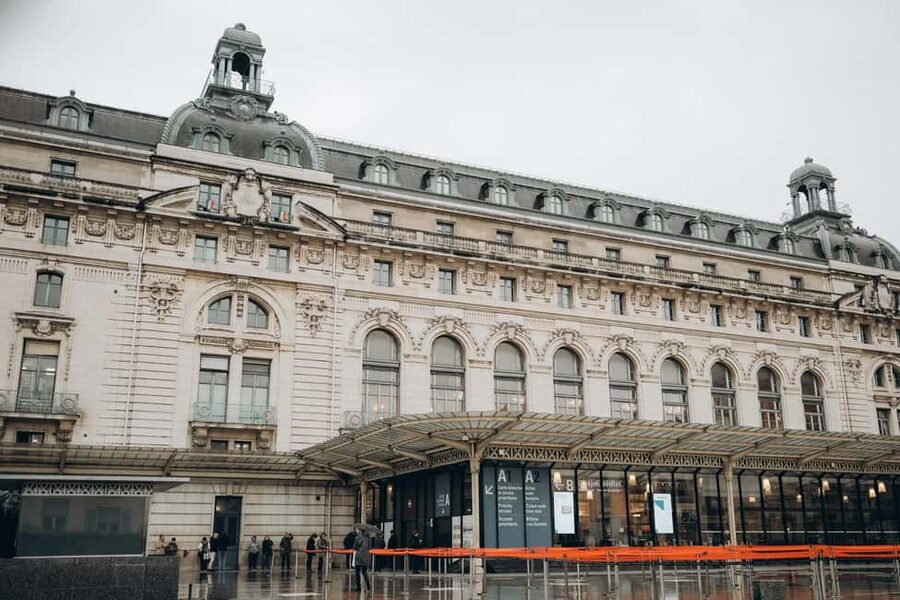
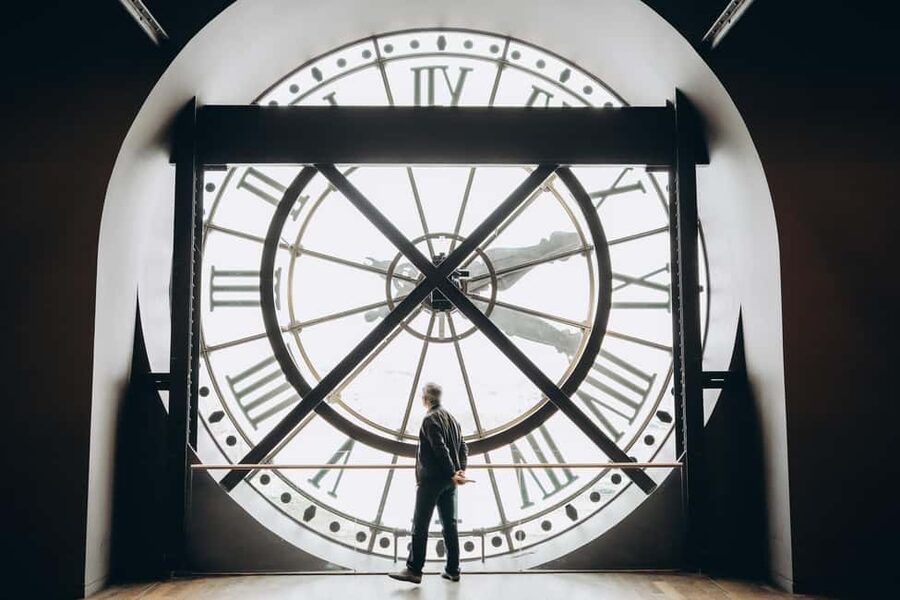
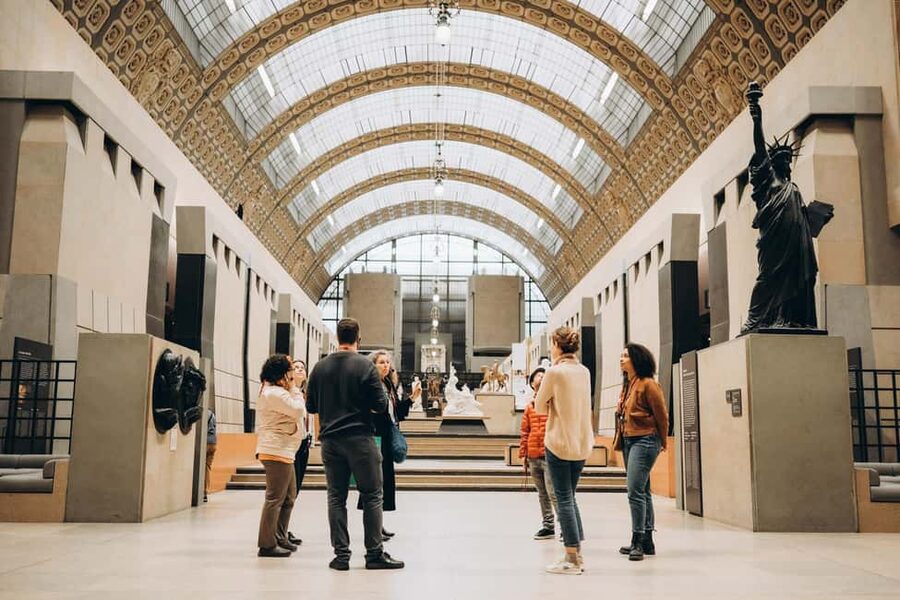
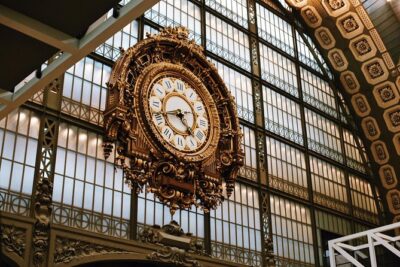
The first visual surprise is the building itself. The museum occupies a grand Beaux-Arts railway station, and the main hall has soaring ceiling vaults that give the collection a dramatic setting.
Your guide uses this opening to explain the building’s change from transport hub to art museum. That background adds a useful layer to the visit. You are not just entering a collection in a converted shell. You are seeing art inside a place built for movement, crowds, engineering, and modern city life.
The station setting also helps explain why the Musée d’Orsay feels different from the Louvre. The building is expansive but more contained, and the central hall gives you a strong sense of direction. At the same time, its size and busy galleries can still overwhelm you, especially if you arrive without a plan.
Skip-the-line entry uses a separate entrance and can reduce time spent waiting outside. It does not guarantee empty rooms. The museum may be crowded once you enter, so the real benefit is getting to the art faster and having a guide decide where to go next.
The two-hour route through Impressionism
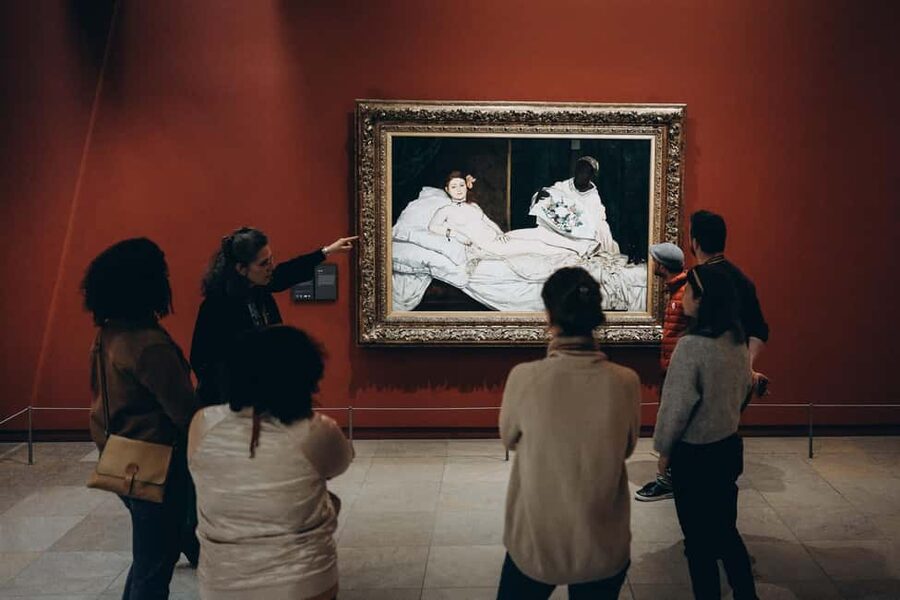
The tour lasts about two hours. That is enough time to see major works and understand their place in the story, but it is not enough for a leisurely look at every painting in the museum.
Your guide selects the key stops. That is a strength, not a shortcoming, for a first visit. You avoid spending 20 minutes in one room only to discover later that you missed a major work on another floor.
The route includes paintings by:
- Vincent van Gogh
- Claude Monet
- Édouard Manet
- Paul Cézanne
- Paul Gauguin
- Other major European artists of the late 19th century
You can expect Van Gogh’s Self-Portrait and Starry Night Over the Rhône, Manet’s Olympia and Luncheon on the Grass, Monet’s Houses of Parliament, and Gauguin’s Tahitian Women on the Beach, among other works.
The value lies in the connections. A guide may use Manet to explain a challenge to academic taste, Monet to show the changing treatment of light, Van Gogh to discuss expressive brushwork, and Gauguin to open a conversation about subject matter and the artist’s search for a different visual world.
The precise order and selection can vary by guide. That is worth knowing before you book. Some guides place more weight on Monet and Van Gogh, while others give more time to the development of art movements and the social setting around them.
Same base, a different kind of day:
- Paris: Louvre Museum Timed-Entrance Ticket
★ 4.6 · 71,977 reviews - Disneyland® Paris 1-Day Ticket
★ 4.6 · 49,412 reviews - Paris: Versailles Palace and Gardens Full Access Ticket
★ 4.6 · 41,579 reviews - Paris: Evening River Cruise with Music
★ 4.4 · 22,721 reviews
Learning how to look at famous paintings
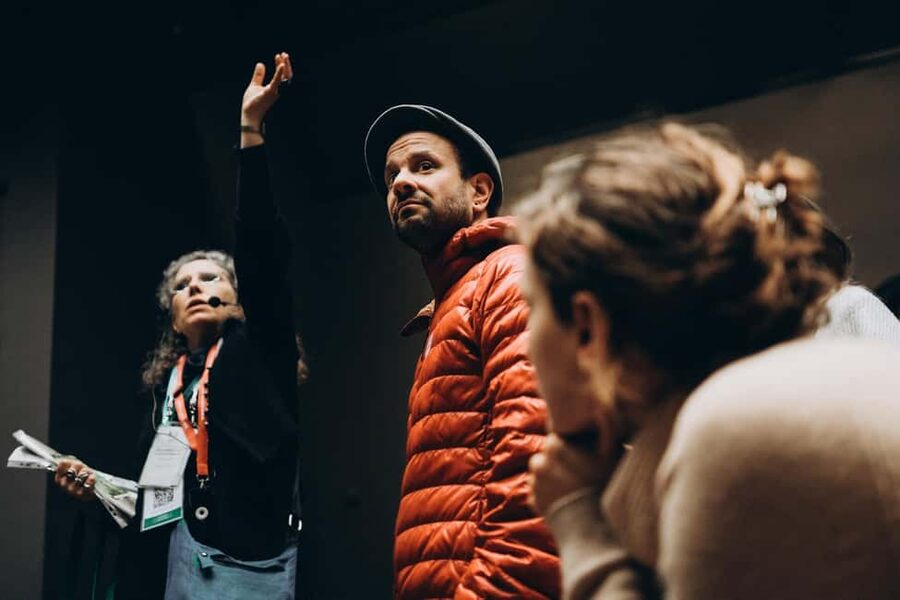
Many people arrive knowing the names of the artists but not quite sure what to look for. This tour is built for that situation.
The strongest guides do more than recite facts. They explain how to read a painting. You may be asked to notice the direction of a brushstroke, the way a figure confronts the viewer, or the difference between a carefully finished surface and a painting that leaves its marks visible.
That approach made a clear impression across the guide lineup. Hugo has been praised for presenting Impressionism as a cultural and artistic revolution. Adam has been noted for linking one key painting to the next and bringing the group close when needed. Karolina has been described as a strong storyteller, while Belen has been recognized for adjusting the discussion to the group’s interests.
Those names do not promise that you will be assigned a particular guide. They do show the range of teaching styles available. You might get a lively storyteller, a more academic presenter, or someone who builds the tour around questions and discussion.
Ahmed has been singled out for explaining the French art scene and giving patient background on the artists. Simon has been praised for setting up the movement from early 19th-century ideas of good painting to the dramatic changes at the century’s end. Laurence brings humor and clear explanations to the visit.
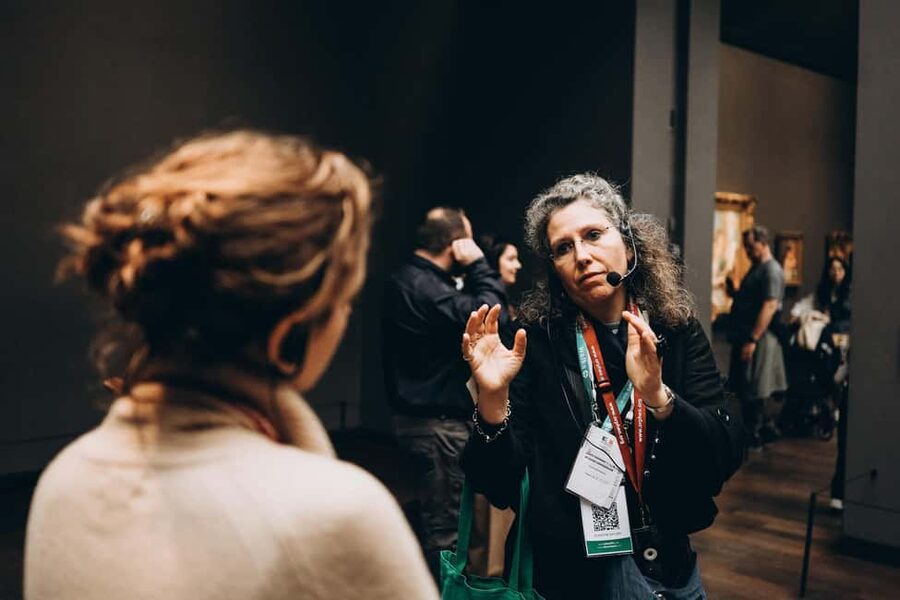
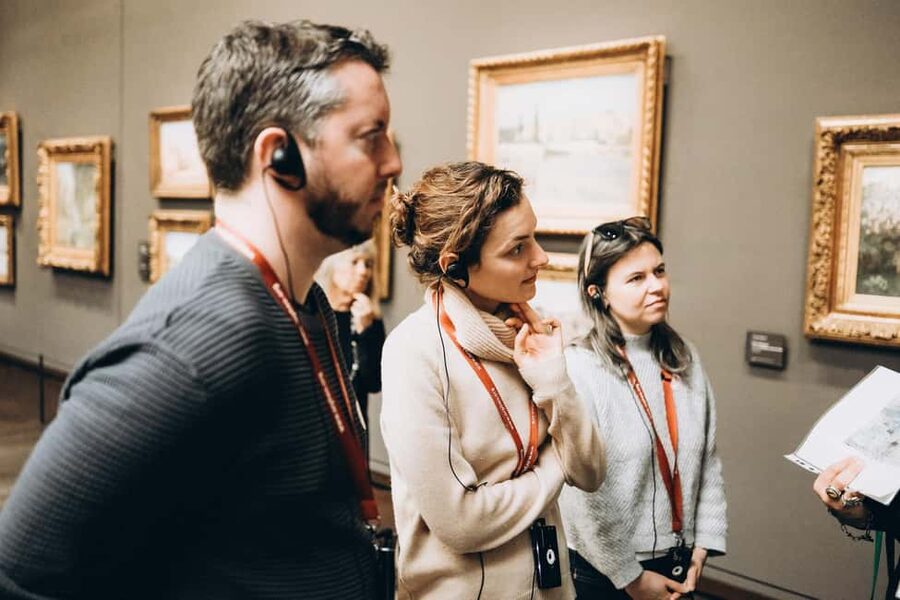
A guide’s personality matters here. Art museums ask you to stand, listen, look closely, and keep moving. An engaging guide keeps the pace from feeling like a school lecture. At times, headsets are used, and one group found the audio a little static, so hearing quality may depend on the equipment and gallery noise.
The major paintings, and what you will not see
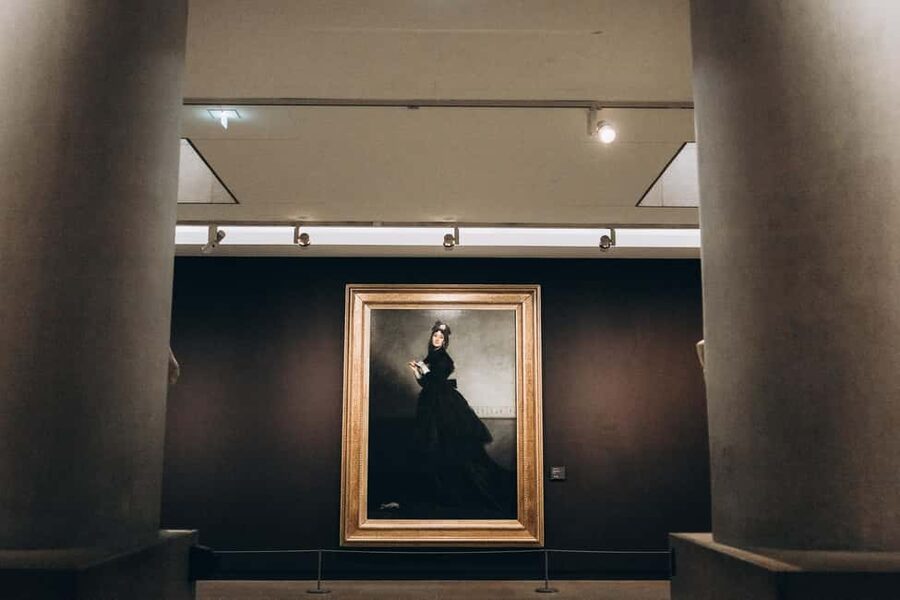
The tour focuses on headline works. Van Gogh’s Self-Portrait offers a close look at the artist’s forceful handling of paint. Starry Night Over the Rhône gives your guide a chance to discuss color, night light, and Van Gogh’s distinctive way of building a scene.
Manet’s Olympia and Luncheon on the Grass are useful for understanding why his work caused such a stir. The paintings put modern subjects and direct visual choices in front of an audience used to more traditional standards. Your guide can explain the social and artistic pressure behind that response.
Monet’s Houses of Parliament helps show how light and atmosphere can become the main event. Gauguin’s Tahitian Women on the Beach brings a different set of questions about travel, representation, and the artist’s search for subjects outside European city life.
The museum contains far more than these familiar names. The tour cannot cover it all, and that is where you need to set expectations. You will receive a thoughtful introduction to the collection, not a complete survey of every gallery.
I recommend treating the tour as your first pass. After it ends, you can return to a favorite room or painting if you still have time and energy. The activity finishes back at the meeting point, so you are free to continue exploring the museum on your own if your admission arrangements allow it.
How the crowd affects the visit
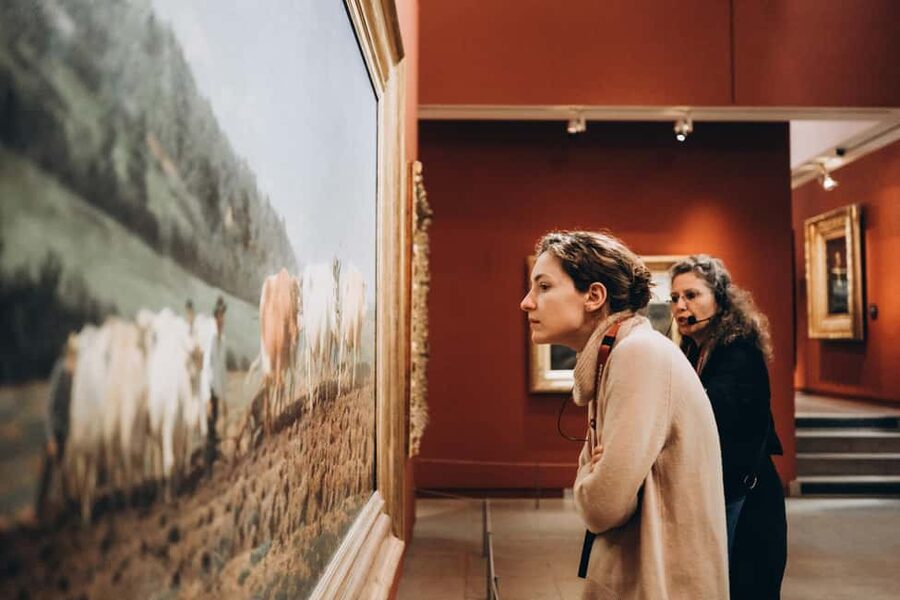
The Musée d’Orsay can be very crowded. This is the clearest practical warning attached to the experience.
Crowds affect the tour in two ways. First, it may take effort to get a clear view of a famous painting. Second, you need to stay close enough to hear your guide and follow the group through busy rooms.
The separate entrance helps with the first stage of the visit, but it cannot remove the people already inside. A skilled guide can position the group, wait for a gap, or ask everyone to step back so the painting can be seen properly. Adam, for example, has been praised for making sure a group of roughly 10 to 12 people could move closer or stand farther back when viewing different works.
Still, you should not expect a quiet, private museum experience unless you choose a private option and happen to visit during a calmer period. The museum remains a major Paris sight, and the most famous paintings draw attention.
Is $73 a fair price?
The price is $73 per person. That is more than a basic museum ticket, so the value depends on how much help you want inside the galleries.
You are paying for admission, skip-the-line access through a separate entrance, a two-hour walking tour, and an English-speaking guide. If you already know the collection well and prefer to move alone, the added cost may not suit you.
For a first visit, I think the price can make sense. The Musée d’Orsay is full of paintings that look familiar from books and screens, but seeing them in person does not automatically explain their importance. The guide supplies the order, context, and visual prompts that help the collection make sense.
The value is strongest if you are short on time, unsure how to approach art, or traveling with people who would lose interest in a self-guided visit. It is also useful if you want to understand Impressionism as a movement rather than simply tick off famous paintings.
Private and small-group options offer a different kind of value. You may pay more or choose a different rate depending on the option available, but a smaller setting can make questions easier and the discussion more personal. Check the available format and starting time before booking.
Who should book this museum tour?
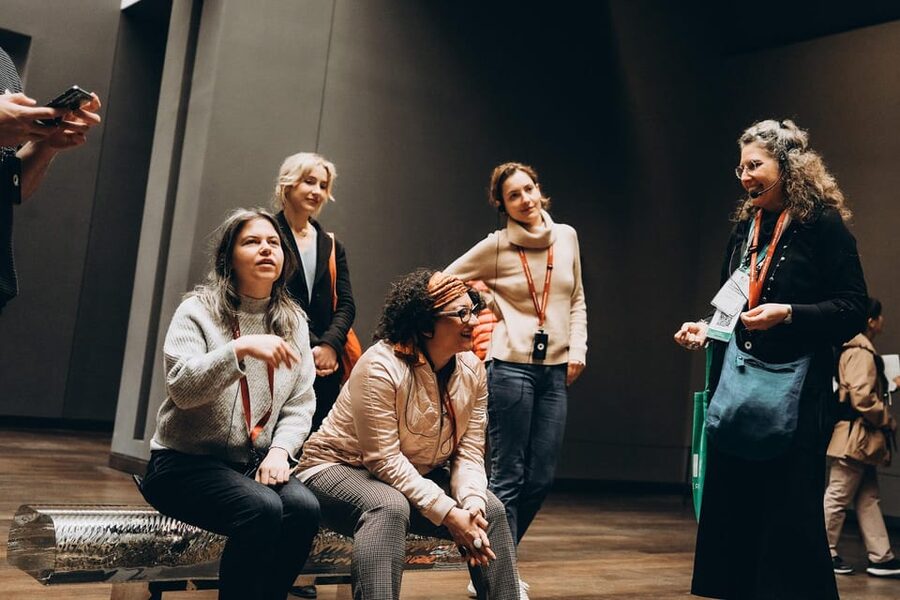
This experience suits a first-time visitor who wants a firm introduction to the Musée d’Orsay. It also works well for anyone who recognizes the big names but wants help understanding why the paintings matter.
I would recommend it to:
- Adults and older children who can walk at a moderate pace
- Visitors with about two hours for a focused museum visit
- People who prefer stories and context over reading every wall label
- Art lovers who want to compare different guide styles through a small group or private option
- Anyone who wants skip-the-line entry and a clear route through a busy museum
It may not suit you if you need wheelchair access, use a stroller, or must bring luggage. It is also a poor fit if you want to sit quietly with a single painting for a long time. The tour keeps moving and covers a selected group of highlights.
Museum closures caused by strikes are possible. If there is time, the operator may contact you before the start, but last-minute changes may be communicated at the meeting point. Keep your plans flexible enough to handle that possibility.
Should you book the Musée d’Orsay guided tour?
Book this tour if you want the Musée d’Orsay to feel organized rather than overwhelming. The best part is not simply seeing Van Gogh, Monet, Manet, and Gauguin. It is learning how those artists questioned the rules of painting and changed what a museum could show.
The $73 price is reasonable for a first visit when you value a guide, skip-the-line entry, and a carefully chosen two-hour route. Just keep the limitations in mind: crowds remain possible, guides vary in style, and the tour is not designed for wheelchairs, strollers, or large bags.
If you are assigned a guide with the storytelling skill shown by Hugo, Ahmed, Adam, Karolina, Belen, Simon, or Laurence, the visit can become one of the strongest art experiences in Paris. If you prefer total freedom, buy a standard ticket and explore on your own. For most first-time visitors with limited time, I would choose the guided option.
FAQ
How long does the Musée d’Orsay tour last?
The tour lasts two hours. It is a focused visit to the museum’s major works rather than a full exploration of every gallery.
Where does the tour meet?
Meet at 1 Rue de la Légion d’Honneur, outside the Musée d’Orsay. Find the rhinoceros statue to the left of the entrance while facing the museum.
How early should I arrive?
Arrive 15 minutes before the scheduled start time. Your guide will be holding a green Walks sign.
Is skip-the-line entry included?
Yes. The activity includes a skip-the-line ticket and entry through a separate entrance.
What language is the tour in?
The tour is conducted in English with a live English-speaking guide.
Can I bring luggage or a baby stroller?
No. Luggage, large bags, and baby strollers are not allowed for this activity.
Is the tour suitable for wheelchair users?
No. The activity is not suitable for wheelchair users or visitors with mobility impairments. It is also not suitable for strollers.
What happens if the museum closes because of a strike?
The Musée d’Orsay can close because of strikes. If there is enough notice, the operator may contact you before the tour. For last-minute closures, information may be given at the meeting point.
Just added in Paris
- Paris Create your Own Perfume Workshop with a Perfumer★ 4.5 · 275 reviews
- Paris: Oh My God She’s Parisian! English Comedy Show★ 4.7 · 257 reviews
- Paris: Create your Signature Scent Perfume Workshop★ 4.8 · 221 reviews
- Paris: Flea Market Insider’s Tour in Extra-Small Group★ 4.6 · 73 reviews
- Paris : Painting experience in an art cafe★ 4.6 · 204 reviews
- Paris: Vallée Village Outlet Shopping Day★ 4.3 · 362 reviews
- Paris night out : Comedy in English ‘How to Become a Parisian ?’★ 4.5 · 373 reviews
- La Vallee Village Shopping Outlet by Luxury Transport from Paris★ 3.5 · 111 reviews
Orsay Museum Tours, compared.
Paris in a Day: Louvre or Orsay, Eiffel Tower, City Walk & Cruise
Read our review →
Musée d’Orsay Entry Ticket and Seine River Cruise
Read our review →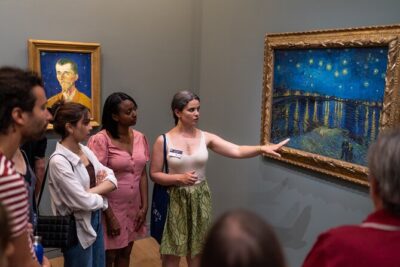
Musée d’Orsay Skip-the-Line Tour with Expert Guide
Read our review →
The Musée d’Orsay Guided Tour Orsay Museum Semi-Private 6ppl Max
Read our review →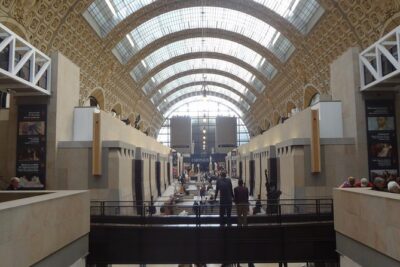
Orsay Museum – Exclusive Guided Tour (Reserved Entry Included)
Read our review →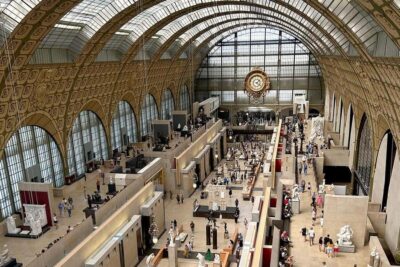
Orsay Museum and Rodin Museum Combo Entry Ticket
Read our review →Browse the lists this tour appears in