
Reviewed · CYCLING TOURS
Paris: Guided City Tour by Electric Bike
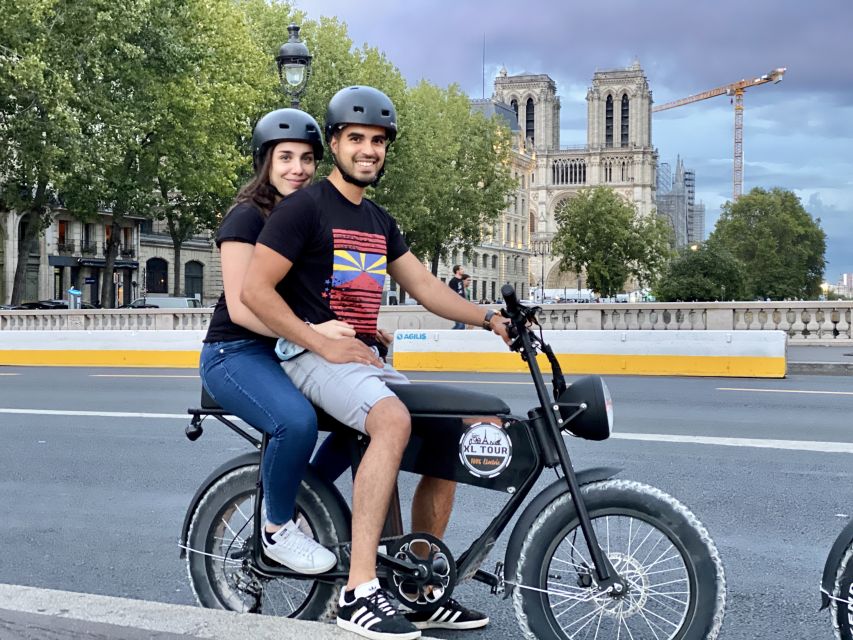
Paris is at its most entertaining when you are moving through it, not staring at it through a bus window. This two-hour e-bike tour takes you from the Louvre to Notre Dame, across the Seine, past the Eiffel Tower, and back to Rue de la Paix, with enough stops for photos and stories.
I like the easy electric assistance, which lets you cover a lot of ground without arriving sweaty. I also like the route itself: mostly bike lanes and sidewalks, with green spaces, bridges, grand avenues, and several famous sights packed into one outing.
The tradeoff is time. You see many places quickly, but you do not go inside the Louvre, Sainte-Chapelle, Notre Dame, or the museums. City traffic is another factor, even with a careful guide, so this suits confident riders more than anyone nervous on two wheels.
Key points to know before you pedal
- Two hours, many major sights: The route covers the Louvre, Notre Dame, Musée d’Orsay, Eiffel Tower, Grand Palais, Invalides, Concorde, and Place Vendôme.
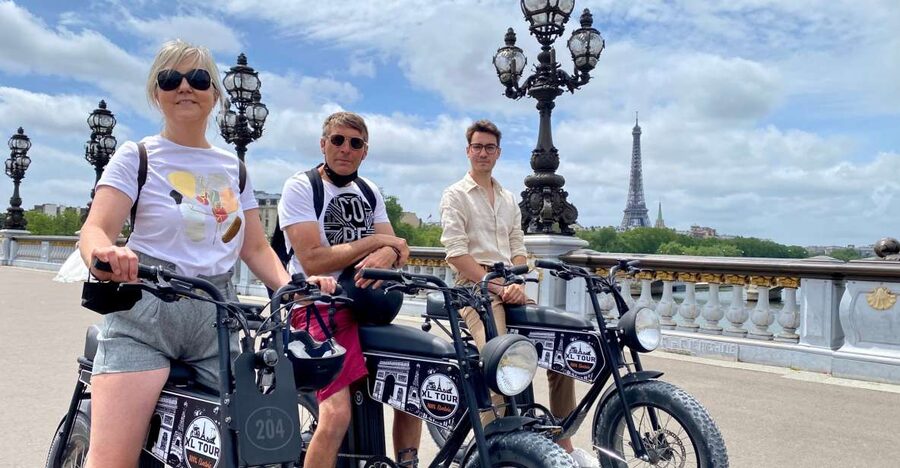
- Electric help makes the distance manageable: The motor does the hard work, while the sturdy bikes remain easy to handle once you complete the practice ride.
- A safety briefing comes first: Allow 15 minutes to receive your bike, helmet, and gloves, test the controls, and follow the guide’s instructions.
- The route favors bike lanes and sidewalks: That makes this a gentler introduction to Paris cycling, though you still share the city with traffic in places.
- Guides add the real value: Romain, Roman, and Thomas are praised for clear English, good humor, historical detail, patience, and careful leadership.
- Dress for the ride: Wear closed-toe shoes and comfortable clothes. A raincoat is supplied, but sandals, flip-flops, and high heels are not allowed.
Why an e-bike is a smart way to see central Paris
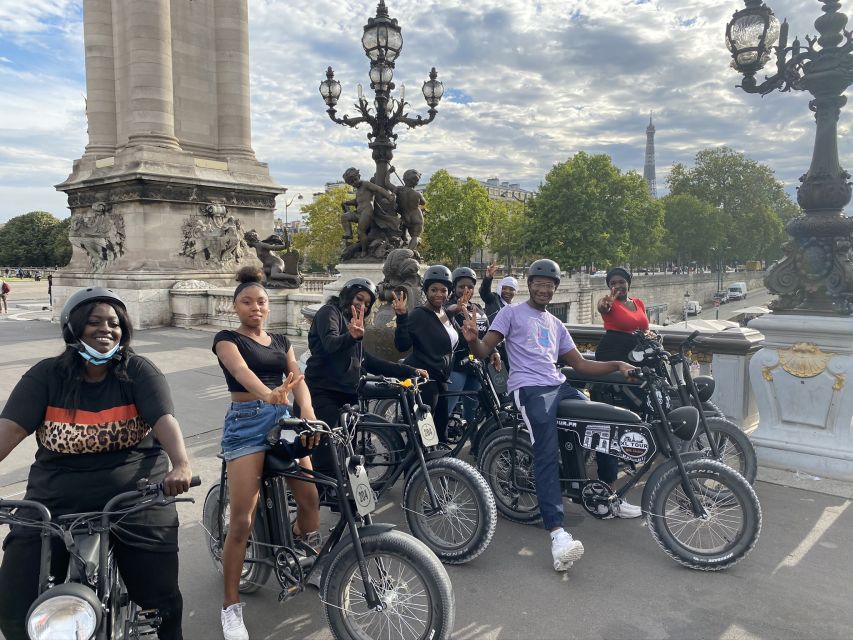
Paris is spread out enough that walking between all these sights would take much of a day. On a standard sightseeing route, you might spend your energy crossing from the Right Bank to the Left Bank, then from the Seine to the Eiffel Tower. The e-bike cuts down that dead time.
You still pedal, but the motor gives you a useful push. That matters on a long route with many stops, especially if you want to keep your attention on the city instead of your legs. The bikes are described as solid and heavy-duty, and the practice ride gives you a chance to check the steering, brakes, and electric assistance before leaving.
This is not a fast cycling workout. The guide leads a sightseeing group, and the point is to pause at landmarks, hear short explanations, and keep the group together. You get the feeling of moving through Paris under your own power, without committing to a full day of strenuous cycling.
A 15-minute safety briefing is part of the scheduled experience. Arrive 10 minutes before your booked time, but not earlier, since the team may not be ready to receive you before that. The meeting point is at 10 Rue de la Paix, inside a parking area rather than a visible storefront. If you do not see bikes or a shop, wait upstairs for a team member.
This detail matters. The tour has a strict late-arrival rule: more than 10 minutes late means a no-show and a lost reservation. If you are delayed, the supplied contact number accepts text or WhatsApp messages, but you should still plan your route to arrive early enough to find the parking entrance.
More cycling tours in Paris:
- Versailles Palace Bike Tour with Market & Marie-Antoinette hamlet
★ 5.0 · 2,680 reviews - Paris: Charming Nooks and Crannies Bike Tour
★ 4.8 · 2,585 reviews - From Paris: Versailles Bike Tour w/ Palace, Gardens, & Picnic
★ 5.0 · 2,150 reviews
From Rue de la Paix to the Louvre
The tour begins near Place Vendôme, one of Paris’s grandest squares and a fitting starting point for a route through royal palaces, imperial monuments, and famous bridges. After the briefing and test ride, you head toward the Louvre Palace.
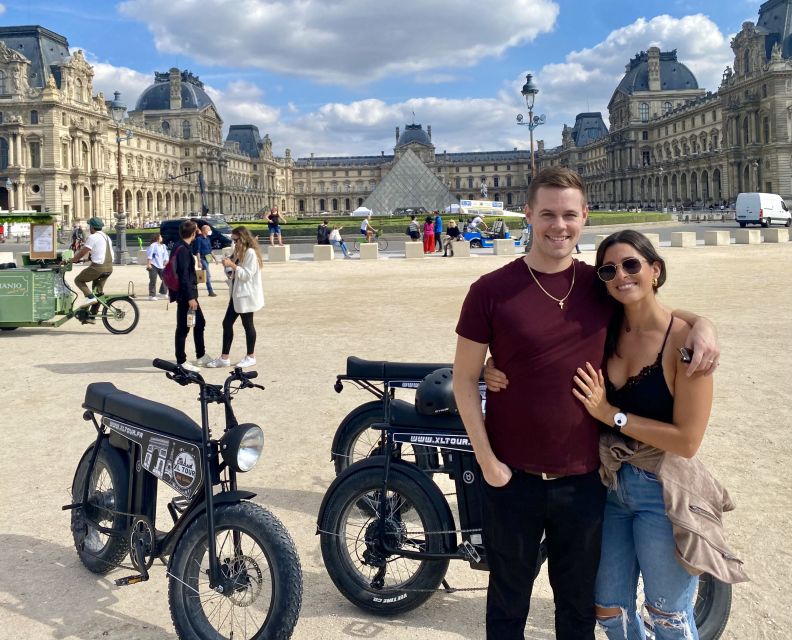
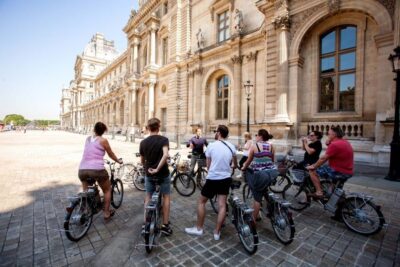
The Louvre stop is mainly an exterior view. You pass the museum and the Carrousel shopping center, with the guide pointing out the scale and history of the palace complex. You will not enter the galleries or see the Mona Lisa up close, so think of this as an orientation visit rather than a museum tour.
That limitation is also part of the appeal. You can see the Louvre’s setting in relation to the Tuileries Gardens and the Seine, something that is harder to understand when you spend the whole visit inside. If the Louvre is a priority, use this stop to decide when you want to return for a longer visit.
The Tuileries Gardens provide one of the route’s calmer stretches. You ride past formal plantings and open paths, with views toward the river and the docks. The guide may point out how the garden connects the Louvre with Place de la Concorde, giving you a better sense of central Paris than a single monument can.
Bridges, islands, and medieval Paris
The route then reaches Pont Neuf, the oldest bridge in Paris. Its name means New Bridge, a reminder that Parisian names often preserve old jokes and old history. From here, the ride moves into the heart of the city, where the Seine and Île de la Cité bring together some of Paris’s most recognizable buildings.
At Pont des Arts, you see the connection between the Institute of France and the Louvre side of the river. The bridge is also associated with love locks, although the city has removed many of them because of the weight and damage they caused. It is a quick stop, but a useful one for understanding how the river divides and joins the city.
On Île de la Cité, the route passes the Conciergerie and Sainte-Chapelle. Both are viewed from outside. The Conciergerie recalls the medieval royal complex and later periods of French history, while Sainte-Chapelle is famous for its Gothic design and stained glass. You will need a separate admission visit if you want to explore either building indoors.
Notre Dame receives a longer stop than several of the smaller points along the route. You see the cathedral’s Gothic architecture and rose window, with time for the guide to explain the building’s place in Paris. This is a good moment for photographs, but do not expect a full cathedral visit or a detailed architectural lecture.
This stretch is one of the strongest parts of the tour because the sights are close together yet very different. In a few minutes, you move from royal power to revolutionary history, Gothic worship, river crossings, and modern Parisian life.
The Left Bank and Musée d’Orsay
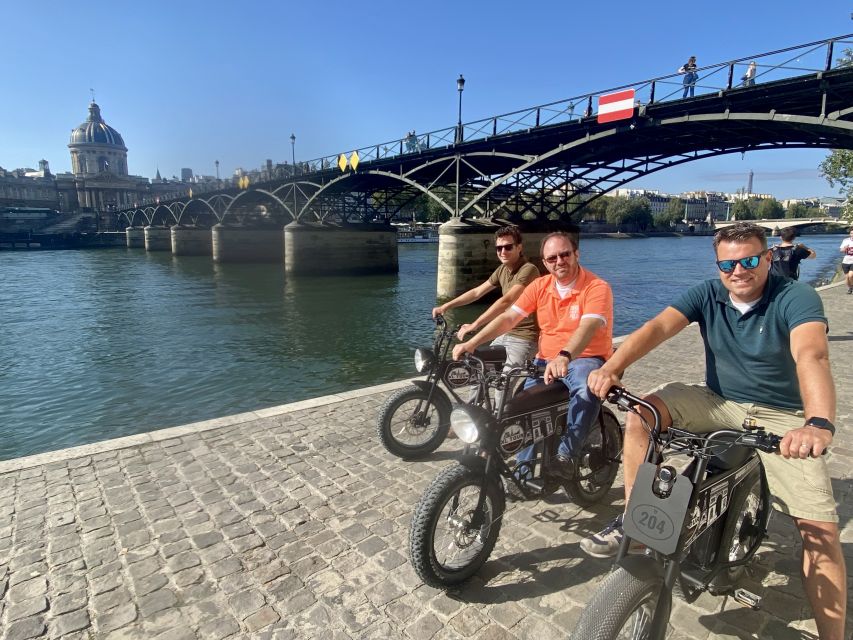
After Île de la Cité, you pass the Institute of France and continue toward the Musée d’Orsay. The museum occupies a former railway station, a detail that helps explain its unusual shape and grand clock-filled interior.
Again, the stop is outside. That is useful if you want a quick city overview, but it is not a substitute for seeing the Impressionist collection inside. If you already have museum tickets, note that this tour will not replace your planned visit. It simply shows you where the museum sits along the river and how it relates to the Louvre across the Seine.
The route along the docks gives you changing views of Paris. You are not just collecting monument photographs; you are seeing how residents use the riverfront, bridges, gardens, and broad public spaces. That moving view is one reason an e-bike can feel more local than a coach tour.
The guide’s commentary is an important part of this section. Romain and Roman are repeatedly praised for clear explanations, while Thomas is singled out for keeping a close eye on safety in heavier traffic. The best guides on this route do more than recite dates. They help you notice why a building is where it is and how the city fits together.
Same base, a different kind of day:
- Paris: Louvre Museum Timed-Entrance Ticket
★ 4.6 · 71,977 reviews - Disneyland® Paris 1-Day Ticket
★ 4.6 · 49,412 reviews - Paris: Versailles Palace and Gardens Full Access Ticket
★ 4.6 · 41,579 reviews - Paris: Evening River Cruise with Music
★ 4.4 · 22,721 reviews
Eiffel Tower views from Trocadéro
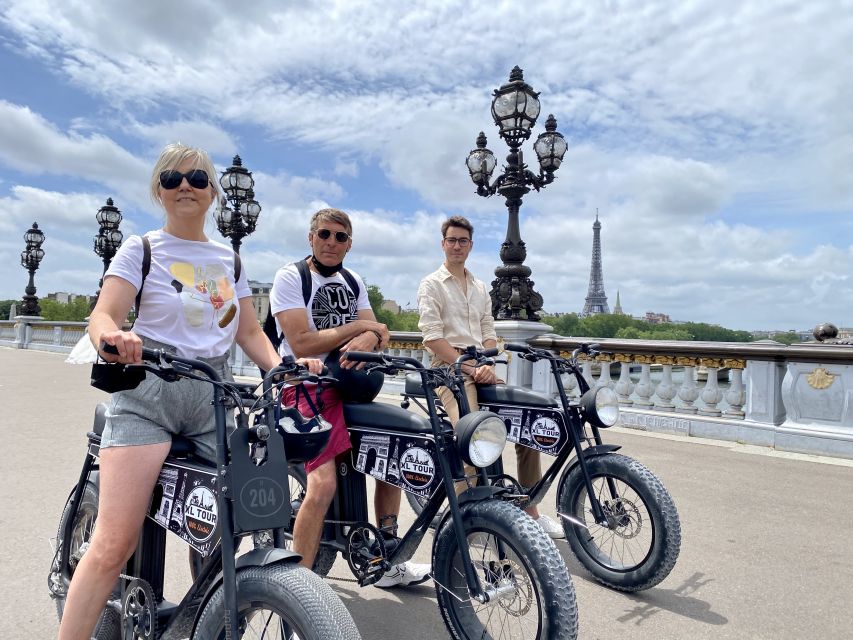
The Eiffel Tower is the route’s biggest visual payoff. You ride toward it, then cross to the Trocadéro Gardens for a broad view from across the river. This angle lets you see the tower in full, rather than looking up from its base with the structure disappearing overhead.
The nearby Palais de Chaillot adds another large-scale Paris view. You see both wings of the palace and the open space around the gardens, then pass the Palais de Tokyo for a glimpse of the city’s modern art scene. These stops give the route a helpful contrast: old royal institutions, nineteenth-century engineering, and contemporary culture all appear within a short ride.
The Eiffel Tower stop is not a ticketed ascent. You will not go up the tower, take the elevators, or wait in a security line. That keeps the tour moving and makes it possible to include so many other sights, but you should reserve a separate tower visit if reaching the top is important to you.
Trocadéro is also one of the places where you will want to follow the guide closely. Wide public spaces can fill with pedestrians, and the group needs to pause without blocking others. The supplied raincoat is useful here because the tour operates in wet weather, though the experience will naturally feel less comfortable in heavy rain.
Grand Palais, Alexandre III, and the western route
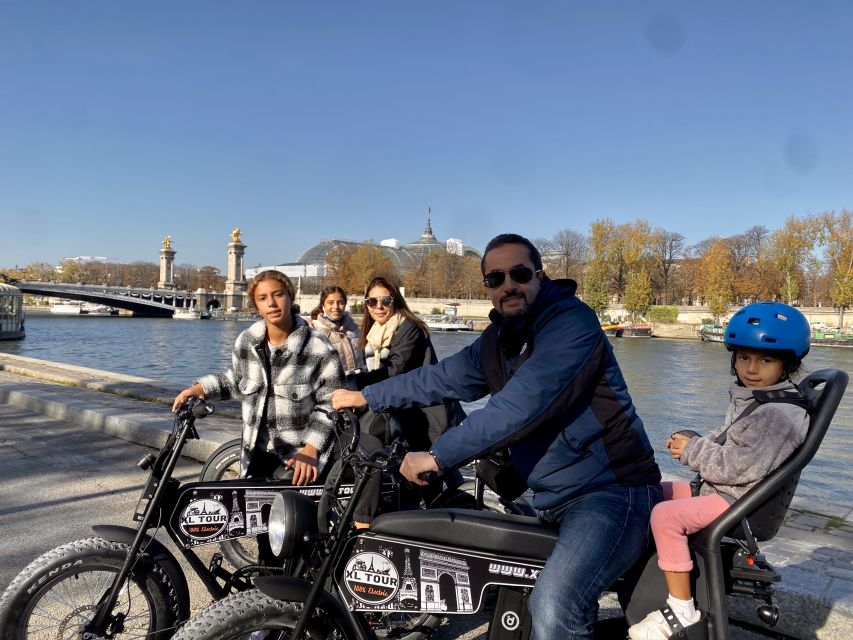
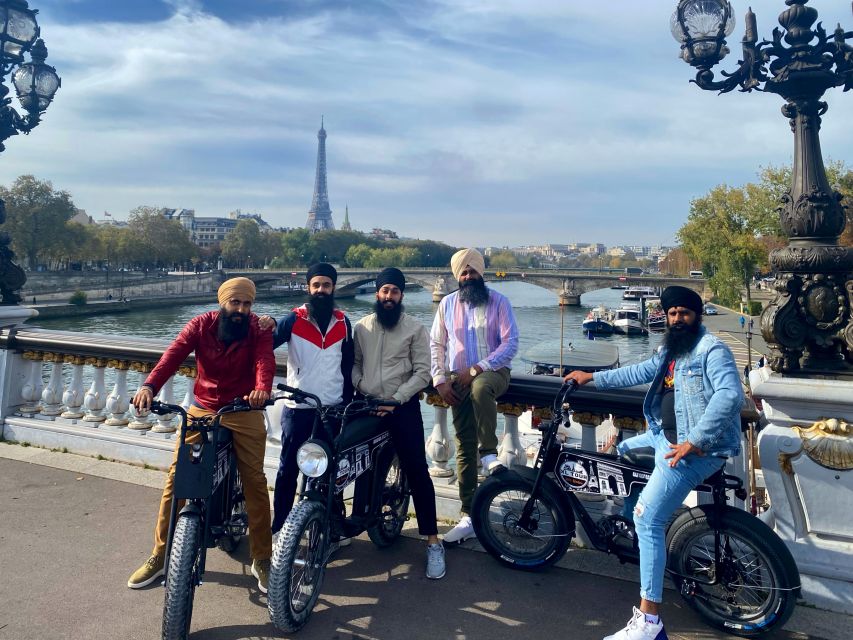
From the Eiffel Tower area, the tour turns toward the Pont Alexandre III. This ornate bridge is among Paris’s most photogenic crossings, with decorated lamps, sculpture, and open views toward Les Invalides and the river. It is a good example of the city’s fondness for turning practical infrastructure into public art.
The route then passes the Grand Palais and Petit Palais. The two buildings make a fun visual pair, with the Grand Palais known for its huge glass roof and the Petit Palais offering a smaller, more intimate counterpart. You see them from the outside and keep moving, so save museum interiors for another part of your stay.
At Place Diana, the Liberty Flame connects Paris with the United States and also recalls Princess Diana because of the square’s later association with her. The stop offers a chance to discuss how monuments can gather new meaning over time, even when their original purpose was different.
Les Invalides follows, bringing another major Paris landmark into view. The route does not include an interior visit, so you will be seeing the domed complex and surrounding area from the bike. That is enough to add context to a first day in Paris, but anyone interested in military history should return with time for the museums inside.
Concorde and Place Vendôme to finish
Place de la Concorde is one of Paris’s grandest open spaces. From the bike, you can appreciate its size and its position between the Tuileries, the Champs-Élysées, and the river. It is a place where the city’s scale becomes clear, and a quick ride-by is more useful than it may sound.
The final stop is Place Vendôme, bringing you back near the starting point. Its elegant buildings and luxury shops make a sharp contrast with the medieval streets around Notre Dame and the working riverfront you saw earlier.
The full route includes about 20 named sights, but several receive only two or five minutes. That is the central bargain: breadth instead of depth. You get a strong mental map of central Paris, then you can return to the places that caught your attention.
Guide quality and the value of the stories
The guide can make or break a city cycling tour. A quiet guide who rides too quickly would leave you with a string of blurry monuments. Here, the strongest feedback centers on Romain or Roman, Thomas, and other guides who combine historical detail with humor and calm riding instruction.
Several outings describe guides who kept a steady pace and remained patient with less confident riders. That is especially useful in Paris, where even a mostly bike-friendly route can include busy crossings and unpredictable pedestrians. Thomas is praised for watching the group carefully in heavier traffic, while Romain is noted for taking photos and even a video at important stops.
The tour is offered in French, English, and Spanish with a live guide. Audio support is listed in Dutch, Japanese, German, Hebrew, Arabic, Chinese, Italian, and Portuguese. If you need one of those audio languages, confirm how it will be delivered when booking, since the live commentary itself is limited to the three spoken guide languages.
The rating is 4.9 from 117 reviews, and the praise is unusually consistent around three points: the guides, the feeling of safety, and the number of sights covered in a short time. One family found the route engaging for two teenagers, while another couple used it shortly after arriving in Paris to get oriented.
Is $76 a fair price for two hours?
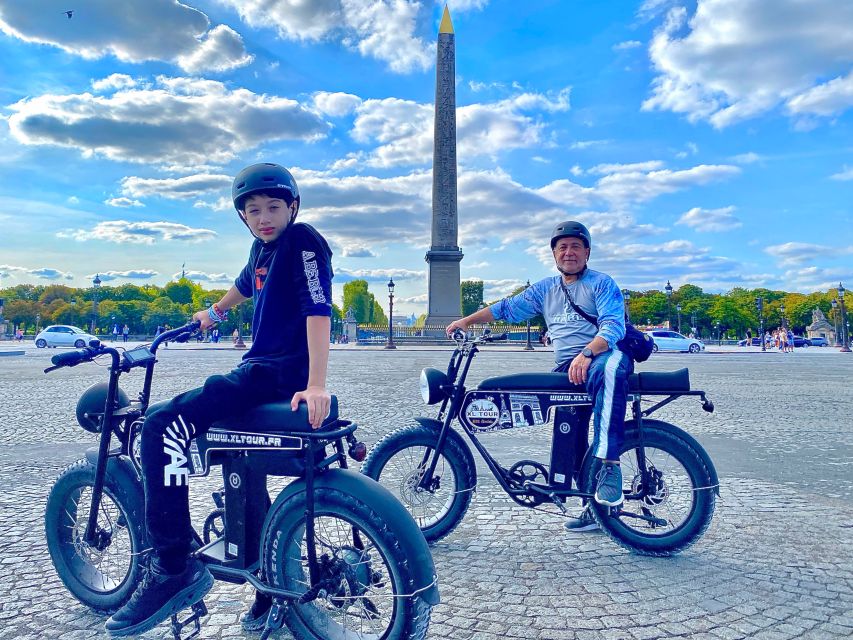
At $76 per person, this is not the cheapest way to see Paris. You are paying for the electric bike, helmet, gloves, raincoat, equipment fitting, guide, and route planning. Food, drinks, hotel pickup, and museum admissions are not included.
The price makes more sense if you have only a short stay, want a first look at the city, or find long walking days tiring. A bus can cover distance, but it cannot use the same narrow paths and sidewalks. Walking gives you more freedom to stop, but you will not reach this many landmarks in two hours.
I would be less quick to recommend it if you have several days in Paris and prefer slow museum visits. The tour gives you exterior views and short explanations, not entry to the Louvre, Sainte-Chapelle, Notre Dame, Musée d’Orsay, Grand Palais, or Les Invalides.
Free cancellation up to 24 hours before the tour and a reserve-now, pay-later option reduce some booking risk. The route is best for adults and older children who meet the height rule. Adults must be at least 155 centimeters, or about 5 feet 1 inch, to ride.
Who should book this Paris e-bike tour?
You are a good match if you want to see major sights quickly, enjoy a guide who adds stories and jokes, and feel comfortable steering a bike in an urban setting. It is also a strong first-day activity because it shows you where the Louvre, river islands, Eiffel Tower, Invalides, and central squares sit in relation to one another.
Families with teenagers may like the balance of movement and short stops. Couples can cover more ground than on foot, and solo visitors can get a structured introduction to the city without arranging every crossing themselves.
You should skip it if you are pregnant, use a wheelchair, have a mobility impairment, or dislike cycling near traffic. Sandals, flip-flops, open-toed shoes, and high heels are not allowed. Choose closed, comfortable shoes and clothes that let you move easily.
Should you book it?
Book this tour if your goal is to see the shape of Paris in two hours, enjoy outdoor sightseeing, and leave with a list of places to revisit. The electric assistance, careful guides, and mainly bike-friendly route make a long central circuit far easier than it would be on foot.
Do not book it expecting museum access, a relaxed architectural tour, or a quiet ride away from all traffic. For the right rider, $76 buys a lively orientation, a lot of ground, and a useful first look at Paris. For a slow, detailed visit, spend the money on one museum ticket and explore on foot.
FAQ
How long is the Paris e-bike tour?
The tour lasts two hours, including stops at major landmarks. A 15-minute safety briefing takes place before the ride.
Where does the tour begin and end?
It begins and ends at 10 Rue de la Paix in Paris.
How early should I arrive?
Arrive 10 minutes before your scheduled start time. The team may not be able to receive you earlier because the briefing area is inside a parking facility.
What happens if I arrive late?
Arriving more than 10 minutes after the scheduled start is treated as a no-show, and the reservation is lost. If you expect a delay, you can send a text or WhatsApp message to the supplied contact number.
Are electric bikes, helmets, and rain protection included?
Yes. Electric bikes, helmets, gloves, and a raincoat are included.
Is the tour suitable for beginners?
The tour includes a safety briefing and a test ride before departure. The route is mainly on bike lanes and sidewalks, but you should still be comfortable handling a bicycle in an urban setting.
What languages are available?
Live guides are available in French, English, and Spanish. Audio guide support is listed in Dutch, Japanese, German, Hebrew, Arabic, Chinese, Italian, and Portuguese.
Can I enter the Louvre or the other landmarks?
No entrance tickets are included. The tour provides exterior sightseeing at places such as the Louvre, Sainte-Chapelle, Notre Dame, Musée d’Orsay, Eiffel Tower, Grand Palais, and Les Invalides.
Who should not take this tour?
It is not suitable for pregnant women, people with mobility impairments, or wheelchair users. Adults must be at least 155 centimeters tall to ride.
Just added in Paris
- Private Transfers in Paris★ 5.0 · 75 reviews
- Personalized Transport service from Disneyland to Paris★ 5.0 · 63 reviews
- Disneyland® Paris 1 Day Ticket with Transport from Paris★ 3.5 · 302 reviews
- CDG – Euro Disney – CDG Two Way Private Shuttle Transfer★ 5.0 · 233 reviews
- Monet’s Gardens & House-Private Giverny Tour From Paris★ 4.5 · 137 reviews
- Giverny Monet House and Gardens Skip the line Walking tour★ 4.0 · 217 reviews
- Guided tour Monet’s house and gardens/small group★ 4.5 · 68 reviews
- Monet’s House and Garden & Giverny Village★ 4.5 · 39 reviews
Cycling Tours, compared.
Versailles Bike Tour w/ Palace, Gardens, & Picnic
Read our review →
Paris Local Districts and Stories Off the Beaten Track Guided Bike Tour
Read our review →
Highlights of Paris Bike Tour w/ a Local Guide (English or Dutch)
Read our review →
Versailles Bike Tour with Market, Gardens & Guided Palace Tour
Read our review →Browse the lists this tour appears in