
Reviewed · CYCLING TOURS
Paris: Afternoon E-Bike Guided Small Group Tour
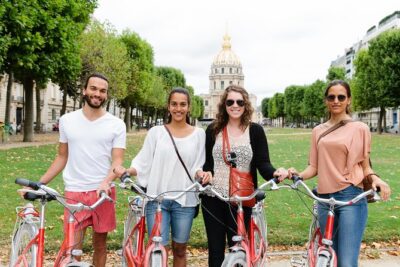
Paris opens up quickly from an e-bike. In 150 minutes, you can move from the Eiffel Tower to the Louvre, Arc de Triomphe, Invalides, and the grand Palais buildings without spending the whole afternoon on foot or inside a tour bus. The route gives you a useful first look at the city’s layout.
I like the short stops for photos and stories, and I like the way the electric assistance makes a long city ride manageable. Guides such as Jack, George, Kenza, and Sebastian have been praised for clear explanations, good pacing, and taking photos. The main drawback is city traffic: some intersections can feel tense, and one rider wished for clearer instructions while moving.
Key points
- A broad Paris sampler: Cover major sights including the Eiffel Tower, Louvre, Arc de Triomphe, Notre-Dame, and Musée d’Orsay.
- Easy electric riding: The e-bikes reduce the effort needed to cover roughly 15 kilometers.
- Strong guide element: Guides such as George, Jack, Kenza, and Sebastian add history, local tips, and photo help.
- Small-group feel: Private and small-group options are available, with groups reported as small as 10.
- Useful first-day plan: The route helps you get your bearings before returning to the places you want to explore properly.
- Traffic needs attention: Cycling is manageable, but busy intersections and city streets require care and concentration.
Why an e-bike is a smart way to see Paris
Paris is compact on a map, but its major sights are spread across a wide sweep of the city. Walking between the Eiffel Tower, the Louvre, the Arc de Triomphe, and Invalides can consume most of a day. A sightseeing bus covers the distance, but it keeps you behind glass and often leaves you with little sense of the streets between the monuments.
An e-bike fills the gap. You cover ground quickly, but you still feel the air, see the buildings at street level, and stop when something catches your eye. The electric motor matters here. You still pedal, but the ride is far less tiring than a conventional bicycle, especially when the route stretches across central Paris.
The tour lasts about two and a half hours and costs $63 per person. That is fair value if you want a city orientation and several landmark stops in one afternoon. It is not the right choice if you want long visits inside museums or a detailed tour of one neighborhood. Think of it as a moving introduction, not a substitute for your Louvre ticket or a full visit to Notre-Dame.
More cycling tours in Paris:
- Versailles Palace Bike Tour with Market & Marie-Antoinette hamlet
★ 5.0 · 2,680 reviews - Paris: Charming Nooks and Crannies Bike Tour
★ 4.8 · 2,585 reviews - From Paris: Versailles Bike Tour w/ Palace, Gardens, & Picnic
★ 5.0 · 2,150 reviews
Starting at 101 Avenue de la Bourdonnais
The tour begins at 101 Avenue de la Bourdonnais, close to the Eiffel Tower and the Champ de Mars. You meet the guide there, leave any luggage in storage, receive an e-bike, and get a helmet if you want one. Helmets are listed as optional, but I would still use one for city riding.
The starting point is practical for a first afternoon in Paris. You begin near one of the city’s defining sights, then finish in the same place. That makes it easier to continue with dinner, return to your hotel, or spend more time around the Eiffel Tower after the ride.
Allow a little mental space at the start for getting comfortable with the bike. One person specifically wanted more guidance about turns and route changes. That is a useful reminder to listen closely during the opening briefing and ask the guide to repeat anything unclear.
Invalides and the Army Museum
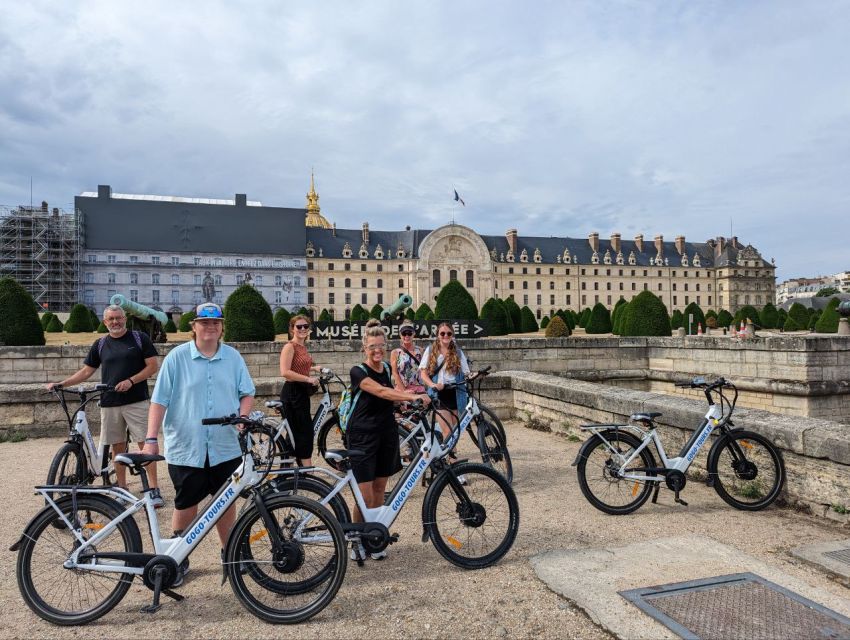
The first part of the route passes Les Invalides and the Army Museum. The golden dome of Invalides is one of Paris’s most recognizable rooflines, and the complex carries several layers of French military history. From a bicycle, you get a quick architectural impression and a useful explanation from the guide.
The Army Museum is only a pass-by stop, not an indoor visit. If military history interests you, mark it for another day. The tour gives you the setting and context, but not the time to examine the collections.
This pattern continues throughout the afternoon. The guide stops at important places, explains what you are seeing, and lets you take pictures. You get breadth rather than lengthy museum time.
Pont Alexandre III and the two grand Palais buildings
Pont Alexandre III brings one of the prettiest crossings on the route. Its ornate lamps, sculpture, and broad views make it a natural photo stop, with the Invalides dome visible in the distance and the Seine opening up around you.
Nearby, the Petit Palais and Grand Palais show off the city’s taste for grand public architecture. Their elaborate details can be easy to miss from a car. On a bike, you can pause close enough to take in the façades, though the itinerary allows only a brief stop at each.
The Grand Palais has had periods of closure and changing access over time, so do not assume this outing includes entry. The value here is the outside view and the guide’s explanation of the buildings and their role in Paris.
Same base, a different kind of day:
- Paris: Louvre Museum Timed-Entrance Ticket
★ 4.6 · 71,977 reviews - Disneyland® Paris 1-Day Ticket
★ 4.6 · 49,412 reviews - Paris: Versailles Palace and Gardens Full Access Ticket
★ 4.6 · 41,579 reviews - Paris: Evening River Cruise with Music
★ 4.4 · 22,721 reviews
Riding the Champs-Élysées to the Arc de Triomphe
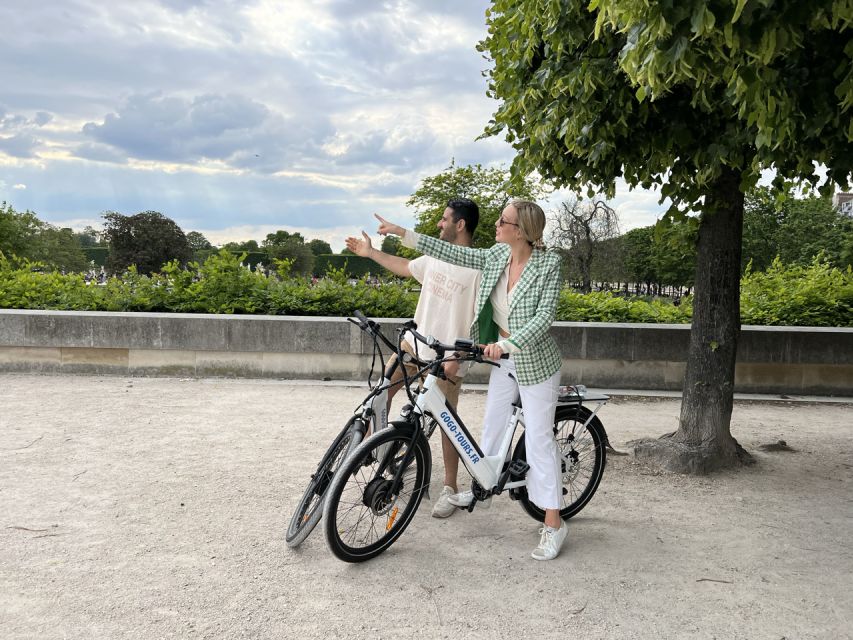
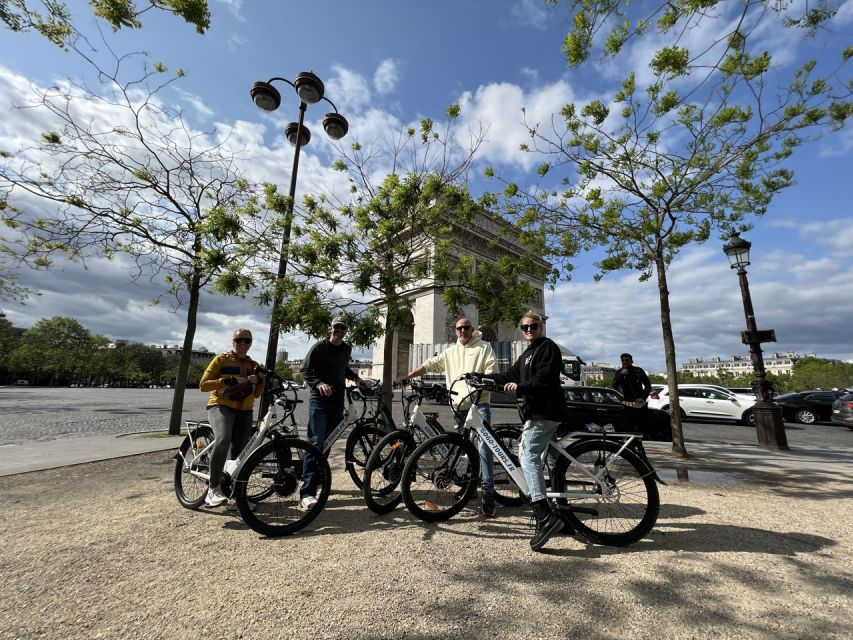
The Champs-Élysées is one of the world’s best-known avenues, running between Place de la Concorde and the Arc de Triomphe. It is broad, grand, and heavily trafficked. Cycling here gives you a stronger sense of its scale than walking a short section, but it also demands attention.
The Arc de Triomphe is seen from outside. Its position at the center of twelve avenues explains why it has long been one of Paris’s key urban landmarks. You can appreciate the design and take photos, but the schedule does not include climbing to the roof or entering the monument.
This is one of the sections where city riding may feel most demanding. The route uses areas suitable for bicycles, and riders have described much of the trip as easy. Still, busy intersections can feel unnerving. Stay behind the guide, keep your eyes up, and do not treat the ride as a carefree cruise.
Place de la Concorde and the Revolution connection
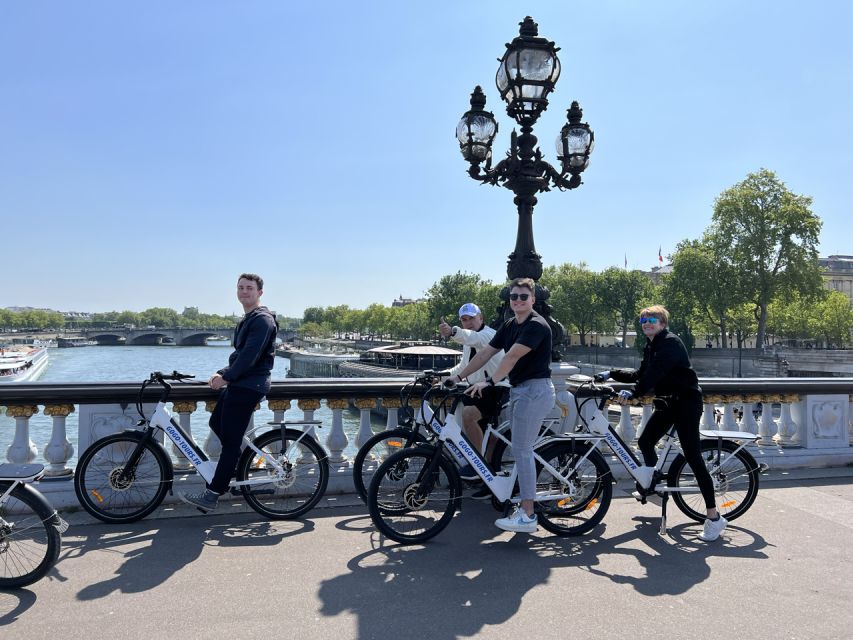
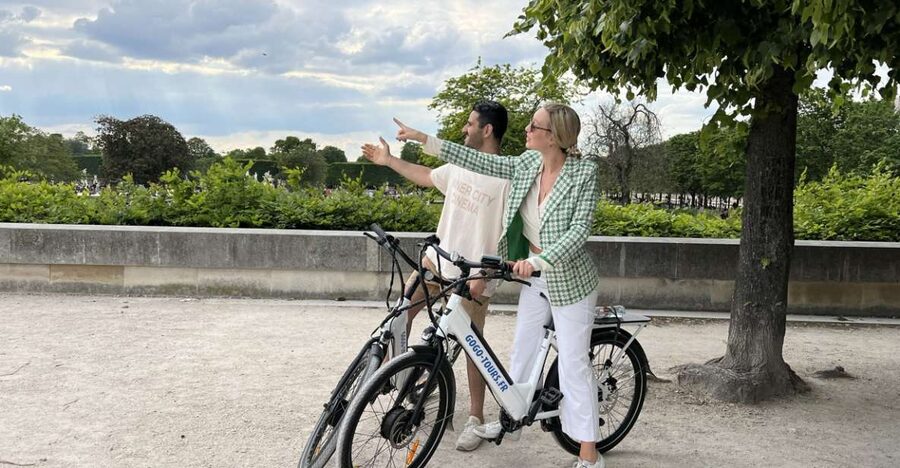
Place de la Concorde is a vast open square with grand views toward the Champs-Élysées and the Tuileries Garden. It is also tied to the French Revolution, including the public executions held here. The guide’s short talk helps connect the elegant setting you see today with the darker events that shaped the country.
This contrast is one of the tour’s strengths. Paris is not only pretty streets and famous façades. Its monuments reflect royal power, revolution, military ambition, art, and changing ideas about public space. A good guide can make those links clear without turning the ride into a lecture.
You will pass through the square rather than spend a long period exploring it. If you want to walk through the Tuileries or visit the nearby Musée de l’Orangerie, save that for later.
The Louvre and Musée d’Orsay from street level
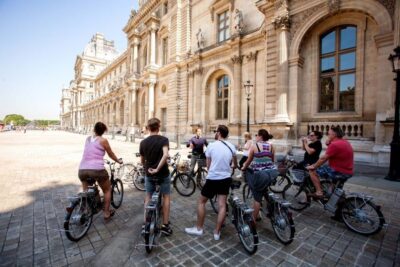
The Louvre is another major pass-by highlight. Its scale is hard to grasp from photographs, and a street-level approach lets you see how the former palace fills an enormous section of central Paris. The tour does not include admission, a timed entry, or a gallery visit.
That limitation is important. If you have only one afternoon and want to see the Mona Lisa, this ride will not replace a Louvre reservation. If you want to understand where the museum sits in relation to the Seine, Tuileries, and other central sights, the bike route is extremely useful.
The Musée d’Orsay appears later along the river. Its former railway-station architecture is distinctive, even from outside. The stop is brief, but it gives you a clear reason to return for the Impressionist collection or the building itself.
I like this pairing because it shows two different sides of Parisian art culture. The Louvre represents a huge former royal complex, while Orsay occupies a dramatic converted station. You get the visual comparison without committing the entire afternoon to museum interiors.
Notre-Dame, the Flame of Liberty, and the river views
Notre-Dame is included among the major sights along the route. From the outside, you can take in the cathedral’s place within the historic center and hear about its role in Paris. The exact amount of time at each point can vary with traffic, group size, and the guide’s pacing, so expect a viewing stop rather than an extended visit.
The Flame of Liberty adds another visual break. Its position near the Seine makes it a useful point for photographs and city views. The area also connects naturally with the Eiffel Tower portion of the ride, creating a sequence of recognizable Paris scenes rather than isolated stops.
The route’s river sections are especially pleasant because they give you changing views of bridges, monuments, and the city’s formal geometry. At times, the guide may need to stop before explaining a site so everyone can hear. One rider suggested audio would help while moving, but the guides compensate by pausing at important locations.
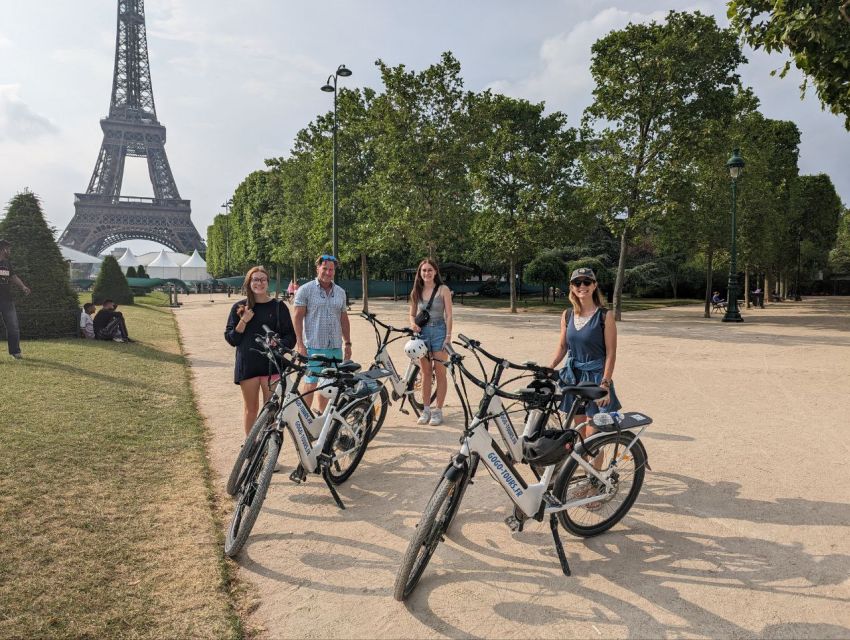
Ending at the Eiffel Tower and Champ de Mars
The ride returns toward the Champ de Mars and the Eiffel Tower. Finishing here gives the afternoon a strong closing point, and it is a good place to continue exploring on foot or pause for a drink after returning the bike.
The Eiffel Tower stop is outside. You can take the classic photographs, see how the tower relates to the open park and surrounding streets, and then decide if you want a separate visit to the tower itself. The tour does not include lift access or tickets.
Ending near the tower also makes the route easy to remember. After a quick tour of Paris, you will have a mental map connecting the main monuments. That helps you plan the rest of your stay with less guesswork.
What the guides add to the ride
The guide is the heart of this activity. The bikes get you from place to place, but the explanations give the stops meaning. Several guides have earned particularly strong praise for their approach.
Jack has been noted for tailoring the outing to the group, sharing local suggestions, and even making time for a hot chocolate during a very cold afternoon. George is frequently described as clear, friendly, and strong on Parisian history, with a talent for taking photos. Kenza has been praised for answering questions and making the stops engaging.
Other named guides include Sebastian, Boris, Fadou, Arthur, Ziggy, Emma, Hugo, Asia, and Santiago. The common thread is a personal style rather than a scripted audio tour. A guide may point out a good photo angle, suggest a place to eat, or adjust the pace so everyone stays comfortable.
The private or small-group format helps. Groups can be as large as about 10, and some departures may have only two people. A solo visitor should note that a minimum number of bookings may affect whether a departure runs, since one person was concerned about nearly missing out. Check the booking conditions for your date.
Is the cycling difficult?
The e-bikes are described as easy to use, and the electric assistance makes this a realistic option for people who would not choose a standard bike tour. The route is physically light compared with ordinary cycling, though you still need to balance, pedal, brake, and pay attention to traffic.
The tour is not suitable for children under 12 or people over 95. Those limits are clear, but the more useful question is how comfortable you are on a bicycle in an urban setting. You do not need to be athletic, yet you should feel able to ride around intersections and follow a group.
Paris streets are not perfectly calm. Some sections use cycling routes, while others involve busy crossings. The guide gives safety advice, but you remain responsible for staying alert. If cycling in traffic makes you anxious, a walking tour or bus tour may feel more relaxing.
The tour runs rain or shine. Bring clothing suited to the forecast, and remember that an afternoon breeze can feel cold even when the temperature looks mild. Food and drinks are not included, though guides may make an occasional stop when the group’s interests and schedule allow.
Price, timing, and overall value
At $63 per person, this is good value for a first look at Paris, particularly if you have only one day or want to see a wide area before choosing where to spend more time. The price includes the e-bike, guide, and optional helmet. You pay separately for meals, drinks, museum entry, and any attraction you visit later.
The value comes from combining transport, orientation, and commentary. A hop-on hop-off bus may cover a similar list of sights, but an e-bike gets closer to the streets and avoids the sealed-in feeling of a vehicle. Walking is cheaper, but you will cover less ground and likely need more than one afternoon to see the same spread of landmarks.
The tour works best early in your stay. Afterward, you can return to the Louvre, Orsay, Invalides, Notre-Dame, or the Eiffel Tower with a better sense of distance and location. It is also a good choice for a family with teenagers, couples, solo visitors who want company, and anyone who wants photographs without arranging every stop alone.
Free cancellation up to 24 hours before the start and reserve-now, pay-later booking add useful flexibility. Still, the rain-or-shine policy and city traffic mean you should choose a time when you can ride comfortably.
Should you book the Paris e-bike tour?
Book it if you want to cover many major sights in one afternoon, prefer street-level sightseeing, and are comfortable riding in city traffic. The combination of easy electric bikes, small groups, photo stops, and lively guide commentary makes it a strong first-day activity.
Skip it if your main goal is long museum visits, a slow neighborhood walk, or a completely traffic-free outing. You will see the Louvre, Musée d’Orsay, Army Museum, and other landmarks from outside, not explore their interiors.
For the best use of your time, schedule it near the start of your Paris stay. Ask for a clear riding briefing, listen closely at intersections, and use the guide’s restaurant and sightseeing suggestions. At $63, it gives you a broad, practical introduction to Paris without wasting the afternoon underground or behind a bus window.
FAQ
How long does the Paris e-bike tour last?
The tour lasts 150 minutes, or about two and a half hours.
Where does the tour start and finish?
It starts and finishes at 101 Avenue de la Bourdonnais in Paris.
Which landmarks will I see?
The route passes Les Invalides, the Army Museum, Pont Alexandre III, Petit Palais, Grand Palais, Champs-Élysées, Place de la Concorde, the Louvre, Musée d’Orsay, Flame of Liberty, Arc de Triomphe, Champ de Mars, and the Eiffel Tower. Notre-Dame is also included among the major sights.
Is the tour suitable for children?
The activity is not suitable for children under 12 years old.
Is a helmet included?
Helmets are available, but they are listed as optional.
What happens if it rains?
The tour takes place rain or shine. Food and drinks are not included.
Just added in Paris
- Private Transfers in Paris★ 5.0 · 75 reviews
- Disneyland® Paris 1 Day Ticket with Transport from Paris★ 3.5 · 302 reviews
- Personalized Transport service from Disneyland to Paris★ 5.0 · 63 reviews
- CDG – Euro Disney – CDG Two Way Private Shuttle Transfer★ 5.0 · 233 reviews
- Monet’s Gardens & House-Private Giverny Tour From Paris★ 4.5 · 137 reviews
- Giverny Monet House and Gardens Skip the line Walking tour★ 4.0 · 217 reviews
- Guided tour Monet’s house and gardens/small group★ 4.5 · 68 reviews
- Monet’s House and Garden & Giverny Village★ 4.5 · 39 reviews
Cycling Tours, compared.
Versailles Bike Tour w/ Palace, Gardens, & Picnic
Read our review →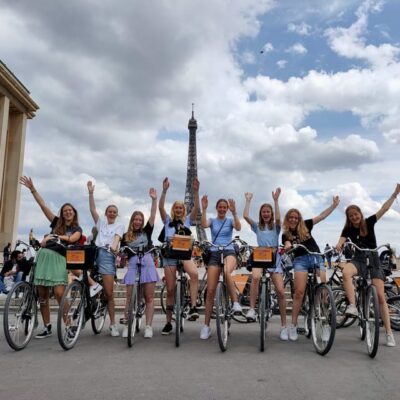
Paris Local Districts and Stories Off the Beaten Track Guided Bike Tour
Read our review →
Highlights of Paris Bike Tour w/ a Local Guide (English or Dutch)
Read our review →
Versailles Bike Tour with Market, Gardens & Guided Palace Tour
Read our review →Browse the lists this tour appears in