
Reviewed · WINE TOURS
Saint-Émilion: 2 hours – Visit of the vineyard, the cellar and tasting
At Château Haute-Nauve, wine is not presented as a finished bottle behind glass. You walk through the vines, see the tanks and machinery, step into the barrel cellar, and then taste four wines that make more sense because you have followed their path. Florent and his mother, Marie-Anne, lead the visit, with English tours available.
I especially like the family-run setting and the practical look at modern vineyard problems, including crop-killing frosts and the estate’s use of a wind turbine. I also like the tasting lineup: a rosé, a Saint-Émilion, and two Grand Cru wines give you a useful comparison for $30.04.
The main consideration is the fixed two-hour format. You get a focused introduction rather than a long estate visit, and the tour begins at Château Haute-Nauve, about which the supplied information gives no public-transport or transfer details. Plan your arrival carefully.
Key points at a glance
- Meet a fourth-generation wine family: Florent or Marie-Anne explains how the estate has changed across generations.
- Walk among different vineyard plots: You learn how vineyard work changes from season to season.
- See practical problem-solving: A wind turbine, a six-meter wine bottle, frost protection, sustainability, and new wines are part of the story.
- Follow wine from harvest to barrel: The winery visit covers fermentation, pumping, pressing, and aging.
- Taste four Château wines: The lineup includes one rosé, one Saint-Émilion, and two Saint-Émilion Grand Cru wines.
- Keep the group manageable: The maximum is 15 people, with free cancellation up to 24 hours before the start time.
Starting at Château Haute-Nauve in Saint-Laurent-des-Combes
The experience begins at Château Haute-Nauve, 1 Haute Nauve, 33330 Saint-Laurent-des-Combes, France. This is in the Saint-Émilion wine area, but the meeting point is not described as being in the center of Saint-Émilion village, so you should check your route before setting out.
The tour lasts about two hours. That is long enough to cover the vineyard, winery, cellar, and tasting without turning into an all-day commitment. It also means the pace is likely to be purposeful. If you want a leisurely afternoon with several estates, this visit can fit neatly into your plans. If you want a full technical study of viticulture, you may find the time limit short.
The group can include up to 15 people. That is a useful middle ground. You are not getting a private visit, but the size is still small enough for questions and conversation. One English-language visit was described as a small group led by Florent, which is the sort of setting that suits a family estate.
English is offered, and the experience is also available in French. Florent leads English visits, while either Florent or his mother, Marie-Anne, may guide the tour. Their family connection matters here because the visit is not just a standard script about grapes. It includes the estate’s fourth-generation story and the decisions being made now.
More wine tours in France:
- Authentic Parisian Gourmet Food Tour with 10 Local Dishes & Wines
★ 5.0 · 4,754 reviews - Loire Valley Castles Day Trip from Paris with Complementary Wine
★ 4.5 · 3,907 reviews - Bordeaux: Cité du Vin Entry Ticket and Wine Tasting
★ 4.6 · 3,885 reviews
Walking the vineyard through the seasons
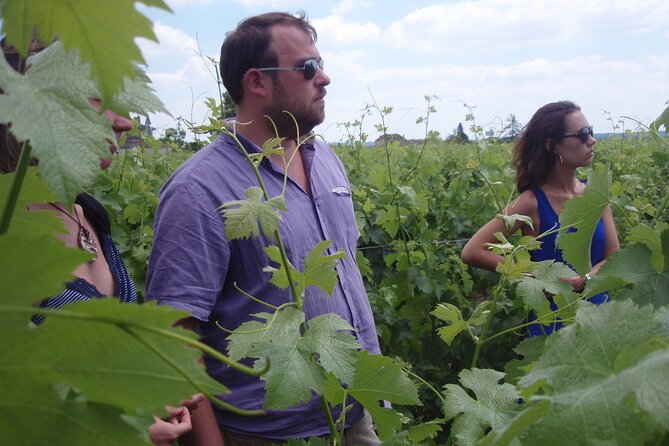
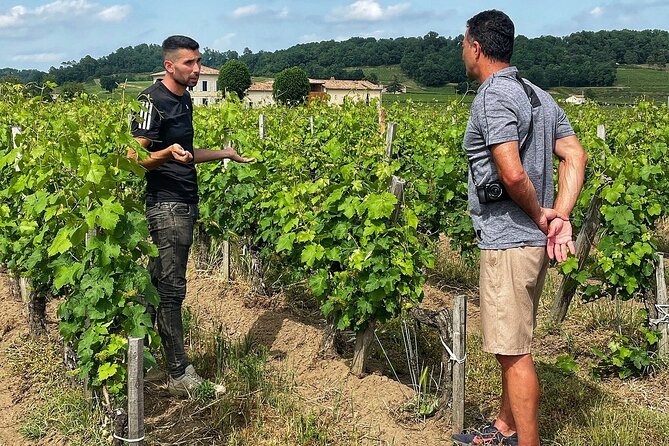
The first part takes you into the vineyard. This is where the visit earns its keep. Instead of hearing only that Saint-Émilion produces famous wine, you get an explanation of the vines, the different plots, and the work required throughout the year.
You learn how vineyard jobs change with the seasons. The tour material does not list every individual task, so I would not expect a full calendar of pruning, flowering, harvesting, and winter care. You can expect a practical explanation of how the growers manage the vines over the course of the year.
The different plots are important because they help connect the vineyard to the final wine. Even without a long lesson in soil science, seeing the estate’s separate areas gives you a better sense of why a Château may produce more than one wine. It also makes the tasting later more useful: you have already seen that the property is not one perfectly uniform patch of vines.
The guide also explains the specific character of the Saint-Émilion appellation. This is valuable if you are still learning French wine labels. Saint-Émilion is not simply a place name on a bottle. The appellation sets a regional context for the grapes, production, and identity of the wines you taste.
I like that the vineyard walk includes the estate’s present-day challenges. Crop freezes are a real concern for winegrowers, and the tour explains how Château Haute-Nauve is responding. You also hear about sustainability, diversification, and the development of new wines. That gives you a more honest picture than a polished story focused only on tradition.
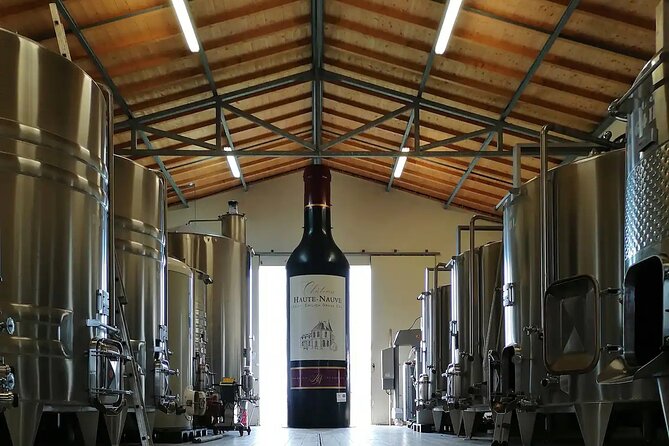
Look for the wind turbine during the visit. It is a clear sign that the estate is trying to address practical needs in a more sustainable way. You will also see a six-meter-high wine bottle, an unusual visual feature that adds a little fun to what could otherwise be a technical walk.
The bottle is not the reason to book the tour, of course. It is simply one of those memorable details that helps the estate feel like a working family property rather than a generic tasting room.
From grapes to wine in the winery
After the vines, you move into the winery. Here, the guide explains how the harvested grapes become wine, including fermentation, pumping, and pressing.
This section is especially useful if you usually skip the production side of a wine visit. Tasting rooms can make wine seem effortless. The winery shows the equipment and movement behind the bottle, giving you a clearer idea of the work that happens between harvest and the final pour.
Fermentation is a key stage, and the tour covers it as part of the wider production process. Pumping and pressing are also explained, so you are not left with a vague from-grape-to-bottle story. You see the machinery and large tanks needed after the harvest, then hear how each part fits into the process.
The experience also touches on wine marketing. That may sound less romantic than vineyard work, but it is part of running a small estate. Producing wine is only one job. A family Château must also present, sell, and develop its wines, and the visit gives you some sense of that wider business.
The information provided does not promise that you will see wine actively fermenting during your particular visit. Conditions change through the year, and some equipment may be more active at harvest than at other times. Still, the explanation of fermentation, pumping, and pressing should help you understand what the tanks and machines are doing.
The barrel cellar and the wait before tasting
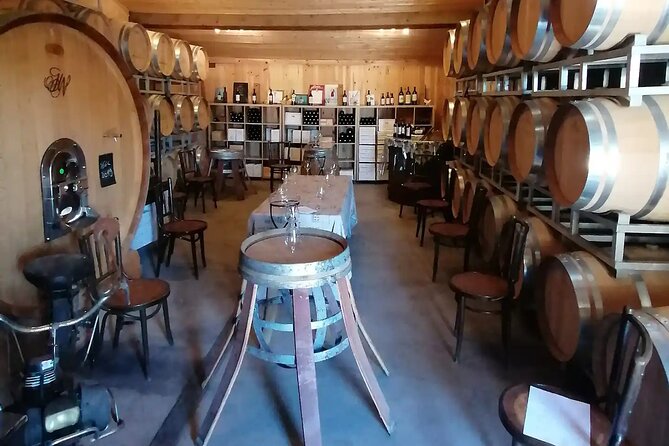
The route ends in the barrel cellar, where you learn how the wines are aged. This is a quieter part of the tour, but it completes the production story.
The point is not simply to look at barrels. You learn about the methods the Château uses during aging and how this stage affects the finished wine. It gives you a useful pause between the busy winery equipment and the tasting table.
The cellar visit also helps explain why two wines made at the same estate can taste different. Grape selection, production choices, and aging all play a part. You do not need to know technical wine terms to benefit from this section. The guide’s job is to connect what you see to what you later smell and taste.
For some people, the barrel cellar will be the most atmospheric stop. For others, it may be less exciting than the vineyard or tasting. That is a matter of taste, but the stop is well placed in the sequence because you reach the tasting with the full production process fresh in your mind.
More food and drink in France:
- Paris: Seine Cruise & Crepe Tasting near the Eiffel Tower
★ 4.4 · 11,231 reviews - Normandy D-Day Small-Group Day Trip with Omaha Beach, Cemetery & Cider Tasting
★ 5.0 · 2,786 reviews - Paris: Illuminated Evening River Cruise & Waffle Tasting
★ 4.1 · 2,697 reviews - Montmartre Hill French Gourmet Food and Wine Tasting Walking Tour
★ 5.0 · 2,588 reviews
Four wines, including two Saint-Émilion Grand Cru
The final part is a guided tasting of four Château wines. The stated lineup includes a rosé, a Saint-Émilion, and two Saint-Émilion Grand Cru wines.
That is a sensible range for a short visit. The rosé gives you an easy point of comparison, while the Saint-Émilion and Grand Cru wines let you explore different expressions from the estate. You are not tasting one bottle in isolation. You are comparing four wines made under the same Château name.
The two Grand Cru wines are the strongest value point in the tasting. Grand Cru is an important term on the Saint-Émilion label, and trying two examples gives you more than a token introduction. You can compare them with the regular Saint-Émilion wine and consider what changes in style and price might be reflected in the glass.
A guided tasting also makes the experience more useful for people who are not confident with wine. You can ask what to notice and hear the producer’s explanation of the wines. The tasting is not presented as a meal, so do not book this expecting lunch or substantial food. The included item is the wine tasting itself.
The tasting can also be a practical buying opportunity. One person gave the visit as a gift to their parents, who enjoyed it and left with wine. The tour information does not state what bottles are available for purchase or whether shipping is offered, so ask at the Château if you want to take something home.
What the guides add to the visit
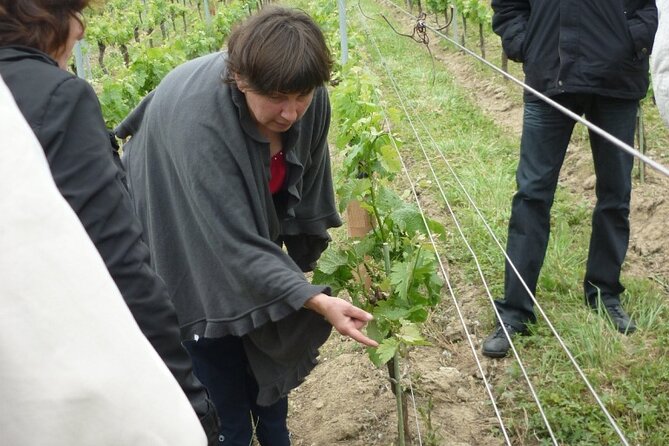
Florent is the guide most clearly associated with the English-language experience. The supplied feedback describes him as humorous, friendly, professional, and able to explain the process from vine to bottle in an approachable way.
That combination is useful. A guide who knows the technical side but cannot explain it plainly can make a winery visit feel like a lecture. Florent’s style appears to lean toward conversation and ease, which suits a small group.
Marie-Anne may also lead the tour. As Florent’s mother and part of the fourth generation of the family estate, she brings the family story from a direct source. The exact guide is not guaranteed, so book this for the Château and format rather than for one specific personality.
French-language visits are also available. The information provided confirms English as an offered language, so English speakers should select the correct option when booking and check the confirmation once received.
Is $30.04 a fair price?
At $30.04 per person, the value is good if you want more than a basic tasting. You receive about two hours of guided time, a vineyard walk, an explanation of the Saint-Émilion appellation, a winery visit, a barrel-cellar visit, and four wines.
The price looks stronger because two of the wines are Saint-Émilion Grand Cru. You are also meeting a family producer and seeing the working side of the estate rather than only sitting at a counter. For a first winery visit in the region, that combination covers a lot.
The value is less obvious if you already have a strong understanding of wine production and mainly want a large tasting flight. In that case, the vineyard and equipment tour may feel basic. The experience is aimed more at curious drinkers who want context with their wine.
I would also factor in transport costs. The meeting point is at the Château in Saint-Laurent-des-Combes, and no transfer service is listed. If you need a taxi or private driver, your total cost will be higher than the ticket price.
Timing, group size, and practical planning
The tour is booked around 12 days ahead on average, so you do not need to reserve months in advance based on the information provided. Still, English tours may have fewer spaces than French ones, and the group limit is 15 people. I would book before finalizing the rest of your day.
Confirmation is sent within 48 hours, subject to availability. Check that confirmation carefully for the date, time, language, and meeting point.
Wear shoes suitable for walking through a vineyard and winery. The experience includes outdoor vineyard time and indoor production areas, but the supplied details do not specify the ground surface or weather arrangements. A light layer is sensible because cellar and winery areas can feel different from the vineyard.
Most people can participate, and service animals are allowed. The information does not provide detailed mobility notes, so anyone with access needs should contact the provider before booking.
You can cancel for a full refund up to 24 hours before the start time. Changes or cancellations inside that window are not accepted for a refund, and the cut-off follows local time. The experience also requires a minimum number of participants, so if that minimum is not met, you are offered another date or experience, or a full refund.
Who should book this Saint-Émilion visit?
I would choose this tour if you want a clear introduction to wine production without giving up half a day. It suits couples, small groups, first-time wine visitors, and anyone who wants to understand what sits behind a Saint-Émilion label.
It is also a good choice for an English-speaking visitor who values a friendly guide and a family connection. The mix of vineyard work, production equipment, cellar aging, and tasting gives you a complete outline in a compact format.
Families should check the alcohol and walking details before booking. The tour is built around wine tasting, and the supplied information says most travelers can participate, but it does not list a child-specific program.
I would look elsewhere if you want a large historic estate, a formal luxury setting, a full meal, or a long private tasting. None of those features is promised here. This is a practical, personal visit to a working family Château.
Should you book Château Haute-Nauve?
Yes, if you want to see the full path from vineyard to bottle and taste four wines at the end. The family-led format, English option, and two Grand Cru wines make $30.04 a reasonable price, especially for visitors who want context rather than a quick pour.
Book it with realistic expectations. You will spend about two hours at one estate, not an entire day touring Saint-Émilion. Arrange your own way to Château Haute-Nauve, confirm your language and time, and leave room in your schedule for the tasting. For a focused introduction to the region’s wine, this is an easy choice.
FAQ
Where does the tour begin?
The tour begins at Château Haute-Nauve, 1 Haute Nauve, 33330 Saint-Laurent-des-Combes, France.
Where does the tour end?
The experience ends back at the meeting point at Château Haute-Nauve.
How long does the Château Haute-Nauve tour last?
The tour lasts approximately two hours.
Is the tour offered in English?
Yes. The tour is offered in English, and French-language visits are also available.
Which wines are included in the tasting?
The tasting includes four Château wines: one rosé, one Saint-Émilion, and two Saint-Émilion Grand Cru wines.
Can I cancel for a full refund?
Yes. You can cancel at least 24 hours before the local start time for a full refund. Cancellations or changes made less than 24 hours before the start time are not accepted for a refund.
Just added in France
- Provence : Aix en Provence, Cassis and Marseille Private Tour★ 4.5 · 53 reviews
- Private French Pastry Class in Marseille★ 5.0 · 90 reviews
- Picturesque Luberon – From MARSEILLE★ 5.0 · 36 reviews
- Marseille Walking food and culture tour 3 hour Private tour★ 4.0 · 36 reviews
- Market & Perched Villages of the Luberon Day Trip from Marseille★ 5.0 · 85 reviews
- Marseille Guided Tour for 2.5 Hours with a Bilingual Local Guide★ 5.0 · 36 reviews
- Marseille Guided Tour for 4 Hours with a Bilingual Local Guide★ 5.0 · 105 reviews
- Private Full Day Wine Tour in Provence From Marseille cruise port★ 5.0 · 32 reviews
Wine Tours, compared.
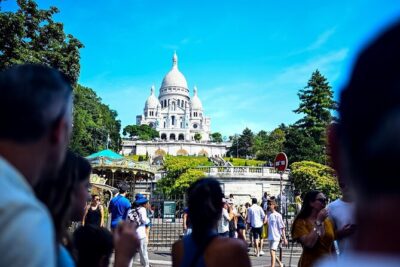
Authentic Parisian Gourmet Food Tour with 10 Local Dishes & Wines
Read our review →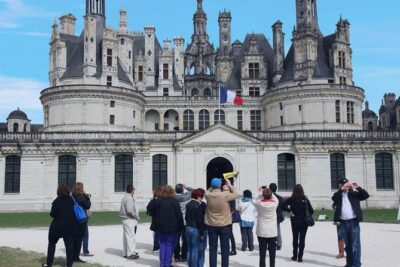
Loire Valley Castles Day Trip from Paris with Complementary Wine
Read our review →
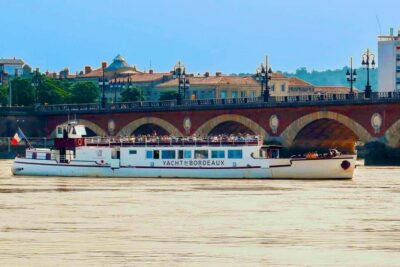
River Garonne Cruise with Glass of Wine and Canelé
Read our review →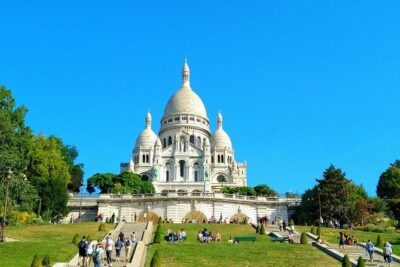
Montmartre Hill French Gourmet Food and Wine Tasting Walking Tour
Read our review →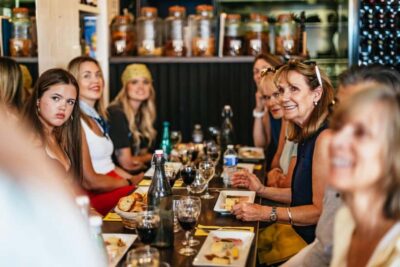
Montmartre Cheese, Wine & Pastry Guided Walking Tour
Read our review →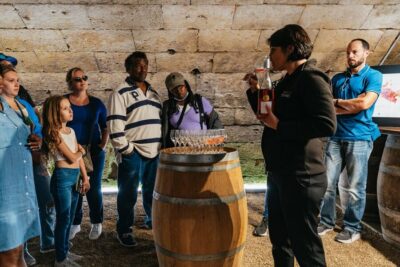
Loire Valley Castles Day Trip With Wine Tasting
Read our review →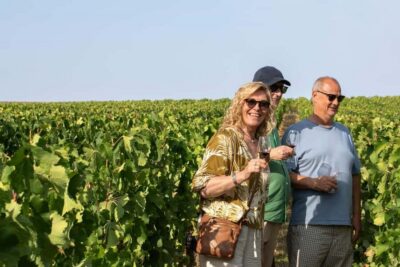
Afternoon Saint-Emilion Wine Tasting & snack
Read our review →Browse the lists this tour appears in