
Reviewed · FRANCE
Entrance ticket for guided tour of the Maginot Line at the Michelsberg
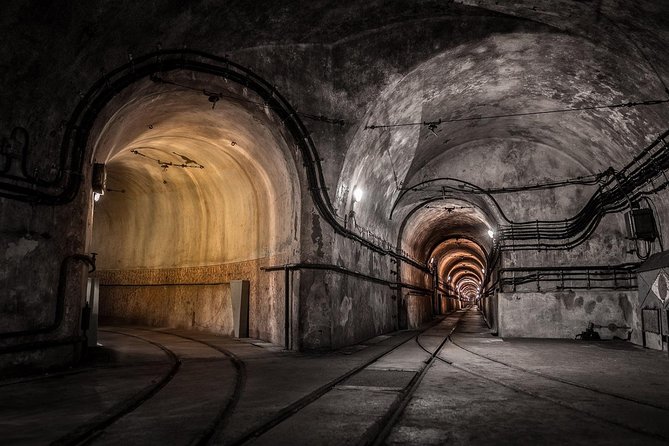
The most striking part of this tour is the sheer scale underground. At Ouvrage Michelsberg, you walk through a fortress of concrete and steel built to resist attack, then see how the site was later brought back into military service during the Cold War. It is not a polished museum visit. It is a real fort, with long galleries, machinery, rooms, and the hard-edged atmosphere of a working military installation.
I like two things right away: the two-hour guided format gives the fort enough time to make sense, and the small price of $9.29 makes this one of the better-value history stops in Lorraine. I also like that the tour covers both World War II and the Cold War, rather than treating the Maginot Line as a single, frozen moment in time.
The main consideration is comfort. Parts of the fort are about 30 meters underground, and one visitor found it cold even in April. The tour is offered in French or German, so check the language before booking if you do not speak either one.
Key points to know before you go
- A real underground fort: Walk through the Michelsberg galleries, rooms, equipment areas, and military installations.
- World War II and Cold War stories: Learn how the fort resisted wartime attacks and was later revived for possible Soviet conflict.
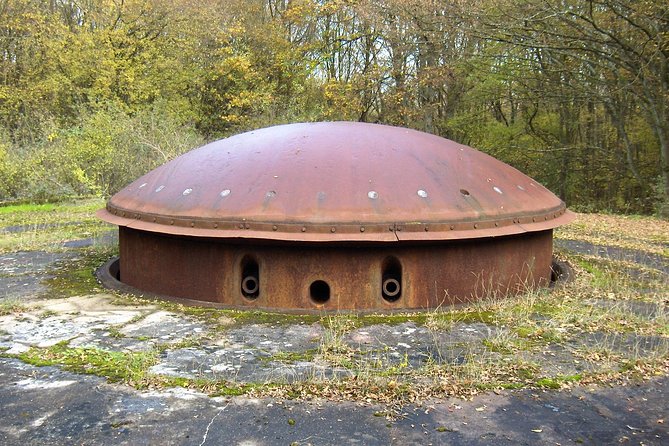
- A close look at engineering: See the huge turret and understand how one person could operate its movement.
- Power machinery in action: The route can include generators switched on, adding a practical sense of how the fort worked.
- French or German guidance: The group tour is available in both languages.
- Simple timing and meeting point: Start at 2:30 p.m. at Ouvrage Michelsberg in Ébersviller, then return there after about two hours.
Why the Michelsberg fort is worth your afternoon
The Maginot Line is often reduced to a familiar wartime story: France built a chain of defensive forts, Germany went around it in 1940, and the fortifications became symbols of a strategy that failed. Michelsberg gives you a more useful picture.
Here, the focus is not only on the political decision to build the line. You see the physical reality: vast concrete structures, steel defenses, underground passages, rooms for soldiers, and equipment designed to keep operating under attack. The fort makes military planning feel less like a map exercise and more like an enormous machine that people had to live inside.
That distinction matters. A short visit to an outdoor bunker can show you walls and gun openings. A guided tour through Michelsberg shows how the whole place functioned as a defensive system. You move through the underground galleries and turn into rooms connected to the daily work of the garrison.
I like this kind of visit because it gives history a human scale without pretending the site is comfortable. The fort was designed for survival, not beauty. Its concrete, metal, machinery, and confined routes tell you plenty before the guide even begins.
Other trips people book in France:
- Paris: Louvre Museum Timed-Entrance Ticket
★ 4.6 · 71,977 reviews - Disneyland® Paris 1-Day Ticket
★ 4.6 · 49,412 reviews - Paris: Versailles Palace and Gardens Full Access Ticket
★ 4.6 · 41,579 reviews
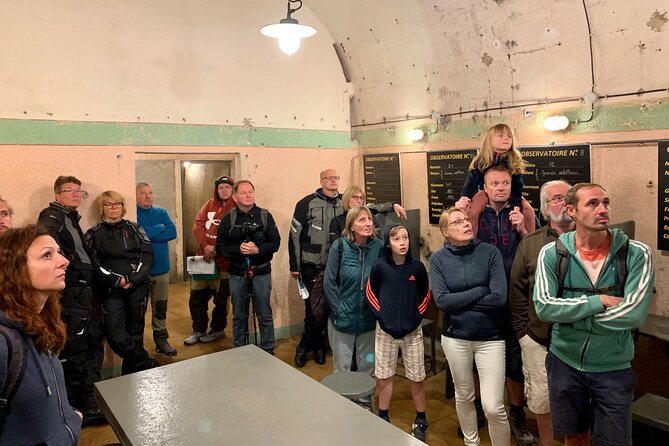
Entering Ouvrage Michelsberg at 2:30 p.m.
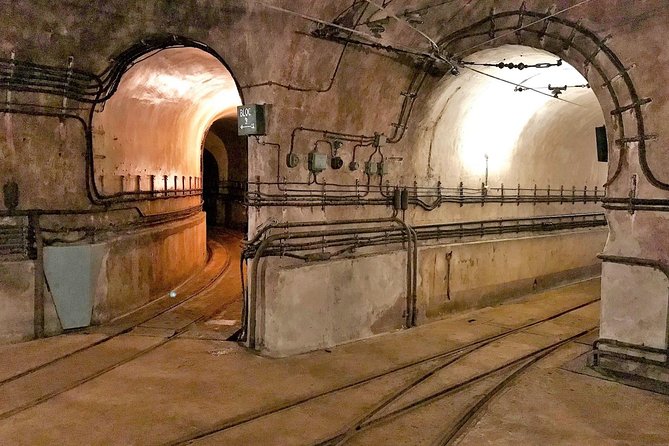
The meeting point is Ouvrage Michelsberg, on Route de Dalstein in Ébersviller, Lorraine. The tour begins at 2:30 p.m. and finishes back at the same place, so you do not need to arrange a separate pickup point or figure out a one-way route through the site.
The advertised maximum group size is 50 people. That is not a tiny private tour, but it is still a defined group rather than a free-for-all visit. Your guide leads the group through the fort and explains what you are seeing as the route unfolds.
The timing makes this easy to fit into a day of exploring the area. At two hours, it is long enough to cover the important parts without turning into an all-day commitment. Still, allow yourself enough time to arrive before 2:30 p.m. The fort is not the kind of place where arriving late guarantees an easy catch-up.
The tour is conducted in French or German. This is one of the most important practical details. If you can follow either language, the visit should give you much more than a self-guided walk. If you do not, the language choice could limit the value, since the main benefit comes from the guide’s explanations of the rooms, machines, and military purpose.
Walking through a fortress of concrete and steel
The main stop is the Michelsberg work, the term used for this type of major Maginot fortification. The route takes you through underground galleries and a series of rooms and equipment areas.
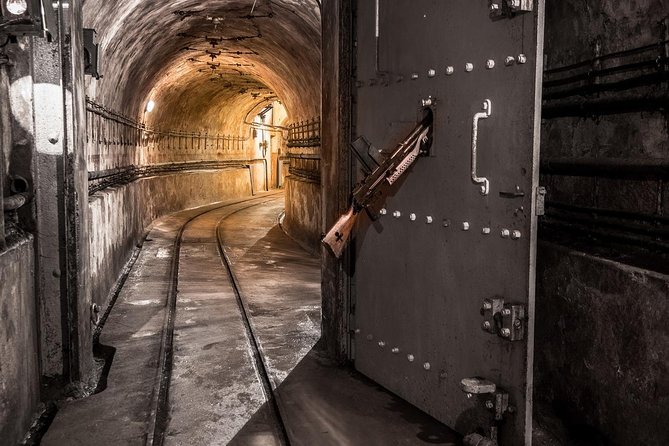
The scale is the first thing to take in. One part of the fort may look like a corridor, but the wider picture is a buried military complex. Concrete protects the structure overhead, while steel and mechanical systems support its defensive role. The guide connects the spaces so you understand how soldiers lived and worked within the fort.
You can expect the tour to focus on the practical side of military life. Where did soldiers spend their time? How did the fort’s equipment operate? How did the different rooms fit into the larger defensive plan? These questions turn a maze of passages into a place with a purpose.
That guidance is especially helpful in a fort like Michelsberg. Without explanations, underground rooms can blur together. A good guide gives each area a job and helps you picture the soldiers who had to maintain, operate, and defend the site.
The route is also a reminder that the Maginot Line was not simply a wall. It was a network of engineered positions, weapons, communications, power systems, and living areas. The tour’s strongest moments come when those pieces are explained together.
The engineering behind the giant turret
One of the most memorable details is the massive turret and the mechanism used to move it. The engineering involved is surprisingly advanced, especially when you consider the weight involved.
The tour explains how one person could move this enormous turret. That detail gives you a clear sense of the precision built into the fort. The designers were not only pouring concrete and installing weapons. They were solving difficult mechanical problems in a place where reliability mattered.
I find this kind of explanation more useful than a list of dates. A date tells you when something happened. A mechanical detail shows you how people thought, built, and worked. It also makes the fort easier to remember after you leave.
Look closely at the equipment rather than rushing from room to room. The Michelsberg experience is strongest when you notice the relationship between the heavy structure and the fine mechanical work inside it. The fort may look massive and blunt from the outside, but its operation depended on exact systems.
Same base, a different kind of day:
- Paris: Evening River Cruise with Music
★ 4.4 · 22,721 reviews - Paris: Eiffel Tower Entry Ticket with Optional Summit Access
★ 4.4 · 20,035 reviews - Paris: Eiffel Tower Summit or Second Floor Access
★ 4.3 · 17,248 reviews - Paris: Louvre Guided Tour with Reserved Access & Boat Cruise
★ 4.3 · 16,353 reviews
Power generators that make the fort feel active
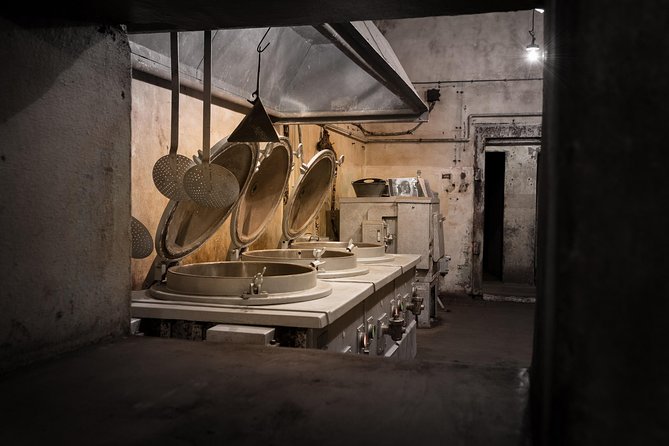
The underground power equipment adds another layer to the visit. You may see generators switched on, giving the tour a practical sense of how the fort once supported itself.
This is a valuable part of the experience because power is easy to overlook when you think about wartime defenses. Weapons and concrete get attention, but a fort also needed lighting, machinery, communications, and other basic systems. Generators helped turn an underground position into a functioning military site.
When machinery is operating, even briefly, the fort becomes easier to imagine as a place built for daily use. You are no longer looking only at silent rooms and old hardware. You can connect the equipment to the work required to keep the entire installation running.
The experience is not presented as a theme-park show, and that is a strength. The machinery supports the story rather than replacing it. Your guide explains what you are seeing, and the equipment gives you something physical to focus on.
What World War II adds to the story
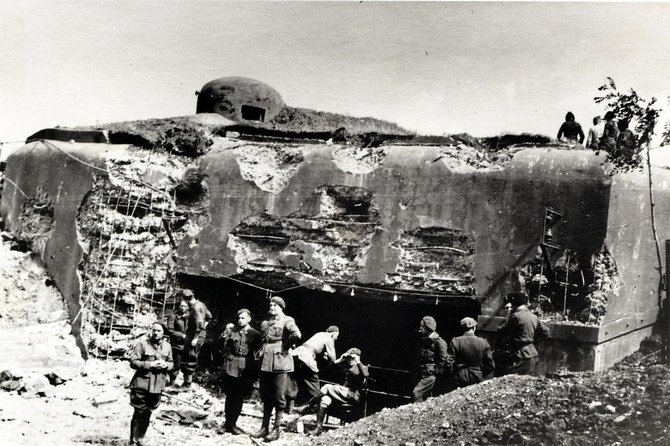
Michelsberg played a role in the defenses of the Maginot Line during World War II, and the tour explains how the fort resisted attacks. The site helps correct the simple idea that the entire line was useless because it did not stop the German advance across France.
The fortifications were built to withstand attack in their own area. Their construction, weapons, and underground systems reflect a serious attempt to protect France’s eastern frontier. The larger military strategy had weaknesses, but the individual forts could still be formidable positions.
At Michelsberg, you get to examine that difference. The fort itself was a powerful defensive work, even though the wider campaign developed in ways its builders did not expect. That makes the site useful for anyone who wants to understand the gap between strong engineering and broader military planning.
The guide’s job is especially important here. Concrete galleries alone do not explain strategy. The tour places the rooms and equipment into the events of the period, helping you understand why the fort existed and what it was meant to do.
The Cold War chapter is easy to miss
Many visits to Maginot Line sites stop with 1940. Michelsberg also covers its later Cold War role, when the fortifications were revived in anticipation of a possible Soviet advance.
This later chapter adds depth without changing the character of the site. The fort was not only a relic of the interwar period. Its military value was reconsidered in a new confrontation, with new fears and a different enemy.
I appreciate that the tour includes this period because it shows how military sites can outlive the conflict that created them. Concrete does not become irrelevant simply because one war ends. Governments may inspect it, adapt it, or consider it again when conditions change.
For you, the Cold War material also makes the visit less predictable. You are not just following a World War II timeline. You are seeing how the same fortifications remained part of European security thinking for years afterward.
Expect cool conditions underground
The fort’s underground setting is part of its appeal, but it also affects comfort. A visitor found it cold at 30 meters below ground even in April. That is entirely plausible for a deep concrete fort, so bring an extra layer rather than assuming a mild day above ground means mild conditions below.
The tour lasts about two hours. You will be on an extended guided route rather than making a quick stop at one room, so sensible footwear and comfortable clothing are a good idea. The supplied information does not specify the exact walking surface or facilities, so plan for a working historic fort rather than a fully modern museum.
Most people can participate, according to the available tour information. Still, the underground setting and length of the visit are worth considering if you have concerns about cold, confined spaces, or extended walking. The activity details do not provide a specific accessibility breakdown, so contact the provider if you need precise information before booking.
Is $9.29 a good value?
At $9.29 per person, this is an inexpensive guided history experience. The value is particularly strong because the price includes admission and about two hours of interpretation inside a major fortification.
You are not paying only to look at a concrete structure from the outside. The fee covers access to underground galleries, military rooms, equipment, and the guided explanation that ties them together. The possible generator demonstration and discussion of the huge turret add further substance.
Language is the main factor that affects the value. If you understand French or German, the tour should offer a full account of the fort. If neither language works for you, the low price may still justify the visit for the physical setting, but you would miss much of the explanation.
The maximum group size of 50 also matters. This is a public group tour, not a personal guide at your side. You may want to stay close enough to hear clearly, especially in long underground passages where sound can carry unevenly.
Who should book this Michelsberg tour?
I would point this tour toward people who like military history, engineering, Cold War sites, and places that still feel functional rather than polished. It also suits anyone looking for a focused two-hour stop in Lorraine at a modest price.
Families with older children may find the scale and machinery more engaging than a conventional museum display. The huge turret, underground routes, and power equipment offer concrete things to see while the guide supplies the historical context.
It is less suitable if you want a light sightseeing activity, a short photo stop, or a tour in English. The experience is built around a guided explanation in French or German, and the fort can be cold underground.
Book at least a little ahead if your schedule is fixed. The experience is booked on average 13 days in advance, which suggests that planning ahead is sensible, especially if you are visiting Lorraine on a tight itinerary.
Free cancellation is available up to 24 hours before the start time for a full refund. Changes or cancellations made less than 24 hours before the 2:30 p.m. start are not accepted for a refund.
Should you book the Ouvrage Michelsberg visit?
Book it if you want to understand the Maginot Line from inside, not just see a bunker on a roadside. The combination of underground galleries, soldier-life details, heavy machinery, a giant turret, World War II defenses, and Cold War reuse gives the visit real substance.
The low price makes the decision easier, but the language and temperature deserve attention. I would choose this tour if French or German is comfortable for you and you are happy to spend two hours underground in a cool military fort.
Skip it if you need an English-language tour, dislike enclosed historic sites, or want a quick and casual attraction. For the right visitor, though, Michelsberg offers an unusually direct look at the human and mechanical reality behind one of Europe’s most famous defensive systems.
FAQ
Where does the Michelsberg tour begin?
The tour begins at Ouvrage Michelsberg, Route de Dalstein, 57320 Ébersviller, France.
What time does the tour start?
The guided tour starts at 2:30 p.m.
How long does the experience last?
The tour lasts approximately two hours and ends back at the meeting point.
What languages are available?
The group tour is available in French or German.
How much does admission cost?
The listed price is $9.29 per person, with admission included.
Can I cancel for a full refund?
Yes. You can cancel at least 24 hours before the experience start time for a full refund. Cancellations or changes made less than 24 hours before the start time are not accepted for a refund.
Just added in France
- Private French Pastry Class in Marseille★ 5.0 · 90 reviews
- Picturesque Luberon – From MARSEILLE★ 5.0 · 36 reviews
- Provence : Aix en Provence, Cassis and Marseille Private Tour★ 4.5 · 53 reviews
- Marseille Walking food and culture tour 3 hour Private tour★ 4.0 · 36 reviews
- Market & Perched Villages of the Luberon Day Trip from Marseille★ 5.0 · 85 reviews
- Marseille Guided Tour for 2.5 Hours with a Bilingual Local Guide★ 5.0 · 36 reviews
- Marseille Guided Tour for 4 Hours with a Bilingual Local Guide★ 5.0 · 105 reviews
- Private Full Day Wine Tour in Provence From Marseille cruise port★ 5.0 · 32 reviews