
Reviewed · GIVERNY & MONET GARDEN TOURS
Giverny Monet House and Gardens Skip the line Walking tour
Giverny is where Claude Monet turned ordinary gardening into painting material. This tour takes you through the village that shaped his later life, then uses a special entrance for his pink house and famous gardens. The sight of the Japanese bridge, willow trees, and lily ponds makes the visit feel wonderfully close to the paintings, even though the original canvases are elsewhere.
I especially like the small-group format, capped at 15 people, and the useful village walk before entering the foundation. Guides such as Bernard, Marine, and Mwamiri have been praised for good stories and for keeping groups together. The main drawback is crowd control: one poor outing involved a larger group, translation problems, and a guide whose commentary was hard to hear.
Key points to know
- See Monet’s actual home and garden: Walk through the pink house, cheerful kitchen, Japanese print collection, flower beds, ponds, and bridge.
- Skip the regular entrance line: Your guide supplies the admission tickets and leads you through a special entrance.
- Start in Giverny village: The tour gives you context about Monet’s life, his artist friends, and the village’s change into an artists’ colony.
- Plan for seasonal changes: April through October can bring roses, hollyhocks, poppies, honeysuckle, water lilies, and other flowers, but October may look less full.
- Meet at La Capucine: The address is 80 Rue Claude Monet, and you should arrive 15 minutes early because latecomers may miss the group.
- Allow extra time for arrival: Pickup is not included, and getting to Giverny requires your own transport arrangements.
Why Giverny feels like a Monet painting
The strongest reason to book this outing is simple: you are not only looking at reproductions of Monet’s work. You are walking through the setting that supplied much of his subject matter.
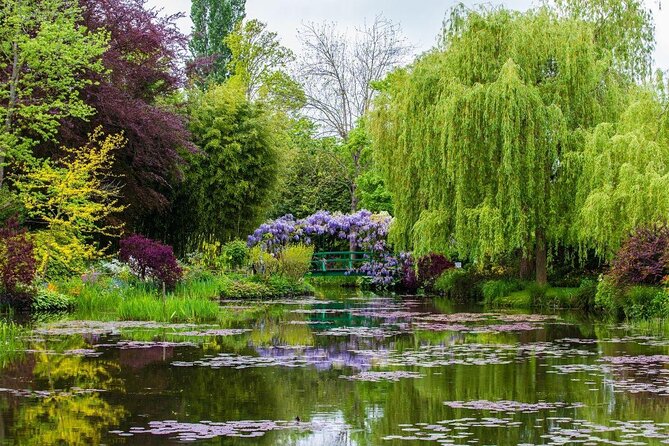
Monet lived in Giverny from 1883 until his death in 1926. His house sits beside gardens designed and tended to support his artistic eye. The flower beds shift with the season, while the Oriental Water Garden holds the features most people come to see: the lily ponds, weeping willows, and Japanese-style bridge.
I like the way the setting connects art to daily life. Monet did not paint an imaginary garden. He painted a place he knew intimately, and the visit lets you compare the real water, plants, and pathways with the familiar compositions.
Still, keep your expectations clear. The original Monet paintings are not displayed in the house. You will see quality replicas and the rooms where he lived, while the original works are held in museums. For me, that does not weaken the visit, but it changes the focus. This is a place-based art experience, not a museum visit.
More walking tours in Paris:
- Paris Top Sights Half Day Walking Tour with a Fun Guide
★ 5.0 · 2,893 reviews - Montmartre Hidden Gems and Scenic Highlights Walking Tour
★ 5.0 · 2,684 reviews - Montmartre Hill French Gourmet Food and Wine Tasting Walking Tour
★ 5.0 · 2,588 reviews
Starting with the village walk
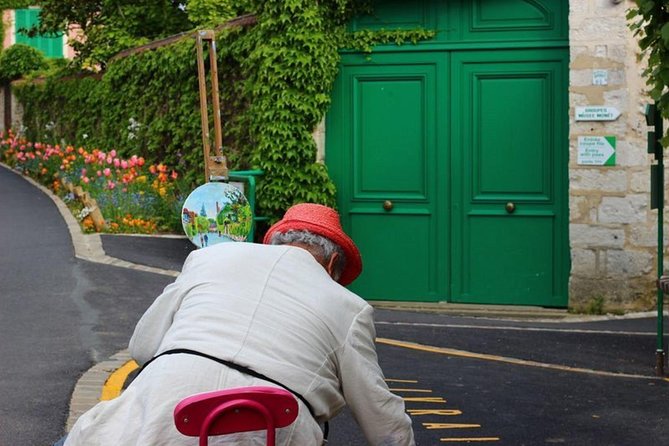
The meeting point is La Capucine Giverny at 80 Rue Claude Monet. The tour ends back at the same meeting point, so you can plan your arrival and departure around one fixed location.
The opening walk introduces the village before the crowds and flower beds take over your attention. Your guide explains Monet’s life in Giverny and how the quiet village became an artists’ colony by the late 1880s. John Singer Sargent, Paul Cézanne, and Mary Cassatt were among the artists connected with the place.
That village context matters. Without it, Monet’s house can feel like a preserved country home attached to a famous garden. With it, you get a better sense of why Giverny mattered to the Impressionist movement and why other artists came to spend time there.
You also have the chance to see the church cemetery, where Monet is buried. The tour data does not promise a formal cemetery stop, so do not count on a long visit there, but it is an important nearby detail if you have extra time after the guided portion.
Using the special entrance at Monet’s house
After the village walk, the guide leads the group to Monet’s house and gardens. Entrance fees are included, and the guide provides the tickets rather than asking you to purchase them at the foundation.
The skip-the-line feature is valuable during busy periods. Giverny is a major day trip from Paris, and spring holidays can bring heavy crowds. A special entrance cannot make the site quiet, but it can save you from spending part of a short visit in the regular admission queue.
Arrive early anyway. The meeting instructions ask you to be there 15 minutes before departure, and the tour starts promptly. If you arrive late, the group may already be inside the village or moving toward the entrance.
One practical point needs emphasis: this is not a tour operated by the Monet Foundation. UTG Experience acts as an independent guide agency, and the tickets come through the guide. That arrangement is normal for a guided visit, but it explains why you should meet the guide at the stated address rather than simply arriving at the house on your own.
Exploring the rooms inside Monet’s pink house
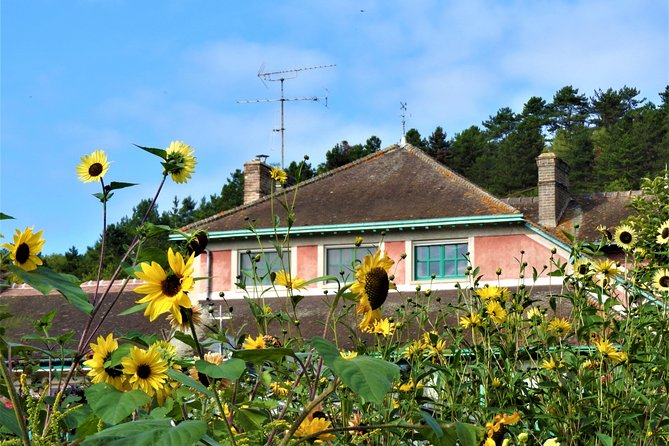
The house gives you a look at Monet’s domestic world. Its pink exterior is one of the most recognizable features in Giverny, but the inside has its own appeal.
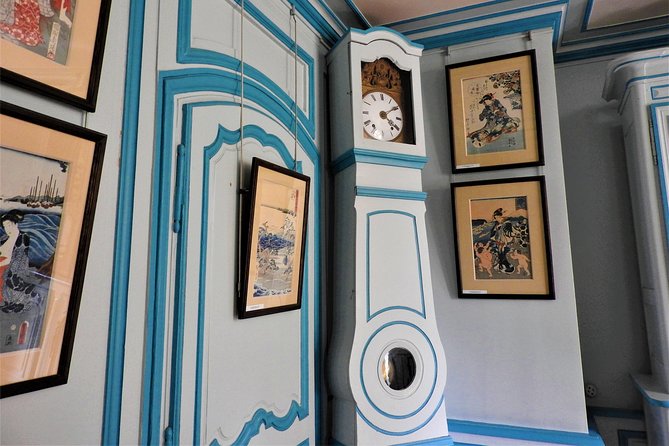
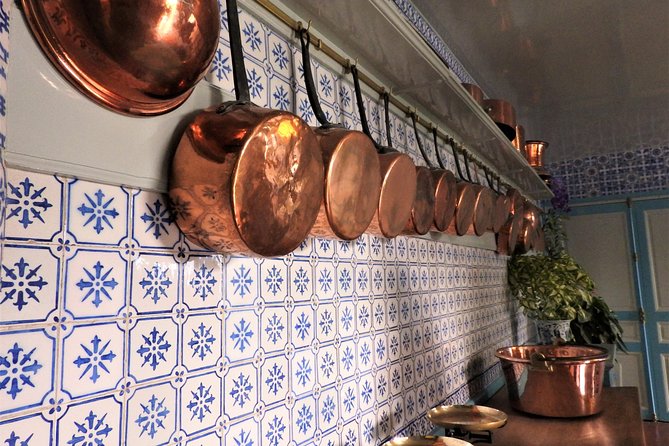
The kitchen is especially cheerful, with bright colors and lively tilework. You also see Monet’s collection of Japanese prints, reflecting the Japanese influence that appears in his garden design and artistic interests. These details help you picture the daily life behind the paintings.
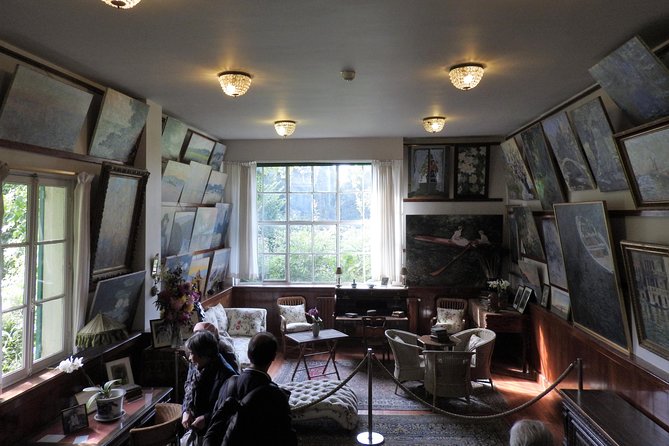
I would not expect a large collection of original art here. The house is valuable for its furnishings, rooms, prints, and connection to Monet’s working life. If your main goal is to stand before original Water Lilies paintings, this is the wrong stop by itself. If you want to understand where Monet lived and how his surroundings shaped his work, it earns its place on a Normandy visit.
A guide can add useful context that signs alone cannot provide. Bernard has been singled out for filling in gaps even for people who already know Monet well. Mwamiri has been praised for keeping a group moving while offering plenty of background. These names are not a guarantee of your assigned guide, but they show the kind of storytelling the tour can provide when the guide is strong.
Other trips out to Monet's garden from Paris:
- From Paris: Giverny Day Trip with Audio Guide or Live Guide
★ 4.3 · 2,372 reviews - From Paris: Giverny, Monet’s House, & Gardens Half-Day Trip
★ 4.5 · 2,174 reviews - Versailles Palace and Giverny Monet House Visit with Lunch
★ 4.0 · 1,948 reviews - Giverny Monet’s Home and Gardens Half Day Tour from Paris
★ 4.5 · 1,836 reviews
Walking through the flower gardens
The flower garden is the most colorful part of the visit. From April through October, it can feature wild roses, hollyhocks, poppies, and fragrant honeysuckle, with the exact display changing as the season progresses.
The gardens are carefully managed, but they should not feel like a static museum room. You move along paths bordered by flowers, trees, and planted beds, seeing the same type of changing light and color that attracted Monet.
May is a particularly appealing month based on the available seasonal feedback. The flowers can be bursting into bloom, and the beds provide strong photo opportunities. Easter periods can also bring packed paths, so beautiful spring color may come with a large number of people.
October is more variable. Some autumn visits still offer striking photographs and plenty of flowers, while others find parts of the garden past their best. If you are choosing dates mainly for peak flower color, spring and early summer are the safer choices. If you prefer cooler weather and can accept a less predictable display, October can still work.
You should also remember that this is a walking tour. The garden paths and village route require you to stay with the group, and the tour lasts about two hours. Most people can participate, and service animals are allowed, but the experience is not designed as a leisurely full-day garden stay.
The Japanese bridge and lily ponds
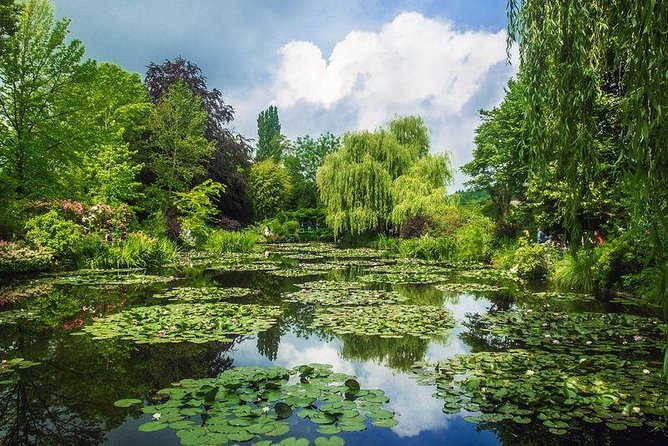
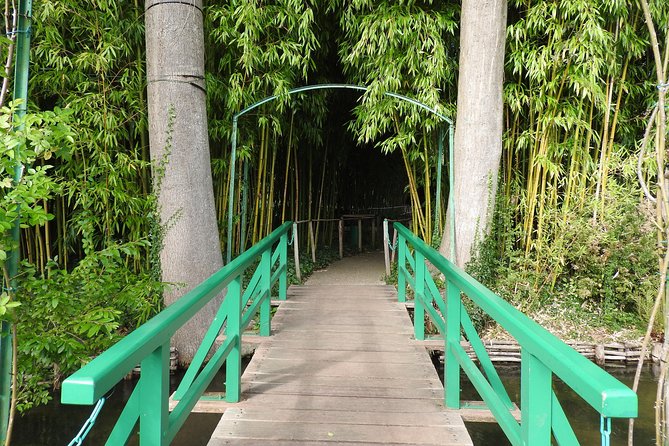
The Oriental Water Garden is the emotional center of the visit. Here you find the water lilies, willow trees, and Japanese bridge associated with Monet’s best-known garden paintings.
The bridge is familiar from reproductions, but seeing its scale and setting in person adds useful perspective. The paintings simplify and reorganize nature, while the real garden has paths, crowds, changing weather, and many competing details. I like that contrast. You can appreciate Monet’s eye more clearly after seeing the raw material he transformed.
The water garden is also the most popular photo area. You will want time to stop, look, and take pictures, but the group may need to keep moving so everyone receives the planned commentary. The guide’s job is partly to explain the scene and partly to prevent a small group from scattering through a crowded garden.
This is where the small-group promise matters. A group of no more than 15 should be easier to hear and manage than a large coach party. One negative experience described 22 people, French and English commentary mixed together, and headphones that cut out for anyone at the back. That appears to be an exception to the stated maximum, but it is a useful warning: group size and audio arrangements can affect the quality of a garden tour.
How the guide affects the experience
The guide can make the difference between a pleasant visit and a rushed walk through pretty flowers.
The best feedback points to guides who tell stories, show images, answer questions, and help the group move through the crowds. Marine has been praised for good stories and for watching the group closely. Another guide known as Virginia was credited with explaining Monet and the gardens clearly, while Bertrand was described as engaging, kind, and very well informed.
There are also clear warnings. One guide was criticized for speaking only occasionally and not using a headset, which made the commentary difficult to follow. Another outing was supposed to be in English but required translation for French-speaking participants, leaving the guide overwhelmed.
I would book this tour for the guide’s context, not only for line access. If you prefer to wander at your own pace, take unlimited photos, and read the signs quietly, independent admission may suit you better. The guided option is strongest when you want Monet’s life and artistic connections explained as you go.
Getting to Giverny without pickup
Transportation is not included. You must reach the meeting point on your own, and there is no hotel pickup or drop-off.
Giverny is often visited from Paris, but the tour does not provide a Paris transfer. One practical route described by a participant involved taking the train from Paris to Vernon, then a shuttle to Giverny. If you use public transportation, check the current shuttle details before setting out because the tour information does not include a timetable.
Driving creates a different concern. Parking can be difficult, especially when the site is busy. One failed visit involved a long search for a parking place and cars blocking others. I would allow plenty of arrival time and avoid cutting it close to the 15-minute early check-in requirement.
The meeting point is near public transportation, and most people can participate. Still, the lack of included transport means this is not a fully packaged day trip from Paris. You are buying the village walk, guide, and entrance access, not the journey to Giverny.
Is the $63.86 price fair?
At $63.86 per person, the price is reasonable if you value a guide and want to avoid the regular entrance line. It includes the local guide and admission to Monet’s house and gardens, which are the two major costs tied to the experience.
The value is less clear if you already know Monet’s story and are comfortable organizing your own visit. Independent entry gives you more freedom, and you can spend as long as you wish in the garden rather than following a two-hour schedule.
For me, the best case for paying the price is a first visit during a busy season. The guide gives you a framework, the special entrance may save time, and the small group should make the commentary more personal. The weaker case is a quiet off-season visit when queues are short and you would rather explore alone.
The experience is commonly booked well in advance, with an average booking lead time of 39 days. That suggests you should not leave a popular spring date until the last minute, particularly if your Paris schedule is fixed.
Who should book this Giverny tour?
I would recommend it to:
- First-time visitors who want Monet’s life explained on site
- Art lovers who want to connect paintings with the garden that inspired them
- Visitors with limited time who value skip-the-line entry
- Families who benefit from a guide keeping everyone together
- Anyone visiting during spring holidays or another busy period
I would think twice if you want a slow, independent garden visit. The group schedule limits how long you can linger at one flower bed or photo spot, and the experience depends heavily on the assigned guide.
Wear practical walking shoes and bring patience for crowds. You may also want time after the tour to enjoy the village, since some outings leave free time for further exploration. Food and drinks are not included, so plan those separately.
Cancellation and booking details
You receive confirmation at booking, and free cancellation is available until 24 hours before the scheduled start time. Canceling less than 24 hours in advance does not qualify for a refund, and changes inside that period are not accepted.
The tour requires a minimum number of participants. If UTG Experience cancels because that minimum is not reached, you can choose another date or experience, or receive a full refund.
Should you book it?
Book this tour if you want the most help making sense of Giverny, especially on a crowded spring day. The house, kitchen, Japanese prints, flower beds, lily ponds, and bridge are worth the trip, and a good guide can turn beautiful scenery into a clearer story about Monet’s working life.
Skip it if you prefer complete freedom or are mainly seeking original paintings. For the best balance, choose a spring date, arrive early at La Capucine, confirm your transport from Paris or elsewhere, and treat the guide as the reason for paying more than independent entry. That is where this two-hour visit offers its real value.
FAQ
How long does the Giverny Monet House and Gardens tour last?
The tour lasts approximately two hours, including the village walk and the visit to Monet’s house and gardens.
Where does the tour meet?
Meet your guide at La Capucine Giverny, 80 Rue Claude Monet, 27620 Giverny, France. The activity ends back at the meeting point.
Are entrance fees included?
Yes. Admission to Monet’s house and gardens is included, and the guide provides the tickets.
Does the tour include transportation from Paris?
No. Pickup and drop-off are not included. You must arrange your own transportation to the meeting point in Giverny.
How many people are in the group?
The advertised maximum is 15 travelers. You should confirm the group arrangements at booking if a small group is especially important to you.
Can I cancel for a full refund?
Yes, if you cancel at least 24 hours before the scheduled start time. Cancellations made less than 24 hours in advance are not refunded.
Just added in Paris
- Private Transfers in Paris★ 5.0 · 75 reviews
- Disneyland® Paris 1 Day Ticket with Transport from Paris★ 3.5 · 302 reviews
- Personalized Transport service from Disneyland to Paris★ 5.0 · 63 reviews
- CDG – Euro Disney – CDG Two Way Private Shuttle Transfer★ 5.0 · 233 reviews
- Monet’s Gardens & House-Private Giverny Tour From Paris★ 4.5 · 137 reviews
- Guided tour Monet’s house and gardens/small group★ 4.5 · 68 reviews
- Monet’s House and Garden & Giverny Village★ 4.5 · 39 reviews
- Fontainebleau Forest Half Day Hot-Air Balloon Ride with Chateau de Fontainebleau★ 4.5 · 53 reviews
Giverny & Monet Garden Tours, compared.

Giverny Day Trip with Audio Guide or Live Guide
Read our review →
Giverny, Monet’s House, & Gardens Half-Day Trip
Read our review →
Versailles Palace and Giverny Monet House Visit with Lunch
Read our review →
Giverny Monet’s Home and Gardens Half Day Tour from Paris
Read our review →
Giverny Small-Group Half Day Trip with Monet’s Gardens from Paris
Read our review →
Giverny and Versailles Palace Guided Day Trip
Read our review →
Giverny and Monet’s House Half Day Trip from Paris Guide or Audio
Read our review →
Giverny and Versailles Small Group Day Trip from Paris with Lunch
Read our review →Browse the lists this tour appears in