
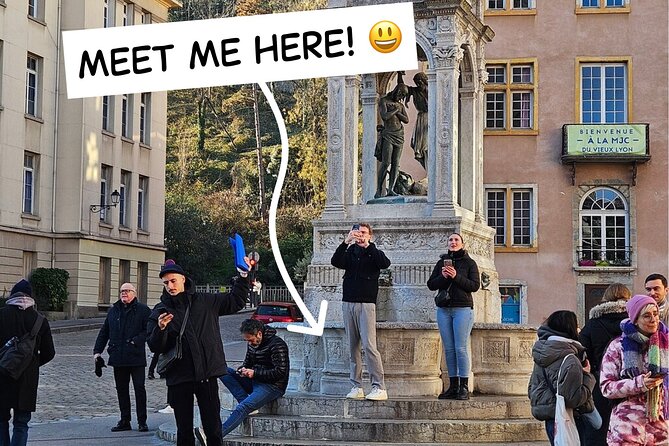
Reviewed · WALKING TOURS
Lyon’s History and Must-Sees with a Local! (English Walking Tour)
Lyon reveals its best stories on foot, and this tour links them neatly from Saint-Jean Cathedral to Place Bellecour. In less than two hours, you move from Roman Lugdunum and Renaissance passageways to bouchon cooking, the French Resistance, and Antoine de Saint-Exupéry, Lyon’s famous author of The Little Prince. Quentin Dubourg leads the walk in English with plenty of humor and local context.
I like the clear eastward route because it gives you a useful first look at the city without wasting time on transport. I also like the food and wartime stops, which keep this from being just a parade of pretty buildings. The main thing to consider is pace: one hour and 45 minutes is enough for an introduction, not a full visit to Lyon’s museums, churches, or Fourvière hill.
Key points at a glance
- Roman beginnings at Saint-Jean: Learn how Lyon began as Lugdunum, an important Roman city and capital of the Gauls.
- Traboules in Vieux Lyon: Walk through Lyon’s famous passageways and hear the stories tucked behind Renaissance façades.
- Food with a local angle: Get the background on bouchons, traditional recipes, Paul Bocuse, and Mère Brazier.
- A serious wartime chapter: Follow the Saône to the courthouse and hear about Jean Moulin, Klaus Barbie, and Lyon’s role in the Resistance.
- A practical city orientation: Finish at Place Bellecour, a useful base for restaurants and onward sightseeing.
- Exceptional price: At $4.64 per person, the tour is priced like a low-cost introduction, with tipping invited if you feel the walk earned it.
Starting at Saint-Jean, where Lyon’s story begins
Meet Quentin at Place Saint-Jean at 2:00 pm. This puts you in the heart of Vieux Lyon, a convenient starting point for the old town and a good place to begin understanding how the city developed.
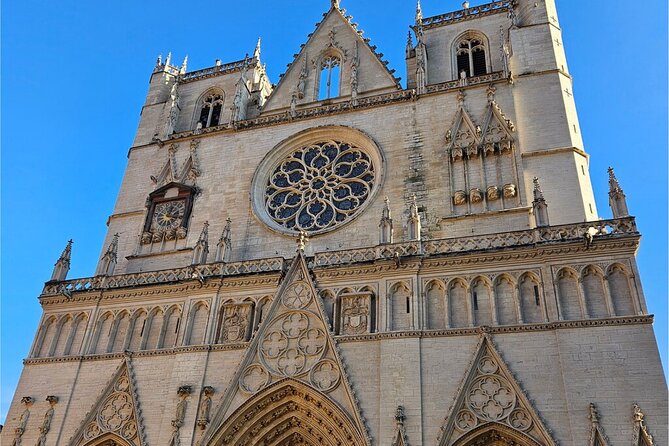
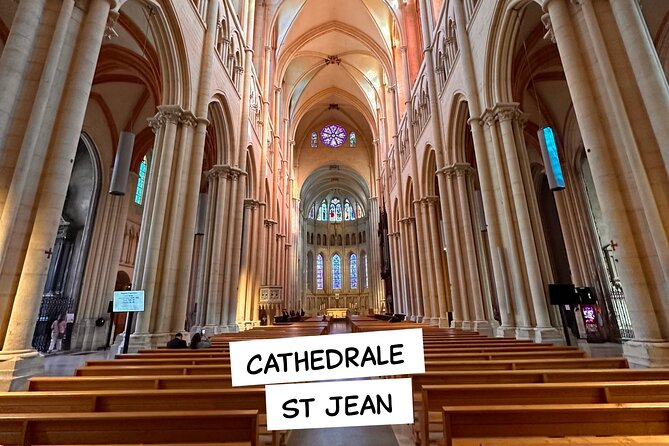
The first stop is Cathédrale Saint-Jean-Baptiste de Lyon. Quentin explains Lyon’s ancient beginning as Lugdunum, founded under Roman rule and made the capital of the Gauls. That opening gives the rest of the walk a useful frame: Lyon is not simply a pretty Renaissance quarter beside a river. It is a city shaped by Roman power, religious life, trade, food, war, and modern redevelopment.
You also hear about the Basilica of Fourvière before going inside Saint-Jean Cathedral. The stop is listed as free, so you are not paying an admission fee for the church visit. Ten minutes is enough for a focused introduction and a look inside, but not a long architectural study. If you want time for every chapel, detail, and stained-glass window, plan to return on your own.
I like this beginning because it avoids launching straight into a list of dates. You get the broad story first, then move into the streets where later chapters of Lyon’s past are easier to picture.
More walking tours in Lyon:
- Vieux Lyon Cultural & Historical Walking Guided Tour (English)
★ 5.0 · 942 reviews - Lyon: Private Walking Tour of “Traboules” in the Old Town
★ 5.0 · 866 reviews - Lyon: City Highlights Walking Tour
★ 4.9 · 847 reviews
Thirty minutes among Vieux Lyon’s traboules
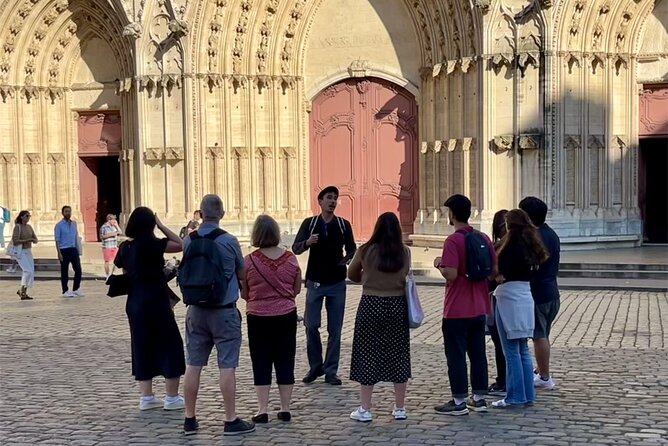
The longest part of the walk takes place in Vieux Lyon, a Renaissance quarter known for its narrow streets, courtyards, and traboules. These passageways connect streets through buildings and courtyards, and they are one of the city’s most distinctive features.
Quentin takes you through several traboules and points out details you could easily miss while walking alone. This is where his local perspective matters most. From the street, a doorway may look ordinary. Inside, the route can reveal a different side of the quarter, with architecture and old urban patterns that do not announce themselves from the main road.
Thirty minutes gives this section enough room to breathe. You are not merely stopping for a quick photograph before hurrying onward. At the same time, the walk does not promise access to every passageway in Lyon, and the tour is not a detailed architectural seminar. The aim is to help you recognize how the old quarter works and to give you ideas for further wandering.
This part should suit families and first-time visitors especially well. The passageways add a sense of discovery without requiring a museum visit, and Quentin’s light, funny style helps keep the history moving. Several comments about his humor and ability to draw people into the setting point to a guide who treats the group as part of the experience, not as a silent audience.
Rue du Bœuf and the story behind bouchon cooking
On Rue du Bœuf, the tour turns to Lyon’s food culture. The subject is not simply where to eat dinner. Quentin explains the story of the bouchon, Lyon’s traditional restaurant, along with some of the recipes associated with this style of cooking.
You also hear how Paul Bocuse and Mère Brazier helped bring Lyon’s cuisine wider attention. That pairing gives you a useful link between traditional local cooking and the chefs who made the city famous beyond France.
This stop lasts about ten minutes, so think of it as a food briefing rather than a tasting. No meal or food admission is included in the tour details. Still, the timing is useful. You are learning what a bouchon represents before choosing a restaurant later, rather than simply being told that Lyon is France’s gastronomic capital.
The end point is in the Presqu’île, where several restaurants are within a few minutes of Place Bellecour. That makes the food discussion practical. You can use the advice immediately after the walk, though the tour does not select or reserve a restaurant for you.
The Saône and Lyon’s difficult wartime past
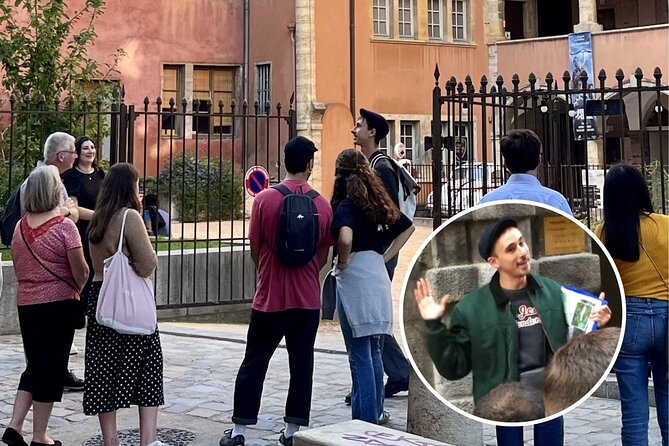
The mood changes at the historic Palais de Justice de Lyon. Here you see the Saône and hear about Lyon during World War II, when the city became an important center for the French Resistance.
Quentin covers Jean Moulin, one of the best-known figures in the Resistance, and Klaus Barbie, the Gestapo chief later tried in this courthouse more than 30 years after the war. The setting gives the subject weight. You are not hearing about wartime Lyon in an abstract room. You are looking at the river and a courthouse tied to the city’s memory.
This is one of the most valuable stops for anyone who wants more than surface-level sightseeing. Lyon’s old streets are attractive, but the city’s past also includes fear, resistance, betrayal, and justice long after the fighting ended. Ten minutes cannot cover the full wartime story, but it can point you toward a part of Lyon that many quick city walks leave out.
I would pay close attention here. The food and architecture sections are lively, while this chapter is more serious. That change helps the tour feel balanced. You get jokes and local color, but also a clear reminder that Lyon’s story is not only about beautiful façades and good meals.
Same base, a different kind of day:
- Lyon City Hop-on Hop-off Sightseeing Bus Tour
★ 4.0 · 1,614 reviews - Lyon: Musée de l’illusion Entrance Ticket
★ 3.9 · 1,023 reviews - Lyon Highlights & Secrets Walking Guided Tour (small group) including Funicular
★ 5.0 · 831 reviews - Highlights and Hidden Gems of Lyon Guided Walking Tour (English)
★ 5.0 · 750 reviews
Place des Jacobins and the Lyon of the nineteenth century
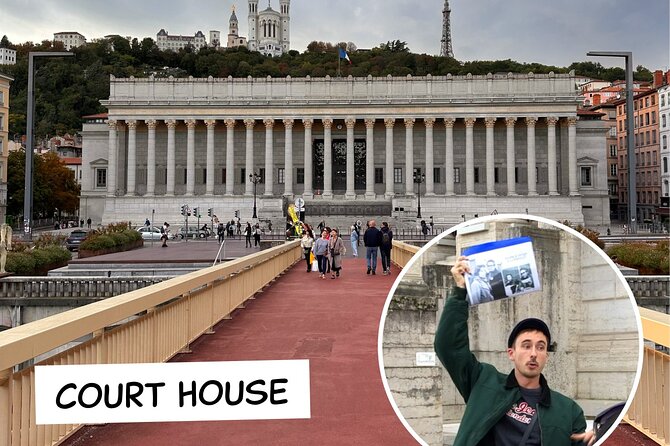
From the courthouse area, the route continues toward Place des Jacobins and nearby squares. Here the subject shifts to the Lyon that grew in the nineteenth century, when wealthy residents shaped new parts of the city.
This is a good point to compare the old quarter with the more formal streets of central Lyon. The change is not just visual. It reflects shifts in wealth, planning, commerce, and daily life. Quentin also talks about what it is like to live in Lyon today, which keeps the tour from becoming trapped in the past.
Fifteen minutes is a sensible amount of time for this section. You can take in the squares, hear how the neighborhood developed, and get a basic sense of modern Lyon without turning the tour into a lecture on urban planning.
I especially like the inclusion of present-day life. A local walking tour should help you read the city you are seeing now, not only memorize old events. This section also gives you a chance to notice how Lyon’s central districts fit together before the final stops.
Hôtel-Dieu, from hospital to public gathering place
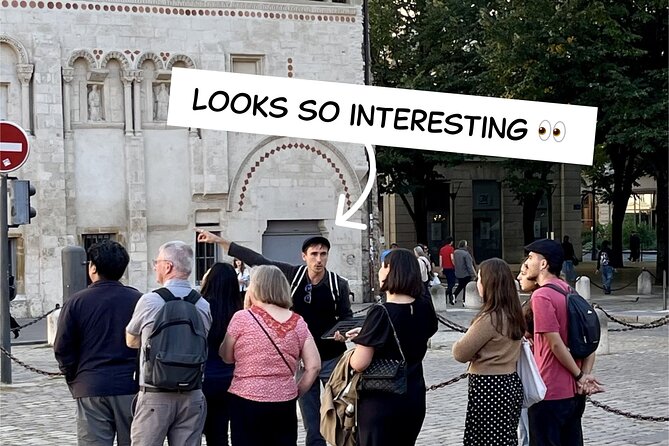
The walk then reaches Grand Hôtel-Dieu, a major Lyon building that served as a hospital for centuries. It has since been converted into a mall and commercial complex.
That change makes the building useful for understanding Lyon’s present-day redevelopment. You see an important institution from the city’s past in a new role, rather than visiting a preserved monument that has been frozen in time.
The stop lasts around ten minutes. Quentin shows you the building and explains its former purpose, but this is not a guided hospital tour or an interior history visit with extended access. Think of it as a concise architectural and social-history stop.
Because Hôtel-Dieu is now a place where you can continue eating, shopping, or simply looking around, it also makes a practical marker during your stay. If the building catches your interest, you can return after the tour with more time than the group schedule allows.
Finishing at Bellecour with Saint-Exupéry
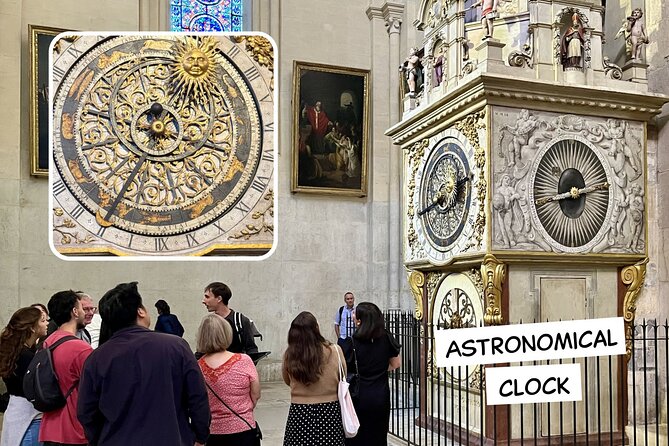
The tour ends at Place Bellecour, one of Lyon’s main squares in the city center. The finish is well chosen. You are no longer in the old town, and you are positioned in the Presqu’île, a central area from which you can reach other parts of Lyon.
Quentin shares lesser-known details about the square before ending at a statue honoring Antoine de Saint-Exupéry, the Lyon-born author of The Little Prince. This is a particularly nice final note because it connects the city to a writer known around the world, while also giving you a detail many people might otherwise walk past.
The stop lasts about ten minutes. You will not cover every corner of the square or visit a Saint-Exupéry museum, but you will leave with a clear landmark and a story to remember.
The location also works well for the rest of your day. The meeting point and end point are in different districts, but both are central. Once you finish, you can walk to nearby restaurants, continue exploring the Presqu’île, or use public transport to reach another part of Lyon.
What Quentin’s guiding style adds
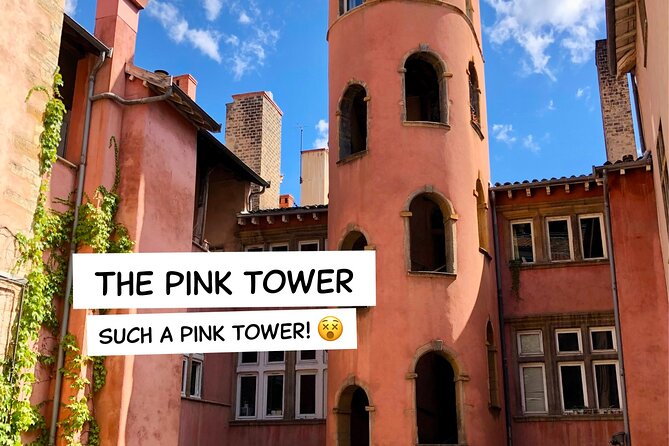
The supplied feedback gives Quentin a consistent profile: funny, energetic, warm, and able to connect buildings with the events that took place around them. That matters on a short walk. A guide can know a great deal and still make an hour and 45 minutes feel like a list. Quentin’s style appears better suited to keeping the group involved.
His approach also seems useful for people who want a social experience. The tour allows up to 20 participants, large enough to meet people from different countries but small enough for a walking group to remain manageable. It is not a private tour, so you should expect a shared pace and shared questions.
The English format makes the walk accessible to international visitors. Most people can participate, and service animals are allowed. The tour is near public transportation, which helps with reaching Place Saint-Jean and leaving from Place Bellecour.
One detail to keep in mind is the tip-based spirit of the experience. The listed price is only $4.64 per person, and Quentin invites you to tip what you think the tour was worth. At that price, the booking cost is remarkably low, but you should treat the tip as part of the social contract if the guide gives you a useful, entertaining introduction to Lyon.
Is $4.64 good value for Lyon?
Yes, provided you understand what you are buying. The price covers a guided walk of about 1 hour and 45 minutes, with no listed admission charges at the stops. You receive an overview of several major parts of Lyon, including old-town architecture, food traditions, wartime history, central squares, and a famous local author.
The value is strongest for a first visit. You get your bearings, learn which areas deserve a longer return visit, and finish near restaurants and other sights. The tour can also help you use the rest of your stay more wisely, since the guide points out buildings and details that might otherwise pass unnoticed.
The low price does come with limits. This is not a private guide, a full-day tour, or a food tour with tastings. You will not have time for a detailed visit to Fourvière, a long church inspection, or a broad survey of every historic district. If you want slow photography or extended questions at each stop, the group schedule may feel brisk.
Still, the balance is unusually favorable. You are paying very little for a well-planned introduction, and the optional tip gives you room to decide what the experience was worth to you.
Who should book this walking tour?
I would recommend it to first-time visitors who want a fast but meaningful orientation. It also suits people who prefer stories, local details, and a bit of humor over a formal lecture.
Families may like the short route, changing subjects, and passageways. Food-minded visitors will appreciate the bouchon background, though they should not book it expecting tastings. History fans will value the Roman and Resistance chapters, while architecture lovers will get the most from Saint-Jean, Vieux Lyon, Place des Jacobins, and Hôtel-Dieu.
It is less suitable if you have limited mobility and find nearly two hours of walking difficult, although most people can participate and the tour is near public transportation. It may also disappoint anyone seeking a private experience or extensive time inside each monument.
You can cancel for a full refund up to 24 hours before the 2:00 pm start time. Changes or cancellations inside that window are not accepted for a refund.
My call: book it for a smart first look at Lyon
Book this tour if you want to understand Lyon quickly, meet a lively local guide, and see how Roman beginnings, Renaissance streets, food, wartime events, and modern city life connect. Quentin’s humor and clear storytelling are the main draw, while the route gives you a useful path through central Lyon.
Skip it only if you need a slow, specialist tour or a meal-based experience. For everyone else, $4.64 buys a strong introduction, and the short length leaves you plenty of time to return to the places that catch your eye.
FAQ
How long does the Lyon walking tour last?
The tour lasts approximately 1 hour and 45 minutes.
Where does the tour start?
It starts at Place Saint-Jean, Pl. Saint-Jean, 69005 Lyon, France.
What time does the tour begin?
The stated start time is 2:00 pm.
Where does the tour end?
The tour ends at Place Bellecour in Lyon’s Presqu’île, at Pl. Bellecour, 69002 Lyon, France.
Who leads the tour?
The tour is led by Quentin Dubourg, a local guide.
What places are included?
The route includes Cathédrale Saint-Jean-Baptiste de Lyon, Vieux Lyon, Rue du Bœuf, the historic Palais de Justice, Place des Jacobins, Grand Hôtel-Dieu, and Place Bellecour.
How many people can join, and can I cancel?
The group can have a maximum of 20 participants. You can cancel for a full refund at least 24 hours before the start time.
More history tours in Lyon
- Historical and naughty tour of Lyon in french
★ 4.5 · 49 reviews - Lyon: Music History Tour with Wine Tasting
★ 4.9 · 34 reviews - Paris: Louvre Museum Entry with History of Mona Lisa
★ 3.9 · 2,823 reviews - Paris: Dark History and Ghostly Guided Walking Tour
★ 4.7 · 1,000 reviews
Just added in Lyon
- Hameau Duboeuf, 1st theme park on Vine and Wine in Europe★ 4.5 · 63 reviews
- Segway – Ride along the rivers 1h30★ 5.0 · 43 reviews
- 1 or 2-Hour Pedicab tour of Lyon★ 5.0 · 213 reviews
- Storytelling tour of Old Lyon★ 5.0 · 39 reviews
- Lyon Old Town Private Food Tour with 6 French Delicacies & Wines★ 5.0 · 85 reviews
- Rhône Valley Wine Tasting Private Day Tour from Lyon★ 5.0 · 43 reviews
- Northern Rhône Valley Wine tour from Lyon Half Day★ 4.5 · 113 reviews
- Northern Rhône Valley From Lyon Full day★ 5.0 · 150 reviews
Walking Tours, compared.
Paris Top Sights Half Day Walking Tour with a Fun Guide
Read our review →
Montmartre Hidden Gems and Scenic Highlights Walking Tour
Read our review →
Montmartre Hill French Gourmet Food and Wine Tasting Walking Tour
Read our review →
Paris Île de la Cité and Notre-Dame Walking Tour With Crypt
Read our review →
Montmartre Cheese, Wine & Pastry Guided Walking Tour
Read our review →
Paris in a Day: Louvre or Orsay, Eiffel Tower, City Walk & Cruise
Read our review →
Montmartre Highlights Walking Tour with a Local Guide
Read our review →
Browse the lists this tour appears in