
Reviewed · TOURS IN LYON
The Full Story of Lyon and Its Must-See With a Local
Lyon reveals itself best on foot, and this walk takes you from the old silk-workers’ quarter down into the city center and Vieux Lyon. Along the way, Quentin Dubourg links secret traboules, Roman ruins, dramatic workers’ revolts, wartime stories, and Lyon’s famous food culture.
I like the downhill route, which makes a hilly city easier to manage, and I like the broad mix of stops. You get architecture, history, city views, and practical food advice in one compact outing. The main drawback is that you still face stairs and uneven streets, and 1 hour 45 minutes leaves little time for long visits inside museums or monuments.
Key points at a glance
- A downhill route from Croix-Rousse: Start high above the center and walk down toward the Rhône and Saône area.
- Traboules with a purpose: See passages once used by silk workers to move fabric through Lyon.
- Roman Lyon in the middle of the modern city: Stop at the Amphitheater of the Three Gauls and hear about Lugdunum.
- A compact introduction: The 1-hour-45-minute walk covers 11 places without turning into an all-day commitment.
- A local food finish: End at Place du Gouvernement, where Quentin can suggest bouchons, street food, Asian food, or French fusion.
- Small-group scale: The group is capped at 20 people, enough for a social walk without the feel of a huge crowd.
Why this Lyon walk works so well
Lyon can feel confusing at first. It has several distinct areas, steep hills, two rivers, Roman remains, a grand central square, and a medieval quarter packed with passageways. This tour gives you a useful route through several of them in one morning.
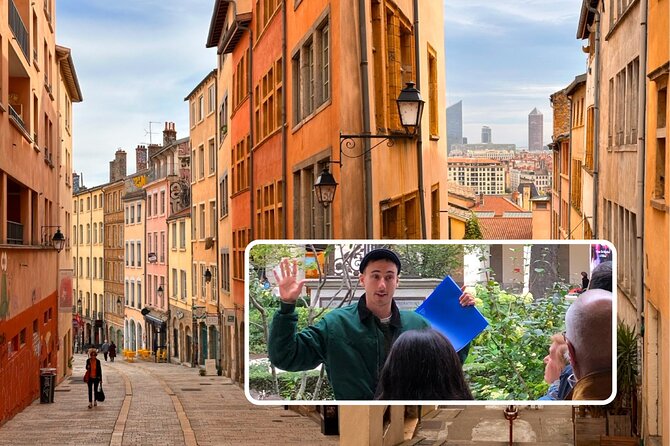
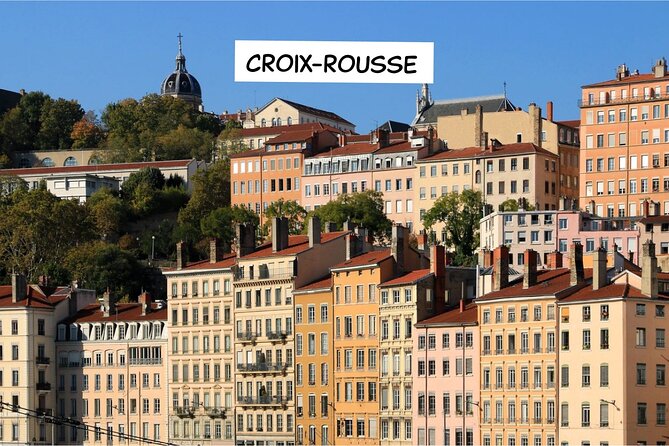
The start at 9 Montée de la Grande-Côte places you in Croix-Rousse, the hill associated with Lyon’s silk workers. From there, the route moves downhill toward Terreaux, then continues toward the old town. That direction matters. You see how the city changes as you descend, from the former working district to grand civic spaces and finally to older streets near the river.
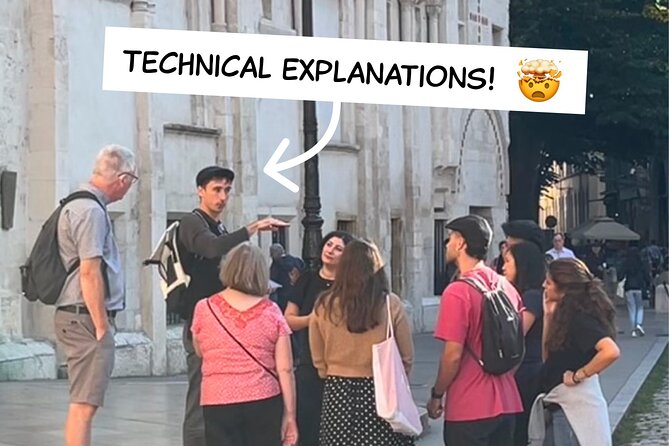
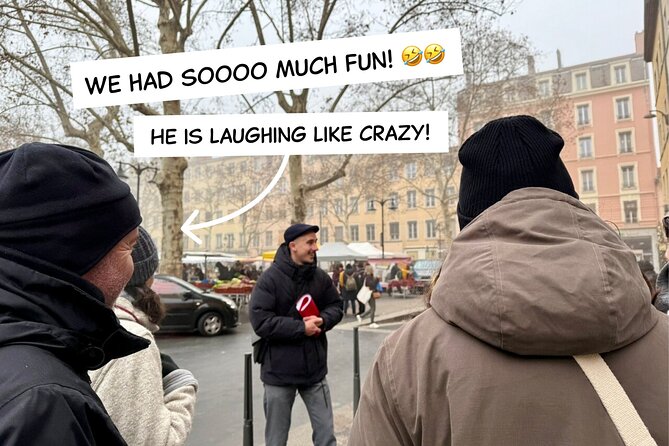
Quentin Dubourg leads the walk as a local guide with a clear interest in French culture and Lyon’s past. The strongest praise for the experience centers on his lively delivery, useful information, and ability to keep the walk enjoyable. The format suits you if you want more than a list of dates but less than a long formal lecture.
At $5.93 per person, the value is unusually strong for a guided city walk. The price does not include museum entry because the route focuses on outdoor sights, public squares, murals, and passageways. You are paying for orientation and storytelling, not a series of lengthy indoor visits. For a first morning in Lyon, that is a sensible trade.
Other trips people book in Lyon:
- Lyon City Hop-on Hop-off Sightseeing Bus Tour
★ 4.0 · 1,614 reviews - Lyon: Musée de l’illusion Entrance Ticket
★ 3.9 · 1,023 reviews - Vieux Lyon Cultural & Historical Walking Guided Tour (English)
★ 5.0 · 942 reviews
Starting in Croix-Rousse and the silk workers’ world
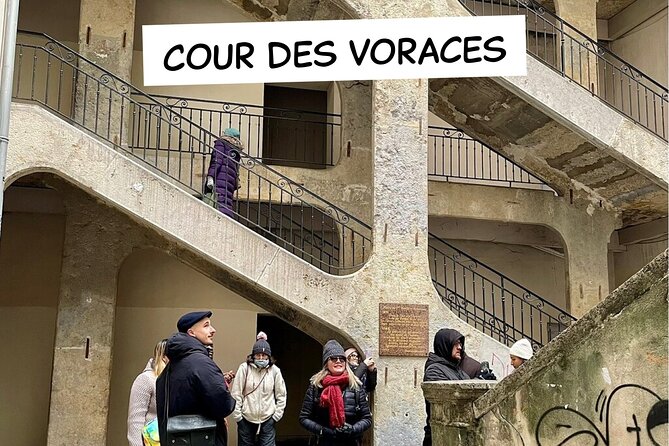
The first stop, Cour des Voraces and its traboule, gives you one of the clearest introductions to Lyon’s working past. A traboule is a passage through buildings and courtyards, allowing people to move between streets without following the main road.
This particular passage is linked to the silk workers who carried fabric down toward the city center. That detail makes the architecture easier to understand. You are not simply looking at an attractive shortcut. You are seeing part of the system that allowed Lyon’s silk trade to function.
Expect about 10 minutes here. That is enough for an explanation and a quick look, but not enough for a slow architectural study. The passage may also feel tight if the group gathers in one spot. A group limit of 20 keeps the experience manageable, though you should stay close so you do not miss the guide’s explanation.
Place Chardonnet follows, giving you a closer look at the downhill side of Croix-Rousse. This is where the route begins to feel like a walk through changing layers of Lyon. You move away from the hilltop district and toward the central city, with the slope doing much of the work for you.
The route is described as mostly downhill, but do not read that as completely effortless. There are stairs, and the streets can be demanding for anyone with limited mobility. The practical advantage is that you are not climbing Croix-Rousse from the center. If stairs worry you, contact Quentin before booking.
Roman Lyon at the Amphitheater of the Three Gauls
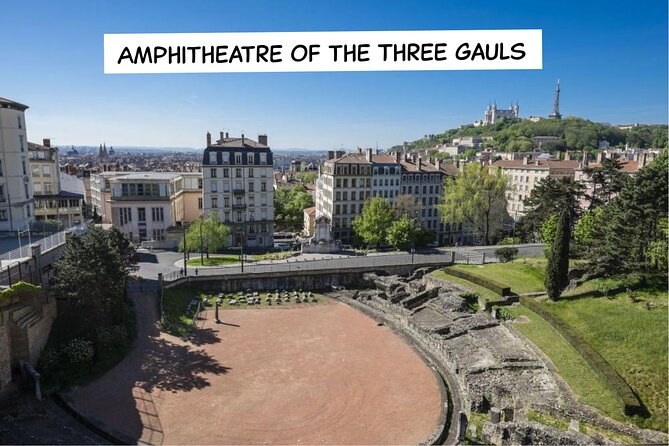
The Amphitheater of the Three Gauls adds an older layer to the walk. Lyon was known as Lugdunum in Roman times, and this site introduces the city’s rise and fall in the Roman period.
You will not be spending hours at an archaeological park. The stop lasts about 10 minutes, so think of it as a sharp historical pause rather than a full Roman-site visit. Quentin’s job here is to place the remains within the larger story of Lyon, helping you see that the modern city sits on top of a much older one.
This stop also breaks up the architecture of Croix-Rousse. After silk workers and hillside streets, you get a reminder that Lyon’s importance began long before its trading and food traditions. I like that range. In a short walk, you are asked to shift from industrial history to ancient history without needing a separate excursion.
Montée de la Grande-Côte, cafés, and vintage shops
Montée de la Grande-Côte is described as the quickest route between Croix-Rousse and the city center. It is also one of the more atmospheric parts of the walk, with cafés and vintage shops lining the route.
The street works well as a transition. You can see how a route that once served daily workers now also attracts people looking for food, shopping, and an old-city feel. The tour does not turn into a shopping stop, so you will have to return later if a shop catches your eye.
This is one place where the timing feels slightly tight. Ten minutes gives you the story and a general look, but not time to browse. That is not a flaw if you want an efficient introduction. It is worth noting if your ideal morning includes long café stops and unhurried shopping.
Same base, a different kind of day:
- Lyon: Private Walking Tour of “Traboules” in the Old Town
★ 5.0 · 866 reviews - Lyon: City Highlights Walking Tour
★ 4.9 · 847 reviews - Lyon Highlights & Secrets Walking Guided Tour (small group) including Funicular
★ 5.0 · 831 reviews - Highlights and Hidden Gems of Lyon Guided Walking Tour (English)
★ 5.0 · 750 reviews
Place des Terreaux and the Bartholdi Fountain

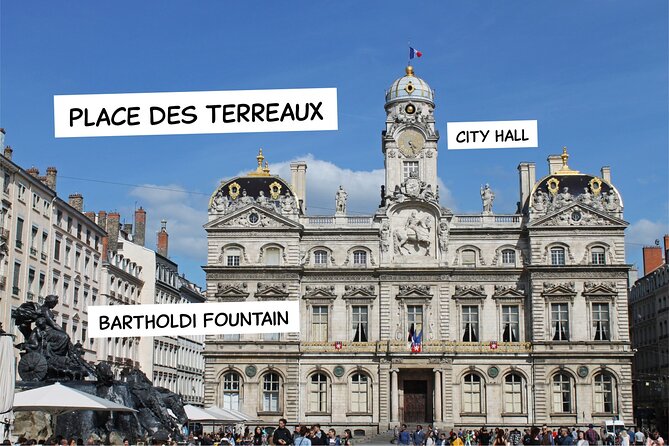
The Bartholdi Fountain is a good example of Lyon’s ability to surprise you with a familiar-looking object. Quentin explains that the fountain was originally intended to face the city hall, and he connects it to another famous Bartholdi work outside Lyon.
The fountain deserves a close look for its sculptural detail, but the wider setting matters just as much. At Place des Terreaux, you are at one of Lyon’s two main squares, alongside the Fine Arts Museum and City Hall. The square brings together civic power, art, and public life in one open space.
The Fine Arts Museum is not a scheduled museum visit. If you want to go inside, plan a separate visit for another time. The walk gives you useful orientation, allowing you to decide if the museum belongs on your own Lyon schedule.
Hôtel de Ville de Lyon follows. The city hall receives a shorter stop of about five minutes, which is enough for an exterior look and a quick explanation. This is a good example of the tour’s rhythm: the guide keeps you moving while still giving you context at major sights.
The Fresque des Lyonnais and local identity
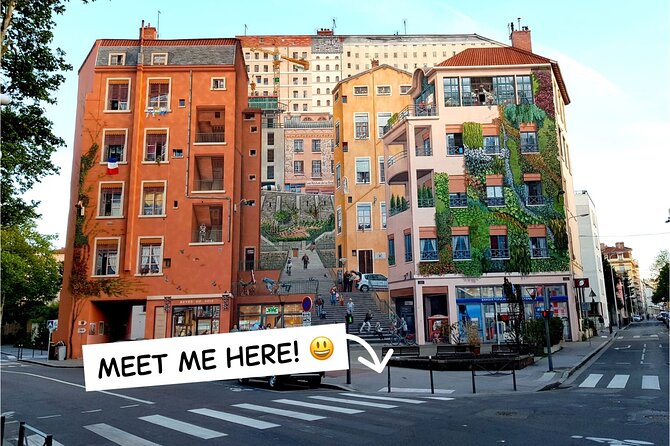
The Fresque des Lyonnais shifts the focus from buildings to people. This large mural presents famous figures connected with Lyon, making it a quick visual guide to the city’s cultural identity.
A mural can be easy to pass without understanding. With Quentin’s explanation, you get a reason to stop and study it. The 10-minute visit gives you time to take in the design and hear about the figures represented.
I like this stop because it keeps the walk from becoming a parade of old façades. Lyon’s story is also about the people who shaped its food, ideas, art, and public life. The mural provides that human side without requiring an indoor museum visit.
Hôtel Bullioud and the architecture of passageways
At Hôtel Bullioud, the focus returns to Lyon’s traboules and their unusual architecture. The passage offers another chance to see how buildings connect courtyards, streets, and private spaces.
The second traboule is useful because one example alone can leave you thinking that all Lyon passageways are alike. Here, you get another architectural variation and a better sense of how common these routes were in the old city.
Access to traboules can depend on doors and private building arrangements, so the experience is best understood as a guided look at Lyon’s passageway tradition rather than a promise of unlimited access to every hidden route. The supplied tour information includes this stop as part of the walk, with admission included where applicable.
Place du Change and the route into Vieux Lyon
Place du Change recalls the commercial side of the old city. Its name points to exchanges and trade, fitting a route that has already covered silk production and the movement of goods.
This is where the tour’s themes begin to connect. Croix-Rousse shows the workers and production behind Lyon’s silk trade. Terreaux shows civic and artistic power. Place du Change brings you back to the buying, selling, and movement that helped make the old city important.
The final stop, Place du Gouvernement, sits in the center of the old town and includes another beautiful traboule leading toward the river. Ending here gives the walk a practical finish. You are not left at an isolated hilltop or outside a museum. You are in a central old-town area, ready to continue exploring or stop for lunch.
The food advice is a useful part of the ending
Lyon is known as France’s gastronomic capital, and the final location makes food planning part of the experience. Quentin can help you choose between a traditional bouchon lyonnais, street food, the Asian district, or a French fusion restaurant.
That advice may be one of the most useful parts of the tour for first-time visitors. A short food recommendation at the end can save you from choosing a restaurant at random when you are hungry and unfamiliar with local terms.
Still, keep your expectations clear. The tour does not include a meal or tasting. You receive suggestions about where to eat, not food as part of the ticket. If you want a dedicated culinary outing, you will need a different experience.
Timing, group size, and practical comfort
The walk starts at 10:00 a.m. and lasts about 1 hour 45 minutes. That timing works well for a first full day in Lyon. You can get oriented in the morning, then continue to lunch near Place du Gouvernement.
The maximum group size is 20 people. That is not an intimate private walk, but it is far smaller than a large coach-style group. Stay near Quentin during the traboule stops, where sound and space may make it harder to hear from the back.
A mobile ticket keeps the booking simple. Confirmation is provided at booking, and the tour is near public transportation. Service animals are allowed, and most people can take part, but the stairs and downhill streets still matter. Anyone concerned about walking should ask Quentin about the route before reserving.
The free cancellation rule is straightforward: cancel at least 24 hours before the local start time for a full refund. Cancellations or changes inside that window are not accepted for a refund.
Who should book this experience?
I would choose this walk if you are visiting Lyon for the first time and want a quick map of the city’s main character. It suits people who enjoy history in small portions, architectural details, local stories, and a bit of social energy.
It is also a good fit if you want to see several districts without spending half a day on a formal tour. The route covers silk heritage, Roman Lyon, civic squares, murals, old-town passageways, and food culture. That is a lot of ground for less than two hours.
Families may appreciate the variety, since the walk does not stay focused on one museum or one historical period. The guide also presents it as suitable for all ages. Still, young children and anyone unsteady on stairs may find the route tiring.
I would not pick it as your only Lyon experience if you want long museum visits, detailed Roman archaeology, or a slow food tasting. It is an introduction and orientation walk. You will likely want to return to some places afterward.
Should you book Quentin’s Lyon walk?
Book it if you want an inexpensive, lively first look at Lyon with a local guide and a route that covers more than one district. The downhill direction, traboules, silk-worker stories, Roman stop, and restaurant advice give it real practical value.
Skip it if stairs are a serious problem or if you prefer to explore at your own pace with long stops. For most visitors who want a clear introduction before lunch, the $5.93 price makes this an easy addition to a Lyon stay.
FAQ
How much does the tour cost?
The listed price is $5.93 per person.
How long does the experience last?
The walking tour lasts approximately 1 hour and 45 minutes.
What time does the tour start?
The start time is 10:00 a.m.
Where does the tour begin?
The meeting point is 9 Montée de la Grande-Côte, 69001 Lyon, France.
Where does the tour end?
The tour ends at Place du Gouvernement, Place du Gouvernement, 69005 Lyon, France.
Who leads the tour?
The experience is led by local guide Quentin Dubourg.
How many people can join?
The maximum group size is 20 people.
Is the route difficult?
The route is mainly downhill from Croix-Rousse, but you still need to manage some stairs and walking through the city.
Are service animals allowed?
Yes. Service animals are allowed on the experience.
Can I cancel for a full refund?
Yes, if you cancel at least 24 hours before the local start time. Cancellations or changes made less than 24 hours before the experience are not refunded.
Just added in Lyon
- Hameau Duboeuf, 1st theme park on Vine and Wine in Europe★ 4.5 · 63 reviews
- Storytelling tour of Old Lyon★ 5.0 · 39 reviews
- Segway – Ride along the rivers 1h30★ 5.0 · 43 reviews
- 1 or 2-Hour Pedicab tour of Lyon★ 5.0 · 213 reviews
- Lyon Old Town Private Food Tour with 6 French Delicacies & Wines★ 5.0 · 85 reviews
- Rhône Valley Wine Tasting Private Day Tour from Lyon★ 5.0 · 43 reviews
- Northern Rhône Valley Wine tour from Lyon Half Day★ 4.5 · 113 reviews
- Northern Rhône Valley From Lyon Full day★ 5.0 · 150 reviews
Tours in Lyon, compared.

Vieux Lyon Cultural & Historical Walking Guided Tour (English)
Read our review →
Private Walking Tour of “Traboules” in the Old Town
Read our review →
Lyon Highlights & Secrets Walking Guided Tour (small group) including Funicular
Read our review →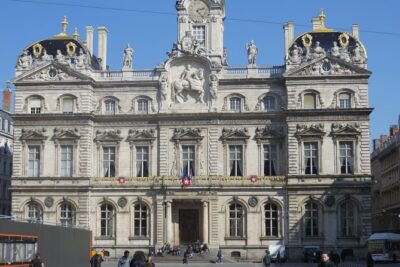
Highlights and Hidden Gems of Lyon Guided Walking Tour (English)
Read our review →
Food Tour in Lyon – A Full Taste of France by Do Eat Better
Read our review →
Lyon Old Town Food Tour with 6 French Delicacies & Fine Wine
Read our review →Browse the lists this tour appears in