
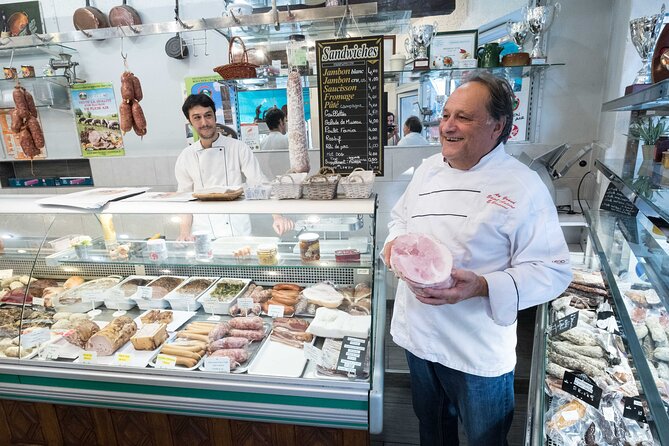
Reviewed · TOURS IN MARSEILLE
Beyond Bouillabaisse: Diving into Marseille’s Multicultural Stew
Marseille makes more sense when you eat your way through it. This small-group food walk follows the city’s migration routes from Saint-Charles station to the Old Port, with Algerian flavors, Provençal sweets, market produce, spice shops, mint tea, and an apéro in an old sailors’ bar. It is less about a polished French menu and more about how people from many places have shaped the city’s table.
I like the maximum group size of seven, which gives the guide room to answer questions and adjust the pace. I also like the practical value: you get two substantial meals, a long list of places to revisit, and advice for the rest of your stay. The main consideration is that this is a food-and-culture walk, not a traditional French seafood tour. If you expect bouillabaisse, formal dining, and plenty of meat, the menu may feel different from what you imagined.
Key points to know
- Start at Saint-Charles station: Begin with Marseille’s migration story and an Algerian delicacy.
- Eat across cultures: Expect food from North Africa and other communities alongside Provençal and French specialties.
- Plan for plenty of food: Two full meals are included, with pastries, coffee, tea, market tastes, and drinks along the way.
- Walk between neighborhoods: The route takes about 5.5 hours and ends at the Old Port, not back at the station.
- Guides shape the experience: Coco, Séverine, Chloé, and Alexis have all led this walk, each bringing a personal style.
- Come prepared: Skip a large breakfast, wear comfortable shoes, and leave room for a generous amount of food.
Marseille on a plate, from Saint-Charles to the sea
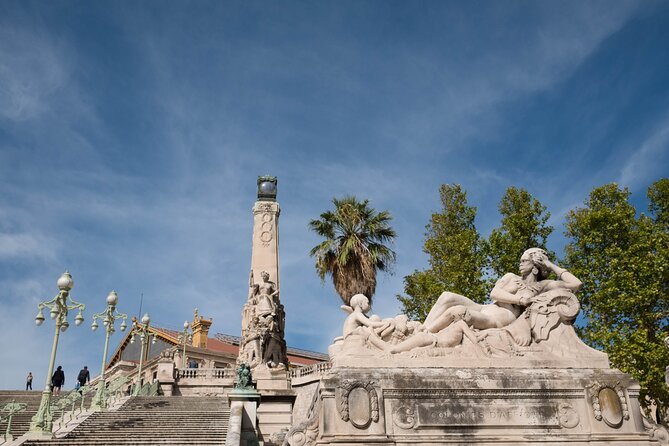
The tour begins at Place des Marseillaises, beside Gare de Marseille Saint-Charles. This is a useful starting point because the station has long been a gateway into the city. Instead of rushing straight toward the postcard sights, you begin with the people and food that made Marseille what it is today.
The first hour pairs local history with an Algerian delicacy. That choice sets the tone. You are not simply sampling French classics in different cafés. You are looking at Marseille as a port city shaped by movement, trade, immigration, and family traditions carried across the Mediterranean.
The route then moves on foot through central Marseille. The total time is about five and a half hours, though the walking is broken up by frequent stops to sit, eat, drink, and talk. That rhythm matters. You are not marching from one tasting to another with a stopwatch. The day leaves room for conversation with the guide and the small group.
More diving in Marseille:
- Calvi: Introduction to Diving Dive with an Instructor
★ 4.8 · 112 reviews - Scuba diving baptism
★ 5.0 · 37 reviews - Fréjus: Diving Experience in Port-Fréjus with an Instructor
★ 4.7 · 34 reviews
Saint-Vincent de Paul and the first sweet stop
About half an hour is spent at Église Saint-Vincent de Paul, also known as the Réformés church. The stop adds architecture and atmosphere to the food story. You step inside Marseille’s grandest Gothic church, then settle into a classic café for Provençal biscuits.
This is a smart early pause. Coffee and pastries are often part of the opening stretch, so I would not eat a full breakfast beforehand. One person described arriving to coffee and a croissant, while other tastings add to the meal. You do not need to arrive starving, but you should arrive ready to eat.
The church stop also prevents the experience from becoming a simple series of bites. Your guide can connect the neighborhood’s buildings and streets to the city’s broader story. Guides such as Coco and Séverine are especially praised for explaining the city while keeping the conversation relaxed and personal.
La Canebière, spice shops, and the city’s everyday pantry
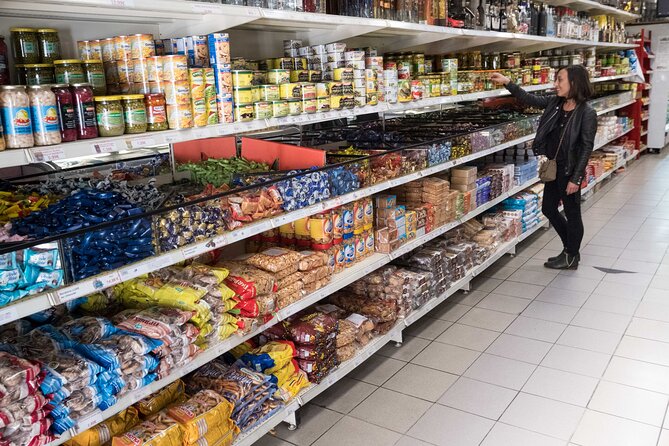
The next hour takes you along La Canebière, Marseille’s best-known boulevard. This is one of the city’s key arteries, but the important part of the stop is not simply seeing a famous street. You visit a colorful spice shop and a market where the food tells a more useful story than a monument might.
Spices, salts, dried goods, fruit, and packaged foods show how households cook at home. They also reveal the connections between Marseille and the wider Mediterranean world. You might see products that would be easy to miss if you stayed on the main sightseeing circuit.
This is where the tour earns its title. You are not being asked to choose between French food and immigrant food. In Marseille, the two exist side by side, often in the same neighborhood and sometimes in the same meal. The guide helps you understand that connection without turning the walk into a lecture.
Coco is particularly well suited to this part of the route. Her tours are praised for making the city feel approachable, like walking around with a friend who happens to know the food, streets, and backstory. Séverine is another guide who receives strong praise for her warmth and ability to connect food with the people who make and sell it.
Marché de Noailles, the belly of Marseille
The hour at Marché de Noailles is likely the heart of the experience. This neighborhood market is known as the belly of Marseille, and you wander among fragrant stalls and food shops shaped by the city’s many communities.
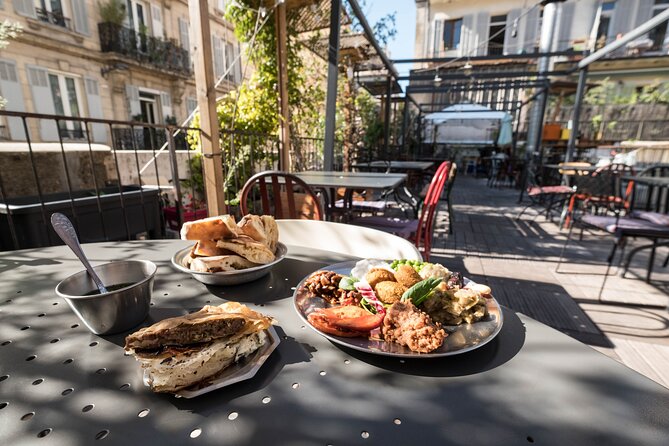
The market gives you a chance to taste beyond the usual French menu. The food may include unusual fruits, sweets, spices, bread, vegetarian items, tea, and other bites from cultures that have found a home in Marseille. One standout mentioned repeatedly is mint tea, served in a small side shop. That kind of stop is easy to miss on your own, especially if you do not know which door to enter or what to order.
You should set your expectations correctly here. The food is generous and varied, but it is not always refined restaurant cuisine. One rating described the food as working-class and only average, while another felt the tour offered too many breads and vegetarian foods and not enough meat, seafood, or seated dining. That criticism is useful. The point is local everyday food, not a parade of expensive dishes.
At the same time, the value of the market lies in access and context. You are learning what people buy, share, and eat in ordinary life. For many people, that is more revealing than a formal meal designed for visitors.
Same base, a different kind of day:
- Marseille: City Sightseeing Hop-On Hop-Off Bus Tour
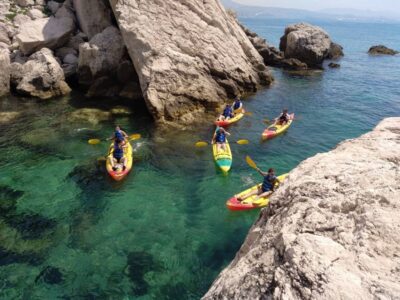
★ 3.8 · 2,820 reviews - Marseille: Côte Bleue Calanques Half-Day Kayak Tour
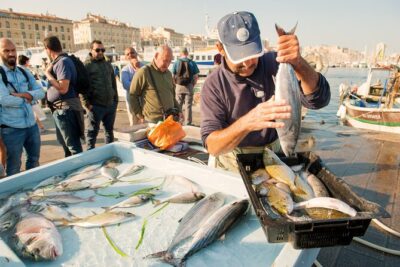
★ 4.7 · 877 reviews - Marseille Food Tour – Full Meal of Local Tastes by Do Eat Better
★ 5.0 · 530 reviews - Marseille: Calanques National Park Guided Hike with Picnic
★ 4.9 · 516 reviews
Two full meals, snacks, and a serious appetite
The tour includes two full meals, plus smaller tastings along the way. Several stops can add up quickly: pastries and coffee, market food, tea, sweets, fish, wine, cheese, fruit, and other specialties. The exact selection can change, and the guide may adapt the route or tastings to the group.
You should not plan another major lunch during the tour. The safest approach is a light breakfast or no breakfast at all, then bring water and patience. The amount of food is one of the experience’s strongest features, but it can also become a challenge. By the later stops, you may be grateful for the walking time between tastings.
The walking helps, but this is still a substantial half-day meal. People who prefer small, elegant portions may find the quantity excessive. Those who want a generous introduction to Marseille’s food culture will likely appreciate it.
The tour also works well for curious eaters who are unsure how to approach Marseille’s mixed food traditions. You do not need to know the names of local dishes or feel comfortable ordering in unfamiliar shops. The guide handles the introductions and explains what you are tasting.
The Old Port and an apéro with sailors’ stories
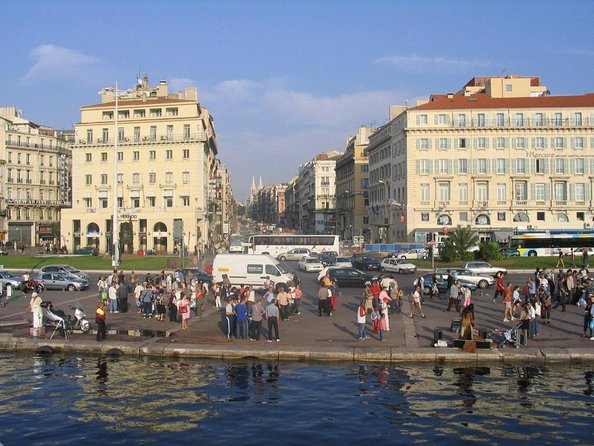
The final stop is the Vieux-Port, Marseille’s boat-filled harbor. Here you learn about the port’s past, then sit for an apéro in a former sailors’ bar.
An apéro is more than a drink before dinner. It is a social ritual, a chance to slow down and talk at the end of the day. After hours of walking and eating, this stop gives the group a natural finish. You can compare notes, ask for more restaurant ideas, and enjoy the harbor setting without rushing to another attraction.
The tour ends at the Old Port rather than returning to Saint-Charles. That is convenient if you want to continue sightseeing around the harbor, visit nearby streets, or make your own way to dinner. It is also useful for a cruise stop, though you need to arrange your return transport yourself.
One cruise passenger had trouble with a taxi that dropped the group far from the meeting point. The guide helped arrange a taxi at the end, but the round-trip taxi cost was about 50 euros. If you are arriving from a ship, confirm the meeting point carefully and allow time for the transfer. Do not assume a port taxi will understand the exact location.
What the guides add to the food
The guides are a major part of the experience. Coco, Séverine, Chloé, and Alexis have all led the walk, and the best descriptions of the experience focus as much on the guide as on the food.
Coco is often praised for her friendly manner, broad grasp of Marseille, and ability to combine architecture, history, food, and neighborhood life. She also gives practical suggestions for the rest of your stay, which makes her particularly useful if you book this on your first day.
Séverine is praised for her personal connections with local businesses. At some stops, the people behind the counter know her, which gives the visit a more natural feel. She is also described as flexible in rainy weather and attentive to the needs of the group.
Chloé brings energy and a strong understanding of the city’s immigrant communities. Her approach seems especially helpful if you want to understand why the route focuses so heavily on multicultural food rather than classic French cooking.
Alexis has also received praise for making the day enjoyable beyond the tastings. Since the provider assigns guides, you cannot necessarily choose one when booking. Still, the consistent pattern is clear: the guide is not there merely to point out food. The guide shapes the whole day through stories, introductions, and conversation.
What $160 gets you
At $160 per person, this is not a cheap snack walk. The price needs to be judged against the length, the quantity of food, the guide’s time, the small group size, and the access to places you might not find by yourself.
The strongest value comes if you use the tour as an introduction to Marseille. You get several hours of orientation, two meals, drinks and tastings, neighborhood context, and restaurant suggestions for later. If you dine at every stop independently, the food alone could add up, though the exact value depends on what is served that day.
The weaker value comes if you care mainly about the cost of the ingredients. One group felt the amount of food did not match the price, and another wanted more formal restaurant dining, meat, and seafood. The tour is not designed as a Michelin-style food event. It is a guided look at working neighborhoods and immigrant food traditions.
I think the price makes the most sense for a first visit, especially if you value local guidance and plan to return to some of the places afterward. If you already know Marseille well, or prefer to spend $160 on one polished meal, this may not be the right fit.
Walking, weather, and practical comfort
Wear comfortable shoes. You will walk through several central neighborhoods for roughly five and a half hours, with stops to sit and eat. This is manageable for most people, but it is not a short tasting circuit.
The tour requires good weather. If poor weather cancels it, you are offered another date or a full refund. Rain does not always ruin the day, as guides can adjust the route, but you should still check the forecast and dress sensibly.
The group is capped at seven people, and most people can participate. Service animals are allowed, and the route is near public transportation. Confirmation arrives within 48 hours, subject to availability.
You can cancel for a full refund up to 24 hours before the start time. Cancellations or changes made later are not refunded or accepted. The tour also needs a minimum number of people, so a cancellation by the provider is possible if that minimum is not met.
Who should book Beyond Bouillabaisse
I would choose this tour if you want to understand Marseille through its neighborhoods, markets, and family food traditions. It suits first-time visitors, solo travelers who enjoy meeting a small group, couples, families with adult children, and cruise passengers who can manage the transfer to and from the city center.
It is especially useful on your first day. You get a feel for several districts, learn where to eat later, and receive specific suggestions from the guide. The small group makes it easy to ask about unfamiliar foods or change the pace when needed.
I would hesitate if your main goal is bouillabaisse, classic French cuisine, or a long sit-down seafood meal. I would also think twice if you dislike bread, sweets, vegetarian food, or walking. The menu is broad, but it may lean more toward everyday market food than polished restaurant dishes.
Should you book it?
Book it if you want a generous, social introduction to Marseille’s multicultural food culture and are willing to trade formal dining for markets, cafés, spice shops, tea, shared plates, and local stories. The route gives you more than a meal. It gives you a practical map of the city and a better sense of who lives there.
Skip it if you want a tightly controlled menu or a classic Provence food tour centered on seafood and French specialties. For everyone else, the combination of a seven-person limit, two substantial meals, several neighborhoods, and guides such as Coco, Séverine, Chloé, and Alexis makes this a strong way to begin a Marseille stay.
FAQ
Where does the tour start?
The tour starts at Place des Marseillaises beside Gare de Marseille Saint-Charles in Marseille.
Where does the tour end?
It ends at the Old Port of Marseille. It does not return to the original meeting point.
How long does the tour last?
The experience lasts approximately 5 hours and 30 minutes.
How many people can join the tour?
The maximum group size is seven people.
What language is the tour offered in?
The tour is offered in English.
Does the tour include full meals?
Yes. The experience includes two full meals, along with additional tastings, drinks, and smaller food stops.
Should I eat breakfast before the tour?
It is best not to eat a large breakfast. The tour can begin with pastries and coffee, and the total amount of food is substantial.
Is the tour suitable for cruise passengers?
Yes, but you need to arrange transport between the cruise port and the meeting point. The tour ends at the Old Port, and the guide may help you arrange a taxi afterward.
What happens if the weather is poor?
If the experience is canceled because of poor weather, you will be offered another date or a full refund.
Just added in Marseille
- Picturesque Luberon – From MARSEILLE★ 5.0 · 36 reviews
- Provence : Aix en Provence, Cassis and Marseille Private Tour★ 4.5 · 53 reviews
- Private French Pastry Class in Marseille★ 5.0 · 90 reviews
- Marseille Walking food and culture tour 3 hour Private tour★ 4.0 · 36 reviews
- Market & Perched Villages of the Luberon Day Trip from Marseille★ 5.0 · 85 reviews
- Marseille Guided Tour for 2.5 Hours with a Bilingual Local Guide★ 5.0 · 36 reviews
- Marseille Guided Tour for 4 Hours with a Bilingual Local Guide★ 5.0 · 105 reviews
- Private Full Day Wine Tour in Provence From Marseille cruise port★ 5.0 · 32 reviews
Tours in Marseille, compared.
Marseille Food Tour – Full Meal of Local Tastes by Do Eat Better
Read our review →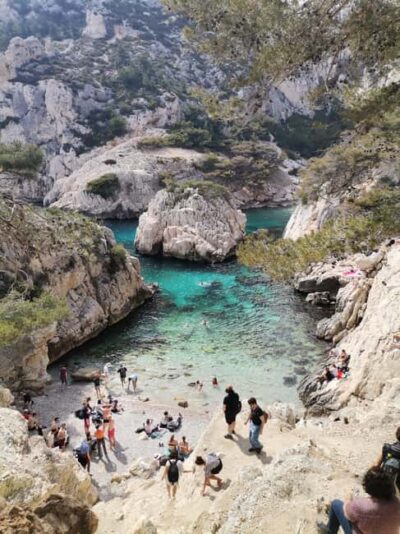
Calanques National Park Guided Hike with Picnic
Read our review →
Calanques Sailing Day Trip with Lunch and Wine
Read our review →
Browse the lists this tour appears in