
Reviewed · CALANQUES TOURS
Ultimate Calanques Panoramic e-bike Ride – 3h (Small Group)
The best part of this outing is the way it gets you from Marseille’s city streets to the Calanques’ limestone coast under your own power. You pedal past beaches and parks, climb to wide sea views, and may finish with a swim at Sormiou or Morgiou. It feels more active and personal than a coach ride.
I like the well-kept electric bikes, which take the sting out of Marseille’s hills, and I like the small-group setup, where guides such as Martin, Vincent, Iris, and Frank can keep an eye on the pace. The main caution is simple: this is not a sightseeing ride for complete beginners. Gravel, rocks, traffic, narrow paths, and steep sections require confidence on a bicycle.
Key points
- Ride from Pointe Rouge into Calanques National Park: The route links Marseille neighborhoods, beaches, parks, and dramatic coastal viewpoints.
- Choose between Sormiou and Morgiou: The exact calanque depends on weather, trail conditions, crowd levels, and the group’s ability.
- Swim during the warmer months: A beach break may give you about 30 to 45 minutes for a Mediterranean dip.
- Electric help, not electric transport: You still pedal, steer, brake, and manage uneven ground.
- Small groups keep the ride personal: The usual format is limited, though the total activity capacity can reach 12 people.
- Allow time for the trip to Pointe Rouge: The meeting point is outside central Marseille, but a public boat from the Vieux-Port can make the journey easy.
Why this e-bike ride is a strong Marseille choice
Marseille is made for a ride like this. The city reaches right up against the Calanques National Park, so you can leave ordinary streets behind without spending half the day on a bus. In a few hours, you get a slice of local neighborhoods, the coast, pine-covered hills, and white limestone cliffs.
I like the change of pace. You are not simply driven to a lookout, handed a few minutes for photos, then loaded back onto a vehicle. You work your way toward the coast, with the electric motor helping on the climbs. That effort makes the views feel earned, though you should not mistake the motor for a free pass.
The tour costs about $83.48 per person. That is fair value if you want bike hire, a helmet, a guide, and an active route into the national park. It is less attractive if you mainly want a long swim or a slow beach morning. Much of the three to four hours includes riding, and the beach stop is only one part of the outing.
The activity is offered in English, though the guide may be multilingual. Guides have different styles. Martin and Vincent are noted for careful group management and friendly help, while Iris has a more structured approach. The experience can feel more informal with one guide and more instructional with another.
More cycling tours in Marseille:
- Marseille Grand E-Bike Tour : “le tour du Fada”
★ 4.5 · 352 reviews - Marseille: City Highlights Guided Half-Day E-Bike Tour
★ 4.8 · 325 reviews - From Marseille: Guided E-Bike Tour to Calanque de Sormiou
★ 4.8 · 308 reviews
Starting near Pointe Rouge at 10 a.m.
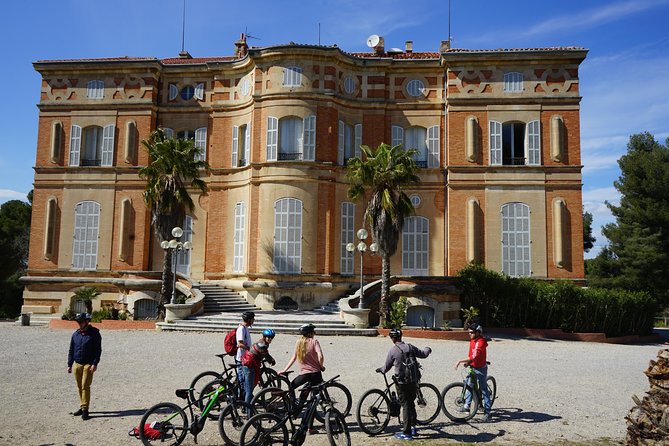
The meeting point is at EVTT Provence, 3 Avenue d’Odessa, near Pointe Rouge beach. The shop sits close to restaurants, snack counters, bars, minimarkets, an ice cream shop, and water sports rentals. That is useful before or after the ride, especially if you need water or a quick bite.
You can reach the area by public transport. A particularly useful option is the public boat from Marseille’s Vieux-Port to La Pointe Rouge, which costs about €5 each way according to the supplied trip details and leaves you about a three-minute walk from the bike shop. Bus and metro combinations are also possible, though they can take longer.
The 10 a.m. start works well for cruise passengers. You have time to reach Pointe Rouge in the morning and return to the ship in the early afternoon. Still, I would build in extra time for the journey. The tour ends back at the shop, not at the cruise port, and traffic or a delayed connection could make the return tight.
At the shop, the guide fits you with an electric bicycle and helmet. All participants’ heights must be provided when booking, and the minimum height is 140 centimeters. The child price applies to children who do not use an electric bike. A child tall enough to ride one pays the adult price.
Wear closed-toe shoes and loose, comfortable clothing. Avoid sandals, flip-flops, high heels, and platform shoes. Bring water, sunscreen, and swimwear if you hope to use the beach stop. Food and drinks are not included.
From Marseille streets to the national park
The first part of the ride takes you through Marseille neighborhoods and along coastal areas toward the national park. This is not a fully separated cycle route from start to finish. You may encounter cars and trucks in the city, although much of the riding uses cycle paths.
That traffic is one of the main points to consider. You need to watch the road, hold your line, and follow the guide’s directions. The ride is not hard because of speed. It is demanding because you are sharing parts of the route with ordinary city traffic, pedestrians, dogs, and other cyclists.
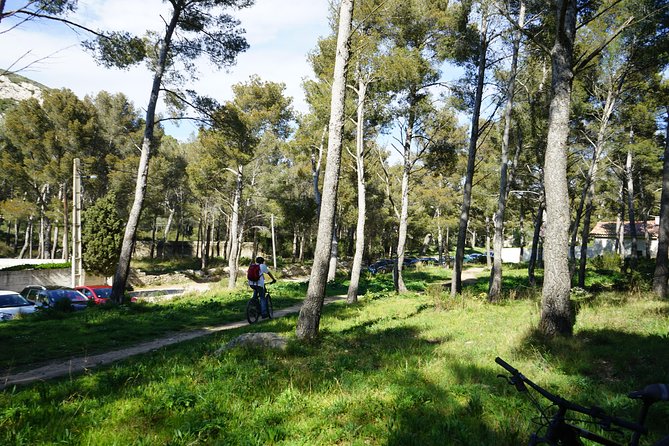
Once you reach more natural paths, the character changes. Expect a mix of paved surfaces, gravel, rocky sections, uneven ground, and occasional tree roots. Some paths are narrow. A few climbs are steep enough that the strongest motor setting becomes helpful.
The guide normally stops at scenic points and for short explanations about the city and surrounding area. Some guides give more history and local detail than others. If you want a lecture-style tour, this may feel light. If you want to keep moving and enjoy the outdoors, the balance should suit you.
Group pace matters. A confident cyclist may find the route fairly easy with electric assistance. A person who rarely rides may need more time on gravel and climbs. The guide may wait at turns or regroup often, which keeps the ride safe but can slow the outing.
Calanques National Park and the first big views
Calanques National Park stretches along roughly 20 kilometers of coastline between Marseille and Cassis. It is unusual because it includes land, sea, and urban areas in one protected park. The scenery changes quickly, from city edges to pale cliffs, scrub, pine trees, small harbors, and open Mediterranean views.
The park section takes about two hours in the stated schedule, though the exact route can change. Fire restrictions, weather, crowds, and the group’s cycling ability all affect where the guide goes. That flexibility is important because access in this dry coastal area can change during the year.
Do not expect a fixed checklist of every calanque named in the description. The route may include Sormiou, Morgiou, or another section of the park. On one outing, you might reach the beach; on another, the guide may choose a safer route with higher viewpoints.
I see that as both a strength and a weakness. It lets the guide respond to real conditions rather than forcing a route that is unsafe or unpleasant. But if you booked mainly to see three specific calanques and swim, you should understand that the plan is not guaranteed.
Other trips into the calanques from Marseille:
- Marseille: Côte Bleue Calanques Half-Day Kayak Tour
★ 4.7 · 877 reviews - Marseille: Calanques National Park Guided Hike with Picnic
★ 4.9 · 516 reviews - From Marseille: Calanques National Park Guided Hike
★ 4.8 · 489 reviews - Marseille: Frioul Calanques Sailing Trip
★ 4.8 · 433 reviews
Sormiou, the classic beach stop
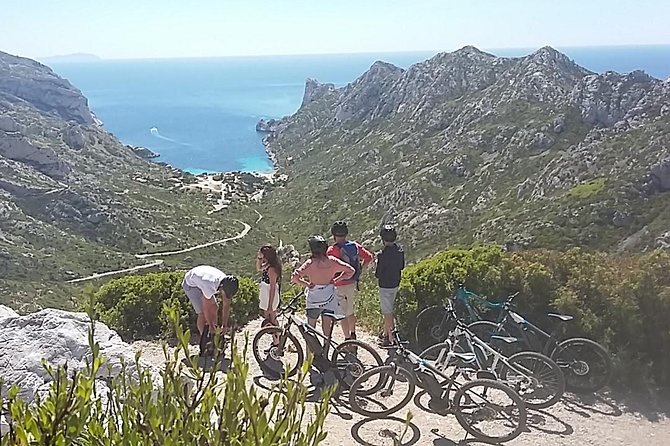
Sormiou is the largest calanque in the park and one of the main attractions on this route. The first view often comes from above, where the cliffs open toward the cove and its sandy beach. The descent brings you closer to the water and the small coastal setting.
From spring through autumn, the group may ride all the way down to the beach for a swim. The stated stop is about 30 minutes, but several trip accounts describe a break closer to 45 minutes. Plan for a short, refreshing stop rather than a full beach afternoon.
The swim is one of the ride’s best rewards. You can cool off after the climbs, take in the clear water, and enjoy a change from the saddle. Bring only what you can manage safely, since the tour is built around riding rather than carrying a full beach kit.
The descent and return are part of the workout. A downhill section may feel easy, but you still need to control the bike around walkers and on uneven ground. The ride back out can include a strong climb, and even the electric bikes require pedal effort in turbo mode.
Outside the warmer season, or when access is limited, the guide may take a different route. You might see Sormiou from above without reaching the sand, or continue toward Morgiou and other paths. The views remain the main prize, but the swimming promise depends on conditions.
Morgiou and its small fishing harbor
Morgiou offers a different feel from Sormiou. It is one of the few inhabited calanques in the park, with a small fishing village tucked among the limestone cliffs. The setting gives you a glimpse of a working coastal community rather than only a scenic stop.
The group may pause here for a drink or swim. Again, the choice depends on the group’s level, crowding, and weather. If the guide decides that Morgiou is the better fit, you still get a coastal cove and a break from the bike, but not necessarily the exact Sormiou experience.
The route into either calanque can be adjusted for safety. That matters because the park is not a smooth cycle path system. A guide who changes plans to avoid difficult conditions is making a sensible call, even if it means you do not tick off every named stop.
Callelongue and Cap Croisette
Callelongue gives the ride another change of mood. The road toward Les Goudes follows the coast for several kilometers, with an end-of-the-world feeling created by the cliffs, sea, and sparse surroundings. It is a good section for photos and a slower look at the shoreline.
A short stop at Cap Croisette may include a view of a small harbor and a diving center. The stated visit lasts about 15 minutes. That is enough to look around and take pictures, not enough for a long walk or a separate activity.
This part also shows why a bicycle is useful here. You can cover more coastline than you would on foot and stop at points a large vehicle cannot easily reach. At the same time, the road and paths can be exposed to wind. Keep both hands ready and stay attentive near edges, walkers, and other road users.
What the electric bike can and cannot do
The bikes pedal and handle like regular bicycles. The motor adds power when you pedal, but it does not replace pedaling. This distinction is important for anyone who has not used an e-bike before.
The electric assistance helps most on hills, into headwinds, and over longer distances. It can turn a climb that would stop a casual cyclist into a manageable effort. You still need to steer around gravel, brake smoothly, shift your weight, and keep your balance on rough sections.
I would not recommend this outing to someone who has never ridden a bicycle. Several parts of the route are easy for a regular cyclist but awkward for a first-timer, especially loose gravel, rocky inclines, narrow paths, and busy streets. The guides can explain the controls, and beginners to e-bikes often learn quickly, but basic cycling ability is essential.
Your fitness level should be moderate. You do not need to train for a race, but you should be comfortable riding for several hours with climbs and descents. The total distance can feel substantial, with one account recording about six miles each way before the beach break.
Group size and guide style
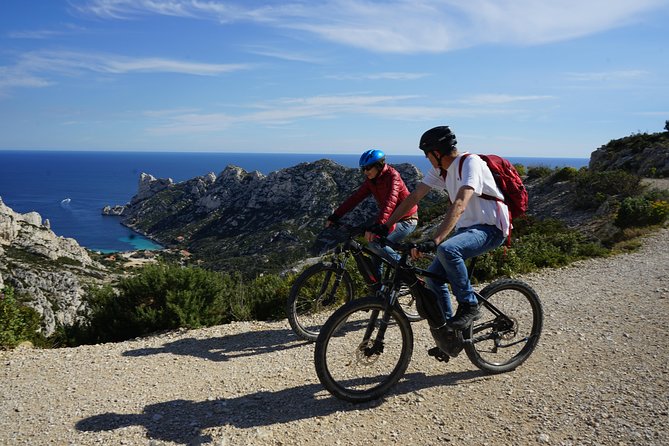
The small-group format is a real advantage. The advertised group limit is generally 10 people, with a maximum of 9 people per booking, while the activity information also gives a maximum of 12 participants. That difference is worth checking when you book, especially if you want a very intimate ride.
A good guide keeps the group together by moving between the front and back, stopping at turns, and checking on less confident cyclists. Guides have also provided backpacks when needed and allowed time for water and sunscreen stops. These small habits make a long ride much more comfortable.
The experience can vary with the group. If several people are new to mountain-style cycling, you may spend time waiting at turns. That is safer than rushing, but a strong cyclist may find the pace slow. A private tour is the better choice if your group has very different abilities or if you want full control over the route.
The guide’s personality also shapes the outing. Martin, Vincent, and Frank are described as attentive and encouraging. Iris has been noted for making safety a priority and using prepared information. You may get lively conversation, practical coaching, or a more formal presentation, depending on who leads your ride.
The real value of $83.48
At roughly $83.48, the price includes the electric bike, helmet, guide, and small-group format. You are paying for the equipment and for access to a route that would be tiring to plan and manage alone. You also avoid renting a bike in one place and trying to work out the best coastal roads yourself.
The price feels strongest for active visitors who want scenery, exercise, and a swim in one half-day outing. It is also useful for solo visitors, since the group gives you company without requiring you to arrange a private guide.
The value is weaker if you want detailed cultural commentary or a long beach stay. Food and drinks cost extra, and you need to arrange your own transport to Pointe Rouge. You should also be comfortable with the possibility that weather, fire restrictions, or group ability will alter the route.
Free cancellation is available up to 24 hours before the 10 a.m. start time. Changes or cancellations inside that window are not accepted for a refund. If poor weather cancels the ride, you can choose another date or receive a full refund. The tour also requires at least three people, so a cancellation for low numbers can result in another date, an alternative activity, or a full refund.
Who should book this ride?
I would choose this tour if you can already ride a bicycle, want to see the Calanques without sitting in a vehicle, and like a bit of physical challenge. It suits couples, solo visitors, families with older children who meet the height rule, and cruise passengers with a free morning.
I would hesitate if you dislike traffic, gravel, uneven paths, or hills. I would also think twice if your main goal is swimming, since the beach break is limited and may disappear when conditions change.
Book it for the combination of coastal scenery, electric-bike freedom, and active time outdoors. Skip it if you need a fixed sightseeing route or a relaxed beach day. For most capable cyclists, this is a memorable way to see the Marseille coast in a morning, with enough effort to make the Mediterranean swim feel well earned.
FAQ
How long does the Calanques e-bike tour last?
The activity lasts approximately three to four hours. The stated start time is 10 a.m., and the tour ends back at the meeting point near Pointe Rouge.
Where does the tour start?
It starts at EVTT Provence, 3 Avenue d’Odessa, 13008 Marseille, France, near Pointe Rouge beach.
Is transportation from a Marseille hotel included?
Round-trip transportation from hotels is available as a convenience, but the included features specifically list the guide, electric bicycle, small-group tour, and helmet. Confirm transportation details when booking.
Can I swim during the tour?
From spring through autumn, the group may ride down to Sormiou or Morgiou for a swim. The beach stop depends on weather, crowd levels, access, and the group’s ability.
Do I need to know how to ride a bicycle?
Yes. The electric bikes still require pedaling, steering, braking, and balance. You should have basic cycling skills and a moderate level of physical fitness.
What should I wear?
Wear closed-toe shoes and comfortable, loose clothing that allows easy movement. Do not wear high heels, platforms, sandals, or flip-flops.
What is the minimum height for the electric bike?
The minimum height is 140 centimeters, or about 4.6 feet. Participants’ heights must be provided at the time of booking.
What happens if the weather is bad?
If poor weather causes cancellation, you will be offered another date or a full refund. The same choice applies if the minimum number of participants is not reached and the activity is canceled.
Just added in Marseille
- Marseille: Tailored Wine Tasting Experience in Top Wine Shop★ 5.0 · 106 reviews
- Marseille: Calanques Sailing Day Trip with Lunch and Wine★ 4.8 · 411 reviews
- From Aix: Cassis Boat Ride & Provence Wine Tasting Day Tour★ 4.8 · 103 reviews
- From Marseille: Provence Sightseeing Tour and Wine Tasting★ 4.7 · 195 reviews
- Marseille: Half-Day City Highlights Guided Walking Tour★ 5.0 · 273 reviews
- Marseille: Foodie Walking Tour of the Cours Julien District★ 4.8 · 97 reviews
- Marseille: Walking Food Tour with Full Meal★ 4.7 · 137 reviews
- Marseille: No-Diet Club Local Food Tasting and Walking Tour★ 4.8 · 173 reviews
Calanques Tours, compared.
Calanques National Park Guided Hike with Picnic
Read our review →
Calanques Sailing Day Trip with Lunch and Wine
Read our review →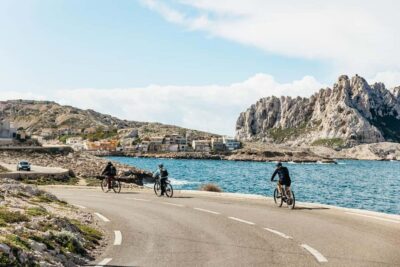
Browse the lists this tour appears in