
Reviewed · WINE TOURS
From Avignon: Wine Tour with Visit to Châteauneuf du Pape
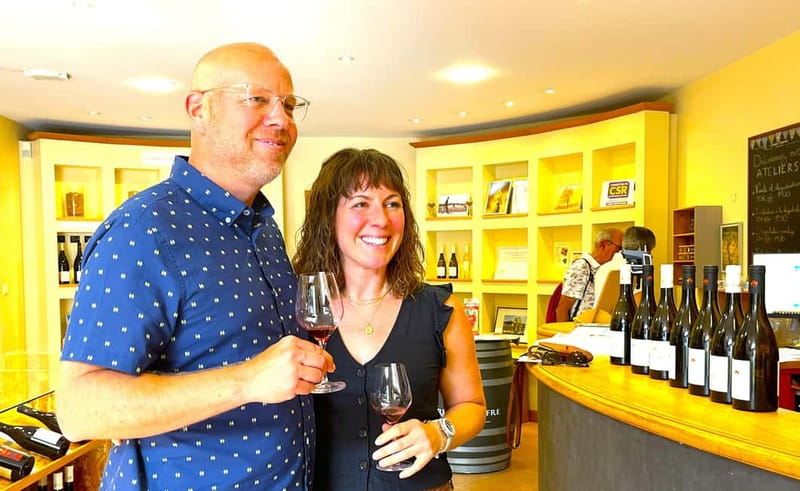
The clever part of this small-group outing is the contrast between three southern Rhône wine areas in one day. You taste Muscat in warm, sheltered Beaumes-de-Venise, sturdy reds from windy Gigondas, and the famous, cellar-worthy wines of Châteauneuf-du-Pape, all while Arnaud explains the vineyards between stops.
I especially like the family-run wineries and the picnic made with local food, including goat cheese, tapenade, eggs, fruit, and grape juice. I also like the small group, which gives you time to ask questions and often leads to extra stops, such as a look at the Châteauneuf-du-Pape castle. The main drawback is the compact black car: with six people aboard, some passengers may find it cramped.
Key points to know before you book
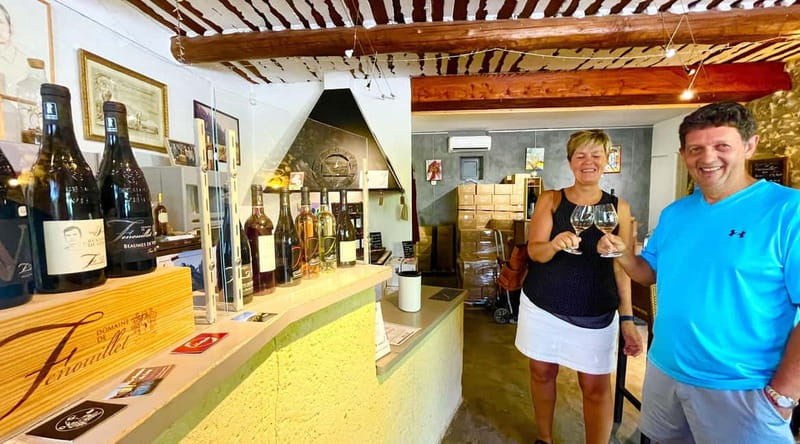
- Three appellations in one outing: Compare Beaumes-de-Venise, Gigondas, and Châteauneuf-du-Pape rather than visiting one wine area in isolation.
- At least nine wines: You taste a minimum of three wines at each of three wineries, with selections that can include sweet Muscat, red, rosé, and white wines.
- Arnaud makes the countryside meaningful: He explains local soils, weather, altitude, grape varieties, village history, and the people producing the wine.
- The picnic is seasonal: Morning departures from April through October include fresh food from local farms and Arnaud’s village. Afternoon and winter departures do not include a meal.
- Small groups matter: The vehicle carries no more than six participants, though the limited space may feel tight.
- Good value at $93: Pickup, drop-off, three wineries, and nine or more tastings are included, making this a strong choice for an introduction to the southern Rhône.
Why this Rhône tour is more than a wine tasting
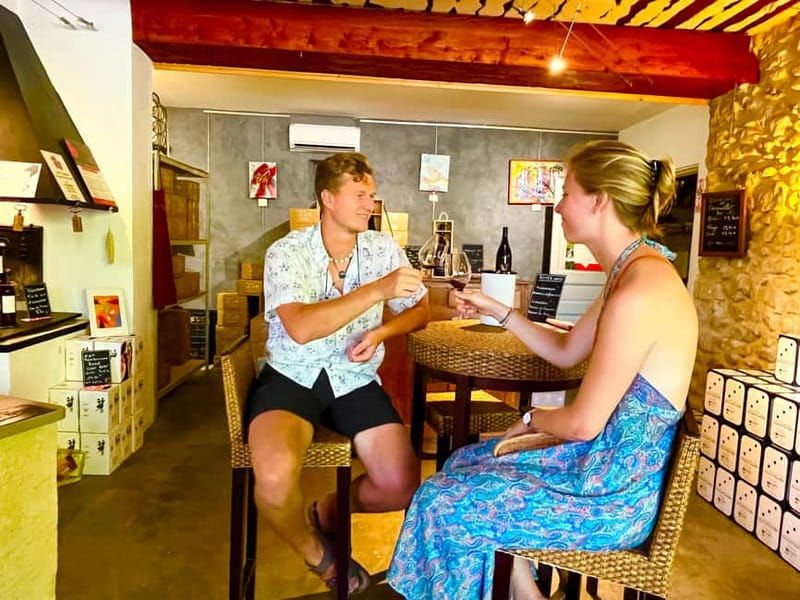
From Avignon, you could visit a single estate and spend the afternoon tasting. This outing gives you a wider lesson in how the southern Rhône changes from one village to the next.
Arnaud drives you through vineyards and villages, pointing out the Dentelles de Montmirail, the three sharp mountain ranges that shape both the scenery and the wine. He explains how one side is warmer and more sheltered, while the other catches the Mistral wind. That kind of running commentary is useful because it connects the glass in front of you to the fields outside the car.
The group is limited to six, and that size changes the tone. You can ask about a wine without holding up a coach group. Arnaud speaks French and English, and his English is described as clear and easy to follow. He is also happy to discuss other things to do in the area, which can help if Avignon is your base for several days.
The pace is not rigid. At times, the outing runs longer than the stated schedule because Arnaud allows time for questions and conversation. That is pleasant if you want an unhurried day, but you should not plan a tight appointment immediately afterward.
More wine tours in Avignon:
- Chateauneuf du Pape wine tour
★ 5.0 · 484 reviews - From Avignon: Châteauneuf du Pape Half-Day Wine Tour
★ 4.7 · 365 reviews - From Avignon: Half-Day Great Vineyards Tour
★ 4.7 · 321 reviews
Beaumes-de-Venise and the sweet side of the Rhône
The route usually begins in Beaumes-de-Venise on the morning departure, while afternoon outings visit it last. The village sits on the southern side of the Dentelles de Montmirail, protected from some of the wind and warmer than nearby wine areas.
That shelter helps explain the local specialty, Muscat de Beaumes-de-Venise. This naturally sweet wine has held AOC status since 1943. You can drink it as an aperitif, with blue cheese or charcuterie, or alongside dessert. Tasting it next to a dry or red wine makes the region’s character easier to grasp.
Beaumes-de-Venise also produces red wine, which received its AOC only in 2005. Winemakers may use up to 10 percent white grapes in the blend. The soil varies among limestone, sandstone, sand, and clay, so the wines do not all taste alike.
I like this stop because it expands the usual idea of Rhône wine. If you arrive expecting only powerful reds, Muscat gives you a different style and a useful point of comparison. The tasting lasts about 45 minutes, enough time for a focused introduction without making the morning feel rushed.
Gigondas, where wind and altitude shape the wine
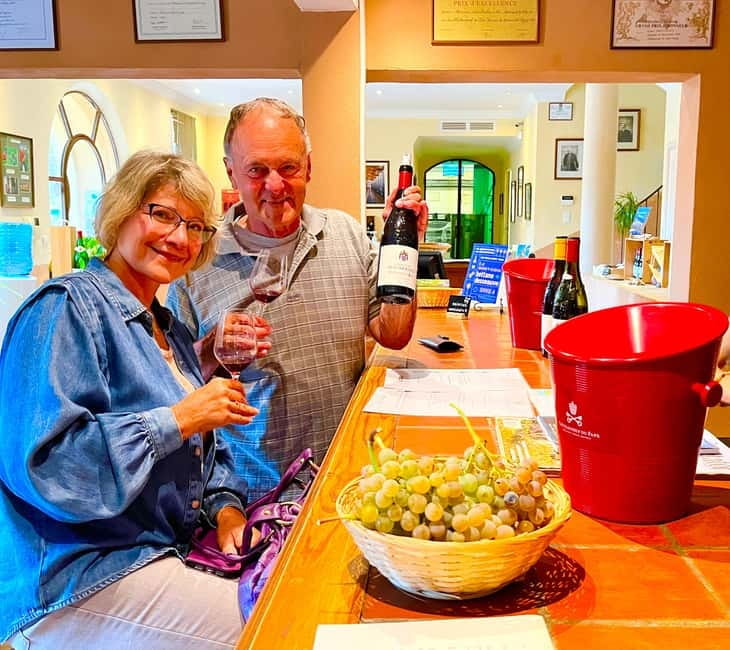
Gigondas lies on the northern side of the Dentelles de Montmirail. Here, the Mistral can blow for around 150 days a year. It is a cold, drying wind, but that is helpful in the vineyards because it pushes away clouds and dries the vines after rain, reducing the risk of disease.
The vineyards sit between about 100 and 600 meters in elevation. Gigondas is especially associated with red wine, with the appellation established for red and rosé in 1971. White wine is a much newer part of the story, joining the AOC in 2023.
The soil includes sandy marl, along with clay, sand, limestone, and sandstone. Arnaud uses these details to show why two wines from nearby villages can have different flavors and textures. You do not need to memorize every soil type, but the explanation gives you a better way to taste.
The Gigondas visit generally lasts about an hour. The wineries are often smaller and more personal rather than set up for large crowds. Some stops may include a look at barrel storage, depending on the estate and the day.
This is also the usual picnic location on the morning tour from April through October. You may eat beneath trees or near the vineyard, with views of the Dentelles and the surrounding fields. The meal is closer to a generous country snack than a restaurant lunch, so do not book this outing expecting a formal midday meal.
A picnic built around local produce
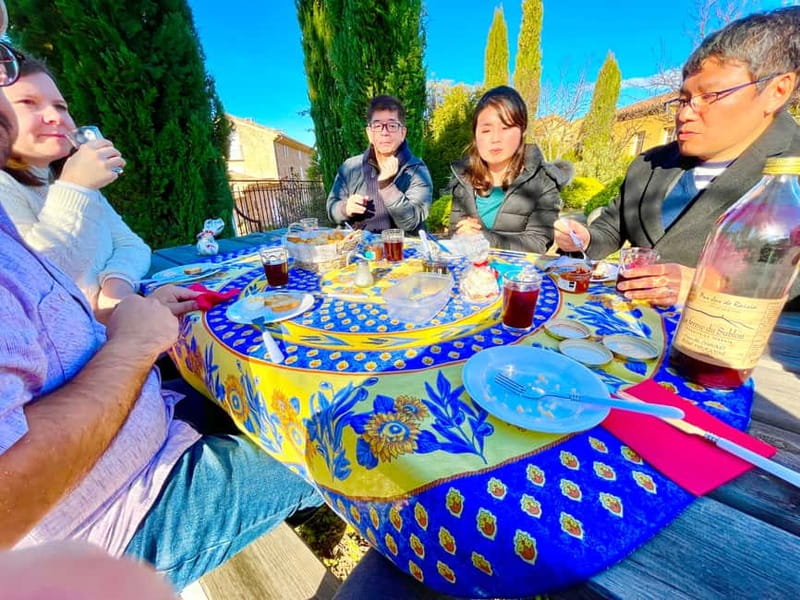
The picnic is one of the most distinctive parts of the morning tour. It uses fresh products from local farms and may include boiled eggs, bread, black olive tapenade, sweet pepper tapenade, fresh goat cheese, seasonal fruit, clementines, fruit juice, and local grape juice.
Arnaud has also served food sourced from around his own village and, at times, produce from his garden. The exact selection changes with the season, which is part of the appeal. You might taste grapes as fruit, juice, and wine during the same day.
The setting matters as much as the food. Sitting near the vineyards gives you time to look around instead of moving directly from one tasting room to the next. It is a chance to enjoy the countryside at a slower pace.
Keep the limits in mind. The picnic is included only on the morning tour between April and October. The afternoon tour has no meal, and the winter morning tour from November through March also excludes the picnic. If you choose an afternoon departure, plan your own food before or after the outing.
Same base, a different kind of day:
- From Arles: Half-Day 4×4 Camargue Safari
★ 4.7 · 1,772 reviews - Provence Highlights Full-Day Tour from Avignon
★ 5.0 · 499 reviews - 4×4 Camargue Safari 4h – Departure from Arles
★ 4.5 · 467 reviews - From Avignon: Full-Day Best of Provence Tour
★ 4.7 · 338 reviews
Châteauneuf-du-Pape, the famous final stop
Châteauneuf-du-Pape is the best-known wine area on this route and the place many people most want to see. It was the first French AOC, established in 1936, and its wines are sold around the world.
The appellation is strongly associated with red wine, which accounts for about 92 percent of production. White wine makes up the remaining 8 percent. The wines are generally full and powerful, and the local bottles can age for 20 to 30 years in a suitable cellar.
The most recognizable feature of the soil is its large river stones. These rounded stones sit among clay, sand, sandstone, and limestone. They hold heat and help create the warm conditions associated with the area, while the mixture of soils gives producers different tools for shaping their wines.
At the winery, you can expect about an hour of tasting and explanation. The precise selection depends on the estate. One important point is that a famous appellation does not guarantee that every sample will suit your taste. Some tastings may focus on younger wines, and you may prefer the selections at Gigondas or Beaumes-de-Venise.
That is not a flaw in the region. It is a reminder that a wine tour should be about comparison, not collecting famous names. If you want to taste older or more expensive Châteauneuf-du-Pape bottles, ask what is being poured before you book or during the tasting. Higher-priced samples are not part of the stated package.
If time and interest allow, Arnaud may make an extra stop at the Châteauneuf-du-Pape castle. This is not presented as a guaranteed part of every departure, but it can add a historic viewpoint and a better sense of the village above the vineyards.
What Arnaud adds to the day
The guide is central to this outing. Arnaud is a local, drives carefully, and has strong relationships with the estates he visits. That local connection can make the tastings feel more personal, especially at smaller producers that may not be set up for large groups.
He also brings the region to life between the wineries. You learn how mountain shelter, Mistral winds, altitude, river stones, and soil affect the vines. He can explain why Beaumes-de-Venise is linked to Muscat, why Gigondas is known for red wine, and why Châteauneuf-du-Pape has such a strong reputation.
His style appears flexible rather than scripted. He can switch between French and English when needed, and he is willing to pause for questions. If your group is curious, expect the day to run beyond the shortest stated duration.
That flexibility has a tradeoff. The amount of detail and the length of each visit can vary with the group, the wineries, and the questions being asked. This suits you if you prefer conversation and local context. It may not suit you if you want a strictly timed, rapid-fire tasting.
Timing, vehicle, and comfort
There are three useful versions of the day.
The April to October morning departure begins at 9:30 a.m. and runs until roughly 3:30 p.m. It includes three wineries, at least nine wines, and the local picnic. The order is generally Beaumes-de-Venise, Gigondas, then Châteauneuf-du-Pape.
The all-year afternoon departure begins at 2 p.m. and finishes around 6:30 p.m. It visits the same three areas in reverse order, starting at Châteauneuf-du-Pape. There is no meal, so this is best for a lighter schedule or a day when you want to keep the morning free.
From November through March, the morning option runs roughly from 9:30 a.m. to 12:30 p.m. It includes two estates, one in Gigondas or Beaumes-de-Venise and one in Châteauneuf-du-Pape, with no picnic. This shorter winter format is useful if you want a compact introduction, but it does not offer the full three-winery program.
Pickup and drop-off are at Hôtel Le Bristol in Avignon. Look for Arnaud’s black car with Ventourisme written on the sides. If you are staying outside Avignon itself, contact the provider because another meeting point may be possible.
The vehicle holds a maximum of six participants. That is excellent for conversation, but space is limited. Two separate comments point to the same practical issue: five people may be comfortable, while six or a group with larger bodies may feel crowded. Large bags, oversize luggage, and walking frames are not allowed in the car.
Is $93 a fair price?
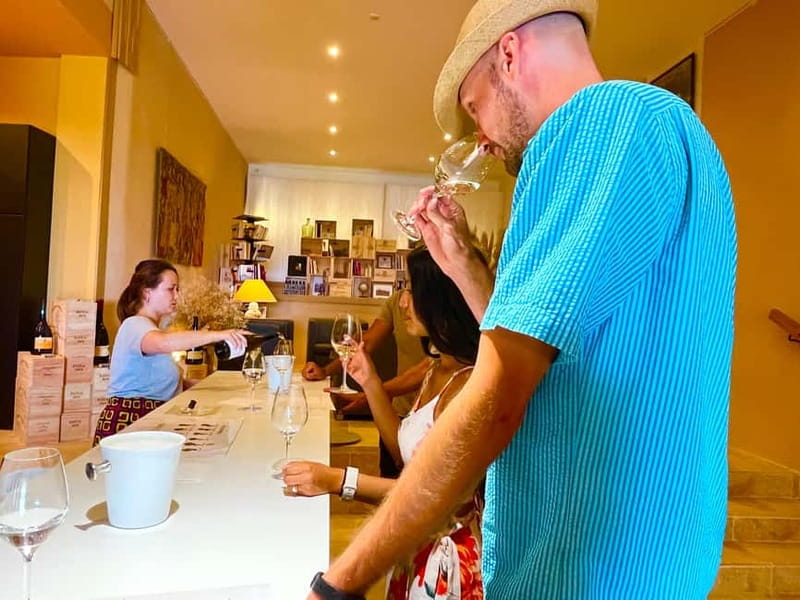
At $93 per person, the value is strong if you choose the full morning tour. You receive transportation from Avignon, a guide for the entire outing, three winery visits, at least nine wine samples, and a local picnic during the warmer months.
The price also covers something harder to buy independently: access to small estates and a guide who can explain the differences between three appellations. Renting a car and arranging three tastings would require more planning, and someone in your party would need to avoid drinking.
The value is slightly different on the afternoon and winter options. Those departures include fewer extras, especially without the picnic, though the afternoon still includes three wineries and the winter version includes two. If food is important to you, the morning spring, summer, or early autumn tour is the clearest choice.
Personal purchases are not included. You can buy bottles if you wish, but there is no stated pressure to do so. Allow room in your budget if you expect to take wine home.
Who should book this outing?
I would choose this tour if you are staying in Avignon and want a broad introduction to southern Rhône wine without organizing a car. It is particularly good for people who enjoy hearing how geography and local weather affect what is in the glass.
It also suits casual wine drinkers. You do not need to arrive with specialist knowledge, since the day moves from familiar ideas such as red and sweet wine to more specific subjects such as AOC rules and soil types.
The small group works well for couples, solo visitors, and friends who like conversation. French and English are both offered, and Arnaud can answer questions in either language.
I would think twice if you dislike compact vehicles, need plenty of personal space, or want a formal gourmet lunch. I would also avoid it if you are pregnant or have heart problems, since the activity is specifically not suitable for those conditions.
Weather can cancel the outing, and winery selections may differ by season. The stated cancellation policy allows a full refund when you cancel at least 24 hours ahead, which gives you some useful flexibility.
Should you book the Ventourisme wine tour?
Book it if you want three distinct Rhône wine areas, a small vehicle, local food, and a guide who explains the countryside rather than simply driving between tasting rooms. The morning tour from April through October offers the fullest package, especially if the picnic appeals to you.
Choose the afternoon departure if you want the same three wine areas without a meal. Choose the winter morning option if you prefer a shorter outing and do not mind visiting only two estates.
The one real caution is comfort in the car. If your group reaches six, expect limited space. For most people who can handle that, $93 buys a well-rounded day in the Rhône Valley, with enough wine, scenery, and local context to make the trip worthwhile.
FAQ
Where does the tour start and finish?
The tour starts and ends in front of Hôtel Le Bristol in Avignon. The vehicle is black and has Ventourisme written on the sides.
How many wineries do I visit?
The full morning and afternoon tours visit three wineries, one in Beaumes-de-Venise, one in Gigondas, and one in Châteauneuf-du-Pape. The winter morning tour visits two estates, one in Gigondas or Beaumes-de-Venise and one in Châteauneuf-du-Pape.
How many wines are included?
The full tour includes at least three wines at each of three wineries, for a minimum of nine wines. The winter option includes two estates, so the number of tastings may be different.
Is the picnic included?
A picnic is included only on the morning tour from April through October. It uses fresh products from local farms and may include eggs, tapenade, goat cheese, seasonal fruit, bread, and grape juice.
Does the afternoon tour include food?
No. The afternoon tour does not include a picnic. It runs from about 2 p.m. to 6:30 p.m.
What languages does the guide speak?
The live guide speaks French and English.
How large is the group?
The group is limited to six participants. The tour uses a black car, and some people may find the vehicle cramped when it is full.
Can I bring luggage or a walking frame?
No. Oversize luggage, large bags, and walking frames are not allowed in the car.
Just added in Avignon
- Rando Aqua – “Le Pont de Tusset” – Discovery Course★ 5.0 · 92 reviews
- Rafting Verdon – “Explor Verdon” – Family Course★ 5.0 · 51 reviews
- Wines from Châteauneuf-du-Pape and surrounding areas in 1/2 day★ 5.0 · 96 reviews
- In the footsteps of Van Gogh in Provence from Avignon★ 4.5 · 102 reviews
- Wine Tasting Tour at Châteauneuf du Pape★ 5.0 · 36 reviews
- Van Gogh & Carrières de Lumières Half-Day Tour from Avignon★ 4.5 · 29 reviews
- Truffle Hunting in Provence★ 5.0 · 55 reviews
- Lavender Route – Small-Group Day Trip from Avignon★ 5.0 · 120 reviews
Wine Tours, compared.
Authentic Parisian Gourmet Food Tour with 10 Local Dishes & Wines
Read our review →
Loire Valley Castles Day Trip from Paris with Complementary Wine
Read our review →
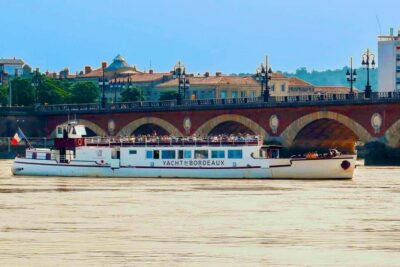
River Garonne Cruise with Glass of Wine and Canelé
Read our review →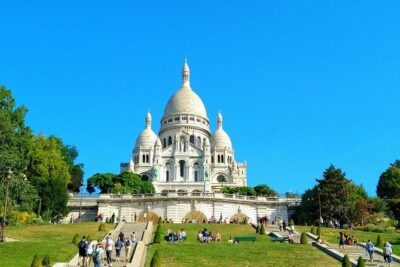
Montmartre Hill French Gourmet Food and Wine Tasting Walking Tour
Read our review →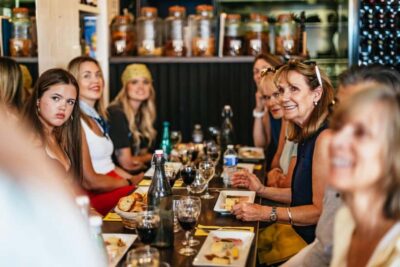
Montmartre Cheese, Wine & Pastry Guided Walking Tour
Read our review →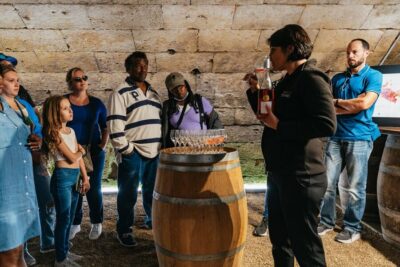
Loire Valley Castles Day Trip With Wine Tasting
Read our review →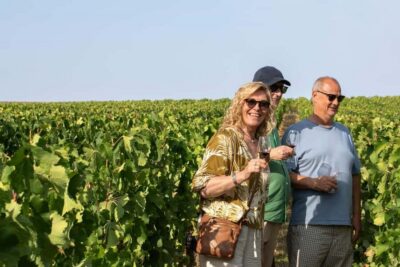
Afternoon Saint-Emilion Wine Tasting & snack
Read our review →Browse the lists this tour appears in