
Reviewed · ORSAY MUSEUM TOURS
Musée d’Orsay Skip-the-Line Tour with Expert Guide
The Musée d’Orsay is one of Paris’s most rewarding museums because the building is part of the show. You enter a former Beaux-Arts railway station and quickly move from grand architecture to paintings that once shocked the art world. I like the way this tour connects the art to the artists’ arguments, rivalries, and social rules. I also like that you can stay inside after the guided visit instead of being hurried out.
The main drawback is time. A 90-minute tour moves quickly through a large museum, and several visitors found that guides sometimes spoke or walked too fast. This is a highlights tour, not a close study of every room, and the museum can be very crowded.
Key points at a glance
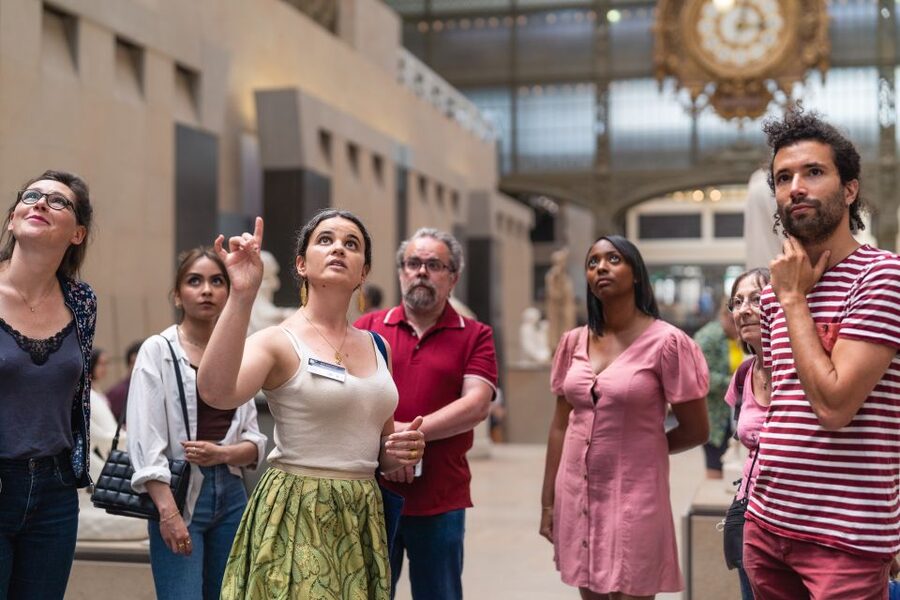
- A former railway station becomes your museum setting: The Musée d’Orsay’s Beaux-Arts structure, built for the World’s Fair, gives the visit a sense of occasion before you even reach the paintings.
- Impressionism is explained as a rebellion: Learn why visible brushstrokes, bright color, and scenes of ordinary life caused outrage when first shown.
- Guides bring different strengths: Anthony, Avi, Perrine, Sarah, Simone, and other English-speaking guides are praised for clear storytelling, humor, and strong art knowledge.
- The dedicated entrance saves useful time: Meet opposite the museum by the Legion d’Honneur Museum, and do not join the public ticket lines.
- You can continue after the tour: Once the guided portion ends, remain in the museum and revisit works or explore rooms you passed quickly.
- Plan around practical limits: Large bags and luggage are not allowed, and the tour is not suitable for wheelchair users.
Why the Musée d’Orsay works so well with a guide
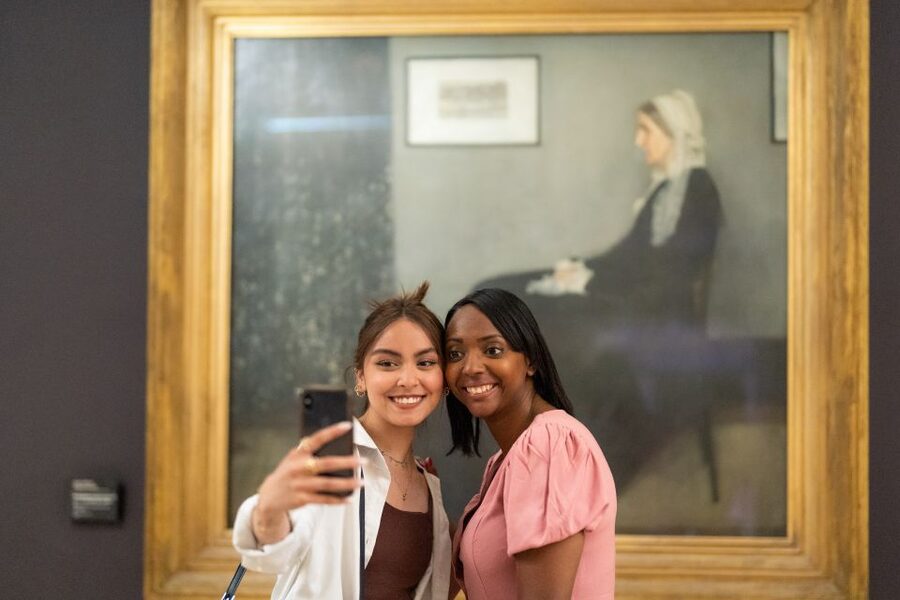
The Musée d’Orsay is famous for Impressionist paintings, but its collection covers more than a single movement. The museum carries you through a period when artists questioned academic rules, traditional subjects, and even the idea of what a finished painting should look like.
That shift can be hard to grasp if you simply walk from canvas to canvas. A guide gives you the missing thread. Instead of seeing a bright Renoir scene as only pretty, you begin to notice its brushwork, modern subject, and challenge to older painting methods. A quiet street or café scene becomes evidence of a changing Paris.
The guide also helps you see how artists influenced one another. The tour connects Monet, Manet, Renoir, Degas, and Van Gogh to the wider artistic arguments of their time. Personal stories and social scandals add life, but the strongest guides use those stories to explain the paintings rather than turning the tour into gossip.
That approach has worked especially well for families and mixed-age groups. One family found that Sarah adapted the route for a child especially interested in Van Gogh, while keeping the rest of the tour focused on the museum’s main works. Another group spanning late teens to late seventies appreciated a guide who explained political and everyday life alongside painting styles.
More Orsay visits booked from Paris:
- Paris in a Day: Louvre or Orsay, Eiffel Tower, City Walk & Cruise
★ 5.0 · 1,956 reviews - Paris: Musée d’Orsay Entry Ticket and Seine River Cruise
★ 4.6 · 1,344 reviews - Paris: Musée d’Orsay Skip-the-Line Tour with Expert Guide
★ 4.5 · 1,145 reviews
Meeting the guide outside the museum
Your meeting point is opposite the main entrance to the Musée d’Orsay, next to the entrance of the Legion d’Honneur Museum. Look for the guide near the entrance wearing a guide badge on an orange lanyard.
The practical warning matters: do not get into the museum lines. The public queues are not where you meet the guide, and joining one can create needless confusion before the tour begins.
The museum is easy to reach by RER Line C at Musée d’Orsay or Metro Line 12 at Solferino. Hotel pickup and drop-off are not included, so you need to make your own way there.
Give yourself enough time to find the meeting point. Paris museums can have several entrances and security areas, and the tour cannot provide a refund for a missed departure. You can cancel for a full refund up to 24 hours before the tour, and a reserve-now, pay-later option is available if your schedule is still shifting.
Entering a Beaux-Arts railway station
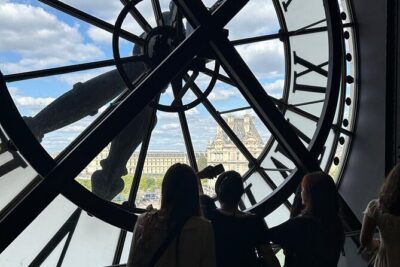
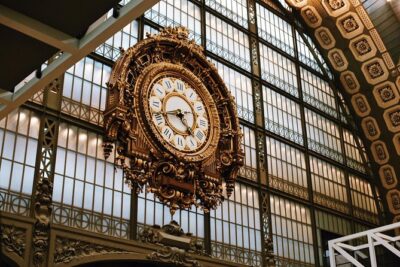
Before you focus on Impressionism, take a moment to look at the building. The museum occupies a magnificent railway station built for the World’s Fair, and its original purpose helps explain the unusual scale of the interior.
The great central space gives the museum a different feel from a traditional palace museum. A railway station was designed to move people through, while the museum asks you to slow down and look. That contrast is part of its charm.
A guide can make this architectural setting useful rather than decorative. You learn why the building matters to the museum’s identity and how its broad interior helps organize the collection. This opening also gives the group a shared starting point before the tour turns to individual artists.
Following the shock of Impressionism
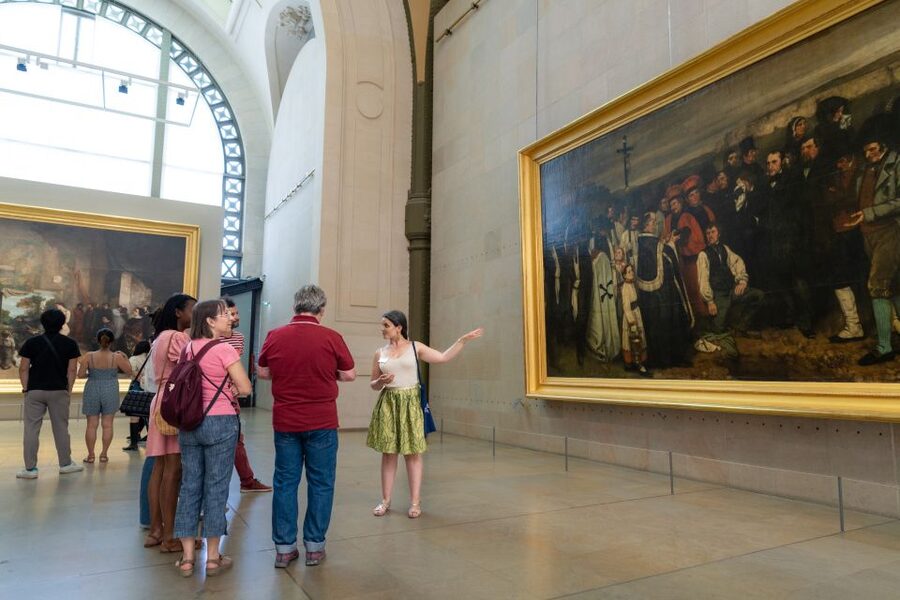
The heart of the tour is the story of artistic resistance. Impressionist paintings now appear familiar, but their first audiences did not see them as safe or charming. Bright colors, visible brushstrokes, everyday scenes, and modern people challenged the polished subjects and controlled finish favored by older institutions.
Your guide explains this change in plain terms. You see how artists broke with tradition, then consider what that break meant at the time. The paintings become less like isolated masterpieces and more like statements in an argument about modern life.
This is where a strong guide makes a real difference. Anthony is repeatedly praised for enthusiasm, patience, humor, and clear explanations. Avi is praised for turning art history into an engaging conversation. Perrine is noted for her passion and ability to move a group through busy rooms. Sarah is particularly good for groups that want context, family-friendly communication, and some flexibility.
Guides do not all follow the exact same personality or rhythm. That can be a benefit because the tour feels human rather than recorded. It also means your experience may depend on the individual guide. Most comments praise the explanations and warmth, but one clear caution is that some guides move quickly between rooms or speak too fast for every listener.
Same base, a different kind of day:
- Paris: Louvre Museum Timed-Entrance Ticket
★ 4.6 · 71,977 reviews - Disneyland® Paris 1-Day Ticket
★ 4.6 · 49,412 reviews - Paris: Versailles Palace and Gardens Full Access Ticket
★ 4.6 · 41,579 reviews - Paris: Evening River Cruise with Music
★ 4.4 · 22,721 reviews
The major artists and what you learn
The route focuses on the museum’s major highlights, with room for lesser-known works along the way. The exact order can change with crowds and gallery conditions, so think of it as a guided sweep through the collection rather than a fixed checklist.
Monet, Manet, and Renoir
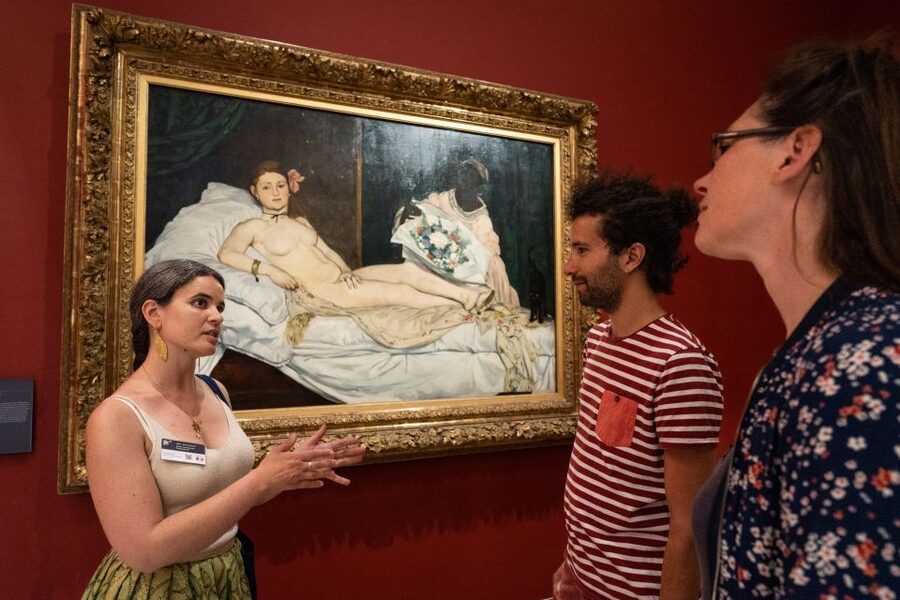
With these artists, the guide can show how painting moved toward modern life and a freer handling of color. You are not simply told that the works are Impressionist. You are shown what to look for, including brushwork, light, subject choice, and the refusal to make every surface look polished.
Stories about the artists’ relationships and the society around them help explain why the works were controversial. The best explanations keep the focus on what you can see in front of you, linking private lives and public attitudes to the choices on the canvas.
Degas and the modern city
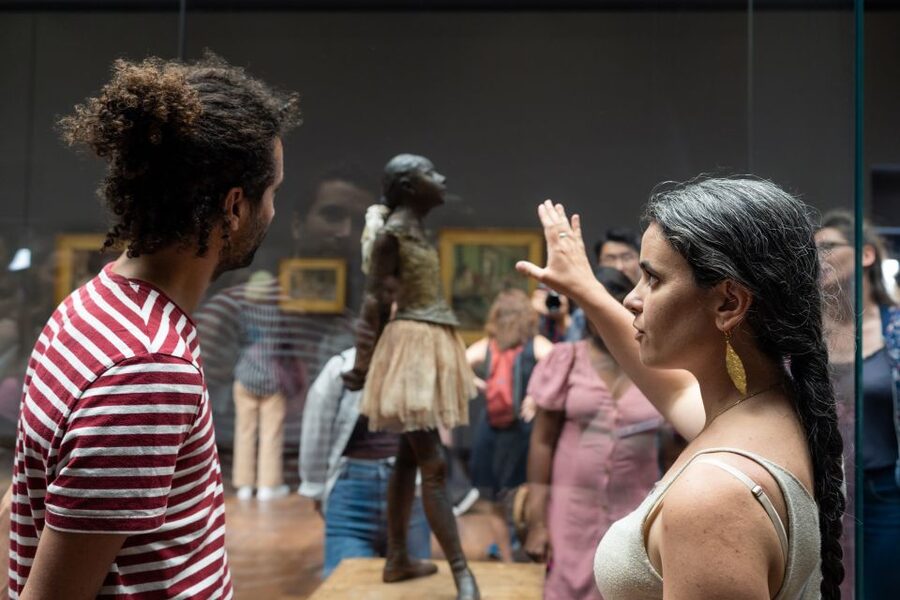
Degas offers a useful contrast to the more familiar outdoor scenes associated with Impressionism. His work encourages you to think about movement, unusual viewpoints, and modern urban life.
A guide’s help is valuable here because a quick glance may not reveal how carefully a composition directs your eye. The tour gives you a way to read the image rather than simply recognize the artist’s name.
Van Gogh and later developments
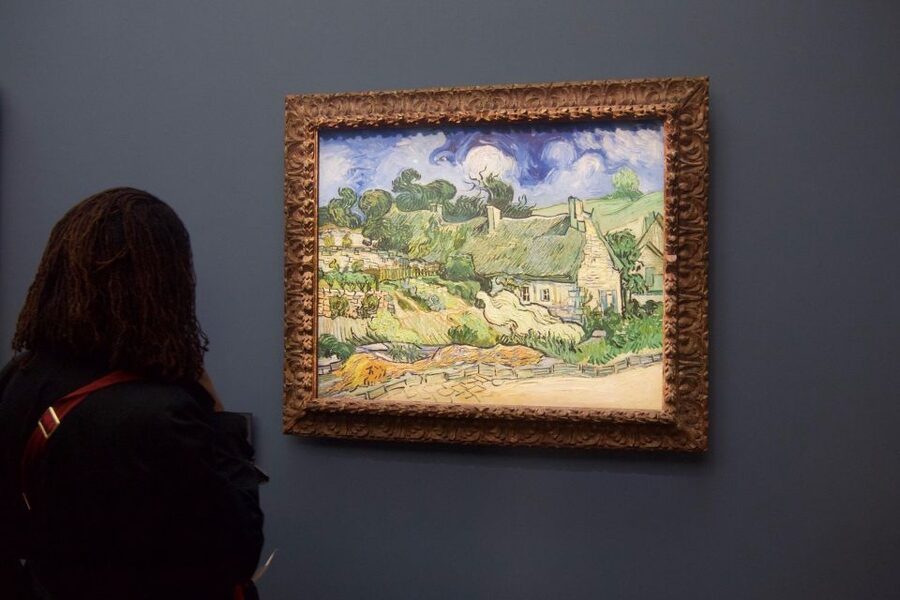
Van Gogh is often a priority for first-time visitors, and the tour makes sure you reach his section. The guide explains how the earlier changes in color and brushwork opened the way for artists who pushed expression even further.
If Van Gogh is your main reason for visiting, tell your guide early. One family found that Sarah changed the order of the tour so they could see the Impressionist galleries before crowds grew and spend extra attention on areas that mattered most to them.
Do not expect a long, quiet session in front of each Van Gogh painting. The tour has a broad route to cover, and the museum may be crowded. The real value is getting enough context to return to the works later with a better eye.
Crowds, headsets, and the pace of the visit
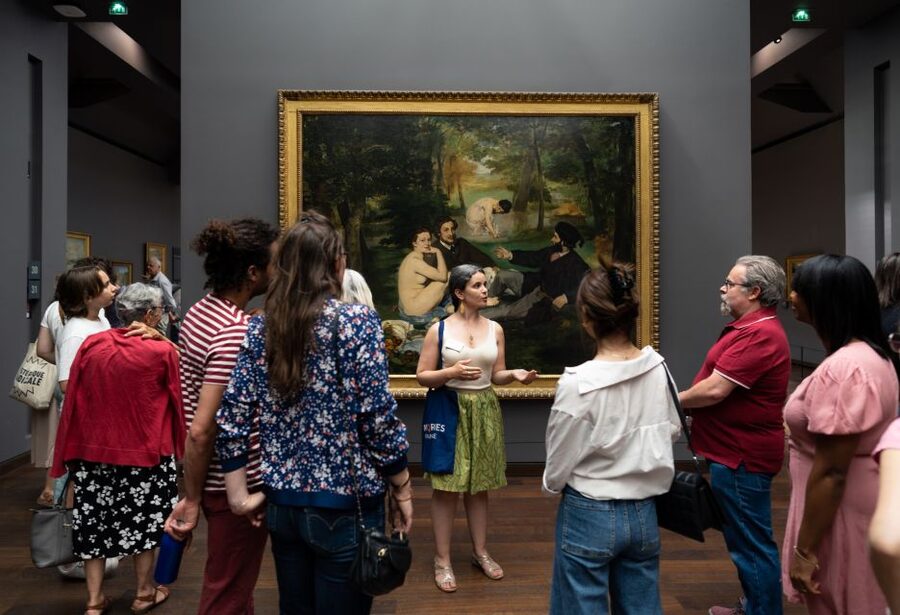
The Musée d’Orsay can be extremely busy, especially around the best-known paintings. A guide cannot remove the crowds, but an experienced one can position the group well, find useful viewing spots, and keep everyone together while moving through the rooms.
This practical skill comes up again and again in the feedback. Several guides are praised for steering groups through packed galleries without losing the main story. That matters because a crowded room can turn a great painting into a frustrating glimpse over someone’s shoulder.
Headsets are provided when appropriate. They are especially helpful if you have trouble hearing in busy galleries or if the guide needs to speak while the group is spread out. One older visitor specifically found the earphones useful.
The pace is the tradeoff. The advertised guided portion is 1 hour 45 minutes, while the activity duration is listed as roughly 90 to 150 minutes depending on the departure. Either way, this is a compact visit for a museum of this size.
I would not book it expecting long periods of silent looking. You will cover major works, hear a large amount of context, and get a strong outline of the museum. If you want to study one artist in detail, use the time after the tour.
What the $82 price buys you
At $82 per person, this is not the cheapest way into the Musée d’Orsay. The value comes from combining museum admission, a dedicated entrance, an accredited local guide, headsets when needed, and the ability to remain inside afterward.
For a first visit, that package can make sense. The guide saves you from spending your limited Paris time trying to decide which rooms matter most. You also get the background that turns famous names into a connected story.
The price is harder to justify if you already know the museum well or prefer to wander alone. You may spend less by visiting independently, then use a guidebook or audio material for context. You also need to remember that the tour will not give you equal time with every section.
I see the strongest value for people with one visit, limited time, or little confidence in reading art. The tour gives you a route, a framework, and a useful starting point for independent exploration.
Staying after the guided portion
One of the best features is the freedom to remain in the museum after the guide finishes. You can return to a favorite painting, visit rooms covered quickly, or continue with a temporary exhibition if available and accessible under the museum’s current arrangements.
Use the guided tour as your orientation rather than your entire museum visit. Listen for the names, themes, and rooms you want to revisit. Then slow down once the group has dispersed.
This also solves the main weakness of the short format. You do not need to demand that every painting receive equal attention during the tour. Let the guide handle the major route, then spend your own time with Van Gogh, pointillism, or another area that caught your interest.
Who should book this tour?
I would recommend it to a first-time Musée d’Orsay visitor who wants art explained without an academic lecture. It also suits families, older visitors who value headsets, and anyone who wants help finding the main works in a crowded museum.
It is a good match for you if you enjoy stories about artistic change, social rules, and the people behind the paintings. The guides are especially strong at adding context about artist relationships, public scandals, political conditions, and daily life.
You may prefer an independent visit if you want to move slowly, sketch, read every label, or focus on one artist. The tour is also a poor fit if you carry large luggage or need wheelchair access, since luggage and large bags are not allowed and the activity is not suitable for wheelchair users.
Final verdict: a smart first visit to the Orsay
Book this tour if you want the Musée d’Orsay to make sense quickly. The former railway station, the story of artistic rebellion, and the guide’s route through Monet, Manet, Renoir, Degas, and Van Gogh give you far more than a hurried list of famous paintings.
Just set the right expectation. You will move briskly, the galleries may be packed, and your guide may not linger as long as you would like. At $82, the tour is worthwhile when expert explanation and saved time matter to you. Stay afterward, revisit the works that caught your eye, and the short guided format becomes much more useful.
FAQ
How long does the Musée d’Orsay tour last?
The guided tour is listed as 1 hour 45 minutes. The activity duration can range from 90 to 150 minutes depending on the selected start time and visit conditions.
What language is the tour conducted in?
The live guided tour is conducted in English.
What is included in the price?
The price includes the guided Musée d’Orsay visit, an accredited local guide, entrance fees, a dedicated entrance, and headsets when appropriate. You may remain in the museum after the guided tour.
Can I stay in the museum after the tour?
Yes. You can stay as long as you like after the guided portion and continue exploring the galleries.
Where do I meet the guide?
Meet opposite the main entrance to the Musée d’Orsay, beside the entrance to the Legion d’Honneur Museum. The guide wears a badge on an orange lanyard.
Should I join the museum entrance line before meeting the guide?
No. Do not get into the museum lines. Go to the stated meeting point and look for the guide there.
Which public transport stations are closest?
The nearest stations are Musée d’Orsay on RER Line C and Solferino on Metro Line 12.
Are headsets provided?
Headsets are provided when appropriate so you can hear the guide in the museum.
Can I bring luggage or a large bag?
No. Luggage and large bags are not allowed for this activity.
Is the tour suitable for wheelchair users?
No. The activity is listed as not suitable for wheelchair users.
Can I cancel the booking?
You can cancel up to 24 hours before departure for a full refund. Missed tours are not refundable.
Just added in Paris
- La Vallee Village Shopping Outlet by Luxury Transport from Paris★ 3.5 · 111 reviews
- Design Luxury and Personalized Jewelry in Paris le Marais★ 5.0 · 160 reviews
- Oh My God She’s Parisian! English Comedy Show in Paris★ 4.5 · 116 reviews
- Paris: Eiffel Tower Photo Shoot★ 5.0 · 420 reviews
- Photo Session in Paris – Photographer at the Eiffel Tower★ 5.0 · 422 reviews
- Paris City Sightseeing Half Day Guided Segway Tour with a Local Guide★ 5.0 · 371 reviews
- Paris Create your Own Perfume Workshop with a Perfumer★ 4.5 · 275 reviews
- Paris: Oh My God She’s Parisian! English Comedy Show★ 4.7 · 257 reviews
Orsay Museum Tours, compared.
Paris in a Day: Louvre or Orsay, Eiffel Tower, City Walk & Cruise
Read our review →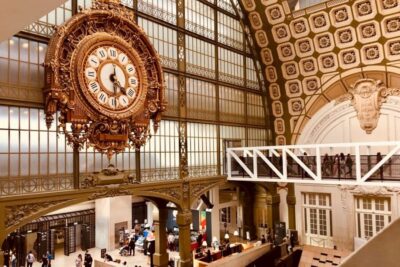
Musée d’Orsay Entry Ticket and Seine River Cruise
Read our review →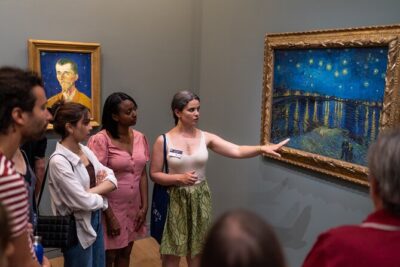
Musée d’Orsay Skip-the-Line Tour with Expert Guide
Read our review →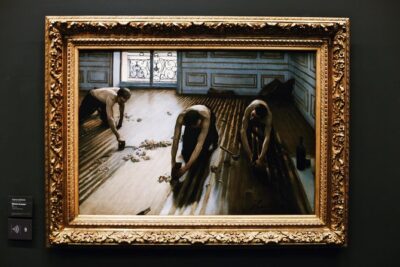
The Musée d’Orsay Guided Tour Orsay Museum Semi-Private 6ppl Max
Read our review →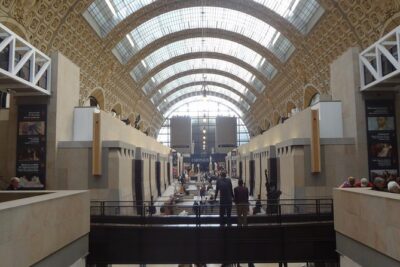
Orsay Museum – Exclusive Guided Tour (Reserved Entry Included)
Read our review →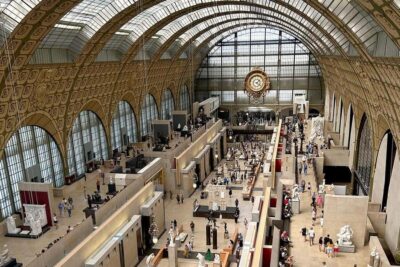
Orsay Museum and Rodin Museum Combo Entry Ticket
Read our review →Browse the lists this tour appears in