
Reviewed · TOURS IN PARIS
From Paris: Day Trip to Champagne with 8 Tastings & Lunch
The best part of this Champagne day trip is the contrast: you see how a famous international house works, then sit down at a smaller producer for lunch and tastings. Between the two, your guide takes you through the vineyards, explains the soil and grapes, and opens more bottles, including styles such as Blanc de Blancs, Blanc de Noirs, rosé, and possibly ratafia.
I like the mix of producers, because it shows that Champagne is not just glossy cellars and famous labels. I also like the well-fed, well-organized pace: croissants on the morning drive, a proper French lunch, and eight tastings spread across the day. Guides including Huw, Cédric, Joel, Lionel, Nicholas, and Aurélien have been praised for making the long drive both useful and fun.
The catch is the distance. You spend about four hours in the van, and the day can run 10 to 11 hours before the return through Paris traffic. The exact famous house can also change, so do not book this expecting Veuve Clicquot or Moët & Chandon specifically.
At a glance
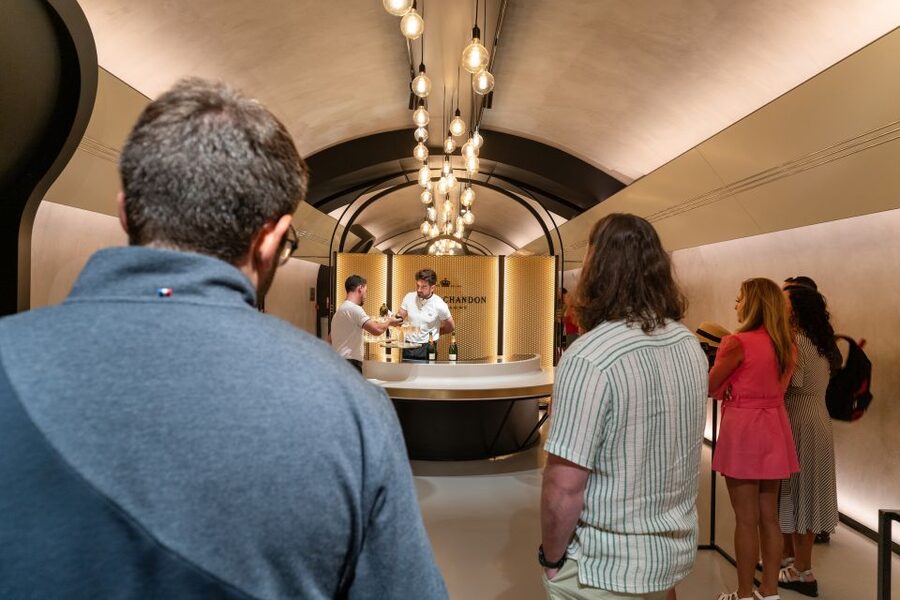
- Eight Champagnes across several stops: Taste different styles instead of sampling one house’s lineup only.
- A useful producer comparison: See a major brand, then a family-run estate or cooperative.
- Lunch at a Champagne property or local restaurant: Expect regional French food paired with Champagne.
- A guide who teaches as you travel: Huw, Joel, Cédric, Nicholas, Lionel, and others have been praised for clear explanations and good group care.
- Pickup from central Paris: Start at your hotel if it is centrally located, then travel in an air-conditioned minivan.
- A full but flexible day: Small groups and private departures are available, though the exact wineries depend on availability.
Why this Champagne trip works better than a quick tasting
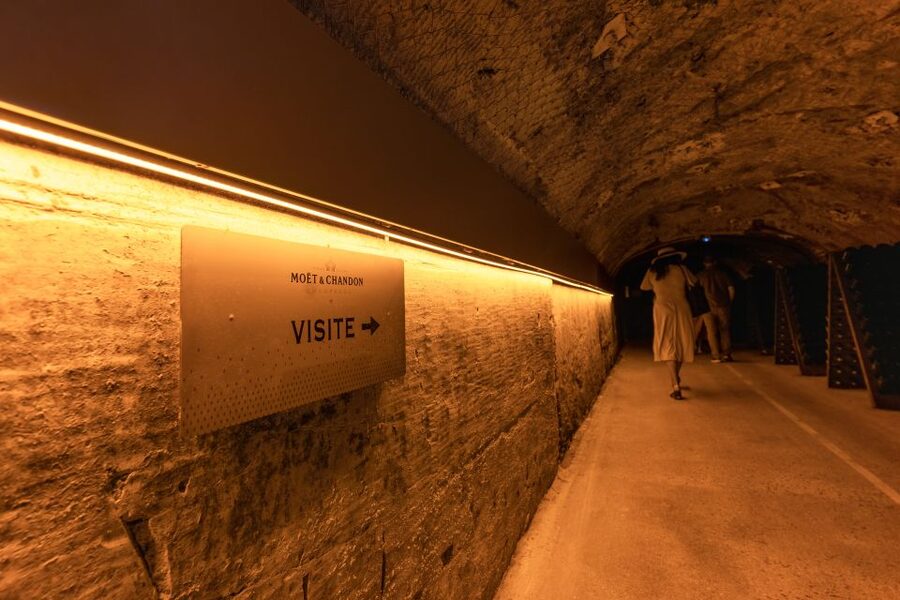
Champagne is not a quick hop from Paris. The drive takes about two hours each way, so a simple cellar visit would not justify the time for many people. This outing makes the journey count by combining formal tours, vineyard views, local food, and instruction.
I like that the day is not built around one brand. A famous house gives you the polished, large-scale side of production. A family producer or cooperative shows how smaller operations fit into the same region. That contrast helps you understand what you are drinking instead of simply collecting tasting glasses.
You also get a useful introduction to the region before arriving. The guide serves fresh croissants during the morning drive and talks about Champagne’s traditions, production, and villages. Guides such as Huw and Lionel have been singled out for making this part more than dead time in a van.
The advertised price is $345 per person. That is a serious day-trip cost, but it includes transportation, a driver-guide, two Champagne-house visits, eight tastings, lunch, and wine instruction. Paying separately for a train, taxis, cellar admissions, food, and tastings would be awkward in this spread-out region. For someone who wants a planned day without driving after drinking, the package makes practical sense.
Other trips people book in Paris:
- Paris: Louvre Museum Timed-Entrance Ticket
★ 4.6 · 71,977 reviews - Disneyland® Paris 1-Day Ticket
★ 4.6 · 49,412 reviews - Paris: Versailles Palace and Gardens Full Access Ticket
★ 4.6 · 41,579 reviews
The two-hour ride from Paris
Pickup is available from hotels in central Paris. If your address is outside the central pickup area, you are directed to a central meeting point instead. For a tour that may begin early, this saves you from crossing Paris before breakfast.
The vehicle is an air-conditioned minivan, usually shared with a small group. Groups of around six to eight people appear common, though the exact size can vary. That format gives you more room for conversation than a large coach, and it makes short photo or viewpoint stops easier.
Bring a warm layer. Cellars are cool, even when the weather outside is mild, and the tour specifically recommends warm clothing. Comfortable shoes also make sense for cellar visits and time outside among the vines.
The return trip is another two hours, and central Paris traffic can stretch the day. One person specifically noted delays caused by protests and heavy city traffic, so avoid scheduling a tight evening reservation or train immediately after the stated end time.
A famous Champagne house first
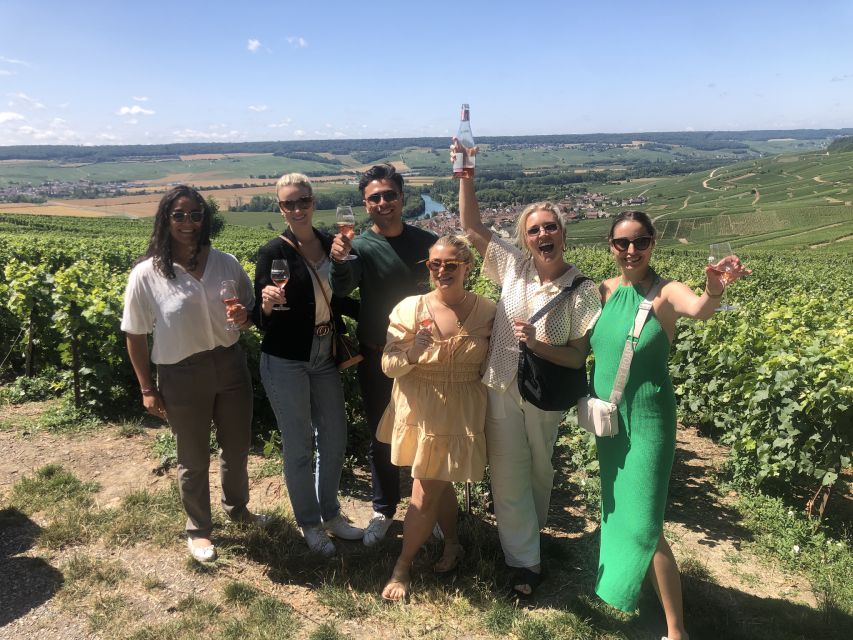
The first major stop is a renowned Champagne house. Depending on the day, this may be Mumm, Veuve Clicquot, Moët & Chandon, Mercier, Pommery, Lanson, or Nicolas Feuillatte.
That variety matters. Large houses have the staff and facilities to explain the standard Champagne process in a polished way. You can expect a guided cellar visit, an explanation of production, and the first tasting, with the whole stop lasting about an hour and a half.
Do keep your expectations realistic. A named house is not guaranteed. One booking was initially drawn by the possibility of visiting Veuve Clicquot but received a different major-house visit because of high-season availability. The tour provider chooses from its network, so book this for the Champagne experience rather than one logo.
The tasting here gives you a reference point for the rest of the day. Later, when a small producer pours a bottle with a different grape balance or aging style, you have something useful to compare.
Seeing the vineyards from the road
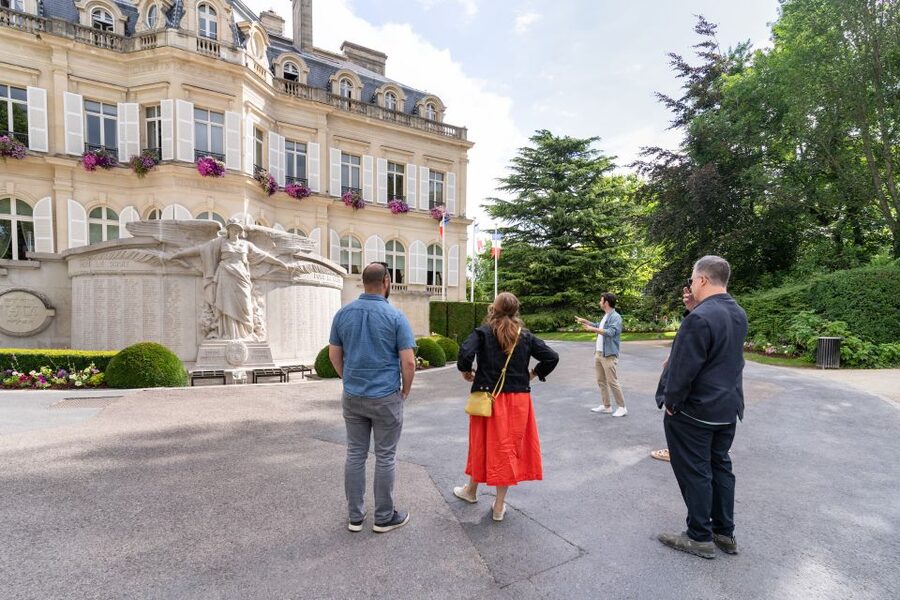
After the first house, the van heads through the Champagne countryside toward lunch. This is where the day gains its sense of place. You pass vineyard-covered hills, villages, and broad views that are difficult to reach without a car.
The guide continues the wine lesson during the drive. You learn about terroir, grape varieties, and the techniques that shape Champagne. At a suitable point, the guide may stop in the vines for a tasting and a view. Several people particularly appreciated raising a glass outdoors, and one guide stopped at a scenic overlook for photographs and a Champagne toast.
These stops depend on timing and conditions, so do not treat them as a guaranteed separate attraction. Still, they are valuable because they connect the bottle to the land. You see that Champagne is a working wine region, not just a cellar brand.
The road time can feel long if you want constant activity. I would bring water and use the drive as a chance to ask questions. A guide who is good at explaining the region, such as Cédric, Joel, or Aurélien, can turn the countryside between stops into part of the lesson.
Same base, a different kind of day:
- Paris: Evening River Cruise with Music
★ 4.4 · 22,721 reviews - Paris: Eiffel Tower Entry Ticket with Optional Summit Access
★ 4.4 · 20,035 reviews - Paris: Eiffel Tower Summit or Second Floor Access
★ 4.3 · 17,248 reviews - Paris: Louvre Guided Tour with Reserved Access & Boat Cruise
★ 4.3 · 16,353 reviews
Lunch at a small Champagne property
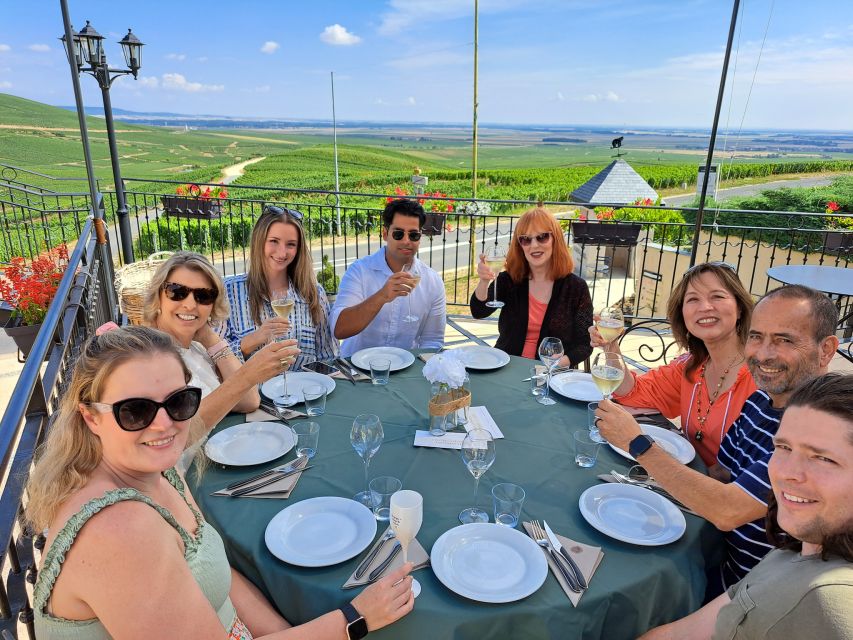
Lunch is one of the strongest parts of the day. It is served either at a family-run Champagne house or at a quality local restaurant, with traditional French food and Champagne pairings. The meal lasts about two hours, so this is not a rushed sandwich stop.
The small-house setting is especially appealing. Instead of eating beside a large tour group in a city restaurant, you may sit at a modest local property where the hosts also make the wine. That puts the food and bottles in the same story. Several menus have included classic regional dishes, dessert, and additional pours such as rosé, Blanc de Noirs, Blanc de Blancs, or ratafia when available.
Ratafia is a sweet local liqueur, and it gives you a break from dry sparkling wine. It is not guaranteed, but it is a worthwhile extra if offered.
Lunch also solves a practical problem. Eight tastings over a full day require real food, and this tour does not leave you to find it between cellar visits. Dietary needs should be given when booking, since the meal is part of the planned experience.
The only limitation is that the exact menu and setting can change. Think traditional and regional rather than a fixed restaurant menu. If you need a highly specific meal, ask before booking.
A smaller producer or cooperative in the afternoon
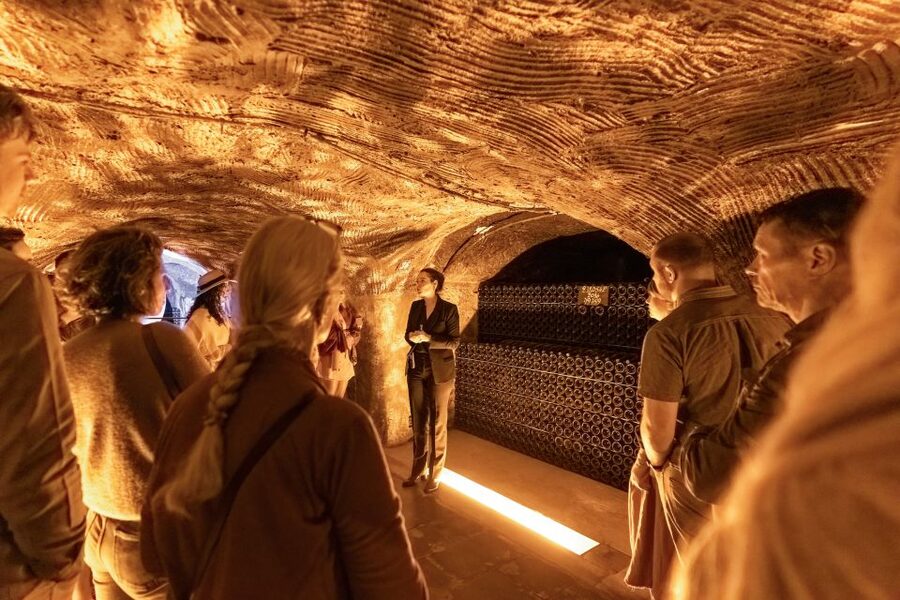
The afternoon stop shows a different side of the region. You may visit a family estate or a cooperative, where the guide and local host explain another way of making and selling Champagne.
This is where the tour earns its price for anyone curious about wine. A large house has brand recognition and a broad distribution network. A family producer may offer a more personal view of vineyards, small batches, and local decisions. A cooperative adds another useful angle by showing how growers can work together.
The exact host can vary. Most accounts describe friendly staff and generous tastings, though one person found the second house less engaging than the others. That is a fair warning: the quality of the day depends partly on the local host and the group’s interest.
Still, the pattern is sound. You taste at a major house, a smaller producer, and sometimes a cooperative, then compare the styles. One stop may also be a good place to buy bottles directly. Several people chose to ship Champagne home after finding bottles they liked, but shipping arrangements and costs are not included in the stated price.
Eight tastings, not eight rushed sips
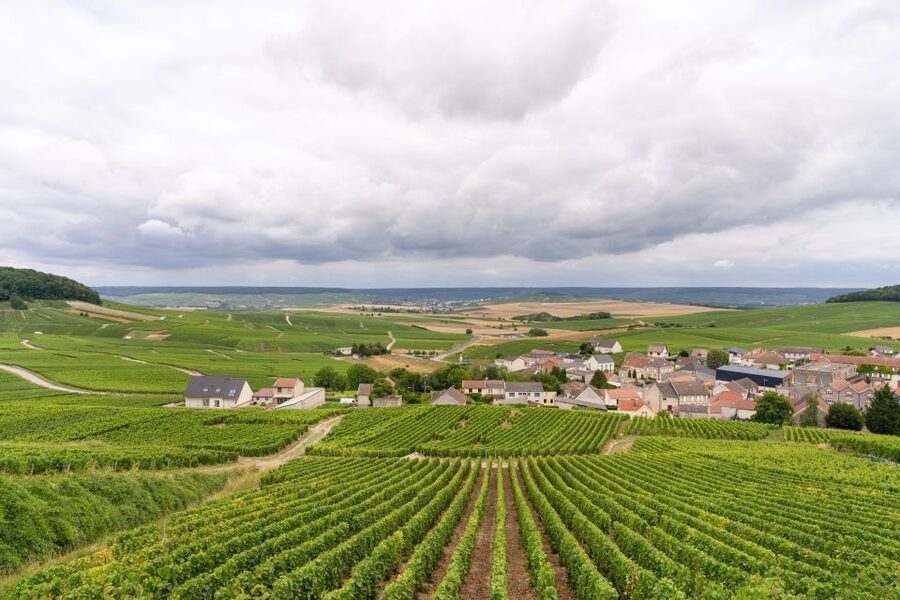
The tour includes eight Champagnes across the day. That may include the first major-house pour, vineyard tasting, lunch pairings, and the final producer visit. The exact breakdown can shift with the participating houses.
The point is not to race through eight glasses. It is to taste across styles and producers while someone explains what you are noticing. You may encounter Blanc de Blancs, made from white grapes, Blanc de Noirs, made from dark grapes, rosé, and possibly ratafia.
You do not need a strong wine background. The guide teaches basic tasting in plain language and helps you notice differences in aroma, body, sweetness, and finish. If you already know wine, you can ask more technical questions about grapes, terroir, and production.
Drink water and pace yourself. Lunch helps, but this remains a day of repeated tastings. The minivan means you are not responsible for driving, yet staying comfortable matters more than finishing every pour.
The guides make a real difference
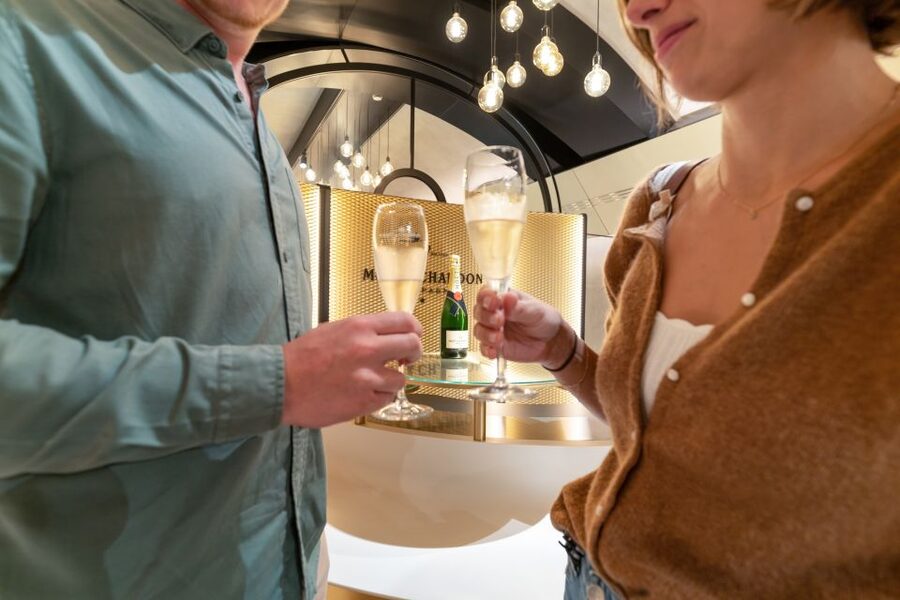
The guide is not only a driver. Guides named Huw, Cédric, Joel, Nicholas, Lionel, Luc, Franck, Aurélien, Chloe, Cecile, Bastian, and Daniel have all led departures. Their styles will differ, but the strongest pattern is clear: a good guide adds context during the drive, keeps the group comfortable, and links the separate stops into one story.
Huw is a trained sommelier and has been praised for explaining wine in a way that works for beginners and experienced drinkers. Lionel has been praised for his Champagne knowledge and for making an early morning more pleasant with a bakery stop. Joel is known for a warm, attentive approach, while Cédric has been praised for balancing information with humor and practical care.
You cannot request a specific guide with certainty from the details provided. Spanish and French tours are subject to availability, and not every winery or guide can offer those languages. English is the safest language assumption unless your booking confirms another option.
Small group or private tour?
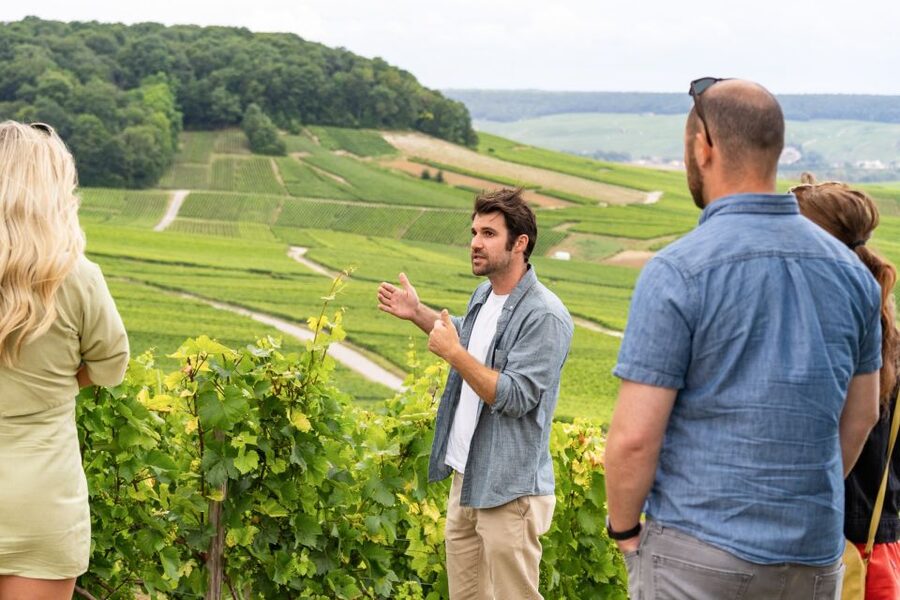
The shared version is a good fit if you enjoy meeting people. The minivan groups are small enough for conversation, and several groups have enjoyed spending the day with fellow passengers. Solo visitors can also feel included, especially with hotel pickup and a guide managing the day.
The private option gives you hotel drop-off and more control over the group experience. The shared tour ends at a central Paris location, including Hôtel de Ville, rather than necessarily returning you to your hotel.
The private upgrade is most useful for families, couples celebrating something, or anyone with a strict schedule. The small-group version offers better value if you are happy to share the vehicle and accept that the wineries are selected for you.
Practical drawbacks to know before booking
This is a long day. The timetable includes about four hours of driving, three main activity blocks, and a return to Paris that may be slowed by traffic. You need to enjoy the countryside and conversation, not just the tastings.
The exact famous house is not fixed, and the smaller producers can vary. That flexibility is part of the point, but it means you should not book around one particular label.
The tour is not suitable for wheelchair users. Pickup is limited to central Paris hotels or arranged central locations, and hotel drop-off is included only with the private option. Cancellation is free up to 24 hours before departure, and you can reserve now and pay later, which helps if your Paris plans are still shifting.
Who should book this day trip?
I would choose it for a first visit to Champagne from Paris, especially if you want wine education without arranging trains, taxis, cellar reservations, and lunch yourself. It is also a good choice for couples, solo visitors, and small groups who want a full day outside the city.
You will get the most from it if you enjoy comparing producers and learning how wine is made. It is less suitable if you want a relaxed half-day, a guaranteed visit to Veuve Clicquot or Moët & Chandon, or a tight evening appointment back in Paris.
At $345, the value comes from the complete package: transport, guide, food, eight tastings, and access to several kinds of producers. I would book it when you want the Champagne region explained to you, not simply photographed from a train window.
FAQ
How long does the Champagne day trip take?
The tour lasts about 10 to 11 hours, including roughly two hours of travel from Paris to Champagne and two hours for the return journey.
Is hotel pickup included?
Pickup is included from hotels in central Paris. If your hotel is outside the central area, pickup and drop-off are arranged from a central Paris location instead.
How many Champagnes will I taste?
The experience includes eight Champagne tastings across the day. The pours may include Blanc de Blancs, Blanc de Noirs, rosé, and ratafia when available.
Which Champagne house will I visit?
The major house can be Mumm, Veuve Clicquot, Moët & Chandon, Mercier, Pommery, Lanson, or Nicolas Feuillatte. The exact house depends on availability, so no single brand is guaranteed.
Is lunch included?
Yes. A traditional lunch is included and is served at a family-run Champagne house or a quality local restaurant, with Champagne pairings.
Can I take the tour in Spanish or French?
Tours may be available in Spanish, English, or French. Spanish and French departures depend on guide and winery availability, so confirm the language when booking.
Just added in Paris
- Paris : Painting experience in an art cafe★ 4.6 · 204 reviews
- Paris: Vallée Village Outlet Shopping Day★ 4.3 · 362 reviews
- Paris night out : Comedy in English ‘How to Become a Parisian ?’★ 4.5 · 373 reviews
- La Vallee Village Shopping Outlet by Luxury Transport from Paris★ 3.5 · 111 reviews
- Design Luxury and Personalized Jewelry in Paris le Marais★ 5.0 · 160 reviews
- Oh My God She’s Parisian! English Comedy Show in Paris★ 4.5 · 116 reviews
- Paris: Eiffel Tower Photo Shoot★ 5.0 · 420 reviews
- Photo Session in Paris – Photographer at the Eiffel Tower★ 5.0 · 422 reviews
Tours in Paris, compared.
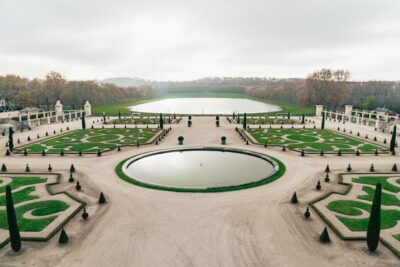
Versailles Palace and Gardens Full Access Ticket
Read our review →
Eiffel Tower Entry Ticket with Optional Summit Access
Read our review →
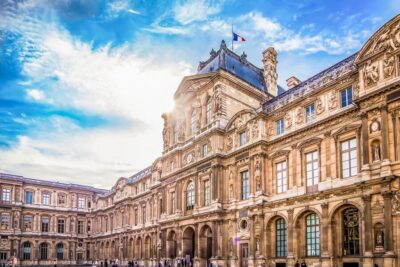
Louvre Guided Tour with Reserved Access & Boat Cruise
Read our review →
Moulin Rouge Cabaret Show Ticket with Champagne
Read our review →
Louvre Museum Masterpieces Guided Tour with Access
Read our review →Browse the lists this tour appears in