
Reviewed · LOUVRE MUSEUM TOURS
Closing Time at the Louvre: The Mona Lisa at her Most Peaceful
Seeing the Mona Lisa near closing time is the clever idea here. The Louvre is enormous, and a late visit gives you a better chance to reach Leonardo’s small portrait without being buried behind a wall of phones. Adam, Julie, Felix, and Nazli are among the guides praised for making the art clear, lively, and easy to follow.
I like the way this tour gives you a sensible route through an impossible museum. I also like the small-group format, the headsets, and the chance to stop for questions rather than simply march past paintings. The catch is simple: closing time does not always mean peaceful time. In June, on holidays, or during peak season, the Mona Lisa room can still be hot, noisy, and crowded.
What makes this Louvre visit worthwhile
- Late access to the Mona Lisa: The timing can reduce the worst crowds and may let you reach the front more easily.
- A focused three-hour route: You see major works instead of losing half the visit to map reading and wrong turns.
- Art-history guidance: The tour connects the Louvre building, its collections, and the stories behind the art.
- Small-group attention: The group can include up to 20 people, with smaller departures possible.
- Skip-the-line help: The group entrance and guided security process can save valuable museum time.
- A lively range of guides: Adam, Julie, Felicia, Laurence, Lee, Nancy, Omar, and others have been praised for clear explanations and engaging styles.
Why the last Louvre entry matters
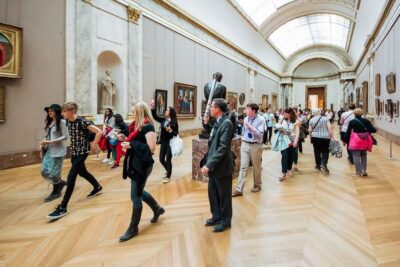
The Louvre is not a museum you casually wander through in three hours. It is a former royal palace with long corridors, grand staircases, several wings, and more famous works than most people can name. Without a plan, you can spend an hour looking for the Mona Lisa and still miss the building’s older layers and greatest sculptures.
This tour solves that problem with a route built around the museum’s essentials. You enter with a guide, move at a purposeful pace, and spend your time looking at art rather than studying the floor plan. That matters most for a first visit, or for a return visit when you want the major sights without repeating a random walk.
The late start is the main selling point. As the museum approaches closing, some daytime crowds thin out. That can make the Mona Lisa easier to see and can give you more breathing room around major works. In a quiet winter period, the effect may be dramatic. One recent departure allowed time to sit near artworks, talk, and take clear photographs.
Do not treat the title as a promise of an empty museum. A June visit can still be crowded, and a 3:30 departure may find the Louvre hot and packed. The late timing improves your odds, but it cannot control school groups, holiday demand, or the museum calendar.
Other ways into the Louvre from Paris:
- Paris: Louvre Museum Timed-Entrance Ticket
★ 4.6 · 71,977 reviews - Paris: Louvre Guided Tour with Reserved Access & Boat Cruise
★ 4.3 · 16,353 reviews - Louvre Museum Masterpieces Guided Tour with Access
★ 4.5 · 12,023 reviews
Meeting at the Arc de Triomphe du Carrousel
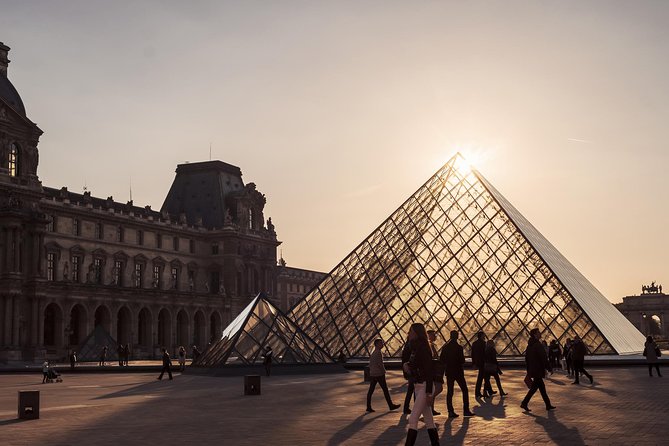
The tour begins at the Arc de Triomphe du Carrousel, at Place du Carrousel in the Louvre complex. This is a practical meeting point, but you should not leave it until the last second. The Louvre grounds contain several plazas, arches, and entrances, and the meeting location is not the same thing as simply arriving at the glass Pyramid.
Allow time to find the correct spot. One serious complaint involved a missed departure after confusion between the Louvre and the stated meeting point. The operator treated the booking as a no-show, so this is not a detail to shrug off. Confirm the meeting instructions before leaving your hotel, arrive early, and look for the guide or group rather than assuming the Pyramid is the meeting place.
The tour ends at the Louvre Museum. Hotel pickup and drop-off are not included, so you handle your own journey to and from the museum. The location is near public transportation, which makes this easier, but the tour itself is a walking visit at a moderate pace.
Beneath the palace, where the Louvre begins
The first part of the visit looks below the famous galleries. At the moat and foundations, you get a glimpse of the medieval fortress that came before the palace most people picture today.
This stop earns its place because the Louvre is not only a container for paintings. The building changed purpose and shape over centuries, and its old foundations help explain why the galleries feel so grand and sometimes confusing. A guide can turn the stonework into a story about defense, royal power, and later expansion.
That context also helps with the rest of the visit. You are not simply crossing rooms in search of famous names. You are moving through a former palace whose architecture was part of the display. One of the strongest aspects of the tour is this connection between the building and the artists who worked within its walls.
Greek sculpture: Venus de Milo and Winged Victory
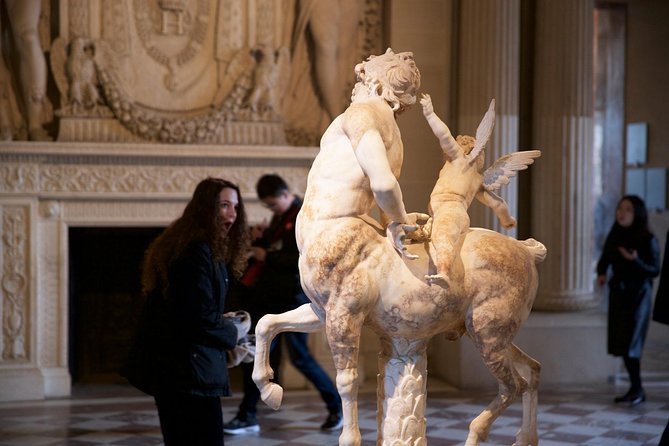
The route then reaches two of the Louvre’s most recognizable sculptures: the Venus de Milo and the Winged Victory of Samothrace.
The Venus de Milo is often presented as a single iconic object, but a guide can help you look past the missing arms and familiar outline. The pose, balance, surface, and setting all matter. This is also a good place to ask questions, since sculpture rewards a slower look than a quick photograph.
Winged Victory has a very different force. Positioned at the top of a grand staircase, she seems to move forward into the space. The staircase and viewpoint are part of the experience. You see not only the statue, but also how the Louvre uses architecture to give a work scale and drama.
The tour does not pretend that you can study every sculpture in the Greek collection. Its value is selection. You see the works that give you a firm sense of the collection, then keep moving before the museum overwhelms you.
Same base, a different kind of day:
- Disneyland® Paris 1-Day Ticket
★ 4.6 · 49,412 reviews - Paris: Versailles Palace and Gardens Full Access Ticket
★ 4.6 · 41,579 reviews - Paris: Evening River Cruise with Music
★ 4.4 · 22,721 reviews - Paris: Eiffel Tower Entry Ticket with Optional Summit Access
★ 4.4 · 20,035 reviews
Paintings with stories behind the surface
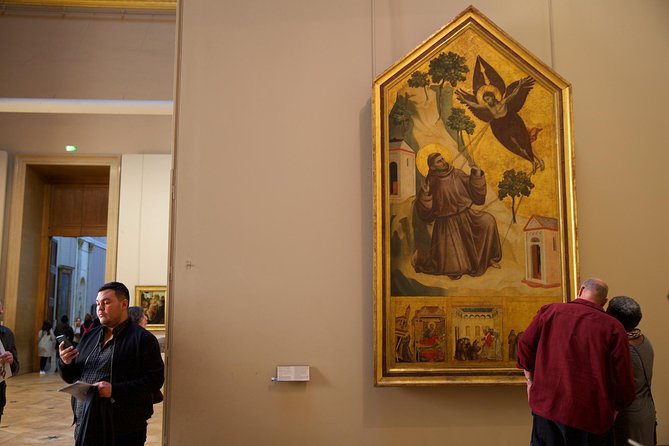
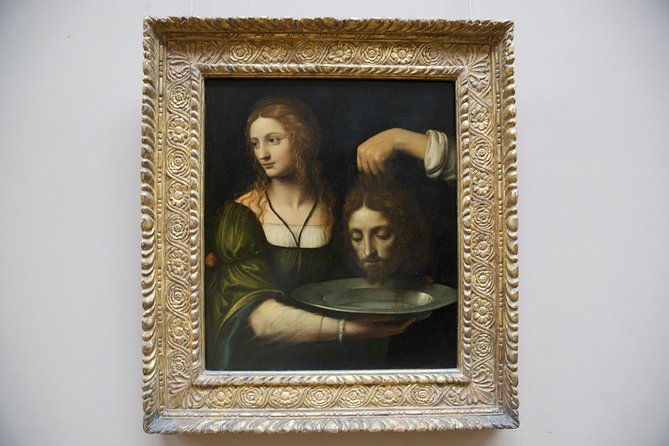
The painting route includes works by Caravaggio, Raphael, and Leonardo da Vinci, along with Théodore Géricault’s The Raft of Medusa. The point is not simply to name famous artists. A good guide shows you details, choices, and clues that are easy to miss when you are alone.
Several guides have been praised for making guests think about the art rather than reciting dates. Adam, for example, has a style that mixes humor with questions and interpretation. Julie has been singled out for keeping the visit engaging while giving the group time to linger. Felix is known for an approachable delivery, and Nazli has been praised for explaining both the Louvre and its artworks in detail.
The guide may use an iPad to show related examples or help you understand a work more fully. That can be useful in a giant museum, where a small detail on a painting may be hard to see from the group’s position.
The Raft of Medusa is particularly suited to guided viewing. Its scale, movement, and emotional charge can be hard to take in when you are trying to keep up with a crowd. A guide can point out the structure of the scene and the visual details that hold it together.
The pace is purposeful. One guide, Laurence, was described as a fast walker, while another departure was praised for balancing speed with time to linger. Expect to walk steadily. If you need frequent breaks, tell the guide early rather than waiting until the group has crossed several galleries.
Meeting the Mona Lisa near closing
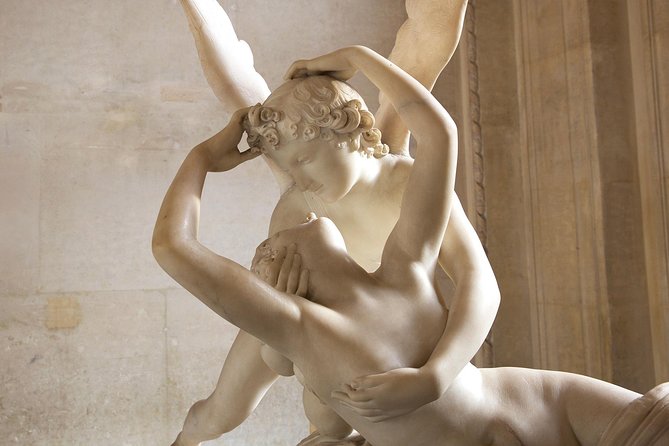
The Mona Lisa is the climax, and the late timing can make a real difference. You cannot stand inches from the painting, and barriers control how close you get. Still, a lighter crowd may let you reach the front rather than viewing her from the rear of a dense semicircle.
Some late visits have offered a remarkably clear view around 5:30 p.m. Other visits, especially in June, have had a large crowd in front of the painting. The honest expectation is a better chance, not a guarantee.
The painting itself is smaller than many first-time visitors expect. That is useful to know before you arrive. The drama comes from the work’s fame, Leonardo’s technique, the expressions and details you are asked to notice, and the unusual experience of seeing it in person. Your guide can make the stop more than a quick photograph by explaining what to look for.
The tour may finish around closing time, so you usually will not have a long period to wander alone afterward. That is both a strength and a limit. You get a clear plan and a productive visit, but you give up the option of staying behind to explore another wing.
Group size, headsets, and the walking pace
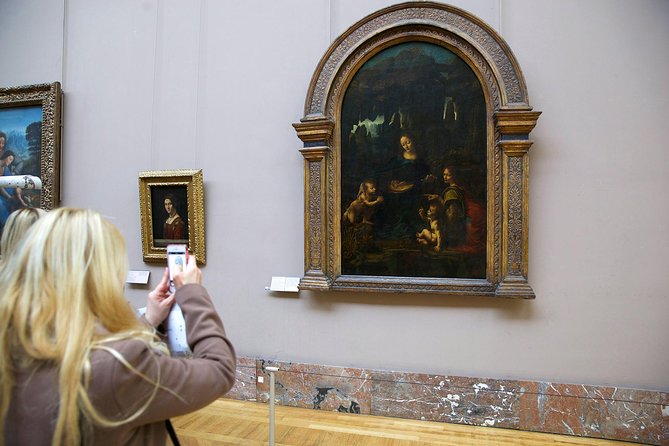
The advertised maximum is 20 people. That is not an intimate private tour, but it is manageable inside a museum of this size. Smaller departures can feel much more personal, especially when you want to ask questions or stand near a work for a minute.
A headset is included. This matters in the Louvre, where high ceilings, hard floors, and nearby groups can make a guide difficult to hear. Felicia was praised for checking that no one fell behind or felt uncomfortable, and for making restroom stops when needed.
The route is still active. You should be able to walk at a moderate pace without difficulty. The Louvre has limited air conditioning, so a summer visit may feel warm inside. Comfortable shoes and water are sensible, though the tour information does not promise special seating. The museum does provide free folding stools, which can be helpful during longer explanations.
The guides are the heart of the experience. Most of the strongest feedback centers on their humor, art knowledge, clear English, and ability to keep children and teenagers involved. Daniel from Ireland was praised for working well with younger visitors, while Antoine was described as both entertaining and good with kids.
Is $101.58 a fair price?
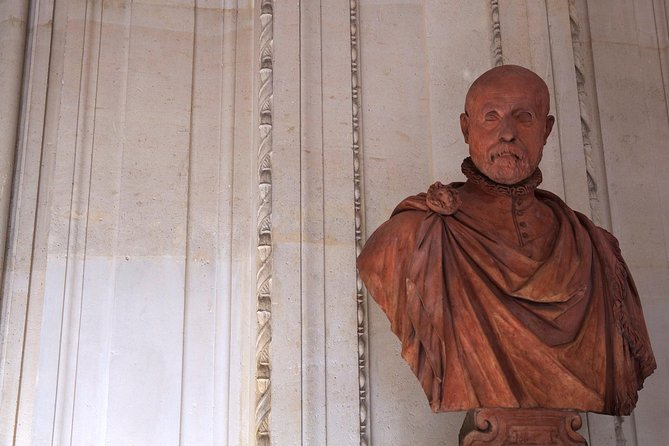
The listed price is $101.58 per person. It includes the adult museum ticket, shown as €22, an English-speaking local guide, guided walking service, and a headset. You are paying a substantial amount beyond the basic admission, so the value rests on the route, time saved, and quality of the guide.
For a first Louvre visit, I think the price can make sense. The museum is so large that a well-planned three-hour route may save you from wandering, missing key rooms, or spending your best energy in queues. The group entrance and guided movement through security can also protect your limited Paris time.
For a repeat visitor who already knows the Louvre well, the value is less automatic. You may prefer a standard ticket and a self-guided visit, especially if your goal is one particular department or a long, quiet look at a few works.
Keep the timing in mind when comparing this with other Louvre options. This tour is not a private visit and does not promise an empty Mona Lisa room. You are buying structure and expert explanation, with the added possibility of lighter late-day crowds.
Who should book this tour?
I would recommend it most strongly for a first-time Louvre visitor, families, couples, and solo visitors who want help making sense of the museum. It is also a good choice if the Mona Lisa matters to you but you do not want to spend half the day planning an approach.
Families may appreciate the clear route and guides who use humor to keep young people involved. Couples and solo visitors may like the chance to ask questions in a smaller group. Art lovers will benefit from the context around Caravaggio, Raphael, Leonardo, and Géricault, though a specialist seeking one narrow collection may want a more targeted visit.
You should think twice if you dislike group pacing or want to explore independently. You should also be realistic about the word peaceful. Winter and later departures may feel calm, but summer, holidays, and popular afternoon times can still be noisy and crowded.
The cancellation policy is generous if your plans change: you can cancel for a full refund up to 24 hours before the start time. Changes or cancellations inside that window are not refunded. The tour is offered in English, and areas of the Louvre can close without warning, so the guide may adjust the route.
Should you book Closing Time at the Louvre?
Book it if you want the Louvre’s greatest hits, a guide who can explain why they matter, and a better chance of seeing the Mona Lisa without the worst daytime crush. The strongest value comes from the route and the guide, not simply from entering the museum.
Choose your date carefully. A winter late-day visit offers the best odds of a calm experience, while June and holiday periods may still feel packed. Arrive early at the Arc de Triomphe du Carrousel, wear comfortable shoes, and expect a brisk three hours.
If you want a thoughtful introduction to the Louvre and prefer to leave with a clear sense of what you saw, this is a sound choice. If you want hours of independent wandering or an empty gallery, buy a regular ticket and set aside more time.
FAQ
How long does the Louvre tour last?
The experience lasts approximately three hours.
What language is the tour offered in?
The tour is offered in English with a local English-speaking guide.
What is included in the price?
The price includes the adult museum entrance ticket, guided walking tour, English-speaking guide, and headset.
Is hotel pickup included?
No. Hotel pickup and drop-off are not included.
Where does the tour begin?
It begins at the Arc de Triomphe du Carrousel, Place du Carrousel, 75001 Paris.
Where does the tour end?
The tour ends at the Louvre Museum.
How many people can join the tour?
The maximum group size is 20 people.
Do I need to be able to walk at a steady pace?
Yes. This is a walking tour, and you should be able to walk at a moderate pace without difficulty.
Can the route change?
Yes. Areas of the Louvre can close, so the guide may modify the route on the day.
Can I cancel for a full refund?
Yes. You can cancel at least 24 hours before the start time for a full refund. Cancellations within 24 hours are not refunded.
Just added in Paris
- Design Luxury and Personalized Jewelry in Paris le Marais★ 5.0 · 160 reviews
- Oh My God She’s Parisian! English Comedy Show in Paris★ 4.5 · 116 reviews
- Paris: Eiffel Tower Photo Shoot★ 5.0 · 420 reviews
- Photo Session in Paris – Photographer at the Eiffel Tower★ 5.0 · 422 reviews
- Paris City Sightseeing Half Day Guided Segway Tour with a Local Guide★ 5.0 · 371 reviews
- Paris Create your Own Perfume Workshop with a Perfumer★ 4.5 · 275 reviews
- Paris: Oh My God She’s Parisian! English Comedy Show★ 4.7 · 257 reviews
- Paris: Create your Signature Scent Perfume Workshop★ 4.8 · 221 reviews
Louvre Museum Tours, compared.

Louvre Guided Tour with Reserved Access & Boat Cruise
Read our review →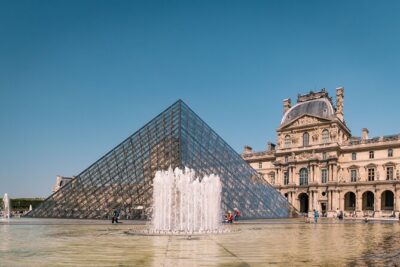
Louvre Museum Masterpieces Guided Tour with Access
Read our review →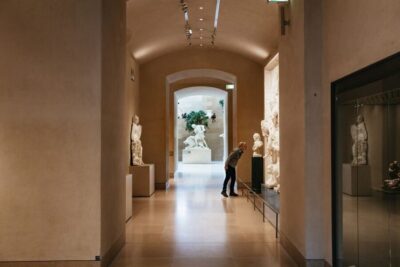
Louvre Museum Entry Ticket With Host and River Cruise
Read our review →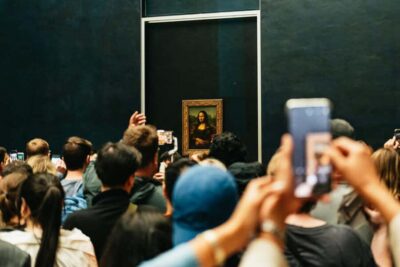
Priority Access Louvre with Host -Direct to Mona Lisa
Read our review →
Mona Lisa & Louvre Masterpieces Tour with Reserved Access
Read our review →
Louvre Museum – Exclusive Guided Tour (Entry Included)
Read our review →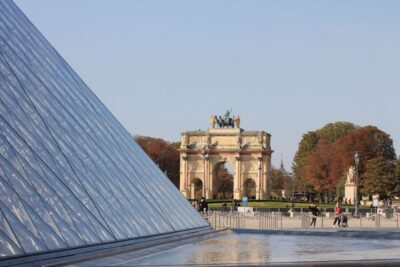
Louvre Reserved Ticket and River Cruise Combo
Read our review →Browse the lists this tour appears in