
Reviewed · GIVERNY & MONET GARDEN TOURS
Giverny: Monet’s House and Gardens Skip-the-Line Tour
Giverny is where Claude Monet turned a country home into a living painting. This two-hour tour takes you from the village churchyard, where Monet is buried, into his house and gardens, with an English-speaking guide explaining how the artist’s daily surroundings shaped his work. The skip-the-line entry matters here, since the regular queue can be extremely long on busy days.
I like the blend of clear storytelling and free time to look around. Guides such as Sheila, Mwamini, and Bertrand have been praised for explaining Monet’s life, garden design, and painting methods without taking over every minute. The main drawback is the short duration: two hours gives you a strong introduction, but you may want extra time in Giverny for the museums, food, and quieter village streets.
Key points to know before booking
- Monet’s Japanese bridge and water-lily pond: See the exact garden features linked to some of his best-known paintings.
- An English-speaking guide: Guides including Sheila, Mwamini, and Bertrand have led engaging tours focused on Monet’s life and creative process.
- Skip-the-line access: Avoid the potentially long ticket queue at Monet’s house and gardens.
- A small-group feel: Some departures have been especially intimate, while groups of around 10 have been described as manageable.
- Two hours at the main site: The visit covers the village, churchyard, house, and gardens, but leaves limited time for a slow second look.
- Wheelchair information: The gardens and paths are accessible to wheelchairs and strollers, but Monet’s house is not.
Why Giverny matters to Monet’s story
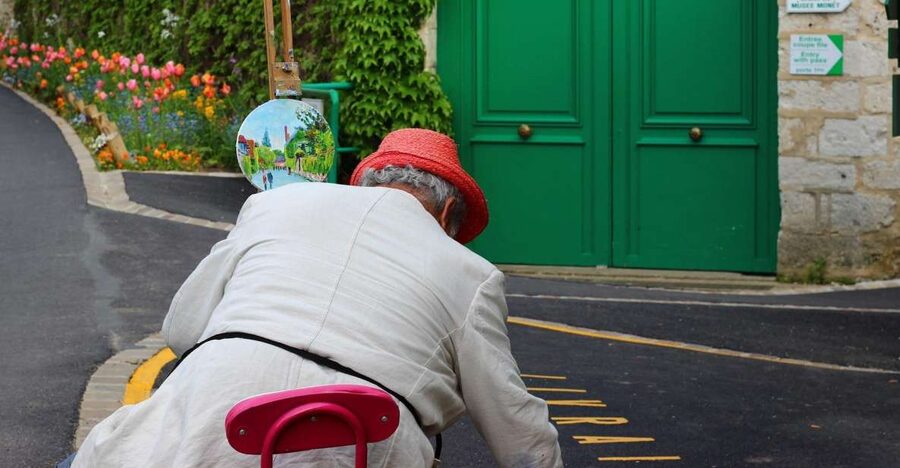
Giverny is not simply a pretty stop added to a Normandy itinerary. It was Monet’s home from 1883 until his death in 1926, and the village became the setting for an important part of his artistic life.
The tour helps you connect the ordinary details of the place with Impressionism. Monet did not paint the garden as a backdrop for a grand historical scene. He studied changing light, reflected color, flowers, water, and weather. His pond, bridge, and willows became subjects in their own right.
You also hear how other artists, including John Singer Sargent, Paul Cézanne, and Mary Cassatt, spent time in Giverny. The village developed an informal artists’ colony, with Monet at its center. That context makes the visit more than a walk through a famous garden. You begin to see why this quiet corner of Normandy attracted painters who were searching for new ways to work.
The tour also includes Monet’s grave in the churchyard. It is a brief stop, but a useful one. Seeing his final resting place before entering the property gives the visit a clear sense of place and reminds you that this was his home, not just a preserved museum.
Other trips out to Monet's garden from Paris:
- From Paris: Giverny Day Trip with Audio Guide or Live Guide
★ 4.3 · 2,372 reviews - From Paris: Giverny, Monet’s House, & Gardens Half-Day Trip
★ 4.5 · 2,174 reviews - Versailles Palace and Giverny Monet House Visit with Lunch
★ 4.0 · 1,948 reviews
Meeting your guide on Rue Claude Monet
The meeting point is outside Les Capucines at 80 Rue Claude Monet in Giverny. You are responsible for reaching the village yourself, since pickup and drop-off are not included.
That detail matters when planning your day. Do not treat this as a hotel pickup excursion from Paris or another Normandy town. Arrange your own transport and allow enough time to find Les Capucines before the scheduled start. One person had trouble reaching the guide and ended up arranging transportation independently, so it is sensible to save the meeting-point address and confirm your route before leaving.
The activity ends back at the same meeting point. That makes it easy to continue exploring Giverny afterward. You can also use the village as more than a quick stop, with the Museum of Impressionism and the Museum of Nature and Mechanics mentioned as additional places to visit.
Walking through the village and churchyard
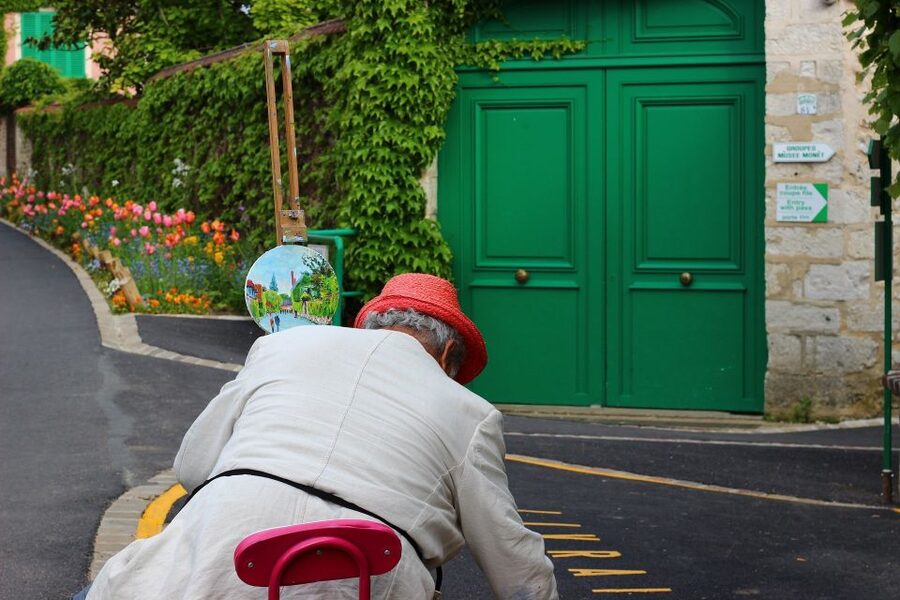
The opening walk gives you a quick look at Giverny beyond the main attraction. Expect cobblestone streets and a small village atmosphere rather than a large town full of sights.
The churchyard visit, including Monet’s grave, adds a personal touch. Your guide can place the artist in time and explain how he lived and worked in Giverny. This introduction is especially useful if you know Monet mainly through the water-lily paintings but have little sense of the man behind them.
This part of the tour is not long, so you should not expect a full village history. Its value is in setting the scene before you enter the property. You see the place where Monet chose to live, then move toward the garden he shaped around his work.
Entering Monet’s house without the long wait
The biggest practical advantage is skip-the-line entry to Claude Monet’s house and gardens. At busy times, the standard queue can stretch far enough to eat into your visit. Paying $63 for this experience is partly paying for the guide, but it also buys time and reduces uncertainty at the entrance.
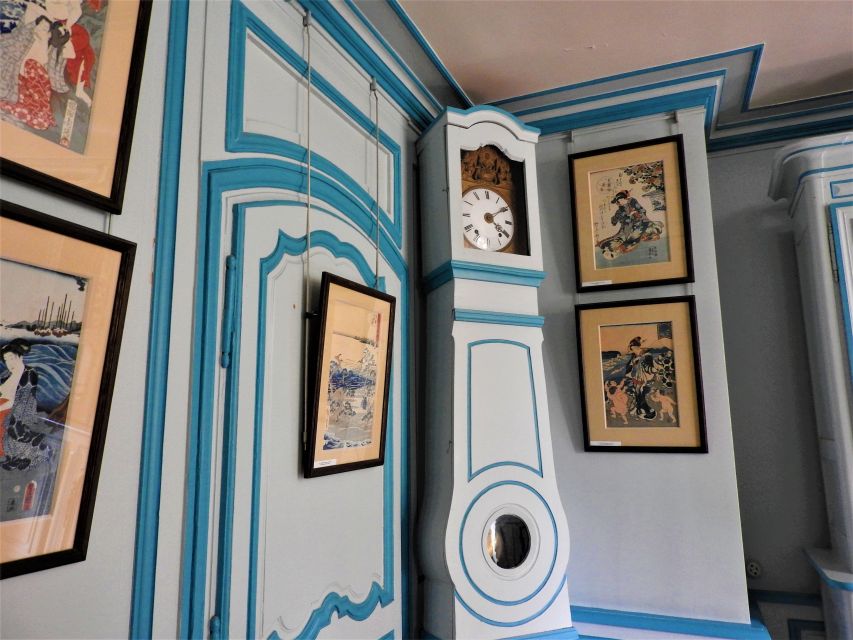
The house itself is modest in scale, which makes it feel more like a home than a grand museum. You can see the cheerful kitchen and Monet’s collection of Japanese prints. These prints are important because Japanese art influenced many European artists in the late 19th century, and they help explain the interest in framing, pattern, asymmetry, and garden scenes that appears in Monet’s work.
The house is not wheelchair accessible, even though the gardens are. If you use a wheelchair or stroller, plan around this distinction. You can still access the garden areas, but the interior visit has a physical limitation that should be clear before booking.
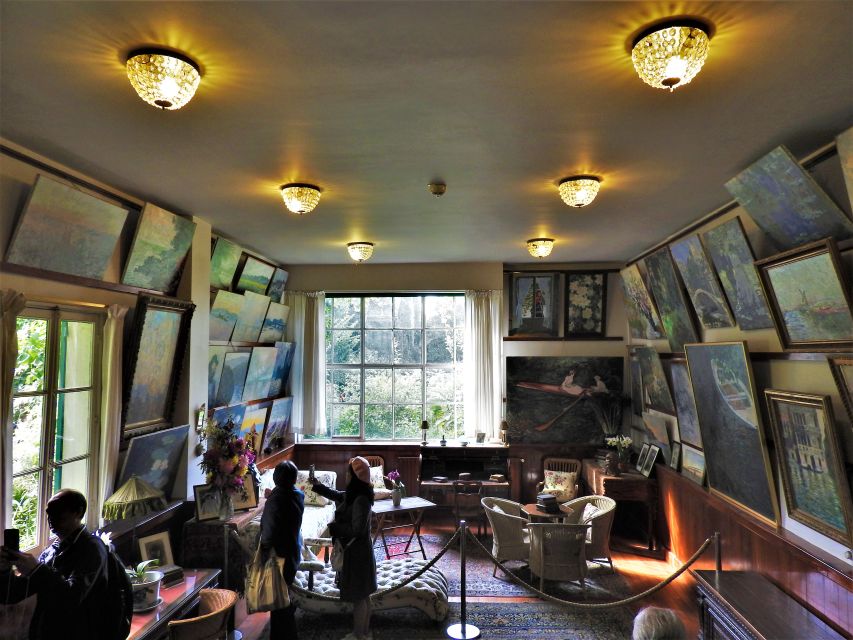
The house can become crowded. Your guide’s explanations help you notice details that are easy to miss while moving through rooms with other people. Still, this is not a private home visit. You will be sharing the spaces with other visitors, and the pace may be controlled by the flow of people inside.
Same base, a different kind of day:
- Paris: Louvre Museum Timed-Entrance Ticket
★ 4.6 · 71,977 reviews - Disneyland® Paris 1-Day Ticket
★ 4.6 · 49,412 reviews - Paris: Versailles Palace and Gardens Full Access Ticket
★ 4.6 · 41,579 reviews - Paris: Evening River Cruise with Music
★ 4.4 · 22,721 reviews
The flower garden and Monet’s use of color
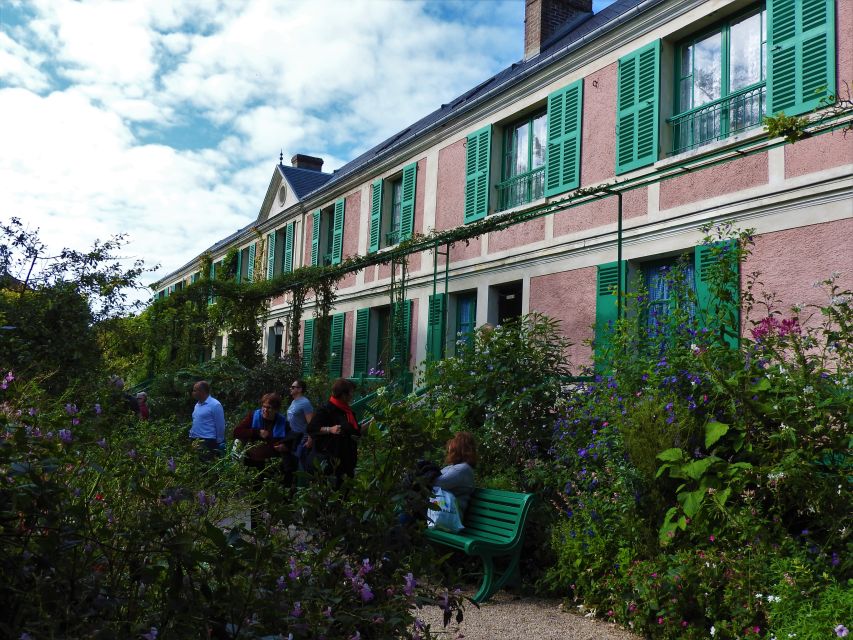
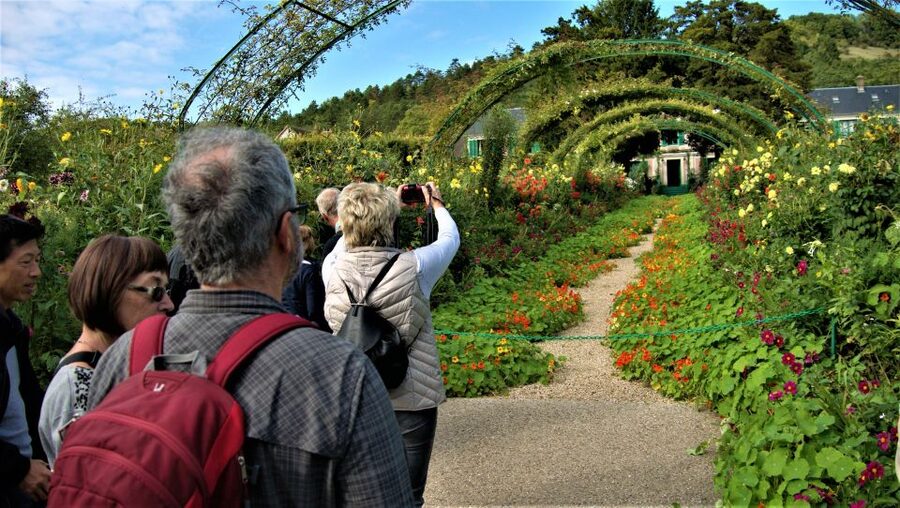
Outside, the experience opens up. Flowers in season can include wild roses, hollyhocks, poppies, and honeysuckle. The exact display changes through the year, so you should not expect every flower to be in bloom at every visit.
That changing quality is part of the point. Monet planned the garden with color and seasonal effects in mind. A good guide helps you understand that the plants were not arranged by accident. The colors, heights, and combinations were part of the visual effect he wanted to see.
This is where guides such as Mwamini and Sheila have received particularly strong praise. Mwamini has been described as giving a useful account of Monet’s life and explaining when he created the garden. Sheila has been noted for explaining plant placement, color choices, and the connection between the garden and Monet’s painting technique.
The best part of the guiding style is the balance. You get background information while walking, then time to stop and study the beds yourself. Several guides have been described as giving the group space rather than filling every pause with commentary. That is important in Giverny. You need a few quiet minutes to notice the scent, color, and order of the garden.
The Oriental water garden and Japanese bridge
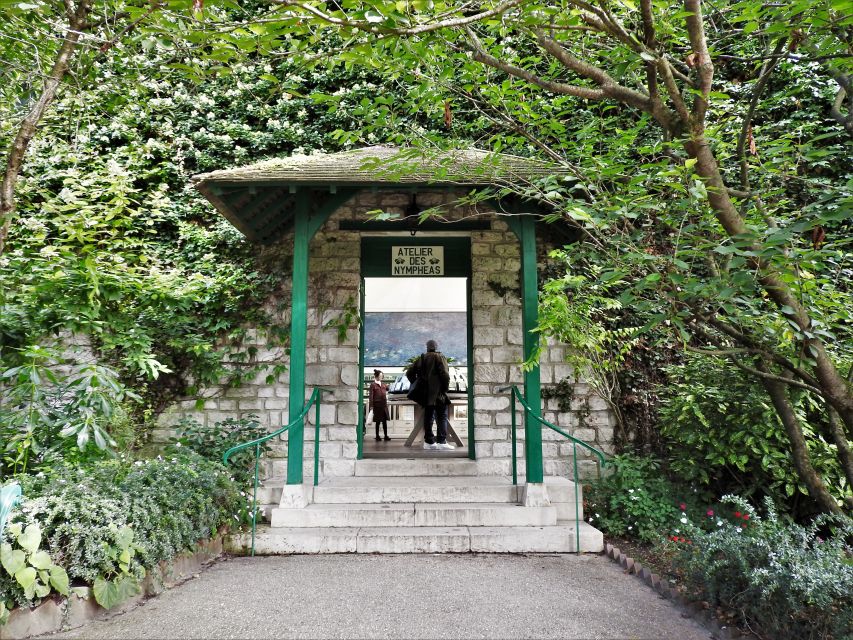
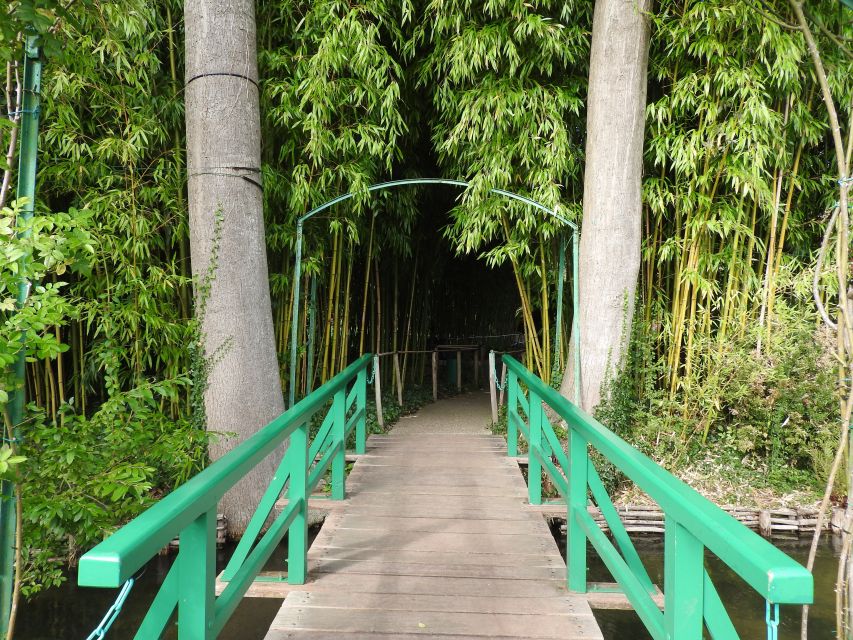
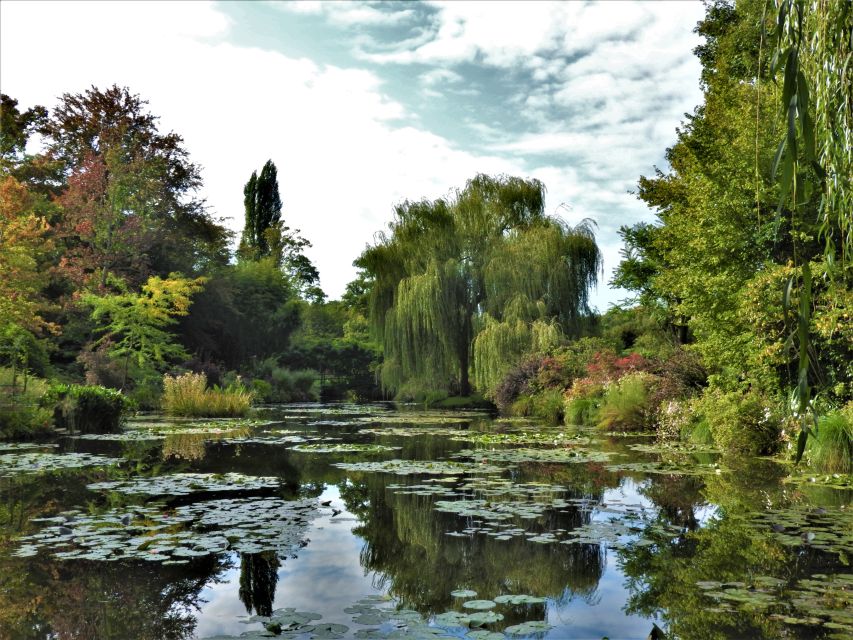
The water garden is the emotional center of the visit. Here you see the pond, water lilies, weeping willows, and the Japanese bridge associated with Monet’s paintings.
The setting is more personal than simply standing in front of a famous canvas. You are looking at the physical features that Monet observed over many years. The bridge and pond may seem familiar from reproductions, but being there helps explain how much his work depended on repeated observation rather than one quick view.
The lilies are instantly recognizable, yet the real garden does not look exactly like a painting. That difference is worth keeping in mind. Monet altered color, light, reflection, and composition to suit the image he wanted. Your guide can help you imagine the creative process without suggesting that the garden itself is a finished painting.
A short tour cannot give you unlimited time at the pond. If photography matters to you, stay alert to the group’s pace and use the free moments offered by the guide. Some guides, including Sheila, have been praised for placing people where they could get better photographs and for offering to take pictures.
Rain does not necessarily ruin the visit, but it can affect comfort. The gardens remain appealing in changing weather, though you should bring suitable clothing for an outdoor walk.
The guide makes the difference
This experience depends heavily on the person leading it. The listed language is English, and the strongest guide descriptions center on clear explanations, warmth, and a good sense of timing.
Sheila is repeatedly singled out for storytelling, patience, humor, and detailed explanations of Monet’s life and artistic struggles. Mwamini is noted for combining biography with a calm walk through the gardens. Bertrand is praised for being well prepared and easy to meet at the starting point.
You cannot choose a specific guide based on the information provided, so consider these names examples of the style you may receive, not a guarantee. The common thread is an emphasis on making Monet’s life understandable rather than reciting dates.
Some departures have effectively felt like private visits when only a few people attended. That cannot be promised, but groups of about 10 have been described as comfortable. An audio system with earphones has also been appreciated because it allows you to hear the guide while standing among other people.
A guide is most useful here if you want to understand why the garden looks the way it does. If you only want to enter, take photographs, and walk at your own speed, a ticket alone may suit you better. The tour adds value through context and orientation, not through access to areas closed to ordinary ticket holders.
Is $63 good value?
At $63 per person, this is not the cheapest way to see Giverny. The value depends on how much you care about saving time and understanding what you are seeing.
The skip-the-line benefit is significant during crowded periods. A long entry queue can turn a pleasant visit into a frustrating one, especially if you have limited time in Normandy. You also receive a live English-speaking guide for two hours, a useful addition if Monet’s biography, garden planning, and artistic influences are important to you.
The price is less compelling if you already know the site well or prefer a completely independent visit. You may want to linger in one part of the garden, return to the pond, or spend longer inside the house than the group pace allows.
I see the tour as good value for a first visit, especially for people making a special trip to Giverny. It combines orientation, entry convenience, and interpretation in one booking. To get the most from the price, keep the rest of your day flexible and explore the village after the guided portion ends.
Who should book this Giverny visit?
This tour suits you if:
- You are visiting Monet’s home for the first time.
- You want explanations in English.
- You dislike wasting time in an entrance queue.
- You enjoy learning how a garden connects to an artist’s work.
- You want a guided introduction but also some time to look around independently.
- You have a limited schedule and want the main sights covered in two hours.
It may be less suitable if you want a full-day Giverny experience. The tour does not include food, drinks, pickup, or drop-off, and two hours is enough for an introduction rather than a slow, unhurried study of every corner.
Families with strollers can use the gardens, but the house is not stroller accessible. Wheelchair users should plan to enjoy the outdoor areas while recognizing that the interior has access limits.
You should also bring the required face mask or protective covering listed for the activity. Free cancellation is available up to 24 hours in advance, and the reserve-now, pay-later option can help if your Normandy plans are still shifting.
Making the most of your two hours
Arrive early enough to find Les Capucines without rushing. Since transport is not included, build in a buffer for the journey and village streets.
Listen closely during the opening biography, then use the garden walk to connect the facts with what you see. Pay attention to the color combinations, the height of the flowers, the water reflections, and the Japanese prints in the house. These details give the visit more meaning than simply photographing the bridge.
After the tour, stay in Giverny if your schedule allows. You can eat nearby, visit the Museum of Impressionism, or look into the Museum of Nature and Mechanics. The guided activity ends at the starting point, so you can continue without having to return to another town immediately.
Should you book it?
Book this tour if you want a well-organized first look at Monet’s home, especially during a busy season when the entrance queue may be long. The strongest reason to choose it is the combination of skip-the-line access and a guide who can explain the garden’s design, Monet’s life, and the artists around him.
Skip it if you prefer total independence, need a fully accessible house visit, or want to spend most of a day in the gardens without a set pace. For most first-time visitors with two hours available, the $63 price is reasonable because it saves time and turns a famous but potentially crowded stop into a more meaningful visit.
FAQ
How long does the Giverny tour last?
The activity lasts two hours. Check availability for the exact starting times.
Where does the tour begin and end?
Meet your guide outside Les Capucines at 80 Rue Claude Monet, 27620 Giverny. The activity ends back at the same meeting point.
Is the tour offered in English?
Yes. The live tour guide language is English.
Does the tour include entry to Monet’s house and gardens?
Yes. A skip-the-line entrance ticket to Claude Monet’s house and gardens is included.
Are the gardens wheelchair and stroller accessible?
The gardens are wheelchair and stroller accessible, but Monet’s house is not wheelchair accessible.
Is transportation or food included?
No. Pickup, drop-off, food, and drinks are not included.
Just added in Paris
- Paris: Vallée Village Outlet Shopping Day★ 4.3 · 362 reviews
- Paris night out : Comedy in English ‘How to Become a Parisian ?’★ 4.5 · 373 reviews
- La Vallee Village Shopping Outlet by Luxury Transport from Paris★ 3.5 · 111 reviews
- Design Luxury and Personalized Jewelry in Paris le Marais★ 5.0 · 160 reviews
- Oh My God She’s Parisian! English Comedy Show in Paris★ 4.5 · 116 reviews
- Paris: Eiffel Tower Photo Shoot★ 5.0 · 420 reviews
- Photo Session in Paris – Photographer at the Eiffel Tower★ 5.0 · 422 reviews
- Paris City Sightseeing Half Day Guided Segway Tour with a Local Guide★ 5.0 · 371 reviews
Giverny & Monet Garden Tours, compared.

Giverny Day Trip with Audio Guide or Live Guide
Read our review →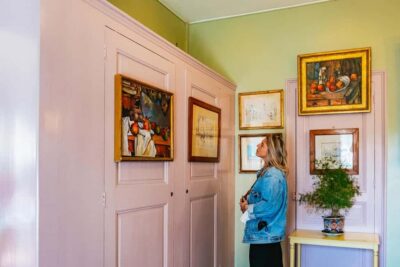
Giverny, Monet’s House, & Gardens Half-Day Trip
Read our review →
Versailles Palace and Giverny Monet House Visit with Lunch
Read our review →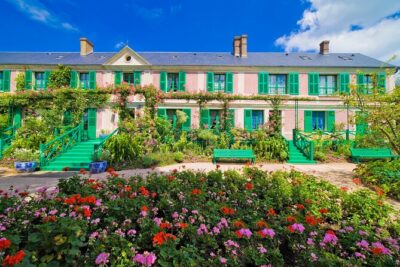
Giverny Monet’s Home and Gardens Half Day Tour from Paris
Read our review →
Giverny Small-Group Half Day Trip with Monet’s Gardens from Paris
Read our review →
Giverny and Versailles Palace Guided Day Trip
Read our review →
Giverny and Monet’s House Half Day Trip from Paris Guide or Audio
Read our review →
Giverny and Versailles Small Group Day Trip from Paris with Lunch
Read our review →Browse the lists this tour appears in