
Reviewed · WALKING TOURS
Historic Paris Walking Tour in English
Paris reveals itself best on foot, and this tour goes straight to the city’s grandest story: how a small settlement on the Seine became the political, artistic, and revolutionary heart of France. In 150 minutes, you connect the Louvre, Notre-Dame, Pont des Arts, Sainte-Chapelle, and the Tuileries Gardens through tales of Napoleon, Quasimodo, the French Revolution, and the Mona Lisa.
I like the strong historical arc, which gives famous buildings a reason to matter. I also like the guide-led storytelling. Tom, Harry, Thomas, Yazid, Francesca, and others have been singled out for warmth, humor, art history, and clear explanations. The main consideration is simple: this is a walking tour, not an interior visit, so you should book separate timed tickets if you want to enter the Louvre, Sainte-Chapelle, or Notre-Dame.
Key points to know before you book
- A 150-minute introduction to central Paris: The route links major sights rather than treating them as isolated photo stops.
- History with plenty of human drama: Expect stories about Quasimodo, Napoleon, Hitler, revolution, love, revenge, and the Mona Lisa theft.
- A local English-speaking guide: The experience depends heavily on the individual guide, with Tom, Harry, Thomas, Yazid, and Francesca among the names praised for their storytelling.
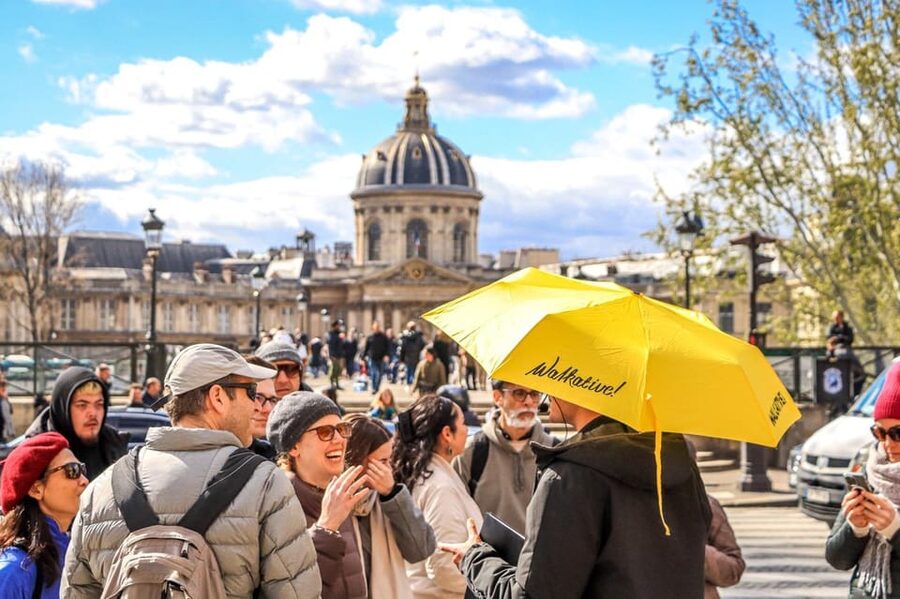
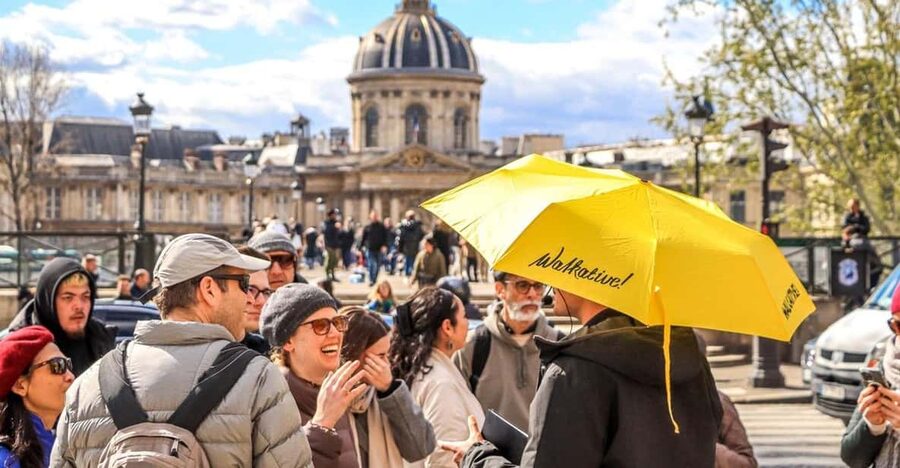
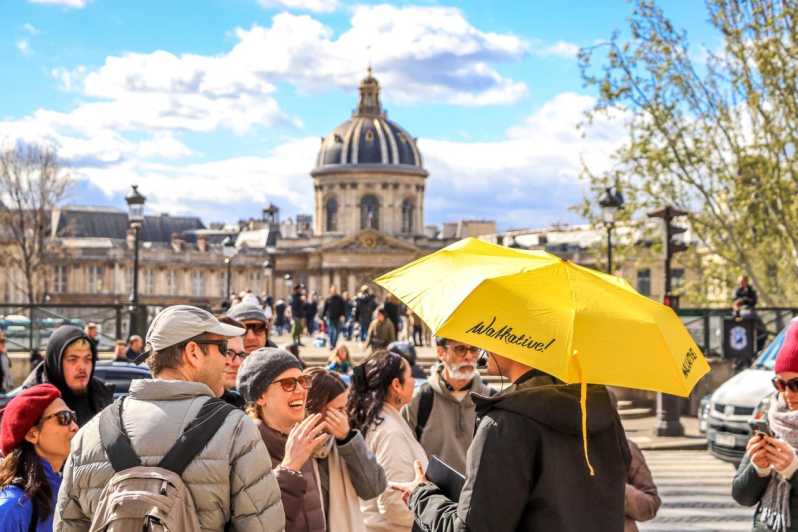
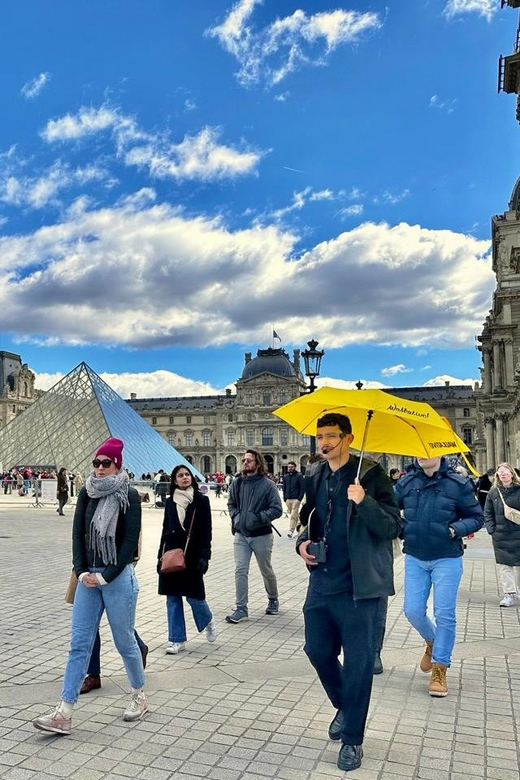
- Meeting at Hôtel de Ville: Find the guide outside the metro at exit 5, marked by a yellow umbrella.
- Good value at $31: Your payment covers the reservation fee and guide’s payment, with no hotel transfer or attraction admission included.
- Best taken early in your stay: It gives you a useful mental map and historical foundation for later museum visits and neighborhood walks.
Why this walk makes sense as your first Paris activity
Paris can feel like a grand stage set at first. You see palaces, churches, bridges, gardens, and broad boulevards, but the connections are not always clear. This tour helps join the pieces.
The story begins with the Parisii, the Gallic people associated with the original settlement around the Seine. From there, the guide follows Paris through Roman rule, the rise of the Franks, the medieval city, religious conflict, royal power, revolution, Napoleon, and 19th-century rebuilding.
That broad sweep is useful because Paris is not just a collection of pretty façades. Its boulevards were shaped by politics. Its churches reflect both faith and royal ambition. Its museums occupy former palaces. Its bridges have carried artists, soldiers, lovers, crowds, and revolutionaries.
I especially like this kind of introduction for a first visit. You do not need to arrive as a history specialist. One recent participant described the walk as suitable for both serious history fans and people with only a passing interest. That is the right balance for a city tour: enough substance to reward curiosity, but enough humor and storytelling to keep the timeline from becoming a lecture.
The walk lasts two and a half hours, so you get a real orientation without giving up an entire day. It is described as good exercise but not strenuous. Still, wear comfortable shoes. Paris sidewalks and historic paving can be hard on tired feet, and the route involves standing while listening as well as walking between sights.
More walking tours in Paris:
- Paris Top Sights Half Day Walking Tour with a Fun Guide
★ 5.0 · 2,893 reviews - Montmartre Hidden Gems and Scenic Highlights Walking Tour
★ 5.0 · 2,684 reviews - Montmartre Hill French Gourmet Food and Wine Tasting Walking Tour
★ 5.0 · 2,588 reviews
Hôtel de Ville and the story of Paris
The meeting point is outside the Hôtel de Ville metro station at exit 5. Look for the yellow umbrella and arrive about 10 minutes early.
This is a smart place to begin. Hôtel de Ville puts you in the middle of historic Paris, close to the Seine and within reach of the medieval core. It also makes the starting point easy to find, which matters in a city where several streets and squares can look similar on a first visit.
From here, the guide can set up the city’s long story before moving toward its best-known monuments. You learn why the river mattered, how Paris grew into the capital of the Franks, and how it became France’s political, religious, economic, and cultural center.
The historical range is one of the tour’s best features. Paris once had about 200,000 residents during the medieval period, making it the most populous city in Europe at the time. That fact gives useful scale to the old city. Medieval Paris was not a quiet village waiting for modern tourists. It was crowded, ambitious, wealthy in places, desperately poor in others, and often troubled by war and religious violence.
A good guide also brings this past down to human size. The stories of ordinary Parisians, royal rulers, religious factions, artists, and rebels help explain the city’s famous spirit of independence. You hear about a population that repeatedly challenged authority, sometimes through protest and sometimes through outright revolt.
Notre-Dame and medieval Paris
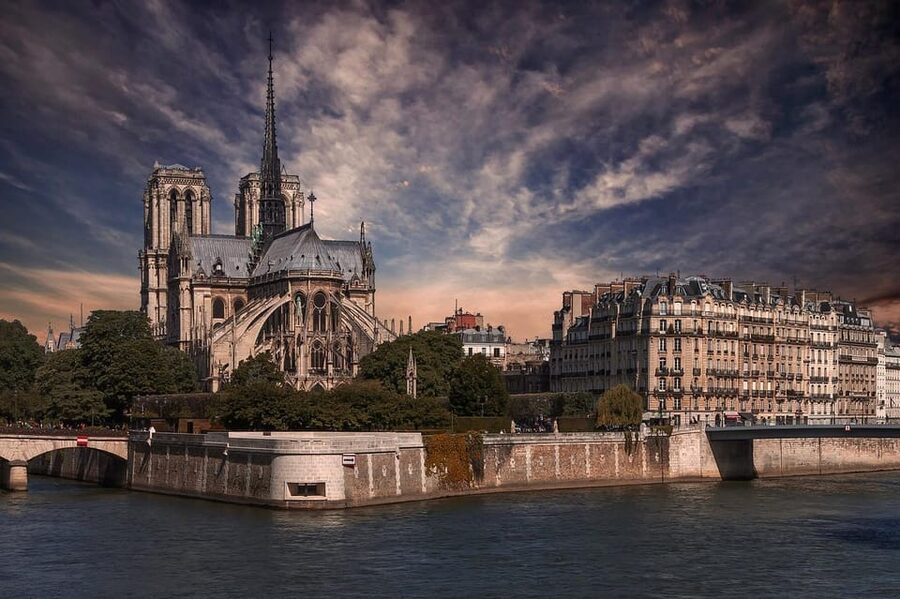
Notre-Dame Cathedral is one of the tour’s main landmarks. Even from outside, it gives you a clear sense of medieval Parisian ambition.
The cathedral is tied to the growth of Paris as a center of religion, learning, and power. Nearby, the Sorbonne helped make the city a major intellectual center, and the Seine gave Paris both a practical route for trade and a natural organizing line.
The guide’s story here is not limited to architecture. Notre-Dame is also the setting connected with Quasimodo, the fictional bell-ringer made famous by Victor Hugo. That blend of fact and literature works well in Paris. A building can be historically important and still live in the imagination through novels, films, legends, and popular stories.
You should expect to see Notre-Dame as part of the outdoor walking route rather than as a guaranteed interior visit. The activity information does not include admission tickets, and the tour is designed around exterior landmarks and historical explanation. If entering the cathedral is important to you, check current visiting arrangements separately and plan additional time.
This is also a place where the pace matters. You will want a few minutes to look up at the structure, take photographs, and listen without rushing. A good guide helps you notice details you might otherwise pass by, while still keeping the group moving toward the next stop.
Sainte-Chapelle and the royal city
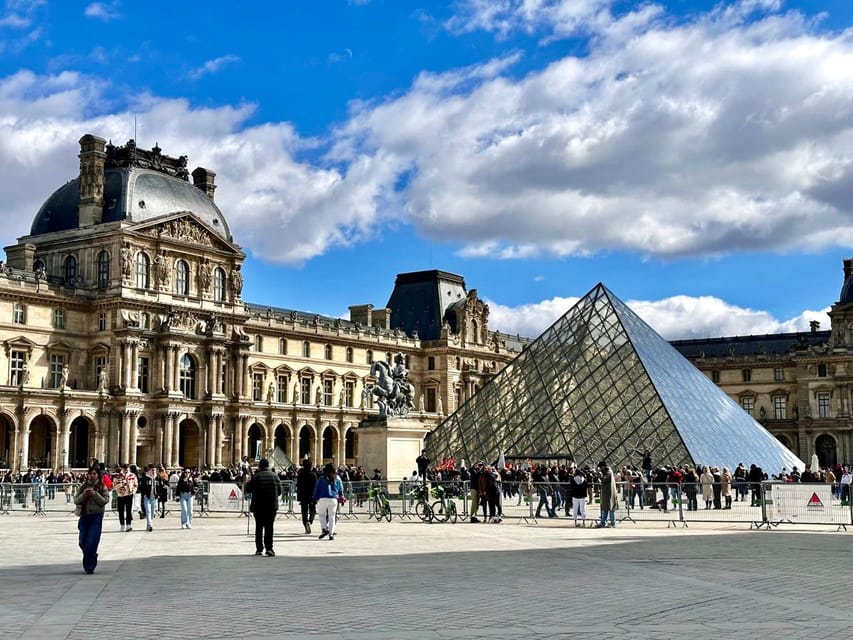
Sainte-Chapelle is included among the sights you may see along the route. This small royal chapel is one of the clearest reminders that medieval Paris was also a seat of monarchy.
Its importance is tied to royal power, religious devotion, and the desire to display precious sacred objects. Even if the tour does not take you inside, the guide can place the chapel within the larger story of the Île de la Cité and the medieval center.
Again, do not confuse seeing a landmark with touring its interior. The $31 price covers the walking experience and guide, not attraction admission. If you want to study the stained glass or spend time inside Sainte-Chapelle, you should arrange a separate visit.
That separation is not a weakness, but it is something to understand before booking. The walk gives you context and a route through central Paris. Museum and monument visits give you slower time inside. Combining the two makes a stronger day than expecting one tour to do everything.
Same base, a different kind of day:
- Paris: Louvre Museum Timed-Entrance Ticket
★ 4.6 · 71,977 reviews - Disneyland® Paris 1-Day Ticket
★ 4.6 · 49,412 reviews - Paris: Versailles Palace and Gardens Full Access Ticket
★ 4.6 · 41,579 reviews - Paris: Evening River Cruise with Music
★ 4.4 · 22,721 reviews
The Louvre, from royal palace to art museum
The Louvre is perhaps the most important stop for understanding how Paris turns power into culture.
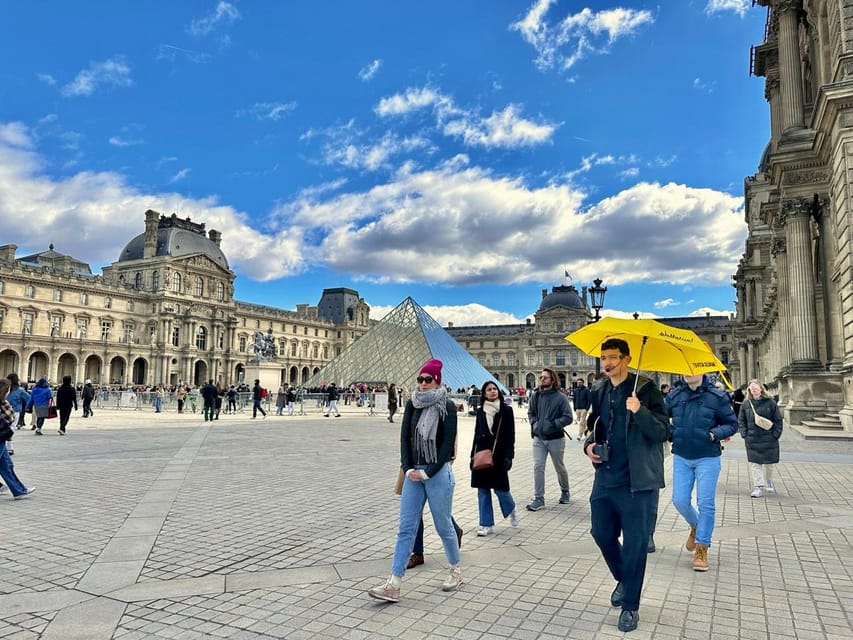
The building began as a royal palace and later became one of the world’s great art museums. The guide explains that transformation, helping you see the Louvre as more than a famous place to take a photograph. Its walls represent centuries of monarchy, political change, collecting, war, and national pride.
The tour also connects the Louvre to the Mona Lisa, including the story of one of the boldest art thefts in history. That is exactly the sort of detail that makes a large subject memorable. You learn not just that the painting is famous, but how its fame and the museum’s public image became part of modern Paris.
Do not expect enough time to visit the galleries during the walk. The Louvre is too large for that, and admission is not included. Instead, use the tour to decide how you want to return. After hearing the background, you may have a better idea of whether you want to focus on Italian painting, French royal rooms, sculpture, or the museum’s architecture.
The outdoor view also matters. The former palace helps explain the city’s ceremonial axis toward the Tuileries Gardens and beyond. Paris often works through long visual lines, and the guide’s explanation can help you read those lines instead of seeing only disconnected monuments.
Pont des Arts and the Seine
Pont des Arts offers a change of mood. After royal palaces and medieval churches, the bridge brings you back to the river and to everyday Paris.
From here, you can appreciate how the Seine has shaped the city’s identity. Bridges are practical structures, but in Paris they are also stages for views, meetings, photographs, and public life. The walk uses these connections to show how central neighborhoods relate to one another.
This is likely to be one of the more relaxed sections of the route. You get a chance to look across the river, see the city from a different angle, and absorb the relationship between the water, the monuments, and the formal streets.
The bridge is also a good place to listen to the guide’s broader reflections on Parisian culture. The experience promises stories of love, desire, and revenge alongside political and artistic history. That mix feels appropriate here. Paris is never presented as only a museum city. The city’s appeal also comes from its habits, its food, its romance, and its famously confident character.
The Tuileries Gardens and the grand axis
The Tuileries Gardens provide one of the tour’s most pleasant outdoor sections. These formal gardens connect the Louvre with the open space of central Paris and offer a chance to slow down after the denser streets around the old city.
You learn how the gardens fit into the story of royal Paris and later public Paris. They are not just decorative lawns. They reflect planning, ceremony, leisure, and the way rulers used space to display order.
This is a good place to think about the contrast between old Paris and the rebuilt city of the 19th century. Paris became famous for elegant boulevards, parks, aqueducts, and sewers after major modernization works. The broad streets made movement easier and improved public health, but they also made it harder for residents to build barricades during uprisings.
That is one of the more revealing themes in the tour. Parisian urban planning was shaped by beauty and control at the same time. The wide boulevards look graceful today, but they also had a political purpose.
The Eiffel Tower may be discussed as part of this larger story, although it is not the starting or ending point of the walk. Its construction for the 1889 Universal Exposition shows another side of Paris: a city that often resists new architecture before eventually claiming it as its own symbol.
Storytelling, guides, and the human side of the tour
The quality of this experience depends on the guide, and the guide names attached to the strongest accounts include Tom, Harry, Thomas, Yazid, Francesca, Victoria, Dawie, Gurvan, and Tank.
The most praised qualities are consistent: clear history, humor, warmth, enthusiasm, and the ability to keep different ages and interest levels involved. Thomas is described as especially good at mixing military history, art history, and humor. Yazid is associated with art history and a warm manner. Harry is praised for making the past feel immediate through storytelling.
That variety matters. A walking tour can become tiring if the guide recites dates without giving them meaning. Here, the most effective approach seems to be narrative. Quasimodo, Napoleon, the French Revolution, the Mona Lisa, Hitler, romance, and revenge give the facts memorable hooks.
The tour also appears suitable for solo visitors. One solo participant found the experience welcoming and inclusive, while another person appreciated it as a first activity in Paris. You will still be part of a general group, not a private tour, but the guide’s role is to keep the group connected and engaged.
Group size can vary. One account described a group of fewer than 20, though that should not be treated as a guarantee. If a very small, private-feeling experience is important to you, book with that limitation in mind.
Price, payment, and what you actually receive
At $31 per person, this is a fair price for two and a half hours with an English-speaking local guide and a carefully prepared historical narrative.
The payment system needs a little attention. The tour is connected with a general pay-as-you-wish format, but in this booking the amount you pay covers the reservation fee and the guide’s payment. In other words, you should not assume that the $31 is merely a small booking charge followed by an expected full tip.
The value is strongest if you use the tour as an introduction rather than as a substitute for museum admission. You are paying for the guide’s route, explanations, and storytelling. You are not paying for hotel pickup, drop-off, or entry to the Louvre, Sainte-Chapelle, or other monuments.
Free cancellation is available up to 24 hours before the activity for a full refund, and you can reserve now and pay later. Those terms are useful when your Paris schedule is still shifting.
Who should book this Paris walk?
I would choose this tour if you are visiting Paris for the first time, want a historical framework, or prefer to understand a city before tackling its museums.
It is especially suitable for:
- Solo visitors who want an organized first activity
- Couples looking for a broad introduction to central Paris
- Families and mixed-age groups who need history presented in an accessible way
- Art lovers who want context before visiting the Louvre
- History fans who enjoy revolution, monarchy, warfare, architecture, and political change
- Visitors with only a short stay who want to cover several major sights in one walk
You may want something else if you dislike group tours, have difficulty walking for 150 minutes, or want long interior visits at the Louvre and Sainte-Chapelle. This is also not a food tour, despite the introduction’s enthusiasm for cheese, baguettes, and wine. The food references set the mood for Paris, but the booked activity is focused on history and sightseeing.
Practical advice for making the walk better
Arrive 10 minutes early at Hôtel de Ville, exit 5, and look for the yellow umbrella. That gives you time to find the meeting point without starting the tour flustered.
Wear shoes suitable for steady city walking. The route is described as not strenuous, but you will be on your feet and may spend long periods listening outdoors.
Bring a charged phone for photographs and notes. You will see enough major sights to make a short list of places you want to revisit, especially the Louvre, Notre-Dame, Sainte-Chapelle, and the Tuileries Gardens.
If you want to enter a monument, plan it for another time that day or another day entirely. This walk gives you the story and the outside orientation. Your separate museum visits will be much more rewarding once you understand how each place fits into Parisian history.
Should you book the Historic Paris Walking Tour?
Yes, if you want a lively first look at central Paris for $31. The tour covers a lot without demanding a full day, and its strongest feature is the way it connects palaces, churches, bridges, gardens, revolution, art, and city planning.
Book it early in your stay if possible. You will finish with a clearer sense of direction and a better idea of how to spend the rest of your visit.
Skip it only if you want private guiding, extended museum time, or a very slow architectural study. For most first-time visitors who want history delivered with humor and human stories, this is a practical and well-priced introduction.
FAQ
How long does the Historic Paris Walking Tour last?
The tour lasts 150 minutes, or two and a half hours.
What language is the tour conducted in?
The live tour guide conducts the experience in English.
Where does the tour meet?
Meet outside the Hôtel de Ville metro station at exit 5. Look for a yellow umbrella.
How early should I arrive?
You should arrive 10 minutes before the activity begins.
What sights are included?
The experience includes discussion or views of the Louvre, Notre-Dame Cathedral, Pont des Arts, and the Tuileries Gardens. Sainte-Chapelle, the Eiffel Tower, Parisian boulevards, and bridges are also listed among the sights and subjects covered.
Does the tour include entry to the Louvre?
No. The provided information includes a walking guide and historical narrative, but it does not include museum admission.
Does the price include hotel pickup and drop-off?
No. Hotel pickup and drop-off are not included.
How much does the tour cost?
The listed price is $31 per person.
Can I cancel for a full refund?
Yes. You can cancel up to 24 hours in advance for a full refund.
Can I reserve now and pay later?
Yes. The booking option allows you to reserve your place and pay later.
More history tours in Paris
- Paris: Louvre Museum Entry with History of Mona Lisa
★ 3.9 · 2,823 reviews - Paris: Dark History and Ghostly Guided Walking Tour
★ 4.7 · 1,000 reviews - Paris: Le Marais & Montmartre Jewish History Walking Tour
★ 4.8 · 170 reviews - Explore the Marais: Culture, History & Hidden Gems of Paris
★ 4.6 · 100 reviews
Just added in Paris
- Private Transfers in Paris★ 5.0 · 75 reviews
- Disneyland® Paris 1 Day Ticket with Transport from Paris★ 3.5 · 302 reviews
- Personalized Transport service from Disneyland to Paris★ 5.0 · 63 reviews
- CDG – Euro Disney – CDG Two Way Private Shuttle Transfer★ 5.0 · 233 reviews
- Monet’s Gardens & House-Private Giverny Tour From Paris★ 4.5 · 137 reviews
- Giverny Monet House and Gardens Skip the line Walking tour★ 4.0 · 217 reviews
- Guided tour Monet’s house and gardens/small group★ 4.5 · 68 reviews
- Monet’s House and Garden & Giverny Village★ 4.5 · 39 reviews
Walking Tours, compared.

Paris Top Sights Half Day Walking Tour with a Fun Guide
Read our review →
Montmartre Hidden Gems and Scenic Highlights Walking Tour
Read our review →
Montmartre Hill French Gourmet Food and Wine Tasting Walking Tour
Read our review →
Paris Île de la Cité and Notre-Dame Walking Tour With Crypt
Read our review →
Montmartre Cheese, Wine & Pastry Guided Walking Tour
Read our review →
Paris in a Day: Louvre or Orsay, Eiffel Tower, City Walk & Cruise
Read our review →
Montmartre Highlights Walking Tour with a Local Guide
Read our review →
Browse the lists this tour appears in