
Reviewed · TOURS IN MARSEILLE
Marseille: découvrir la vieille ville avec un marseillais
Marseille reveals itself best on foot, and Claude B. takes you through the city’s oldest corners at a friendly pace. You’ll move from ancient Greek and Roman remains near the Old Port to the narrow lanes of Le Panier, with local stories filling in the gaps between the major sights. I especially like the small-group limit of 10 and the useful restaurant, bar, and sightseeing advice that comes at the end.
I also like that the walk is shaped around the group rather than run like a fixed-speed march. Claude has welcomed more than 1,000 people over five years and brings a clear affection for Marseille, including its modern realities, not just its postcard views. The main consideration is that the tour is French-only, so it will suit you best if you can follow a French-speaking guide.
Key points at a glance
- A local guide with personal ties to Marseille: Claude is from the city and focuses on the places he knows from daily life, not only the standard monuments.
- A compact two-hour route: You’ll cover Port Antique, the Hôtel de Ville district, Le Panier, and the Old Port without giving up a full day.
- A maximum of 10 people: The small group makes it easier to ask questions and adjust the pace.
- A useful food and sightseeing briefing: Claude shares addresses for restaurants, bars, activities, and places worth adding to your stay.
- A route through Marseille’s oldest quarters: Greek and Roman remains, the Accoules church, Hôtel Dieu, and Le Panier all fit into one walk.
- Flexible arrangements: The route can be adapted, private visits are possible, and groups larger than 10 adults can be arranged by contacting Claude before booking.
Starting at Rue Reine Elisabeth near the Old Port
The walk begins at 31 Rue Reine Elisabeth, in front of the Trabuc shop with its red façade. This is close to the Old Port, so you start in a useful central spot rather than spending time getting out to a distant neighborhood.
From the first minute, the point is orientation. Marseille can feel scattered if you arrive without a plan, with the harbor, old quarters, hilltop sights, and newer streets all competing for attention. A local-led walk gives you a basic map in your head before you set off on your own.
The meeting point matters for another reason: you can continue exploring after the tour without arranging transport. The route ends near Hôtel de Ville, also by the Old Port, so you remain in the center of Marseille throughout.
The experience is in French. That is an important booking detail, not a minor footnote. If you understand French comfortably, you’ll get the full benefit of Claude’s explanations and local asides. If you do not, the walk may be harder to follow because the value rests on spoken commentary rather than on entry tickets or printed material.
Other trips people book in Marseille:
- Marseille: City Sightseeing Hop-On Hop-Off Bus Tour
★ 3.8 · 2,820 reviews - Marseille: Côte Bleue Calanques Half-Day Kayak Tour
★ 4.7 · 877 reviews - Marseille Food Tour – Full Meal of Local Tastes by Do Eat Better
★ 5.0 · 530 reviews
Port Antique and 2,600 years of Marseille
The first substantial stop is the Port Antique, where Claude sets the city’s story in motion. Marseille traces its beginnings back 2,600 years, and this part of the walk gives you a reason to look beyond the modern waterfront.
The ancient remains are especially useful as an opening stop because they connect today’s port city to its Greek and Roman past. Claude explains how Marseille developed over the centuries, giving the rest of the walk a clear frame. Instead of seeing Le Panier as simply a photogenic quarter, you begin to understand it as part of a city with an unusually long urban history.
This is not an archaeological-site visit with a long formal lecture. It is a short stop within a walking tour, so expect an overview rather than an exhaustive study of every stone. That balance works well for a first visit. You get enough background to make later streets and buildings more meaningful, while the tour keeps moving.
The route includes brief breaks and walking sections. At two hours, the pace is designed to cover several districts, but Claude says the walk follows the rhythm of the participants. That can be helpful if your group wants to pause for questions or take a closer look at a place.
The Hôtel de Ville district and Marseille’s quieter corners
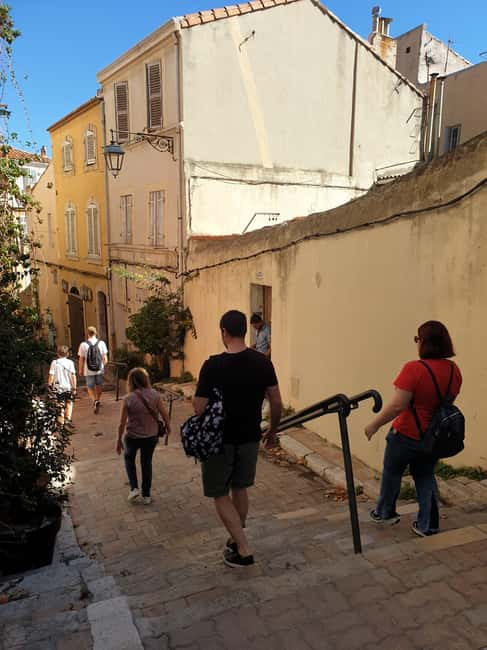
From the ancient port area, the route continues toward the Hôtel de Ville district. This section focuses on old Marseille’s narrower lanes and less obvious corners, rather than only the buildings that appear on every postcard.
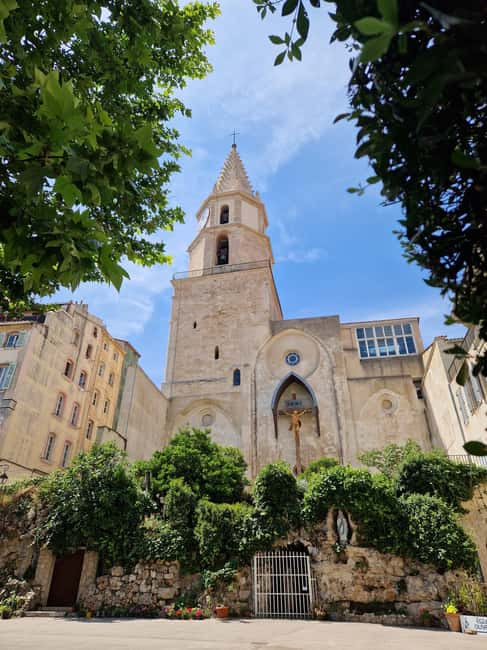
You’ll see the Hôtel Dieu, the former court, and the Accoules church. Each stop adds a different piece to the center of the city. Hôtel Dieu brings an important historic building into view, while the old court and Accoules church help show how civic and religious life shaped this part of Marseille.
The Accoules church is one of the named stops, so you have a clear landmark to watch for as you walk. Claude’s role here is not just to point out façades. He explains the setting and connects the buildings to the older streets around them.
I like this part of the route because it gives you the chance to notice small details between major sights. Marseille’s old center is not a polished museum district. Its appeal comes from the mix of grand buildings, tight lanes, changing façades, and everyday city life. A resident guide can help you distinguish a meaningful corner from a random street that simply looks old.
The tradeoff is that the tour does not promise interior visits to these landmarks. Hôtel Dieu is listed as a photo stop, and the route centers on walking and explanation. If you want long indoor visits or museum time, you’ll need to plan those separately.
Le Panier, Marseille’s oldest district
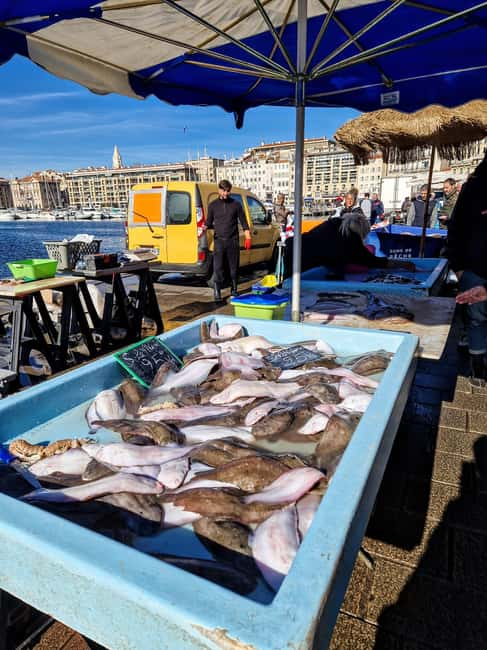
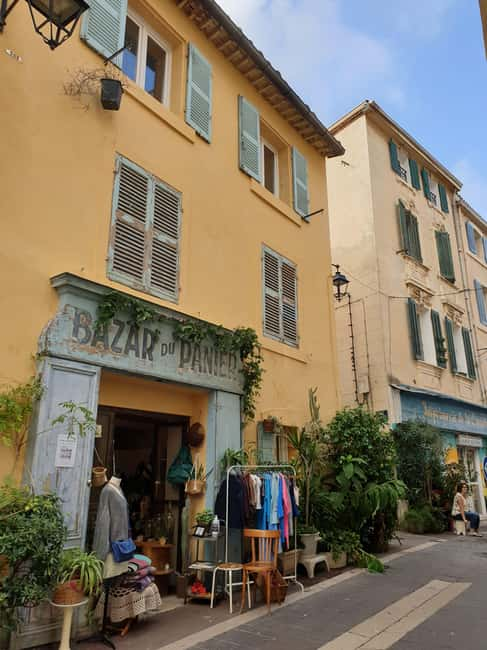
Le Panier is the heart of the experience. Claude describes it as Marseille’s oldest district, and the walk through its lanes gives you the kind of close-up view that a bus tour cannot provide.
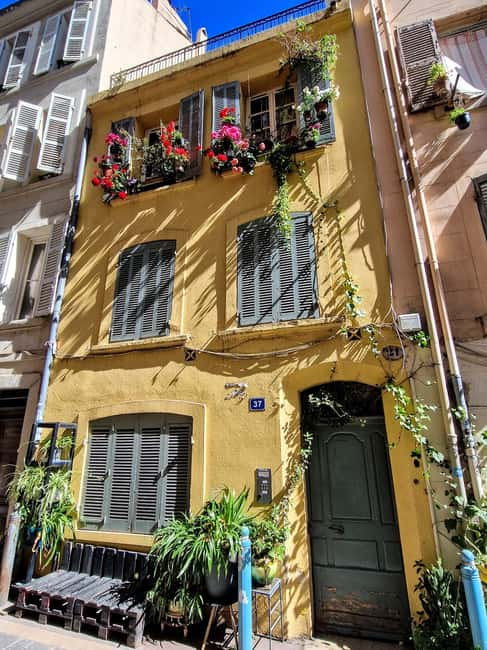
Expect a stroll through narrow streets, picturesque corners, and the layered feel of an old neighborhood. Claude explains the history of Le Panier as you go, so the district becomes more than a collection of colorful walls and steep-looking lanes. You get a sense of how its streets fit into the wider story of Marseille.
This is also where the guide’s local knowledge has the most practical value. The route includes places that are easy to miss when you explore alone. They may not require a ticket or a formal stop, but they help you see the district with more attention. You can ask questions as you go, which is useful if you want to know where to return later for a meal, drink, or second look.
The district is compact enough to visit on foot, but two hours does not allow for every lane. The walk gives you an introduction, not a complete survey. I’d use it as a first orientation, then return to the parts that catch your eye after the tour.
Claude’s approach also appears to leave room for the group’s mood. Some people want a steady history lesson. Others prefer stories, questions, and time to look around. The stated plan is to move at the participants’ rhythm, which should make this feel more like a city walk with a local than a rigid timetable.
Same base, a different kind of day:
- Marseille: Calanques National Park Guided Hike with Picnic
★ 4.9 · 516 reviews - From Marseille: Calanques National Park Guided Hike
★ 4.8 · 489 reviews - Marseille: Musée de l’Illusion Entry Ticket
★ 4.1 · 488 reviews - Marseille: Frioul Calanques Sailing Trip
★ 4.8 · 433 reviews
Back to the Old Port and Hôtel de Ville

After Le Panier, the route returns toward the Old Port and finishes near Hôtel de Ville. This closing section brings the ancient and modern parts of the walk together.
The Old Port is described as France’s oldest port, and Claude explains its story before the walk ends. It is a fitting place to finish because you can connect the harbor you see now with the Greek and Roman beginnings discussed earlier.
The end point near Hôtel de Ville is practical. You are still close to the center, restaurants, bars, and other Marseille sights. You can stop for a meal, continue into Le Panier, or use Claude’s suggestions to build the rest of your day.
I would pay attention during the final advice session. The tour includes Claude’s recommendations for restaurants, bars, activities, essential sights, and personal tips. That information can be worth as much as the route itself, especially if you are staying in Marseille for more than one day and want help deciding what deserves your time.
Because the tour ends near where it begins, it is also easy to fit into a larger day. You might schedule it early in your stay, then use the advice to plan later visits. You can also book it after you have already seen Marseille, but the orientation value is stronger at the start.
What Claude adds as a Marseille resident
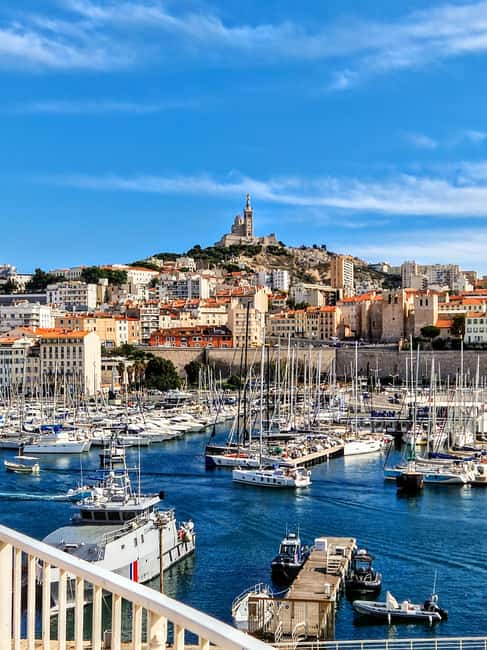
The central appeal is not a long list of sights. It is the local perspective connecting them.
Claude is from Marseille and has spent five years welcoming more than 1,000 people during his free time. That background suggests a guide who has answered many of the practical questions that come up on a first visit: what is worth seeing, where to eat, which districts matter, and how to spend limited time.
The tone is meant to be open and direct. Claude shares both the city’s attractions and its present-day realities, rather than presenting Marseille as a spotless postcard. That matters here. Marseille is a city with character, and a useful introduction should help you see its good points without pretending every street feels the same.
Recent feedback describes Claude as passionate, pleasant to listen to, and easy to follow. One group found that he adjusted the walk when the weather turned difficult, while another appreciated that he answered questions throughout the visit. Those details point to an important strength: the experience is not just a memorized speech delivered at fixed stops.
You should still keep your expectations in proportion. Claude is a local guide, not a licensed museum specialist offering a full academic course. The benefit is the personal connection, flexible pace, and practical advice. If that sounds more useful to you than a dense lecture, this is the right kind of city walk.
Group size, pace, and private options
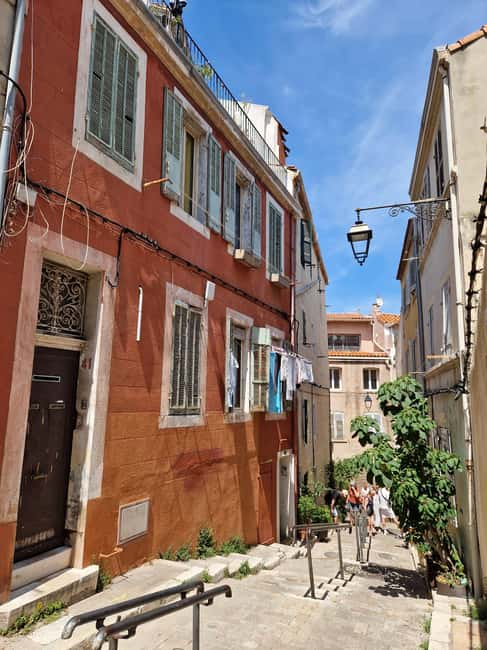
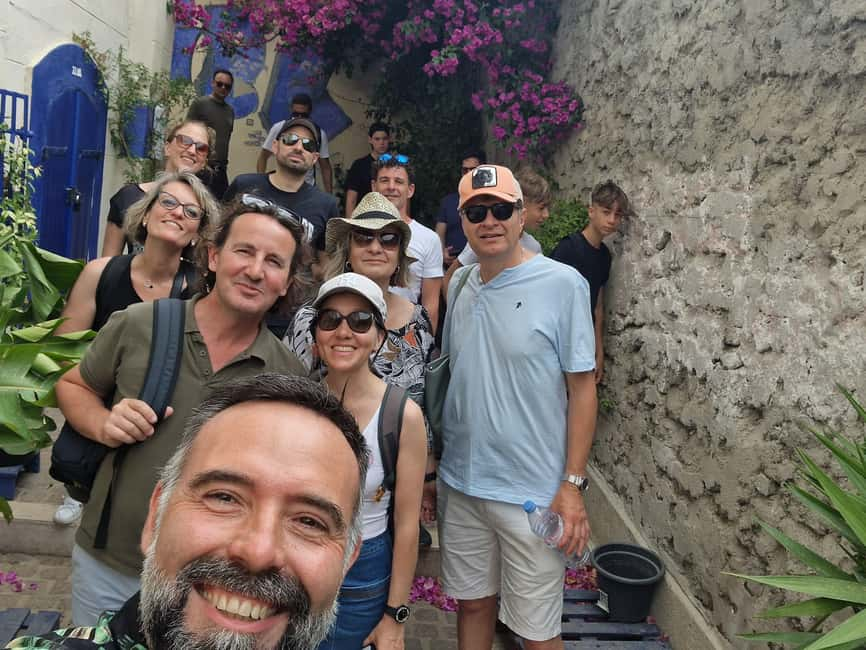
The standard group has a maximum of 10 people. That is small enough for the guide to hear questions and for the walk to retain a personal feel. It also makes it easier to adjust the pace when someone wants a closer look at a church, street, or building.
The advertised duration is two hours. That is long enough to cover the main sequence of stops, but short enough to fit before lunch, after arrival, or between other plans. You should wear comfortable shoes and be ready for continuous city walking, since the route moves between several districts on foot.
The walk can be adapted on request. Claude can change the route, arrange dates that are not shown in the normal booking calendar, and create a private visit. Groups of more than 10 adults are also possible by contacting him through mon-marseille.fr before booking.
A private version could make sense if your group has a particular interest in architecture, local food addresses, or a slower pace. The standard small-group format should suit most people who want a personal introduction without paying for a fully private guide.
Is the $25 price good value?
At $25 per person, this is a modest cost for a two-hour introduction to central Marseille. You are paying for a walking tour with a local guide, not for admissions or transport, so the value depends on how much you want explanation and personal advice.
I consider the price strongest when you book near the start of your stay. Claude’s food, bar, and activity suggestions can help you avoid wasting a meal or an afternoon on places that do not match your interests. The city orientation also gives you a better sense of where to return later.
The price is less compelling if you want extensive interior access, a full-day tour, or commentary in a language other than French. You will see several important areas, but the time at each one is limited. This is a compact walking introduction, not an all-inclusive sightseeing package.
There is also a useful booking cushion: you can cancel up to 24 hours in advance for a full refund, and the reserve-now, pay-later option lets you keep your plans flexible. Those terms reduce the risk if your arrival schedule is still changing.
Who should book this Marseille walk?
I would recommend it most strongly to first-time visitors who want a quick sense of how Marseille fits together. It is also a good choice if you prefer local recommendations over a long list of standard facts.
The tour should suit:
- Couples and small groups looking for a relaxed city introduction
- French-speaking visitors who enjoy asking questions
- People with only a short time in Marseille
- Anyone who wants restaurant, bar, and activity suggestions from a resident
- Visitors who want to see Le Panier with historical context
- Families or mixed-age groups that benefit from a pace shaped around the participants
You may want something else if you need English commentary, extensive museum time, guaranteed interior access, or a highly specialized history tour. The route is social and conversational, so people expecting a silent audio-guide style visit may not get as much from it.
Should you book Claude’s Old Marseille walk?
Book it if you want to meet a local, see the Old Port and Le Panier in one short outing, and leave with practical ideas for the rest of your stay. The strongest reasons are Claude’s personal connection to Marseille, the group size, the flexible pace, and the advice on places to eat and visit.
I would schedule it early in your trip, preferably when you can still use the recommendations. Confirm that French works for you, meet Claude in front of the red Trabuc façade at 31 Rue Reine Elisabeth, and allow two hours for the walk to Hôtel de Ville.
At $25, it is a sensible way to get your bearings and add human context to Marseille’s oldest streets. It will not replace a museum visit or a longer specialist tour, but it can give you a more useful first look at the city than sightseeing on your own with no local frame.
FAQ
How long does the Marseille walking tour last?
The tour lasts two hours.
Where does the tour begin?
Meet in front of the Trabuc shop at 31 Rue Reine Elisabeth. The façade is red.
Where does the tour finish?
The walk finishes near Hôtel de Ville in Marseille.
What language is the tour in?
The live tour guide speaks French.
How many people can join the standard group?
The standard group has a maximum of 10 participants.
What places are included on the walk?
The route includes the Port Antique, the Hôtel de Ville district, the Accoules church, Hôtel Dieu, Le Panier, and the Old Port.
Can the route or group size be changed?
Yes. Claude can adapt the route, arrange private visits, schedule dates not shown in the booking calendar, and accept groups larger than 10 adults by prior arrangement.
Just added in Marseille
- Private French Pastry Class in Marseille★ 5.0 · 90 reviews
- Picturesque Luberon – From MARSEILLE★ 5.0 · 36 reviews
- Provence : Aix en Provence, Cassis and Marseille Private Tour★ 4.5 · 53 reviews
- Marseille Walking food and culture tour 3 hour Private tour★ 4.0 · 36 reviews
- Market & Perched Villages of the Luberon Day Trip from Marseille★ 5.0 · 85 reviews
- Marseille Guided Tour for 2.5 Hours with a Bilingual Local Guide★ 5.0 · 36 reviews
- Marseille Guided Tour for 4 Hours with a Bilingual Local Guide★ 5.0 · 105 reviews
- Private Full Day Wine Tour in Provence From Marseille cruise port★ 5.0 · 32 reviews
Tours in Marseille, compared.


Marseille Food Tour – Full Meal of Local Tastes by Do Eat Better
Read our review →
Calanques National Park Guided Hike with Picnic
Read our review →


Calanques Sailing Day Trip with Lunch and Wine
Read our review →
Browse the lists this tour appears in