
Reviewed · NORMANDY D-DAY TOURS
Normandy Battlefields Tour – American Sites (A3)
The most powerful part of this day is the movement from quiet villages and churchyards to the wide sands of Omaha Beach. You are not simply checking off museums. You are following the American airborne and infantry campaign across Normandy, from Sainte-Mère-Église to Pointe du Hoc and the cemetery at Colleville-sur-Mer.
I like the small maximum of eight people, which gives you room to ask questions and keeps the minivan from feeling like a rolling auditorium. I also like the way the route balances battle sites with places of remembrance, especially La Cambe German War Cemetery and the American Cemetery. The main drawback is the pace: nine hours is a lot of ground to cover, and one day can feel like a history lesson delivered from a fire hose.
What makes this Normandy day worthwhile
- A compact American-sector route: Sainte-Mère-Église, Pointe du Hoc, Omaha Beach, and Colleville-sur-Mer give you a strong overview of the invasion.
- Small-group transport: The minivan carries no more than eight people, making questions and conversation easier.
- Guides who add context: Guides including Sophie, David, Jack, Gaetan, Jeremiah, Emma, and Noemi have been praised for clear English, patience, maps, and battlefield explanations.
- A useful contrast in cemeteries: La Cambe and the American Cemetery offer two very different places to think about the cost of war.
- A full day from Bayeux: Pickup and return in Bayeux save you from arranging separate transport between scattered sites.
- Some walking is required: Expect beaches, cemetery paths, museum visits, and bunker areas, so comfortable shoes matter.
A full day across the American D-Day sector
This tour costs $161.25 per person and lasts about nine hours, usually from the 8:30 am start until around 6 pm. That is a fair price if you want transport, admissions, and a guide without hiring a private car or trying to connect these rural sites by local transport.
The value comes from the geography. Normandy’s D-Day sites are spread across the coast and inland villages. A rental car gives you more freedom, but you must navigate, park, read signs, and build a sensible route. Here, you can look out the window while the guide explains how each place connects to the next.
The small group also matters. With up to eight people, you can ask why an attack unfolded as it did, pause over a map, or hear an extra explanation without competing with dozens of other voices. One practical weakness is that the day is tightly packed. Several stops are planned for roughly an hour, and the museum visit may feel short if you want to read every display.
Guide quality appears to be an important part of the experience. The guide varies, so no one particular person is guaranteed, but past tours have included Sophie, David, Jack, Gaetan, Jeremiah, Emma, Wally, Bryce, Caroline, and Noemi. Several guides were praised for strong English and detailed explanations. Noemi brought maps, diagrams, and photographs, while Jeremiah connected the invasion plans, German deception efforts, resistance activity, and the changing battles from one site to another.
That variation is worth keeping in mind. Most feedback is very positive, but one person had a disengaged guide who gave brief explanations and left the group largely on its own. A small-group tour is only as good as the person leading it, so the experience can vary from one departure to another.
Other days on the landing beaches from Bayeux:
- Normandy American D-Day Beaches Full Day Tour from Bayeux
★ 5.0 · 2,103 reviews - Normandy American D-Day Experience – Group tour from Bayeux
★ 5.0 · 1,566 reviews - Normandy Beaches Half-Day Afternoon Trip from Bayeux (A2)
★ 4.5 · 1,116 reviews
Sainte-Mère-Église and the Airborne Museum
Your first stop is Sainte-Mère-Église, a small town closely associated with the American airborne landings. The church is the visual centerpiece. A paratrooper became caught on the church tower during the fighting, and the event is now part of the town’s wartime memory.
You have about an hour here, including the admission time listed for the stop. The site works well as an opening because it introduces the airborne side of D-Day before the day shifts toward the coastal landings. Your guide can help separate the dramatic image from the larger military operation.
The nearby Airborne Museum adds more detail. It focuses on the American paratroopers who landed behind the beaches and the equipment, planning, and confusion surrounding their mission. Several people valued the museum but wished they had longer there, especially with lunch fitted into the same part of the day.
That is a useful warning. If you like military displays and want to study every object, you may have to choose what to read. I would arrive with a simple goal: listen to the guide’s introduction, then focus on the exhibits that explain how airborne troops supported the beach invasion.
La Cambe brings a different kind of silence
La Cambe German War Cemetery is one of the day’s most important stops because it changes the viewpoint. The American sites naturally draw attention to liberation and sacrifice, but this cemetery asks you to consider the young German soldiers who died on the other side of the battle.
An hour here gives you time to walk, look at the cemetery’s design, and absorb the scale of the losses. The stop can feel quieter and more reflective than the museums and beaches. That contrast is valuable. It keeps the day from turning into a simple account of one side winning and the other side losing.
You may find this is one of the places where the guide’s judgment matters most. A good explanation can provide context without turning the cemetery into a military scorecard. The day is about human cost as much as troop movements.
Pointe du Hoc shows how hard the cliffs were to take
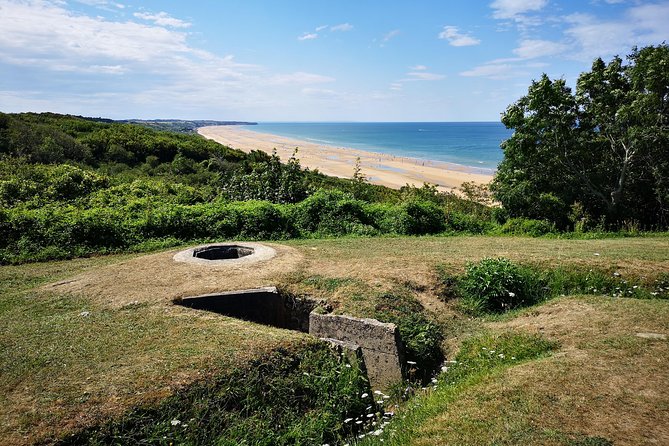
At Pointe du Hoc, American Rangers attacked a German gun position on high ground above the sea. The site remains marked by deep bomb craters, damaged concrete positions, and open grass around the fortifications.
You get about an hour here. The ground is uneven in places, and the stop includes walking around the old defensive positions. The physical setting helps you understand the problem better than a book alone. The cliffs, exposed ground, and concrete defenses make the operation feel like a difficult climb rather than a neat arrow on a map.
This is also a place where the guide can connect several parts of the invasion. One explanation given on the tour links the Pointe du Hoc operation with Omaha Beach: when the attack did not unfold as planned, some Rangers later reinforced the Omaha fighting instead of completing the original objective in the expected way.
That kind of connection is one of the strongest reasons to take a guided tour. Without help, you might see craters and bunkers but miss how one battlefield affected another. You may also get time to enter or examine bunker areas, depending on the route and site conditions.
Other battlefield and wartime sites reachable from Bayeux:
- Normandy Battlefields D-Day Private Trip with VIP Services from Paris
★ 5.0 · 240 reviews - Somme Battlefields Small-Group Day Trip with John Monash Centre from Paris
★ 4.5 · 270 reviews - Somme Battlefields from Paris with Australian memorial & Amiens Cathedral
★ 5.0 · 228 reviews
Omaha Beach is broad, open, and sobering
Omaha Beach is not a preserved battlefield in the usual sense. It is a broad beach where you can walk, look inland, and try to imagine the conditions facing the landing forces. The openness is part of its power. There is nowhere for the mind to hide behind walls or displays.
The tour gives you about an hour here. Your guide will explain the German defenses, the landing, and the severe American losses. The value is not just in standing on the sand. It is in hearing how the terrain, defensive positions, confusion, and delayed support shaped the battle.
The published highlights also include Utah Beach, and several descriptions of the route refer to both Utah and Omaha. However, the timed stop list names Omaha Beach but does not list Utah Beach as a separate stop. If seeing Utah is essential to you, confirm the exact route before booking. The tour clearly focuses on the American sector, but the amount of time at each beach can vary.
This is also a good place to notice the limits of a one-day tour. You will get an informed overview rather than time for long independent walks, private reflection, or detailed study of every monument.
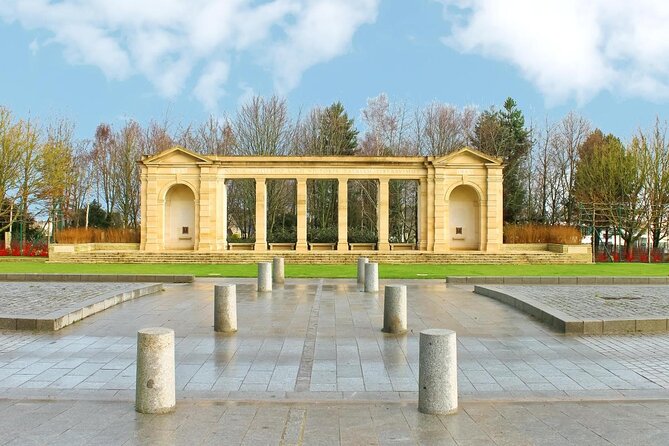
The American Cemetery at Colleville-sur-Mer
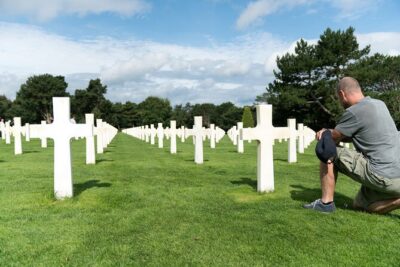
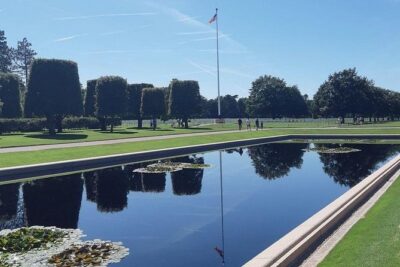
The American Cemetery is the emotional finish of the route. Rows of white crosses and Stars of David stretch across the grounds above Omaha Beach, creating a setting that is orderly, quiet, and difficult to forget.
You have about an hour here. That is enough to walk through part of the cemetery and pay your respects, though you may wish for longer. A guide can explain the setting and the broader campaign, but this is also a place where you should have time without a running commentary.
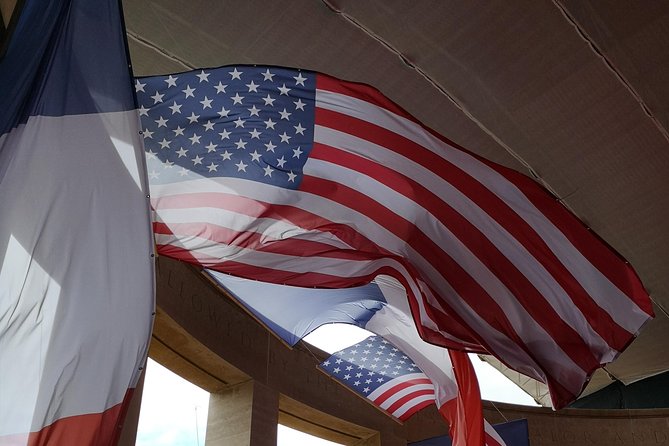
One useful detail from the tour experience is the chance to witness the lowering of the flag and the playing of taps when timing permits. A guide even helped record the ceremony for someone whose phone had run out of power. Do not treat that as a guaranteed feature of your visit, but if the ceremony is important to you, ask the guide about the timing.
This stop gives the day its proper weight. After museums, beaches, and fortifications, the cemetery makes the scale of the deaths personal. I would save a little energy for it rather than treating it as just another final stop.
Transport, walking, meals, and timing
Pickup is offered in Bayeux, with hotel or accommodation pickup specified for the 8:30 am departure. The tour returns to Bayeux around 6 pm. There is no pickup from Paris, so you need to be staying in Bayeux or make your own way there before the start.
The minivan is a practical choice for this route. Roads between the sites take time, and the vehicle keeps the group together. The maximum of eight also makes hotel pickup and drop-off less cumbersome than a large coach.
Plan on a long day with regular walking. You will walk around a church area, through a museum, across cemetery paths, over battlefield ground, and along beaches. The tour suits most people, and service animals are allowed, but anyone with mobility concerns should ask about the exact walking surfaces and site access before reserving.
Food and drinks are not included. Bring something for the day or ask the guide about the lunch plan. One stop may be shortened to make room for lunch, and past experiences suggest that the museum can feel rushed when meal time is included.
The meeting instructions deserve care. One person had confusion about the exact van location, although the pickup point was eventually found. Confirm the meeting place and make sure the guide checks your name before leaving. A mix-up with another tour company once resulted in people boarding the wrong vehicle, so do not assume the first minivan at the hotel is yours.
Who will get the most from this tour
I would choose this tour if you have one full day in Bayeux and want to understand the American side of D-Day without driving. It is especially useful for first-time visitors who want the major sites explained in a sensible order.
It also suits people who enjoy asking questions. The group is small enough for conversation, and strong guides may bring maps, photographs, and battlefield details that are hard to pick up on your own.
You may prefer a private tour if you want to set your own pace, spend extra time at one beach, or avoid the risk of a guide whose energy does not match your interests. This shared tour cannot linger indefinitely at one stop because the later sites and return to Bayeux still have to fit into the day.
Before booking, remember that the tour is offered in English, costs $161.25 per person, and is often reserved about 59 days ahead. The cancellation terms are strict: a full refund requires cancellation at least six full days before departure, while cancellations two to six full days ahead receive 50 percent. Cancellations less than two full days before departure are not refunded.
Should you book the American Sites tour?
Book it if you want a well-organized first look at Normandy’s American D-Day sites, value a small group, and prefer listening to a guide rather than managing rural roads yourself. The combination of Sainte-Mère-Église, La Cambe, Pointe du Hoc, Omaha Beach, and the American Cemetery gives you both military context and time for reflection.
I would hesitate only if you dislike full days, want long museum visits, or need a fully flexible schedule. Confirm whether Utah Beach is included on your departure, pack food and comfortable shoes, and verify the meeting point before the morning starts. For most people with limited time in Bayeux, the route offers strong value and a serious, memorable look at what happened here.
FAQ
Where does the Normandy Battlefields Tour begin?
The tour departs from Bayeux in Normandy. Hotel or accommodation pickup is offered for the 8:30 am option.
Does the tour pick up from Paris?
No. Hotel pickup is available in Bayeux, but there is no hotel pickup from Paris.
How long does the tour last?
The tour lasts about nine hours and returns to Bayeux around 6 pm.
How many people can join the tour?
The tour has a maximum of eight travelers, creating a small-group format.
Is transportation included?
Yes. Roundtrip transport from Bayeux is provided by minivan, with hotel drop-off in Bayeux.
Which places are visited?
The timed route includes Sainte-Mère-Église Church, the Airborne Museum, La Cambe German War Cemetery, Pointe du Hoc, Omaha Beach, and the American Cemetery at Colleville-sur-Mer.
Is Utah Beach included?
Utah Beach is named among the tour highlights and is referenced in descriptions of the American-sector route, but it is not listed as a separate timed stop in the itinerary provided. Confirm the exact route before booking if Utah Beach is important to you.
Is food included?
No. Food and drinks are not included unless specifically stated.
Is the tour offered in English?
Yes. The tour is offered in English.
Can service animals join the tour?
Yes. Service animals are allowed, and most people can participate.
What is the cancellation policy?
You can receive a full refund by canceling at least six full days before the start time. Cancellations two to six full days ahead receive a 50 percent refund. Cancellations less than two full days before departure are not refunded.
Just added in Bayeux
- 2-Hour Guided Walking tour of the Mont Saint Michel★ 4.0 · 203 reviews
- Mont-Saint-Michel bay walk★ 4.5 · 182 reviews
- Mont-saint-Michel : Walk in the heart of the Bay★ 4.7 · 167 reviews
- Normandy Battlefields D-Day Private Trip with VIP Services from Paris★ 5.0 · 240 reviews
- Mont Saint-Michel Day Trip from Bayeux (Shared tour)★ 5.0 · 540 reviews
- From Bayeux: American D-Day Sites in Normandy Full-Day Tour★ 4.9 · 503 reviews
- Mont Saint Michel: Walking Tour & Optional Abbey Ticket★ 4.3 · 562 reviews
- From Paris: Normandy D-Day Beaches Day Trip★ 4.6 · 566 reviews
Normandy D-Day Tours, compared.
Normandy D-Day Sites & Cemetery Day Trip from Paris with Lunch
Read our review →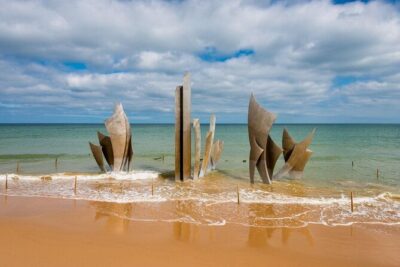
Normandy D-Day Small-Group Day Trip with Omaha Beach, Cemetery & Cider Tasting
Read our review →
Normandy D-Day Beaches and American Cemetery Day Trip from Paris
Read our review →
Normandy American D-Day Beaches Full Day Tour from Bayeux
Read our review →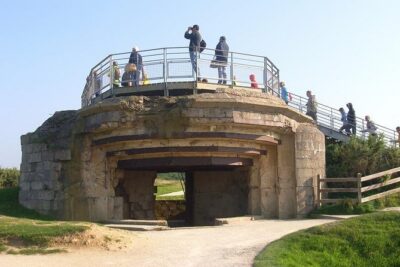
Normandy American D-Day Experience – Group tour from Bayeux
Read our review →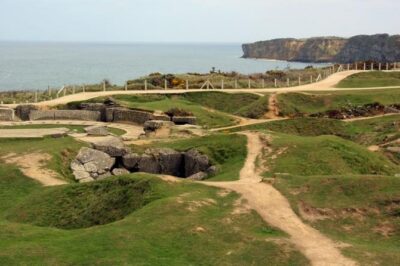
Normandy Beaches Half-Day Afternoon Trip from Bayeux (A2)
Read our review →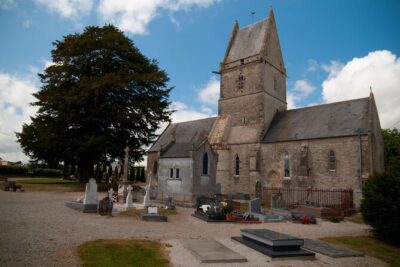
Omaha Beach D-Day Experience – Afternoon group tour from Bayeux
Read our review →Browse the lists this tour appears in