
Reviewed · NORMANDY D-DAY TOURS
Normandy Victory Museum admission ticket
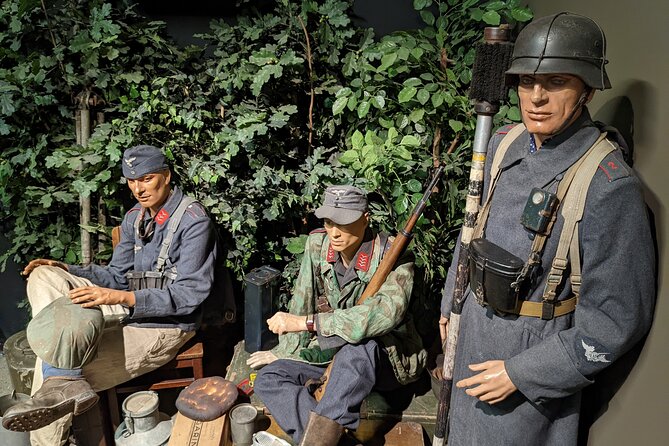
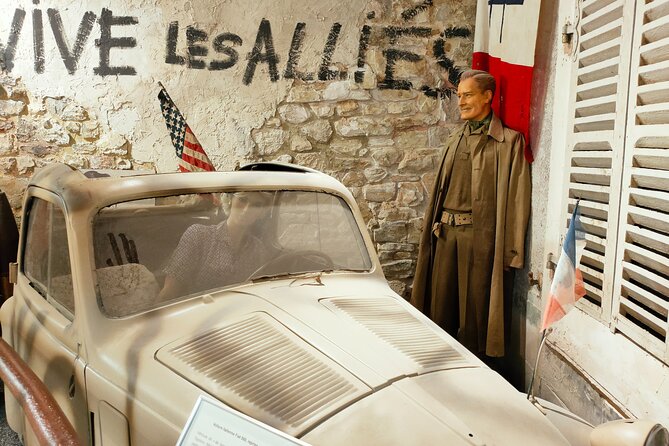
The Normandy Victory Museum puts the spotlight where many D-Day visits do not: the brutal Battle of the Hedges, fought after the beach landings as Allied troops pushed through Normandy’s dense, narrow fields. Its 20 large-scale scenes, original objects, and old military vehicles make June 1944 feel less like a string of dates and more like a hard, muddy human ordeal.
I like the museum’s strong value and its clear visual storytelling. I also like the mix of military equipment with civilian life, giving you a fuller sense of wartime Normandy. The main drawback is practical: the museum is in Carentan, not at Mont-Saint-Michel itself, so you need to plan it as part of a Normandy driving route.
Key points to know before you go
- The Battle of the Hedges gets center stage: Learn what happened after D-Day, when progress inland slowed among Normandy’s thick banks and hedgerows.
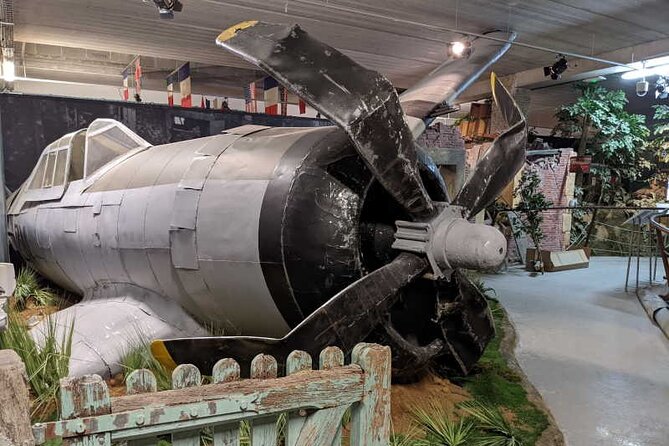
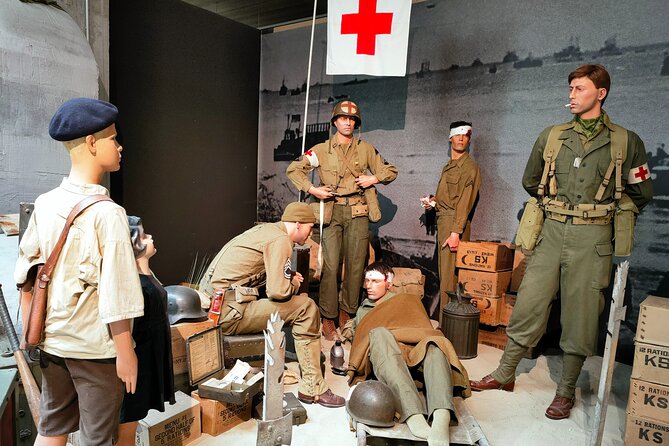
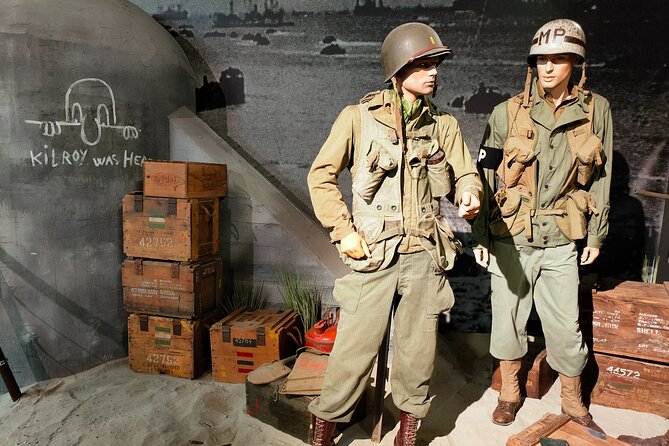
- Twenty large-scale scenes: Walk through carefully arranged settings with sound effects, information panels, and original wartime objects.
- More than 10,000 original objects: The collection gives the museum plenty of detail beyond the usual tanks-and-uniforms display.
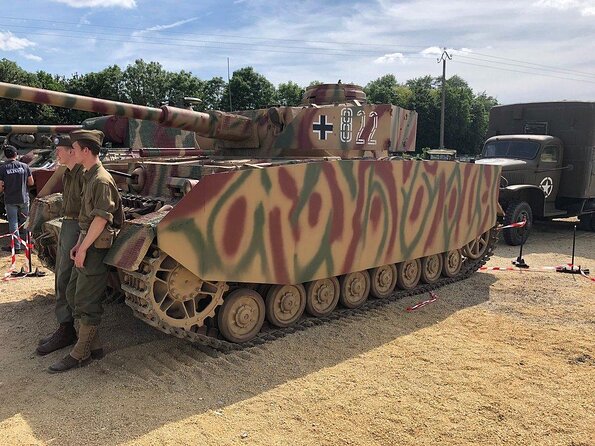
- Vehicles add real scale: Outdoor military vehicles, including a Sherman and a Thunderbolt, help connect the indoor displays with the machinery of war.
- Plan 90 minutes to two hours: That is enough time for a proper visit without rushing through the text panels.
- Good family pricing: Children ages 0 to 6 enter free, ages 7 to 17 pay €7, and the adult ticket is about $11.95 through this booking option.
Why Carentan gives this museum its focus
Many Normandy museums naturally concentrate on June 6, 1944. The Normandy Victory Museum takes you into the difficult days that followed, when the initial landings had succeeded but the war was far from over.
Carentan matters because it was part of the fight to connect the American beachheads and push inland. The surrounding countryside was not an easy open field. Thick hedgerows divided farms into small, enclosed plots, giving defenders cover and turning every advance into a slow, dangerous fight.
That setting gives the museum a useful angle. You are not only looking at the famous landing craft, beach obstacles, and invasion plans. You are also looking at what happened once troops moved away from the shore, into farmland where visibility was poor and movement was painfully slow.
If your Normandy trip includes the D-Day beaches, this museum helps fill in the gap between the beach landings and the broader campaign. It gives you a better sense of why victory did not come in a single day.
Other days on the landing beaches from Bayeux:
- Normandy American D-Day Beaches Full Day Tour from Bayeux
★ 5.0 · 2,103 reviews - Normandy American D-Day Experience – Group tour from Bayeux
★ 5.0 · 1,566 reviews - Normandy Beaches Half-Day Afternoon Trip from Bayeux (A2)
★ 4.5 · 1,116 reviews
The 20 scenes make the story easy to follow
The visit is arranged around 20 large-scale scenes. This is helpful if you do not want a museum made up only of glass cases and long blocks of text.
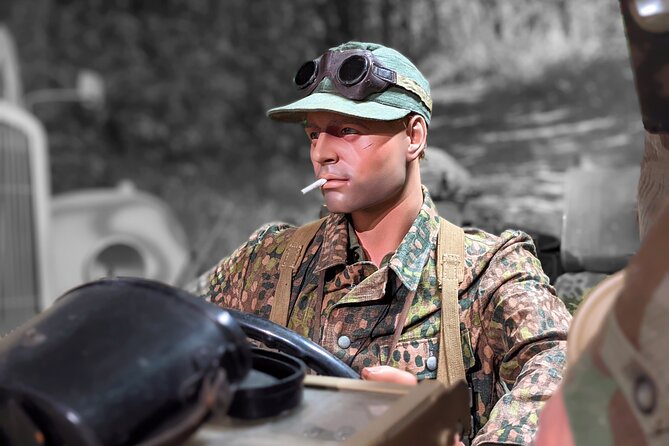
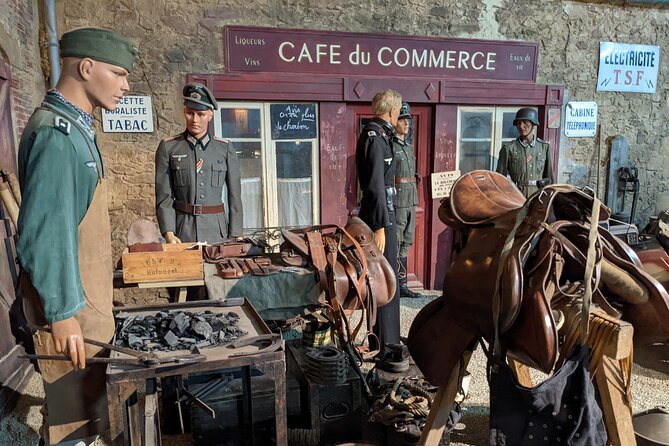
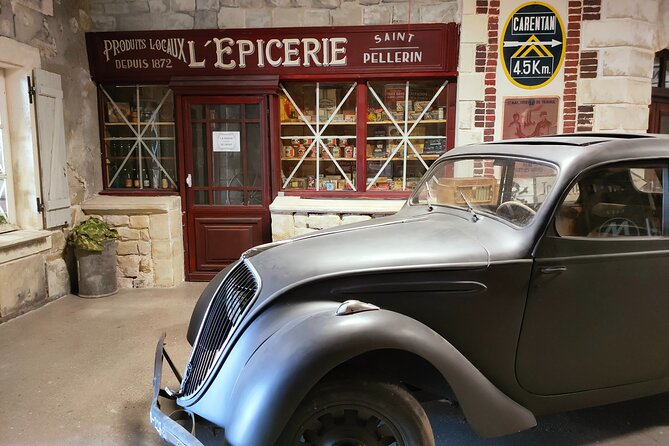
The displays recreate wartime settings and combine figures, equipment, objects, and sound. You might find yourself pausing to look at a small domestic detail before noticing the larger military picture around it. That contrast matters. War was fought by armies, but it also disrupted homes, farms, roads, and ordinary routines.
The visual approach works especially well for families and older children. You can read the information panels at your own pace, then use the scenes to understand how the pieces fit together. Adults who already know the broad D-Day story will find more value in the local detail and the focus on the days after the landings.
One practical warning: sound effects add atmosphere, but they can compete with video presentations in nearby areas. One visitor found the sound on a D-Day testimony video too low beside the surrounding displays. If you want to watch one of these accounts, ask staff to raise the volume rather than trying to listen from the edge of the room.
More than 10,000 original objects, not just reconstructed scenes
The original objects are one of the museum’s biggest strengths. The collection includes more than 10,000 items, so the displays have substance behind the theatrical presentation.
You will find military equipment and artifacts from the 1940s, along with objects that help show how soldiers and civilians lived through the period. The museum presents life from both sides, military and civilian, rather than treating the campaign as a simple story of uniforms and weapons.
That broader approach gives you more to think about. A tank shows power and scale, but a personal object can tell you more about fear, routine, shortage, or survival. The museum’s strength comes from placing those different kinds of evidence together.
The scenes are also designed to be interactive in a modest, practical way. Some displays allow you to sit in vehicles and place yourself inside the setting. This can be especially effective with children, who often understand size and space more quickly when they can see where people sat or stood.
The vehicles outside are worth your time
Do not rush away after the indoor galleries. The outdoor vehicle area adds an important second half to the visit.
The collection includes old military vehicles, and the outdoor displays have included a Sherman tank and a Thunderbolt. Jeeps and lorries may also be present, along with visiting vehicles and special displays at certain times.
These machines help explain the physical demands of the campaign. A vehicle that looks manageable in a photograph feels very different when you stand beside it. You can better understand the weight, height, cramped space, and mechanical limits involved in moving troops and supplies through Normandy.
The outdoor section also gives the visit a change of pace. After reading panels and examining smaller objects, you can walk around larger equipment and take in the details from several angles. Families usually get good value from this part because it gives younger visitors something tangible to explore.
The exact vehicles and events can change, so treat special reenactments as an occasional extra, not a guaranteed part of the admission. The museum has hosted outdoor reenactment activity, and when it happens, it can add life to the vehicle area.
More museums in Bayeux:
- Airborne Museum Admission Ticket
★ 5.0 · 424 reviews - Caen: Guided D-Day Sites Tour & Caen Memorial Museum Ticket
★ 4.8 · 385 reviews - Mont Saint-Michel: 3 Museums Entry Pass
★ 3.6 · 304 reviews - Mémorial de Caen Museum Admission and Guided Tour of D-Day Sites
★ 4.5 · 275 reviews
A quieter alternative to the best-known Normandy museums
The museum is not presented as one of the giant, headline attractions of the Normandy coast. That can be a benefit.
You may find the visit calmer than at the most heavily promoted D-Day sites. The layout gives you room to stop at objects and read panels without feeling pushed along. Several displays are detailed enough to reward a slower pace, especially if you are interested in uniforms, equipment, and personal artifacts.
The tradeoff is that the museum can be a little tricky to locate. It is tucked behind an industrial building, and missing the correct exit can make the approach confusing. Keep your directions ready and allow a few extra minutes rather than assuming you can simply spot it from the main road.
Once you arrive, parking is available. The museum is also described as accessible to everyone, and most people can take part without special arrangements. Service animals and dogs are accepted, though you should still consider how comfortable your dog will be around sound effects and crowds.
How long to allow, and how to fit it into your day
Plan on 90 minutes to two hours. You can move faster if you mainly want to see the scenes and vehicles, but the information panels and original objects deserve more time.
A sensible visit might look like this:
- Begin with the main indoor scenes to understand the campaign’s sequence.
- Slow down around the original objects and civilian displays.
- Watch any video material that interests you, asking staff about the sound if needed.
- Finish outside with the military vehicles.
- Leave time for the shop and, if open, the airfield-themed cafe.
You do not need to treat this as an all-day attraction. It works well as a focused stop between other Normandy sites, particularly if you are exploring the Carentan area or driving toward Cherbourg. It can also be a useful break from beach visits, because you spend less time outdoors and get a different type of historical explanation.
Food and drinks are not included with the admission ticket. A cafe has been associated with the museum, but do not assume a meal is part of the ticket. Bring a plan for lunch or a snack if you are arranging a tight schedule.
The ticket price and who gets the best value
The adult admission is listed at $11.95 per person. That is a reasonable price for a visit lasting up to two hours, especially given the number of original objects, the 20 scenes, and the vehicles outside.
The value improves for families. Children ages 0 to 6 enter free, and youths ages 7 to 17 are included at the €7 youth rate. That makes the museum easier to add to a family day than a series of high-priced attractions.
A reduced €7 ticket is available at reception for people with reduced mobility, students, teachers, and military personnel. The booking information also lists free Wi-Fi and a maximum group size of 100 people, so the setting is not designed for huge crowds.
I would compare the price with your own interests. If you only want to see a famous tank and take a few photographs, there are cheaper ways to spend an hour. If you want a structured account of the post-D-Day fighting, original artifacts, civilian context, and a vehicle collection, the price is fair.
Is it suitable for children?
Yes, particularly for school-age children and teenagers who can handle military history. The displays are visual, the vehicles are engaging, and the interactive elements can help younger visitors stay involved.
The subject is still war, and some scenes may feel serious or upsetting. The museum aims for an emotional and realistic presentation, so parents should decide how much detail suits their children.
Older children who already know a little about D-Day will get more from the visit, but beginners can follow the general story through the scenes and panels. The free admission for ages 0 to 6 also makes it possible to include very young children without adding much to the cost, even if they only enjoy the vehicles and visual displays.
Practical details for planning your visit
The experience is offered in English, and you receive a mobile ticket. Confirmation arrives at booking, which makes it easy to keep the admission information on your phone.
Opening hours vary by season:
- February 14 to April 3, 2026: 10:00 a.m. to 5:30 p.m.
- April 4 to May 29, 2026: 10:00 a.m. to 6:30 p.m.
- May 30 to August 23, 2026: 9:30 a.m. to 7:00 p.m.
These dates matter if you are building a long Normandy sightseeing day. The longer summer hours give you more flexibility, while the earlier closing time in late winter and early spring calls for a morning or early afternoon visit.
The booking is cancellable for a full refund if you cancel at least 24 hours before the start time. Changes or cancellations made inside that period are not accepted for a refund.
My verdict on the Normandy Victory Museum
I would book this museum if you want more than a quick look at invasion equipment. Its best feature is the focus on the Battle of the Hedges, a part of the Normandy campaign that can be missed when you concentrate only on the beaches.
The original objects, large-scale scenes, civilian context, and outdoor vehicles give the visit real range. I especially like that the museum works for both serious history fans and families who need a visual, manageable introduction.
Skip it if your itinerary already has several similar military museums and you prefer to spend your limited time outdoors. Also check the route carefully, since the Carentan location is not a spontaneous side trip from Mont-Saint-Michel.
For most Normandy history itineraries, though, this is a well-priced stop with enough substance for two hours. Add it when you want to understand what happened after D-Day, not just what happened on the beaches.
FAQ
Where is the Normandy Victory Museum located?
The museum is in Carentan, Normandy, France. It is listed with Mont-Saint-Michel as the location for the experience, but the museum itself is in Carentan.
How long does a visit take?
Allow approximately 1 hour and 30 minutes to 2 hours.
Is the experience offered in English?
Yes. The experience is offered in English.
What does the admission ticket include?
The ticket includes admission to the Normandy Victory Museum. Food and drinks are not included.
Are children admitted free?
Children ages 0 to 6 are included free of charge. The youth rate for ages 7 to 17 is €7.
What are the museum’s opening hours?
From February 14 to April 3, 2026, opening hours are 10:00 a.m. to 5:30 p.m. From April 4 to May 29, hours are 10:00 a.m. to 6:30 p.m. From May 30 to August 23, hours are 9:30 a.m. to 7:00 p.m.
Just added in Bayeux
- Mt St. Michel Private Tour with Abbey tickets and tour guide★ 5.0 · 45 reviews
- Private Guided Tour in WW2 Jeep of the Landing Beaches★ 5.0 · 110 reviews
- Mont-St-Michel: Private Walking Tour “Abbey Ticket Included”★ 5.0 · 28 reviews
- From Cherbourg: D-Day Beaches Shore Excursion★ 5.0 · 28 reviews
- Airborne Museum Admission Ticket★ 5.0 · 424 reviews
- Small Group Guided D-Day Tour and Mémorial de Caen Museum★ 5.0 · 237 reviews
- Private Day Tour including Normandy Landing Beaches & Battlefields from Caen★ 5.0 · 53 reviews
- Normandy: Private tour D-Day landing beaches American sector★ 5.0 · 62 reviews
Normandy D-Day Tours, compared.

Normandy D-Day Sites & Cemetery Day Trip from Paris with Lunch
Read our review →
Normandy D-Day Small-Group Day Trip with Omaha Beach, Cemetery & Cider Tasting
Read our review →
Normandy D-Day Beaches and American Cemetery Day Trip from Paris
Read our review →
Normandy American D-Day Beaches Full Day Tour from Bayeux
Read our review →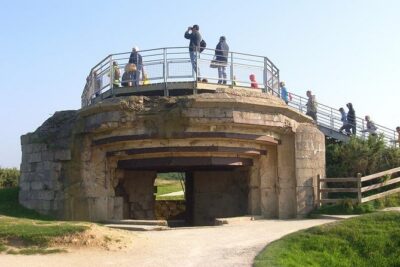
Normandy American D-Day Experience – Group tour from Bayeux
Read our review →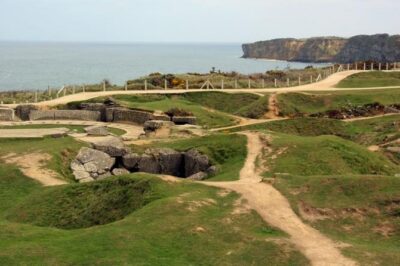
Normandy Beaches Half-Day Afternoon Trip from Bayeux (A2)
Read our review →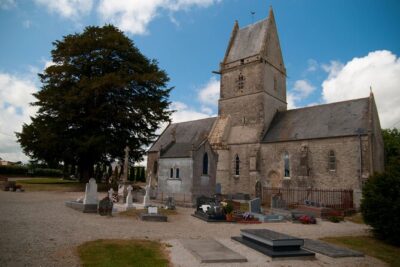
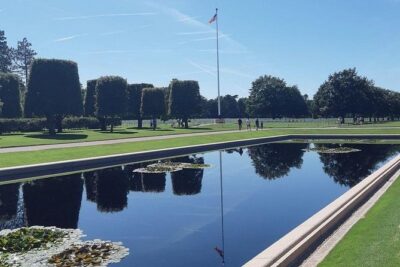
Omaha Beach D-Day Experience – Afternoon group tour from Bayeux
Read our review →Browse the lists this tour appears in