
Reviewed · TOURS IN PARIS
Paris: City Center Group Tour in German
Paris reveals itself best on foot, and this walk links many of the city’s big sights into one useful story. You begin near Opéra Garnier and follow Paris’ historic axis toward the Seine, passing royal squares, revolutionary ground, the Tuileries, the Louvre, Pont Neuf, and Notre-Dame.
I like the compact two-hour route, which gives first-time visitors a quick sense of how central Paris fits together. I also like the specific stories, from women’s seating rules at the opera to the controversy over the Louvre Pyramid. The main drawback is pace: with so many major stops, you’ll see them from outside and may need more time later for museums and interiors.
Key points at a glance
- A strong first-day route: Walk from Opéra Garnier to Île de la Cité through the historic center.
- Stories with a point: Hear about Napoleon, the French Revolution, Pont Neuf, opera customs, and the Louvre Pyramid.
- German-language guidance: The live tour is offered in German, with guides including Marilena and Lasse.
- Notre-Dame after its 2024 reopening: Finish near the cathedral and see it as part of the city’s oldest core.
- Useful local advice: Make time for restaurant, museum, and neighborhood tips during or after the walk.
- Good value at $35: You get two hours of guided sightseeing, but food, entry fees, and gratuity are extra.
Why this two-hour route works for a first look at Paris
This is not a tour built around one museum or one monument. It is a city walk with a clear line through the center, moving from the grand world of the Opéra and royal Paris toward the river and the medieval island where Notre-Dame sits.
That shape matters. Paris can feel scattered when you first arrive. The Louvre is here, the Seine is there, and the Tuileries seem to stretch forever. This route helps you place the major sights on a mental map. You will understand how Place Vendôme, Place de la Concorde, the Louvre, and the river connect before you spend more time exploring them on your own.
The tour is listed at $35 per person. For that price, I see it as an orientation walk rather than a full sightseeing day. You are paying for a guide, a planned route, historical explanation, and practical advice. You are not paying for museum admission or a long stop inside any monument.
The 4.7 rating from 69 bookings suggests a consistently well-received experience. The strongest pattern is the guides themselves. Marilena is described as entertaining and highly capable, while Lasse is praised for answering questions and putting together an interesting route. Those details matter because a walking tour rises or falls on the person holding the group together.
Other trips people book in Paris:
- Paris: Louvre Museum Timed-Entrance Ticket
★ 4.6 · 71,977 reviews - Disneyland® Paris 1-Day Ticket
★ 4.6 · 49,412 reviews - Paris: Versailles Palace and Gardens Full Access Ticket
★ 4.6 · 41,579 reviews
Meeting the guide near Opéra Garnier
The meeting point is in front of the Cadillac store at 7 Rue Meyerbeer, in the 9th arrondissement. Look for a guide carrying a HelpTourists bag and wearing a pink baseball cap.
The location puts you near Palais Garnier, one of Paris’ most theatrical buildings. It is a sensible starting point: easy to recognize, central, and surrounded by the grand streets and department-store district of the right bank.
The tour is offered with a live German-speaking guide. If German is your preferred language, that is the main reason to choose this walk over a general English-language city tour. The supplied details also describe a professional English-speaking guide in one section, so I would confirm the guide language at booking if this point matters to you. The activity information identifies German as the tour language.
Arrive ready to walk. The route covers several central districts in two hours, and the goal is steady movement with stops for explanation and photos. Comfortable shoes will make a real difference, even though the route itself is not presented as a strenuous hike.
Palais Garnier and the social rules of opera
The first major sight is Palais Garnier, the grand opera house near the starting point. You should expect a photo stop and outdoor explanation rather than an included visit inside the building.
The useful part here is the social story. You hear why women were once not allowed to sit in certain opera seats. That detail does more than add an amusing fact. It shows how Parisian entertainment was once shaped by class, gender, and strict public behavior.
A good guide can use a building like Palais Garnier as a doorway into daily life, not just architecture. As you look at the ornate exterior, you begin to see opera as a social institution, not simply a place where music was performed.
If you want to tour the interior, plan that separately. No entry fee is included, and the two-hour walk does not leave room for a full visit.
Place Vendôme and the power of Parisian elegance
From the opera district, the walk continues toward Place Vendôme. This square is known for its formal design and polished appearance, but the tour gives it a political angle as well.
Napoleon’s story enters the walk here. You will hear how power was displayed through monuments, grand urban planning, and symbols placed in the middle of the city. The square helps explain why central Paris often feels carefully staged. Its beauty is not accidental, and neither is its connection to royal and imperial ambition.
This is a short sightseeing stop, so do not expect a long architectural lecture. The benefit is the route’s rhythm. You see the place, hear why it matters, take photographs, and keep moving toward the larger open spaces of the center.
Same base, a different kind of day:
- Paris: Evening River Cruise with Music
★ 4.4 · 22,721 reviews - Paris: Eiffel Tower Entry Ticket with Optional Summit Access
★ 4.4 · 20,035 reviews - Paris: Eiffel Tower Summit or Second Floor Access
★ 4.3 · 17,248 reviews - Paris: Louvre Guided Tour with Reserved Access & Boat Cruise
★ 4.3 · 16,353 reviews
Place de la Concorde and the French Revolution
Place de la Concorde brings a sharper turn in the story. Today, it is a broad urban square between the Tuileries and the Champs-Élysées. During the French Revolution, it became one of Paris’ most dramatic and dangerous locations.
That contrast is one of the tour’s strengths. The city can look calm and elegant while standing on ground shaped by violence and political upheaval. The guide connects the square to the Revolution and helps you look past its modern traffic and open space.
You also get views toward the Champs-Élysées. These are not the same as walking the full avenue, but they give you a sense of the grand axis that runs through this part of Paris.
Place de la Concorde can be busy and exposed, with traffic around its edges. The stop is best treated as a place for orientation and storytelling, not quiet contemplation. Your guide’s explanation is what turns a large square into a meaningful stop.
The Tuileries Garden as Paris’ open-air salon
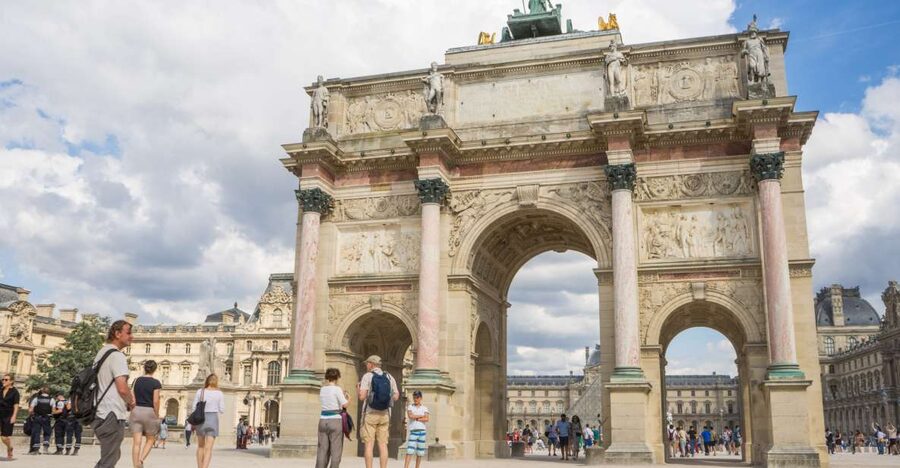
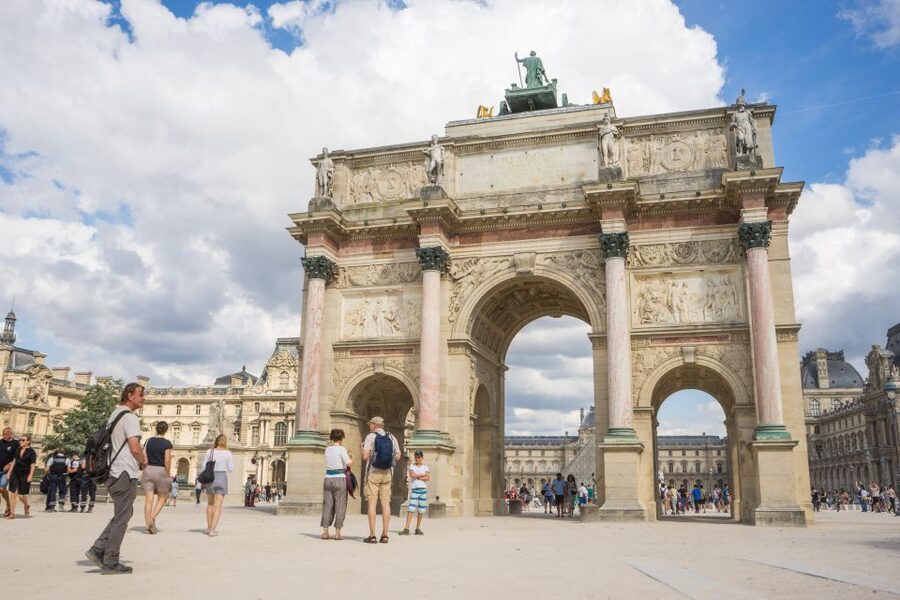
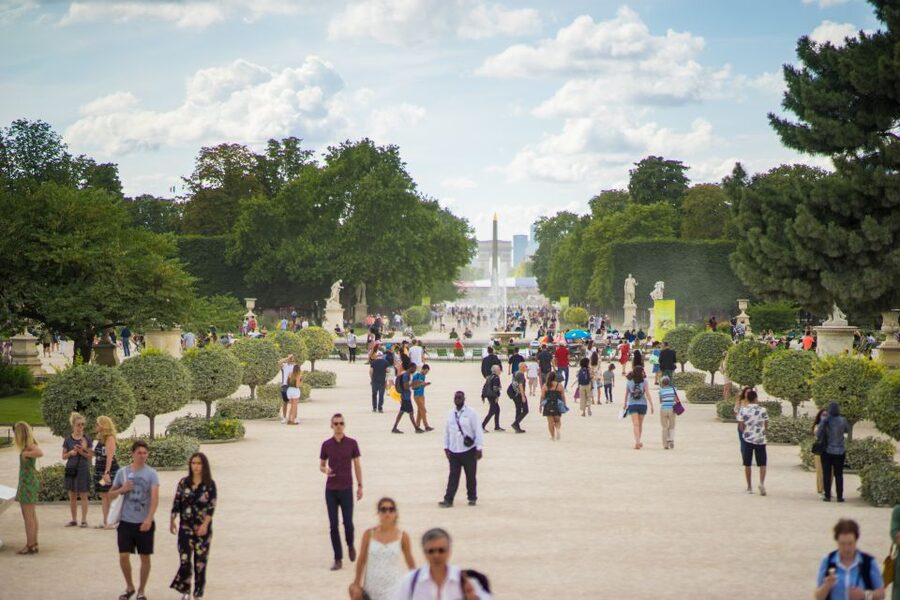
The route then enters the Tuileries Garden, where the pace should feel more relaxed. You will walk through one of Paris’ best-known formal gardens, with views toward the Champs-Élysées and the Louvre.
This is a valuable pause between large city squares. The garden gives you room to see how Paris handles public space: straight paths, ordered plantings, sculpture, and long views toward major buildings. It also offers a more pleasant setting for questions and conversation than a traffic-heavy intersection.
The tour includes sightseeing and walking here, not a private garden experience. You will not have time to explore every path or sit for long. Still, the Tuileries works well as a bridge between the revolutionary history of Concorde and the museum district ahead.
I especially like this part for first-time visitors. The garden shows the scale of central Paris better than a quick taxi ride can. You can look back toward the avenue and forward toward the Louvre, seeing the city as one connected plan.
The Louvre and the pyramid that caused a fuss
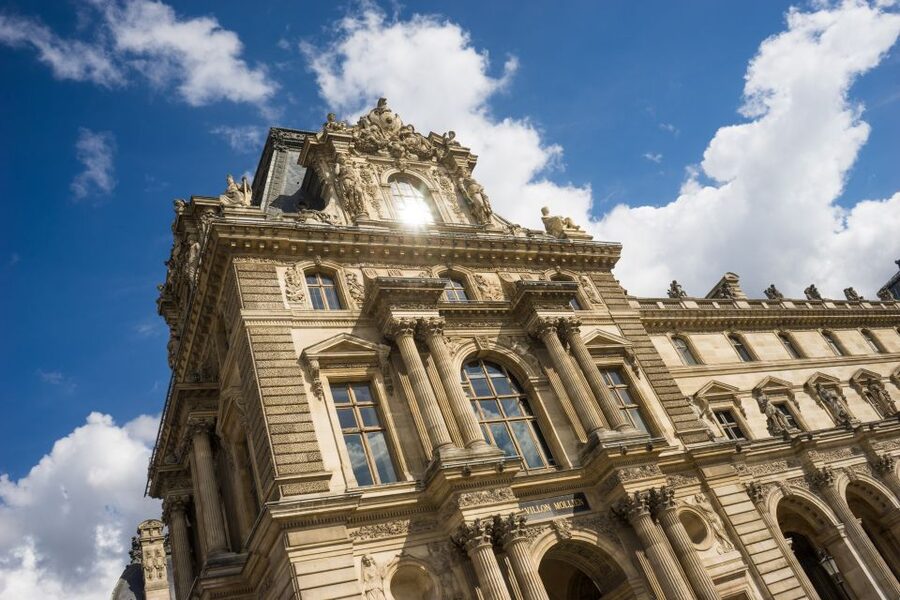
The Louvre is one of the biggest stops on the route, but it is an outdoor sightseeing visit. You will see the museum complex and the famous glass Pyramid, with time for photographs and an explanation of the controversy surrounding its construction.
That story is useful because the Louvre is often treated as timeless. It is not. The pyramid was a modern addition to one of Paris’ most historic sites, and its design did not win instant approval. The tension between old palace architecture and modern glass is part of what makes the courtyard memorable.
You should set your expectations carefully. This walk does not include museum entry, reserved access, or time to see the collections. The Louvre deserves at least a separate half-day if art is a major reason for your visit.
Still, seeing it in the context of the route has real value. You have already walked through the Tuileries and followed the city’s central axis. By the time you reach the Louvre, the building feels less like an isolated attraction and more like one piece of Paris’ royal and public center.
Pont Neuf, the oldest bridge with the newest name
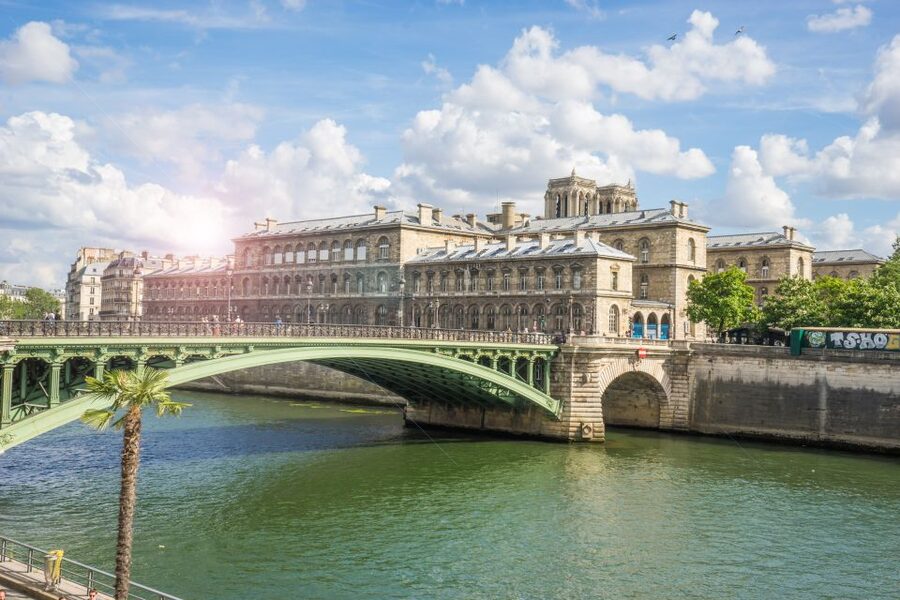
The walk continues toward the Seine and Pont Neuf. Its name means New Bridge, but it is actually the oldest bridge in Paris. That contradiction makes an easy fact to remember, and it is exactly the kind of detail that helps a city walk stick in your mind.
Pont Neuf also changes the feel of the tour. The earlier stops are broad squares, gardens, and monumental courtyards. Here, the river brings a stronger sense of distance and movement. You can look along the Seine and understand why the water has always been central to Paris.
Expect another photo stop and guided explanation, not a long pause by the river. The bridge can be busy, and the tour continues on foot. If you want quiet river views or time for photographs, return later at your own pace.
The bridge is a particularly good place to ask questions. The guide can help connect the city’s political center with its older streets and islands, which is one reason a live tour is more useful than simply following a map.
Île de la Cité and Notre-Dame after reopening
The walk ends on Île de la Cité, the island at the heart of historic Paris. Notre-Dame is the obvious closing sight, and the tour includes views of the cathedral after its 2024 reopening.
Ending here gives the route a clear sense of arrival. You have moved from the elegant modern center around Opéra through royal and revolutionary Paris, then crossed toward the oldest part of the city.
The stop is primarily a sightseeing finish. Entry to Notre-Dame is not included, and the tour details do not promise an interior visit. If you want to go inside, treat that as a separate plan and check the cathedral’s current entry arrangements for your date.
Notre-Dame also makes a useful endpoint because you can continue exploring Île de la Cité afterward. The tour itself ends here, so you are not rushed into a return transfer or sent back to the starting point. That means you should think ahead about what you want to do next.
What the guide adds beyond a map
A map can show you the shortest route from Opéra to Notre-Dame. It cannot explain why an opera seat once carried social rules, why Pont Neuf has such an odd name, or why the Louvre Pyramid sparked argument.
The guide’s role is to connect these facts. The best moments of the walk are likely to come from those links, especially if you ask questions along the way. Lasse is noted for answering questions, and Marilena for combining humor with strong subject knowledge. Those are useful qualities on a route that covers a lot of ground quickly.
You also receive practical tips for restaurants, museums, and local places. The details provided do not specify individual recommendations, so I would treat this as a chance to ask direct questions about your own plans. Tell the guide what kind of meal, museum, or neighborhood experience you want.
Because the tour is in German, it can be especially helpful for German-speaking visitors who want explanations and questions handled in their own language. The group format keeps the cost below a private guide, though it also means the pace and stops are shared with others.
Who will get the most from this walk
I would choose this tour if you are visiting Paris for the first time and want a strong central orientation before tackling museums and neighborhoods on your own. It also works for a return visit if you have seen the monuments but want more context for them.
The route suits you best if you enjoy:
- Walking between major sights instead of taking transport from one stop to the next
- Short historical stories tied to places you can see
- Outdoor sightseeing and photography
- A German-speaking guide
- Practical suggestions for the rest of your stay
It is less suitable if you want long visits inside Palais Garnier, the Louvre, or Notre-Dame. None of those entry fees is included, and two hours is not enough for proper interior tours.
Families and older visitors should consider the steady walking pace and the need to remain with the group. The supplied details do not state accessibility arrangements, so ask before booking if that is important for you.
Is $35 a fair price?
At $35, the tour offers fair value if you use it as a city introduction. You get two hours with a live guide and a route that covers several of Paris’ most important central sights. A German-language tour can also be worth the price simply because it lets you follow historical explanations and ask questions without a language barrier.
The value drops if you expect admissions or extensive time at each monument. Food, drinks, entry fees, and gratuity are not included. You should budget separately for any museum or cathedral visit.
I would also factor in the advice at the end of the walk. A good restaurant or museum suggestion can save you time and help you avoid choosing a place only because it sits beside a famous monument. Ask specific questions, and you are more likely to get useful answers.
You can cancel up to 24 hours before the tour for a full refund, and you can reserve now while paying later. Those policies make it easier to place the walk near the beginning of a flexible Paris schedule.
My recommendation for this Paris city walk
Book this tour if you want a German-language introduction to central Paris with a clear route, lively historical stories, and a finish near Notre-Dame. The praised guides, especially Marilena and Lasse, are an important part of its appeal.
Do not book it as a substitute for the Louvre, Palais Garnier, or Notre-Dame interiors. Use it to understand where those places fit, then return to the sights that deserve more time. For $35, that is a sensible way to get your bearings early, ask practical questions, and start the rest of your visit with a better map in your head.
FAQ
How long does the Paris city center tour last?
The walking tour lasts two hours.
What language is the tour offered in?
The live tour guide language is German.
Where does the tour begin?
Meet in front of the Cadillac store at 7 Rue Meyerbeer, 75009 Paris. Look for a guide carrying a HelpTourists bag and wearing a pink baseball cap.
Where does the tour finish?
The tour ends on Île de la Cité.
Is entry to the Louvre or Notre-Dame included?
No. Entry fees are not included in the tour price.
What does the tour price include?
The price includes the two-hour guided walking tour. Food, drinks, entry fees, and gratuity are not included.
Can I cancel the booking?
Yes. You can cancel up to 24 hours in advance for a full refund. You can also reserve now and pay later.
Just added in Paris
- Private Transfers in Paris★ 5.0 · 75 reviews
- Disneyland® Paris 1 Day Ticket with Transport from Paris★ 3.5 · 302 reviews
- Personalized Transport service from Disneyland to Paris★ 5.0 · 63 reviews
- CDG – Euro Disney – CDG Two Way Private Shuttle Transfer★ 5.0 · 233 reviews
- Monet’s Gardens & House-Private Giverny Tour From Paris★ 4.5 · 137 reviews
- Giverny Monet House and Gardens Skip the line Walking tour★ 4.0 · 217 reviews
- Guided tour Monet’s house and gardens/small group★ 4.5 · 68 reviews
- Monet’s House and Garden & Giverny Village★ 4.5 · 39 reviews
Tours in Paris, compared.
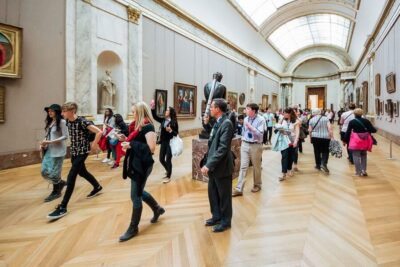

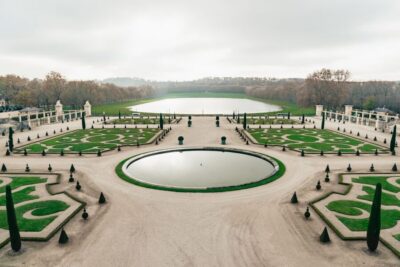
Versailles Palace and Gardens Full Access Ticket
Read our review →
Eiffel Tower Entry Ticket with Optional Summit Access
Read our review →
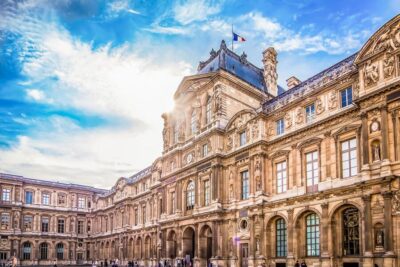
Louvre Guided Tour with Reserved Access & Boat Cruise
Read our review →
Moulin Rouge Cabaret Show Ticket with Champagne
Read our review →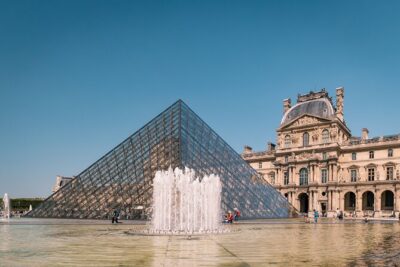
Louvre Museum Masterpieces Guided Tour with Access
Read our review →Browse the lists this tour appears in