
Reviewed · WALKING TOURS
Paris: French Revolution Walking Tour
Paris becomes a different city when you walk it through the eyes of 1789. This two-hour tour links old streets, churches, monuments, and overlooked details to the conspiracy, violence, and hope that reshaped France. I like the strong storytelling and the way guides such as François, Louis, and Fran turn a tangled subject into a clear human drama.
I also like the comfortable pace and the mix of famous events with small features you could easily pass without noticing. The drawback is that two hours cannot cover every major site, so the tour may touch only briefly on places such as the Place de la Concorde or Champs de Mars.
Key points to know before you book

- A walking route through revolutionary Paris: Begin at the Fontaine au Sphinx on Place du Châtelet and follow the story through the old center of the city.
- A focused two-hour history lesson: The guide compresses the years before, during, and after 1789 into a brisk but manageable outing.
- Excellent English storytelling: François, Louis, Fran, Louis, and other guides have been praised for clear speech, humor, passion, and careful explanations.
- More than famous names: Expect stories of hidden objects, churches, political plots, executions, massacres, and the daily pressure behind the Revolution.
- A good fit for families and first-time learners: The format worked well for adults, teenagers, and people whose knowledge comes mainly from school lessons.
- Simple logistics: The tour costs $46 per person, includes the guide and walking tour, and offers free cancellation up to 24 hours before departure.
Starting at Place du Châtelet with Paris under pressure
Your meeting point is the Fontaine au Sphinx on Place du Châtelet. This puts you in the heart of Paris, close to the Seine and within easy reach of the city’s older central quarters. Look for the guide before the start time, since one person had difficulty finding the group and noted that there was no obvious tour logo.
The opening matters because the French Revolution did not spring from one angry afternoon. It grew from financial strain, social inequality, political frustration, and a royal system that could not solve its own problems. A good guide uses the first part of the walk to make those pressures easy to follow, rather than throwing a list of dates at you.
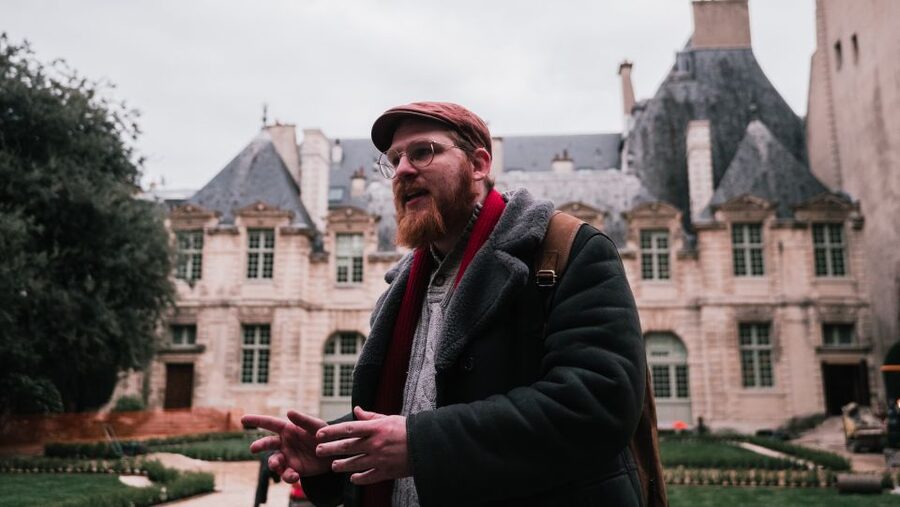
You can expect a live guide in English, not an audio recording or a museum-style lecture. Guides have included François, Louis, Fran, Guillaume, Ilan, Amber, and Sam, though the person leading your walk will vary. The strongest guides have a clear voice and can keep speaking over normal city noise, an important point on a street tour.
More walking tours in Paris:
- Paris Top Sights Half Day Walking Tour with a Fun Guide
★ 5.0 · 2,893 reviews - Montmartre Hidden Gems and Scenic Highlights Walking Tour
★ 5.0 · 2,684 reviews - Montmartre Hill French Gourmet Food and Wine Tasting Walking Tour
★ 5.0 · 2,588 reviews
Following the story through old Paris
The route uses the streets themselves as evidence. You may examine a church, a building detail, a public square, or an overlooked object and then connect it to the political mood of the time. These small clues give the walk its value. You are not just hearing that Paris changed, you are seeing how the city carried the marks of that change.
The route is not strictly chronological. That may bother you if you want to walk from one event to the next in a neat timeline. In practice, a skilled guide can keep the sequence clear while moving between nearby sites, and the benefit is that you see more of central Paris without spending the whole outing retracing one narrow thread.
One useful feature is the way the walk treats the Revolution as a process rather than a single storming of the Bastille. You hear about the years of argument and pressure that came first, then the sudden action, then the fear and bloodshed that followed. The Bastille remains a major climax, but it is not treated as the whole story.
Some guides also bring in the impact on churches and religious life. That adds an important layer, since the Revolution changed institutions as well as governments. You might find this part especially useful if your school lessons focused mainly on Louis XVI, Marie Antoinette, and the guillotine.
The Bastille and the day the city changed
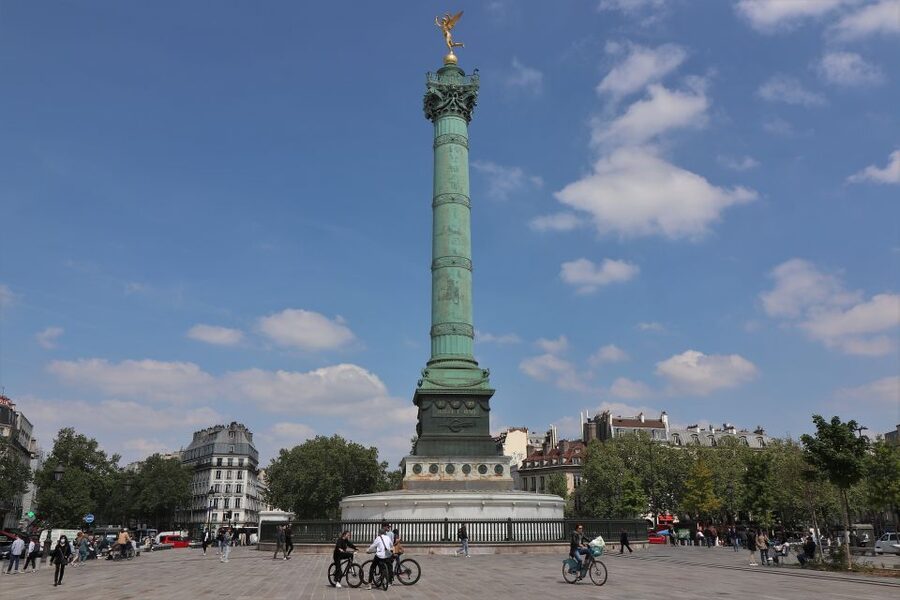
A major strength of the tour is its attention to the events leading to the storming of the Bastille. One guide used a day-by-day account of the build-up, which made the events easier to picture and gave the walk a strong sense of forward motion.
The Bastille was not simply a prison in a textbook paragraph. In the tour’s telling, it becomes a symbol of royal power, public fear, and the growing belief that ordinary Parisians could force events to move. Walking through the city while hearing how tension built gives the story a physical setting that a classroom cannot provide.
The guide may also explain how the Revolution moved through different stages. Early demands for change did not automatically lead to mass violence, royal executions, or the later struggles among revolutionaries. That gradual shift is one of the most useful lessons here, especially if your previous knowledge stops at the famous date of July 14, 1789.
Do not expect every Bastille-related location to survive in its original form. The point is to understand the area, the route, and the political meaning of what happened. The city you see today is modern in many ways, but the street plan and nearby landmarks help you picture the pressure of the period.
From royal power to the guillotine
The tour also deals with the fate of Louis XVI and Marie Antoinette. The subject is dramatic, but the better guides avoid turning it into simple royal gossip. Their explanations place the executions within the larger breakdown of trust between the monarchy, political factions, and the public.
You can expect vivid details about the guillotine and the violent atmosphere of the period. This is not a gentle sightseeing walk, and the material includes murder, massacres, conspiracy, and mass execution. Families with older children and teenagers may find it gripping, but parents should decide if the subject suits younger members of their group.
A particularly memorable thread concerns a dark prophecy connected with the downfall of a major revolutionary figure. Details like this give the walk a human edge, although the guide’s main job is to separate dramatic legend from what can be supported by historical evidence.
That balance is important. The best experience here is not the most sensational version of the Revolution. It is the version that shows how fear, ideology, ambition, and public anger worked together. François, in particular, has been praised for presenting newer theories alongside older interpretations without pretending that every question has one easy answer.
Same base, a different kind of day:
- Paris: Louvre Museum Timed-Entrance Ticket
★ 4.6 · 71,977 reviews - Disneyland® Paris 1-Day Ticket
★ 4.6 · 49,412 reviews - Paris: Versailles Palace and Gardens Full Access Ticket
★ 4.6 · 41,579 reviews - Paris: Evening River Cruise with Music
★ 4.4 · 22,721 reviews
Churches, local details, and the city beyond the textbook
The walk looks at the effect of the Revolution on churches and religious institutions. This helps you understand that the upheaval reached into everyday life, property, worship, and the organization of the city. It also adds variety to a route that could otherwise become a march from one political speech to the next.
You may also notice small architectural or street-level features that carry a revolutionary connection. These are not always grand sights, and that is part of the appeal. A guide can point out something easy to miss, then explain why it mattered at the time.
This approach works well for visitors who have already seen the Louvre, Notre-Dame area, or the Eiffel Tower and want a less polished view of Paris. You are not being shown a postcard version of the city. You are being asked to imagine how the same streets felt when rumor moved faster than official news and crowds could change the course of government.
The route may include areas around Le Marais and other central quarters. One guide kept the group on track while adding context about the neighborhood itself. That combination makes the outing useful even when a particular site is not directly tied to one famous event.
Why the guides make or break this walk
The strongest praise for this experience centers on the guides, and that makes sense. Revolutionary history is complicated. A guide who simply recites dates will lose you quickly, while a guide who explains motive, sequence, and uncertainty can make two hours pass fast.
François has been singled out for clear English, a relaxed manner, and a careful approach to accuracy. He can answer questions and adjust the story when the group wants to follow a side topic. Louis has also been praised for energy, warmth, and a strong grasp of the period.
Other guides have brought different strengths. Fran used descriptions of scenes as they might have appeared at the time, mixed with local facts and newer ideas. Ilan was described as energetic and passionate, while Sam was happy to handle questions beyond the main subject. The exact style depends on who leads your departure, but the repeated pattern is clear: the guide is the main reason to book rather than simply reading about the Revolution on your phone.
English is the only listed language. Several guides have been praised for clear speech, which matters in a noisy city. Still, you should expect an outdoor walking conversation, not the quiet acoustics of a museum room.
Pace, comfort, and what two hours can cover
The two-hour length is well judged for a history walk. It gives the guide enough time to build a story without asking you to spend half a day on one subject. Several guides have been praised for keeping a comfortable pace, and one tour included a comfort break in the middle.
You will be on your feet, so wear shoes you can walk in and dress for the weather. The supplied information does not give a precise distance or a complete list of stops, so do not book this expecting a short stroll between only two monuments.
The route is wheelchair accessible, which makes it a more practical choice for many visitors. Since this is an outdoor city walk, it is still sensible to check the exact route and current starting time when you book, especially if you have specific mobility needs.
The group experience can vary. One person had trouble locating the guide, and the guide did not make much effort to introduce the group or encourage conversation. That sounds like an exception among otherwise strong comments, but it offers a useful tip: arrive early at the Fontaine au Sphinx and make sure you have the guide’s contact or booking details available.
Is $46 a fair price?
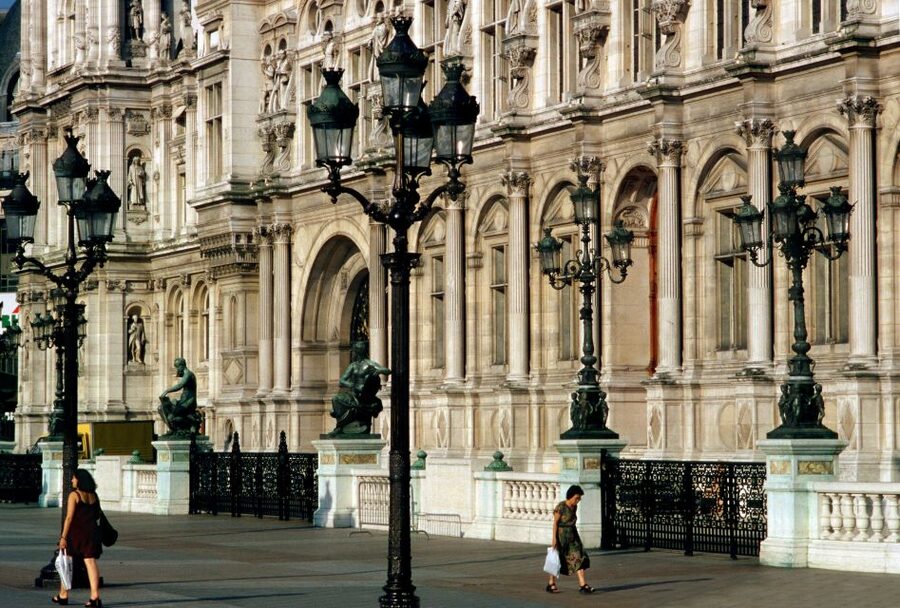
At $46 per person, this is not the cheapest way to walk through central Paris. You are paying for a live English-speaking guide who can organize a difficult subject, answer questions, and point out details you would probably miss alone.
The value is strongest if you want interpretation rather than transportation or entry tickets. The price includes the walking tour and guide, but not hotel pickup or drop-off. There is no attraction admission listed, so the experience is built around streets, public places, storytelling, and historical context.
I would consider the price fair for visitors who have limited time and want a focused introduction to the French Revolution. It is also good value for families, since one well-told walk can give adults and teenagers a shared framework for the rest of a Paris visit.
The value is weaker if you already have a strong command of the period and want an exhaustive tour of every major location. The two-hour limit means some sites, including the Place de la Concorde and Champs de Mars, may receive little or no attention. One person specifically wished for more discussion of those places, but adding them would require a longer outing.
Who should book this French Revolution walk?
I would choose this tour if you want to understand how the Revolution changed Paris, not just memorize the date of the Bastille. It suits first-time learners, history fans, families with older children, and visitors who enjoy seeing ordinary streets connected to large events.
It is also a good choice after a major museum visit. The Louvre can show you royal art and symbols of power, while this walk helps explain why that system came under attack. You will leave with a better sense of how political ideas became street action.
I would think twice if you dislike graphic historical subjects or long periods on foot. The tour includes executions, massacres, murder, and the guillotine, and the route is not designed as a relaxed café-to-café stroll.
The experience also depends heavily on the guide. Most of the recorded feedback praises the guides’ energy, clarity, and command of the subject, but one account points to a less engaging presentation and a weak start. Arrive prepared, identify your guide, and speak up if you have questions. A responsive group can get much more from the two hours.
Final verdict: book it for the story, not a checklist
Book the French Revolution Walking Tour if you want a lively, grounded introduction to one of Paris’s defining upheavals. The best parts are the day-by-day build-up to the Bastille, the human stories behind the guillotine, the attention to churches and small city details, and guides such as François and Louis who can make a difficult subject easy to follow.
Skip it if you need a complete tour of every revolutionary site or prefer a strictly chronological route. For most visitors, though, $46 buys a useful pair of eyes on central Paris and a story that continues long after the walk ends.
FAQ
Where does the French Revolution Walking Tour meet?
Meet the guide in front of the Fontaine au Sphinx on Place du Châtelet before the tour begins.
How long does the tour last?
The walking tour lasts two hours.
What language is the tour offered in?
The tour is offered in English with a live English-speaking guide.
What is included in the price?
The price includes the walking tour and guide.
Is hotel pickup included?
No. Hotel pickup and drop-off are not included.
Is the tour wheelchair accessible?
Yes. The activity is listed as wheelchair accessible.
Can I cancel for a full refund?
Yes. You can cancel up to 24 hours in advance for a full refund. You can also reserve now and pay later, subject to the booking conditions shown when you choose a time.
Just added in Paris
- Private Transfers in Paris★ 5.0 · 75 reviews
- Disneyland® Paris 1 Day Ticket with Transport from Paris★ 3.5 · 302 reviews
- Personalized Transport service from Disneyland to Paris★ 5.0 · 63 reviews
- CDG – Euro Disney – CDG Two Way Private Shuttle Transfer★ 5.0 · 233 reviews
- Monet’s Gardens & House-Private Giverny Tour From Paris★ 4.5 · 137 reviews
- Giverny Monet House and Gardens Skip the line Walking tour★ 4.0 · 217 reviews
- Guided tour Monet’s house and gardens/small group★ 4.5 · 68 reviews
- Monet’s House and Garden & Giverny Village★ 4.5 · 39 reviews
Walking Tours, compared.

Paris Top Sights Half Day Walking Tour with a Fun Guide
Read our review →
Montmartre Hidden Gems and Scenic Highlights Walking Tour
Read our review →
Montmartre Hill French Gourmet Food and Wine Tasting Walking Tour
Read our review →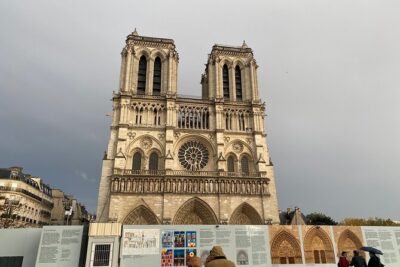
Paris Île de la Cité and Notre-Dame Walking Tour With Crypt
Read our review →
Montmartre Cheese, Wine & Pastry Guided Walking Tour
Read our review →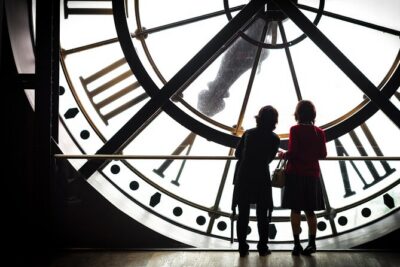
Paris in a Day: Louvre or Orsay, Eiffel Tower, City Walk & Cruise
Read our review →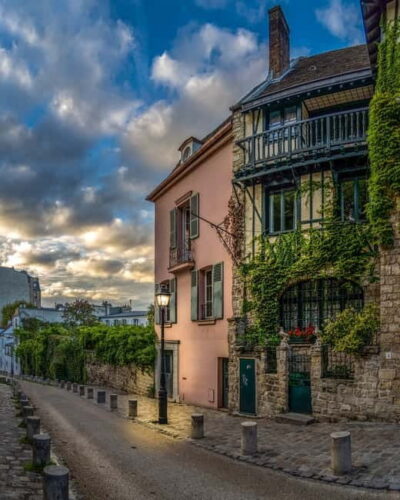
Montmartre Highlights Walking Tour with a Local Guide
Read our review →
Browse the lists this tour appears in