
Reviewed · WALKING TOURS
Paris Jewish History 2-Hour Private Guided Walking Tour
Paris’s Jewish story begins in a surprising place: near Notre Dame Cathedral, where the tour connects the city’s medieval religious world with the long, complicated story of its Hebrew community. From there, you walk into the Marais and the Pletzl, where Jewish life, memory, food, architecture, and daily street life meet.
I like the private format and the clear route from the cathedral area to the traditional Jewish quarter. I also like that the tour does not stop with medieval persecution, but reaches the Dreyfus affair, the Vichy government, Nazi occupation, and the present day. The main caution is time: two hours can only sketch such a large subject, and one review specifically wished for more stories about Jewish life in Paris.
Key points to know before you book
- The tour starts beside Shakespeare and Company: Meet by the green water fountain, where your guide carries a red canvas tote bag.
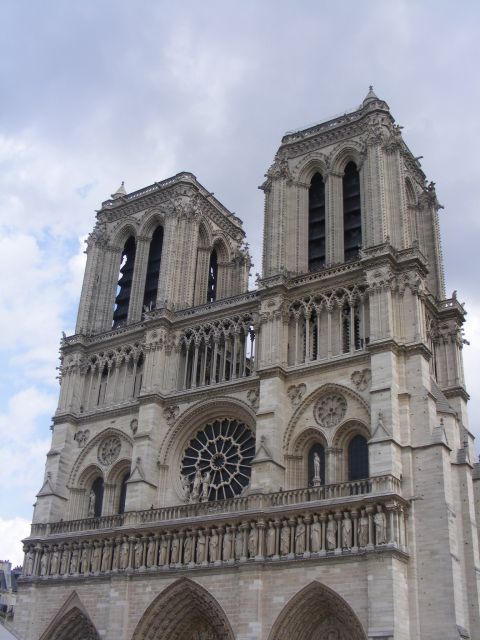
- Notre Dame provides the opening context: A 30-minute guided visit covers the cathedral and its Jewish connections.
- The Pletzl is the heart of the walk: Expect about an hour in the Marais, including Rue des Écouffes, Goldenberg Deli, Place des Vosges, and Rue Pavée.
- The history is serious and wide-ranging: The guide discusses medieval expulsions and prejudice, the Dreyfus affair, Vichy France, and the Nazi occupation.
- Private guiding makes questions easier: Guides including Hannah and Boris have been praised for patient explanations and strong connections between Parisian and European history.
- The price reflects a private experience: At $176 per person, it makes the most sense for a small group that wants focused attention rather than a general sightseeing walk.
Why this Paris Jewish history walk matters
Paris often presents itself through grand churches, royal squares, and famous boulevards. This tour asks you to read the same city through another set of markers: old community streets, religious buildings, memorials, food shops, and the traces left by laws and prejudice.
That change in viewpoint is the main value here. You are not simply walking through the Marais to admire handsome buildings. You are learning how Jewish residents lived in Paris, how rulers treated them, how false beliefs took root, and how political events shaped the community over many centuries.
The subject is not light. The tour covers raids ordered by French kings, medieval superstition, anti-Semitism, the Dreyfus affair, the Vichy regime, and the Nazi occupation. Still, the route keeps these events tied to real places. That can make difficult history easier to grasp than a string of dates in a museum gallery.
The experience is run by Paris in Person Private Tours, a small operator named among the top 10 small tour operators in Europe from a field of 26,000 companies in the 2025 Arival TourReview Spotlight Awards. That recognition does not tell you exactly how your particular walk will unfold, but it does suggest a company with a serious interest in small-group guiding.
The overall rating is 4.6 from 32 reviews. The strongest praise goes to the guides’ preparation, warmth, and ability to connect Jewish history with the wider story of Paris and Europe. Hannah is described as friendly, professional, and patient with questions. Boris is praised for weaving the subject together with care. Those comments point to the sort of guide you want for a topic that needs both facts and judgment.
More walking tours in Paris:
- Paris Top Sights Half Day Walking Tour with a Fun Guide
★ 5.0 · 2,893 reviews - Montmartre Hidden Gems and Scenic Highlights Walking Tour
★ 5.0 · 2,684 reviews - Montmartre Hill French Gourmet Food and Wine Tasting Walking Tour
★ 5.0 · 2,588 reviews
Starting beside Shakespeare and Company
Your meeting point is in front of the Shakespeare and Company bookstore, beside the green water fountain. Look for the guide carrying a red canvas tote bag.
This is a practical starting point near the Seine and Notre Dame. It gives the guide a natural place to begin with the older history of Paris before the walk moves east toward the Marais. Arrive ready to walk, since the tour includes streets, public squares, and several stops rather than one indoor presentation.
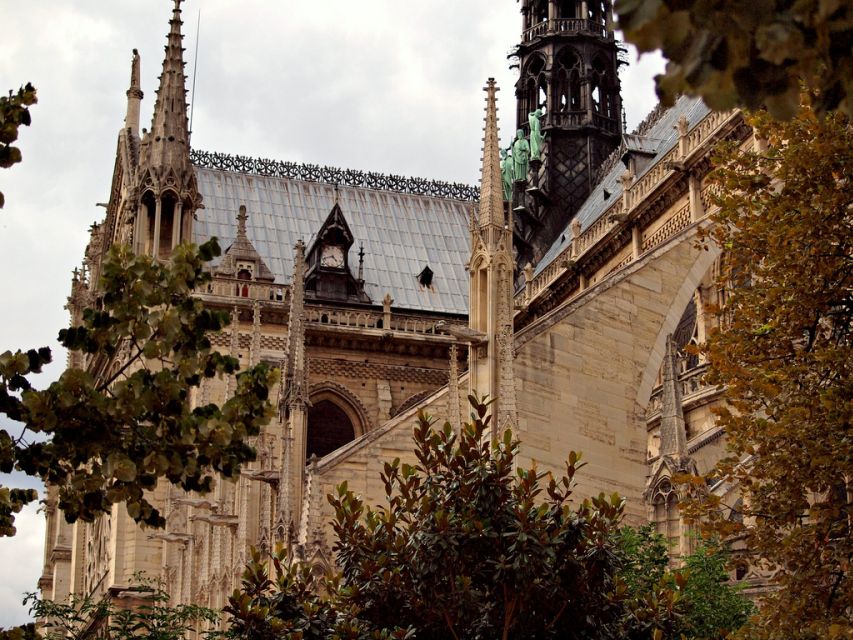
The first section lasts about 30 minutes at Notre Dame Cathedral. The focus is not simply the cathedral’s familiar facade or its architecture. You will hear about Jewish aspects of the site and how Jewish history fits into the religious and political life of medieval Paris.
The cathedral is a useful opening because it lets the guide explain the setting in which the Hebrew community existed before the modern French state took shape. The tour reaches back to a Jewish community in the Paris area centuries ago, then follows the pressures that came with royal power, church influence, and popular prejudice.
The supplied details do not promise entry into every part of the cathedral, so you should think of this as a guided stop around or at Notre Dame rather than a full cathedral tour. The description does highlight the cathedral as a central part of the experience, and the itinerary allows roughly half an hour for it.
Reading Notre Dame through Jewish history
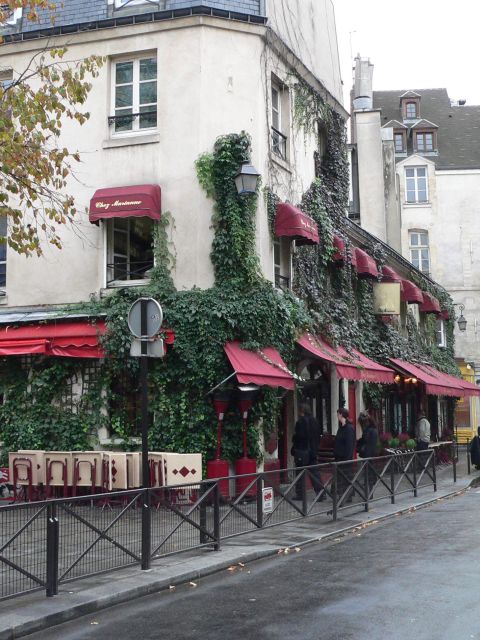
Many visitors see Notre Dame as an isolated masterpiece. This walk encourages you to see it as part of a city shaped by competing communities, laws, beliefs, and rulers.
The guide discusses medieval origins of superstitions and prejudgments about Jewish people. That matters because it shows how prejudice was built from stories and assumptions, not just from official decrees. You may find the explanation especially useful if you know the broad outline of European anti-Semitism but want to understand how it appeared in Paris.
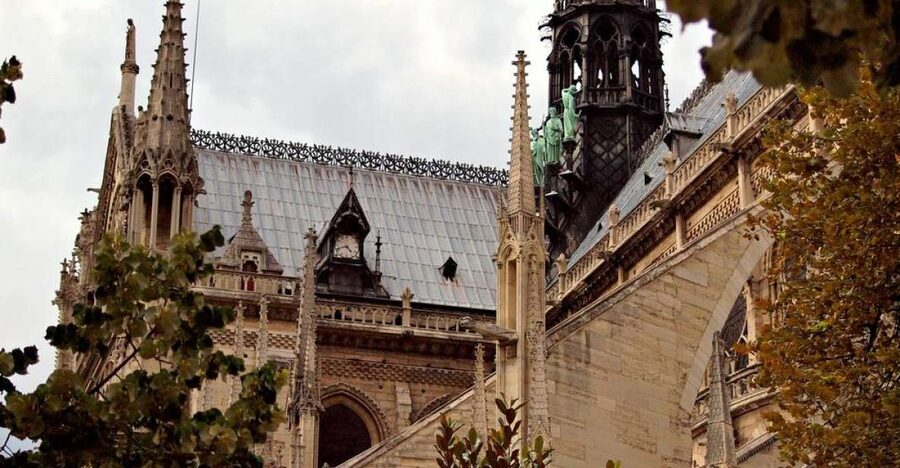
The tour also points toward the architectural skill required to create such a complex structure. The highlight refers to admiring the architectural genius that made the cathedral complex possible. The experience therefore mixes Jewish social history with a close look at the city’s built environment.
This section may suit you if you enjoy history that connects buildings to politics. If you want a long architectural lecture about Notre Dame alone, this is not the right tour. The cathedral is one chapter in a larger story.
Entering the Pletzl and the Marais
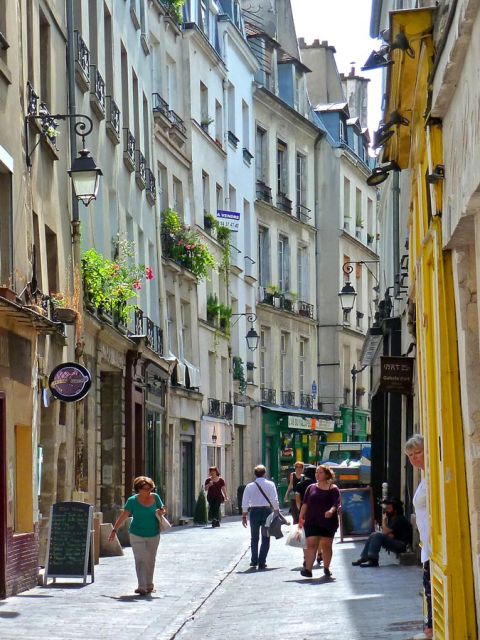
After Notre Dame, the route heads into Le Marais, with about an hour devoted to the traditional Jewish quarter. The Pletzl is the emotional center of the walk. Its name refers to the small square, and the area has long been associated with Jewish life in Paris.
Here, history feels closer to street level. You will move through the Pletzl and along Rue des Écouffes, with the guide explaining how the neighborhood became a center of community life. The route also includes the Goldenberg Deli, a well-known Jewish food landmark listed as one of the principal sights.
Food is not included, so do not expect a tasting or a meal. Still, the deli adds something important to the walk. A Jewish quarter is not only a place of memorials and persecution. It is also a place of work, cooking, shopping, family life, and ordinary routines.
This is where the private format can help. In a large group, a narrow street can turn the guide’s explanation into background noise. With a private group, you can ask what a particular street name means, how the neighborhood changed, or which parts of Jewish Paris remain active today.
The main limitation is that the tour lasts only two hours. The Marais contains far more stories than can fit into one hour. One review praised the guide but wished for more stories about Jewish life in Paris. That is a fair warning: the walk gives you a strong historical outline, but it may not satisfy you if you want an extended account of customs, family histories, literature, immigration, or present-day community institutions.
Same base, a different kind of day:
- Paris: Louvre Museum Timed-Entrance Ticket
★ 4.6 · 71,977 reviews - Disneyland® Paris 1-Day Ticket
★ 4.6 · 49,412 reviews - Paris: Versailles Palace and Gardens Full Access Ticket
★ 4.6 · 41,579 reviews - Paris: Evening River Cruise with Music
★ 4.4 · 22,721 reviews
Place des Vosges and the shape of Paris
Place des Vosges is included among the tour’s highlights and is considered one of the city’s most beautiful squares. Its regular design and handsome surrounding buildings offer a pause from the narrower streets of the Pletzl.
The square also helps the guide show how architecture and power shaped this part of Paris. Rather than looking at a Jewish quarter as an isolated pocket, you can see it within a larger urban setting of royal planning, residences, commerce, and public space.
I like this part of the route because it gives the history some breathing room. A serious subject benefits from a change of scene, and the square provides a clear visual contrast with the smaller streets nearby. You are still learning, but you are also seeing one of the city’s most carefully planned spaces.
The available details do not specify how long the group stays at Place des Vosges. Treat it as one of several Marais highlights rather than a long independent visit.
The Rue Pavée synagogue and Art Nouveau detail
The Rue Pavée synagogue is one of the walk’s most distinctive stops. It is described as a roughly 100-year-old Art Nouveau jewel, giving the tour a strong architectural point beyond Notre Dame.
You will see how a synagogue can reflect the era in which it was built, just as Notre Dame reflects another period of Parisian history. The contrast is useful. One building points to the medieval city, while the Rue Pavée synagogue belongs to a much more recent chapter of Jewish Paris.
The synagogue is an especially good stop for anyone who likes architecture with a social story. The building is not presented only as a beautiful object. It represents a Jewish presence in the city that continued, changed, and rebuilt across different periods.
Do not assume that the tour includes an interior visit or a religious service. The information confirms the synagogue as a sightseeing stop, but it does not promise access inside. Dress and behave respectfully around the building, as you would at any active place of worship.
The combination of Notre Dame and Rue Pavée is one of the best features of the route. You get two very different architectural settings and a chance to consider how Jewish life existed within the changing fabric of Paris.
From royal raids to the Dreyfus affair
The guide covers several painful turning points. You will hear about raids ordered by French kings, medieval anti-Jewish beliefs, and the ways prejudice affected the Hebrew community.
The tour then moves into more modern history, including the Dreyfus affair. This is an important inclusion because it shows that anti-Semitism was not only a medieval problem. The affair became a national crisis in France, tied to the army, the press, politics, and public opinion.
The walk also covers the Vichy government and the Nazi occupation during World War II. These subjects are handled as part of the history of Paris, not as detached events from a textbook. Memorials and streets give the guide physical points from which to explain what happened.
One of the listed sites is a memorial to victims of the Vichy regime. The exact stop is not named in the supplied details, but its inclusion signals the tour’s focus on remembrance as well as older history.
This portion may feel compact. The guide must move from medieval Paris through the nineteenth century and into the twentieth century in a single walk. If you want a detailed study of the Dreyfus affair or the occupation, plan to use this tour as an introduction and continue with a museum or book afterward.
The final walk toward Bastille
The tour finishes at Bastille, after the route through Le Marais. Ending there gives you a convenient sense of progress across the eastern part of central Paris.
The finish also suits the structure of the walk. You begin near the Seine and Notre Dame, move through the Pletzl and its surrounding streets, and end in a major Paris district associated with political change. The route is not just a collection of disconnected sights. It traces how the city expanded and how Jewish life formed part of its changing center.
The exact amount of walking between stops is not stated, so comfortable shoes are sensible. The tour operates rain or shine. Bring a coat or umbrella if the forecast is poor, since this is an outdoor walking experience rather than a museum program.
The tour is wheelchair accessible, but you may want to confirm the practical route details when booking, especially if street conditions or access at individual sites matter to you.
Is $176 per person a fair price?
At $176 per person, this is not a budget walking tour. The value comes from the private format, the guide’s attention, and the subject’s depth rather than from admission tickets or included food.
The tour includes only the guide. Food and beverages are not included, and there is no stated entry fee for a paid attraction. You are paying for two hours of focused interpretation, not a package of extras.
For a couple or small group with a strong interest in Jewish history, the price can make sense. You can ask direct questions, request more explanation at a particular site, and move at a pace suited to your group. That flexibility is harder to get on a large public tour.
For a solo visitor, the cost is harder to justify unless this subject is a top priority. If you are mainly looking for a general introduction to the Marais, you may find a less expensive group walk sufficient. If you want a private guide who can connect medieval Paris, the Dreyfus affair, Vichy, and Jewish life today, the added cost has a clear purpose.
The free cancellation window, up to 24 hours before the tour, and the reserve now, pay later option make the booking less rigid. Starting times depend on availability.
Who will get the most from this tour?
I would recommend this walk to you if you want a serious introduction to Jewish Paris and prefer learning through streets and buildings rather than sitting in a classroom. It also suits visitors who have already seen the headline sights and want a more focused way to understand the Marais.
The tour is a good match for:
- Couples or families wanting a private history lesson
- Visitors interested in religious history, architecture, or World War II
- People who like asking questions as they walk
- Travelers staying near the Seine, Notre Dame, the Marais, or Bastille
- Anyone comfortable with a sober discussion of persecution and anti-Semitism
It may be less suitable if you want a food tour, a long synagogue visit, or a relaxed stroll with only light commentary. It is also not ideal for anyone expecting every period of Jewish life in Paris to receive equal detail. Two hours requires choices.
Guiding is available in English, French, and Serbo-Croatian. The strongest guide feedback points to Hannah and Boris, both praised for clear explanations, patience, and the ability to connect local events with wider European history. Guide assignments can vary, so you should not assume one particular person will lead your walk.
Should you book this Jewish history tour?
Book it if you want a private, place-based introduction to Jewish Paris that moves from Notre Dame to the Pletzl and the Rue Pavée synagogue. The route has a good balance of architecture, neighborhood history, memorials, and major political events.
I would especially choose it early in a Paris stay. The walk can give you useful context before you return to the Marais on your own, perhaps for food, shopping, or a slower look at the streets.
Book with realistic expectations. You will get a thoughtful overview, not an exhaustive course on Jewish life in France. The subject includes painful events, the schedule is tight, and food is not included. For a small group that values personal guiding and serious history, the $176 price is defensible. For a visitor seeking only general sightseeing, it is probably more than you need.
FAQ
How long is the Paris Jewish history walking tour?
The tour lasts two hours.
Where does the tour begin?
It begins in front of Shakespeare and Company bookstore, by the green water fountain.
How will I recognize the guide?
The guide will be carrying a red canvas tote bag.
Where does the tour finish?
The walk finishes at Bastille.
Which languages are available?
The tour is offered in English, French, and Serbo-Croatian.
Is the tour private?
Yes. It is arranged for a private group.
Is the tour wheelchair accessible?
Yes, the activity is listed as wheelchair accessible.
Does the tour include food or drinks?
No. Food and beverages are not included.
What happens if it rains?
The tour operates rain or shine, so prepare for the weather on the day of your walk.
More history tours in Paris
- Paris: Louvre Museum Entry with History of Mona Lisa
★ 3.9 · 2,823 reviews - Paris: Dark History and Ghostly Guided Walking Tour
★ 4.7 · 1,000 reviews - Paris: Le Marais & Montmartre Jewish History Walking Tour
★ 4.8 · 170 reviews - Explore the Marais: Culture, History & Hidden Gems of Paris
★ 4.6 · 100 reviews
Just added in Paris
- Private Transfers in Paris★ 5.0 · 75 reviews
- Disneyland® Paris 1 Day Ticket with Transport from Paris★ 3.5 · 302 reviews
- Personalized Transport service from Disneyland to Paris★ 5.0 · 63 reviews
- CDG – Euro Disney – CDG Two Way Private Shuttle Transfer★ 5.0 · 233 reviews
- Monet’s Gardens & House-Private Giverny Tour From Paris★ 4.5 · 137 reviews
- Giverny Monet House and Gardens Skip the line Walking tour★ 4.0 · 217 reviews
- Guided tour Monet’s house and gardens/small group★ 4.5 · 68 reviews
- Monet’s House and Garden & Giverny Village★ 4.5 · 39 reviews
Walking Tours, compared.
Paris Top Sights Half Day Walking Tour with a Fun Guide
Read our review →
Montmartre Hidden Gems and Scenic Highlights Walking Tour
Read our review →
Montmartre Hill French Gourmet Food and Wine Tasting Walking Tour
Read our review →
Paris Île de la Cité and Notre-Dame Walking Tour With Crypt
Read our review →
Montmartre Cheese, Wine & Pastry Guided Walking Tour
Read our review →
Paris in a Day: Louvre or Orsay, Eiffel Tower, City Walk & Cruise
Read our review →
Montmartre Highlights Walking Tour with a Local Guide
Read our review →
Browse the lists this tour appears in