
Reviewed · MONTMARTRE TOURS
Paris: Montmartre Private Walking Tour
Montmartre is where Paris gets wonderfully untidy. In two hours, this private walk takes you from the Moulin Rouge and old cabaret culture to Picasso’s drinking dens, village-like lanes, street artists, and the white dome of Sacre Coeur. It is a compact way to see how a former suburb became Paris’s best-known artists’ quarter.
I like the route’s strong sense of place, especially the climb along Rue Lepic, where broad stories about Impressionism meet ordinary streets and old buildings. I also like the private format. Guides such as Boris and Isabella can adjust their pace and explanations, and Boris has kept children aged 10 and 12 engaged during the walk.
The main drawback is time. Two hours gives you a lively introduction, not a full examination of Montmartre, and you will be walking uphill on uneven city streets. At $171 per person, the tour makes the most sense for a small private group that wants personal attention rather than for a solo visitor watching every euro.
Key points at a glance
- Meet at Metro Blanche: Find your guide at the exit, carrying a red canvas tote bag.
- Follow Rue Lepic uphill: This old street connects Montmartre’s cabaret past with its artists’ story.
- See the Moulin Rouge and Moulin de la Galette: The route covers both famous names, with very different roles in Montmartre’s past.
- Visit Place du Tertre and the vineyard: You get the neighborhood’s village character, along with its working artistic traditions.
- Hear about Picasso and Modigliani: Lapin Agile and other old drinking spots put famous artists into a more human setting.
- Finish where you started: The walk returns to the Metro Blanche meeting point after two hours.
Why Montmartre works so well as a walking tour
Montmartre rewards walking because its character changes from one block to the next. One moment you are near the Moulin Rouge, surrounded by one of Paris’s best-known nightlife addresses. A few streets later, you are climbing a narrow road toward old houses, small squares, and the Sacre Coeur basilica.
The neighborhood was once outside Paris’s official jurisdiction. That helped it develop a reputation for cheap drinks, rougher entertainment, and behavior that city authorities considered improper. Later, painters, writers, and performers gave Montmartre a fashionable artistic identity.
I like that this tour does not reduce the area to postcard views. It connects the cabarets, slums, grand houses, taverns, painters, and religious landmarks. That makes the neighborhood easier to understand. Montmartre was not simply a charming artists’ village. It was also a place where poverty, nightlife, ambition, and creativity sat close together.
A private guide can explain those changes as you walk instead of asking you to absorb them from a museum label. The result should feel more like a conversation than a fixed lecture, though the exact emphasis will depend on your guide and your questions.
More walking tours in Paris:
- Paris Top Sights Half Day Walking Tour with a Fun Guide
★ 5.0 · 2,893 reviews - Montmartre Hidden Gems and Scenic Highlights Walking Tour
★ 5.0 · 2,684 reviews - Montmartre Hill French Gourmet Food and Wine Tasting Walking Tour
★ 5.0 · 2,588 reviews
Starting at Metro Blanche and the Moulin Rouge
The tour begins at the exit of Metro Blanche. Look for the guide with a red canvas tote bag. This is a useful meeting point because it places you directly in the lower Montmartre nightlife district rather than asking you to find a quiet side street.
The first major landmark is the Moulin Rouge. The cabaret is tied to the development of the Can-Can and to the bold entertainment culture that made Montmartre famous. Your guide will also discuss Maison Blanche, the earlier name associated with the Metro Blanche area, and the illegal alcohol trade that helped give the neighborhood its unruly reputation.
This opening works well because it sets up a contrast. The Moulin Rouge is polished and famous today, but the district’s earlier entertainment scene had a rougher edge. Stories of obscene Can-Can dancers and illegal drinking help explain why Montmartre once attracted people looking for freedom from stricter city rules.
Do not expect a cabaret performance as part of the tour. The guide points out the sites and explains their place in the neighborhood’s past. Food and drinks are not included, so this is a sightseeing walk rather than a tasting experience.
Climbing ancient Rue Lepic
From the lower streets, the route heads along Rue Lepic. This is one of the most useful parts of the walk because it gives you a real sense of Montmartre as a neighborhood, not just a group of famous monuments.
Rue Lepic climbs toward the hill, so you should expect some physical effort. The street’s age and slope help explain why Montmartre kept a more separate identity from central Paris for so long. The route also uses the street to introduce the artists who worked in the area and the birth of Impressionism in the 19th century.
I like this section because the guide can point out the contrast between lavish homes and run-down housing. That contrast is central to Montmartre’s story. Artists and writers were attracted by the area’s low-cost rooms and lively social life, while wealthier residents and visitors were drawn by its growing fame.
The walk is not built around entering a long list of attractions. Much of its value comes from seeing the streets in context. If you want a museum-heavy experience or a longer art lecture, this will feel brief. If you want to understand why painters and writers chose this hill, Rue Lepic gives you a useful first look.
Moulin de la Galette and the artists’ Montmartre
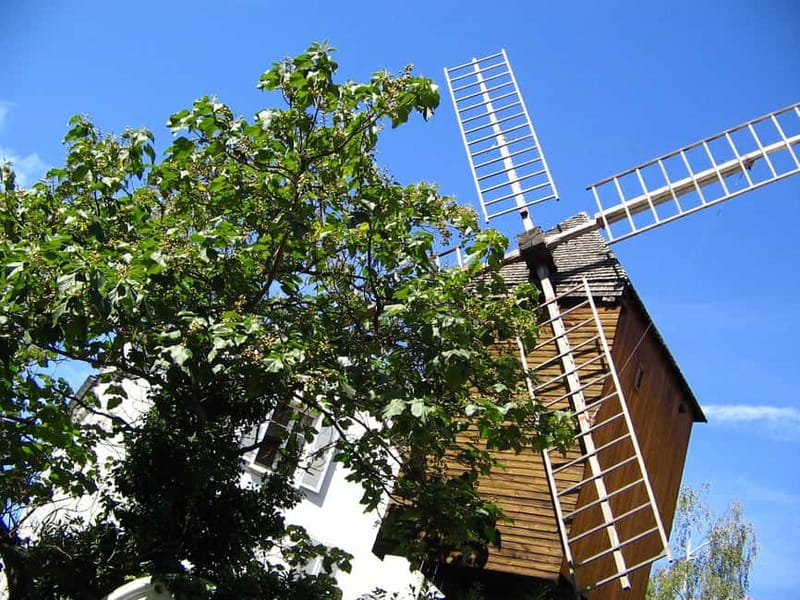
The Moulin de la Galette is another major stop. Its name is tied to Montmartre’s old mill culture and to the area’s social life. Here, the tour turns more clearly toward the painters who made the neighborhood famous.
The guide describes the links between Montmartre and Impressionism, along with the cafés and drinking places where artists met. The point is not only to list famous names. It is to show how artistic movements grew out of everyday contact: people sharing cheap drinks, talking, arguing, and trying to make a living.
That context gives more meaning to the paintings associated with Montmartre. Instead of seeing the neighborhood as a ready-made backdrop, you can picture it as a place where artists found subjects, companions, and a public.
The tour also draws attention to the less attractive side of the district. Elegant buildings stood close to poor housing, and the creative life was not always comfortable. That balance is important. Montmartre’s artistic reputation can seem romantic from a distance, but the people who worked there also faced financial hardship and uncertain careers.
Other walks around Montmartre from Paris:
- Paris: Montmartre Cheese, Wine & Pastry Guided Walking Tour
★ 4.8 · 2,255 reviews - Paris: Montmartre Highlights Walking Tour with a Local Guide
★ 4.9 · 1,668 reviews - Private Montmartre Food Tour with Wine, Cheese & Pastries
★ 5.0 · 1,027 reviews - Paris: Sacré-Coeur and Montmartre Tour with Expert Guide
★ 4.1 · 1,027 reviews
Place du Tertre and the village feel
Place du Tertre is the point where Montmartre most clearly feels like a village inside Paris. Street artists work around the square, and the setting has a strong connection to the neighborhood’s artistic identity.
The square can be one of the most appealing stops for first-time visitors because it gives you a visual break from the larger city. You can look around, watch artists at work, and see how the old village image continues today. The private guide adds context about how this square fits into the wider history rather than leaving you with a quick photograph and a souvenir-shop impression.
There is also a tradeoff here. Place du Tertre is a popular stop, so it may not feel quiet or untouched. The tour presents its village charm, but you should not expect a secluded rural square. Its value lies in the mix of old character and present-day activity.
The guide can help you read the square as part of Montmartre’s long performance of itself. The area has always attracted people who wanted to see artists, drink, watch entertainment, or be seen among creative company. That makes the square more interesting than a simple scenic pause.
Sacre Coeur and the high point of the route
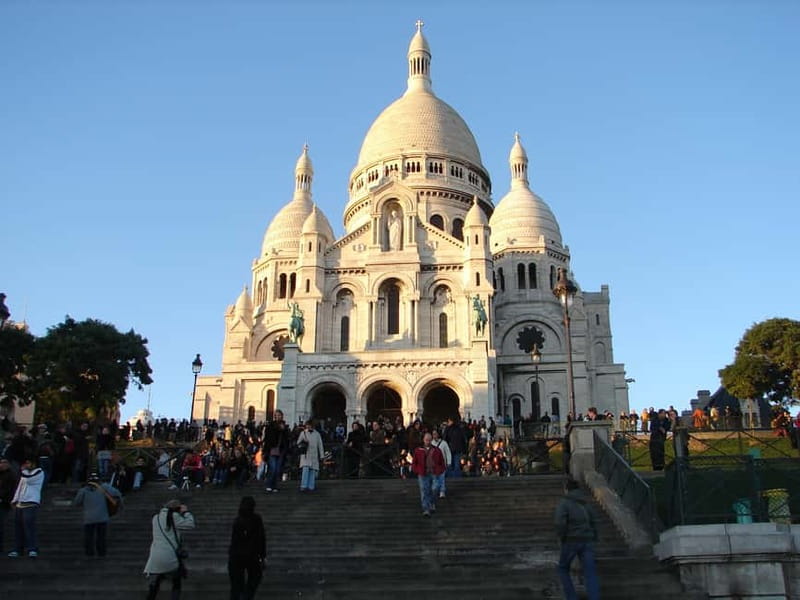
The tour includes the white façade of Sacre Coeur. The basilica is one of Paris’s most recognizable sights, and its position on the hill gives Montmartre a strong visual finish.
The approach matters. You do not simply arrive by vehicle, take a quick photograph, and leave. You reach the basilica after walking through the district’s older streets, hearing about artists and cabarets, and climbing Rue Lepic. That sequence makes the monument part of the neighborhood’s story.
The route information does not promise a long interior visit, so treat Sacre Coeur mainly as an exterior landmark and a major wayfinding point. If entering the basilica is important to you, ask your guide what the two-hour schedule allows before booking.
The climb may be tiring for some people. The tour takes place rain or shine, and there is no promise of a weather cancellation. Wear shoes suited to a walking route and bring clothing for the forecast. The practical upside is that rain or shine, you still see how Montmartre’s streets fit together.
The Montmartre vineyard
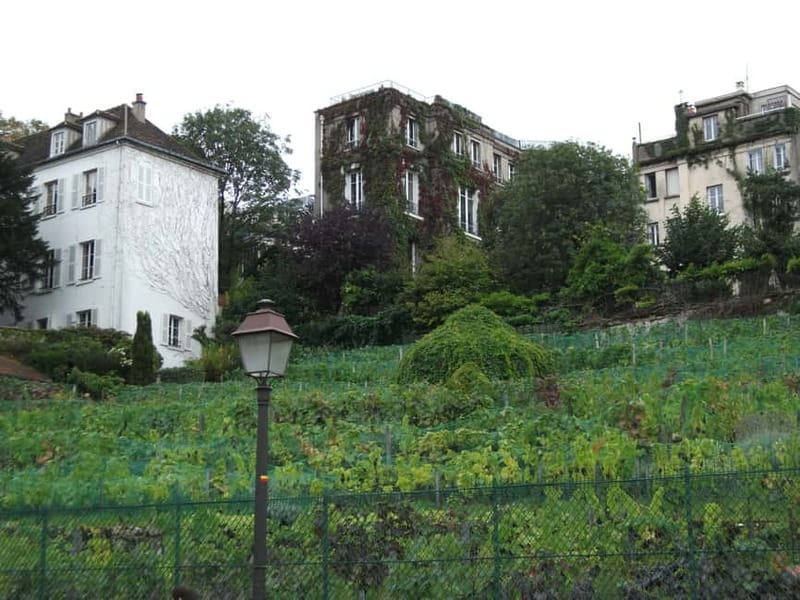
The Vigne de Montmartre, or Montmartre vineyard, adds an unexpected detail to the route. It is a reminder that the hill has an older rural side beneath its Paris identity.
This stop helps explain the area’s village character. Montmartre was not always simply a district of studios, cabarets, and tourist sights. Its vineyard keeps a link to the days when the hill had open land and local agricultural activity.
The vineyard is not presented as a wine tasting stop. Food and drinks are excluded, and the two-hour schedule is focused on walking and interpretation. Still, it is a worthwhile pause because it breaks up the better-known stories of Picasso, the Moulin Rouge, and Sacre Coeur.
I find details like this especially useful when seeing a famous district. A landmark everyone recognizes can become a checklist item. A small vineyard makes the neighborhood feel less predictable and shows why Montmartre retains its unusual village image.
Lapin Agile and the old artists’ drinking dens
Lapin Agile is one of the tour’s most distinctive stops. This cabaret was a favored place for struggling artists and writers, including Picasso and Modigliani.
That detail brings the artistic story down to a human scale. Picasso is usually presented as a major modern artist, but here you hear about the places where he and other ambitious young figures spent time before they were famous. The same applies to Modigliani. Lapin Agile helps you picture artists as people trying to find friends, income, attention, and a place in Paris.
The tour also points out other drinking dens linked with artists. These stops are useful because they show that Montmartre’s art scene was social as well as visual. Paintings did not develop in isolation. They grew within cafés, cabarets, rented rooms, and arguments over drinks.
Again, this is a walking visit, not a full evening at a cabaret. The attraction is the story and the setting. If you want nightlife, a meal, or a performance, you will need to arrange that separately.
What the private format adds
A private group is the main reason to consider this experience instead of a standard group walk. You have one guide for your party, and the route can feel more personal. You can ask about Impressionism, cabaret culture, Sacre Coeur, or the artists tied to Lapin Agile without waiting for a large group to move on.
The guide languages are English, French, and Serbo-Croatian. Boris has been especially good at making the history work for families, including two children aged 10 and 12. Isabella is described as both informative and fun, which points to the relaxed tone you can expect from a strong guide.
That does not mean every guide will use the same style. Private tours depend heavily on the individual person leading them. The provider, Paris in person private tours, has been recognized among the top 10 small tour operators in Europe in an award program that considered 26,000 companies. That is useful context, but your own experience will still depend on the guide assigned to your booking.
The private format also gives you control over conversation. You can ask for more detail about artists, more neighborhood history, or a quicker pace. The route itself remains two hours, so the guide cannot cover every corner of Montmartre.
Is $171 per person a fair price?
At $171 per person, this is not a budget walk. You are paying for a private guide, not for admission tickets, transport, food, or drinks. The price is easier to justify for a family or small group that would otherwise book several places on a shared tour.
The value comes from focus. In two hours, you get a guide-led route covering the Moulin Rouge, Maison Blanche, Rue Lepic, Moulin de la Galette, Place du Tertre, Sacre Coeur, the vineyard, and Lapin Agile. You also get the connected story behind those places rather than a series of disconnected sights.
For a solo visitor, the cost may feel high. For a group that wants a private discussion and a flexible pace, it can be reasonable. I would book it early in a Paris stay if you want help getting your bearings in Montmartre, then return later to spend more time at the spots that caught your attention.
The tour lasts two hours and ends back at the meeting point. That makes it easy to fit into a larger day, though you should allow time before the start to find the Metro Blanche exit and identify the red tote bag.
Who should book this Montmartre walk?
I would recommend it to first-time Paris visitors who want Montmartre explained rather than simply photographed. It also suits families, especially because Boris has shown he can keep children engaged while still covering serious history.
Art lovers will appreciate the links to Impressionism, Picasso, and Modigliani. Anyone interested in nightlife and social history will get more from the Moulin Rouge, Can-Can, Lapin Agile, and old drinking dens than from a standard monument-only route.
You may want another option if you dislike hills, need frequent rest stops, or want a quiet tour with little attention to cabarets and nightlife. You should also look elsewhere if your main goal is an extended interior visit to Sacre Coeur, a meal, or a wine tasting. Those are not included in the stated experience.
The tour runs rain or shine, so check the forecast and dress for conditions. Free cancellation is available up to 24 hours before the start, and you can reserve now and pay later, which helps if your Paris schedule is still taking shape.
Should you book it?
Book this Montmartre private walking tour if you want a personal guide and a connected story in a short time. Its best moments are not just the famous sights, but the links between Rue Lepic, the cabarets, struggling artists, Place du Tertre, the vineyard, and Sacre Coeur.
At $171 per person, it is a premium choice. I would choose it for a small group, a family with curious children, or anyone who values questions and personal attention. If you are happy to explore alone and read about the area as you go, save the money. If you want Montmartre to make sense by the end of one uphill walk, this is a strong option.
FAQ
How long does the Montmartre private walking tour last?
The tour lasts two hours.
Where does the tour begin?
Meet your guide at the exit of Metro Blanche. The guide will be carrying a red canvas tote bag.
Where does the tour end?
The activity ends back at the Metro Blanche meeting point.
Which languages are available?
The tour is offered in English, French, and Serbo-Croatian.
Is this a private group tour?
Yes. The experience is for a private group.
What happens if it rains?
The tour takes place rain or shine. You can cancel up to 24 hours in advance for a full refund, according to the stated cancellation terms.
Just added in Paris
- Private Transfers in Paris★ 5.0 · 75 reviews
- Disneyland® Paris 1 Day Ticket with Transport from Paris★ 3.5 · 302 reviews
- Personalized Transport service from Disneyland to Paris★ 5.0 · 63 reviews
- CDG – Euro Disney – CDG Two Way Private Shuttle Transfer★ 5.0 · 233 reviews
- Monet’s Gardens & House-Private Giverny Tour From Paris★ 4.5 · 137 reviews
- Giverny Monet House and Gardens Skip the line Walking tour★ 4.0 · 217 reviews
- Guided tour Monet’s house and gardens/small group★ 4.5 · 68 reviews
- Monet’s House and Garden & Giverny Village★ 4.5 · 39 reviews
Montmartre Tours, compared.
Montmartre Hidden Gems and Scenic Highlights Walking Tour
Read our review →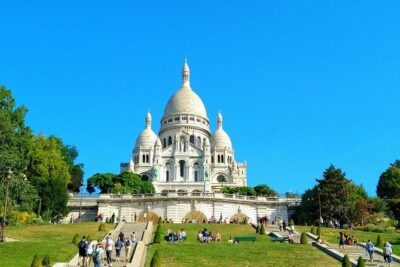
Montmartre Hill French Gourmet Food and Wine Tasting Walking Tour
Read our review →
Montmartre Cheese, Wine & Pastry Guided Walking Tour
Read our review →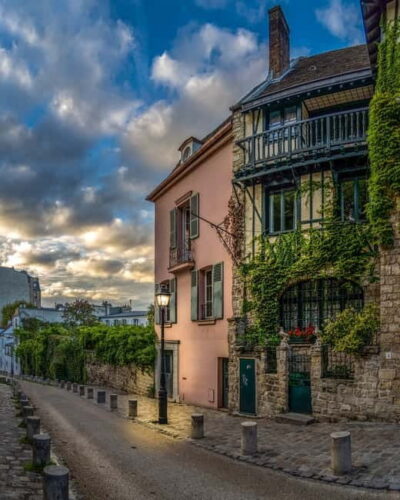
Montmartre Highlights Walking Tour with a Local Guide
Read our review →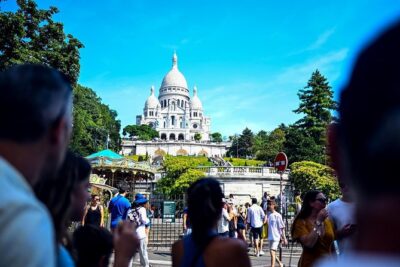
Private Montmartre Food Tour with Wine, Cheese & Pastries
Read our review →
Paris Montmartre Food Tour – A Full French Meal by Do Eat Better
Read our review →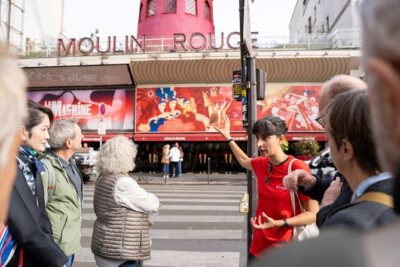
Hidden Montmartre: Paris’ Secret Streets Walking Tour
Read our review →
Paris Montmartre Food & Wine Tour with Eating Europe
Read our review →Browse the lists this tour appears in