
Reviewed · WINE TOURS
Private Bordeaux History Tour with a glass of Bordeaux wine.
Bordeaux’s best introduction may be a walk that connects its grand monuments with the city’s complicated past. This private tour moves from Saint-André Cathedral through medieval streets, royal gateways, elegant squares, and grand 18th-century avenues, ending at Place des Quinconces with a glass of local wine.
I like the private format, since you can ask about the subjects that catch your attention. I also like the clear route: the cathedral, Porte Cailhau, Place de la Bourse, the Grand Théâtre, and the Monument aux Girondins give you a useful first map of Bordeaux. Guides Victor and Emma are praised for making the history clear and personal.
The main drawback is pace. The tour covers many stops in roughly two hours, so several monuments receive only a short explanation from outside. It is a walking overview, not an inside look at Bordeaux’s churches, theatre, or historic gates.
Key points at a glance
- A private English-language walk lets your group shape the conversation and ask questions as you go.
- Saint-André Cathedral and Porte Cailhau bring Bordeaux’s medieval and religious past into focus.
- Place de la Bourse and the Miroir d’Eau provide the city’s most familiar grand view.
- Rue du Loup and Place du Palais add stories about medieval Bordeaux and its period under English rule.
- Passage Sarget and Allées de Tourny show the city’s later taste for elegant urban design.
- A glass of Bordeaux wine at a partner bar is included after the sightseeing portion.
Why this two-hour walk works as a first look at Bordeaux
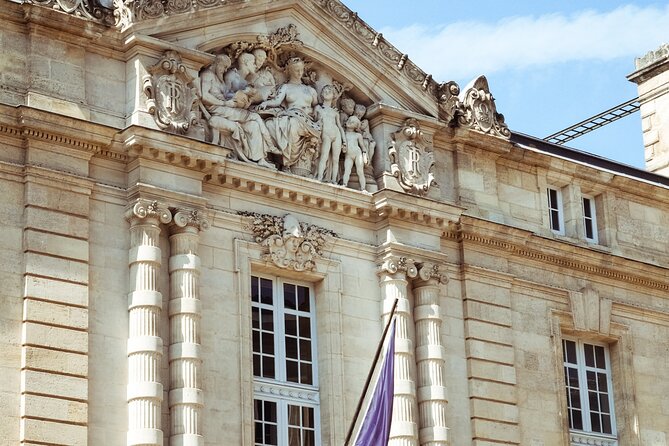
Bordeaux can feel like a collection of handsome façades until someone explains how the pieces fit together. This tour gives you that framework. You begin beside the cathedral and finish at Place des Quinconces, crossing the central area on foot rather than simply stopping at one famous square.
The route links several chapters of the city. You hear about medieval Bordeaux around Rue du Loup, the city’s connection with England, royal power at Porte Cailhau, 18th-century planning along Allées de Tourny, and revolutionary memory at the Monument aux Girondins.
That range is the tour’s main strength. You are not spending two hours on architecture alone. You also get an introduction to politics, religion, trade, urban planning, and wine.
The private setup matters. Your group is the only group on the activity, and the guide can spend more time on a question that interests you. If you want to know more about Bordeaux’s 300-year connection with Great Britain, wine origins, or the mayor credited with making the city easier to walk and cycle, say so early. Victor has covered these subjects with particular care, while Emma is described as thorough and friendly.
The advertised price is $90.36 per person. That is not a budget stroll, especially for one or two people, but it can be fair for a private guide, an English-language tour, and a wine stop. The value improves for a small group because the cost buys personal attention rather than a large public walk. Remember that gratuities and admission inside monuments are not included.
More wine tours in Bordeaux:
- Bordeaux: Cité du Vin Entry Ticket and Wine Tasting
★ 4.6 · 3,885 reviews - Bordeaux: River Garonne Cruise with Glass of Wine and Canelé
★ 4.5 · 3,630 reviews - From Bordeaux: Afternoon Saint-Emilion Wine Tasting & snack
★ 4.8 · 1,581 reviews
Starting at Saint-André Cathedral and Tour Pey-Berland
Meet at Cathédrale Saint-André de Bordeaux on Place Pey Berland. The cathedral is one of the tour’s strongest opening points, both for its scale and for the amount of history attached to it.
You’ll hear about its Gothic design, medieval beginnings, later restoration, and role in Bordeaux’s religious life. The cathedral is also linked with the marriage of Eleanor of Aquitaine and King Louis VII, giving the building a direct connection to major French medieval history.
The visit here is about 15 minutes, and admission to the tour stop is free. That does not mean the tour includes a full indoor visit. The entrance fee for monuments is not included, so you should think of this part as an exterior and historical introduction unless your guide tells you otherwise.
Tour Pey-Berland is listed as the next stop. The supplied description shifts into Rue Sainte-Catherine, so treat this part of the route as a walk through the cathedral and central shopping district rather than a guaranteed climb or interior visit to the tower. The important point for you is orientation. Rue Sainte-Catherine is described as a long pedestrian street with roots as a Roman road, now lined with shops and daily city life.
This is a useful contrast. Bordeaux is not only stone monuments and formal squares. It is also a working city where an old route has become a modern shopping street.
Rue du Loup, medieval Bordeaux, and English connections
At Rue du Loup, the guide turns toward the Middle Ages. You’ll look at medieval architecture and hear how Bordeaux became English.
This is the sort of short stop that can give the rest of the walk more meaning. Without context, the city’s gates, streets, and squares may look like separate photo stops. With the political story in place, you begin to understand why Bordeaux developed such strong connections across the Atlantic and Channel.
The stop lasts about 10 minutes. That is enough for a concise explanation and questions, but not a long architectural survey. I would use this moment to ask how English rule affected trade, wine, and the city’s position. The tour information specifically points to Bordeaux’s wine origins and its 300-year British period, so those are natural subjects for your guide.
The walk then continues through Promenade Sainte-Catherine, another short stop connected with Rue Sainte-Catherine. Expect a look at the pedestrian setting and its place in modern Bordeaux. It is less about a single monument and more about seeing how historical routes remain part of ordinary city life.
Place du Palais and Porte Cailhau
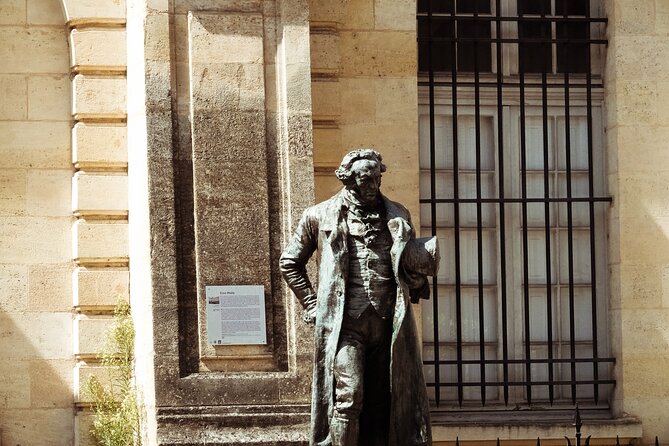
Place du Palais gives the guide a chance to explain the square’s design and the idea behind its creation. This is a good pause between the medieval street sections and the city’s major riverfront monuments.
Porte Cailhau is one of the more memorable stops. This 15th-century gate once served as a main entrance to Bordeaux. Its design mixes Gothic and Renaissance elements, and it was built to honor Charles VIII’s victory at Fornovo.
You’ll hear about its defensive purpose and its symbolic role as a gateway to Bordeaux’s prosperity. The stop lasts about 15 minutes, which is longer than some of the later square visits. That makes sense, since the gate offers architecture, politics, warfare, and civic pride in one compact place.
The tour does not include admission inside monuments. If you want an interior visit or a climb, you’ll need to arrange that separately. The guide’s explanation from the street still helps you decide which buildings deserve more of your time later.
Same base, a different kind of day:
- Medoc or Saint Emilion Wine Tasting and Chateau from Bordeaux
★ 5.0 · 1,415 reviews - Saint Emilion Day Trip with Sightseeing Tour & Wine Tastings from Bordeaux
★ 5.0 · 1,120 reviews - Saint-Émilion: Grand Cru Classé Winery Visit and Tasting
★ 4.6 · 1,118 reviews - Saint Emilion Half-Day Trip with Wine Tasting & Winery Visit from Bordeaux
★ 4.5 · 1,034 reviews
Place de la Bourse and the Miroir d’Eau
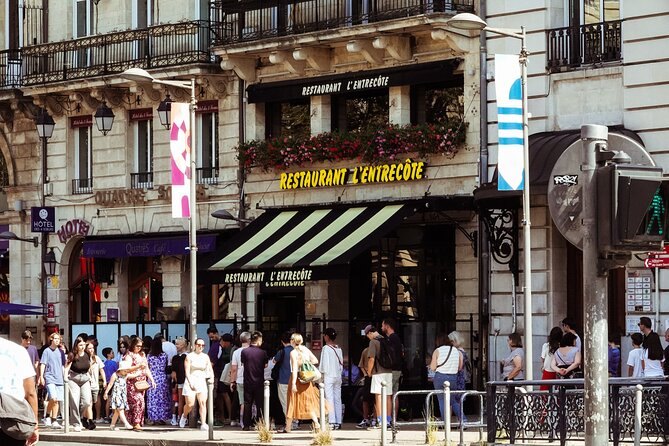
Place de la Bourse is Bordeaux’s signature urban scene, and even a short stop here earns its place on the route. The square presents the city at its most polished, with grand classical façades facing the riverfront.
The Miroir d’Eau adds the familiar reflective surface in front of the buildings. The listed stop is brief, about five minutes, so you should not expect a long photo session or extended time at the water. Your guide’s role here is to explain the historical importance of the square and connect it with Bordeaux’s wider architectural plan.
The short timing is worth noting. If the Miroir d’Eau is high on your personal list, return after the tour. A private history walk gives you context, but it may not leave enough time to wait for the best reflections or linger for photographs.
The tour description also identifies Pont de Pierre and the Basilica of Saint-Michel among Bordeaux’s important sights. The route details do not assign separate stops to both, so do not book this expecting a complete visit to every major monument in the city. You are getting a concentrated central walk, not a full-day city tour.
The Grand Théâtre and Bordeaux’s grand style
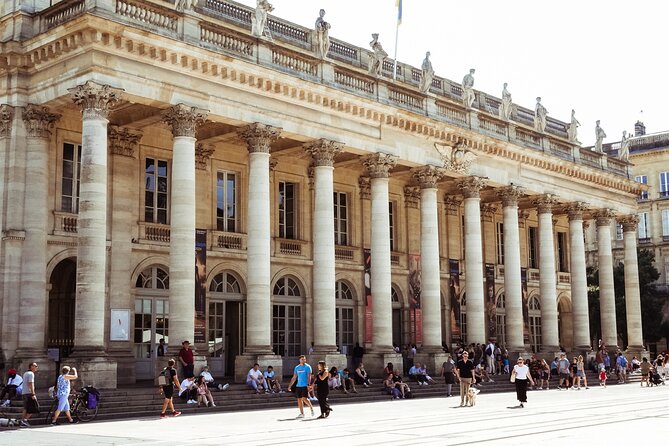
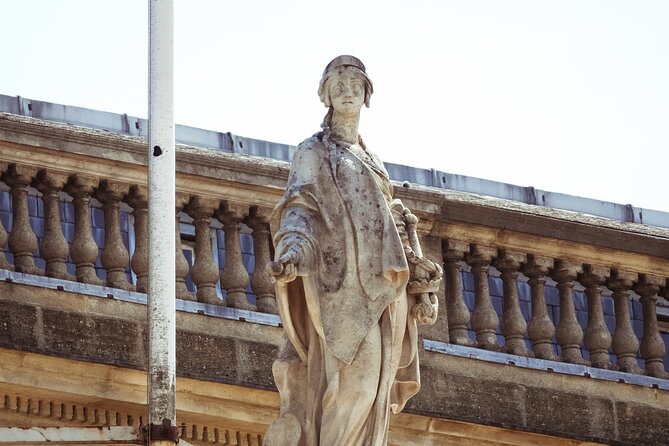
The Grand Théâtre receives about five minutes, mostly from the outside. Its neoclassical façade is marked by columns and statues of the nine muses and goddesses. The building dates to 1780 and was designed by Victor Louis.
The exterior alone makes a strong impression, but the most ornate details are inside: the grand staircase, chandelier, and theatre spaces. Those interiors are not included in the tour price. If opera houses matter to you, plan a separate performance or visit if available during your stay.
This short stop works best as part of the larger story about Bordeaux’s 18th-century transformation. The tour is not asking you to study the theatre in detail. It is showing you how the city used monumental architecture to express wealth, culture, and civic ambition.
Place Gambetta, Passage Sarget, and Place du Chapelet
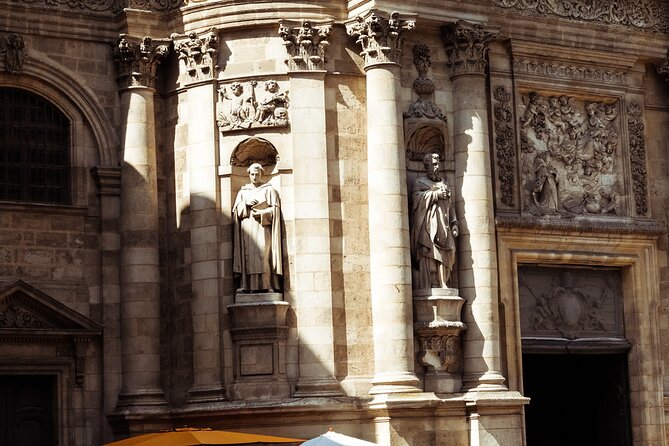
Place Gambetta offers a change of mood. It was once connected with the city’s western gate and later became part of 18th-century urban changes. The square also has links with political history, including the French Revolution.
Today, it is described as a gardened public space surrounded by elegant buildings. The stop lasts about five minutes, so you’ll get the main story and a look at the setting rather than a long pause.
Passage Sarget is a more intimate architectural moment. Built in the late 19th century, this covered passage connects Rue de la Porte-Dijeaux with Place des Grands-Hommes. Its glass roof, ironwork, and refined stonework reflect the fashion for Parisian-style arcades.
The passage was named for banker and philanthropist Jean-Alexandre Sarget. It once served luxury shopping and social life, while today it remains a walkway with shops and cafés. I like this stop because it keeps the tour from becoming a parade of huge squares. You get to see a smaller piece of Bordeaux’s Belle Époque character.
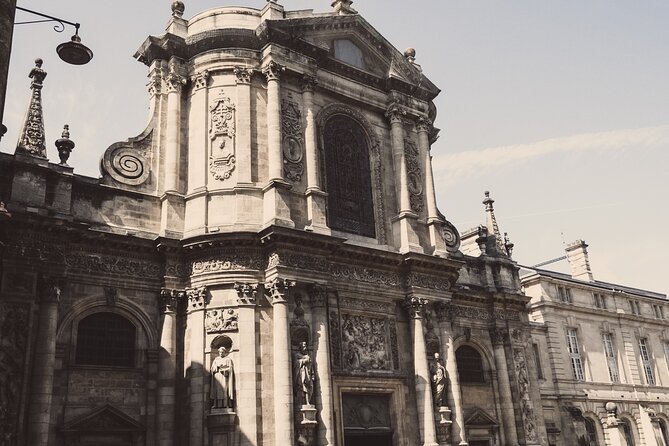
At Place du Chapelet, the focus shifts to the Church of Notre-Dame. The 17th-century church is known for its organ, which still sounds during special performances. It also has a connection with the funeral of a famous 19th-century painter.
Again, the distinction between exterior explanation and interior admission matters. The tour introduces the church and its cultural role, but entrance costs are not included.
Allées de Tourny and the Monument aux Girondins
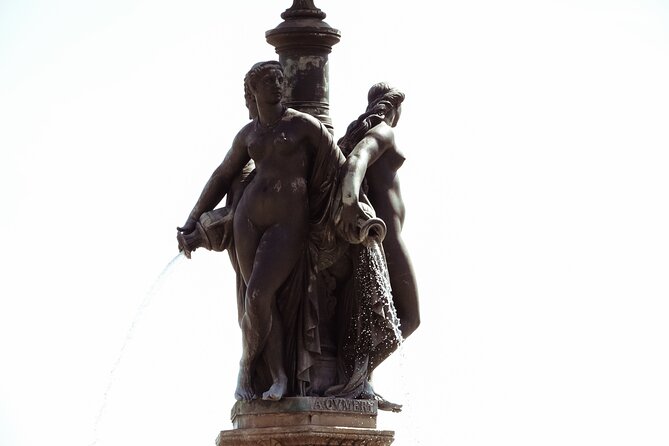
Allées de Tourny is a broad, tree-lined avenue with a classical design. The guide explains the figure behind its layout and that person’s influence on urban planning in Bordeaux and Paris.
This stop helps you notice the city as a planned place, not merely an old center that grew by accident. It also gives your feet a more open stretch after the tighter streets and covered passage.
The final major stop is the Monument aux Girondins at Place des Quinconces. It honors Girondin deputies who died during the French Revolution. The monument includes dramatic sculpture representing liberty, the Republic, and Bordeaux’s maritime identity.
The square is Bordeaux’s largest, and the monument is meant to be read from a distance. Your guide can explain the political symbolism, which is far more useful than simply photographing the fountain and column.
The official end point is Place des Quinconces. This is practical if you plan to continue toward other parts of central Bordeaux, use public transportation, or explore on your own after the wine stop. Confirm with your guide where the included wine is served, since the exact partner bar is not specified.
The included Bordeaux wine
The wine is served after the walking portion at a partner bar. One glass is included, while extra drinks and food are not listed as part of the experience.
I like this ending because it turns the tour toward local life instead of finishing at a monument and sending you off. It also gives you an easy chance to ask follow-up questions about Bordeaux wine, a subject tied closely to the city’s history and economy.
Do not mistake the included glass for a full tasting. The experience promises one glass, not a winery visit, cellar tour, or detailed comparison of appellations. If your main goal is wine education, you’ll need a separate vineyard or tasting experience. If you want a pleasant local finish after a history walk, this is a useful extra.
Pace, guides, and practical details
The tour lasts about two hours and is offered in English. It is confirmed at booking, operates near public transportation, allows service animals, and is described as suitable for most participants.
You’ll be walking through central Bordeaux, with stops ranging from five to 15 minutes. Wear shoes you can use comfortably on city streets, and leave room in your schedule if you want to revisit the cathedral, Miroir d’Eau, or Grand Théâtre afterward.
Traffic and parking can make a group a few minutes late at the meeting point. The guide can be accommodating, but you should still arrive at the cathedral with time to spare. The meeting point is specific: Cathédrale Saint-André, Place Pey Berland.
The tour is recommended by all 28 reviews provided and holds a five-star rating. The strongest pattern is not a single landmark. It is the guide’s ability to explain Bordeaux clearly, answer questions, and adjust the conversation. Victor is praised for adding detail when a group showed special interest, while Emma is described as thorough and informative.
Free cancellation is available up to 24 hours before the start time. A cancellation inside that window is not refunded, and changes are not accepted less than 24 hours before the start.
Is this Bordeaux walking tour worth booking?
Book it if you want a private introduction to Bordeaux’s central monuments, especially if you like asking questions and prefer a guide who can connect architecture with politics, wine, and city planning.
It suits first-time visitors, couples, families, and small groups who want a clear orientation in two hours. It also works well early in a Bordeaux stay, since the route ends at Place des Quinconces and gives you ideas for places to revisit.
Skip it if you want long interior visits, a serious wine tasting, or a slow photography walk. At $90.36 per person, the tour earns its price through private attention and a well-packed route, not through included admissions or extensive time inside each monument.
For most people, the smart expectation is a brisk, thoughtful overview followed by one glass of Bordeaux wine. If that sounds like the right first chapter for your visit, this is a solid choice.
FAQ
How long does the Bordeaux history tour last?
The tour lasts approximately two hours.
Where does the tour begin?
It begins at Cathédrale Saint-André de Bordeaux, Place Pey Berland, 33000 Bordeaux, France.
Where does the tour end?
The tour ends at Place des Quinconces in Bordeaux.
Is the tour private?
Yes. Only your group participates in the private activity.
Is the tour offered in English?
Yes. An English-speaking guide leads the tour.
Is a wine tasting included?
One glass of Bordeaux wine at a partner bar is included after the walking tour.
Are monument entrance fees included?
No. Entrance inside the monuments is not included.
Are tips for the guide included?
No. Gratuities are not included in the price.
Can service animals join the tour?
Yes. Service animals are allowed.
What is the cancellation policy?
You can cancel up to 24 hours before the experience begins for a full refund. Cancellations or changes made less than 24 hours before the start time are not accepted, and the amount paid is not refunded.
More history tours in Bordeaux
- Bordeaux: Historic Center & Chartrons District Bike Tour
★ 4.8 · 709 reviews - Bordeaux: Top Landmarks & Historic Bike Tour
★ 4.9 · 346 reviews - 2-Hour Walking Tour of the City’s Iconic Sights and History
★ 4.0 · 207 reviews - Bordeaux’ Best Boulangeries & History Tour
★ 5.0 · 126 reviews
Just added in Bordeaux
- Au Cœur du Château – VSOP D’USSÉ & XO BARON OTARD★ 4.5 · 108 reviews
- Discover Braastad Cognac★ 5.0 · 52 reviews
- retro road trip/ Méhari, 2CV & Burton in Rochefort, La Rochelle★ 5.0 · 28 reviews
- Saint Emilion Full Day Wine and Bike Tour★ 5.0 · 167 reviews
- Virtual Room Bordeaux – 1st team virtual reality experience★ 5.0 · 47 reviews
- Wine Masterclass & Cheese Tasting Workshop in Bordeaux★ 5.0 · 29 reviews
- Bordeaux bike tour “The Best of Bordeaux”★ 5.0 · 164 reviews
- Luxurious full day Bordeaux wine tour in a Tesla★ 4.5 · 31 reviews
Wine Tours, compared.
Authentic Parisian Gourmet Food Tour with 10 Local Dishes & Wines
Read our review →
Loire Valley Castles Day Trip from Paris with Complementary Wine
Read our review →
River Garonne Cruise with Glass of Wine and Canelé
Read our review →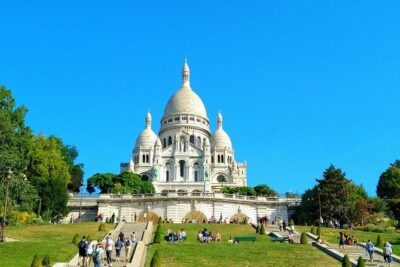
Montmartre Hill French Gourmet Food and Wine Tasting Walking Tour
Read our review →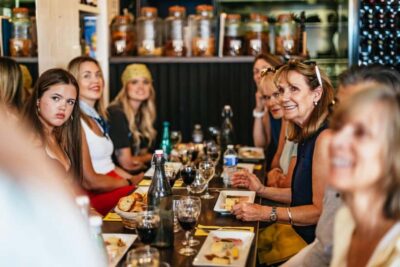
Montmartre Cheese, Wine & Pastry Guided Walking Tour
Read our review →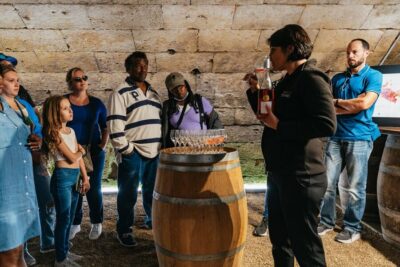
Loire Valley Castles Day Trip With Wine Tasting
Read our review →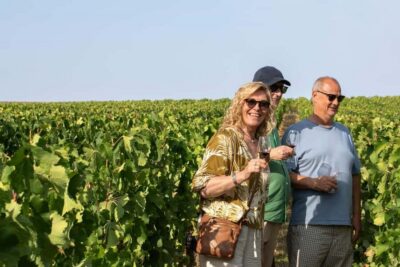
Afternoon Saint-Emilion Wine Tasting & snack
Read our review →Browse the lists this tour appears in