
Reviewed · WINE TOURS
Taste Wine in Lyon: Burgundy, Beaujolais, Rhône, and more
Lyon sits within easy reach of Burgundy, Beaujolais, and the Northern Rhône, so this tasting brings several major French wine regions to one table. In a restored 1800s silk loft, you’ll taste five wines, including Crémant de Bourgogne, while an English-speaking sommelier such as Julia, Madeleine, Margaret Rose, or Ghjulia explains what is in your glass.
I like the small group size, capped at 10, and the generous cheese, charcuterie, and baguette board. I also like the practical teaching style: blind tasting, label tips, grape varieties, and simple guidance you can use when ordering wine later.
The main drawback is the setting’s slightly tricky arrival. The door number can be hard to spot, and you’ll climb a dark staircase to the second floor. The walk up to Croix-Rousse can also be steep, so leave time and do not schedule this between tight appointments.
Key points to know before booking
- Five regional wines in one sitting: Start with Crémant de Bourgogne, then taste wines from Beaujolais, Burgundy, Northern Rhône, and a changing wildcard region.
- A real meal-sized snack: Local cheese, cold cuts, and artisan bread make the noon session a workable lunch.
- English-speaking wine educators: Guides including Julia, Madeleine, Margaret Rose, Nicholas, and Ghjulia explain French wine without making the lesson stiff.
- Historic Croix-Rousse setting: The tasting takes place in a restored 1800s silk loft with comfortable seating and air conditioning.
- Small, social format: The maximum is 10 people, leaving room for questions and conversation.
- Plan the arrival carefully: Look for the ornate dark wooden door marked with a number that may look more like 19 than 12, then continue upstairs to the apartment entrance.
Why this Lyon wine tasting works so well
Lyon is a smart place for a French wine lesson. You are not sitting in one vineyard tasting only one producer’s bottles. Instead, you are positioned between several important wine areas and can compare them side by side.
That comparison is the real value. A glass from Beaujolais can show a different style from a Burgundy wine, while a Northern Rhône red brings another set of grapes, soils, and traditions to the table. The point is not simply to drink five glasses. It is to learn why they taste different and how French wine labels help you identify them.
The lesson is made for mixed experience levels. If you already know your appellations, you can ask more detailed questions about grapes, terroir, and food pairings. If French wine labels normally look like a puzzle, you get a clear starting point without being talked down to.
The tone also matters. Guides are described as friendly, patient, funny, and easy to talk with. Julia is praised for making regional wine information clear. Madeleine is noted for answering questions at the right level and keeping the session lively. Margaret Rose is especially good at turning complex ideas into easy tips you can remember at dinner.
That teaching style makes this more useful than a simple flight at a wine bar. You leave with a better sense of what to order, how to taste, and how to connect a French wine to its place.
More wine tours in Lyon:
- Lyon Old Town Food Tour with 6 French Delicacies & Fine Wine
★ 5.0 · 575 reviews - From Lyon: Golden Stones Beaujolais Wine Tasting Tour
★ 4.7 · 387 reviews - Beaujolais Segway Tour with Wine Tasting
★ 5.0 · 98 reviews
Finding the silk loft in Croix-Rousse
The address is 12 Grande Rue de la Croix-Rousse, in Lyon’s Croix-Rousse district. This is not a signposted shopfront with a large tasting-room banner. You enter through an ornate dark wooden door, and the number can be faded enough to look like 19.
Once inside, expect a staircase to the second floor. One detailed account describes a dark stairway and an apartment door marked C. Connor. Booking instructions are sent with the reservation, so read them before setting out instead of relying only on a map pin.
The route is worth treating as part of your timing. One person noted that the walk to the apartment is steep. You do not need to turn up exhausted, but you should avoid arriving at the last second after rushing uphill. Give yourself extra minutes to find the door and climb the stairs.
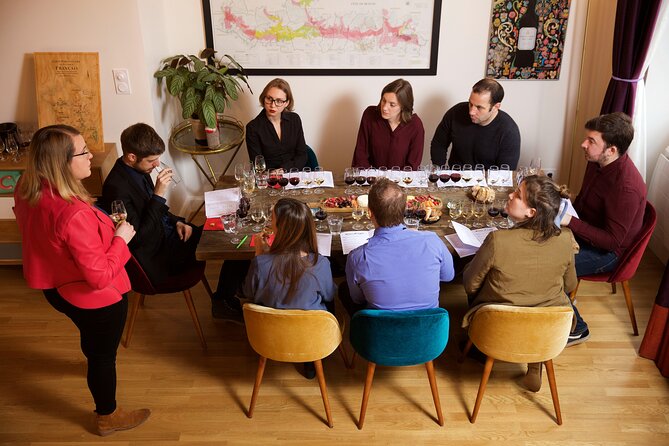
Inside, the atmosphere changes completely. The space is a restored 1800s loft once used for silk weaving, now arranged with comfortable seating and tables for the tasting. The old building gives the session character, while air conditioning keeps the room comfortable in warm weather.
This apartment setting is both a strength and a consideration. It feels personal and informal, not like a large commercial tasting room. But if you prefer a fully obvious venue with street-level access, this setup may require more patience.
The first glass: Crémant de Bourgogne
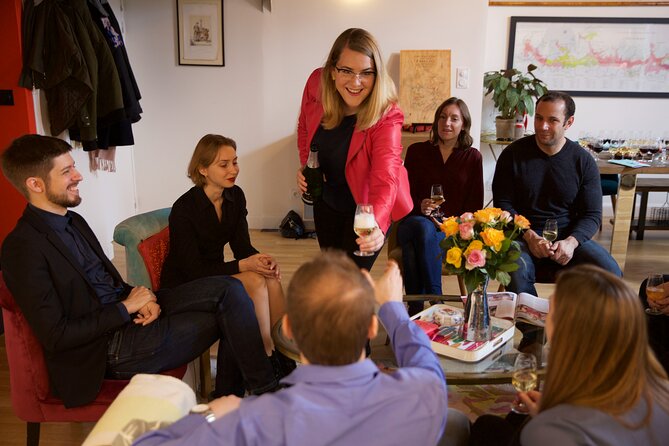
The tasting begins with Crémant de Bourgogne, a sparkling wine from Burgundy. This is a useful opener because it gets everyone tasting right away and gives the sommelier an easy way to explain bubbles, freshness, and regional identity.
Several people singled out the Crémant as a favorite. One person liked it enough to buy six bottles afterward. That does not mean your taste will match, but it shows why starting with a less familiar French bottle can be worthwhile.
The first glass also sets the relaxed tone. You sit around a coffee table, learn the basic approach, and begin discussing what you notice. You are not expected to identify every aroma or use formal tasting language.
If you are new to wine, this is a good moment to ask basic questions. If you already know sparkling wine, you can compare the Crémant with Champagne in terms of style and value, though the exact comparison depends on the guide and the bottle selected that day.
Comparing Beaujolais, Burgundy, and Northern Rhône
After the sparkling wine, the session moves through the major regional styles. The standard plan includes Beaujolais, Burgundy, and the Northern Rhône, with a wildcard added to keep the selection flexible.
The exact bottles can change, which is a benefit for a teaching session. Wine educators can choose bottles that show a clear contrast or fit the group’s questions. It also means you should not expect a fixed producer list.
Beaujolais is an important inclusion because it is so close to Lyon and is often misunderstood outside France. Burgundy gives you a chance to consider the region’s famous reputation and its detailed sense of place. Northern Rhône adds another important nearby style, especially for people who want to understand Rhône wines beyond a broad red blend.
The tasting usually includes both white and red wine. One account describes two whites and two reds among the regional wines, along with the opening sparkling glass. The selection gives you more than one color or grape profile to compare, rather than making the entire session a line-up of similar reds.
The guide explains grapes, vineyards, winemaking traditions, and appellations as you go. This is where the session earns its keep. Rather than memorizing a list of French regions, you begin to connect a name on a label with the kind of wine in your glass.
Same base, a different kind of day:
- Lyon City Hop-on Hop-off Sightseeing Bus Tour
★ 4.0 · 1,614 reviews - Lyon: Musée de l’illusion Entrance Ticket
★ 3.9 · 1,023 reviews - Vieux Lyon Cultural & Historical Walking Guided Tour (English)
★ 5.0 · 942 reviews - Lyon: Private Walking Tour of “Traboules” in the Old Town
★ 5.0 · 866 reviews
The wildcard wine and blind tasting
The fifth wine is a wildcard. The advertised structure names Crémant de Bourgogne, Beaujolais, Burgundy, and Northern Rhône, then leaves one place open. Past sessions have included wines connected with places such as Jura and the Loire Valley, so the final glass may broaden the lesson beyond Lyon’s nearest neighbors.
There may also be a blind tasting. This is one of the most useful parts for beginners because it removes the label at first. You can focus on smell, weight, acidity, fruit, and finish before the region or grape creates an expectation.
Do not worry about getting the answer right. The value is in slowing down and noticing what changes from glass to glass. The guides use the exercise to show how you can analyze a wine without needing professional training.
This also makes the session social. You taste, compare notes, and hear how other people read the same wine. The group can ask questions as the lesson develops, rather than waiting for a fixed lecture to end.
Cheese, charcuterie, and a practical lunch
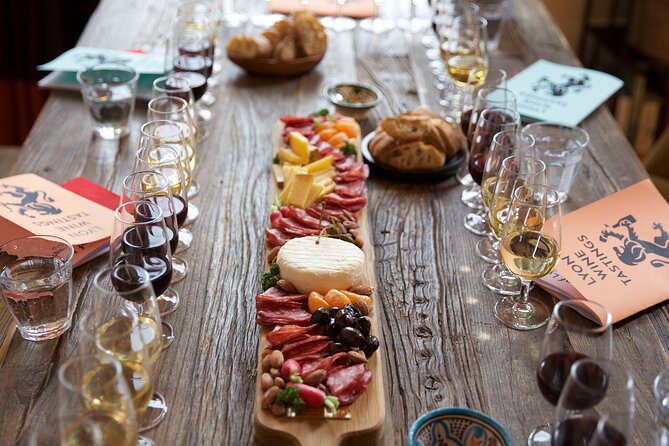
The food is not a token bowl of crackers. You receive local cheese, charcuterie, and artisan bread, including cold cuts such as rosette sausage in one described presentation.
The board matters for two reasons. First, it keeps the noon tasting from feeling like a light pre-dinner activity. The organizers specifically note that there is plenty of food at the 12 p.m. session. Second, it lets you test how wine changes with food.
The guides discuss pairings and use the board to show why a wine may taste sharper, softer, fruitier, or more balanced with something salty or creamy. You do not need to treat the pairing like an exam. Simply notice what works for your own taste.
Dietary needs should be raised at least 24 hours ahead. The food can be adjusted in some cases. One person who had a goat cheese limitation received a board arranged partly around goat cheese, but you should still contact the provider in advance rather than count on a last-minute change.
The food selection is another reason the noon time slot makes sense. If you are planning a full restaurant lunch immediately afterward, you may find the timing less convenient. The 4 p.m. session works better if you want the tasting to lead into dinner.
What the guide adds to the experience
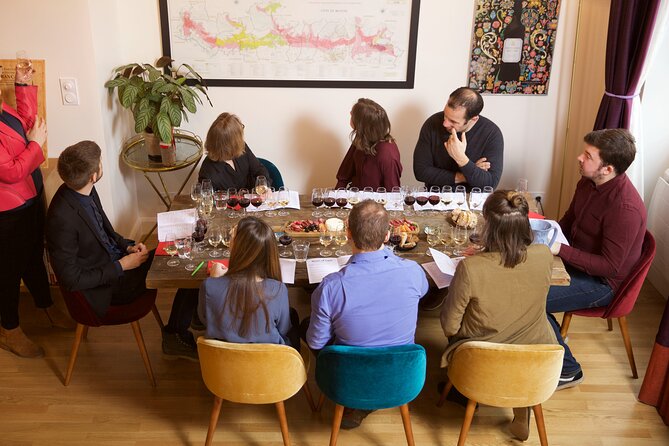
The sommelier is the key variable in any tasting, and the guide names associated with this experience include Julia, Madeleine, Margaret Rose, Ghjulia, and Nicholas.
Julia is praised for her clear explanation of French regions and for making the tasting engaging. Madeleine is described as funny, professional, and able to answer questions for both beginners and more experienced drinkers. Margaret Rose receives particular praise for explaining wine mechanics and pairing in plain, memorable terms.
Ghjulia is noted for creating a friendly atmosphere even when leading a tasting for the first time. Nicholas is described as patient and kind. These details point to a consistent approach: the session is designed as conversation, not a formal performance.
You can ask for recommendations for the rest of your Lyon visit. The guides have also helped with suggestions for other places in France, including Annecy. That sort of local advice is not the central product, but it can make the afternoon feel more connected to your trip.
The strongest part of the teaching is the balance between facts and use. You learn about regional grapes and wine history, but you also learn how to choose a French wine you might actually enjoy. That distinction is important. A wine lesson that only gives you information can fade quickly. A lesson that helps you order better at dinner has a longer life.
Is $120.98 a fair price?
At $120.98 per person, this is not a bargain tasting. You are paying for five wines, food, a small group, an English-speaking sommelier, and a private-feeling historic setting.
The value is strongest if you want instruction. A basic tasting flight elsewhere might cost less, but it may not include the same amount of explanation, the blind exercise, or the regional comparison. This experience also saves you the time and transport needed to visit several separate wine areas.
It cannot replace a vineyard visit. You will not be walking among vines or touring a cellar in Beaujolais, Burgundy, or the Rhône. If your main goal is to see how wine is made at a rural estate, spend a day outside Lyon instead.
For a short Lyon stay, though, the city format has a clear advantage. You can taste across several regions in about two hours and still have most of your day available. One session ran closer to two and a half hours, so I would leave some space afterward rather than book a train or timed attraction immediately.
The price makes the most sense for curious drinkers who want both food and a lesson. It is less compelling for someone who only wants a quick glass of wine or already has a full vineyard itinerary.
Choosing between noon and 4 p.m.
The tasting is offered at 12 p.m. or 4 p.m. The noon session includes enough cheese, charcuterie, and bread to work as lunch, especially if you prefer a relaxed start to the afternoon.
The 4 p.m. time is better if you want to tour Lyon first and make the tasting part of your transition into dinner. It also gives you a chance to arrive without rushing from a morning activity.
Both sessions follow the same broad format, with five glasses and food. Since the experience can run longer than the advertised two hours, keep the rest of your schedule flexible.
The group maximum is 10 people. That is small enough for questions and conversation, though the final atmosphere depends on who joins your table. The tasting works best when you are willing to talk a little, compare impressions, and let the discussion move beyond a strict presentation.
Who should book this tasting?
I would recommend it to anyone who wants a clear introduction to French wine without leaving Lyon. It suits beginners especially well, since the guides explain labels, regions, and tasting methods in a welcoming way.
It also suits experienced drinkers who want to compare nearby regions or sample bottles they might not encounter at home. The wildcard glass and changing selection add some variety for people who already know the basics.
Food lovers will appreciate the cheese and charcuterie board, while couples and small groups will like the apartment’s comfortable, informal setting. Solo bookers can also fit in easily because the small group format encourages conversation.
I would be more cautious if you have mobility concerns. The route includes a potentially steep approach, a dark staircase, and a second-floor room. The provided information does not describe step-free access, so ask before booking if stairs are a concern.
You should also skip it if you are looking for a full countryside wine tour. This is a city tasting with regional context, not a visit to working vineyards.
Booking, cancellation, and final practical advice
Confirmation is provided at booking, and the activity is near public transportation. The session begins and ends at 12 Grande Rue de la Croix-Rousse, so you do not need to arrange a separate return transfer.
Free cancellation is available up to 24 hours before the start time. Changes or cancellations inside that window are not accepted for a refund. The activity also needs a minimum number of people to operate. If that minimum is not met, you are offered another date or experience, or a full refund.
Book early if your Lyon dates are fixed. The average booking point is 27 days ahead, and a maximum of only 10 places keeps the session small. Before leaving your hotel, reread the arrival directions, wear shoes suitable for a steep walk and stairs, and avoid scheduling a tight commitment afterward.
Should you book it?
Book this tasting if you want to understand French wine rather than simply sample it. The combination of five regional wines, a thoughtful food board, blind tasting, and friendly English instruction gives you useful skills for the rest of your trip.
Skip it if your priority is a vineyard visit or if you need a fully accessible, street-level venue. For most people spending a few days in Lyon, though, this is a smart city-based alternative to a long excursion. You get a taste of Burgundy, Beaujolais, and the Rhône without giving up an entire day, and you leave better prepared to order your next French bottle.
FAQ
How long does the wine tasting last?
The advertised duration is about two hours. One described session lasted about two and a half hours, so leave extra time afterward.
Where does the tasting take place?
It starts and ends at 12 Grande Rue de la Croix-Rousse, 69004 Lyon, France. The venue is a restored 1800s silk loft on an upper floor.
How many wines are included?
Five glasses are included. The tasting starts with Crémant de Bourgogne and normally includes wines from Beaujolais, Burgundy, and the Northern Rhône, plus a wildcard wine.
Is food included?
Yes. The tasting includes local cheese, charcuterie, and artisan bread. The noon session is described as having enough food to work as lunch.
Is the tasting offered in English?
Yes. The experience is offered in English and is led by English-speaking wine educators or sommeliers.
What is the maximum group size?
The maximum is 10 people. This keeps the tasting relatively small and allows time for questions.
Can I cancel for a full refund?
Yes, if you cancel at least 24 hours before the experience start time. Cancellations or changes made less than 24 hours ahead are not refunded or accepted.
Just added in Lyon
- From Lyon: Golden Stones Beaujolais Wine Tasting Tour★ 4.7 · 387 reviews
- Lyon: 3-Hour Guided E-Bike Tour★ 4.9 · 131 reviews
- Lyon: Segway Tour Along Rhône and Saône River★ 4.8 · 146 reviews
- Lyon: City Segway Tour with a Local Guide★ 4.8 · 102 reviews
- First canyoning in Grenoble in the Vercors★ 5.0 · 111 reviews
- 2h – Electric Bike Tour of Lyon with a Local Guide★ 5.0 · 273 reviews
- Beaujolais Segway Tour with Wine Tasting★ 5.0 · 98 reviews
- 4h Complete Lyon Experience: E-Bike, Food Tasting & Old Town Walk★ 5.0 · 228 reviews
Wine Tours, compared.
Authentic Parisian Gourmet Food Tour with 10 Local Dishes & Wines
Read our review →
Loire Valley Castles Day Trip from Paris with Complementary Wine
Read our review →
River Garonne Cruise with Glass of Wine and Canelé
Read our review →
Montmartre Hill French Gourmet Food and Wine Tasting Walking Tour
Read our review →
Montmartre Cheese, Wine & Pastry Guided Walking Tour
Read our review →
Loire Valley Castles Day Trip With Wine Tasting
Read our review →
Afternoon Saint-Emilion Wine Tasting & snack
Read our review →Browse the lists this tour appears in