
Reviewed · PASTRY & CHOCOLATE WORKSHOPS
Paris: French Croissant Baking Class with a Chef
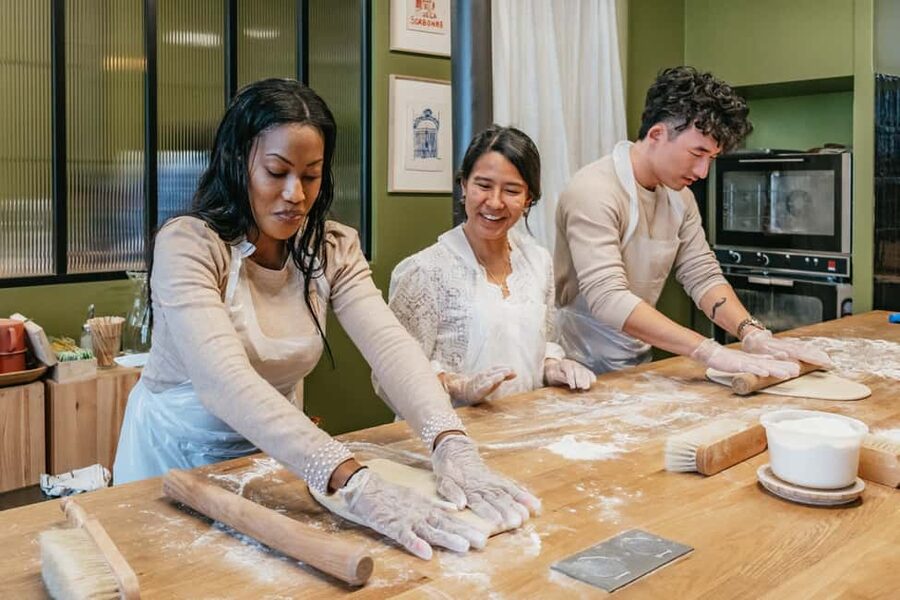
Making a croissant is less about clever shaping than patience, butter, and getting the dough just right. At Maison Fleuret, you work through the process with an English-speaking pastry chef, then bake croissants, pain au chocolat, and often cinnamon swirls to eat and take home. I especially like the small groups of up to eight and the hands-on format. You are not just watching a demonstration.
I also like the warm, informal teaching style reported by instructors such as Felix, Guillaume, Alice, and Erika. They explain each step clearly and offer Paris food tips along the way. The main drawback is the price, $159 per person, which is a serious sum for a 150-minute class. Families should also know that participants generally work in pairs, so a group of five may need to share with another person.
Key points to know before booking
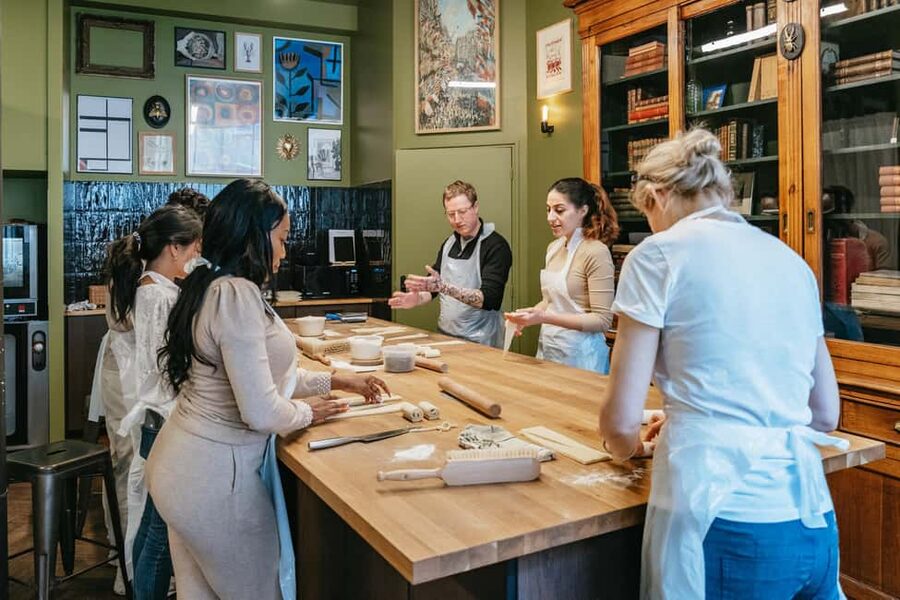
- You make more than croissants: The class can include pain au chocolat and cinnamon swirls, giving you several useful shapes and fillings to practice.
- The class is limited to eight people: A small group allows the chef to correct your technique and answer questions.
- You work in pairs: This keeps the class moving, but odd-numbered families may need to share a work station with someone outside their group.
- The pastries go home with you: You make enough to eat in class and carry away, sometimes enough for breakfast over the next few days.
- It works well on a rainy morning: The indoor setting near Notre Dame makes this a practical break from sightseeing.
- The lesson is in English: Chef instructors explain the techniques, history, and recipe in English.
What happens at 3 Rue des 3 Portes
The class begins at Maison Fleuret Ateliers Parisiens, at 3 Rue des 3 Portes on the Left Bank. This is not a coach tour with a long ride to a distant cooking school. You make your own way to the studio, check in, and settle into a pastry-focused lesson that lasts about two and a half hours.
The setting is designed to feel like a traditional Parisian home rather than a large commercial kitchen. That matters because the class is meant to feel social and approachable. You meet a small mix of couples, families, friends, and solo participants, then work together under the chef’s direction.
The school provides the cooking equipment and instruction, so you do not need to bring baking tools. Hotel pickup and drop-off are not included. Plan to arrive at the Left Bank meeting point on your own and allow extra time if you are crossing Paris during a busy morning.
More cooking classes in Paris:
- Paris Cooking Class and Lunch with Wine plus Market Visit Option
★ 5.0 · 1,024 reviews - Paris Croissant Small-Group Baking Class with a Chef
★ 5.0 · 910 reviews - Paris Cooking Class: Learn How to Make Macarons
★ 5.0 · 634 reviews
Why croissant dough takes real skill
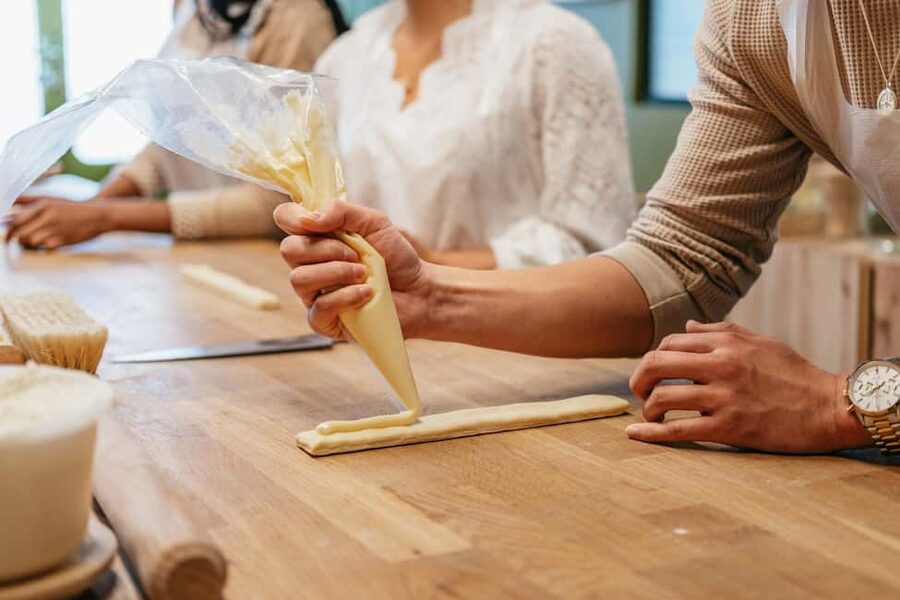
The class focuses on laminated dough, the layered pastry used for croissants and pain au chocolat. The basic idea sounds simple: dough and butter are folded together again and again. In practice, the butter must remain at the right consistency, the dough must be rolled evenly, and the layers must stay intact.
That is where an instructor earns the fee. A written recipe can tell you how much flour and butter to use, but it cannot easily show you how the dough should feel or how gently to roll it. Chef Felix, Chef Guillaume, and the other instructors guide participants step by step, which helps first-time bakers avoid the usual heavy, dense result.
You also learn how to shape the dough into the familiar crescent form and how to prepare chocolate-filled pastries. The class gives you practical skills you can repeat at home, though you should not expect to become a professional baker in one morning. Croissants require time, careful temperature control, and practice.
The hands-on lesson with an English-speaking chef
The strongest part of the experience is the teaching. The chef explains the process, demonstrates the technique, then lets you do the work. You roll, cut, shape, and prepare the pastries rather than standing at the back of the room with a camera.
The instructors have different personalities, but the pattern is consistent. Felix is described as both serious about pastry and playful in the kitchen. Guillaume is praised for patient, step-by-step explanations. Alice and Erika bring a lively tone, while other instructors such as Ines, Lauren, Leslie, Manel, Selma, and Ke are noted for friendly guidance and clear instruction.
That variety matters because pastry classes can become frustrating when the teacher moves too quickly. Here, the small group makes it easier to ask for help. If your dough looks uneven or your shaping is less than elegant, you have a chef nearby to show you what to change.
Families also get useful support. Children and teenagers have enjoyed the activity, including children around ages 11 and 12 and teenagers in their early teens. The class is not presented as a children’s program, but the patient teaching style makes it workable for young bakers who can follow instructions and stay with a hands-on task.
Croissants, pain au chocolat, and cinnamon swirls
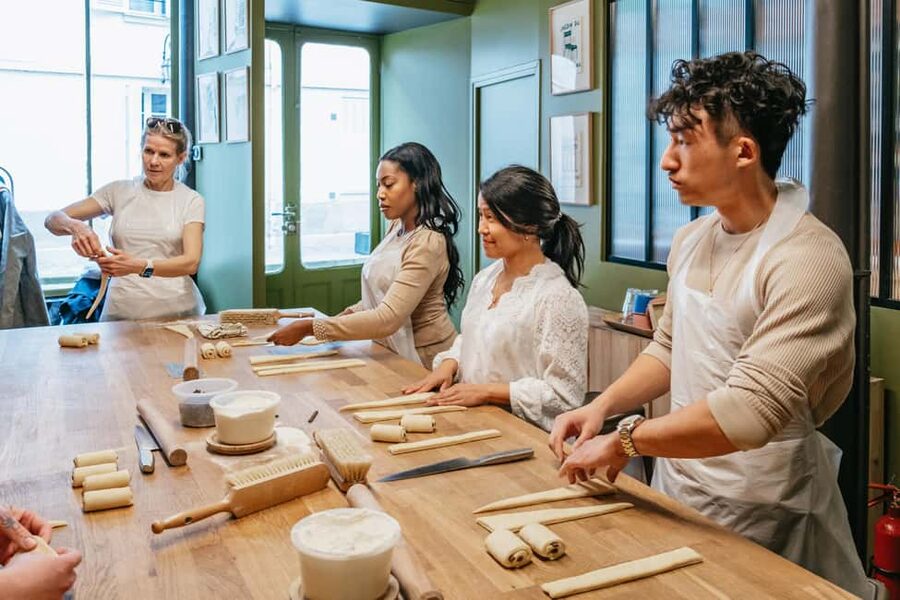
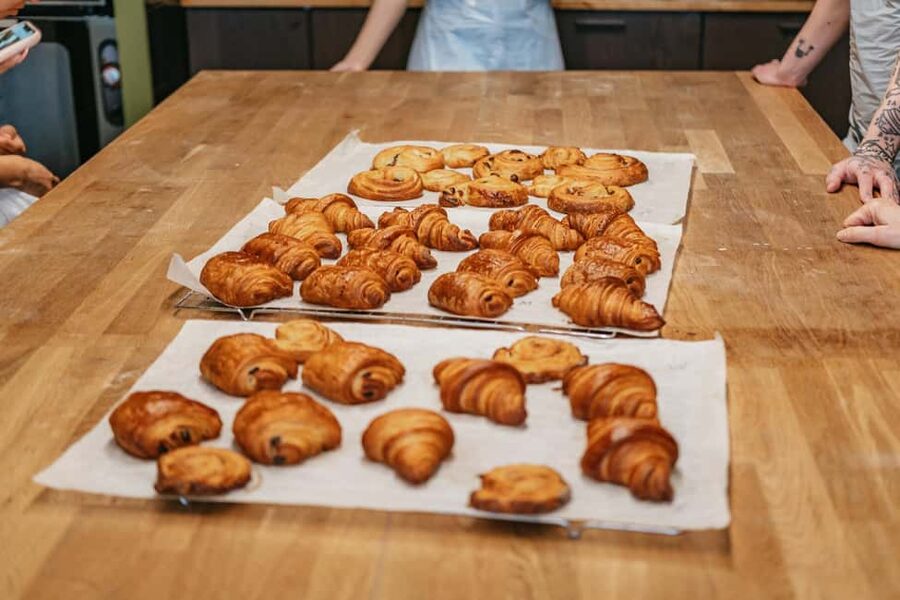
A good reason to choose this class over a basic croissant demonstration is the range of pastries. Along with classic croissants, you may prepare pain au chocolat and cinnamon swirls. That gives you different ways to use the same dough and makes the finished box more interesting.
Pain au chocolat is especially appealing for families and chocolate lovers. You learn how to place the chocolate and shape the pastry so it bakes into a crisp, layered parcel. Cinnamon swirls add another change of pace and give younger participants a simpler, familiar shape to work with.
The food is one of the best parts of the morning. You will have pastries to sample fresh and warm, plus plenty to carry away. Several participants used the pastries as breakfast during the next few days, particularly when they took the class early in their Paris stay.
One useful tip is to avoid eating a large breakfast before class. You will be handling butter and pastry for two and a half hours, and the finished batch can be substantial. Drinks are not guaranteed as part of the experience, so bring water if you tend to get thirsty. One participant specifically noted that water or coffee was not offered during a particular class.
Other pastry and chocolate sessions around Paris:
- Paris: Montmartre Cheese, Wine & Pastry Guided Walking Tour
★ 4.8 · 2,255 reviews - Award-Winning Paris French Bakery Experience — Le Marais, 4th Arr
★ 4.5 · 1,186 reviews - Paris: Entrance Ticket to the Chocolate Museum
★ 4.1 · 1,105 reviews - Private Montmartre Food Tour with Wine, Cheese & Pastries
★ 5.0 · 1,027 reviews
A little French pastry history
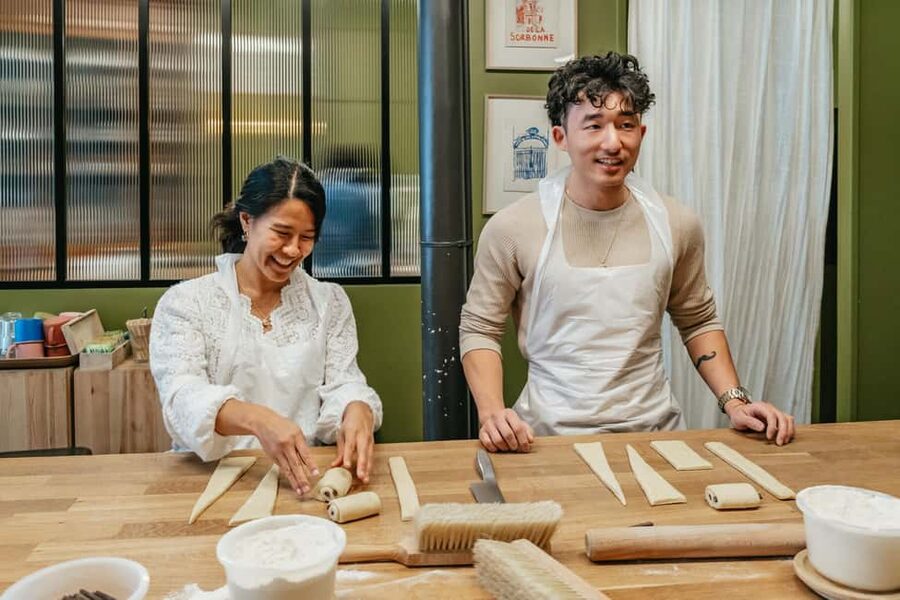
The chef also explains how the croissant became part of everyday French food culture. The pastry gained wide popularity among Parisians and the French in the early 20th century, becoming closely linked with the classic French breakfast.
This short historical element gives the baking a useful setting. You are not only learning a recipe, you are learning why a pastry now appears in bakeries and cafés across France. The class connects the dough, the technique, and the French habit of treating food as part of daily life.
Do not expect a long lecture on pastry history. The main focus stays on baking. The history is there to add context while your dough rests, rolls, or bakes.
What you take home after 150 minutes
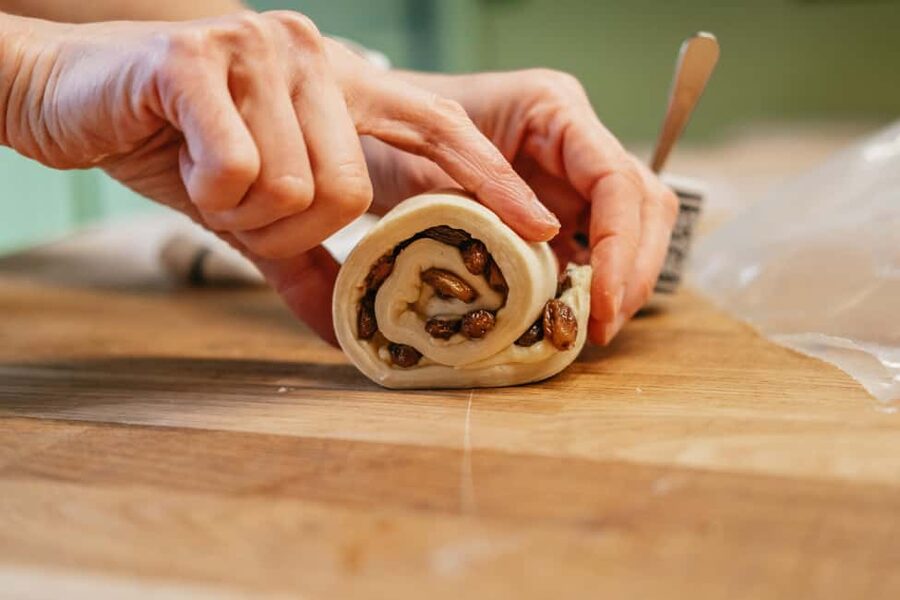
The exact quantity can vary, but the class produces enough pastries to make the take-home portion meaningful. Participants describe leaving with bags of regular croissants, pain au chocolat, and other baked goods. Some had enough for breakfast for several mornings.
You also receive the recipe after the class, according to the information provided by participants. One point to keep in mind is that a recipe sent later may not always match the ingredients used during the class exactly. If you want to recreate the pastries at home, pay close attention to the chef’s technique as well as the written instructions.
The takeaway is more than food. You leave with a better sense of how laminated dough should look and feel, plus the confidence to try it again. A baker who has struggled with homemade croissants may find the demonstration of folding, rolling, and shaping especially useful.
Is $159 good value?
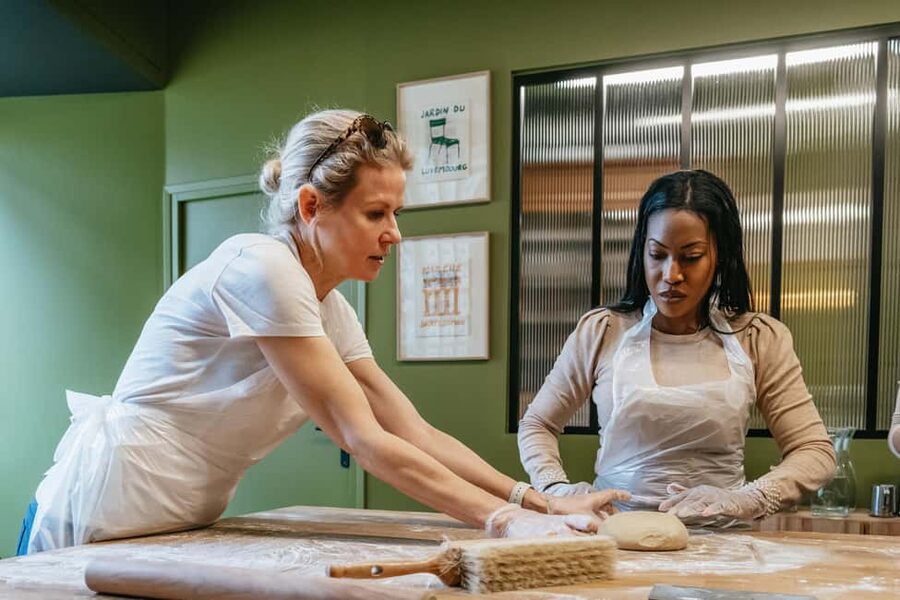
At $159 per person, this is not a budget breakfast. You can buy an excellent croissant in Paris for a few euros, so the price only makes sense if you value the lesson, the social experience, the professional setting, and the pastries you take with you.
The value improves if you are traveling with someone who enjoys cooking. A couple can treat the class as a shared Paris activity, and a parent can give older children a memorable project instead of another museum visit. The take-home food also adds practical value, especially if you schedule the class near the start of your stay.
The price is harder to justify if you only want to eat a croissant or if you have little interest in baking. This is an active class, not a pastry tasting. You will spend time working with dough, following instructions, and waiting for the baking process.
Compared with a large group demonstration, the limit of eight is an important advantage. You get more direct attention, and the instructor can help when your shaping goes wrong. That smaller setting is a major part of what you are paying for.
The best time to fit it into your Paris plans
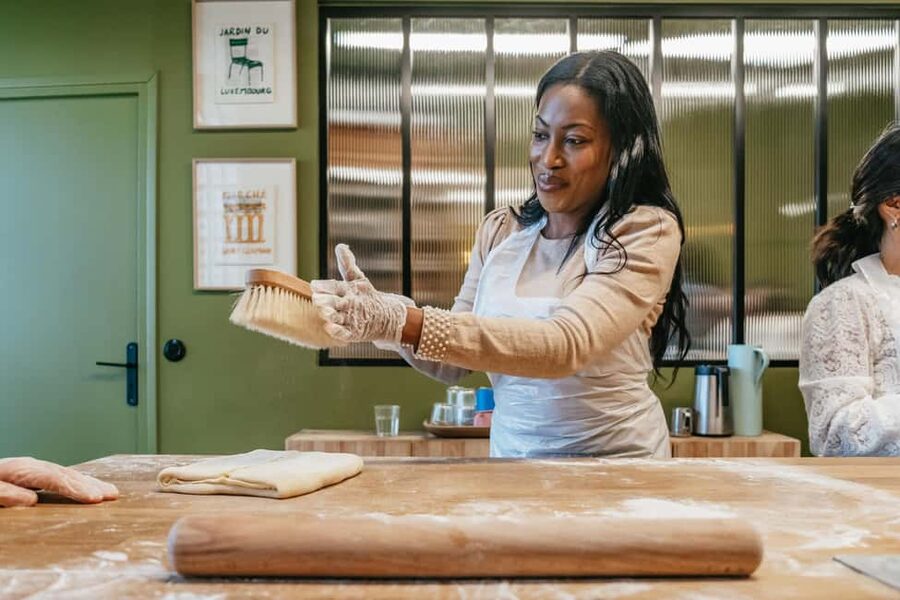
A morning class works particularly well. You can use the pastries as breakfast or a late-morning snack, then continue exploring the Left Bank and nearby central Paris. The location also makes this a useful rainy-day plan.
Several participants liked doing the class early in their visit. You learn a Paris food skill at the start, receive restaurant and pastry-shop suggestions from the chef, and have homemade pastries for later breakfasts.
The class also fits a celebration. It has been used as a birthday activity and as a special outing for couples, parents, and adult children. It is more personal than simply sitting in a café, but less demanding than a full-day cooking course.
Give yourself enough time to reach 3 Rue des 3 Portes. One participant arrived late because of a busy Metro, and the group was allowed to join after the class had begun, but you should not count on that. Arriving on time is considerate to the chef and the other bakers.
Who will enjoy this class most
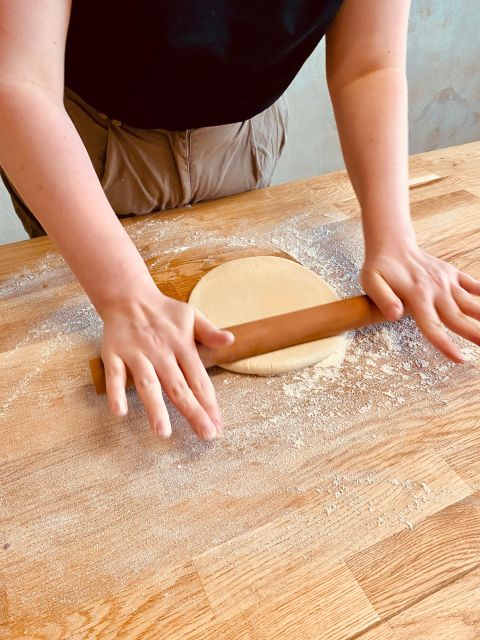
I would recommend it first to people who already love pastries and want to understand the work behind them. You do not need professional baking experience. Several beginners found the instructions approachable, and the chefs are used to helping people with little or no baking background.
It is also a strong choice for families with older children and teenagers. The work is social, tangible, and food-based. Kids can shape their own pastries and see the result in the oven, which is often more engaging than another guided sightseeing stop.
Couples and friends get a relaxed shared activity, while solo participants can meet other food lovers in a small group. The class is taught in English, so you can follow the instruction without needing French baking vocabulary.
People with mobility needs should note that the activity is listed as wheelchair accessible. Still, it is sensible to confirm the practical layout and any needs at booking, since the provided details do not explain the exact kitchen arrangement.
What could disappoint you
The class is not a full professional pastry course. You learn the main process, but you will still need practice at home to produce consistent results. The dough takes patience, and the amount of butter may surprise you.
Working in pairs is another point to consider. It can be fun for couples and friends, but a family of five may not have one station per person. An odd-numbered group may need to pair one participant with someone from another booking.
The experience also costs more than many short Paris activities. If your budget is tight, compare it with a market visit, bakery crawl, or simple pastry breakfast. Those options will not teach you the technique, but they cost much less.
Finally, amenities such as coffee and water are not clearly included. Bring water and do not assume the class provides a café-style breakfast alongside the pastries.
Should you book Maison Fleuret’s croissant class?
Book it if you want a practical Paris memory, not just another food stop. The small group, English-speaking chefs, hands-on work, and generous pastries make this a strong choice for couples, families with older children, and anyone who has tried to make croissants at home without much success.
I would schedule it early in your stay, preferably on a morning when you have room for a relaxed activity afterward. Skip it if $159 feels too high for a short class or if you would rather spend your time eating pastries than making them.
For the right person, the lasting value is the combination of skill and place. You learn how French pastry works, eat what you made, and return home with a recipe and enough buttery evidence to keep breakfast going for a few days.
FAQ
Where does the croissant class take place?
The class takes place at Maison Fleuret Ateliers Parisiens, at 3 Rue des 3 Portes on Paris’s Left Bank.
How long does the class last?
The experience lasts 150 minutes, or two and a half hours.
Is the class taught in English?
Yes. The instructor language is English.
How many people are in each class?
The class is limited to eight participants.
Do I need baking experience?
No specific experience is required. The class is designed to teach the process step by step, including participants with little or no baking knowledge.
What pastries do you make?
You learn to make French croissants and may also prepare pain au chocolat and cinnamon swirls.
Is equipment included?
Yes. Cooking equipment and a chef instructor are included.
Is hotel pickup included?
No. You must make your own way to the Maison Fleuret meeting point.
Just added in Paris
- Paris: Oh My God She’s Parisian! English Comedy Show★ 4.7 · 257 reviews
- Paris: Create your Signature Scent Perfume Workshop★ 4.8 · 221 reviews
- Paris: Flea Market Insider’s Tour in Extra-Small Group★ 4.6 · 73 reviews
- Paris : Painting experience in an art cafe★ 4.6 · 204 reviews
- Paris: Vallée Village Outlet Shopping Day★ 4.3 · 362 reviews
- Paris night out : Comedy in English ‘How to Become a Parisian ?’★ 4.5 · 373 reviews
- La Vallee Village Shopping Outlet by Luxury Transport from Paris★ 3.5 · 111 reviews
- Design Luxury and Personalized Jewelry in Paris le Marais★ 5.0 · 160 reviews
Pastry & Chocolate Workshops, compared.
Montmartre Cheese, Wine & Pastry Guided Walking Tour
Read our review →
Award-Winning Paris French Bakery Experience — Le Marais, 4th Arr
Read our review →
Private Montmartre Food Tour with Wine, Cheese & Pastries
Read our review →
Paris French Sweets Tasting Tour with Pastries and Chocolates
Read our review →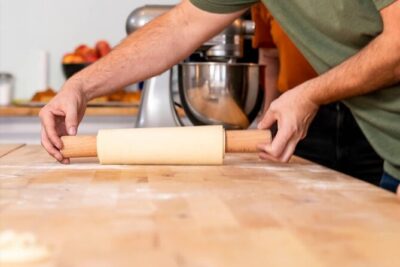
Paris Croissant Small-Group Baking Class with a Chef
Read our review →

Paris Cooking Class: Learn How to Make Macarons
Read our review →Browse the lists this tour appears in