
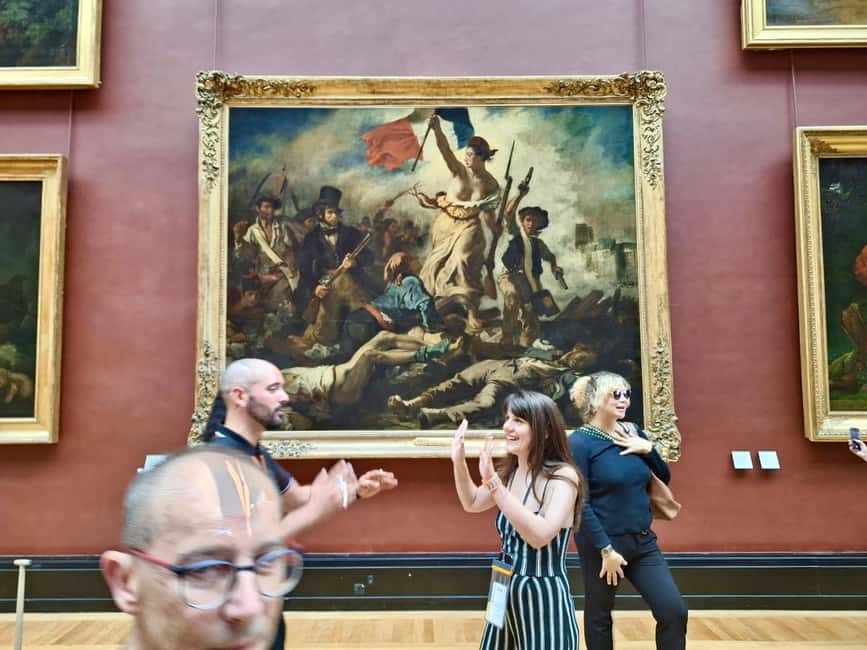
Reviewed · LOUVRE MUSEUM TOURS
Skip-the-Line Louvre Museum Tour with Artist
The best thing about this Louvre tour is its artist-guide approach. Instead of racing from famous object to famous object, you learn how to look: how Leonardo used light, how sculptors suggested movement, and how religious paintings communicate through color and gesture. Guides such as Blerta have also tailored stops to family interests and answered questions about works beyond the standard highlights.
I like the tiny group of no more than six and the reserved entry. Those two details matter in a museum as large and crowded as the Louvre. The drawback is the price, $246 per person for two hours, and the tour is not suitable for wheelchair users.
Key points to know before booking

- A certified artist leads the visit, so you get practical explanations of painting and sculpture techniques, not just dates and names.
- The group is limited to six people, allowing the guide to adjust the pace and answer individual questions.
- Reserved entry uses a separate entrance, a major help when the public line is long.
- The route includes the Mona Lisa, Venus de Milo, and Nike, along with major works from Greek Antiquity and the Italian Renaissance.
- Guides can adapt the conversation, with past tours working well for children, teenagers, families, and visitors with some mobility concerns.
- The meeting point is outside the Louvre, at the Kiosque des Noctambules near the Comédie Française, not at the Pyramid.
Why an artist changes the way you see the Louvre
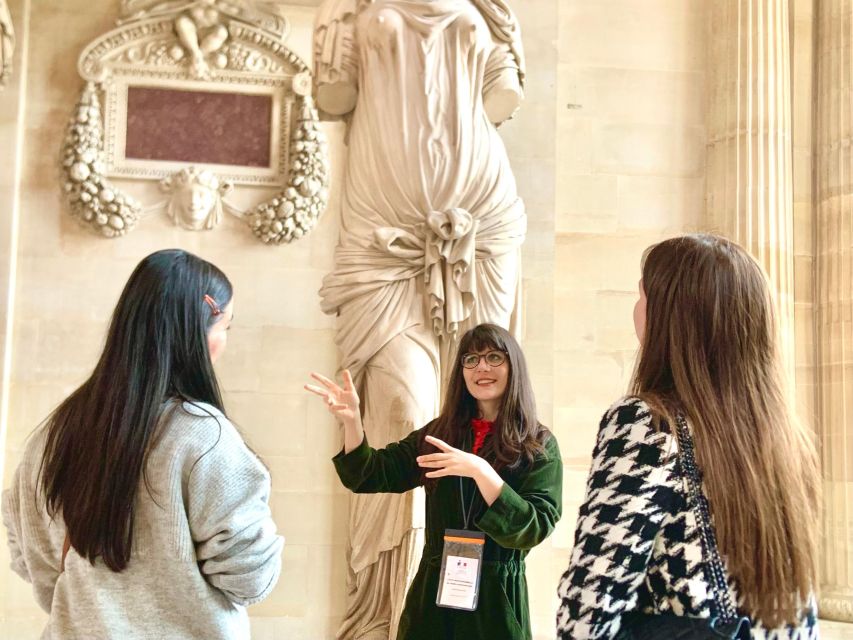
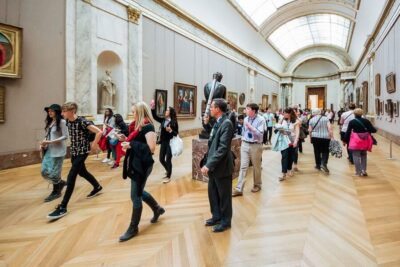
The Louvre can be exhausting even before you reach the first masterpiece. Its collection contains more than 35,000 works, spread through a vast former palace. Without a plan, you can spend a long time walking corridors and still miss the pieces you most wanted to see.
This tour gives you a short, purposeful route. The guide places famous works in a wider story, moving from Greek Antiquity toward the Italian Renaissance and explaining how artistic ideas changed along the way. You are not expected to know art vocabulary. The explanations are designed for beginners, but they still give experienced museumgoers something to think about.
That artist’s eye is the main reason to choose this visit over a basic museum orientation. You might hear how a painter uses light to guide your attention, how folds in carved fabric create the feeling of movement, or how a portrait’s expression can remain hard to pin down. These observations make the art feel less like a set of famous names and more like work made by people solving visual problems.
Past tours have been led by Blerta, Assgan, and Arianna. Blerta receives especially strong praise for her clear explanations, friendly manner, and ability to connect with children and teenagers. You should not assume a particular guide is guaranteed, but the artist-led format is central to the experience.
Other ways into the Louvre from Paris:
- Paris: Louvre Museum Timed-Entrance Ticket
★ 4.6 · 71,977 reviews - Paris: Louvre Guided Tour with Reserved Access & Boat Cruise
★ 4.3 · 16,353 reviews - Louvre Museum Masterpieces Guided Tour with Access
★ 4.5 · 12,023 reviews
Meeting at the Kiosque des Noctambules
You do not meet inside the Louvre. The group gathers at the Kiosque des Noctambules, the colorful Murano glass-bead sculpture by Jean-Michel Othoniel, across from the Comédie Française.
This is a useful meeting point because it is easy to identify and close to the Palais Royal, Musée du Louvre metro station. Use the Place Colette exit. Give yourself enough time to find the sculpture and check in before the scheduled start. Meeting in the open square also avoids the confusion of trying to find a guide inside a busy museum entrance.
The location has one practical catch: if you walk directly to the Pyramid expecting to meet there, you will be in the wrong place. Read the meeting instructions carefully, and carry the identification required for entry. A passport or ID card is requested, and a copy is accepted according to the tour information.
Bring comfortable shoes. Two hours in the Louvre means standing and walking on hard floors, even with a carefully chosen route. A reusable water bottle is sensible for the journey to the meeting point, but food and drinks are not allowed inside the museum.
Reserved entry and the Louvre Pyramid
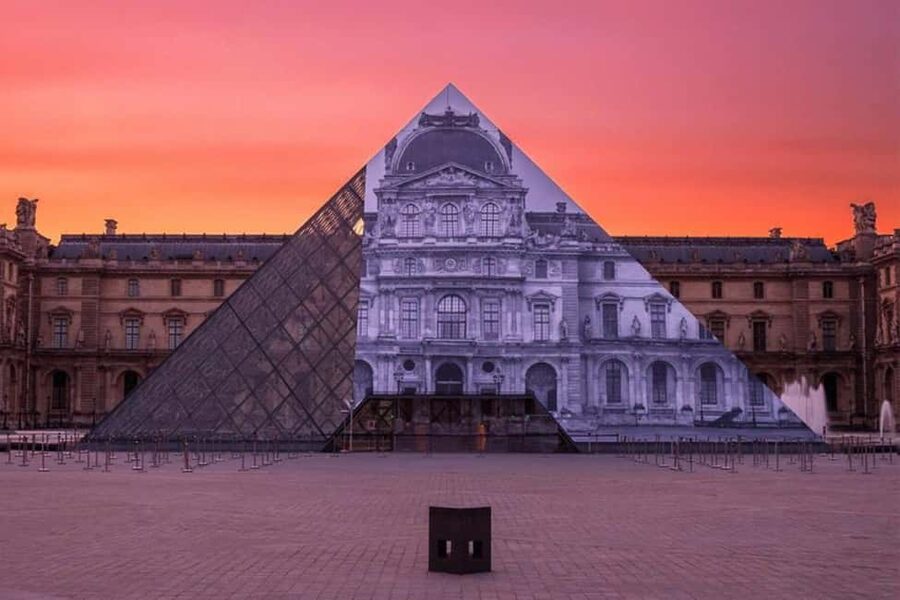
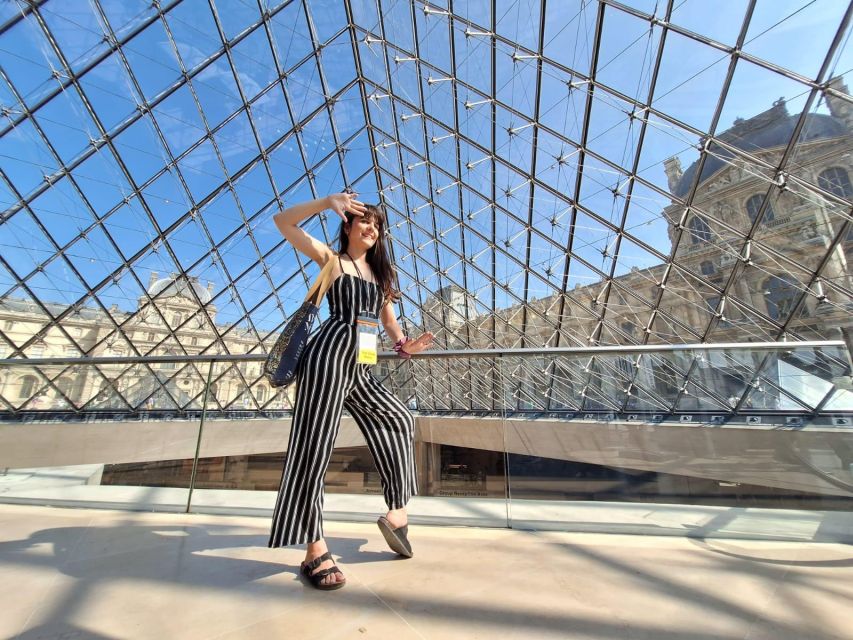
After meeting the guide, the group heads toward the Louvre Pyramid and the museum entrance. Your ticket is reserved, and the tour uses a separate entrance, so you avoid the standard public line. This is not the same as walking straight in without any security checks. You should still expect entry procedures and possible crowding around popular works.
The value here depends heavily on your schedule. If you have only one afternoon in Paris, losing a large part of it in a public queue can spoil the visit. A reserved entrance protects your limited time and gets you into the museum with a guide already ready to set the pace.
The Pyramid itself is one of the Louvre’s most recognizable modern features, but the museum quickly becomes an indoor maze once you pass through it. That is where a guide earns the fee. You do not need to spend the first half hour studying maps or wondering which staircase leads to the Italian paintings.
Audio headsets are provided when available, making it easier to follow the guide in crowded galleries. The group size also helps. Six people can gather around a work more easily than a large coach group, though the museum may still be noisy and busy.
Seeing the Mona Lisa without losing the plot
The Mona Lisa is one of the tour’s main stops, and the guide helps you look beyond the familiar smile. You may discuss Leonardo’s use of light, the construction of the face, and the choices that make the portrait feel so elusive. The point is not to claim that one explanation solves the painting. It is to give you useful ways to examine what is in front of you.
The gallery around the Mona Lisa can be crowded. You should expect a quick, close encounter rather than quiet time alone with the painting. A guide can help you make those minutes count by directing your attention to specific details instead of leaving you to stare over a sea of phones.
This stop works especially well for families. One family guide, Arianna, asked about the group’s interests and shaped the route around them, while also introducing teenagers to ideas about light and dark in religious art. That approach matters because young visitors often respond better to a question or visual puzzle than to a long speech about dates.
If the Mona Lisa is your only reason for booking, remember that the tour lasts two hours and includes several other major works. You will not spend the full visit in front of Leonardo’s portrait.
More museums in Paris:
- Paris: Louvre Museum Entry Ticket With Host and River Cruise
★ 4.6 · 9,926 reviews - Les Invalides: Napoleon’s Tomb & Army Museum Entry
★ 4.6 · 9,185 reviews - Louvre Museum – Exclusive Guided Tour (Entry Included)
★ 5.0 · 6,296 reviews - Paris: Louvre Museum Hosted Entry and Mona Lisa Audioguide
★ 4.6 · 5,235 reviews
Venus de Milo and the art of ideal form
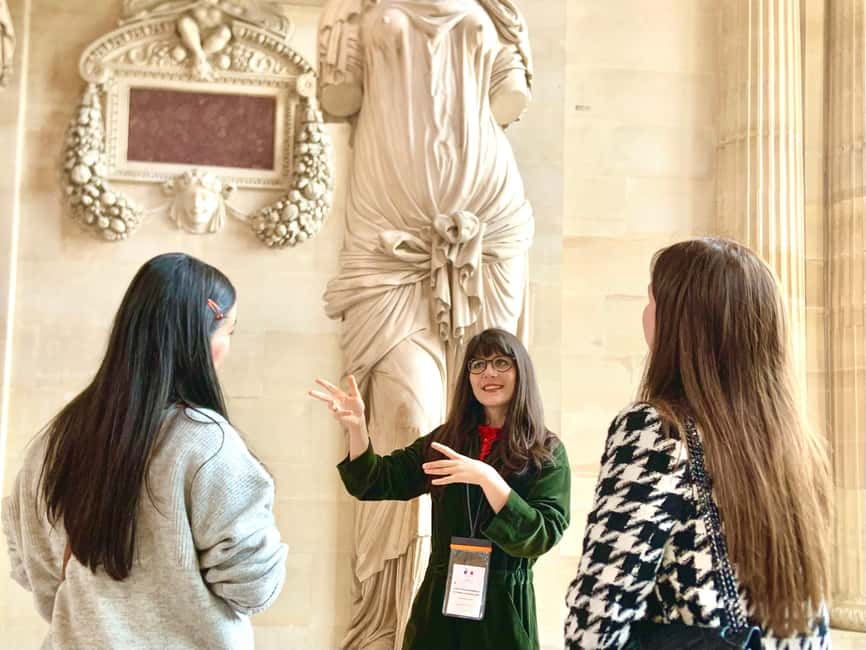
The Venus de Milo gives the tour a different kind of lesson. Here the guide can move from painting technique to sculpture, proportion, balance, and the way a figure suggests an ideal body and pose.
The missing arms are part of the sculpture’s mystery, but the guide’s artist background can shift your attention toward the surviving form: the turn of the torso, the fall of the cloth, and the way the figure holds its weight. You begin to see why a statue can communicate movement even when it is made from solid stone.
This is a good stop for visitors who are not sure they enjoy museums. You do not need a long background in classical art to notice posture, texture, and balance. A clear explanation gives you a small set of tools you can reuse in other galleries.
The possible drawback is crowding. The Louvre’s major statues attract people from every direction, and a small group still has to share the room. Stay close enough to hear the guide, and do not expect the silence or space of a private viewing.
Nike and the feeling of movement in stone
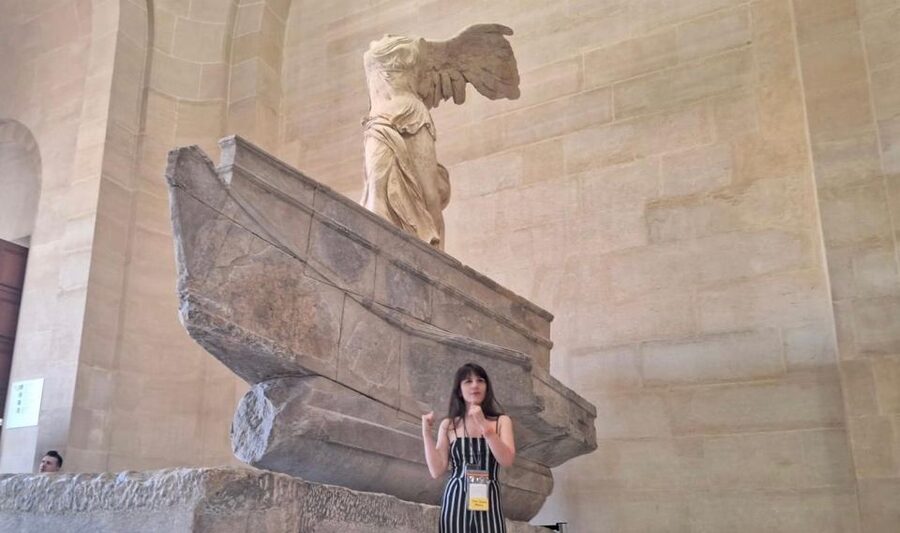
Nike of Samothrace offers one of the clearest examples of how sculpture can suggest motion. The flowing folds of the clothing, the spread of the wings, and the placement at the top of the Daru staircase all contribute to the sense that the figure has just arrived.
The guide can explain how carved fabric is more than decoration. It creates rhythm, shadow, and the impression of wind. You may also look at how the missing head and arms do not prevent the sculpture from feeling active and forceful.
This is where an artist-guide format feels particularly useful. A standard label can tell you the name, date, and material. A practicing artist can point out how the eye travels across the form and why the sculpture feels alive from a distance.
The stairs near Nike are worth considering if you have mobility limitations. One guide adjusted the route to reduce stairs for visitors with mobility issues, but the tour is officially not suitable for wheelchair users. If you have limited mobility but can walk independently, contact the provider before booking and explain your needs. Do not assume the standard route will work for you.
From Greek Antiquity to the Italian Renaissance
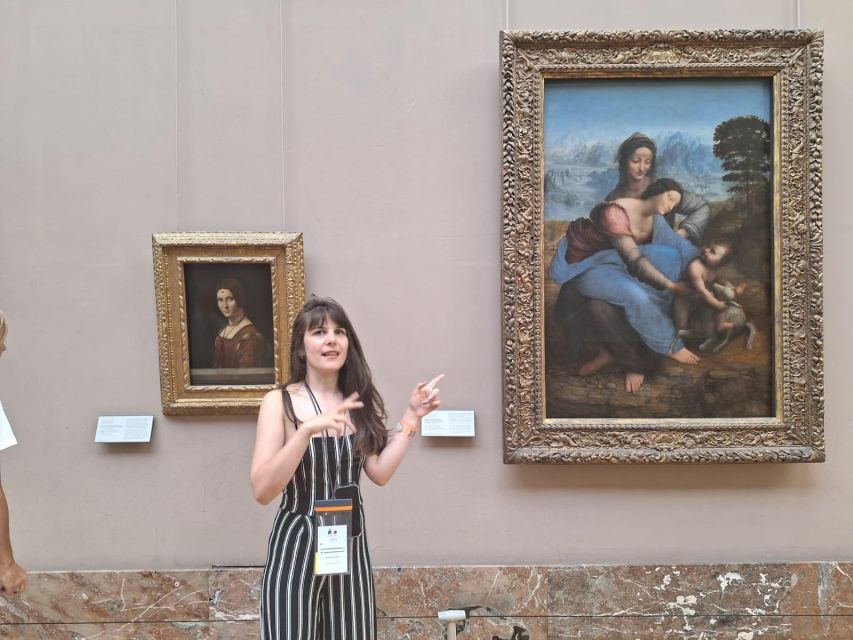
The visit is not only a checklist of three famous objects. It traces a broad movement through Western art, from Greek Antiquity to the Italian Renaissance. That gives the familiar works more meaning.
Greek sculpture can introduce ideas about the human body, ideal form, and movement. Renaissance painting then brings in new attention to perspective, light, anatomy, and individual expression. The guide’s job is to connect those shifts without turning two hours into a lecture.
You will cover a substantial amount of art and physical space in a short time. That is both a strength and a limit. The route gives first-time visitors a useful framework, but it cannot offer a slow reading of every painting or room in the Louvre.
I would treat this as an introduction, not a complete museum visit. Afterward, you may want to return on your own for a particular department or artist. The tour helps you decide where to spend that extra time.
How the small group affects your visit
A maximum of six people is one of the strongest features here. You can ask about a detail, request a little more time at a work, or mention a painting you hoped to see. A large group rarely allows that kind of exchange.
The guides have also worked well with mixed ages. Children aged 11 to 16 have been included in explanations without being treated as an afterthought, and families have been able to ask for stops that matched their interests. That makes the tour a sensible choice if your group includes people who are not naturally drawn to museums.
The format is still shared unless you book a private group. You should expect to follow the guide’s route and accommodate the interests of other participants. If your party wants complete control over timing, language, and focus, ask about the private option.
Languages listed are English, French, and Albanian. If you need a particular language, confirm its availability for your chosen time before paying.
Is $246 worth it for two hours?

At $246 per person, this is an expensive Louvre visit. The price is easiest to justify when you value three things: reserved entry, a very small group, and an art specialist who can make the collection easier to understand.
For a family with limited time, the calculation may work. You avoid spending hours in a public queue, reduce the risk of wandering without a plan, and give teenagers or first-time museumgoers a clear reason to pay attention. Several families found that the guide’s ability to explain art in simple terms made the visit more useful than going alone.
For a solo visitor or couple on a tight budget, the cost requires more thought. The Louvre can be visited in other ways, and two hours is not enough to cover its full collection. You are paying for direction, conversation, entry convenience, and the guide’s artistic viewpoint, not for a long museum session.
A 5/5 rating from 39 published ratings supports the tour’s strong reputation, especially for guide quality and personal attention. Still, ratings cannot remove the basic tradeoff: the price is high, and the museum may be crowded even with reserved access.
Practical details that can make the visit easier
The tour lasts two hours. Check the available start times when booking, since the schedule is not fixed in the information provided.
Cancellation is free up to 24 hours before the start time, and you can reserve now and pay later. That is helpful if your Paris plans are still changing, but you should still check the final booking conditions before confirming.
Bring your passport or ID card. A copy is accepted. Weapons and sharp objects are not allowed, and food and drinks cannot be taken into the museum.
The tour does not include pickup or drop-off. You make your own way to the Kiosque des Noctambules, then continue with the group into the Louvre. The Palais Royal, Musée du Louvre metro station, Place Colette exit is the most useful transport reference given for the meeting point.
Who should book this Louvre tour?
I would choose this tour if you are visiting the Louvre for the first time, have only a few hours, or want more than a list of famous names. It is particularly well suited to families with older children and teenagers, couples who want a focused introduction, and anyone who finds museum labels too dry or the building too confusing.
You should also consider it if the Mona Lisa, Venus de Milo, and Nike are priorities. The guide gives you a practical route to those works while adding context about other important pieces along the way.
I would hesitate if you want a quiet, unhurried museum day, need wheelchair access, or are mainly looking for the lowest-cost entry. The two-hour schedule is focused and active, not leisurely.
Should you book it?
Book this Louvre tour if you want to understand what you are seeing, not simply take photographs of the headline pieces. The artist-guide format, six-person limit, and reserved entry give you a strong two-hour introduction, and guides such as Blerta have shown particular skill with families and curious first-time visitors.
Skip it if $246 feels too steep for a short visit or if you prefer to explore independently. For everyone else, the combination of time saved and better explanations makes this a serious option for a first Louvre visit.
FAQ
Where does the tour meet?
The group meets at the Kiosque des Noctambules, a Murano glass-bead sculpture by Jean-Michel Othoniel across from the Comédie Française. It is near the Palais Royal, Musée du Louvre metro station, using the Place Colette exit.
Does the tour meet at the Louvre Pyramid?
No. You meet at the Kiosque des Noctambules and then go to the Louvre with the guide.
How long does the tour last?
The tour lasts two hours. Starting times vary, so check availability for your preferred date.
What artworks are included?
The route includes the Mona Lisa, Venus de Milo, and Nike, along with major works connected to Greek Antiquity and the Italian Renaissance.
How many people are in the group?
The shared tour is limited to no more than six visitors. A private group option is also available.
Which languages are offered?
Tours are offered in Albanian, English, and French. Confirm the available language for your selected time.
Is museum entry included?
Yes. The tour includes entry tickets to the Louvre Museum and reserved entry through a separate entrance.
Is the tour suitable for wheelchair users?
No. The activity is listed as not suitable for wheelchair users. It is best to ask the provider about any mobility concerns before booking.
What should I bring?
Bring comfortable shoes, a reusable water bottle for before or after the museum, and a passport or ID card. A copy of the ID is accepted.
Can I cancel the booking?
You can cancel up to 24 hours in advance for a full refund. The reserve-now, pay-later option is also available.
Just added in Paris
- Private Transfers in Paris★ 5.0 · 75 reviews
- Disneyland® Paris 1 Day Ticket with Transport from Paris★ 3.5 · 302 reviews
- Personalized Transport service from Disneyland to Paris★ 5.0 · 63 reviews
- CDG – Euro Disney – CDG Two Way Private Shuttle Transfer★ 5.0 · 233 reviews
- Monet’s Gardens & House-Private Giverny Tour From Paris★ 4.5 · 137 reviews
- Giverny Monet House and Gardens Skip the line Walking tour★ 4.0 · 217 reviews
- Guided tour Monet’s house and gardens/small group★ 4.5 · 68 reviews
- Monet’s House and Garden & Giverny Village★ 4.5 · 39 reviews
Louvre Museum Tours, compared.

Louvre Guided Tour with Reserved Access & Boat Cruise
Read our review →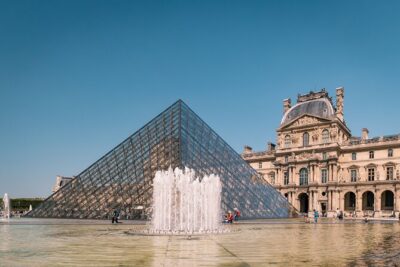
Louvre Museum Masterpieces Guided Tour with Access
Read our review →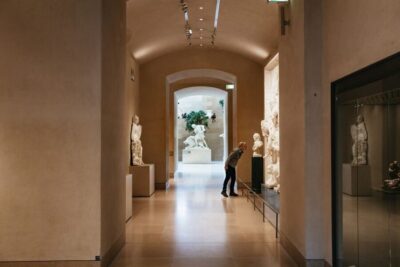
Louvre Museum Entry Ticket With Host and River Cruise
Read our review →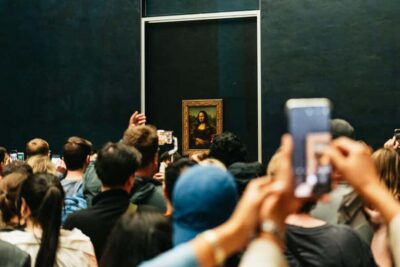
Priority Access Louvre with Host -Direct to Mona Lisa
Read our review →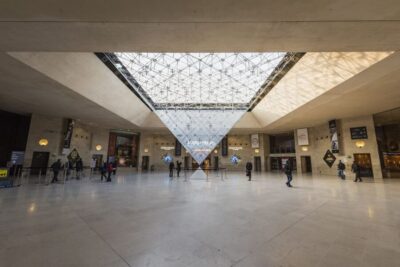
Mona Lisa & Louvre Masterpieces Tour with Reserved Access
Read our review →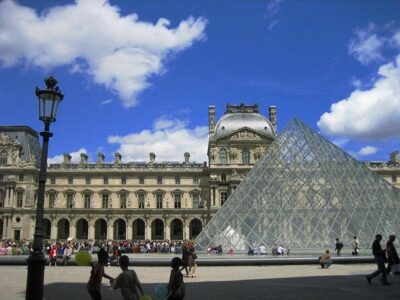
Louvre Museum – Exclusive Guided Tour (Entry Included)
Read our review →
Louvre Reserved Ticket and River Cruise Combo
Read our review →Browse the lists this tour appears in