
Reviewed · PASTRY & CHOCOLATE WORKSHOPS
Paris: Macarons Class, Teatime and To-Go Box
The hardest part of a macaron is not eating one. It is getting the shells smooth, light, and properly shaped. This small class at Le Foodist tackles that challenge with the Italian meringue method, then lets you pipe, fill, bake, and pack up your results. I like the practical focus and the fact that you leave with recipes, not just a sugar rush.
I also like the generous finish: you sit down for tea, coffee, fruit juice, and your own macarons, while your instructor explains the pastry’s story and shares a few French culture tales. The main consideration is that the class costs $152 per person, and the kitchen is for participants only, so a nonparticipating adult cannot simply tag along with a child.
Key points
- Italian meringue method: Learn the more demanding technique that gives beginners a reliable foundation for making macarons at home.
- Small English-speaking group: Classes are limited to six participants, with earlier sessions often described as intimate and personal.
- Hands-on from start to finish: You pipe the shells, add color, make a ganache or curd filling, and help create the finished pastries.
- A proper Paris pause: The class ends with tea, coffee, juice, stories, and time to taste what you made.
- A useful souvenir: You take home a box of your macarons plus recipes in printed and electronic form.
- Good for older children: Children under 12 cannot participate, while ages 12 to 16 must attend with a participating adult.
Making macarons the French way at Le Foodist
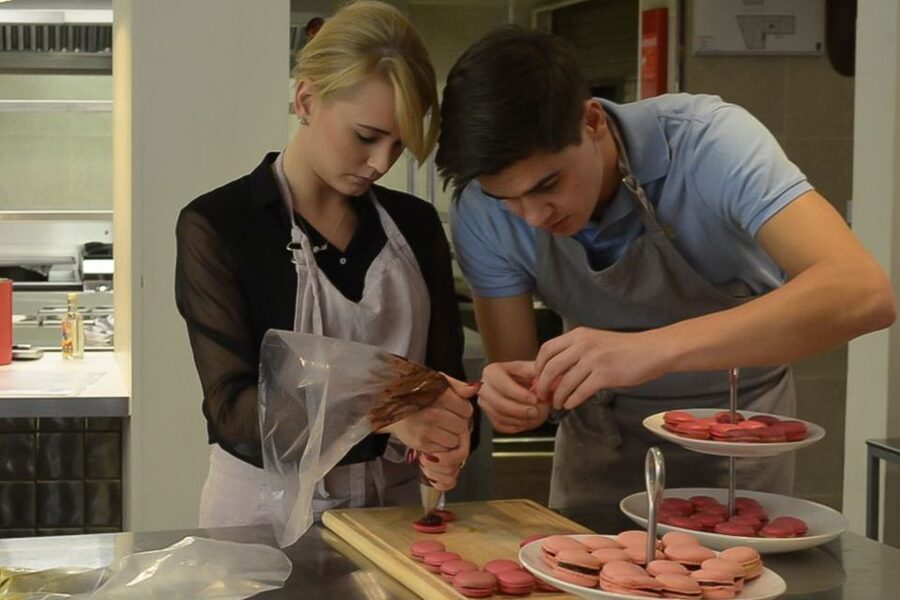
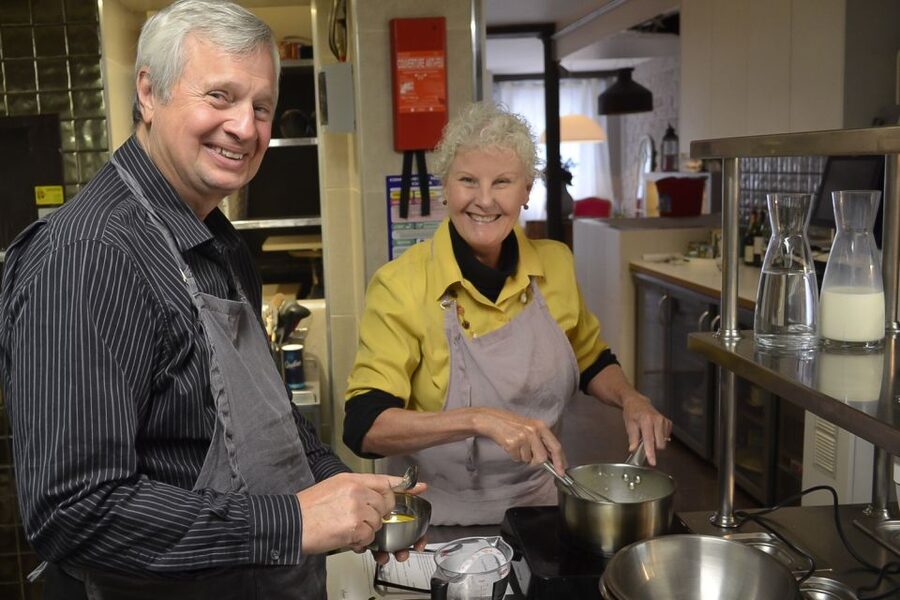
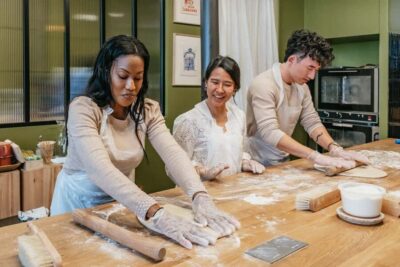
This is not a demonstration where you sit at a counter and watch a pastry chef do all the work. You put on an apron, handle the ingredients, pipe the shells, prepare the filling, and take part in the full process.
The class takes place at Le Foodist, at 59 Rue Cardinal Lemoine in the 5th arrondissement. The location puts you in a central Paris neighborhood, but the address can be easy to miss if you hurry. One past participant found the street difficult to locate and took a taxi to arrive on time, so give yourself a little extra time to find the door.
The format is compact. The macarons class itself lasts about two hours, followed by teatime and conversation, for a total of three hours. That is long enough to learn a real technique without turning the activity into an all-day commitment.
Groups are limited to six participants in the current format, though some older sessions had as many as eight people. Either way, this is far smaller than a large sightseeing group. The smaller size matters because macaron work is fussy. You want to be able to ask why your batter looks too thick, where to hold the piping bag, or whether your shells have been mixed enough.
The instruction is in English. Different sessions may be led by different chefs, including Anne, Amanda, Fanny, Florence, Hugo, Luc, Frédéric, and Stéphane Jimenez. Stéphane has been described as a head pastry chef at The French Laundry, while other instructors are praised for their patience, humor, and clear explanations. The teaching style can vary from chef to chef, but the basic goal stays the same: make a technical pastry approachable for a first-timer.
Other pastry and chocolate sessions around Paris:
- Paris: Montmartre Cheese, Wine & Pastry Guided Walking Tour
★ 4.8 · 2,255 reviews - Award-Winning Paris French Bakery Experience — Le Marais, 4th Arr
★ 4.5 · 1,186 reviews - Paris: Entrance Ticket to the Chocolate Museum
★ 4.1 · 1,105 reviews
Why the Italian meringue method matters
Macarons have a reputation for being small but difficult. The shells can crack, spread, lose their feet, or turn hollow. You can follow a recipe closely and still wonder what went wrong.
This class uses the Italian meringue method. Instead of simply whipping egg whites with sugar, you work with a hot sugar syrup and incorporate it into the meringue. It takes more care than the simpler French method, but it is also more stable and dependable once you understand the steps.
That makes this a good class for you if you want more than a pretty holiday activity. You learn why the texture matters, how the mixture should behave, and how careful mixing affects the final shell. The instruction is aimed at beginners, but the method gives experienced home bakers something useful to take away as well.
You will also learn to add color to the shells. This sounds simple, but a little too much liquid or careless mixing can change the batter. The class gives you a chance to see these details under supervision instead of discovering them alone after buying expensive almond flour and supplies.
The piping stage is another strong reason to book. Even batter will not produce neat macarons if you hold the bag at the wrong angle or squeeze unevenly. Your instructor shows you how to pipe the rounds and helps correct problems as you work.
Piping, filling, and baking your own batch
The hands-on section moves through several separate jobs. You work with the prepared macaron mixture, pipe the shells, and add color. Then you prepare a filling, such as a ganache or curd, before pairing the baked shells.
The exact flavors can vary by session. One class produced four different flavors, while the listed format specifically includes making a ganache or curd filling. Do not book expecting one fixed menu unless the provider confirms it for your date.
You should expect to work steadily. One family described the two-hour class as nearly nonstop activity, which is helpful to know if you imagine a relaxed pastry tasting with occasional stirring. This is a working kitchen class. You will be measuring, mixing, piping, checking, and assembling.
The payoff is that you can see the process from raw ingredients to finished box. Many cooking activities give you a taste but little sense of how to repeat the dish. Here, the printed recipe is provided during the lesson, and an electronic copy is also included. Having the recipe during class gives you a chance to write notes beside the instructions, such as how the mixture looked at a certain stage or how much filling you preferred.
One participant wished the printed recipe had included more of the chef’s personal tips. That is a fair limitation. You receive the recipe, but you may need to take your own notes if you want to capture the small corrections and timing advice that make a difference at home.
All equipment and an apron are included. You also avoid the cleanup, which is a genuine benefit during a short Paris stay. You can spend the afternoon learning and tasting instead of washing mixing bowls in a rented apartment.
Teatime with macarons and French stories
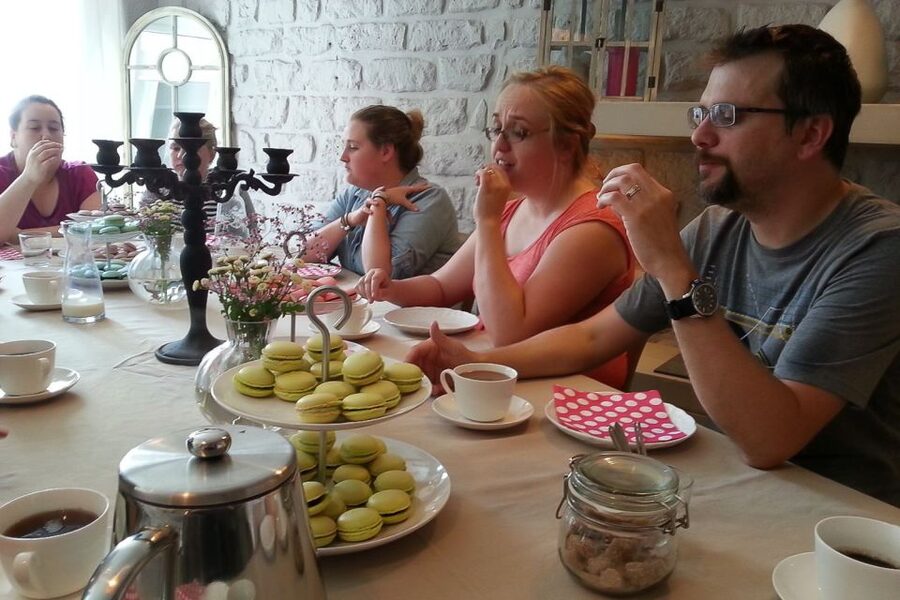
After the active cooking, the mood changes. You sit down with tea, coffee, fruit juices, and some of the macarons you made. This is not just a final snack. It gives the class a social finish and lets you compare the texture of the shells while the process is still fresh in your mind.
Your host uses this time to explain the story of the macaron and share a few other pieces of French culture. The tone is described as entertaining and sometimes tongue in cheek, so you can expect more than a formal pastry lecture.
I like this part because it connects the food to French daily life. Macarons are now associated with polished pastry shops and gift boxes, but making them yourself helps you understand how much technique sits behind their tidy appearance. The conversation also gives the class a natural chance to slow down and meet the other people at your worktable.
The group setting is part of the experience. Couples, families, teenagers, and solo participants can all work together, and several sessions included people from different countries. If you enjoy talking with strangers over food, this can be a pleasant way to spend three hours in Paris.
If you have a tight schedule afterward, leave enough time. One participant had booked a taxi that arrived early and missed some of the relaxed social time at the end. The formal class ends after three hours, but the last part is where you can sit, eat, and ask final questions.
Same base, a different kind of day:
- Paris: Louvre Museum Timed-Entrance Ticket
★ 4.6 · 71,977 reviews - Disneyland® Paris 1-Day Ticket
★ 4.6 · 49,412 reviews - Paris: Versailles Palace and Gardens Full Access Ticket
★ 4.6 · 41,579 reviews - Paris: Evening River Cruise with Music
★ 4.4 · 22,721 reviews
The box you take home
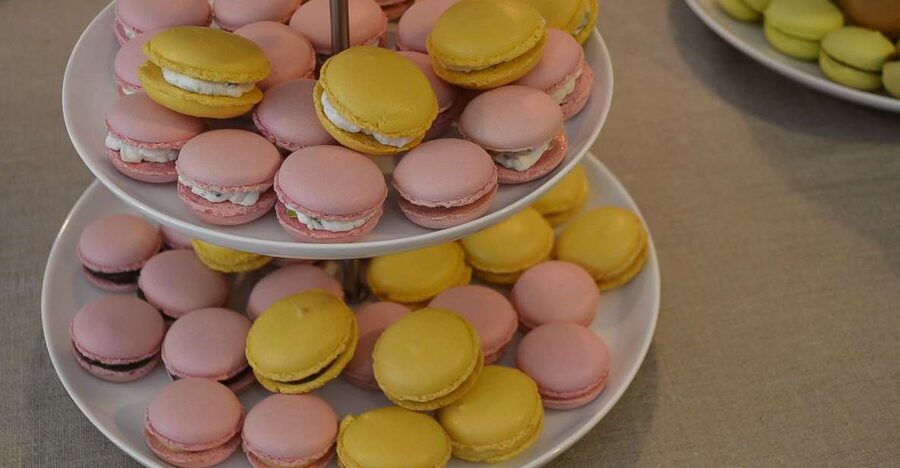
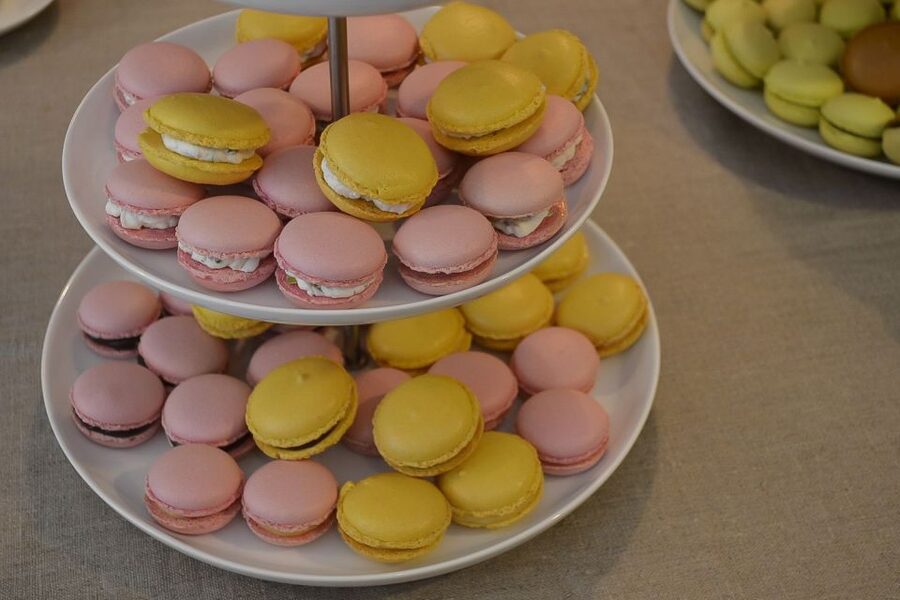
The take-home box is one of the best practical features. You do not merely taste one or two macarons before walking away. You leave with a substantial supply of your own creations, enough to share with family and friends or enjoy over the following days.
The exact quantity can vary. Some participants described taking home a large box, while one family left with two boxes. Treat those comments as a general guide rather than a guaranteed count. The main point is that the class produces enough for the result to feel like a souvenir, not just a sample.
Pack the box carefully into your day. The activity includes the box, but no special transport container or long-term storage service is specified. If you plan to spend hours walking around Paris afterward, you may prefer to return to your hotel first, especially in warm weather.
For children and teenagers, the box adds a clear sense of accomplishment. They can point to the finished pastries and say they made them, rather than simply having watched a chef work. Adults get the same satisfaction, especially if they normally consider baking too technical.
Is $152 a good value?
At $152 per person, this is not a cheap way to get a dessert. Paris has plenty of bakeries where you can buy excellent macarons for far less.
The value comes from the complete package. You receive roughly two hours of instruction, access to equipment and an apron, an English-speaking chef, teatime, drinks, cultural stories, recipes in two formats, and a box of your own pastries. The small group size also means your payment covers personal help with a technique that is easy to get wrong.
I would compare it to other premium Paris cooking classes, not to the price of a bakery box. If you want a souvenir you can eat and a skill you can try again at home, the price is easier to justify. If you simply want to taste macarons, buy them at a pastry shop and spend the remaining money on another experience.
The class is especially good value for a family that wants a shared activity. Several parents brought teenagers, and the children stayed active rather than sitting on the sidelines. Still, every person entering the kitchen needs to be a paid participant, so you should not assume that one adult can supervise a child without joining the class.
Age rules and who should book
Children under 12 cannot participate. Ages 12 through 16 must attend with a participating adult, and there are no childcare or crèche facilities.
That rule matters for families. A 14-year-old can take part, but the accompanying adult must also book a place and work in the kitchen. Only participants may enter the kitchen, so an observing parent cannot stand nearby and take photos while a child does the class.
The activity suits first-time bakers particularly well. Several instructors have been praised for patience, clear explanations, and making people feel comfortable even when they had little cooking experience. You do not need to arrive as a pastry expert.
It also suits couples and older children looking for something different from museums and monuments. The class has enough structure to keep you busy, but enough conversation to feel social. A solo participant can join, too, though the experience works best if you are comfortable sharing a worktable and collaborating with a small group.
I would skip it if you dislike precise cooking tasks, sweet foods, or group activities. Macaron making requires attention, and the class is not designed as a passive sightseeing stop.
Timing, cancellation, and planning your day
The activity lasts three hours, but starting times vary. Check the available session when you book and build your Paris day around it rather than trying to squeeze it between two timed attractions.
The meeting point is Le Foodist, 59 Rue Cardinal Lemoine, 75005 Paris. Since the street can be tricky to find, plan to arrive early. A rushed arrival is a poor start for a class that depends on careful steps.
Free cancellation is available up to 24 hours in advance for a full refund. You can also reserve and pay later, which is useful if your Paris schedule is still shifting. These policies do not change the class itself, but they reduce the risk of committing too early to a busy itinerary.
The instructor language is English. If you need another language, this is not the right choice based on the information provided.
What makes this class different from a bakery visit
A bakery visit gives you the polished final product. This class shows you the messy middle, including the piping, mixing, and small adjustments that make the final macaron work.
That difference is important. You may leave with a better eye for quality, too. Smooth shells, a balanced filling, and a light texture stop being abstract descriptions when you have just handled the batter yourself.
The class also gives you a story to carry home. You learn about the macaron while eating one, then receive the tools to try again. The first batch at home may not be perfect, but the Italian meringue technique, printed recipe, and notes from the chef give you a reasonable starting point.
I would not treat the activity as a professional pastry qualification. It is a well-organized beginner class with expert guidance, not a substitute for a culinary school. Its strength is that it makes a demanding pastry feel possible within one Paris afternoon.
Should you book the Paris macaron class?
Book it if you want an active food experience, prefer small groups, and like the idea of returning home with both a recipe and a box of pastries. It is particularly well suited to couples, families with children aged 12 and older, and first-time bakers who want patient help.
Think twice if $152 feels high for a dessert activity, if you need childcare, or if your schedule cannot spare a full three hours. You can buy macarons more cheaply, but you cannot buy the hands-on lesson, the teatime conversation, and the satisfaction of piping your own batch at a pastry counter.
For me, the strongest reason to choose it is the balance between work and pleasure. You learn a demanding French technique, enjoy a calm teatime, and leave with something made by your own hands. That is a more lasting Paris souvenir than another box picked up on the way to the métro.
FAQ
Where does the macaron class take place?
The class meets at Le Foodist, 59 Rue Cardinal Lemoine, 75005 Paris. The address can be difficult to find, so arriving early is sensible.
How long does the experience last?
The full experience lasts three hours. About two hours are devoted to hands-on macaron instruction, followed by teatime, drinks, stories, and tasting.
Is the class taught in English?
Yes. The listed instructor language is English.
What macaron technique will I learn?
You will learn the Italian meringue method. The class also covers piping, coloring the shells, and preparing a ganache or curd filling.
Are children allowed to participate?
Children under 12 cannot participate. Children aged 12 to 16 must be accompanied by a participating adult.
Can a parent observe without taking part?
No. Only participants may enter the kitchen, and there are no childcare or crèche facilities.
What is included in the price?
The price includes the two-hour class, cooking equipment, an apron, teatime with tea, coffee and fruit juices, cultural stories, recipes in printed and electronic formats, and a box of your macarons to take away.
Just added in Paris
- Private Transfers in Paris★ 5.0 · 75 reviews
- Disneyland® Paris 1 Day Ticket with Transport from Paris★ 3.5 · 302 reviews
- Personalized Transport service from Disneyland to Paris★ 5.0 · 63 reviews
- CDG – Euro Disney – CDG Two Way Private Shuttle Transfer★ 5.0 · 233 reviews
- Monet’s Gardens & House-Private Giverny Tour From Paris★ 4.5 · 137 reviews
- Giverny Monet House and Gardens Skip the line Walking tour★ 4.0 · 217 reviews
- Guided tour Monet’s house and gardens/small group★ 4.5 · 68 reviews
- Monet’s House and Garden & Giverny Village★ 4.5 · 39 reviews
Pastry & Chocolate Workshops, compared.
Montmartre Cheese, Wine & Pastry Guided Walking Tour
Read our review →
Award-Winning Paris French Bakery Experience — Le Marais, 4th Arr
Read our review →
Private Montmartre Food Tour with Wine, Cheese & Pastries
Read our review →
Paris French Sweets Tasting Tour with Pastries and Chocolates
Read our review →
Paris Croissant Small-Group Baking Class with a Chef
Read our review →
Browse the lists this tour appears in