

Reviewed · MONTMARTRE TOURS
Paris: Le Marais & Montmartre Jewish History Walking Tour
Paris reveals two very different sides of Jewish life on this 210-minute walking tour. In Le Marais, you follow centuries of community, worship, trade, persecution, and survival. In Montmartre, you connect Jewish artists and writers with the cafés, studios, and streets that helped shape modern Paris. Guides such as Benjamin, Benoit, and Pierre-Louis have been praised for clear storytelling and a thoughtful approach to painful subjects.
I especially like the way the tour links the solemn Shoah Memorial with ordinary neighborhood life, including food shops and falafel stops near the old Jewish quarter. I also like the small-group format, capped at nine people, which gives you room to ask questions. The main drawback is the pace: three and a half hours of walking, stairs, city crossings, and public transport can feel long, especially in rain or heat.
Key points before you book
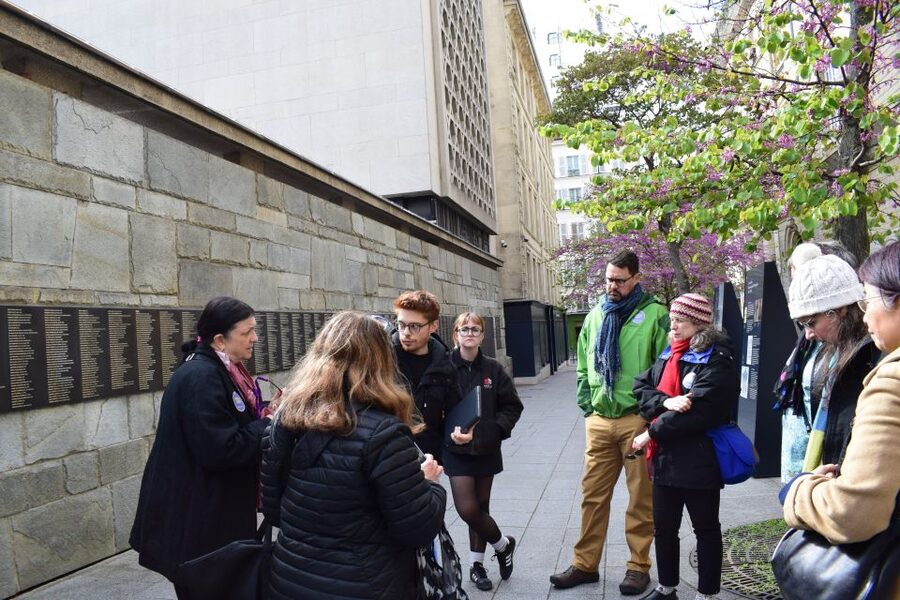
- Two neighborhoods, two very different stories: Le Marais focuses on Jewish community life and memory, while Montmartre adds art, literature, and bohemian Paris.
- A serious visit to the Shoah Memorial: The exterior memorial and wall of names bring the history of the Holocaust into sharp focus.
- Hector Guimard’s synagogue is viewed from outside: The Art Nouveau design is striking, but synagogue interiors are not included.
- Small groups make the history more personal: Groups of up to nine allow for questions and a more flexible conversation.
- Public transport connects the districts: A ticket is included, but you still need to move through Paris during the tour.
- The final reward is Sacré-Cœur: The walk ends near Square Louise-Michel with broad views across Paris.
Starting in Le Marais, where Jewish Paris feels most tangible
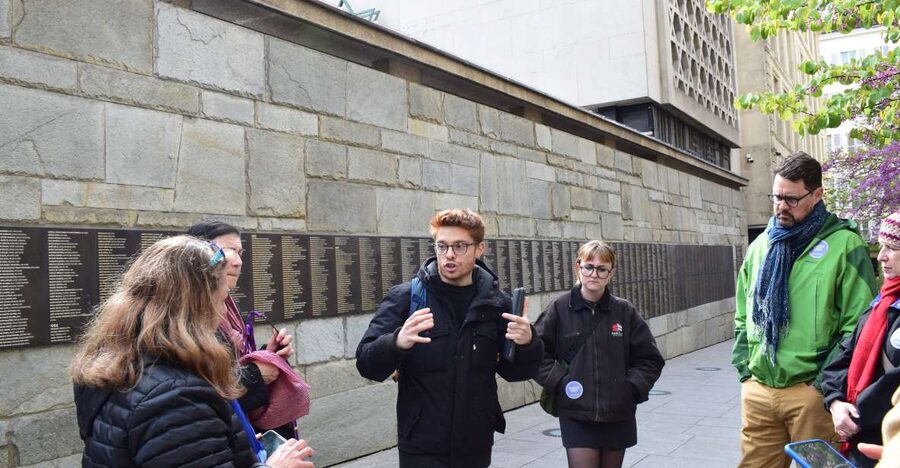
The meeting point may be at BHV Marais or L’Eléphant du Nil, depending on the option you choose. Check the exact location carefully. BHV has several entrances, and one person had trouble identifying the right one. Arrive 15 minutes early, since joining after the walk begins is not possible.
Le Marais is the right place to begin because Jewish Paris here is not presented as a distant museum subject. You walk through a living neighborhood with Jewish-owned businesses, food shops, restaurants, and streets that still carry traces of earlier community life. At the same time, much of the old district has changed, so you need a guide to explain what has disappeared or moved.
That point matters. You will not find a preserved Jewish quarter at every turn. Some of the history survives in buildings and street patterns, while other parts survive only through documents, memorials, and stories. One part of the tour spends time explaining what used to be in a location, which can feel less visually dramatic than visiting a fully intact historic district. The trade-off is a more honest picture of how cities change.
Your guide places Jewish life in the wider story of France, from the Middle Ages through the modern era. The best guides on this route, including Benjamin, Benoit, Pierre-Louis, Pilu, and Achilles in past departures, have been praised for making complicated events easy to follow without reducing them to a string of dates.
More walking tours in Paris:
- Paris Top Sights Half Day Walking Tour with a Fun Guide
★ 5.0 · 2,893 reviews - Montmartre Hidden Gems and Scenic Highlights Walking Tour
★ 5.0 · 2,684 reviews - Montmartre Hill French Gourmet Food and Wine Tasting Walking Tour
★ 5.0 · 2,588 reviews
Village Saint-Paul and the everyday life of an old neighborhood
The walk includes Le Village Saint-Paul, an area of narrow streets and courtyards in the Marais. This part of the route helps you picture how ordinary life once worked: people lived near their businesses, formed local networks, worshipped nearby, and built a community within the larger city.
Do not expect every stop to offer a grand monument. The value is in the connections your guide makes between streets, buildings, migration, religion, commerce, and the changing shape of Paris. This is also where a small group helps. You can pause to ask how a particular place fits into the story instead of simply keeping up with a large crowd.
Le Marais today is also known for fashion, restaurants, independent shops, and LGBTQ+ life. The tour gives you a taste of that present-day character while focusing on Jewish Paris. That mix is useful because it prevents the neighborhood from becoming a frozen historical display. You see how different communities and eras overlap in the same few blocks.
Agoudas Hakehilos and Hector Guimard’s Art Nouveau design
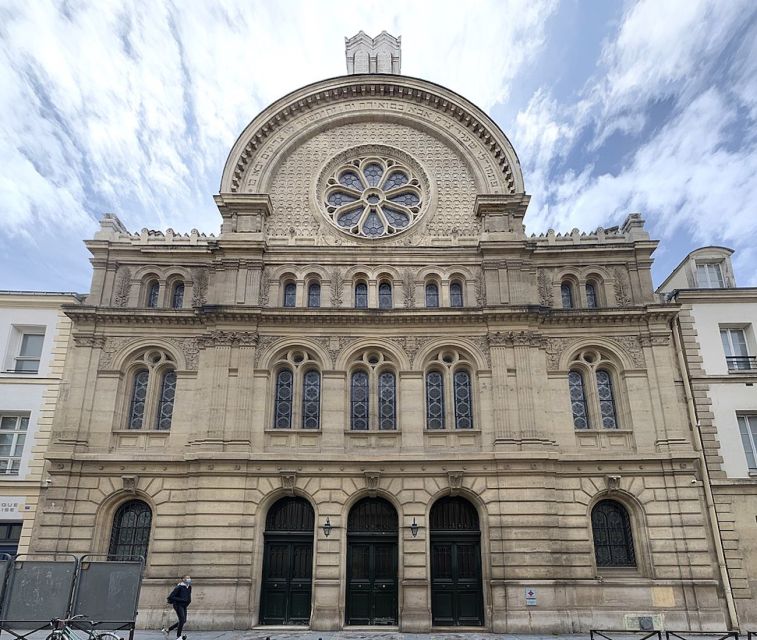
One of the visual highlights is the exterior of Agoudas Hakehilos Synagogue, designed by Hector Guimard. Guimard is best known for the decorative entrances he created for the Paris Métro, and this synagogue shows the same interest in flowing Art Nouveau forms.
The building is worth seeing even if you are not an architecture specialist. Your guide explains how the design fits both the artistic culture of Paris and the needs of a Jewish congregation. It is a good example of how religious buildings can express identity while also responding to the city around them.
Set your expectations correctly: the synagogue interior is not included. This is an exterior visit, and the tour does not include entry to monuments or historical sites. If you want to see inside, you will need to make separate plans and check access rules.
The Shoah Memorial, a quiet and serious pause
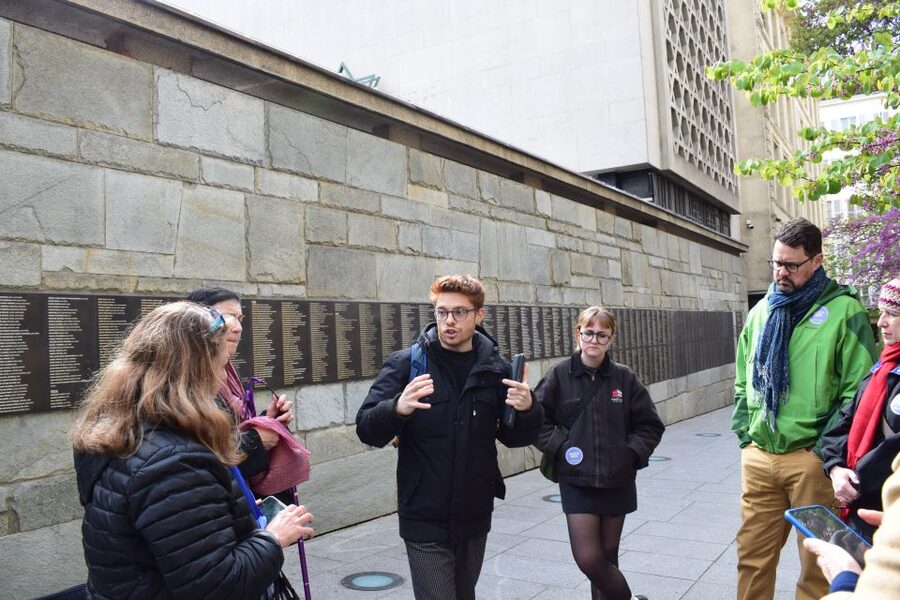
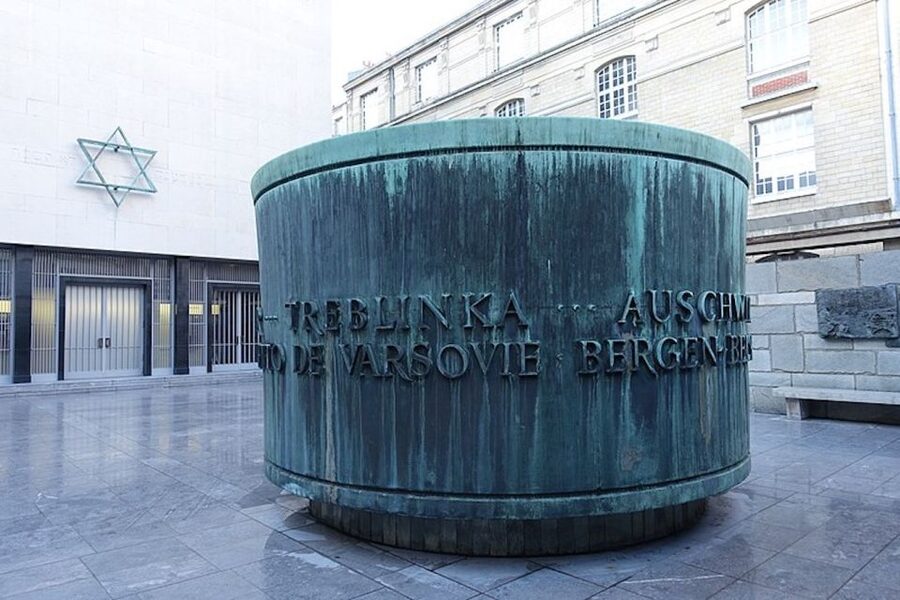
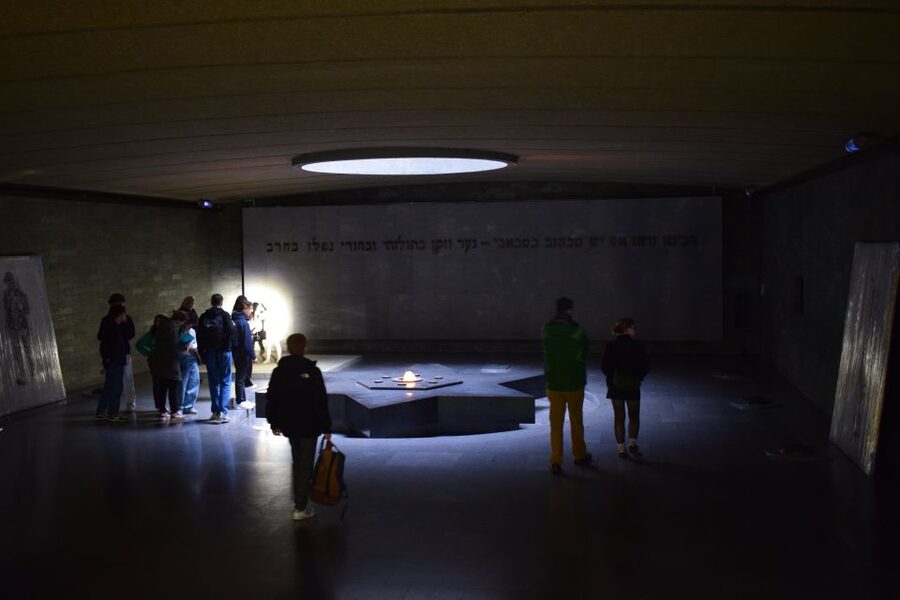
The Shoah Memorial is the emotional center of the Le Marais section. From the exterior, you can see the wall of names and learn about the memorial’s purpose. The stop also addresses the Nazi occupation, the murder of French Jews during the Second World War, and the French people who helped others escape or survive.
This is difficult material, and the guide’s tone matters. Several guides have been praised for handling the subject with care and for answering sensitive questions without turning the stop into a political argument. The strongest part of the experience is the connection between the memorial and the surrounding streets. You are not learning about an event in an isolated building. You are standing in the neighborhood where people lived before their lives were shattered.
Give yourself a little emotional space here. The tour continues afterward, but this is not a quick photo stop. The wall of names and the memorial design ask you to slow down and listen.
Other walks around Montmartre from Paris:
- Paris: Montmartre Cheese, Wine & Pastry Guided Walking Tour
★ 4.8 · 2,255 reviews - Paris: Montmartre Highlights Walking Tour with a Local Guide
★ 4.9 · 1,668 reviews - Paris: Sacré-Coeur and Montmartre Tour with Expert Guide
★ 4.1 · 1,027 reviews - Private Montmartre Food Tour with Wine, Cheese & Pastries
★ 5.0 · 1,027 reviews
From Hôtel de Ville to Montmartre by public transport
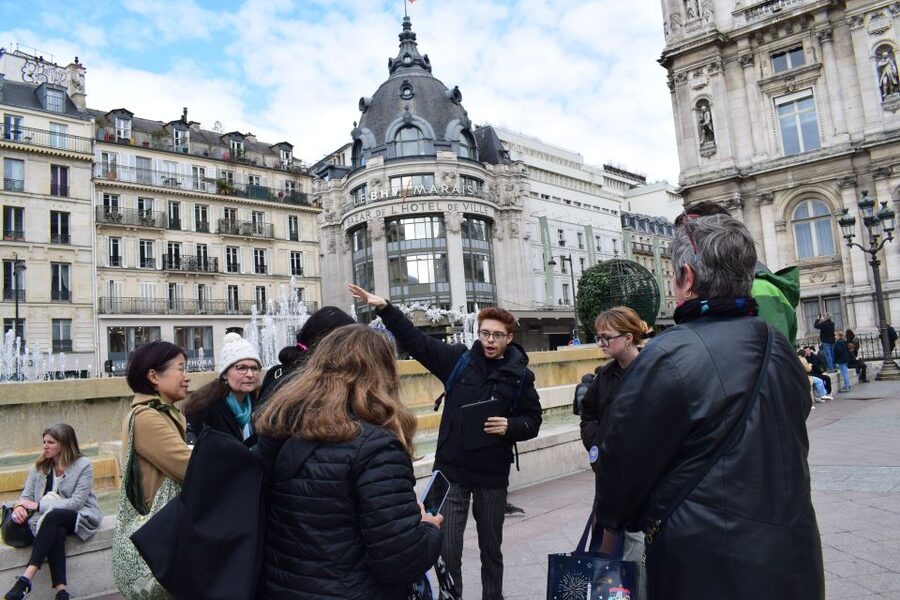
The Le Marais section ends near Hôtel de Ville, Paris’s City Hall. From there, the group uses public transport to reach Montmartre, with the ticket included in the tour price.
This transfer is practical rather than scenic. It breaks the walk into two parts and lets you cover two districts that are too far apart for a sensible continuous walk. Still, public transport adds a change of pace and requires you to stay with the group. Keep your belongings close and pay attention to the guide during the transfer.
Montmartre feels very different from Le Marais. The first district centers on community, religion, memory, and urban change. The second turns toward artists, writers, cafés, studios, and the creative circles of the late 19th and early 20th centuries.
Montmartre’s Jewish artists and the bohemian city
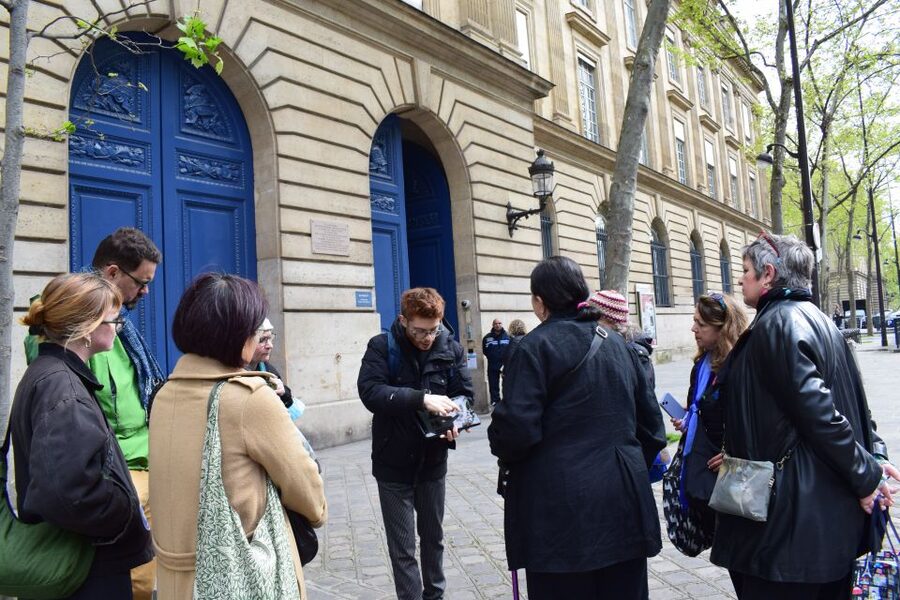
The Montmartre section explores the part Jewish artists, writers, and thinkers played in the neighborhood’s cultural life. The guide connects individual places with the wider creative world that formed around Montmartre.
This is not an art museum tour. You pass locations and hear the stories tied to them, including 7 Rue Ravignan, Le Bateau-Lavoir, the Musée de Montmartre, and 16 Rue du Mont-Cenis. The route is strongest when the guide explains how studios, cafés, friendships, and artistic circles encouraged new work.
At 7 Rue Ravignan, the story centers on the building associated with artists and writers. Le Bateau-Lavoir adds another layer to Montmartre’s artistic past. You pass the Musée de Montmartre rather than entering it, so the stop gives you context for the neighborhood without adding a museum visit or admission fee.
At 16 Rue du Mont-Cenis, the route continues through Montmartre’s uphill streets. The walk is scenic, but it is not flat. Cobblestones, inclines, stairs, and crowds can make this section tiring. People with mobility impairments and wheelchair users should choose a different activity.
Some travelers have found the walking demanding after a long day. I would schedule this tour when you have fresh legs, not after a full morning of museums and several miles around Paris.
Sacré-Cœur and the view at the end
The route finishes at Sacré-Cœur Basilica and Square Louise-Michel. You see the basilica as a landmark and take in the wide view over Paris. The ending works well because it shifts the mood from difficult history toward reflection, art, and the city itself.
The view is open and expansive, especially from the steps below the basilica. Your guide ties the scene back to Jewish identity, artistic expression, and the many people who shaped Montmartre. Sacré-Cœur is not a Jewish site, so it is important to understand its role here. It provides the setting for the final conversation rather than serving as the main subject of the tour.
You do not receive an indoor monument visit as part of the experience. The route ends outdoors near Square Louise-Michel, leaving you free to continue exploring Montmartre afterward.
The guides make or break a history walk
The most consistent strength of this experience is the guiding. Benjamin has been praised for combining historical detail with the current character of Le Marais. Benoit is known for bringing together French history, Jewish life, the Holocaust Memorial, and useful food advice. Pierre-Louis has been described as a strong communicator who makes the past feel connected to the present.
Other past guides, including Achilles, Pilu, Paul-Louis, Pierre, Thomas, Lucien, Elliott, Matthieu, and JP, have also led departures. The exact guide depends on the date and booking, so do not assume you will receive a particular person.
What should you look for in a good guide? Clear English, a calm approach to persecution and genocide, and the ability to answer questions without losing the thread of the tour. This experience covers a long period, sometimes reaching back more than 1,000 years, so the guide must select details carefully.
The strongest departures balance broad context with specific stories. You should come away understanding not only where Jewish Parisians lived, but also how laws, migration, antisemitism, war, art, and daily life shaped the community over time.
Is $80 a fair price?
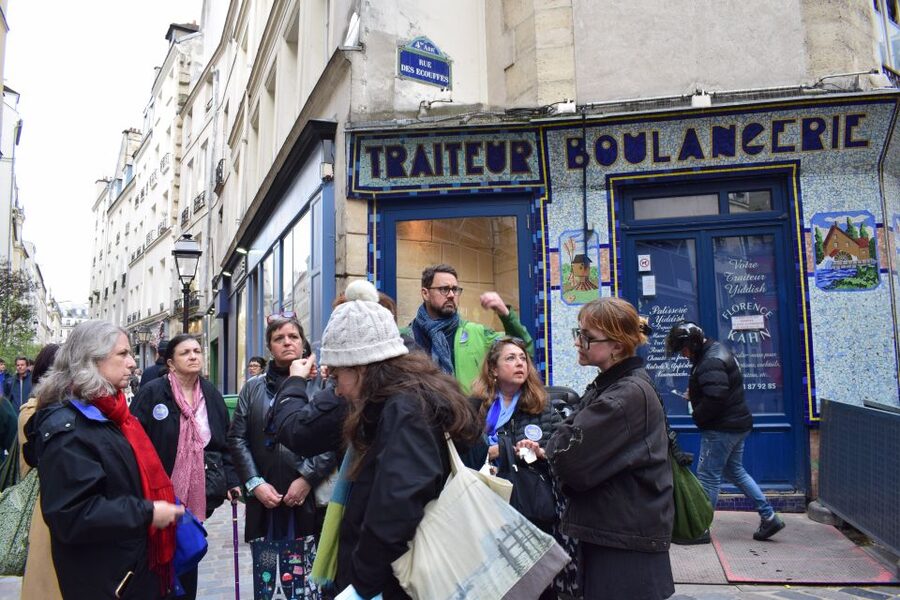
At $80 per person, this is not a bargain walking tour. You are paying for 210 minutes, an English-speaking local guide, a small group of up to nine people, and public transport between the two districts.
The value depends on your interests. If you would walk through Le Marais and Montmartre on your own without seeking Jewish history, you would see the same streets but miss much of the meaning behind them. The tour also saves you the work of sorting through a long and difficult subject while trying to navigate two different parts of Paris.
The price is easier to justify for first-time visitors who want a focused introduction to Jewish Paris, families trying to make history understandable, or anyone with a personal connection to French Jewish life. It is less appealing if you want long indoor visits, synagogue access, museum entry, or a relaxed food tour.
Food is not officially included, but the route finishes near restaurants and Jewish-owned food businesses. Guides have offered falafel and kosher dining suggestions, so you may want to plan a meal after the walk rather than before it.
Practical details that affect your day
Plan for real walking, not a casual stroll. The first section lasts about 90 minutes, the transfer takes about 30 minutes, and the Montmartre section adds another 90 minutes. Wear shoes with good grip and bring water.
Rain does not cancel the historical content, but it can make the experience less comfortable. One departure began in heavy rain and still worked well because the guide kept the group engaged. Heat can be just as tiring, especially on Montmartre’s slopes.
The tour is offered in English, with private or small-group options available. You can cancel up to 24 hours in advance for a full refund and reserve now while paying later, which helps if your Paris schedule is still changing.
Weapons and sharp objects are not allowed. More important for most people, arrive early and make sure you know the correct meeting entrance. A few minutes spent finding BHV Marais is better than starting the day in a panic.
Who should book this walk?
I would recommend it to you if you want history tied to actual streets, prefer a small group, and are comfortable with serious subjects. It suits people who want Jewish Paris presented as part of French history, not as a separate footnote.
It is also a good choice if you have already seen the major Paris monuments and want a more focused neighborhood experience. The tour adds meaning to streets you might otherwise pass without noticing.
I would skip it if you need step-free access, dislike long walks, or mainly want synagogue interiors and museum collections. You should also choose another activity if your main goal is food, since any falafel or restaurant stop is an informal possibility rather than a central included feature.
Should you book the Le Marais and Montmartre Jewish History Walking Tour?
Book it if you want a thoughtful introduction to Jewish Paris and appreciate a guide who can handle difficult history with care. The combination of the Shoah Memorial, Guimard’s synagogue, old community streets, Montmartre’s artists, and Sacré-Cœur gives you a broad view in a single afternoon.
The best reason to choose it is the connection between places that might otherwise seem unrelated. Le Marais shows community and memory. Montmartre shows creativity and cultural exchange. Together, they give you a more layered sense of Jewish life in Paris.
Just arrive early, bring comfortable shoes, prepare for weather, and expect more explanation of lost history than preserved buildings. At $80, it is a worthwhile choice for curious visitors who value context and conversation, but not the right pick for anyone seeking a short, flat, mostly indoor sightseeing tour.
FAQ
How long does the tour last?
The tour lasts 210 minutes, or three and a half hours. It includes about 90 minutes in Le Marais, approximately 30 minutes of public transport, and about 90 minutes in Montmartre.
Is public transport included?
Yes. Public transport tickets for the journey from the Hôtel de Ville area to Montmartre are included.
Can I go inside the synagogue?
No. The tour views Agoudas Hakehilos Synagogue from the exterior. Indoor synagogue visits and entry to monuments or historical sites are not included.
Is the tour suitable for wheelchair users?
No. The activity is not suitable for wheelchair users or people with mobility impairments because it involves extended walking through Le Marais and Montmartre.
Where does the tour meet?
The starting point may be BHV Marais or L’Eléphant du Nil, depending on the option booked. Check your booking details carefully and arrive 15 minutes before the start.
What language is the tour in?
The live tour guide speaks English. Private and small-group options are available.
More history tours in Paris
- Paris: Louvre Museum Entry with History of Mona Lisa
★ 3.9 · 2,823 reviews - Paris: Dark History and Ghostly Guided Walking Tour
★ 4.7 · 1,000 reviews - Explore the Marais: Culture, History & Hidden Gems of Paris
★ 4.6 · 100 reviews - Historic Paris Walking Tour in English
★ 4.9 · 78 reviews
Just added in Paris
- Private Transfers in Paris★ 5.0 · 75 reviews
- Disneyland® Paris 1 Day Ticket with Transport from Paris★ 3.5 · 302 reviews
- Personalized Transport service from Disneyland to Paris★ 5.0 · 63 reviews
- CDG – Euro Disney – CDG Two Way Private Shuttle Transfer★ 5.0 · 233 reviews
- Monet’s Gardens & House-Private Giverny Tour From Paris★ 4.5 · 137 reviews
- Giverny Monet House and Gardens Skip the line Walking tour★ 4.0 · 217 reviews
- Guided tour Monet’s house and gardens/small group★ 4.5 · 68 reviews
- Monet’s House and Garden & Giverny Village★ 4.5 · 39 reviews
Montmartre Tours, compared.

Montmartre Hidden Gems and Scenic Highlights Walking Tour
Read our review →
Montmartre Hill French Gourmet Food and Wine Tasting Walking Tour
Read our review →
Montmartre Cheese, Wine & Pastry Guided Walking Tour
Read our review →
Montmartre Highlights Walking Tour with a Local Guide
Read our review →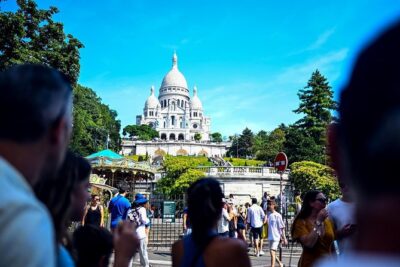
Private Montmartre Food Tour with Wine, Cheese & Pastries
Read our review →
Paris Montmartre Food Tour – A Full French Meal by Do Eat Better
Read our review →
Hidden Montmartre: Paris’ Secret Streets Walking Tour
Read our review →
Paris Montmartre Food & Wine Tour with Eating Europe
Read our review →Browse the lists this tour appears in