
Reviewed · WINE TOURS
Bordeaux: Guided Food and Wine Tour with Tastings
Bordeaux reveals itself bite by bite on this three-hour walking tour. You’ll taste a fresh croissant, canelé, cheese, chocolate, cream-filled pastry, a daily French dish, and three regional wines while moving through the old center. The food is the main event, but the city’s churches, bell tower, cafés, and grand streets give every stop a sense of place.
I like the small group of 10 or fewer, which makes it easier to ask questions and hear the guide in busy streets. I also like the mix of working food shops and landmarks, especially the family chocolate business dating to 1915 and the cheesemonger’s lesson on French regional differences.
The main consideration is pace. You’ll eat a lot, walk steadily, and spend much of the tour on your feet. Seating is limited, and the tour is not suitable for wheelchairs, strollers, or people with gluten intolerance or vegan diets.
Key points to know before booking
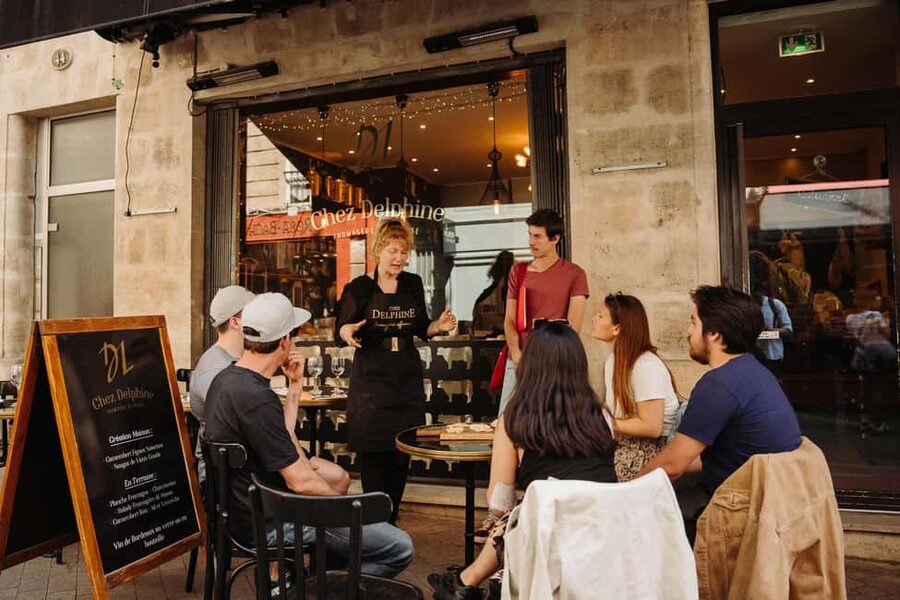
- Six food stops bring 9 or more tastes, including bakery goods, Bordeaux canelés, cheese, chocolate, a savory daily dish, and pastry.
- Three regional wines are included, with the final tasting led by two brothers at a local wine bar.
- The route links food with Bordeaux landmarks, including La Grosse Cloche, Pey-Berland, Bordeaux Cathedral, and Place Gambetta.
- The group is capped at 10 people, giving the English-speaking guide room to explain ingredients, customs, and city history.
- Come hungry and wear comfortable shoes, since the portions add up and the route is a moderate walking tour.
- Dietary planning matters, since vegetarian, pescatarian, dairy-free, non-alcoholic, and pregnancy-friendly adjustments are possible, but vegan, kosher, and gluten-free diets cannot be accommodated.
Why food is a smart way to see Bordeaux
Bordeaux is famous for wine, but this tour avoids treating the city as just a place for vineyard excursions. You stay in the historic center and use food to understand how people eat, shop, work, and socialize here.
That approach suits a first visit. Instead of spending three hours only inside tasting rooms, you pass through streets near the city hall, the Triangle d’Or, the cathedral, and the old bell tower. The guide connects each bite to Bordeaux, France, or the wider southwest rather than simply handing you food and moving on.
The experience costs $116 per person. That is not a small amount for a three-hour walk, but it includes at least nine tastes, six food stops, three wines, a local guide, and a compact introduction to central Bordeaux. If you bought a pastry, lunch, cheese, chocolate, and several glasses of wine separately, the price would not seem out of line. The value is strongest if you want one organized introduction early in your stay and plan to use the guide’s food suggestions afterward.
You should not book this as a formal wine course or a full restaurant meal. It is a moving tasting route with several small servings. One dish is a homemade plat du jour, but the tour is built around variety rather than one long lunch.
More food tours in Bordeaux:
- Saint-Emilion Afternoon Wine Tour – 2 Wineries & delicacies
★ 5.0 · 614 reviews - Bordeaux Food Tour – A Full French Meal by Do Eat Better
★ 5.0 · 357 reviews - Saint-Emilion Food and Wine Day Tour
★ 5.0 · 323 reviews
Starting near Église Saint-Paul and La Grosse Cloche
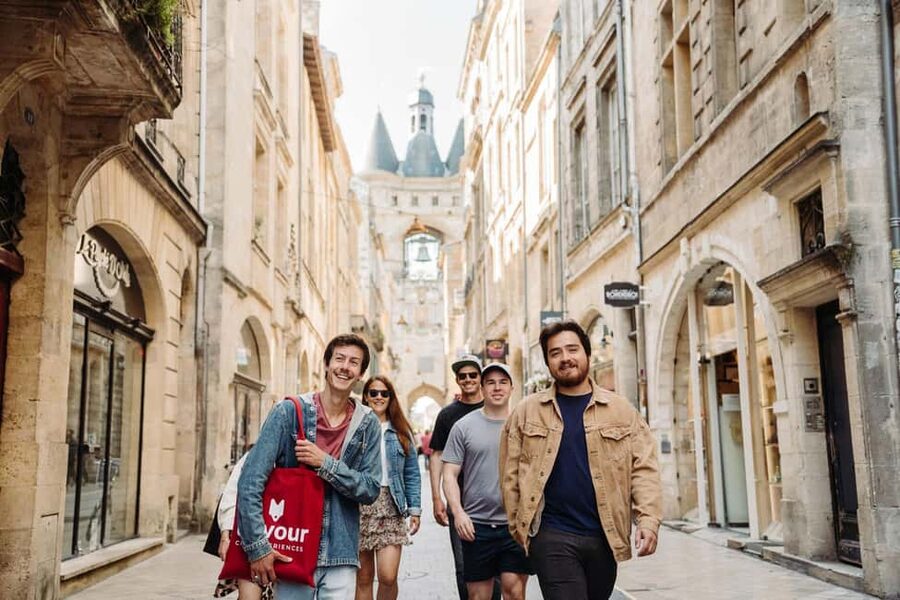
The meeting point is in front of Église Saint-Paul at 20 Rue des Ayres. Arrive 15 minutes early and look for a guide carrying a red bag or a Devour Tours sign. The tour finishes at Place Gambetta, so you are not returned to the starting point.
One of the early city landmarks is La Grosse Cloche, Bordeaux’s Big Bell. The stop gives the food walk an immediate sense of the old city, and the nearby streets help you understand how the central districts fit together.
The exact order of food stops can vary with shop hours and the guide’s route, but the experience moves through several distinct parts of central Bordeaux. Expect short walks between tastings, brief historical explanations, and time to stand inside small shops or cafés.
Fresh croissants at Boulangerie Louis Lamour
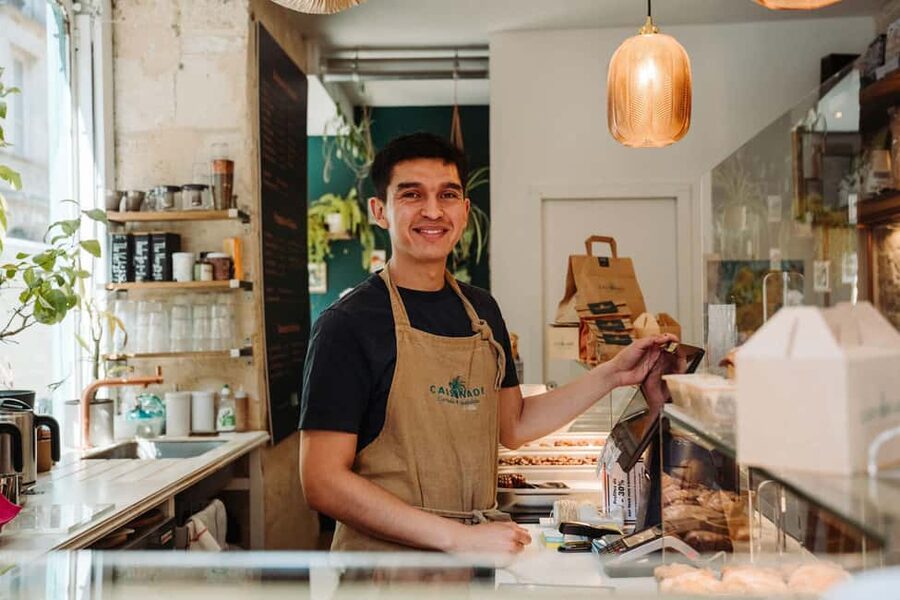
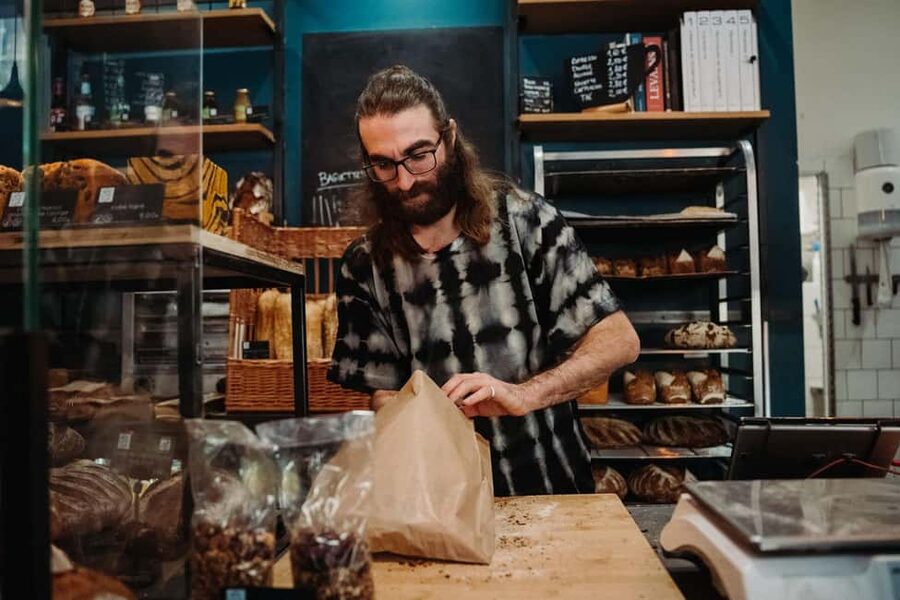
The bakery stop is one of the most useful because you see the work before eating the result. A young baker makes bread and viennoiserie on site, and you can watch croissants being rolled and folded.
That small demonstration gives context to a familiar pastry. A croissant may look simple on a plate, but the layers depend on careful folding and handling. You’ll also hear how the pastry became part of French food culture and how it connects to Bordeaux.
The bakery visit is not just a quick pastry handout. It shows a working food business, which is often more revealing than a polished museum display. You may also taste a chocolatine, a local term for a chocolate-filled pastry, depending on the food selection that day. One practical tip is clear: eat lightly before the tour. The tastings are plentiful, and breakfast can make the later stops feel like work.
Bordeaux’s canelé and its local identity
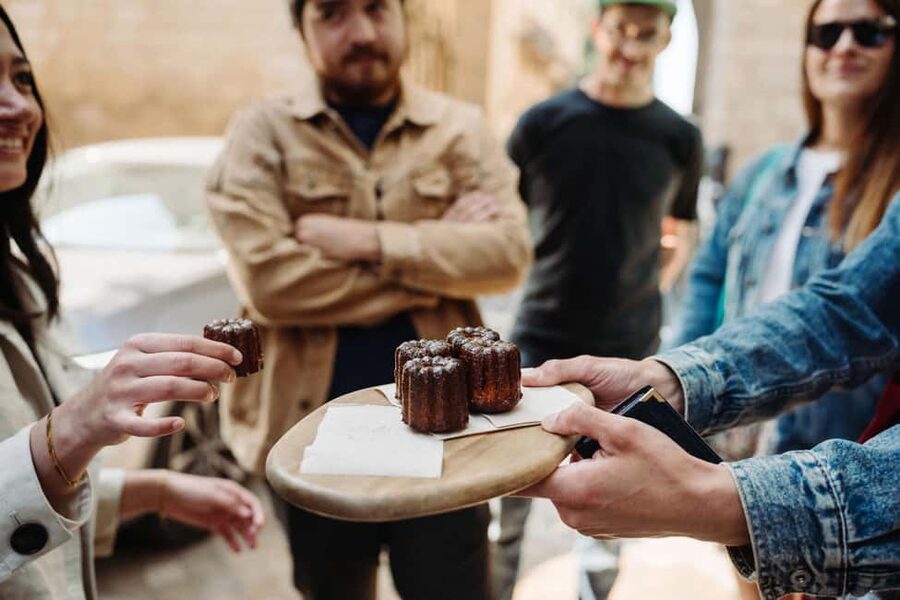
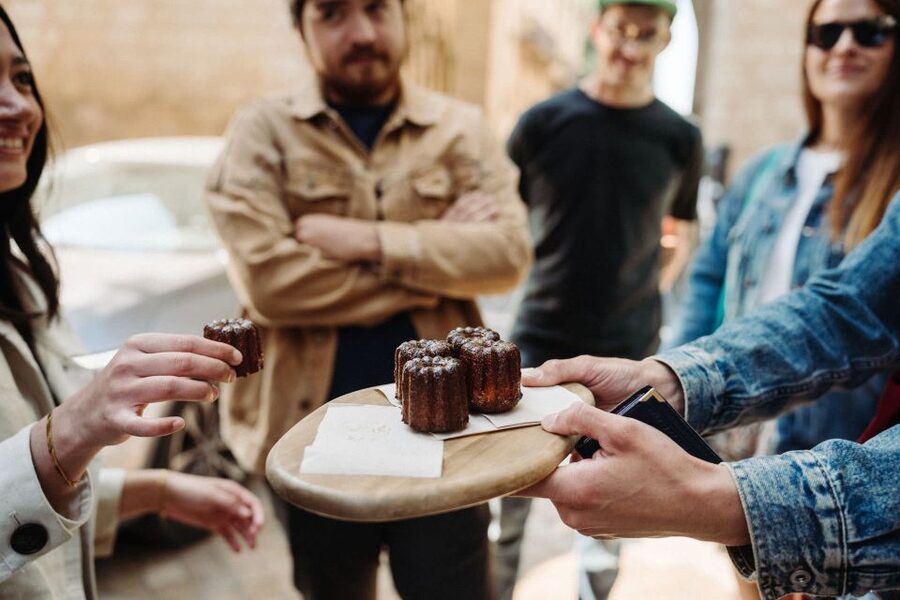
The canelé is closely tied to Bordeaux and the surrounding wine country. Its dark, caramelized exterior and soft center make it different from the lighter pastries you taste at the bakery.
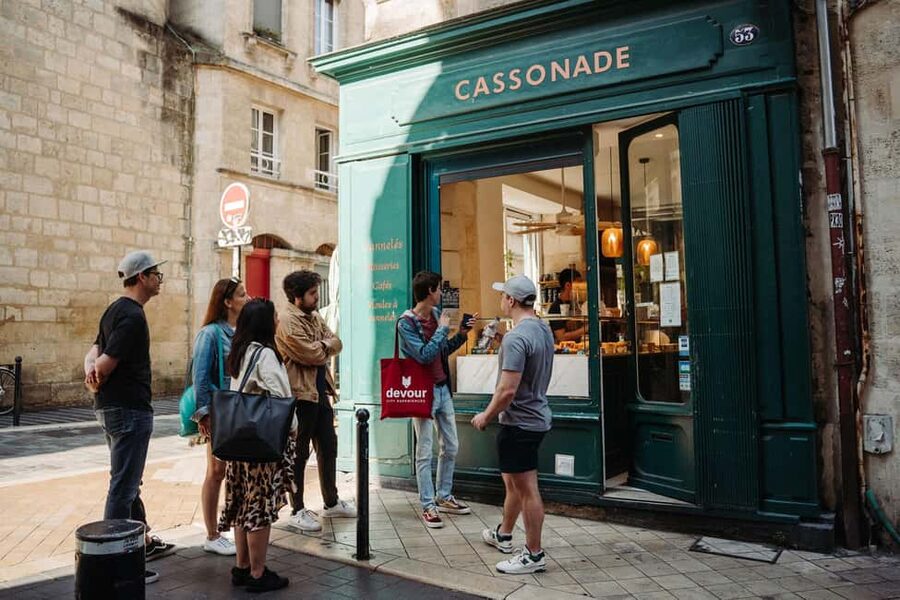
You visit a small owner-operated patisserie that makes canelés fresh each day with natural ingredients. That detail matters because the stop focuses on how the sweet is made and why it belongs to Bordeaux, not simply on buying a famous souvenir.
The canelé also gives the guide a chance to explain the relationship between local baking and the wine region. Its history is part of Bordeaux’s wider food culture, where small specialty shops still play an important role in daily life.
More wine tours in Bordeaux:
- Bordeaux: Cité du Vin Entry Ticket and Wine Tasting
★ 4.6 · 3,885 reviews - Bordeaux: River Garonne Cruise with Glass of Wine and Canelé
★ 4.5 · 3,630 reviews - From Bordeaux: Afternoon Saint-Emilion Wine Tasting & snack
★ 4.8 · 1,581 reviews - Medoc or Saint Emilion Wine Tasting and Chateau from Bordeaux
★ 5.0 · 1,415 reviews
Cathedral, Pey-Berland, and the city’s long story
Between tastings, you pass Bordeaux Cathedral, also called the Cathedral of Saint André. It is one of the city’s key religious monuments, and the guide points out its connection to the marriage of the future King Louis VII in 1137.
Nearby, Pey-Berland’s gold-topped tower gives you one of the route’s most recognizable views. These stops are brief rather than formal monument visits, so you will not have time to explore the cathedral interiors as part of the tour. Still, the pauses keep the route from becoming a chain of food counters.
Bordeaux has more than 2,000 years of port and commercial history. The guide uses the streets and buildings to explain how the city developed, including the difficult parts of its past. That background makes the food feel less isolated. You are tasting in a city shaped by trade, wealth, religion, and the river.
A daily dish near Bordeaux city hall
At a typical café-brasserie close to Bordeaux city hall, you’ll receive a homemade plat du jour. This means the daily special, prepared around available local ingredients and the chef’s ideas.
This may be the most useful stop for understanding ordinary French dining. The dish is not presented as a grand tasting menu. It is a glimpse of how a café can serve a changing midday meal, with the kitchen making practical use of what is good that day.
Past tastings have included savory foods such as croque monsieur with truffles. The precise dish can change, so do not book expecting one fixed menu item. Think of this as your central savory course before the tour returns to cheese, sweets, and wine.
You may want to carry water. The food is plentiful, but drinks other than the included wines are not a major part of the tour. One stop has seating, while much of the experience involves standing or walking.
French cheese with a specialist cheesemonger
The cheese stop is a strong part of the tour because it gives you a framework for a subject that can otherwise feel confusing. France produces more than 1,200 cheeses, and the cheesemonger explains how regional conditions affect flavor and style.
You’ll learn about French terroir, a word that links food to place, climate, land, and local practice. This is a better use of time than simply tasting several cheeses without explanation. The specialist helps you notice differences and gives you language to use when ordering cheese later.
If cheese is important to you, this stop may be the highlight. If you avoid dairy, tell the provider before booking so an alternative can be arranged. Dairy-free adjustments are listed as possible, but the tour cannot accommodate every restriction.
Chocolate since 1915 in the Triangle d’Or
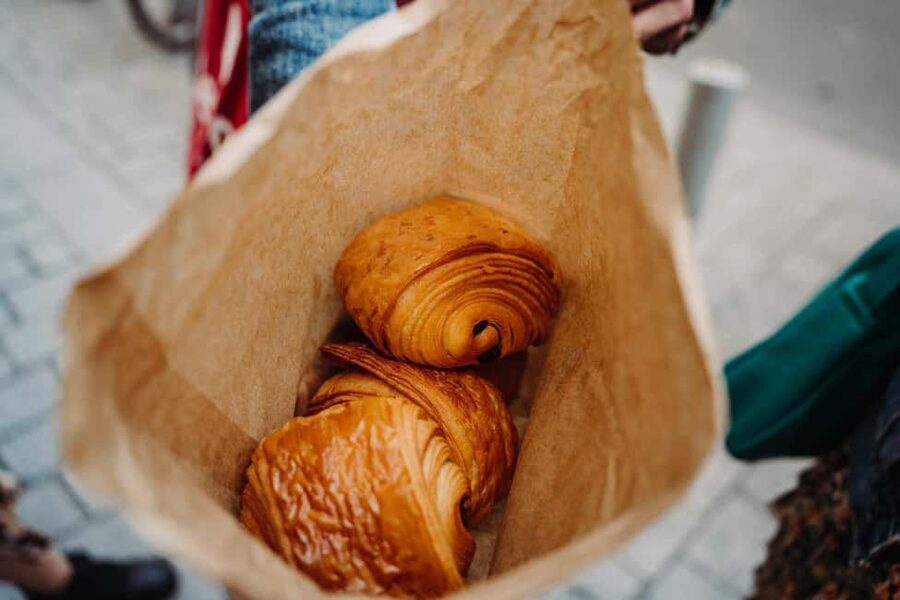
In Bordeaux’s Triangle d’Or quarter, the route visits La Maison Darricau, a family chocolate business that has made artisanal chocolate since 1915. It is now a third-generation operation, giving the stop a clear link between old local trade and present-day food production.
You are tasting chocolate, but you also get a look at the kind of specialist shop that gives a city its character. The location in the Triangle d’Or adds another layer, since this district is known for elegant streets and major city addresses.
The stop is short, around 10 minutes, so expect a focused taste rather than a long chocolate workshop. It works best as part of the larger pattern: bakery, savory food, cheese, chocolate, and wine, all from different kinds of local businesses.
Dunes Blanches and Bordeaux’s newer pastry tradition
Just next door, you’ll visit a newer pastry shop named for the distinctive Atlantic coastline of the region. The pastry was invented in 2007 by the son of a famous pastry maker.
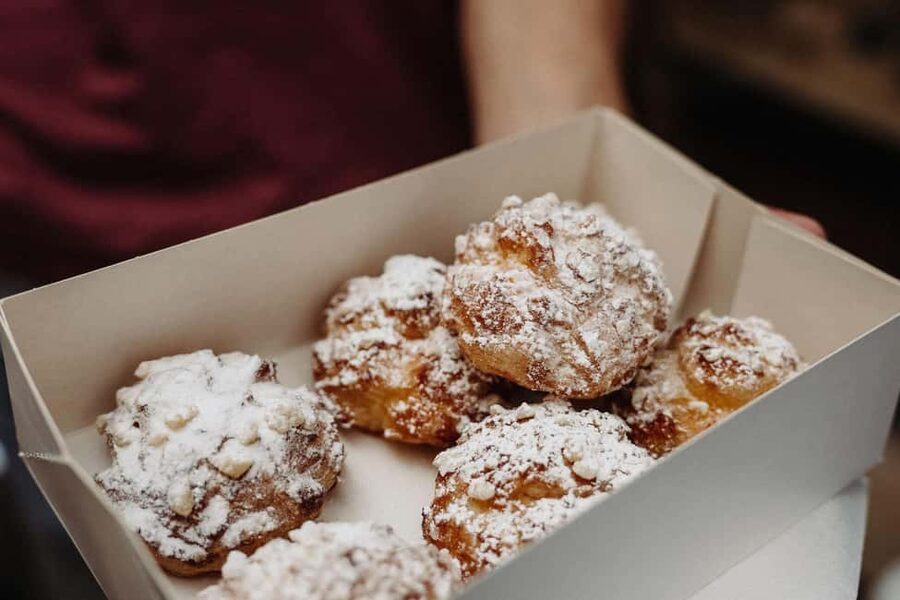
You’ll taste a crunchy puff pastry filled with cream. It provides a useful contrast to the canelé and croissant. The canelé is dense and caramelized, the croissant is layered and buttery, and this pastry brings crisp pastry together with a soft filling.
This stop also reminds you that Bordeaux’s food culture is not frozen in the past. Some of the city’s best-known treats are traditional, while others are recent creations that quickly became popular.
Three wines with two local hosts
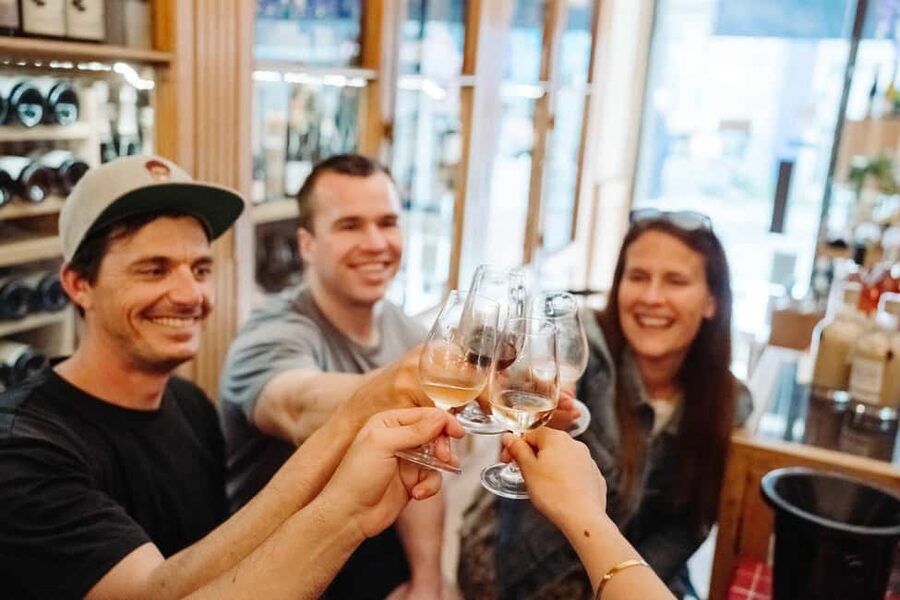
The final tasting takes place at a local wine bar, where two brothers lead a tasting of three regional wines. They explain the basics of French regional wine and invite questions about what you are drinking.
This is an approachable ending for anyone who knows little about wine. You can ask about the labels, local styles, and the brothers’ own opinions rather than sitting through a rigid lecture. The tasting is meant to help you order with more confidence during the rest of your stay.
Keep in mind that this tour is not suitable for people who do not drink alcohol, although non-alcoholic options can be arranged for some dietary or medical needs. It is also limited to adults aged 18 and over.
The final wine stop is more of a standing tasting than a long seated session. If you prefer a formal class with extensive notes, six wines, or extended food pairings, a dedicated wine-tasting class may suit you better. This tour gives you three wines within a broader city walk.
The guides make the difference
Guide quality is important on a route with many short stops. Sylvie is praised for her energy, personal attention, and ability to connect food with Bordeaux’s past and present. Joshua is described as easygoing and good at adding regional facts without making the walk feel like a lecture.
Nina brings strong wine knowledge and a lively approach, while Jamie is noted for explaining the cultural importance of the foods. Other guides named for the experience include Sylvie M, Josh, and Jamie, so the exact personality of your tour will depend on the date.
The small group helps here. With no more than 10 people, you can ask about a pastry, request a restaurant suggestion, or clarify a wine point without trying to compete with a large crowd. A useful follow-up is to ask your guide for the names and addresses of the food stops. The guide may send those details afterward, along with restaurant recommendations.
Who should book this Bordeaux food tour
I would choose this tour for a first or second day in Bordeaux. It gives you a food map, a short history lesson, and several places to revisit on your own. It also works well for people who want wine included but do not want to spend half a day riding out to Saint-Émilion or the Médoc.
Come prepared to walk at a moderate pace. Comfortable shoes are essential, and the route is not suitable for wheelchairs, people with mobility impairments, or baby strollers.
Vegetarians, pescatarians, pregnant participants, and people needing dairy-free or non-alcoholic options may be accommodated if they contact the provider before joining. Vegan, kosher, and gluten-free diets cannot be accommodated, so this is not the right choice if any of those apply to you.
You also should not expect hotel pickup or drop-off. The tour begins and ends in central Bordeaux, making it easy to fit into a day of sightseeing, but you need to arrange your own way to the meeting point and your next destination.
Should you book it?
Book this tour if you want Bordeaux explained through everyday food, small specialist shops, and a few important landmarks. The combination of 9 or more tastes, three wines, six stops, and a group capped at 10 gives you a useful introduction for $116, especially if you arrive hungry and take notes for later meals.
Skip it if you want a vineyard visit, a seated wine seminar, or a tour built around a vegan or gluten-free menu. For everyone else, this is a generous, well-paced way to get your bearings fast and learn what to eat after the guide says goodbye at Place Gambetta.
FAQ
How long does the Bordeaux food and wine tour last?
The tour lasts three hours.
How much does the tour cost?
The price is $116 per person.
How many food tastings are included?
You receive 9 or more different tastes at six food stops.
How many wines are included?
The tour includes three local wines.
Where does the tour begin?
It begins in front of Église Saint-Paul de Bordeaux at 20 Rue des Ayres, 33000 Bordeaux.
Where does the tour finish?
The tour finishes at Place Gambetta.
What language is the tour conducted in?
The tour is conducted in English.
How large is the group?
The group is limited to 10 participants.
Can people with dietary restrictions join?
Vegetarian, pescatarian, dairy-free, non-alcoholic, and pregnancy-friendly arrangements are possible if you contact the provider before the tour. Vegan, kosher, and gluten-free diets cannot be accommodated.
Is the tour suitable for wheelchair users or strollers?
No. The tour is not suitable for people with mobility impairments, wheelchair users, or baby strollers. You should also be able to walk at a moderate pace.
Is wine included for people under 18 or those who do not drink?
The tour is not suitable for people under 18 or people who do not drink alcohol. Non-alcoholic options may be arranged for some participants if requested in advance.
What should you bring?
Bring comfortable shoes. Carrying water is also a sensible idea because the tour includes plenty of food but not much to drink outside the wine tasting.
More food and drink in Bordeaux
- Saint-Émilion: Grand Cru Classé Winery Visit and Tasting
★ 4.6 · 1,118 reviews - Saint Emilion Half-Day Trip with Wine Tasting & Winery Visit from Bordeaux
★ 4.5 · 1,034 reviews - From Bordeaux: Half-Day Saint-Émilion Tour and Wine Tasting
★ 4.6 · 657 reviews - Bordeaux Wine and Trade Museum Admission Ticket with Wine Tasting
★ 4.5 · 599 reviews
Just added in Bordeaux
- Au Cœur du Château – VSOP D’USSÉ & XO BARON OTARD★ 4.5 · 108 reviews
- Discover Braastad Cognac★ 5.0 · 52 reviews
- retro road trip/ Méhari, 2CV & Burton in Rochefort, La Rochelle★ 5.0 · 28 reviews
- Saint Emilion Full Day Wine and Bike Tour★ 5.0 · 167 reviews
- Virtual Room Bordeaux – 1st team virtual reality experience★ 5.0 · 47 reviews
- Private Bordeaux History Tour with a glass of Bordeaux wine.★ 5.0 · 28 reviews
- Bordeaux bike tour “The Best of Bordeaux”★ 5.0 · 164 reviews
- Luxurious full day Bordeaux wine tour in a Tesla★ 4.5 · 31 reviews
Wine Tours, compared.
Authentic Parisian Gourmet Food Tour with 10 Local Dishes & Wines
Read our review →
Loire Valley Castles Day Trip from Paris with Complementary Wine
Read our review →
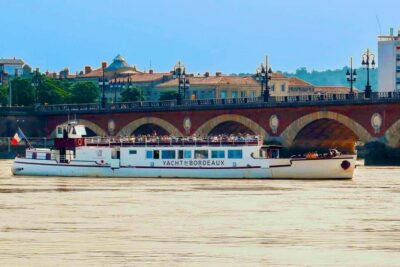
River Garonne Cruise with Glass of Wine and Canelé
Read our review →
Montmartre Hill French Gourmet Food and Wine Tasting Walking Tour
Read our review →
Montmartre Cheese, Wine & Pastry Guided Walking Tour
Read our review →
Loire Valley Castles Day Trip With Wine Tasting
Read our review →
Afternoon Saint-Emilion Wine Tasting & snack
Read our review →Browse the lists this tour appears in