
Reviewed · BATTLEFIELD & WWII TOURS
Musee Somme 1916 Admission Ticket
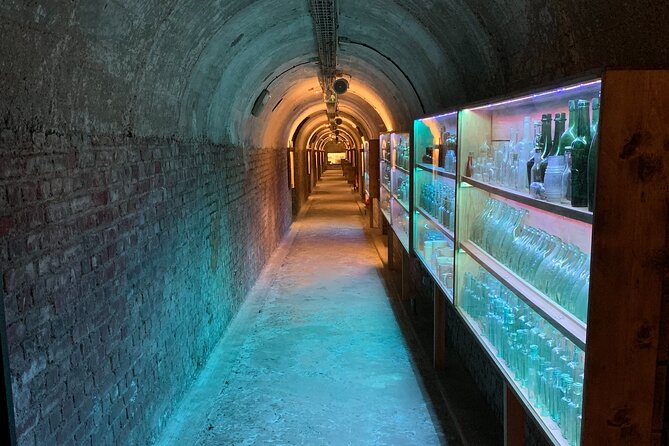
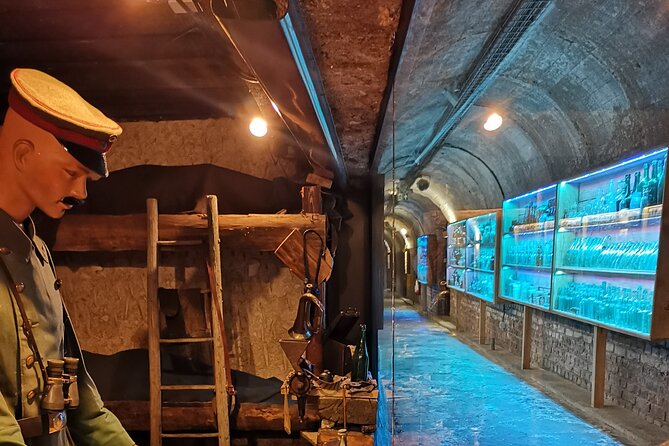
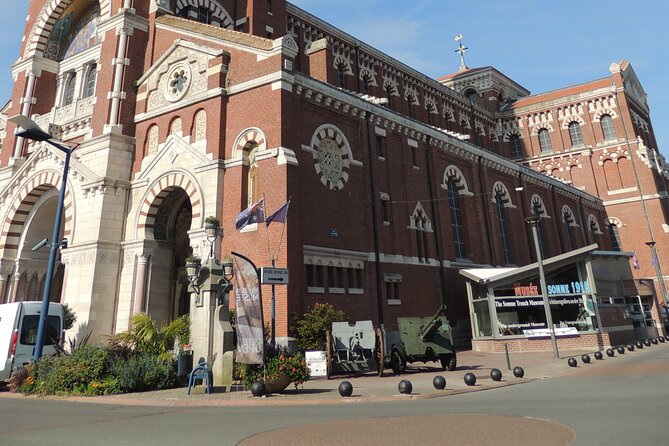
The most striking part of the Musée Somme 1916 is its setting: you enter beside Albert’s Basilica, then walk through a 250-meter tunnel about 10 meters below ground. The dark passage and staged trench scenes give the museum a physical sense of wartime confinement before you even reach the displays.
I like the clear English-language option and the mix of human stories, weapons, photographs, and sound effects. I also like the ending, which leads you out into Albert’s Arboretum beside the Ancre River instead of dropping you straight back onto a busy street. One thing to plan for: despite being marketed with Amiens, the museum is in Albert, about 20 miles beyond Amiens, so you need to arrange your own transport.
Key points to know before you go
- A 250-meter underground entrance: The museum begins in a tunnel 10 meters below the surface, setting the tone before the exhibits begin.
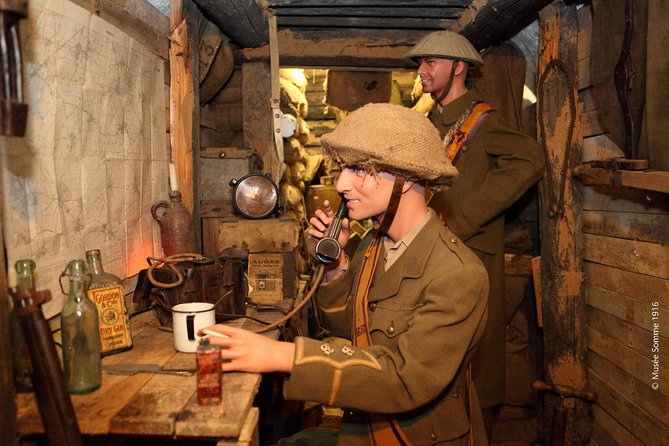
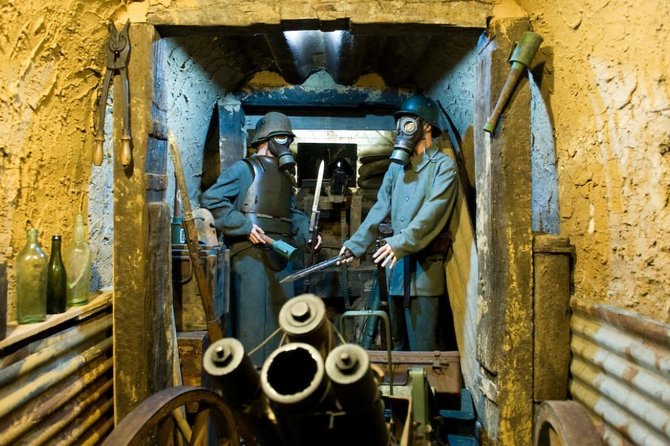
- Fifteen trench-war scenes: Alcoves recreate moments from the Somme fighting with sound and light effects.
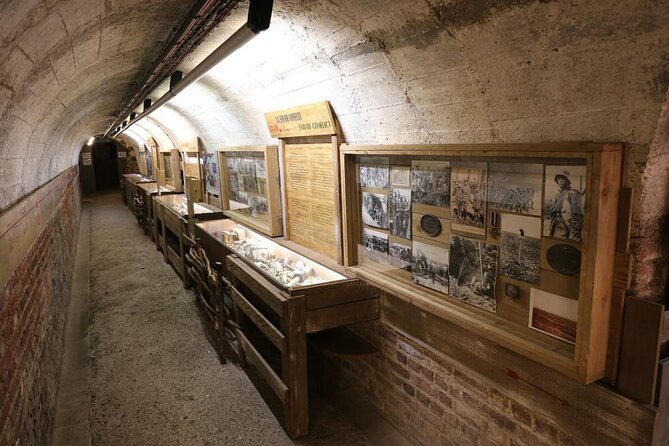
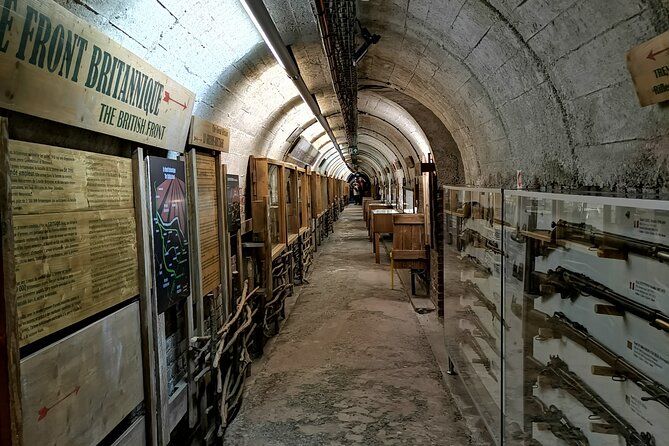
- Twenty-five display cases: You can examine First World War artifacts, weapons, and related objects at your own pace.
- Four languages: Information is available in English, French, German, and Dutch.
- A quieter ending outdoors: The exit leads into Albert’s public garden and the Arboretum, with views of the Ancre River and its cascades.
- A low-cost, flexible visit: Admission costs about $9.67 per person, and most people spend one to three hours inside and around the exit garden.
Why the Somme Museum begins underground
The Somme battlefield is difficult to understand from dates and casualty figures alone. The fighting in 1916 was among the worst of the First World War, and about 56,000 British soldiers were killed on the first day of the Somme offensive. The museum’s design gives that grim subject a physical starting point.
You enter near the Basilica and move below ground into a long tunnel. At roughly 250 meters, it is not a quick hallway leading to a few cases. The passage makes you slow down and notice the enclosed setting. At 10 meters below the surface, you are removed from ordinary town life before the museum begins telling its story.
That arrangement has a practical benefit. Instead of walking into a bright room and trying to adjust your mind to a century-old battle, you gradually move into the subject. The tunnel does not recreate every part of trench life, but it gives you a clear sense that this is meant to be atmospheric as well as factual.
The route is suitable for most people, and no health restrictions are stated. Still, anyone who dislikes dark enclosed spaces should keep the layout in mind. The experience depends partly on the feeling of being underground.
Other battlefield and wartime sites reachable from Lille:
- Full day Australian Battlefields Tour
★ 5.0 · 92 reviews - Dunkirk: Operation Dynamo and Battlefield of Dunkirk Tour
★ 5.0 · 85 reviews - Australian private Somme tour including Sir John Monash Centre
★ 5.0 · 51 reviews
Fifteen scenes that explain trench warfare
The main display uses fifteen separate alcoves. Each one presents a scene connected with trench warfare in the Somme. You move from one staged setting to the next rather than viewing one large, open gallery.
This format works well if you prefer information in manageable pieces. Each alcove gives you one more angle on the fighting, and the arrangement helps you follow the subject without facing a wall of text. Sound and light effects add to the presentation, with realistic bombardment effects that can make the experience more intense than a standard museum visit.
I would not treat the effects as a replacement for historical detail. Their purpose is to help you picture the conditions soldiers faced. The artifacts and display cases provide the factual material, while the scenes give the setting an emotional weight.
The result is serious and sometimes unsettling. This is not a light family attraction, though children can attend if accompanied by an adult. The staged scenes may help older children understand the subject, particularly if you take time afterward to discuss what they saw.
Twenty-five cases of weapons and wartime objects
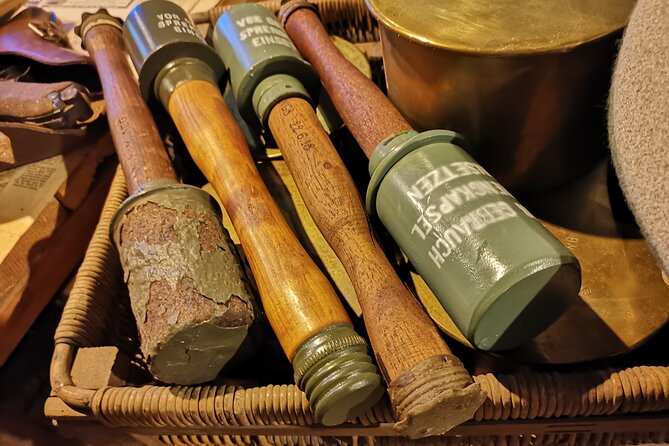
Alongside the reconstructed scenes, the museum has 25 display cabinets containing First World War artifacts and weaponry. These cases are important because they shift the visit from atmosphere to evidence.
You can study the objects at your own pace. That matters in a museum covering a battle as large and destructive as the Somme. The scenes show broad conditions, but the cases let you focus on the tools and material realities of the war.
The available information does not provide a complete object-by-object list, so you should not arrive expecting a particular rifle, uniform, or personal item. What you can count on is a collection built around the First World War and the Somme campaign, presented alongside the trench scenes.
The English-language option makes the displays easier to follow if you do not read French. French, German, and Dutch are also available, giving the museum a useful international reach. The new free app provides an additional way to take in the material, though the details of its exact format are not specified.
The Gallery of Heroes and the human cost of war
The final museum section is the Gallery of Heroes. It focuses on nine people who distinguished themselves during the war.
This ending narrows the story from armies and battlefields to individual lives. That can make a large historical event easier to grasp. After seeing scenes of trenches, bombardments, and military equipment, you finish with named individuals rather than statistics alone.
The presentation also leaves room for a more difficult question: whose stories get remembered? The museum gives special attention to nine figures who were honored for their actions, but the Somme was also defined by enormous numbers of wounded, disabled, and dead soldiers.
If you are visiting with children, this is a useful moment to explain that war affects more than those who are killed. The subject includes injury, fear, lasting disability, and the strain placed on families. The museum’s focus on heroes is accessible, but you may want to add that wider context yourself.
Same base, a different kind of day:
- Entrance Ticket Nausicaa, the biggest aquarium in Europe
★ 3.5 · 1,135 reviews - Lille Driving Tour by Convertible Citroen 2CV
★ 4.9 · 711 reviews - Nausicaá National Sea Center: Full-Day Entry Ticket
★ 4.5 · 541 reviews - Unique Tour of Lille by Convertible 2CV – 1h00
★ 5.0 · 470 reviews
Leaving through the Arboretum beside the Ancre
The museum does not end at the souvenir shop. You exit into Albert’s public garden, the Arboretum, where the Ancre River flows past cascades.
This is one of the best design choices in the visit. After the enclosed tunnel and dramatic sound effects, the outdoor setting gives you space to think. The river and garden do not erase the subject, but they provide a calm contrast to the underground displays.
You should allow a little extra time here rather than treating the garden as a passage to the street. The exit offers views over the Ancre and a chance to recover from the more forceful parts of the museum. It also makes the visit feel connected to the town instead of sealed inside a building.
The museum route ends at the souvenir shop before leading into the garden. Food and drinks are not included, so plan separately if you need a meal or refreshment. The ticket covers admission and the new free app, not transportation or food.
How long to allow, and what the price buys
The stated visit takes about one to three hours. That is a broad range, but it makes sense for a museum you can approach at different speeds.
If you read every display, study the 25 cases, pause at all 15 scenes, use the app, and spend time in the Arboretum, you could use much of the longer estimate. If you move quickly through the scenes and focus on the main displays, the visit can be shorter.
At about $9.67 per person, admission is modest for an experience that includes a substantial underground route, multilingual material, staged scenes, artifact cases, the Gallery of Heroes, and the outdoor exit area. The value is strongest if you are already exploring the Somme battlefields or making a dedicated history stop in Albert.
It is less compelling as a casual detour from Amiens if you have not allowed for the journey. One important practical point is the location. The museum is associated with the Somme and often connected with Amiens in trip planning, but it is not in central Amiens. The supplied directions place it about 20 miles past Amiens, in Albert. Check your route carefully before booking.
The ticket is generally booked about 19 days ahead, so reserving in advance is sensible during a busy visit to the area. The maximum group size is 15 people, which helps keep the experience from feeling like a mass attraction, though the visit is primarily an admission experience rather than a scheduled guided tour.
Languages, app, and the pace of the visit
You can visit in English, French, German, or Dutch. That is a major advantage for an international audience, especially in a museum where the written material adds context to the staged scenes.
The new free app is included with admission. Since no guide names or live guiding schedule are provided, you should think of this as a self-paced museum visit rather than a tour led by a named historian. You control how long you spend at each alcove and case.
That flexibility suits different kinds of visitors. A family can stop when children need a break. A serious history enthusiast can linger over the weaponry and artifacts. Someone with only an hour can follow the central route without committing to a full-day battlefield program.
The sound and light effects deserve a little caution. They help you picture bombardment and trench conditions, but they can also make the visit feel heavy. If you want a quiet museum with minimal theatrical presentation, this may not be your ideal stop. If you want historical material presented with a strong sense of place, the approach is likely to work for you.
Who should make the trip to Albert
I would recommend this museum to anyone interested in the First World War, especially if you are already visiting the Somme region. It provides a compact introduction to the 1916 battle through objects, scenes, and individual stories.
Families with older children may find it useful because the route is visual and easy to follow. Children must be accompanied by an adult, and the subject is serious, so parents should decide how much detail is appropriate for their children.
The museum also suits visitors who want more than a conventional display case collection. The underground tunnel and staged alcoves create a stronger physical experience than a standard room of panels. The outdoor ending helps keep the visit from becoming emotionally flat or overly confined.
I would be more cautious about recommending it to someone staying only in central Amiens with no spare time. The distance from Amiens is not a minor detail. Once you account for transportation, the museum becomes a dedicated outing rather than a quick city-center stop.
Practical details that affect your decision
Opening hours are listed as 9:00 a.m. to 6:00 p.m., Monday through Sunday, for January 25 through December 31, 2026. Confirm the timing for your chosen date when booking, particularly if you are planning the museum near the end of the day.
Confirmation is provided at booking. Transportation to and from the attraction is not included, so you need to arrange that yourself. The experience has no stated health restrictions, and most people can participate.
Free cancellation is available if you cancel at least 24 hours before the start time. Cancellations made less than 24 hours ahead are not refunded, and changes inside that period are not accepted. The cut-off follows local time.
Because no food, drinks, or transport are included, I would pair the museum with a simple plan for the surrounding area rather than assuming everything is handled by the ticket. The Arboretum gives you a natural place to pause after the visit, but the admission itself is focused on the museum route.
Should you book the Musée Somme 1916?
Book it if you want an affordable, focused introduction to the Somme, especially one that combines underground atmosphere with real artifacts. The four-language presentation, free app, 15 trench scenes, 25 display cases, and Gallery of Heroes give you plenty to see for the price.
I would also book it if you are interested in how museums help you feel the conditions of history, not just read about them. The tunnel, sound effects, and outdoor river exit create a clear emotional arc.
Skip it if you are expecting a guided battlefield tour, a museum in central Amiens, or a light and cheerful family outing. This is a serious wartime experience, and the trip to Albert requires planning.
For most people already exploring the Somme area, the low admission price and strong sense of place make it a worthwhile stop. Just remember that the museum’s most useful feature is also its main warning: you need to go underground to understand it, and you need to go beyond Amiens to reach it.
FAQ
Where is the Musée Somme 1916 located?
The museum is in Albert, France. It is about 20 miles past Amiens, rather than in central Amiens.
How much does admission cost?
Admission costs approximately $9.67 per person.
How long does the visit take?
You should allow approximately one to three hours, depending on how closely you study the scenes, objects, app, and Arboretum.
Which languages are available?
The museum is available in French, English, German, and Dutch.
What is included with admission?
Admission to the museum and the new free app are included.
Is transportation included?
No. Transportation to and from the attraction is not included.
Can children visit the museum?
Yes. Children can attend, but they must be accompanied by an adult.
What are the opening hours?
The listed opening hours are 9:00 a.m. to 6:00 p.m., Monday through Sunday, from January 25 through December 31, 2026.
Just added in Lille
- 1 Hour Private Lille Tour by Convertible 2CV with a Local Products Tasting★ 5.0 · 78 reviews
- Lille Scavenger Hunt and Highlights Self Guided Audio Tour★ 4.0 · 32 reviews
- Rallye “Discoveries and Surprises”★ 5.0 · 52 reviews
- Private Lille Tour by Classic Convertible 2CV with Champagne★ 5.0 · 49 reviews
- 30-Minutes Private Guided Tour of Lille by Convertible 2CV★ 5.0 · 79 reviews
- Lille Scavenger Hunt and City Highlights Walking Tour★ 4.5 · 47 reviews
- Lille Old Town Walking Tour With A Guide★ 4.5 · 40 reviews
- Private battle of Dunkirk Operation Dynamo Tour★ 5.0 · 99 reviews
Battlefield & WWII Tours, compared.
Normandy Battlefields Tour – American Sites (A3)
Read our review →
Somme Battlefields Small-Group Day Trip with John Monash Centre from Paris
Read our review →
Normandy Battlefields D-Day Private Trip with VIP Services from Paris
Read our review →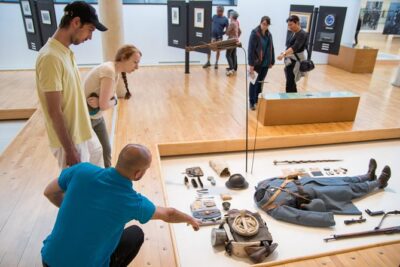
Somme Battlefields from Paris with Australian memorial & Amiens Cathedral
Read our review →
Full-Day US Battlefields of Normandy Tour from Bayeux (A3LST)
Read our review →
Full-Day Canadian Battlefields & sites Normandy Tour from Bayeux
Read our review →
Private Day Tour including Normandy Landing Beaches & Battlefields from Bayeux
Read our review →
Normandy Battlefields Half Day Tour – Canadian World War II Sites
Read our review →Browse the lists this tour appears in