
Reviewed · NORMANDY D-DAY TOURS
Full-Day Canadian Battlefields & sites Normandy Tour from Bayeux
Juno Beach is only the beginning. This small-group Canadian battlefield tour follows the fighting inland toward Caen, so you see both the landing site and the hard push that followed. I like the clear Canadian focus, and I like that the route includes quiet memorials, villages, bunkers, and battle positions rather than stopping at the beach alone.
I also like the small van, which allows a guide such as Emmanuel, Jeremy, Laurent, or Remy to answer questions and sometimes add a stop when time allows. The tradeoff is a long, information-heavy day. The van can feel tight when full, and you return to Bayeux around 6 pm, so this is not a light sightseeing outing.
Key points to know before booking
- Juno Beach is treated as a starting point, not the whole story: You follow Canadian forces inland toward Caen and Carpiquet.
- The Juno Beach Centre gives you needed context: Plan on an hour for exhibits, artifacts, personal accounts, and the German bunkers outside.
- Beny-sur-Mer Canadian War Cemetery is a quiet, moving stop: You have time to pay your respects rather than making a rushed photo stop.
- The group is capped at eight people: That is a useful size for questions and direct contact with your guide.
- The day runs from about 8:30 am to 6 pm: Bring lunch money, water, and clothing for an exposed coast.
- The Canadian viewpoint is the reason to choose this route: It covers the 3rd Canadian Infantry Division, the 9th Brigade, the Abbey d’Ardenne, Carpiquet, and Hill 67.
Why this Canadian route matters
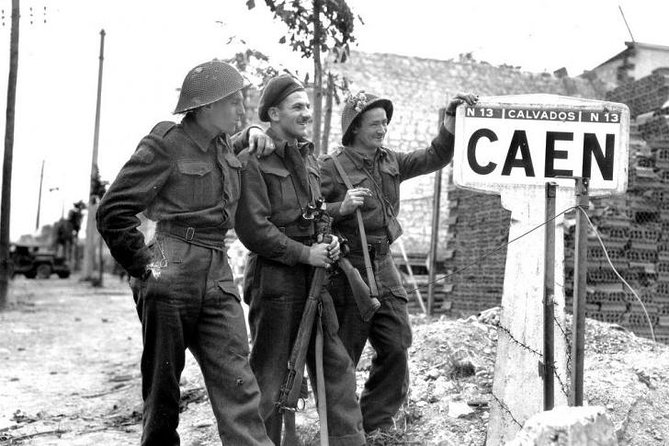
Many Normandy tours focus on the American beaches, especially Omaha. This excursion gives you a different and more focused story: the Canadian landings at Juno Beach and the difficult advance west of Caen.
On June 6, 1944, Canadian troops came ashore between St. Aubin-sur-Mer and Graye-sur-Mer. They faced German strongpoints and heavy machine-gun fire, then had to move inland while German forces mounted counterattacks. The tour explains how Canadian units held positions west of Caen and fought the German 12th SS Panzer Division.
That wider view is important. At Juno, you can picture the assault from the sea. Inland, you begin to understand why the campaign lasted for two months and why so many Canadian graves are spread across Normandy.
The Canadian focus is also useful if you have a family connection. One person used the route to follow a great-uncle’s movement from Juno Beach through the countryside and then locate his grave. That kind of personal connection is not guaranteed, but the route gives you a strong framework for understanding where a Canadian soldier may have fought and died.
Other days on the landing beaches from Bayeux:
- Normandy American D-Day Beaches Full Day Tour from Bayeux
★ 5.0 · 2,103 reviews - Normandy American D-Day Experience – Group tour from Bayeux
★ 5.0 · 1,566 reviews - Normandy Beaches Half-Day Afternoon Trip from Bayeux (A2)
★ 4.5 · 1,116 reviews
Starting from Bayeux in a small minivan
The tour begins at 8:30 am. You can meet your guide at Bayeux train station, Place de Quebec, or at your Bayeux hotel. Hotel pickup and drop-off apply within Bayeux only, not from Paris or the cruise ports.
The air-conditioned minivan carries no more than eight people. That limit is one of the tour’s practical strengths. You are not part of a large coach group, and a guide can usually hear your question and respond without turning the day into a public lecture.
There are two things to keep in mind. First, the van may feel snug when every seat is occupied. Second, air-conditioning is available, but one review noted that the cooling is felt most strongly in the front and that windows cannot be opened. If you are sensitive to heat, dress in light layers and ask about seating when you board.
Your guide matters a great deal on a battlefield day. Emmanuel is praised for adding extra stops and linking the sites to visitors’ Canadian hometowns. Jeremy is known for detailed explanations and personal stories. Laurent, also called Wally, is bilingual in French and English and has been praised for keeping a full day moving. Remy and Bice have also led this route, with Bice especially noted for his strong focus on Canadian service members.
Guide assignments can change, so book for the route and subject rather than expecting a specific person. Still, the repeated praise for the guides tells you something useful: this experience depends heavily on the person in the driver’s seat.
Juno Beach: seeing the landing zone
The first stop is Juno Beach, with about 30 minutes outside. This is a short stop, but it gives you the physical setting for the morning’s story.
You move through different sections of the shore between St. Aubin-sur-Mer and Graye-sur-Mer, where the 3rd Canadian Infantry Division landed. The coast is open and exposed, so wind can be sharp even when the day feels mild in Bayeux.
Do not expect a long, unstructured beach walk. The time is used to connect the shoreline to the assault and to the German defenses. Your guide explains how Canadian troops crossed the sand under fire and then pushed through fortified positions.
The beach can feel ordinary at first glance. That is part of its force. There is no need for a grand monument to make the setting meaningful. Once you know what happened there, the broad stretch of sand becomes a place you read differently.
Bring a warm layer even in summer. In winter, several layers are essential because the wind off the Channel can be bitter. Good walking shoes help, although the tour does not require a strenuous hike.
The Juno Beach Centre and German bunkers
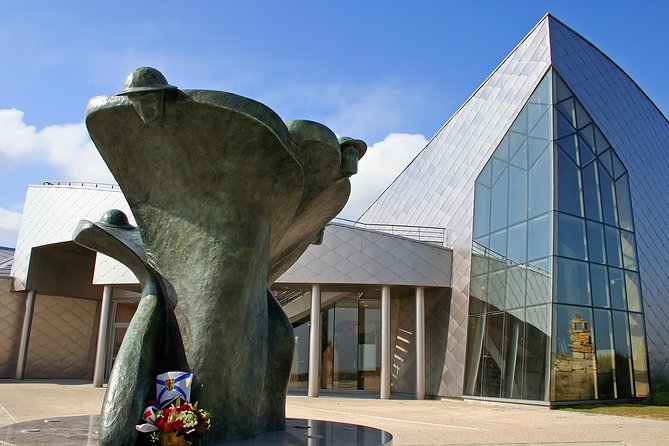
You spend about an hour at the Juno Beach Centre, with admission included. This is the main indoor stop and a useful break from the coast.
The centre tells the story of Canada’s wartime role through photographs, archival material, first-hand accounts, and artifacts. It also covers the 45,000 Canadians who died in the Second World War, including 359 on D-Day and about 5,500 during the Battle of Normandy.
The numbers are difficult to absorb in the abstract. The displays help by putting faces, documents, and individual experiences alongside the military timeline. I would give the exhibits your full attention rather than treating the centre as a quick stop between beaches.
Outside, you can see excavated German bunkers on the shore. These defensive positions help explain why the first minutes of the landing were so dangerous. The museum and the beach work well together: one gives you the voices and records, while the other gives you the setting.
The day’s schedule includes museum time, but you may want longer than one hour if you read every panel carefully. This is one of the few parts of the tour where you have time to explore at your own pace, and the amount you see will depend on how quickly you move through the displays.
Other battlefield and wartime sites reachable from Bayeux:
- Normandy Battlefields Tour – American Sites (A3)
★ 5.0 · 876 reviews - Normandy Battlefields D-Day Private Trip with VIP Services from Paris
★ 5.0 · 240 reviews - Full-Day US Battlefields of Normandy Tour from Bayeux (A3LST)
★ 5.0 · 214 reviews - Private Day Tour including Normandy Landing Beaches & Battlefields from Bayeux
★ 5.0 · 172 reviews
Beny-sur-Mer Canadian War Cemetery
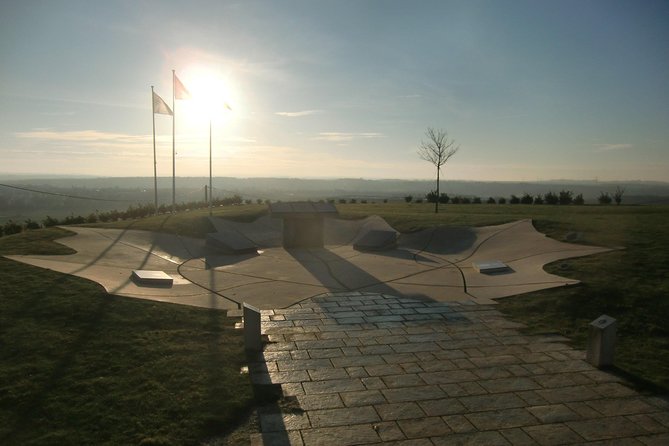
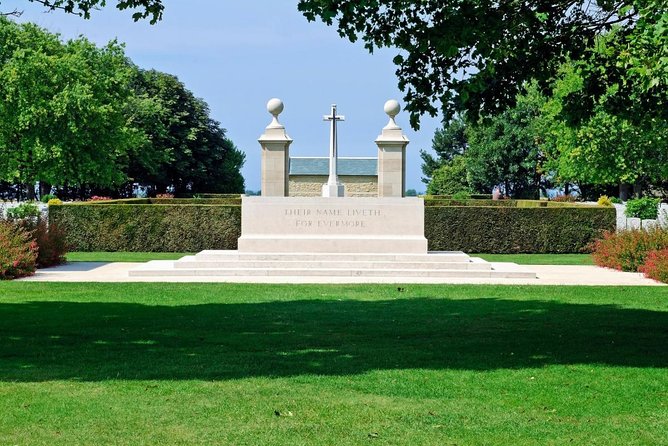
The next major stop is Beny-sur-Mer Canadian War Cemetery, where you have about an hour. This is one of the most meaningful parts of the route, and the generous time matters.
The cemetery contains Canadian service members killed during the early Normandy fighting. The rows of headstones make the cost of the advance clear in a way that maps and battle diagrams cannot.
Your guide can place the cemetery within the route you have already followed. By this point, you have seen where the troops landed and learned about the push inland. Here, the individual names bring that larger story down to a human scale.
Allow yourself quiet time. You do not need to know a family name to find the stop affecting. If you are researching a relative, bring the details you have, including name, rank, regiment, and date of death. The tour may help you understand the setting, though the information provided does not promise a dedicated genealogy service or a guaranteed grave search.
This is also a place where respectful behavior matters. Keep voices low and treat the headstones as graves, not props for quick photographs.
Authie and the route toward Caen
The stop at Authie lasts about 30 minutes. It helps bridge the gap between Juno Beach and the inland fighting.
The Canadian advance was not a straight, easy march from the beach. Villages, roads, defensive positions, and German counterattacks shaped every mile. At Authie, your guide adds detail to the movement toward Caen and explains how the Canadian units faced resistance after leaving the shore.
This part of the day rewards listeners. There may not be a single famous structure that carries the stop, so the value comes from the explanation and the connection between locations. If you already know the Normandy campaign, you may appreciate the tactical detail. If you are new to it, the amount of information can feel heavy.
Take notes if you want to remember names and unit movements. The tour covers a lot in one day, and the sequence can blur by the evening.
Abbey d’Ardenne: a solemn inland stop
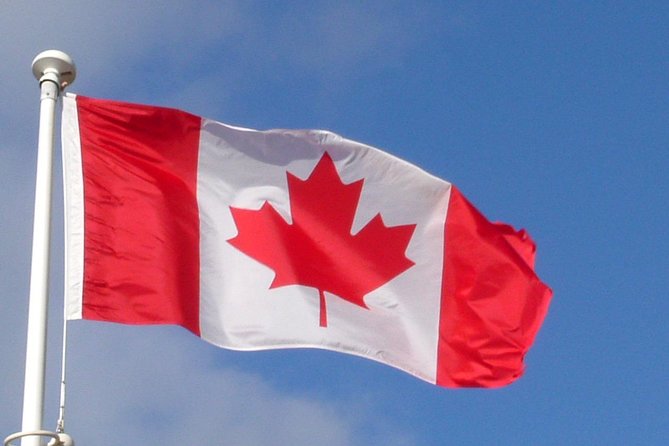
You spend about an hour at the Abbey d’Ardenne. The site is connected to the advance of the 9th Canadian Brigade on June 7 and to the capture of Carpiquet.
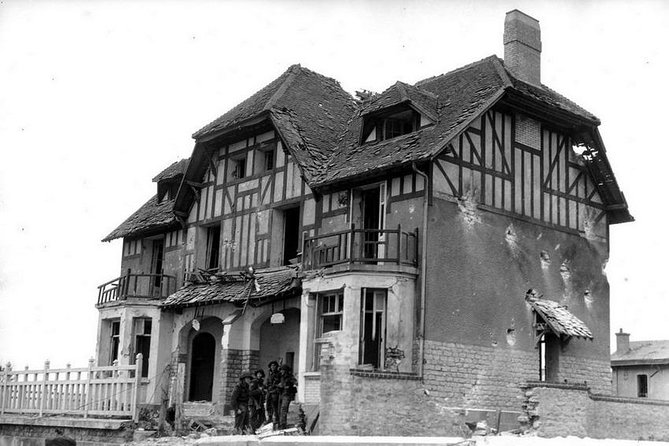
The abbey adds a different mood from the beach and cemetery. It is an inland place where the war unfolded among existing buildings and communities. Your guide helps explain how Canadian troops moved through the area and why the route toward Caen became so difficult.
This stop is particularly useful because it keeps the story from ending with D-Day itself. The landing was a beginning, not a victory lap. The fighting continued, and places such as the abbey show how the campaign moved into villages and positions far from the shore.
The hour gives your guide room to explain events in detail. It also contributes to the day’s length. If you want a quick overview of Normandy, this tour may feel too slow. If you want to understand the Canadian advance, the extra time is the point.
Carpiquet and the fight inland
The tour continues to Carpiquet, with about an hour at the site. The airfield was an important objective during the push toward Caen.
Here, the route follows the Canadian advance and connects the battlefield to the larger struggle for control of the area. Your guide describes the fighting and the effort to capture the airfield, helping you see why the Canadian campaign involved far more than the first assault on Juno Beach.
Carpiquet is also a good example of why transport matters. The sites are spread across the Normandy countryside. Without a car and a strong grasp of the locations, it would be difficult to link them efficiently in a single day.
You should expect stops that rely on explanation rather than a large visitor complex. The guide’s ability to point out routes, positions, and connections is central here. Some people will find that fascinating. Others may prefer more formal museums and fewer battlefield descriptions.
Hill 67 and the cost of the advance
The final listed stop is the Hill 67 Canadian Memorial, with about 30 minutes. The hill lies south of Caen and commemorates the bloody fighting in the area.
By now, the day has moved from the beach through the cemetery, villages, abbey, and airfield. Hill 67 gives the route a final battlefield marker and reinforces the cost of the effort to move toward Caen.
The short stop is enough for an overview and a moment of reflection. It is not designed as a long independent walk. The full meaning comes from the chain of sites you have visited earlier.
Afterward, you return to the original starting point in Bayeux, arriving around 6 pm. The schedule is full, but the route is logically arranged and avoids asking you to organize several separate transfers.
Lunch, weather, and physical comfort
Lunch is not included. The supplied details do not specify a fixed restaurant or meal plan, so bring money and ask your guide early about the lunch timing and options for the day.
You should also pack water and a snack. An eight-hour tour with repeated stops can be tiring, especially when you are concentrating on military dates and unit movements.
Weather matters more than on many inland day trips. Juno Beach is exposed to the Channel wind, and rain can make the outdoor stops feel colder than expected. Wear layers, bring rain protection, and use shoes suitable for uneven outdoor surfaces.
The itinerary includes frequent getting in and out of the minivan. One person found the vehicle tight when full, and that is worth considering if you have mobility concerns. The tour states that most people can participate, service animals are allowed, and children must be accompanied by an adult.
Is the $161 price fair?
At $161.32 per person, this is not the cheapest way to see Normandy. You are paying for an eight-hour guided route, a small group capped at eight, transport from Bayeux, fuel, professional guiding, and admission to the Juno Beach Centre.
The value comes from what would be difficult to arrange alone. You would need to rent a car, plan a route through several towns, understand the relation between the sites, and allow time for parking and navigation. The tour also gives you a Canadian point of view rather than a general D-Day survey.
For two people, the cost may be higher than driving yourself. A rental car gives you more freedom, but it does not give you a guide who can explain the 9th Brigade’s route, the fighting around Carpiquet, or the significance of Hill 67 while you move between places.
I think the price makes the most sense if you value interpretation and convenience. It is less compelling if you only want to photograph Juno Beach and spend the rest of the day independently.
Who should book this day?
I would choose this tour if you are Canadian, have a Canadian family connection, or want the Canadian campaign treated as the main subject rather than a brief part of a larger Normandy circuit.
It also suits anyone who prefers a guide-led day with a clear military focus. The small group makes it easier to ask questions, and the route includes both a museum and outdoor sites.
I would think twice if you want a relaxed coastal outing, dislike long periods of listening, or need plenty of personal time at each location. The schedule is full, and the subject is emotional. Several stops ask you to process loss, sacrifice, and the realities of combat.
This is also not a Vimy tour. Vimy is connected to Canadian military history, but it is not nearby and is not part of this Normandy route. Plan it separately.
Should you book the Canadian Normandy tour?
Book it if you want to understand what Canadian troops did after landing at Juno Beach. The strongest part is the complete route: shore, museum, cemetery, inland villages, Abbey d’Ardenne, Carpiquet, and Hill 67.
The main caution is stamina. You will spend a full day in a compact van, listen to a great deal of military detail, and move through emotionally serious places. Bring layers, allow for lunch costs, and prepare to return to Bayeux tired.
For a Canadian-focused view of Normandy, this is a strong use of one day in Bayeux. It gives you the facts, but also the places where those facts happened.
FAQ
Where does the tour start?
You can meet at Bayeux train station, Place de Quebec, or your Bayeux hotel. The start time is 8:30 am.
Does hotel pickup include Paris or cruise ports?
No. Hotel pickup and drop-off are offered from Bayeux only. The tour does not provide pickup from Paris or from ports.
How many people are in the group?
The tour has a maximum of eight travelers and uses an air-conditioned minivan.
How long does the tour last?
The experience lasts about eight hours and returns to Bayeux around 6 pm.
Is lunch included?
No. Lunch is not included in the tour price.
Is admission to the Juno Beach Centre included?
Yes. Entrance to the Juno Beach Centre is included.
Can children and service animals join?
Children must be accompanied by an adult, and service animals are allowed. The tour states that most people can participate.
Just added in Bayeux
- Small Group Guided D-Day Tour and Mémorial de Caen Museum★ 5.0 · 237 reviews
- Private Day Tour including Normandy Landing Beaches & Battlefields from Caen★ 5.0 · 53 reviews
- Normandy: Private tour D-Day landing beaches American sector★ 5.0 · 62 reviews
- Guided Tour in an Old Convertible Car on the Côte de Nacre★ 5.0 · 66 reviews
- Mémorial de Caen Museum Admission and Guided Tour of D-Day Sites★ 4.5 · 275 reviews
- WW2 Jeep or Dodge truck tour of the Omaha Beach site★ 5.0 · 51 reviews
- 2- to 6-hour sidecar excursion on the D-Day Landing Beaches★ 5.0 · 131 reviews
- Normandy U.S. D-Day Sites Half Day Tour From Bayeux★ 5.0 · 325 reviews
Normandy D-Day Tours, compared.
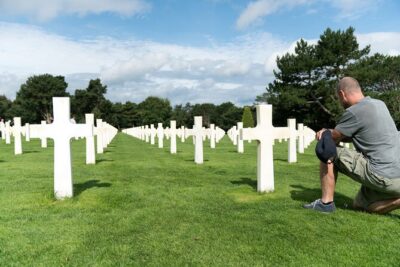
Normandy D-Day Sites & Cemetery Day Trip from Paris with Lunch
Read our review →
Normandy D-Day Small-Group Day Trip with Omaha Beach, Cemetery & Cider Tasting
Read our review →
Normandy D-Day Beaches and American Cemetery Day Trip from Paris
Read our review →
Normandy American D-Day Beaches Full Day Tour from Bayeux
Read our review →
Normandy American D-Day Experience – Group tour from Bayeux
Read our review →
Normandy Beaches Half-Day Afternoon Trip from Bayeux (A2)
Read our review →
Omaha Beach D-Day Experience – Afternoon group tour from Bayeux
Read our review →Browse the lists this tour appears in