
Reviewed · NORMANDY D-DAY TOURS
Normandy WW2 Full Day Classic Jeep Tour
The best thing about this tour is the way it connects Normandy’s famous beaches with the quiet lanes and hedgerows behind them. You ride in a WWII-era Jeep, often on back roads and farm tracks, so the day feels less like checking off monuments and more like tracing how the invasion moved inland. Pointe du Hoc and Omaha Beach provide the major battlefield stops, while the countryside helps explain why the fighting was so hard.
I like the private format, since your guide can adjust the pace and answer your questions without a large group slowing things down. I also like the range of guides, including Kate, Arnaud, Adrian, Amandine, David, Thomas, Vincent, and Dean, who are praised for clear explanations and personal connections to D-Day veterans. The main drawback is the open Jeep: an eight-hour ride can be chilly, especially in wind or poor weather, so dress warmly even on a bright morning.
Key points to know before booking
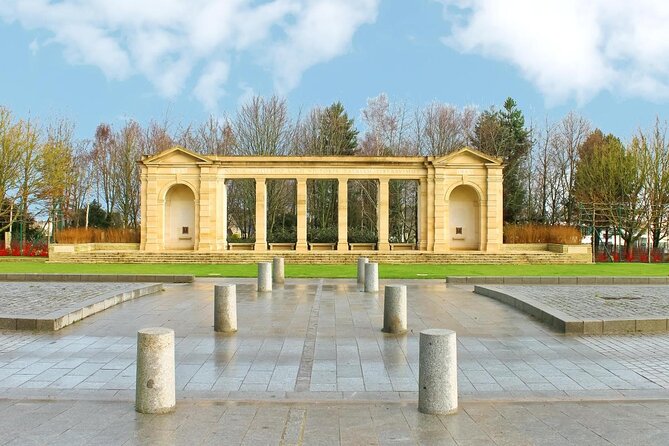
- A full eight-hour route from Bayeux: Start at 9:00 a.m. and return to the central meeting point at Place du Québec.
- A private Jeep experience: Only your group participates, with space for up to three people at the listed group price.
- Major American and British sites: See Pointe du Hoc, Omaha Beach, the American Cemetery, Longues-sur-Mer, and Arromanches.
- Back roads and bocage country: The Jeep takes you beyond the beaches and into the lanes and hedgerows that shaped the battle.
- Strong guide-led storytelling: Guides such as Kate, Arnaud, Adrian, and Amandine explain both military decisions and individual acts of courage.
- Weather matters: The tour operates in all weather conditions, but poor weather can lead to cancellation, and the open vehicle needs warm clothing.
Why the Jeep changes your view of Normandy
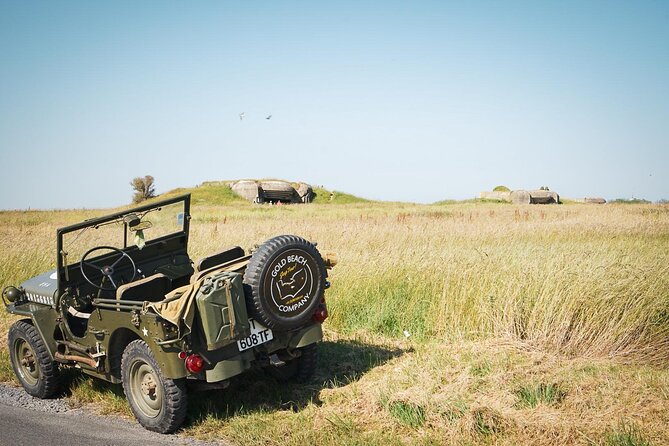
A standard minibus tour can cover more ground with less exposure to the elements. This Jeep tour offers the opposite trade-off. You sit close to the road, feel the breeze, and move through the same kind of narrow rural setting that made the Normandy campaign so demanding.
The vehicle is a major part of the experience, not just transport between stops. The Jeep is described as having been used during WWII, and several guides use the vehicle itself to give the day a stronger sense of place. You are not simply looking at a military display behind glass. You are riding in an open vehicle through villages, lanes, and farm tracks.
That setting matters. The beaches are only one part of the D-Day story. Once Allied forces moved inland, the hedgerows and sunken lanes became a serious obstacle. The thick banks and small fields limited visibility and made movement difficult. A Jeep ride through this countryside gives you a clearer sense of why progress after the landings was slow and costly.
The private format also helps. Your group can ask for more explanation at a stop, request a little extra time, or focus on a particular part of the campaign. The listed capacity is up to three people per group, making this a good choice for a couple, a small family, or a compact group of friends.
Other days on the landing beaches from Bayeux:
- Normandy American D-Day Beaches Full Day Tour from Bayeux
★ 5.0 · 2,103 reviews - Normandy American D-Day Experience – Group tour from Bayeux
★ 5.0 · 1,566 reviews - Normandy Beaches Half-Day Afternoon Trip from Bayeux (A2)
★ 4.5 · 1,116 reviews
Pointe du Hoc, where the cliffs were only the beginning
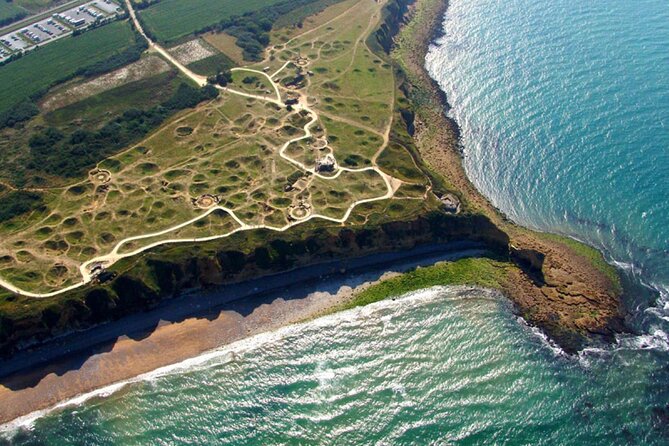
The first major stop is Pointe du Hoc, with about 30 minutes set aside. This headland was attacked by the 2nd Ranger Battalion, whose task was to scale the cliffs and capture German guns believed to threaten the beaches below.
Your guide explains why this position mattered and how the operation unfolded. The value here is not just the view. It is the connection between the high ground and the wider invasion plan. A gun position at Pointe du Hoc could reach landing areas along the coast, so taking it was important even though the site itself was small compared with the beaches.
Thirty minutes is enough for an introduction, a look around, and photographs, but it is not a long archaeological or museum visit. If you want a very detailed study of the Rangers’ movements, you may find the time tight. The strength of this tour is the broad day, not a deep examination of one site.
The guide-led explanation is especially useful here. The ground can appear peaceful now, and without context it is easy to miss the scale of the attack. A good guide helps you picture the cliffs, the exposed approach, and the pressure on the soldiers who had to take the position.
Omaha Beach, where the human cost comes into focus
The tour then reaches Omaha Beach for roughly 30 minutes. This is one of the most important D-Day locations, but it is also one of the easiest places to misunderstand if you arrive without guidance. The wide shore and calm sea do not immediately reveal how dangerous the landing was.
Your guide sets the beach within the larger operation and keeps attention on the people who faced the assault. The emotional weight of the stop comes from that contrast: the ordinary appearance of the beach today against the enormous loss of life on June 6, 1944.
You will have time to stand on the sand, look back toward the land, and hear how the terrain affected the attack. The stop is brief, so expect a focused explanation rather than a long period for quiet reflection. The next visit, at the American Cemetery, gives the day more space for that.
The Jeep is useful here because it links the beach to the roads behind it. You are not seeing Omaha as an isolated strip of coast. You are following a route through the wider area, where movement away from the shore was just as difficult as getting onto it.
Colleville-sur-Mer American Cemetery, a quiet pause
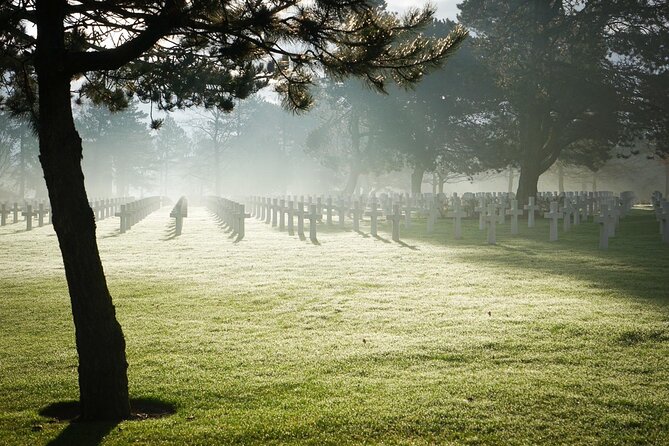
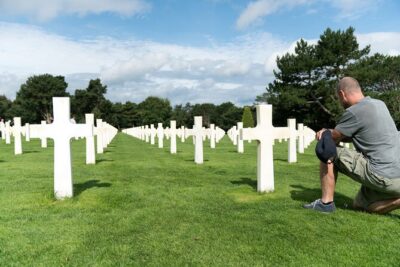
The American Cemetery at Colleville-sur-Mer receives about 45 minutes, the longest scheduled stop of the day. That extra time is appropriate. The cemetery is a place for silence, scale, and personal reflection rather than a quick photograph.
Your guide can provide the historical frame, but this is also the point where you should leave room for your own response. Rows of graves make the cost of the campaign visible in a way that maps and battle plans cannot.
One useful detail from the guiding experience is the emphasis on individual soldiers, not only generals and large movements. Guides such as David have worked with D-Day veterans and bring first-hand recollections into the conversation. Other guides, including Kate, connect the area to long family ties in Normandy. Those personal links can make the cemetery feel less like a formal stop and more like part of a living local story.
The cemetery is also a practical place to slow down after the beaches. Forty-five minutes may still feel short if you want to explore every section, but it gives you a more respectful amount of time than a quick roadside visit.
Other battlefield and wartime sites reachable from Bayeux:
- Normandy Battlefields Tour – American Sites (A3)
★ 5.0 · 876 reviews - Normandy Battlefields D-Day Private Trip with VIP Services from Paris
★ 5.0 · 240 reviews - Full-Day US Battlefields of Normandy Tour from Bayeux (A3LST)
★ 5.0 · 214 reviews - Full-Day Canadian Battlefields & sites Normandy Tour from Bayeux
★ 5.0 · 191 reviews
The unnamed fishing port and the campaign’s supply story
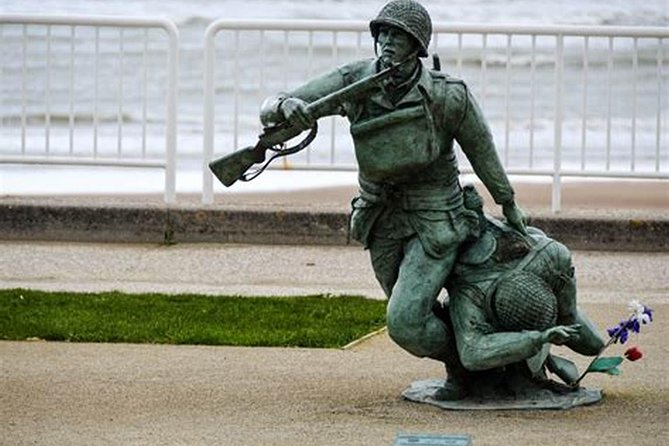
The route includes a stop at a small fishing port known for scallops and for the oil operation that followed D-Day. The supplied details do not identify the town by name, so you should treat this as a coastal stop rather than plan around a specific harbor.
This break adds useful contrast. Normandy was not only a battlefield. It was also a working region of fishing villages, farms, and ports. The reference to the post-invasion oil operation points toward the practical problem of supplying Allied forces after the landings.
The stop may appeal to you if you like seeing ordinary local life alongside military sites. It also provides a change of pace after the cemetery and beaches. Since no visit length is supplied, ask your guide on the day how much time is planned there.
Lunch is not listed as included. One guide, Kate, took a group to a favorite restaurant where they enjoyed quiche, but that is not presented as a guaranteed part of every departure. Bring money for food and ask about the lunch plan at the start of the morning.
Longues-sur-Mer, a clear look at the Atlantic Wall
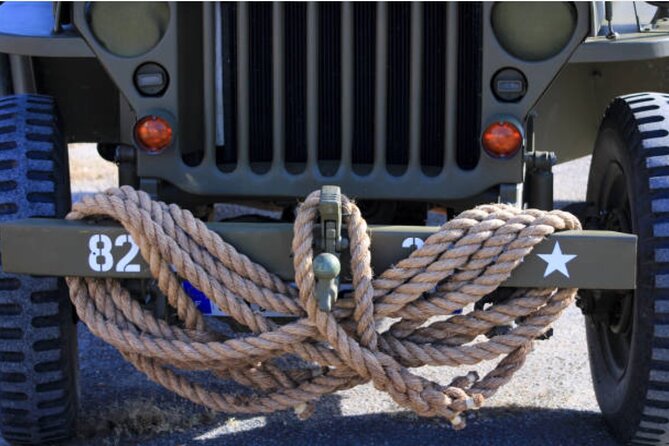
At Batterie Allemande de Longues-sur-Mer, you spend about 30 minutes examining a German coastal fortification. This is one of the more concrete military stops because the site shows how the Atlantic Wall was designed to control the coast.
The battery helps you understand the defensive system behind the beaches. Rather than seeing only where Allied troops landed, you see the structures meant to stop ships and protect the German position. The fortification is a strong match for visitors who want physical evidence of wartime planning.
Again, the guide is important. Concrete bunkers and gun positions can seem self-explanatory, but the reason for their placement and their role in the invasion are easier to grasp when someone ties them to the coastline and the naval approach.
Thirty minutes gives you a useful overview, not a full military engineering study. The tour’s strength is the way it places this battery between the American sites and the British-focused stop at Arromanches.
Arromanches and the artificial harbor
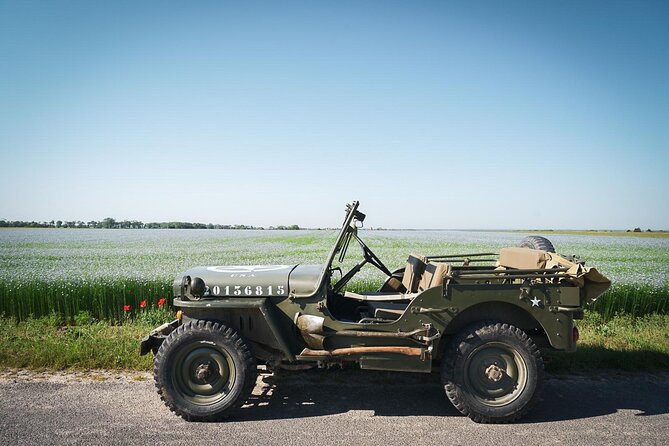
The final named stop is Arromanches-les-Bains, with around 30 minutes. The town is linked to Mulberry B, the artificial harbor built by the British to bring men, vehicles, fuel, and supplies ashore after the initial landings.
This is one of the clearest places to understand Allied engineering. Capturing beaches was only the first task. The armies then needed a working supply system, and the artificial harbor helped keep the advance moving.
The stop also broadens the story beyond the American experience. Pointe du Hoc, Omaha Beach, and Colleville focus heavily on the American contribution. Arromanches highlights British planning and construction, giving the day a more complete view of the Allied effort.
You should expect an exterior visit and guide explanation rather than a long museum session. The 30-minute stop works well as part of a full route, though anyone wanting extensive time in Arromanches may prefer to return separately.
How the guides shape the day
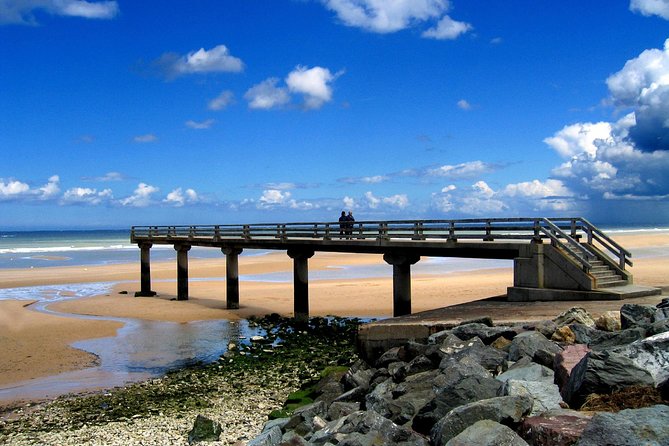
The guide is the most important variable in a tour like this. The vehicle and route create atmosphere, but the explanations determine how much you take away.
The named guides connected with this experience include Adrian, Amandine, David, Thomas, Vincent, Kate or Katell, Arnaud, and Dean. Their backgrounds and styles differ, but the available information points to several traits worth seeking: clear speech, strong knowledge of the invasion, enthusiasm, and a willingness to discuss both the big picture and personal stories.
That last point matters. A good explanation should connect military choices with the experience of individual soldiers. Amandine is described as combining broad WWII context with concrete stories. David draws on time spent volunteering with D-Day veterans. Kate brings family ties to the area and a strong connection to the local story.
If you are hard of hearing, one guide has been praised for speaking clearly and loudly enough to follow. Still, the Jeep is open and roadside conditions can add noise, so tell your guide at the start if you need them to face you or repeat details.
The tour may be operated by a multilingual guide. If you need a specific language, confirm it before booking rather than assuming English is the only option or that every guide will use it throughout.
Price, group size, and what you receive
The price is $1,141.33 per group of up to three. That sounds high until you divide it across a full private day: with three people, the listed cost is about $380 per person for eight hours, before any food or personal spending.
You are paying for a private driver-guide, the Jeep, local guiding, round-trip transport from central Bayeux, and a route covering several major sites. The price makes more sense for three people sharing the cost than for one person alone.
The tour is less attractive if your main aim is the lowest possible price. A larger coach excursion may cost less per person, and a rental car gives you more control. The trade-off is that you would need to plan the route, interpret the sites, and handle the driving yourself.
I see the strongest value in the guiding and the private vehicle, not in the admission savings. The listed stops have no admission charge, so the expense is mainly for time, transport, access to the rural route, and the guide’s interpretation.
The tour is booked an average of 61 days ahead, which suggests you should not leave it until the last moment during a busy Normandy visit. Confirmation is provided at booking, and the meeting point is Place du Québec in Bayeux at 9:00 a.m.
What to wear and how demanding the day feels
The tour runs in all weather conditions, but the cancellation terms also state that poor weather can lead to a different date or a full refund. You should dress for exposure rather than for the temperature you feel while standing in Bayeux.
A warm layer is essential. Several accounts point out that the breeze in the open Jeep can feel cold, even when the weather is bright. Waterproof clothing and sturdy shoes are sensible because the route includes outdoor battlefield sites and rural stops.
The required fitness level is moderate. You should be comfortable getting in and out of a Jeep, standing at outdoor sites, and walking around beaches, cemeteries, and fortifications. The exact walking distance is not provided, so anyone with mobility concerns should ask the operator for more detail before booking.
Children must be accompanied by an adult. Service animals are allowed, and the meeting point is near public transportation.
Who should book this Normandy Jeep tour?
I would choose this tour if you want one full day that combines the major D-Day sites with a more personal ride through the countryside. It suits first-time visitors who want structure, couples and families who prefer a private group, and WWII enthusiasts who value interpretation over a quick photo stop.
It also works well if you have limited time in Bayeux. In eight hours, you cover Pointe du Hoc, Omaha Beach, the American Cemetery, a coastal fishing port, Longues-sur-Mer, and Arromanches. That is a lot for one day, but the route is organized around a clear story: landing, resistance, remembrance, defense, and supply.
You may want another option if you dislike open vehicles, need long unhurried visits at each site, or want a museum-heavy day. The 30-minute stops are useful introductions, but they do not allow for every exhibit or every corner of each location.
Should you book it?
Book this Normandy Jeep tour if the idea of riding in a WWII-era vehicle through the bocage appeals to you as much as seeing the beaches. The strongest parts are the private format, the range of major sites, and the guides who connect battlefield decisions with individual lives.
The price is substantial, especially for one or two people, and lunch is not guaranteed. Yet for three people sharing the fee, the private transport and full-day guiding offer a reasonable way to see a wide stretch of the D-Day area without planning every turn yourself.
Pack warm clothes, allow room for an emotional day, and ask about the guide and lunch arrangements when you confirm. If you want Normandy to feel like more than a line of monuments, this is a strong choice.
FAQ
Where does the Normandy Jeep tour start?
The tour starts at Place du Québec, Pl. du Québec, 14400 Bayeux, France. The start time is 9:00 a.m.
Does the tour return to Bayeux?
Yes. The activity ends back at the meeting point in Bayeux.
How long does the tour last?
The tour lasts approximately eight hours.
How many people can join the private tour?
The listed price covers a private group of up to three people. Only your group participates.
Which D-Day sites are included?
The route includes Pointe du Hoc, Omaha Beach, the American Cemetery at Colleville-sur-Mer, a coastal fishing port, Longues-sur-Mer German Battery, and Arromanches-les-Bains.
What happens if the weather is poor?
The tour operates in all weather conditions, but it requires good weather and may be canceled if conditions are poor. In that case, you can be offered another date or a full refund. You should also dress appropriately, since the Jeep is open.
Just added in Bayeux
- Small Group Guided D-Day Tour and Mémorial de Caen Museum★ 5.0 · 237 reviews
- Private Day Tour including Normandy Landing Beaches & Battlefields from Caen★ 5.0 · 53 reviews
- Normandy: Private tour D-Day landing beaches American sector★ 5.0 · 62 reviews
- Guided Tour in an Old Convertible Car on the Côte de Nacre★ 5.0 · 66 reviews
- Mémorial de Caen Museum Admission and Guided Tour of D-Day Sites★ 4.5 · 275 reviews
- WW2 Jeep or Dodge truck tour of the Omaha Beach site★ 5.0 · 51 reviews
- 2- to 6-hour sidecar excursion on the D-Day Landing Beaches★ 5.0 · 131 reviews
- Private American landing beaches tour from Bayeux★ 5.0 · 36 reviews
Normandy D-Day Tours, compared.
Normandy D-Day Sites & Cemetery Day Trip from Paris with Lunch
Read our review →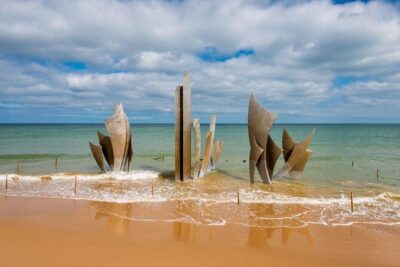
Normandy D-Day Small-Group Day Trip with Omaha Beach, Cemetery & Cider Tasting
Read our review →
Normandy D-Day Beaches and American Cemetery Day Trip from Paris
Read our review →
Normandy American D-Day Beaches Full Day Tour from Bayeux
Read our review →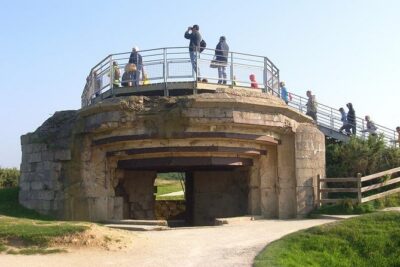
Normandy American D-Day Experience – Group tour from Bayeux
Read our review →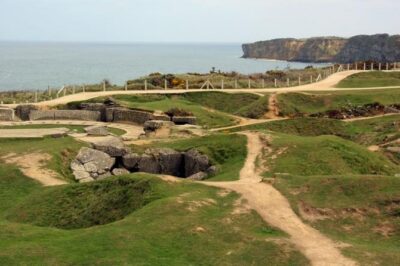
Normandy Beaches Half-Day Afternoon Trip from Bayeux (A2)
Read our review →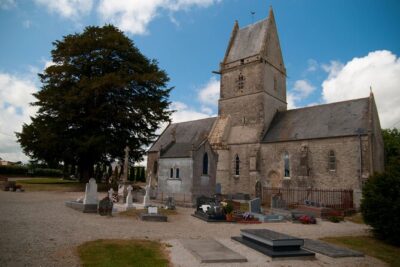
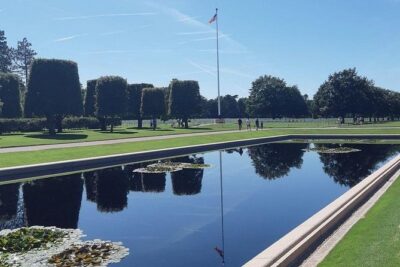
Omaha Beach D-Day Experience – Afternoon group tour from Bayeux
Read our review →Browse the lists this tour appears in