
Reviewed · TOURS IN BORDEAUX
Dordogne Day Tour : Prehistory and The Art of the Caves from Sarlat
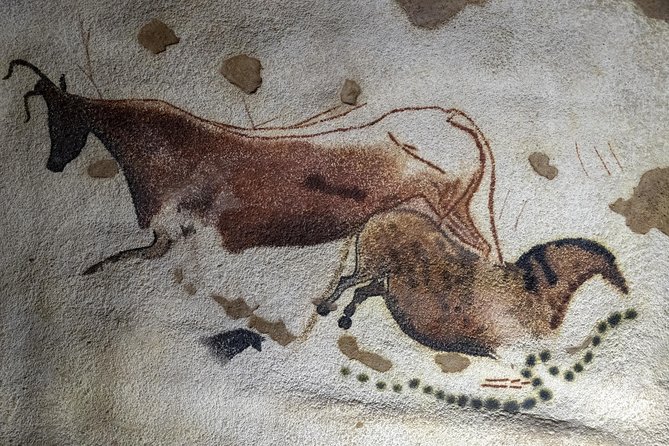
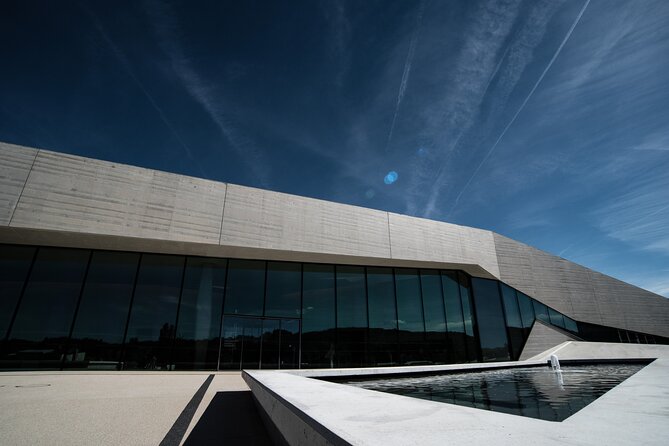
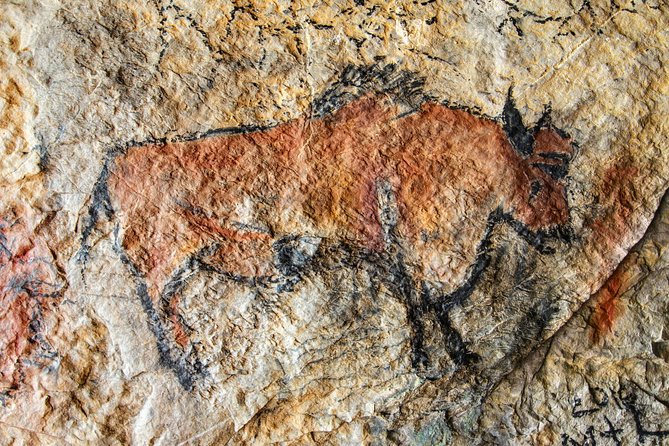
The ancient art is the star here, but the best part is the story around it. At the National Museum of Prehistory, you get the tools, bones, timelines, and human context needed to make sense of the cave paintings later. Then Lascaux IV gives you an impressive replica of one of Europe’s most famous decorated caves.
I like the small group of no more than eight, which gives guides such as Benoît, Anne, Florence, and Martin room to answer questions. I also like the practical design: admissions are covered, transport is handled, and lunch is left flexible. The main caution is that the day is long, some cave visits are crowded, and English commentary inside Lascaux IV is limited.
Key points before you book
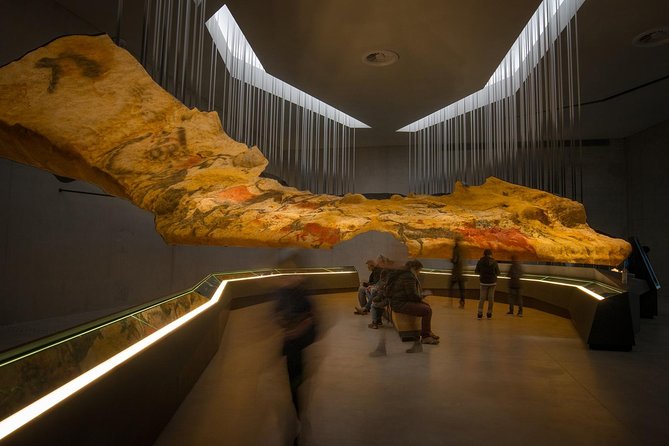
- Lascaux IV is a full-scale replica, not the original cave, but its presentation makes the paintings easy to see without damaging the fragile original site.
- The National Museum of Prehistory comes first on the published schedule, giving you useful context before the caves.
- The tour is capped at eight people, a real advantage when a guide is explaining museum displays or managing timed entries.
- Cave temperature is about 13°C, or 56°F, so bring a warm layer even on a hot Dordogne day.
- The exact order can change because Lascaux IV visits are tied to reserved time slots.
- The published route names La Roque Saint-Christophe, while several described departures include Grotte de Rouffignac instead, so confirm the precise stops before paying.
Why this day makes prehistoric art easier to understand
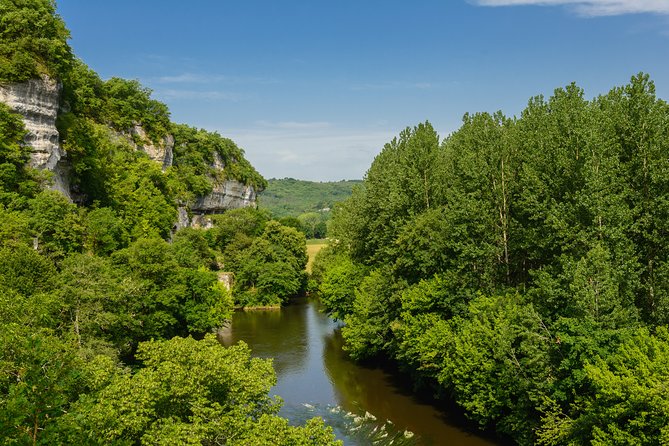
The Dordogne is one of the best places in France to connect museum objects with the caves and cliffs where early people lived. You are not simply looking at painted animals in a dark room. You are learning how people made tools, used shelters, moved through caves, and created art thousands of years ago.
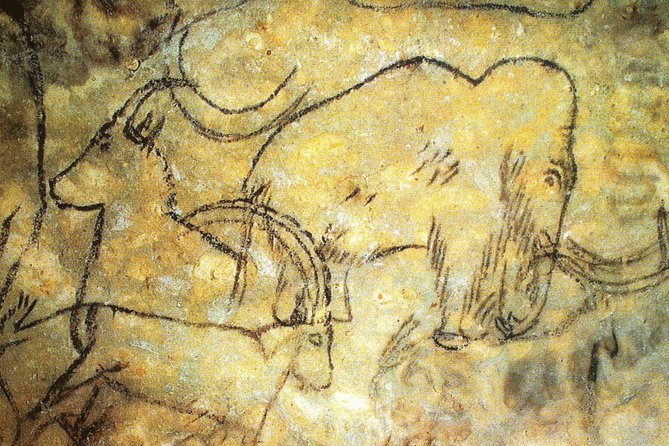
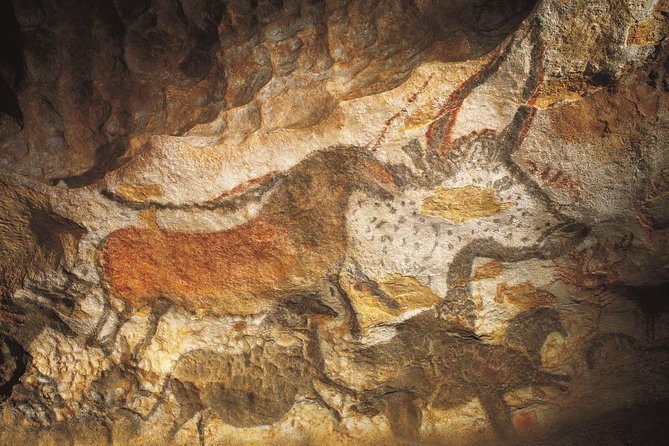
That order matters. A guide can point out a small stone tool or bone object in the museum and explain why it belongs to a certain period. Later, when you see a bison, horse, or mammoth painted on a cave wall, the image has a time and place around it.
This is where the guide adds real value. Guides such as Benoît and Martin have been praised for making the museum manageable rather than allowing its large collection to become a blur of cases. Anne has been particularly noted for selecting the important displays and explaining the different human species and timelines in clear English.
The tour is based in Sarlat-la-Canéda, although the supplied location information also lists Bergerac. That matters if you are arranging transport. The official meeting point is Place Pasteur in Sarlat, at 9:00 a.m., and the day returns there after roughly nine hours. Hotel pickup and drop-off are not included.
Other trips people book in Bordeaux:
- Bordeaux: Cité du Vin Entry Ticket and Wine Tasting
★ 4.6 · 3,885 reviews - Bordeaux: River Garonne Cruise with Glass of Wine and Canelé
★ 4.5 · 3,630 reviews - From Bordeaux: Afternoon Saint-Emilion Wine Tasting & snack
★ 4.8 · 1,581 reviews
The National Museum of Prehistory at Les Eyzies
The museum is the right first stop because it gives you a framework for the rest of the day. Its exhibits cover early human life and Paleolithic art, with extensive displays of tools, remains, and other objects from the region.
You have about two hours here, with admission included. On your own, it would be easy to spend too much time reading every panel or to miss the objects that best explain the period. A guide can keep the visit moving and focus your attention on the pieces that connect directly with the caves.
I especially like this stop for families and anyone who does not already know the basic prehistoric timeline. The subject can become confusing quickly, with different Homo species, changing tools, and vast stretches of time. A good guide turns that into a story you can follow.
The museum is also a useful reality check. Cave paintings often receive all the attention, but the objects show the practical side of ancient life. You begin to think about how people hunted, cut materials, made fire, and adapted to their surroundings before seeing the art itself.
Plan on walking and standing. The entire tour includes stairs, and the day is not suitable for people with mobility problems. Children under four cannot join, and children who do attend must be accompanied by an adult.
La Roque Saint-Christophe and the Dordogne cliffs
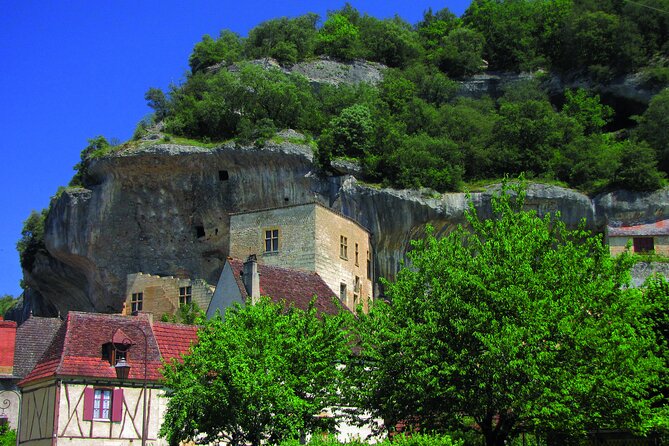
The published itinerary next takes you to La Roque Saint-Christophe, a sheer limestone cliff with human occupation reaching back to Paleolithic times. The site shows how people used natural rock shelters and later adapted the cliff with practical construction and engineering.
You have about two hours here. This is not simply another cave stop. The focus is the relationship between people and the cliff itself, including the way natural overhangs and vertical rock offered shelter and protection.
A guide can help you picture the scale of the site and explain how living spaces developed against the rock. Without that context, you may see an impressive cliff but miss the human decisions behind it.
The setting also breaks up the museum and cave visits. After two hours indoors, fresh air and a dramatic limestone wall are welcome. Wear shoes suited to stairs and uneven surfaces, since this is an active sightseeing day rather than a seated museum excursion.
One clarification is worth making before you book. The published schedule names La Roque Saint-Christophe, while several described departures include Grotte de Rouffignac instead. Rouffignac is known for a small train that carries you farther into the cave, where prehistoric drawings and engravings can be viewed. Since the order and exact site can depend on reservations, confirm which version of the route applies to your date.
Lunch in Montignac, with room to choose
The itinerary allows about two hours for lunch in Montignac-Lascaux. The meal is not included, and you can follow your guide’s recommendation or choose a restaurant yourself.
This flexible pause is useful because a fixed group meal can consume time and limit choice. Guides such as Martin and Anne have offered restaurant suggestions in the area, and some described departures have included an extra stop in Saint-Léon-sur-Vézère. That kind of local advice can turn an ordinary break into one of the more pleasant parts of the day.
Still, do not treat lunch as an unlimited restaurant outing. The tour has timed cave admissions, and the order may change. Keep an eye on the meeting time and stay close enough to return promptly.
The lunch break also gives you a chance to recharge. Nine hours of museum floors, stairs, transport, and cave visits is a full day. A relaxed meal helps, but you should not expect a long, leisurely afternoon.
Same base, a different kind of day:
- Medoc or Saint Emilion Wine Tasting and Chateau from Bordeaux
★ 5.0 · 1,415 reviews - Saint Emilion Day Trip with Sightseeing Tour & Wine Tastings from Bordeaux
★ 5.0 · 1,120 reviews - Saint-Émilion: Grand Cru Classé Winery Visit and Tasting
★ 4.6 · 1,118 reviews - Saint Emilion Half-Day Trip with Wine Tasting & Winery Visit from Bordeaux
★ 4.5 · 1,034 reviews
Lascaux IV and the art of the original cave
Lascaux IV is the major finish. It recreates the famous decorated cave and includes a modern presentation explaining its discovery and the paintings inside.
You spend about three hours at the Lascaux complex, with admission included. The replica lets you see the art at close range without sending large numbers of people into the original cave. That protection is essential, since temperature, humidity, breath, and constant contact can harm prehistoric paintings.
The presentation is also more accessible than a bare cave wall. You can study the shapes, colors, and placement of the animals, then learn about painting methods and possible reasons for working in the cave. The experience connects modern technology with art created roughly 15,000 years ago.
There are two limits to keep in mind. First, English tours inside Lascaux IV are very limited. Most cave presentations are in French, and simultaneous translation is not allowed inside. Your English-speaking guide explains the cave before and after the visit, but the central presentation may be harder to follow if you do not understand French.
Second, the site can feel crowded. Timed groups move through together, and a large group may make it hard to see every section or hear the guide. One guide may be excellent while the official cave presenter speaks accented or less familiar English. The quality of the interpretation inside can therefore vary.
If you care most about quiet, close observation, Lascaux IV may not be your favorite stop. If you want a polished, accessible way to see the famous paintings without entering the fragile original, it is essential.
What the small group adds
The maximum group size is eight. That is small enough for a guide to notice when you have fallen behind, answer a question without stopping the whole day, and make useful suggestions for lunch or free time in Sarlat.
The vehicle is shared, and the guide serves as both driver and interpreter. That saves you from arranging several separate admissions and navigating rural roads between sites.
The strongest guides bring the area to life beyond the printed schedule. Benoît has been praised for his enthusiasm for prehistoric art, his sense of humor, and his ability to explain theories about how and why paintings were made. Martin has been described as especially strong on prehistoric subjects and time management. Florence, Anne, Marion, Miriam, and Emilion have also led departures described as friendly, professional, and clear in English.
Guide quality is not completely predictable, of course. The guides are employed by the local operator Ophorus, and the day depends partly on who is assigned. A strong guide can make a crowded museum feel focused. A less effective explanation at Lascaux can leave you wishing for more.
Timing, meeting point, and the one rule you cannot ignore
Meet at Place Pasteur in Sarlat at 9:00 a.m. The experience ends back at the same meeting point. Since hotel pickup is not included, leave extra time to find the exact meeting area and reach it before departure.
Do not cut the arrival close. This is a shared small-group tour with timed admissions. A guide may be unable to wait for a late arrival without disrupting the other seven people and the reserved cave slots.
One poor experience described a family missing the departure after confusion over the meeting location and a short delay while arranging parking. The lesson is simple: confirm whether the meeting point means the bus stop or nearby parking area, and arrive early. If your group is larger than four and you need flexibility, a private tour may be a better fit.
The sequence of visits may change according to the Lascaux IV reservation. That is normal for a timed attraction, but it means you should not assume the museum, cliff site, lunch, and Lascaux will occur in exactly the order printed.
Is $199.55 good value?
At about $199.55 per person, this is not a cheap sightseeing day. But the price includes transport, an English-speaking driver-guide, live commentary, a professional guide, and entrance fees to the National Museum of Prehistory, Lascaux IV, and La Roque Saint-Christophe.
Buying those admissions and organizing transport separately would take time, and Lascaux reservations can be difficult to coordinate with other sites. The group size also gives this more personal attention than a large coach tour.
The value is strongest if you want prehistoric sites but do not have a car, do not speak French, or want someone to explain what you are seeing. It is less compelling if you are happy to drive yourself, prefer to set your own pace, or want to spend most of the day at one cave.
Lunch costs extra. You should also account for your transport to and from Sarlat, since the listed start and finish are at the meeting point rather than your hotel.
What to wear and who should skip it
Bring a warm layer. The caves are about 13°C, or 56°F, even when the Dordogne outside is hot. Comfortable shoes are important because the day includes stairs and walking.
The tour suits adults, older children, and anyone curious about archaeology, early human life, or art. It is a strong choice for families with children old enough to handle a long day, provided each child has an accompanying adult.
It is not suitable for children under four, people with mobility issues, or anyone who dislikes fixed schedules and shared transport. Pets are not allowed.
You should also be comfortable with the possibility that parts of the Lascaux visit will be in French. Your guide supplies context in English, but cannot provide simultaneous translation inside the cave.
Should you book this Dordogne prehistory tour?
Book it if you want a full day that links museum objects, cliff shelters, prehistoric caves, and Lascaux in one carefully arranged outing. The small group, included admissions, and local guides can save you substantial planning and give you much more meaning than a quick independent visit.
I would be especially inclined to book if Benoît, Anne, Martin, Marion, or another strong English-speaking guide is assigned, though guide availability may change. Confirm the exact cave stops, meeting point, and Lascaux language arrangements before finalizing.
Skip it if you need hotel pickup, cannot manage stairs, want a slow day, or expect every cave explanation to be in English. For most people who have come to the Dordogne specifically for prehistoric art, though, this is a worthwhile use of nine hours, provided you arrive early and bring a sweater.
FAQ
Where does the tour start?
It starts at Place Pasteur in Sarlat-la-Canéda at 9:00 a.m.
Where does the tour end?
The activity ends back at the meeting point in Sarlat.
How long does the tour last?
The tour lasts approximately nine hours.
Is transportation included?
Shared transportation with an English-speaking driver-guide is included. Hotel pickup and drop-off are not included.
What admission fees are included?
Admission to the National Museum of Prehistory, Lascaux IV, and La Roque Saint-Christophe is included.
Is lunch included?
No. Lunch is not included, and you can choose a local restaurant or follow a recommendation from your guide.
Will the Lascaux visit be in English?
English tours inside Lascaux IV are very limited. Most visits are in French. Your guide explains the cave before and after the visit, since simultaneous translation inside is not allowed.
How large is the group?
The maximum group size is eight people.
Is the tour suitable for children and people with mobility issues?
Children must be accompanied by an adult, and children under four are not allowed. The tour includes stairs and is not recommended for people with mobility issues.
Just added in Bordeaux
- Au Cœur du Château – VSOP D’USSÉ & XO BARON OTARD★ 4.5 · 108 reviews
- Discover Braastad Cognac★ 5.0 · 52 reviews
- retro road trip/ Méhari, 2CV & Burton in Rochefort, La Rochelle★ 5.0 · 28 reviews
- Saint Emilion Full Day Wine and Bike Tour★ 5.0 · 167 reviews
- Virtual Room Bordeaux – 1st team virtual reality experience★ 5.0 · 47 reviews
- Private Bordeaux History Tour with a glass of Bordeaux wine.★ 5.0 · 28 reviews
- Wine Masterclass & Cheese Tasting Workshop in Bordeaux★ 5.0 · 29 reviews
- Bordeaux bike tour “The Best of Bordeaux”★ 5.0 · 164 reviews
Tours in Bordeaux, compared.

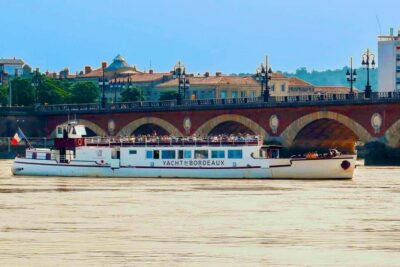
River Garonne Cruise with Glass of Wine and Canelé
Read our review →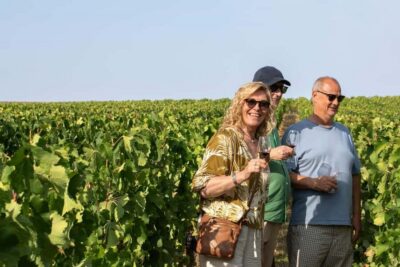
Afternoon Saint-Emilion Wine Tasting & snack
Read our review →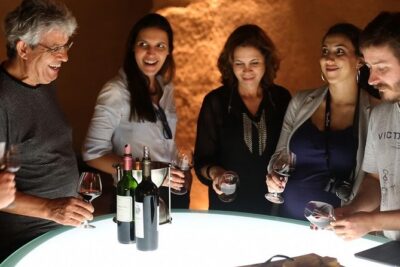
Medoc or Saint Emilion Wine Tasting and Chateau from Bordeaux
Read our review →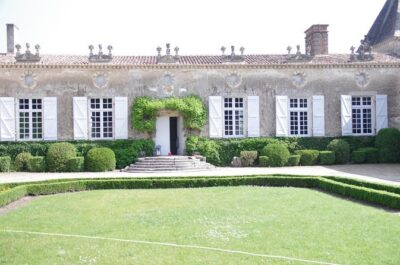
Saint Emilion Day Trip with Sightseeing Tour & Wine Tastings from Bordeaux
Read our review →
Saint Emilion Half-Day Trip with Wine Tasting & Winery Visit from Bordeaux
Read our review →
Browse the lists this tour appears in