
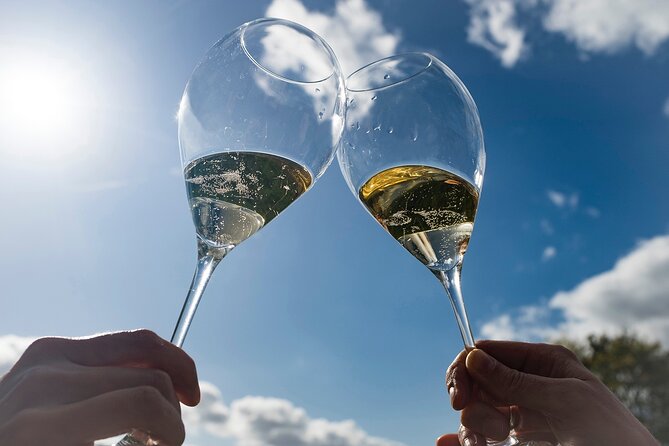
Reviewed · CHAMPAGNE TASTINGS
Bubble Champagne Tour from Epernay (Small group half day tour)
The best part of this tour is the change of scale. You move from Épernay’s grand Champagne houses to a family-run grower in Oger, where the work happens on a smaller, more personal level. You also visit Hautvillers, see Dom Pérignon’s tomb, and take in a fine view over the Marne Valley.
I like the small group of two to eight and the wide range of tastings. Guides such as Isabelle, Philippe, Marine, and Charlotte bring plenty of local knowledge, and the three Grand Cru Champagnes are joined by Ratafia, Fine de la Marne, and Marc de Champagne. The main consideration is time: in three and a half hours, you see several places, but stops and photo time can feel brief.
Key points at a glance
- Hautvillers puts the Dom Pérignon story in context: Visit the church where his tomb lies and hear why calling him the inventor of Champagne is too simple.
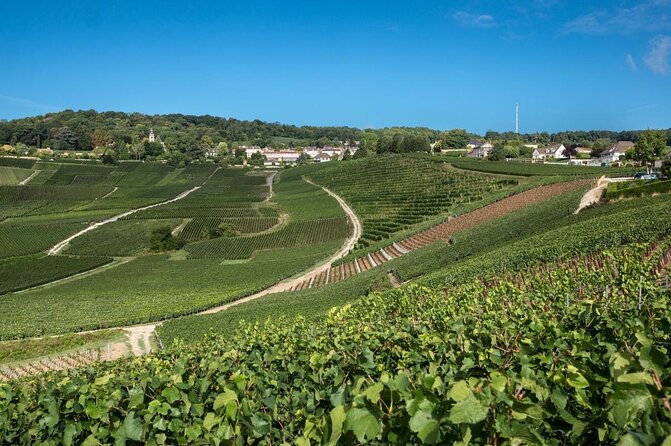
- The Marne Valley view is a highlight: Stop among Pinot Noir vines for a broad panorama and an explanation of Champagne’s soil, grapes, and vineyard work.
- Oger offers a more personal wine visit: Tour a family estate dating from 1864, including its press, cellar, and production areas.
- Three Grand Cru Champagnes are included: Taste different styles, including brut, vintage, oak-aged, and Champagne without added dosage.
- Local spirits add variety: Try Ratafia Champenois, Fine de la Marne, and Marc de Champagne from Goyard Distillery.
- The route is efficient but full: You see Hautvillers, the Côte des Blancs, Épernay, and the Avenue de Champagne in one half-day.
Why this Épernay Champagne tour is different
Many Champagne visits focus on a famous house, a polished cellar, and a carefully managed tasting room. This tour gives you that grand-house setting from the outside, then takes you into the vineyards and a small producer’s cellar. That contrast is the point.
The route covers two important parts of the region. Around Hautvillers and the Marne Valley, Pinot Noir is a major presence. South of Épernay, the Côte des Blancs is known for Chardonnay and its Grand Cru villages. You will pass through Cramant and Avize, then spend the main visit in Oger, another Grand Cru village known for Blanc de Blancs Champagne.
The vehicle is premium and air-conditioned, and the guide drives while explaining the region. With no more than eight participants, you can ask questions without trying to catch a guide’s attention from the back of a large bus. Some departures may be private if only two people book, while a full group still remains small enough for conversation.
The tour costs about $187.06 per person. That is not a bargain-basement tasting, but the price includes transport during the tour, a guide, the estate visit, three Grand Cru Champagnes, and three regional alcohols. If you booked separate tastings and paid for a taxi or rental car between villages, the cost could quickly rise. The value is strongest if you want a guided introduction in a short window and care about seeing a grower estate rather than only a major brand.
Other champagne houses to visit from Epernay:
- Champagne: Champagne Tasting Class with Lunch
★ 4.9 · 384 reviews - Aÿ-Champagne: Champagne House Tour and Tasting Class
★ 4.9 · 209 reviews - Passy-Grigny: Chocolate and Champagne Tasting Tour
★ 4.8 · 208 reviews
Hautvillers and the real Dom Pérignon story
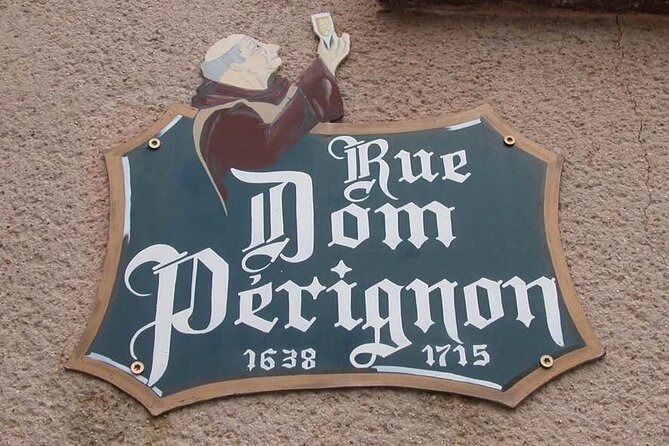
The first stop is Abbaye Saint-Pierre d’Hautvillers, in the village widely called the Cradle of Champagne. The church contains the grave of Dom Pérignon, the Benedictine monk linked so closely with Champagne that his name now appears on one of the world’s most famous bottles.
Your guide explains his role and addresses the familiar question: did Dom Pérignon invent Champagne? The useful answer is more complicated than the legend. This stop helps separate the marketing story from the wider development of Champagne production.
The church visit lasts about 30 minutes and has no separate admission charge. It is not a grand, extended abbey tour. Think of it as a compact historical introduction before you enter the vineyard country. If you want a full religious or architectural visit, this will feel brief. If you want a clear explanation of why Hautvillers matters, the timing works well.
Hautvillers itself is a pleasant village setting, and the route gives the Dom Pérignon story a sense of place. You are not only hearing about a famous name in a tasting room. You are standing in the village tied to his work and to the early story of Champagne.
The Marne Valley view and the work behind the bottle
From the village, the tour heads into the historic hillsides of Champagne, a UNESCO World Heritage Site. The stop lasts about 45 minutes and focuses on the view over the Marne Valley, with vineyards spread across the slopes.
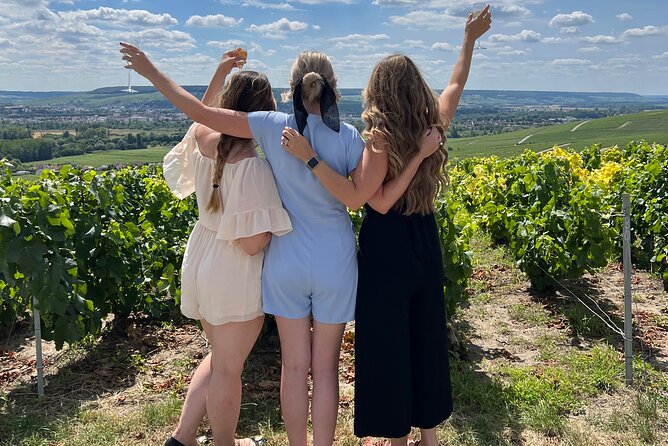
This is the place to have your camera ready. The panorama is one of the tour’s strongest visual moments, and the setting gives you a quick lesson in how vineyards occupy the hills around Épernay. The vines here are mainly planted with Pinot Noir, so the guide can explain how this grape differs from the Chardonnay-dominated Côte des Blancs.
You will also hear about grape varieties, the local terroir, sustainable viticulture, and the work required in the vines. That information matters because it connects the tasting to the ground beneath the vines. Champagne is not simply a brand or a production method. The village, slope, exposure, grape, and producer all affect what reaches your glass.
Photo time is one area where expectations need adjusting. The itinerary allows a useful stop, but it is still a scheduled half-day tour. You may not have unlimited time to wander along every viewpoint or wait for perfect light. If photography is your main purpose, a longer private visit would give you more freedom. For most people, the stop provides enough time for several photos and a clear view.
Driving through the Côte des Blancs
The route then turns south of Épernay toward the Côte des Blancs, known as the kingdom of Champagne Chardonnay. Cramant and Avize are Grand Cru villages, a designation that marks the highest level in the Champagne appellation.
The drive is part of the lesson. Rather than rushing straight to a tasting room, you pass through the villages and see how the region changes from the Marne Valley. The guide points out the largest bottle factory, Château de Saran, and the Montaigu site associated with Moët & Chandon’s Champagne production.
Château de Saran is a private LVMH property used for major customers and VIPs, so you view it from the route rather than tour inside. The same applies to the production sites. These glimpses help explain the power and scale of the big Champagne companies, but they are not substitutes for a house tour.
The drive may use some of the same roads on the way back to Épernay. If you expect a constantly changing route with a new photo stop at every turn, this tour may feel more limited. Its purpose is to connect the best-known villages and the small estate within a short period, not to provide a full day of rural touring.
Same base, a different kind of day:
- From Reims: Champagne and Family-Run Wineries Tour
★ 4.8 · 671 reviews - Aÿ-Champagne: Pressoria Champagne Museum with Tasting
★ 4.7 · 239 reviews - The Essential Tour from Epernay with Champagne Tasting
★ 4.9 · 120 reviews - Champagne experience with a vintage van from Epernay – 3 hours
★ 5.0 · 108 reviews
Inside the Oger family estate
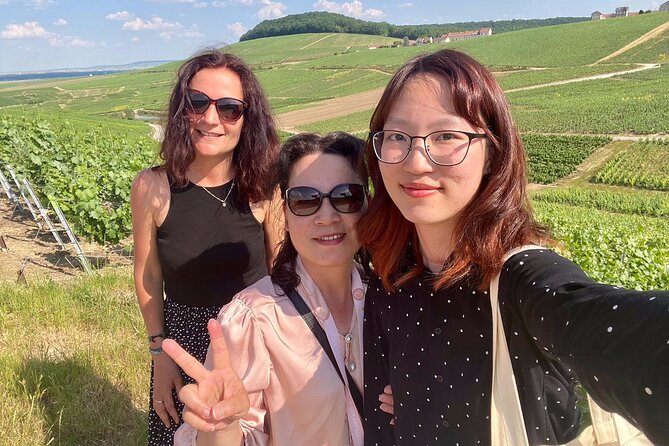
The main visit takes place in Oger, a Grand Cru village associated with 100 percent Chardonnay Blanc de Blancs Champagne. You visit an independent grower whose family estate dates to 1864.
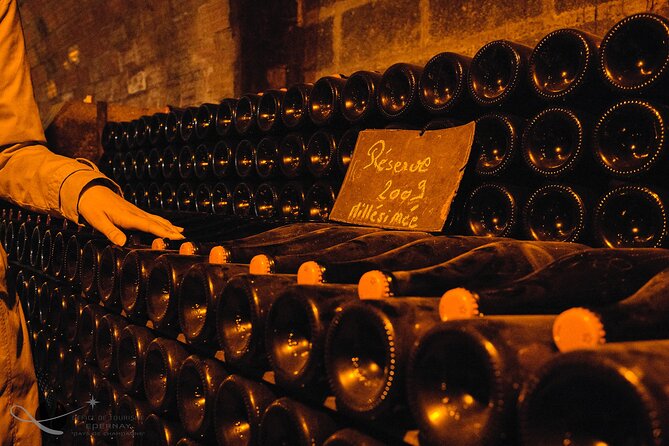
This is the heart of the experience. A family estate gives you a different view from a large Champagne house. The tour covers the press, winery, and cellar, with an explanation of how Champagne moves from grape to bottle. You get a look at the practical work behind the label instead of only hearing a polished brand story.
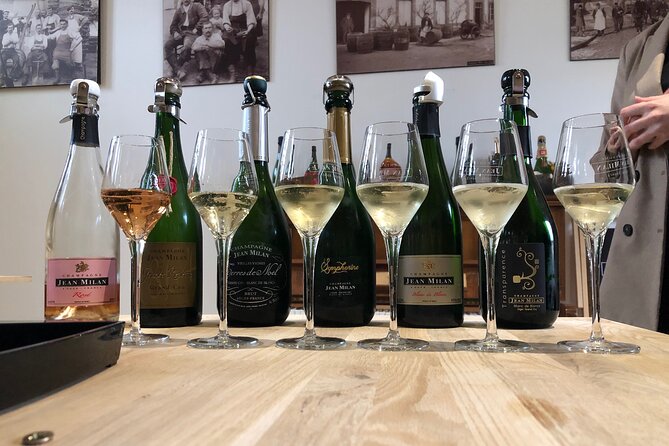
The tasting includes three 100 percent Grand Cru Champagnes. The exact selection can include Champagne without dosage, brut, a vintage wine, or a wine aged in oak barrels. These are not just three random pours. The guide uses the styles to show how dosage, age, grape treatment, and cellar choices change the final wine.
Champagne without dosage can taste quite different from a standard brut because no sugar is added after disgorgement. A vintage Champagne gives you a chance to think about a specific harvest year, while oak aging can bring another texture and flavor profile. You do not need to be a wine expert to follow the tasting. The guide offers practical advice on what to notice and how to compare the wines.
The estate is also a good place to buy bottles if you find a style you like. Purchases are optional, of course, but buying directly from a grower can be more meaningful than selecting an unfamiliar bottle from a supermarket shelf later. If you plan to buy, remember that luggage and suitcases are not allowed on the tour vehicle, so carry only what fits within the operator’s rules.
Ratafia, Fine, and Marc: the local drinks many visitors miss
The additional tasting in or near Cramant adds a useful twist. You sample three Champagne alcohols and aperitifs from Goyard Distillery in Aÿ, founded in 1911 and described as the oldest distillery in Champagne.
Ratafia Champenois is the most distinctive of the three. It is a sweet wine made from the same grape varieties used for Champagne and has been produced in the region since the 13th century. It can work as an aperitif, digestif, or pairing for certain foods. Since it is not widely exported, this may be your best chance to try it in its home region.
Fine de la Marne and Marc de Champagne are brandies. They are commonly served as digestifs and give you a useful reminder that Champagne country produces more than sparkling wine.
Depending on weather and season, this tasting takes place with a vineyard view or at the family estate. That flexibility is practical, though it means the setting is not fixed. The drinks also appeal to different tastes. If you only want dry Champagne, the sweet Ratafia and strong brandies may not be your favorite part. If you enjoy regional specialties, they add real value.
A quick look at Épernay’s Avenue de Champagne
Before returning to the meeting point, the vehicle makes a commented passage along the Avenue de Champagne in Épernay. This grand avenue is lined with mansions and production buildings belonging to names such as Moët & Chandon, Perrier-Jouët, and Pol Roger.
Beneath the avenue are roughly 100 kilometers of cellars holding about 200 million bottles. The street is often described as one of the most expensive avenues in the world because of the Champagne stored below it and the fortunes attached to the houses above.
You do not tour those cellars on this half-day outing. Instead, the guide explains the avenue’s role and points out the buildings as you pass. That is enough to help you understand Épernay as the capital of the Champagne vineyard, but you should book a separate cellar visit if going underground is important to you.
The drive-by also makes a useful final contrast. Earlier, you saw the small producer’s press and cellar. Here, you see the grand architecture and international brands. Both belong to the same region, but they represent very different ways of making and selling Champagne.
Guides, group size, and the pace of the morning
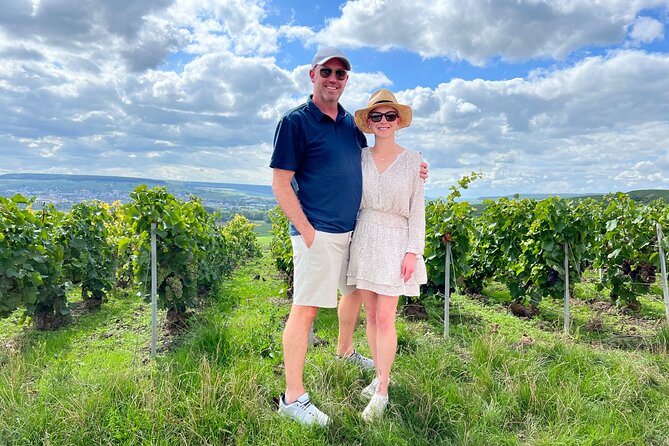
The guide can shape this tour more than any single stop. Names associated with departures include Isabelle, Philippe, Marine, Charlotte, Nina, Victoria, Svetlana, and Louis. The strongest guide experiences described for this tour center on clear English, local pride, friendly conversation, and the ability to explain production without making it feel like a classroom lecture.
The small group matters. A maximum of eight people makes it easier to hear in the vehicle and at the estate, and solo visitors can expect a more social setting than they would get on a private car tour. One-person participants have also found the format comfortable and reassuring.
At around three hours and 30 minutes, the schedule is compact. You cover a church, a village viewpoint, two wine areas, a grower estate, a regional tasting, and the Avenue de Champagne. That is a lot for half a day. The benefit is efficiency. The tradeoff is that each stop has a defined purpose and limited spare time.
The meeting point is the Office de Tourisme d’Épernay at 7 Avenue de Champagne. The tour ends there as well. Hotel transfers are not included, so plan to reach the office yourself. The location is near public transportation, which helps if you arrive in Épernay by train or stay elsewhere in town.
Who should book this tour?
I would choose this tour if you have one free half-day in Épernay and want more than a single famous-house visit. It suits wine lovers who want to compare Grand Cru styles, people interested in family producers, and anyone who wants a broad introduction without renting a car.
It is also a good choice after visiting a large Champagne house in Reims. The two experiences balance each other: one shows industrial scale and famous labels, while this tour focuses more on villages, vineyards, and a multigenerational estate.
I would hesitate if you want a long cellar tour, extensive time for photography, or a route that avoids any repeated roads. The tasting format may also be a concern for serious wine students. One past participant disliked having the same glass used for several Champagnes and felt the pours moved too quickly. If separate glasses and a formal tasting setup matter to you, ask about the arrangement before booking.
The tour has free cancellation up to 24 hours before the start time. Most people can participate, and the group is capped at eight. Suitcases are not allowed, so leave large luggage at your accommodation or another suitable location.
Should you book the Bubble Champagne Tour from Épernay?
Book it if you want a well-rounded half-day that joins Champagne’s famous stories with its working vineyards. The Dom Pérignon stop, Marne Valley view, Grand Cru villages, family estate, and regional spirits create a fuller picture than a single brand visit.
At about $187.06, it makes the most sense when you value a small group, air-conditioned transport, an English-speaking guide, and several tastings in one outing. You will not get unlimited time at each place, and the tour is not designed for a long cellar study. But for a first visit to Épernay, it offers a practical route through the region and a welcome taste of Champagne beyond the big names.
FAQ
Where does the tour start and finish?
It starts and ends at the Office de Tourisme d’Épernay at 7 Avenue de Champagne, 51200 Épernay, France.
How long does the tour last?
The tour lasts approximately three hours and 30 minutes.
How many people can join the tour?
The group is limited to between two and eight participants.
Is the tour offered in English?
Yes. The tour is offered in English.
What Champagne is included in the tasting?
You taste three 100 percent Grand Cru Champagnes at the independent producer in Oger.
Are other drinks included besides Champagne?
Yes. The tour includes tastings of Ratafia Champenois, Fine de la Marne, and Marc de Champagne from Goyard Distillery.
Is hotel pickup included?
No. Transfer from your hotel is not included. You need to reach the meeting point at the Épernay tourism office.
Can I cancel for a full refund?
Yes. You can cancel at least 24 hours before the start time for a full refund. Cancellations or changes made less than 24 hours before the start time are not accepted for a refund.
Just added in Epernay
- Champagne experience with a vintage van from Epernay – 3 hours★ 5.0 · 108 reviews
- The Must-sees 3h30 from Epernay (Private Half day Champagne Tour)★ 5.0 · 30 reviews
- From Epernay: Champagne Small-Group tour with tastings & Lunch★ 5.0 · 93 reviews
- Food & Champagne Experience from Epernay (Private tour)★ 4.5 · 28 reviews
- Discovery tour (2 tastings)★ 5.0 · 77 reviews
- From Epernay Full day Electric bike Champagne and lunch★ 5.0 · 36 reviews
- The Connoisseurs from Epernay (Private Half day Champagne Tour)★ 5.0 · 59 reviews
- Champagne Munoz Bruneau : Half Day Visit and Tasting★ 5.0 · 50 reviews
Champagne Tastings, compared.
Champagne Day Trip from Paris with 8 Tastings & Lunch
Read our review →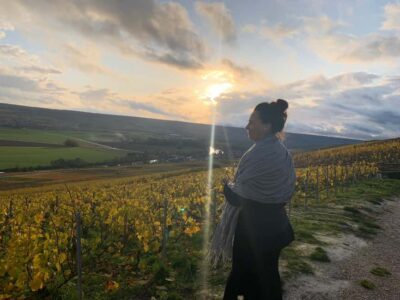
Small Group – Half Day Champagne Tour – Visit of 2 Small Producers/Growers
Read our review →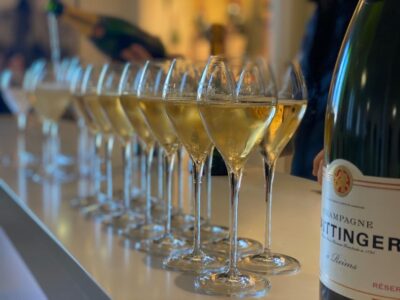
Small-Group Champagne Tour with 3-Course Lunch
Read our review →Browse the lists this tour appears in