
Reviewed · CHAMPAGNE TASTINGS
Food & Champagne Experience from Epernay (Private tour)
The best part of this day is its range. You are not simply taken to one famous Champagne house, given a glass, and sent on your way. You taste nine Grand Cru and Premier Cru Champagnes, sample Ratafia and local brandies, visit independent producers, walk through vineyards, and eat regional food from Reims ham to Biscuit Rose.
I like the playful aroma workshop at the start, because it gives you a useful way to understand what you are tasting. I also like the route through Aÿ, the Côte des Blancs, and the Marne Valley, where the villages and vineyards matter as much as the bottles. The main caution is value: at $785.72 per person, you should expect a full, food-centered private experience, not just a winery tour. Lunch quality and vehicle comfort may also vary.
Key points to know before booking
- Nine Champagne tastings: Expect Grand Cru and Premier Cru wines in styles ranging from Blanc de Blancs and Blanc de Noirs to rosé, vintage, extra brut and natural low-dosage Champagne.
- A strong focus on independent producers: You visit family-run growers and see the press, cellar and winery rather than spending the whole day with major brands.
- More than sparkling wine: Ratafia, Fine de la Marne, Marc de Champagne and Coteaux-Champenois add local drinks that many visitors never encounter.
- A serious food element: Lunch includes regional meats, cheeses, bread, sweets and Champagne pairings, though portions and preparation may not satisfy everyone.
- Good guiding matters: Mathias, also written as Matthis or Mattis, is repeatedly praised for his energy and clear explanations. Isabella is another named guide associated with the experience.
- Pickup is limited: Collection is available within 6 kilometers of Epernay, but not from Reims unless you book a different tour.
Why this Epernay Champagne day feels different
Champagne tasting can become repetitive fast. One cellar looks much like another, and after several glasses, technical explanations blur together. This experience tries to prevent that by mixing wine, food, spirits, village history and vineyard time across a long day.
You begin around 9:30 a.m. and return to the meeting point after roughly seven to eight hours. The day is private, so only your own group takes part. That matters if you want to ask plenty of questions or set the pace around the interests of your group.
The route covers several important parts of the Champagne region. Aÿ-Champagne is known for Pinot Noir and Grand Cru status. The Côte des Blancs, including Avize and Oger, is known for Chardonnay. Mareuil-sur-Aÿ and Monthelon add more grower-producer visits and food stops.
This is not a quick tasting with a little sightseeing added. It is closer to a food and wine study day, with enough driving between villages to show you how varied Champagne can be.
Other champagne houses to visit from Epernay:
- Champagne: Champagne Tasting Class with Lunch
★ 4.9 · 384 reviews - Aÿ-Champagne: Champagne House Tour and Tasting Class
★ 4.9 · 209 reviews - Passy-Grigny: Chocolate and Champagne Tasting Tour
★ 4.8 · 208 reviews
Starting with aromas in Mareuil-sur-Aÿ
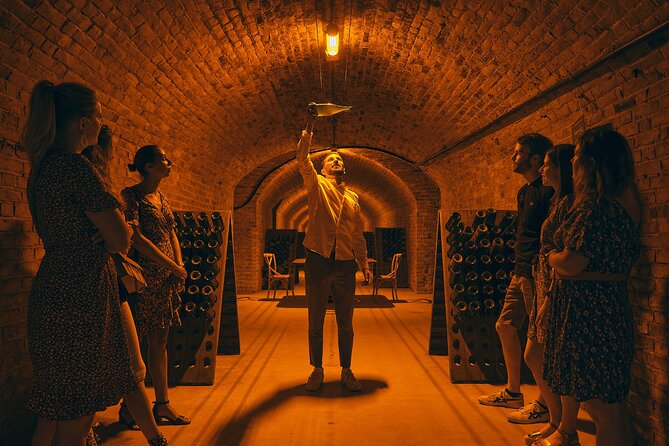
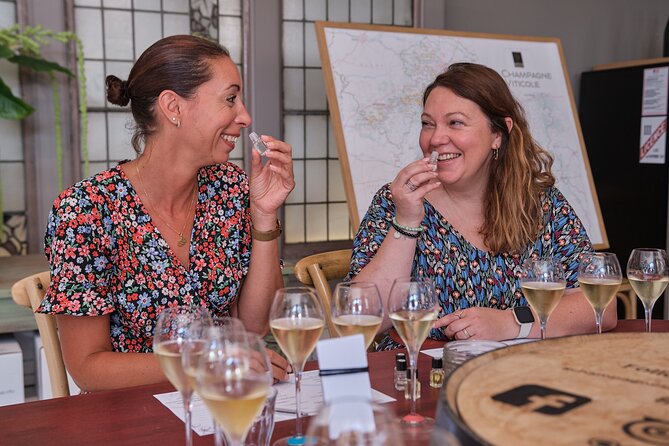
The opening workshop gives the day a useful structure. At a producer in or near Mareuil-sur-Aÿ, you work through Champagne aromas before tasting several wines. The goal is to identify scents and flavors, then recognize them again in the glass.
That may sound simple, but it helps beginners. Champagne is often described with terms such as brioche, citrus, orchard fruit, toast, spice and minerality. Without a framework, those words can feel like decoration. An aroma exercise gives you something concrete to look for.
If you pass the smell and taste test, you receive a Champagne knowledge certificate. Do not treat the certificate as a formal wine qualification, but it adds a light, playful touch to what could otherwise be a technical start.
The Champagne selection is the heart of the experience. You may taste single-variety and blended wines, Blanc de Blancs made from white grapes, Blanc de Noirs made from dark grapes, rosé, vintage wines, wines from old vines, single plots and Champagne aged in oak barrels.
The range also includes non-dosed natural Champagne, extra brut, brut and dry styles. This is especially useful if you are trying to work out what you like. A visitor who normally finds Champagne too sweet may prefer a dry or extra brut wine. Someone who finds very dry Champagne severe may respond better to a softer style or a wine with some age.
Aÿ-Champagne, Pinot Noir and the region’s local spirits
Aÿ is one of the most important villages on the route. The village has long been linked with Champagne production, and its vineyards are Grand Cru, the highest classification in the Champagne appellation. Pinot Noir dominates here, giving you a useful contrast with the Chardonnay-focused Côte des Blancs later in the day.
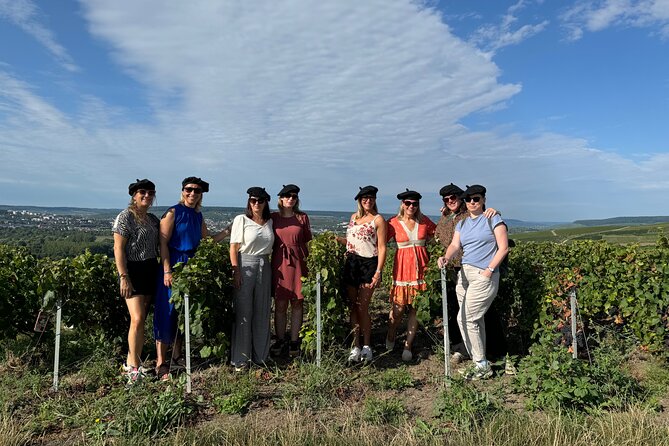
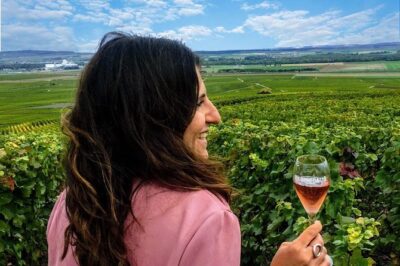
The vineyard stop lasts about 45 minutes. You learn about grape varieties, the soil, vine work and sustainable growing methods. This is a good place to slow down and connect the wine in your glass with the rows of vines outside the vehicle.
The guide also explains Aÿ’s older role in the wine trade. In the 16th century, it was a major center of Champagne production, and French kings maintained their own presses here. The region’s wines were once called Wines of Aÿ. That detail gives the village more meaning than a passing photo stop.
A separate stop in Aÿ introduces three local alcoholic drinks. Ratafia is a sweet wine made from the same grape varieties used for Champagne. It is not widely exported, so this is a useful chance to taste a regional specialty that you are unlikely to find on a standard wine list at home.
You also try Fine de la Marne and Marc de Champagne from the Goyard Distillery. Both are Champagne brandies, usually served as digestifs. The flavor shift from sparkling wine to sweet fortified wine and then to brandy gives your palate a break from bubbles.
Food pairings accompany the tastings. Depending on the selection, you may encounter foie gras, snails, sea bass rillettes with truffle, scallops or white pudding. This is one of the tour’s more adventurous features. If you are not keen on snails or foie gras, tell the operator in advance and ask what alternatives are available.
Coteaux-Champenois also appears here. It is a still wine from the Champagne appellation and can be red, white or rosé. Many people do not realize that Champagne producers also make still wine, so this tasting adds useful context.
The Avenue de Champagne in Epernay
At some point, the route passes along Epernay’s famous Avenue de Champagne. This broad avenue is lined with the grand properties and production buildings of major houses such as Moët & Chandon, Perrier-Jouët and Pol Roger.
The stop is described as a commented passage rather than a full visit to one of the major cellars. That distinction matters. If your main aim is to tour Moët & Chandon or another large house, you should book that separately.
Still, the avenue helps you understand the scale and prestige of Epernay. The rest of this experience focuses mainly on smaller producers, so seeing the grand houses gives you a useful comparison.
More food and drink in Epernay:
- Aÿ-Champagne: Pressoria Champagne Museum with Tasting
★ 4.7 · 239 reviews - The Essential Tour from Epernay with Champagne Tasting
★ 4.9 · 120 reviews - Champagne Tasting Class and Lunch near Epernay
★ 5.0 · 53 reviews - Champagne Munoz Bruneau : Half Day Visit and Tasting
★ 4.9 · 53 reviews
Lunch at a winemaker’s table in Monthelon
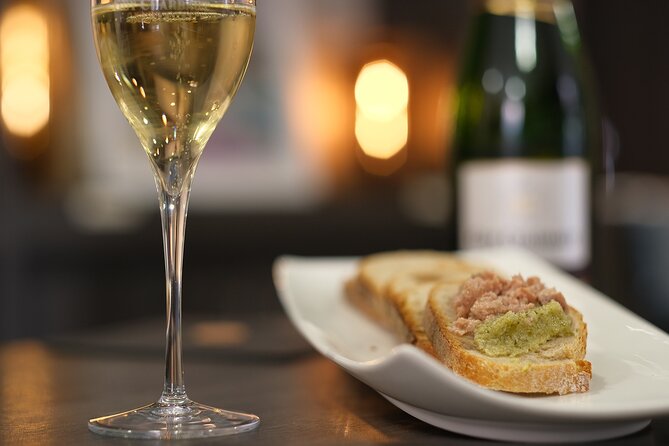
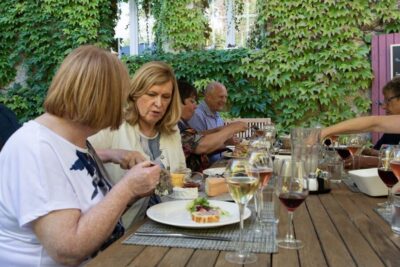
Lunch is planned at a winemaker’s establishment in Monthelon. You taste more Grand Cru and Premier Cru Champagne and several Ratafias alongside a mixed platter of regional foods.
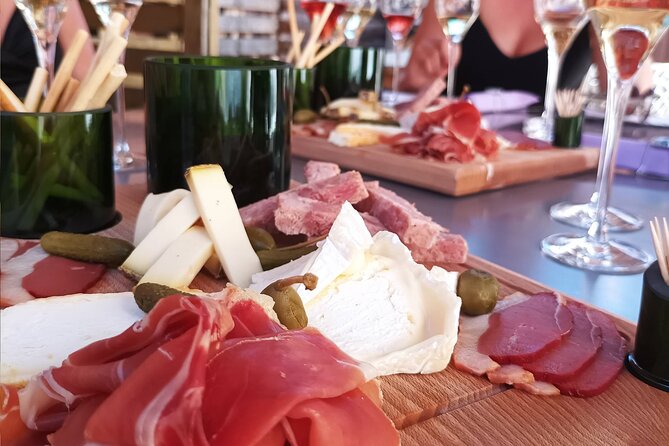
The menu includes Jambon de Reims, cured ham, duck rillettes, duck breast, Chaource and Langres cheeses, bread and other local products. Ratafia may accompany the duck rillettes, while Champagne provides the usual lift for salty meats and creamy cheese.
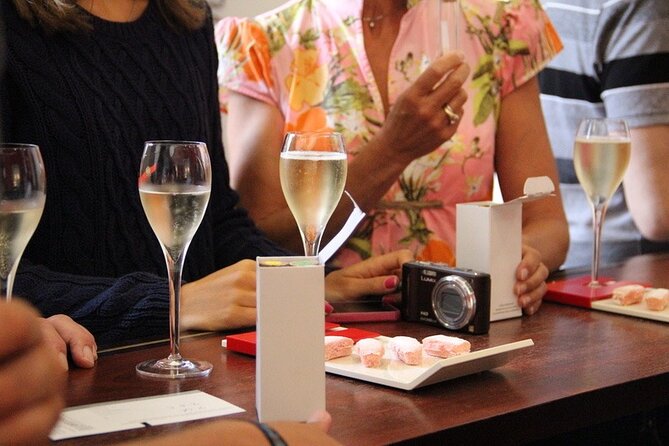
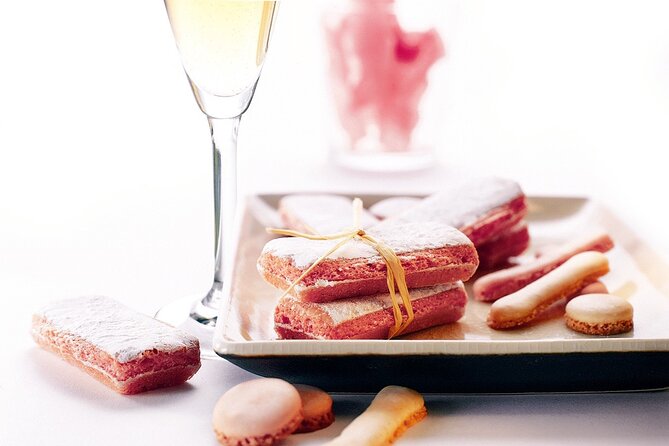
Dessert keeps the local theme going. You may have chocolate filled with Ratafia and a sweet based on Biscuit Rose de Reims, the pink biscuit associated with Reims. The biscuit was first made in the 18th century and is often served with Champagne because its firm texture holds up well when dipped.
I like the idea of this lunch because it links the wine to the food people actually eat in the region. It is not simply a restaurant meal placed in the middle of a wine tour.
Still, set your expectations carefully. The lunch has received mixed reactions. Some people find it excellent and enjoy the traditional local products. Others describe it as meager or object to a stew served in a heated jar. If you want a long, polished restaurant lunch, this may disappoint. If you are happy with a casual regional meal built around tastings, it makes more sense.
You should also raise dietary restrictions before booking. One meal experience did not provide a satisfying alternative for a person who could not eat cheese, even though the partner restaurant reportedly offers cheese and charcuterie options. Do not assume every dietary request will be handled automatically.
Through the Marne Valley and the Côte des Blancs
The route also takes you through the Marne Valley and its historic vineyard slopes, which are listed as a UNESCO World Heritage Site. You may spend part of this section looking from the vehicle rather than stopping for a long walk, but it gives you a broad view of the region where Champagne developed.
In the afternoon, the road turns toward the Côte des Blancs. This is Chardonnay country, and the villages of Cramant and Avize are among its best-known names. The change from Pinot Noir country around Aÿ to Chardonnay country around Avize and Oger is one of the day’s most useful lessons.
A short passage through Avize takes about 15 minutes. It is not a major tasting stop, but it helps connect the villages on the map with the wines in your glass.
The final producer visit in Oger
The last substantial stop is with another independent family producer in Oger, one of the best-known Grand Cru Chardonnay villages. Here, you revisit the Champagne-making process with a look at the press, winery and cellar.
This second production visit is important because it lets you compare methods and styles. You can ask how the producer handles pressing, fermentation, blending and cellar aging, then taste the result in the same setting. The exact character of the visit depends on the producer and the day, but the focus is on seeing how a smaller house works.
Snack time brings more Grand Cru Champagne and Biscuit Rose de Reims from Biscuiterie Fossier. You may also try the biscuit in a crunchy macaroon form. The day ends with a typical French surprise discovery, though the details are deliberately not given in advance.
That final surprise is a pleasant bit of theater, but do not book this tour solely for it. The real value lies in the full sequence of tastings, producer visits, food and regional context.
Guides, vehicles and the pace of the day
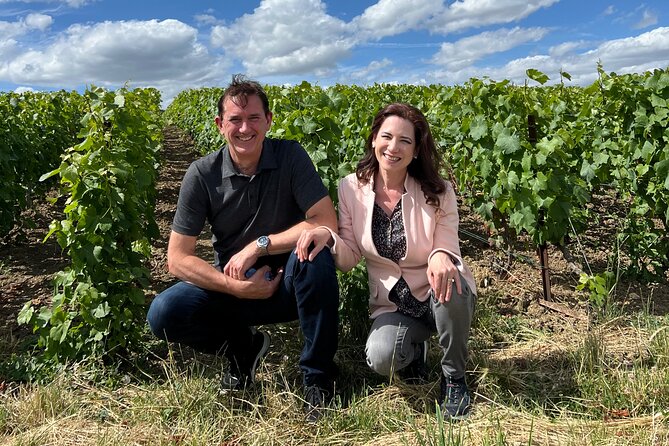
The guide can make or break a long wine day. Mathias, also spelled Matthis or Mattis in the supplied information, receives especially strong praise for his enthusiasm, local knowledge and ability to explain Champagne production without making the subject heavy. Isabella is also named as a guide who can explain the wine and local places around Epernay and Reims.
The vehicle depends on the season, weather and group size. The operator may use an electric red E-Mehari Jeep-style car, a premium van or a minivan. The E-Mehari is slightly raised, so tell the operator if getting into a higher vehicle is difficult.
Vehicle comfort deserves attention. One group found a smaller vehicle tight and hot with eight people, particularly during a heatwave. Another group of six found the van comfortable. The practical lesson is simple: ask about the likely vehicle and group size before paying, especially if comfort matters to you.
Water is another sensible question to ask. One experience raised concern about not having water available in the vehicle during the spirits stop. You will be tasting alcohol for much of the day, so carrying water is a good idea even if the operator says drinks are supplied.
Weather can also change the feel of the vineyard portion. In heavy rain, you may see the vines mainly from the vehicle. The guide may provide umbrellas, but this remains an outdoor wine-region tour, so wear shoes and clothing that can handle damp ground.
Is $785.72 per person good value?
This is an expensive day. You are paying for a private experience, a full-time guide, transportation, several producer visits, nine Champagne tastings, local spirits, food pairings and lunch. The price makes more sense for a couple or group that wants a tailored day and plans to taste seriously.
It makes less sense if you mainly want a few glasses and a cellar tour. In that case, a standard half-day option would likely be better value.
The number of tastings is not the only measure. You are comparing Champagne from different villages, grape varieties, sweetness levels, production choices and aging methods. The day also includes drinks that are hard to find outside the region, particularly Ratafia and the Champagne brandies.
Still, do not assume every bottle will be rare or costly. The experience emphasizes independent producers and regional character, not a parade of famous luxury labels. That is a strength if you want to understand grower Champagne. It is a weakness if you expect prestige cuvées at every stop.
Who should book this Champagne experience?
I would choose this for someone who wants a full day rather than a quick tasting, especially if you enjoy food as much as wine. It suits curious beginners because the aroma workshop and production visits explain the basics clearly. It also suits experienced Champagne drinkers who want to compare Grand Cru villages, small producers, Ratafia and Coteaux-Champenois.
It is less suitable for anyone who dislikes long tasting days, sweet fortified drinks, brandy or regional foods such as snails and foie gras. It may also frustrate you if you want a large-house cellar tour, a gourmet restaurant lunch or a relaxed schedule with little driving.
Pickup is offered from accommodations within 6 kilometers, or about 3.7 miles, of Epernay. Reims is around 40 minutes away and is not covered by this pickup arrangement. If you are staying in Reims, use the operator’s separate Reims-area option rather than assuming this one will collect you.
Cancellation is free up to 24 hours before the 9:30 a.m. start time. Changes or cancellations inside that period are not accepted for a refund.
Should you book it?
Book this day if you want Champagne explained through villages, producers, food and local spirits, not just poured into a flute. The strongest features are the variety of wines, the contrast between Aÿ and the Côte des Blancs, and guides such as Mathias or Isabella who can make the technical parts easy to follow.
Before booking, confirm the pickup address, likely vehicle, group size, lunch style and handling of dietary needs. At this price, those details matter. If you accept a casual lunch and the possibility of a warm or compact vehicle, this offers a broad, satisfying look at Champagne in one day. If you want luxury at every turn, choose a more narrowly focused private wine day.
FAQ
How long does the Food and Champagne Experience last?
The experience lasts approximately 7 to 8 hours and begins at 9:30 a.m. It ends back at the meeting point.
Where can pickup be arranged?
Pickup is available within 6 kilometers, or about 3.7 miles, of Epernay. Pickup from Reims is not included with this experience.
Is this a private tour?
Yes. Only your own group participates in the private activity.
How many Champagnes will I taste?
You will taste nine Grand Cru and Premier Cru Champagnes. The selection may include Blanc de Blancs, Blanc de Noirs, rosé, vintage, extra brut, brut, dry, natural low-dosage, old-vine, single-plot and oak-aged styles.
Will I taste drinks other than Champagne?
Yes. The day includes Ratafia, Fine de la Marne, Marc de Champagne and Coteaux-Champenois, a still wine from the Champagne appellation.
What food is included?
Food may include foie gras, snails, sea bass rillettes with truffle, scallops, white pudding, Jambon de Reims, cured meats, duck rillettes, duck breast, Chaource, Langres, bread, chocolate with Ratafia and Biscuit Rose de Reims desserts.
What is the cancellation policy?
You can cancel up to 24 hours before the experience start time for a full refund. Cancellations or changes made less than 24 hours before the start are not accepted for a refund.
Just added in Epernay
- Champagne experience with a vintage van from Epernay – 3 hours★ 5.0 · 108 reviews
- The Must-sees 3h30 from Epernay (Private Half day Champagne Tour)★ 5.0 · 30 reviews
- From Epernay: Champagne Small-Group tour with tastings & Lunch★ 5.0 · 93 reviews
- Bubble Champagne Tour from Epernay (Small group half day tour)★ 5.0 · 58 reviews
- Discovery tour (2 tastings)★ 5.0 · 77 reviews
- From Epernay Full day Electric bike Champagne and lunch★ 5.0 · 36 reviews
- The Connoisseurs from Epernay (Private Half day Champagne Tour)★ 5.0 · 59 reviews
- Champagne Munoz Bruneau : Half Day Visit and Tasting★ 5.0 · 50 reviews
Champagne Tastings, compared.
Champagne Day Trip from Paris with 8 Tastings & Lunch
Read our review →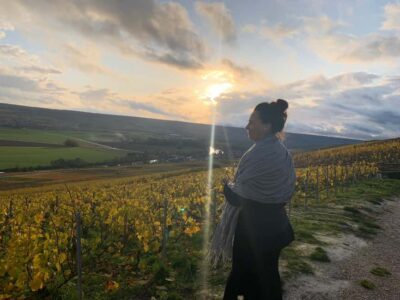
Small Group – Half Day Champagne Tour – Visit of 2 Small Producers/Growers
Read our review →
Small-Group Champagne Tour with 3-Course Lunch
Read our review →Browse the lists this tour appears in