
Reviewed · PASTRY & CHOCOLATE WORKSHOPS
Paris: Croissant Baking Class with a Chef
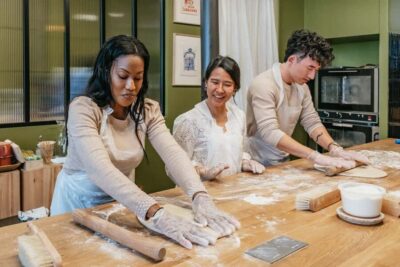
The best part of this Paris class is that you do not simply watch a chef shape dough. You roll, fold, cut, and shape it yourself, then eat the warm results. Chef Léo and Chef Maria keep the class lively while explaining why each step matters.
I like the small group of eight, which gives the chef time to correct your technique. I also like the honest, useful teaching: butter quality, dough temperature, proofing, and arm strength all matter. The one catch is that croissant dough takes real work, and the class is not suited to children under 15.
Key points at a glance
- Make the pastry yourself: You handle the dough from mixing and rolling through shaping and baking.
- Learn from Chef Léo or Maria: Both bring humor, patience, and practical pastry tips to the workstation.
- Expect a generous finish: Sessions commonly produce four butter croissants and four pain au chocolat per person.
- Small class, real help: With no more than eight participants, the chef can watch your folds and shaping.
- Understand the science: You learn how butter, resting, rising, and proofing affect the final pastry.
- Try something more colorful: A bi-colour croissant class is offered on selected days for an added creative twist.
Why this croissant class feels different
Croissants look simple in a bakery case. Their curved shape hides a fussy process involving yeast dough, butter, repeated folds, careful resting, and a hot oven. This class gives you enough time to see how those pieces fit together, rather than handing you a pre-made pastry to decorate.
You work in the kitchen at Studio Pâtisserie, not in a large lecture room. The chef demonstrates a stage, then you try it at your own station. That pattern matters. You can ask why the dough feels too soft, why the butter is cracking, or how tightly to roll the crescent.
The class is taught in English. Chef Léo appears frequently in the class sessions, while Chef Maria also leads groups. Both are described as warm, funny, patient, and attentive, with the kind of teaching style that helps beginners relax when the dough does not behave perfectly.
The small-group setup is a real advantage. Eight people is enough for a social morning without turning the lesson into a crowded demonstration. The chef can move around the room, check each person’s work, and offer a quick correction before a minor mistake ruins the next stage.
More cooking classes in Paris:
- Paris Cooking Class and Lunch with Wine plus Market Visit Option
★ 5.0 · 1,024 reviews - Paris Croissant Small-Group Baking Class with a Chef
★ 5.0 · 910 reviews - Paris: French Croissant Baking Class with a Chef
★ 4.9 · 712 reviews
Finding Studio Pâtisserie near Rome and Villiers
The meeting point is Studio Pâtisserie, a building with a gray storefront. It is served by Paris Metro Line 2 at Rome and Line 3 at Villiers, making it fairly easy to reach from many parts of the city.
Give yourself enough time to find the entrance. A cooking class is not the place to arrive flustered, especially when the group may begin with instructions about the dough. Look for the gray storefront rather than assuming the studio will resemble a traditional street bakery.
The setting is practical and clean, with professional-grade equipment and tools supplied. You do not need to pack baking gear. All ingredients are included, as are the tools needed to roll and shape the pastries.
The class lasts three hours. That sounds long for a pastry lesson, but croissant dough needs pauses. The dough must rest and rise, so the schedule naturally alternates between active work and explanation. Those waiting periods are useful, not wasted. They give the chef time to explain what is happening inside the dough.
Rolling, folding, and building flaky layers
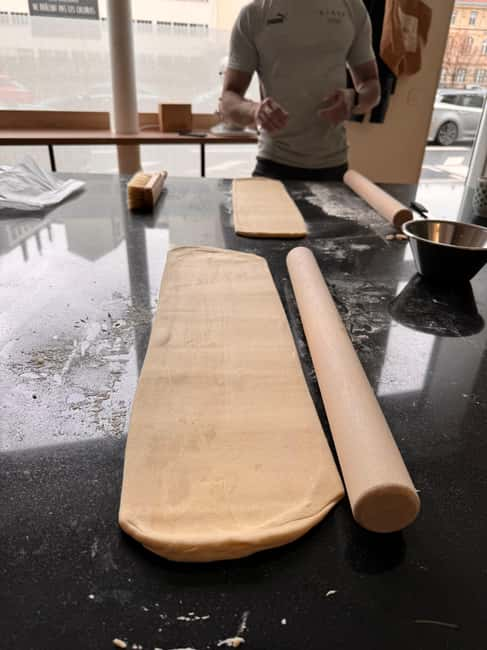
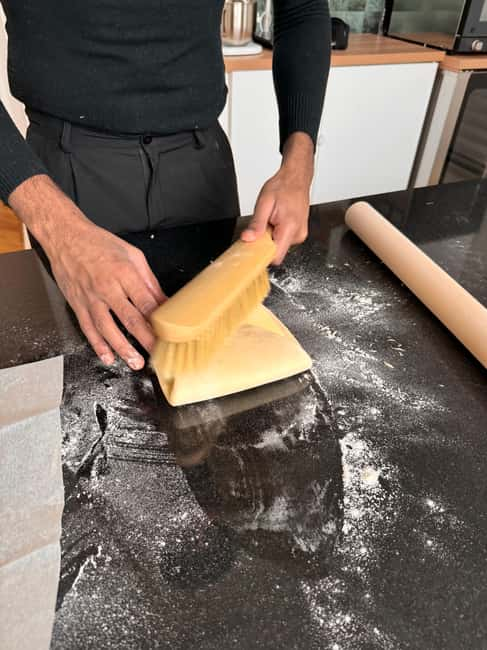
The first hands-on stage introduces the dough. You work through the basic preparation, then begin rolling it into the shape needed for lamination. This is where the class becomes more demanding than a casual baking demonstration.
Croissant dough needs physical effort. You may need to press and roll firmly, especially as the dough resists the rolling pin. The experience information specifically warns that children under 17 must be accompanied by a paying adult, and children under 15 are not accepted. That age rule reflects the work involved, not just a formal booking condition.
The chef explains the role of butter as you go. Good butter gives the pastry its flavor and helps create thin layers, but butter that is too hard can crack and butter that is too soft can leak into the dough. You learn to pay attention to texture, not only to a written recipe.
Next comes folding. The dough and butter are arranged, rolled, and folded in stages. Each fold increases the number of layers. The exact movement matters, but the class is designed to let you practice rather than memorize instructions from a distance.
This is where Chef Léo’s or Chef Maria’s individual help becomes valuable. Beginners often roll unevenly or press too hard at one end. A quick correction can make the next fold much cleaner. You are not expected to produce bakery-perfect dough on your first attempt, but you are shown how to improve it.
What happens during the resting periods
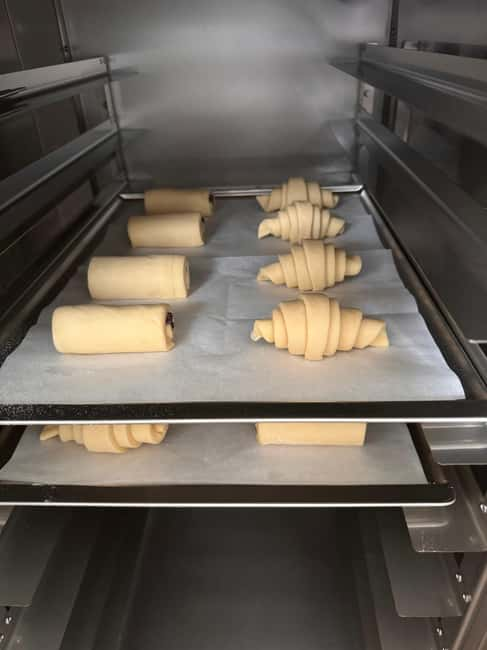
Croissant making includes waiting. After the dough is worked, it must rest so the gluten can relax and the butter can remain in the proper condition. It also needs time to rise before baking.
The pauses give the chef room to explain the science behind the pastry. You learn why proofing affects the texture, why temperature matters, and why rushing can produce a dense or greasy croissant. This background is one of the most useful parts of the class because it helps you troubleshoot at home.
The schedule can feel slightly broken up. You may finish an active task and then wait before moving on. That is simply part of making laminated pastry. If you want a nonstop activity with no pauses, this may test your patience. If you want to understand the process, the breaks make sense.
Use the quiet time to ask questions. The chefs are happy to explain details, and the class includes practical tips aimed at home bakers. You can ask about butter, proofing, shaping, and the signs that the dough is ready for the next stage.
Other pastry and chocolate sessions around Paris:
- Paris: Montmartre Cheese, Wine & Pastry Guided Walking Tour
★ 4.8 · 2,255 reviews - Award-Winning Paris French Bakery Experience — Le Marais, 4th Arr
★ 4.5 · 1,186 reviews - Paris: Entrance Ticket to the Chocolate Museum
★ 4.1 · 1,105 reviews - Private Montmartre Food Tour with Wine, Cheese & Pastries
★ 5.0 · 1,027 reviews
Shaping crescents and pain au chocolat
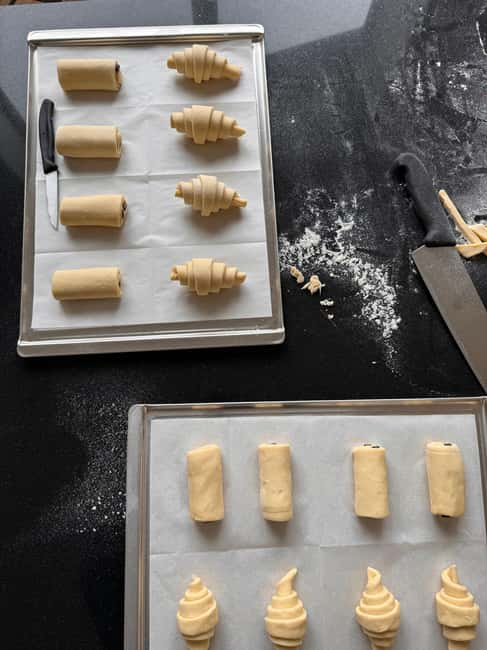
When the dough is ready, you cut it into pieces and shape the pastries. For classic croissants, you work with triangular pieces, roll them from the wide end, and curve them into crescents.
Shaping looks easy until you try to make every pastry the same size. The chef watches how you roll the dough and helps you avoid compressing the layers. The aim is not only a pretty curve. The shape also affects how the pastry expands and bakes.
Many sessions include both butter croissants and pain au chocolat. A common haul is four of each per person, giving you plenty to eat during class and carry back to your hotel. The exact pastry mix can vary by session, so check the current option when booking.
Pain au chocolat offers a useful contrast. The dough is handled in a similar way, but the shape and chocolate filling change how you work with it. Making both gives you more practice and makes the final results feel less repetitive.
On selected days, you can book the bi-colour croissant option. This adds colored dough to the pastry, creating a decorative effect rather than changing the basic lamination lesson. It suits experienced bakers or anyone who wants something more playful. Check the date and option carefully, since it is not available at every session.
Baking, tasting, and taking pastries away
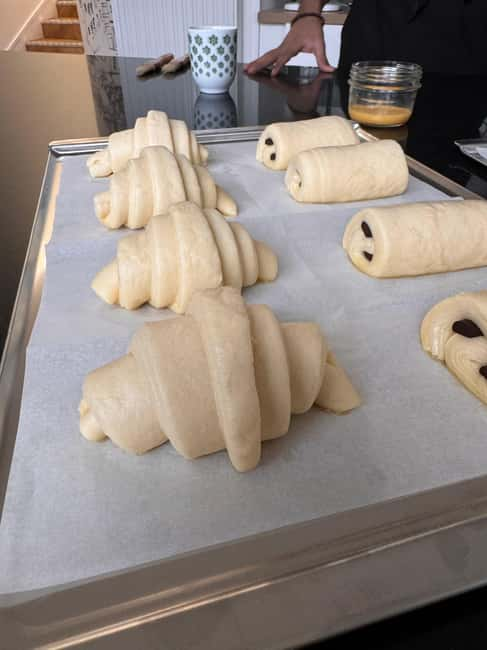
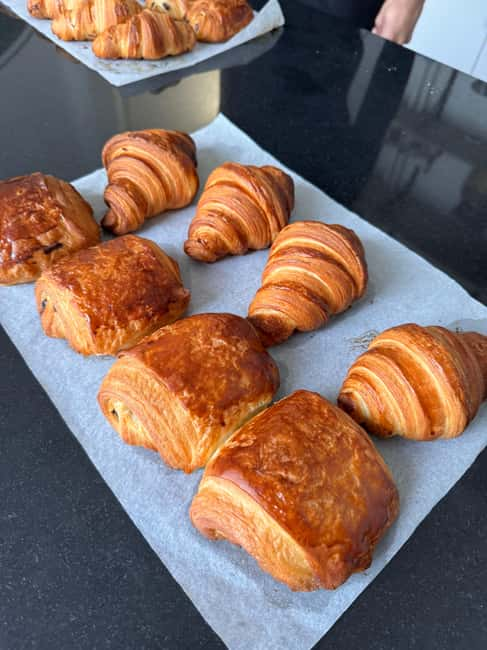
The most satisfying part comes when your pastries go into the oven and begin to brown. You have handled the dough at every important stage, so the finished croissant feels more personal than one picked up at a bakery.
The class includes ample sampling of the pastries you make. You can expect to eat at least one warm from the oven, often with a drink offered at the end. That first bite is also a useful lesson. You can see whether the layers opened properly, whether the center baked through, and how crisp the outside became.
You will usually have more pastry than you want to eat in one sitting. Eight pieces per person is a substantial amount, especially after three hours of baking. Bring a bag or plan space in your hotel room. You can take the rest with you, although the pastries are best fresh.
This generous output adds real value to the class. You are paying for instruction, ingredients, kitchen use, and an experience, but you also leave with a pile of handmade pastries. The food is not an afterthought. It is the reward for the work.
The teaching style and level of personal attention
The chefs keep the mood relaxed. Chef Léo is known for an energetic, humorous style, while Chef Maria brings a similarly friendly and encouraging approach. Their personalities help, since pastry work can make beginners nervous.
The instruction is aimed at mixed ability levels. You do not need professional baking experience. People who bake often can still learn from the details about lamination and proofing, while first-time bakers can follow the process with guidance.
I would pay attention to the small tips. One useful part of the class is not just the recipe, but the explanation of how the dough should look and feel at each stage. A recipe may tell you to rest the dough, but the chef can explain what problem that pause solves.
Some sessions include photographs or videos taken during the class. Do not count on this as a guaranteed feature, but it may be a pleasant extra if the chef has time. If you want to remember a particular folding motion, ask permission before recording it yourself.
The recipe is provided for home use. That matters because croissants are not an instant project. You will need time, patience, and enough room to roll the dough, but the class gives you a better starting point than a recipe alone.
Is $140 a fair price?
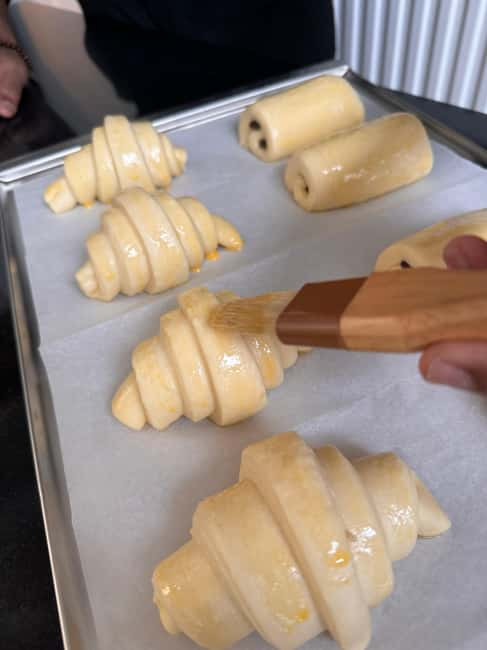
At $140 per person, this is not a cheap breakfast. You can buy a fine croissant in Paris for a few euros. The value comes from the teaching, the professional kitchen, the ingredients, the hands-on work, and the pastries you take away.
The small group strengthens the case for the price. A class capped at eight allows more help than a large cooking demonstration. You are not simply watching a chef perform while standing at the back of a room.
The three-hour length also matters. You receive time for dough preparation, folding, resting, shaping, baking, tasting, and questions. The class does not pretend that laminated pastry can be mastered in 45 minutes.
I think the price makes sense for someone who values an activity as part of a Paris trip, especially a baker or food lover. It may feel expensive if your main goal is simply to eat a croissant. In that case, visit a bakery and spend the rest of the money on several pastries.
Who should book this experience?
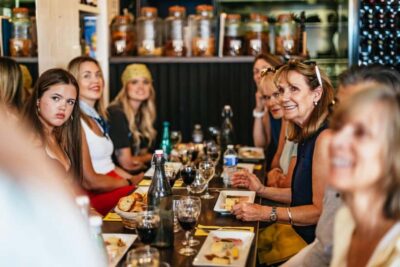
This class works especially well for couples, families with older teenagers, mother and daughter trips, and solo visitors who enjoy meeting people through food. The small group makes it social without requiring you to arrive with a large party.
It is also a good rainy-morning plan. You get three indoor hours, practical work, and food at the end. The class can suit a mixed group too. One person may love baking while another has never made pastry, because the chef gives help at each station.
You should be comfortable using your arms for rolling and kneading. The class is not suitable for children under 15, and anyone under 17 must attend with a paying adult. If you have limited strength or do not want a physical activity, choose a less demanding food experience.
You should also enjoy a slower pace. The dough cannot be rushed, and the resting periods are part of the lesson. Plan your day so you are not racing to an appointment immediately afterward.
Practical details before you reserve
The class is conducted in English and includes all ingredients, tools, professional kitchen equipment, instruction, tasting, and a recipe to take home. The standard option focuses on classic croissants, with pain au chocolat commonly included. The bi-colour option is offered only on selected days.
You can cancel up to 24 hours before the class for a full refund, and the reserve-now-pay-later option lets you hold a place without paying immediately. Starting times vary, so check availability for your date.
Wear clothes you can work comfortably in. The most important preparation is mental: expect flour, rolling, repeated handling, and a few moments when the dough seems uncooperative. That is normal.
Allow room in your day for the pastries afterward. Eight pieces per person can become an edible souvenir, but they are fragile and do not make the best item to carry around Paris all afternoon.
Should you book the Studio Pâtisserie class?
Book it if you want to do more than eat French pastry. You will learn a real technique, work closely with a chef, and finish with warm croissants made by your own hands.
I would choose the regular class for a first visit, since it gives you the classic butter and chocolate pastries. Choose the bi-colour session if you already bake or want a more decorative result.
Skip it if you dislike waiting, physical dough work, or paying for an activity when bakeries are close at hand. For everyone else, this is a well-focused Paris experience with a clear reward: useful pastry skills and a bag full of breakfast.
FAQ
How long does the croissant baking class last?
The class lasts three hours, including preparation, folding, resting, shaping, baking, tasting, and instruction.
Where does the class meet?
The meeting point is Studio Pâtisserie, in a building with a gray-colored storefront. The nearest Metro stations are Rome on Line 2 and Villiers on Line 3.
Is the class taught in English?
Yes. The class language is English.
Who teaches the class?
The class is taught by an in-house pastry chef, commonly Chef Léo or Chef Maria. Both lead hands-on instruction and offer pastry tips during the process.
How many people are in each group?
The class is limited to eight participants.
Are ingredients and equipment included?
Yes. The class includes all necessary ingredients, professional-grade kitchen equipment, and the tools needed to make the pastries.
What pastries will I make?
Sessions commonly include butter croissants and pain au chocolat. Many participants make four of each, though the exact format can depend on the selected class option.
Is the bi-colour croissant class always available?
No. The bi-colour option is offered on selected days. Check the available option for your chosen date.
Can children attend the class?
Children under 15 are not permitted. Children under 17 must be accompanied by a paying adult. The dough requires physical strength for rolling and kneading.
Just added in Paris
- Private Transfers in Paris★ 5.0 · 75 reviews
- Disneyland® Paris 1 Day Ticket with Transport from Paris★ 3.5 · 302 reviews
- Personalized Transport service from Disneyland to Paris★ 5.0 · 63 reviews
- CDG – Euro Disney – CDG Two Way Private Shuttle Transfer★ 5.0 · 233 reviews
- Monet’s Gardens & House-Private Giverny Tour From Paris★ 4.5 · 137 reviews
- Giverny Monet House and Gardens Skip the line Walking tour★ 4.0 · 217 reviews
- Guided tour Monet’s house and gardens/small group★ 4.5 · 68 reviews
- Monet’s House and Garden & Giverny Village★ 4.5 · 39 reviews
Pastry & Chocolate Workshops, compared.
Montmartre Cheese, Wine & Pastry Guided Walking Tour
Read our review →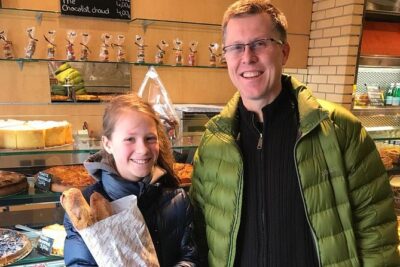
Award-Winning Paris French Bakery Experience — Le Marais, 4th Arr
Read our review →
Private Montmartre Food Tour with Wine, Cheese & Pastries
Read our review →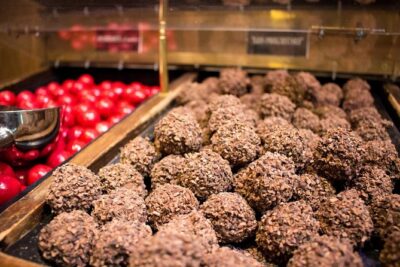
Paris French Sweets Tasting Tour with Pastries and Chocolates
Read our review →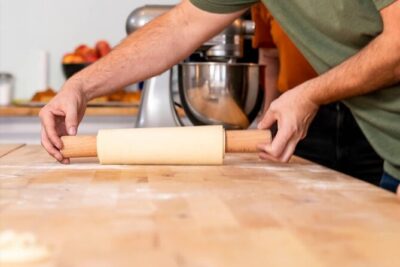
Paris Croissant Small-Group Baking Class with a Chef
Read our review →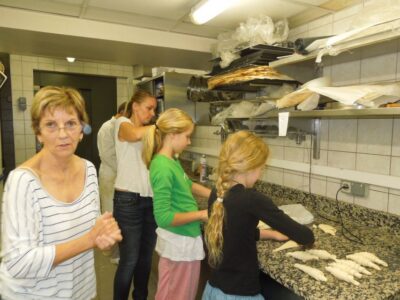

Browse the lists this tour appears in