
Reviewed · ORSAY MUSEUM TOURS
Orsay Museum – Exclusive Guided Tour (Reserved Entry Included)
The Musée d’Orsay makes a fine second act to the Louvre. Inside a grand former train station, you follow the road from academic painting to Impressionism, seeing Manet’s Luncheon on the Grass, Renoir’s Dance at Le Moulin de la Galette, and Van Gogh’s Bedroom in Arles along the way. The reserved entry and focused route help you get your bearings fast.
I especially like the small-group or private choice, since a six-person maximum can make it easier to ask questions. I also like the chronological approach, which explains why Impressionism caused such a fuss instead of treating the paintings as pretty wall decorations. The main caution is price: at $144.21 per person, this makes sense chiefly if you want expert guidance and efficient use of your museum time.
Key points to know before you book
- The tour follows art’s road to Impressionism, from Millet and Delacroix through Manet, Monet, Renoir, and Van Gogh.
- Reserved museum entry is included, though security checks and some waiting can still occur.
- Private and semi-private formats are available, with the semi-private option offered at a lower price.
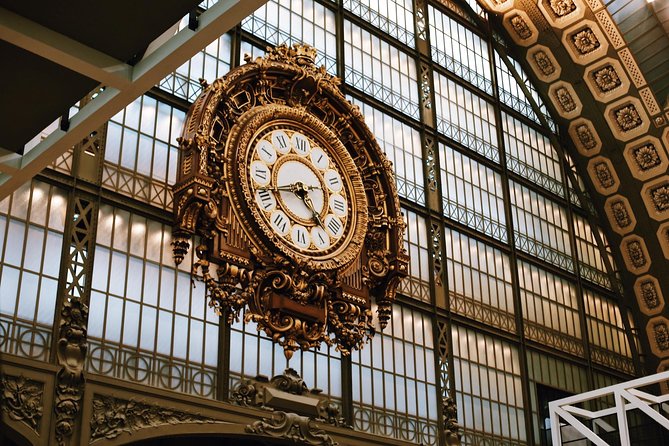
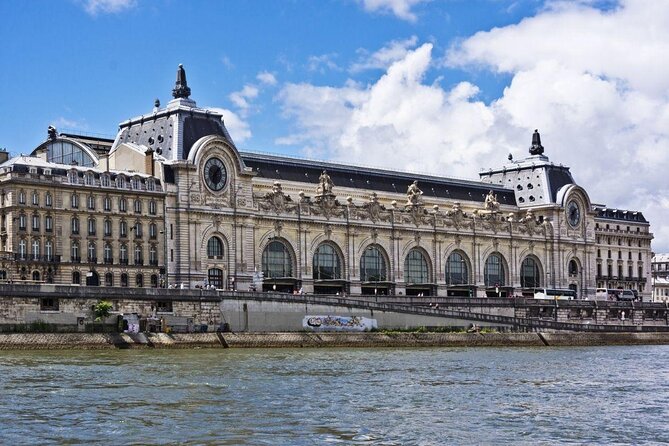
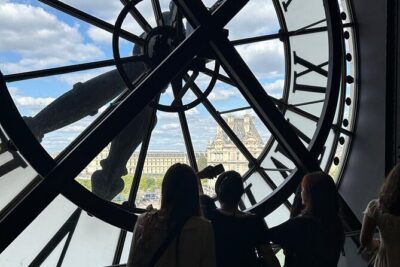
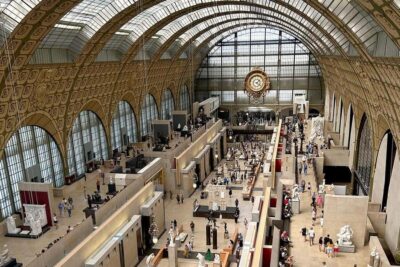
- The museum building is part of the experience, a converted Beaux-Arts train station with a famous giant clock.
- Guides praised by name include Christophe, Dina, Liliya, Hugo, Romain, Dunja, and Paloma, each noted for clear explanations and engaging delivery.
- The visit lasts about two to two and a half hours, a useful first look rather than a full-day museum study.
Why the Musée d’Orsay is the right museum for Impressionism
The Louvre can feel like a city disguised as a museum. The Musée d’Orsay is easier to grasp. Its collection centers on art from the mid-1800s into the early 1900s, the period when old rules began to crack and modern painting took shape.
That makes this tour especially useful if you know the famous paintings but not the story connecting them. Instead of jumping from one celebrated canvas to another, you trace the changes in subject, brushwork, color, and public taste.
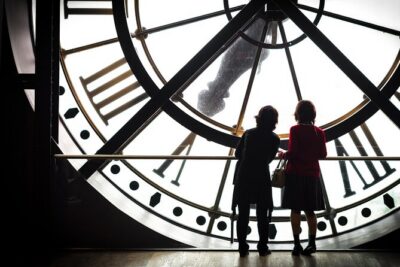
The building helps set the mood. The museum occupies the old Gare d’Orsay, a Beaux-Arts railway station, and its huge clock is one of the most memorable sights inside. You are not simply walking through a neutral gallery box. The architecture gives the visit a strong sense of place, and there is even a coffee shop on the fourth floor for a break afterward.
I like this pairing of art and setting. The station was built for a modern age, then transformed into a museum devoted to artists who helped define modern art. That connection gives the visit more meaning than a simple checklist of famous paintings.
More Orsay visits booked from Paris:
- Paris in a Day: Louvre or Orsay, Eiffel Tower, City Walk & Cruise
★ 5.0 · 1,956 reviews - Paris: Musée d’Orsay Entry Ticket and Seine River Cruise
★ 4.6 · 1,344 reviews - Paris: Musée d’Orsay Skip-the-Line Tour with Expert Guide
★ 4.5 · 1,145 reviews
What the two-and-a-half-hour route covers
The tour begins with reserved entry at the Musée d’Orsay. Your guide then leads you through the movements that prepared the way for Impressionism.
You may begin with artists such as Jean-François Millet and his painting The Gleaners. Works like this help explain the shift toward ordinary people and daily labor as serious artistic subjects. The point is not only what you see, but why the subject once seemed bold or politically charged.
From there, the route reaches Édouard Manet, whose Luncheon on the Grass remains one of the museum’s essential stops. Manet challenged accepted ideas about beauty, finish, and respectable subject matter. A good guide can show you why the painting unsettled its first audience and how it helped open the door for later painters.
Renoir’s Dance at Le Moulin de la Galette brings a different energy. The painting captures a crowded outdoor dance with shifting light, movement, and social life. You can expect attention to the way Renoir handles figures, shadows, and the feeling of a scene caught in the middle of ordinary pleasure.
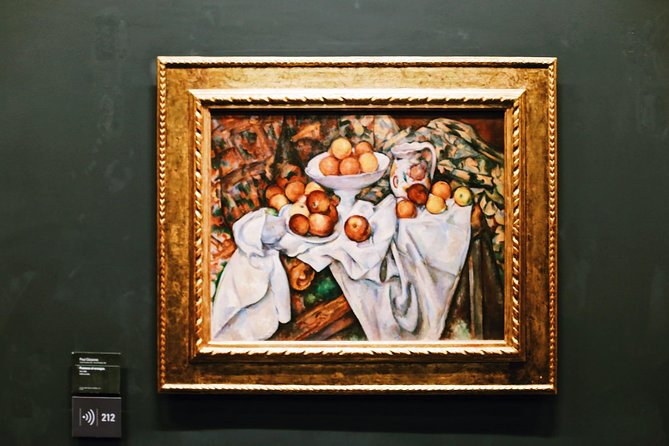
The tour then turns to the Impressionists themselves. Claude Monet’s poppies are among the expected highlights, and your guide explains the techniques behind the loose brushwork and changing light. These pictures can look simple at first glance. The useful part of a guided visit is learning how much planning and observation went into that apparent ease.
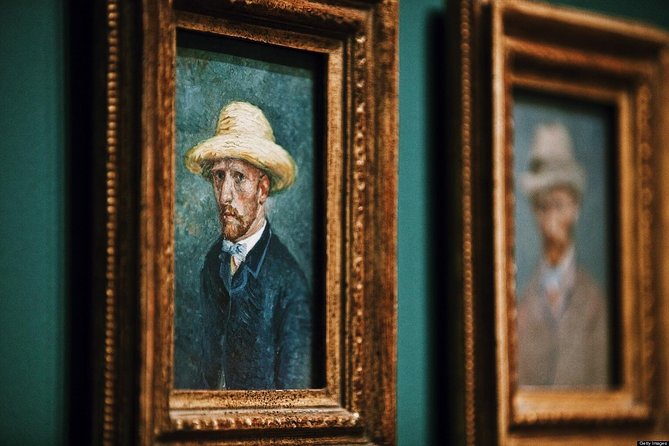
The final part includes later artists, especially Vincent van Gogh. Bedroom in Arles gives you a chance to consider what happened after Impressionism. Van Gogh kept the movement’s interest in color and visible brushwork, but pushed emotion and distortion much further.
The route is not limited to the best-known paintings. Guides are also expected to point out less familiar works and explain links between artists. That balance matters. If you see only the museum’s greatest hits, you may leave with a list of names but not a clear sense of how the movement changed.
The value of a guide who can explain the connections
A museum guide is most useful when the art does not speak plainly on its own. Impressionist paintings often look accessible, but their history is not. The painters were reacting to schools, critics, technology, city life, changing ideas about leisure, and each other.
Several guides receive especially strong praise for making those connections clear. Christophe is noted for moving chronologically and explaining the links between artists. Romain is praised for his command of Impressionism and for keeping a steady pace. Dina is described as warm, lively, and attentive to everyone in the group.
Liliya and Lili are praised for turning the tour into an active conversation rather than a speech. Hugo is described as educational, funny, and entertaining. Dunja is especially suited to people who want more than Impressionism, since her approach includes the broader history of art.
Paloma is praised for speaking with the group rather than at it. That is an important distinction in a museum. You should have room to ask why a painting matters, how an artist fits into the period, or what to notice in a detail you might otherwise miss.
The experience can vary by assigned guide, so you cannot book a particular teaching style with certainty unless the operator confirms it. Still, the repeated praise centers on the same qualities: clear English, enthusiasm, good pacing, and the ability to adjust the route to the group.
One negative assessment points to a guide who moved too quickly, did not invite enough questions, and seemed stronger on general history than on art. That is worth taking seriously. At this price, you are paying for more than entry. You are paying for interpretation, attention, and a pace that suits the people in front of the guide.
Private or semi-private: which format fits you?
The private option gives your group its own guide. That is the better choice if you want to ask many questions, have different interests within the group, or need a slower pace. It is also the option that includes the stated wheelchair-friendly arrangement.
The semi-private choice is the money-saving format. It is not a private tour, and the private guide and wheelchair-friendly claims do not apply in the same way. The group size is described as six maximum in one detailed account, which is small enough for a personal feel while keeping the cost below a fully private visit.
If you are a couple focused on the major Impressionist works, semi-private may be enough. If you are bringing children, older relatives, or a family with mixed art interests, private guiding offers more control. Christophe is specifically praised for working well with children, while other guides are praised for helping groups with questions after the tour.
The price is not a bargain museum ticket. Admission alone would cost far less than $144.21. The value comes from reserved entry, a two-and-a-half-hour route, and the time saved by understanding what you are seeing. If you already know the collection well and enjoy wandering alone, you may prefer a standard visit. If the Orsay feels intimidating or your Paris schedule is tight, the cost is easier to defend.
More museums in Paris:
- Paris: Louvre Museum Timed-Entrance Ticket
★ 4.6 · 71,977 reviews - Louvre Museum Masterpieces Guided Tour with Access
★ 4.5 · 12,023 reviews - Paris: Louvre Museum Entry Ticket With Host and River Cruise
★ 4.6 · 9,926 reviews - Les Invalides: Napoleon’s Tomb & Army Museum Entry
★ 4.6 · 9,185 reviews
Reserved entry helps, but it is not a magic pass
Reserved entry means you do not need to buy a separate museum admission ticket. It also gives you a planned way into one of Paris’s most popular museums.
Still, do not read skip the line as a promise that you will never pause. The museum can add security checks, and extra lines may form even with reserved access. Large bags and suitcases are not allowed. Bring only a handbag or a small, thin backpack.
The meeting point is at the Musée d’Orsay, 75007 Paris. The tour ends there as well. Hotel pickup and drop-off are not included, so plan to reach the museum by public transportation, taxi, or Uber. The museum is near public transport, but you should allow enough time to find the exact meeting spot and clear security.
Morning, afternoon, and evening start times are offered. Morning usually makes sense if you want to see the museum before a busy day of sightseeing. An evening slot can work well if you want to place the tour after lunch and use the earlier hours for outdoor sights.
The operator requires your mobile phone number, including the country code. Keep your phone available on the day of the visit, especially if your guide needs to coordinate at the meeting point.
Practical limits inside the museum
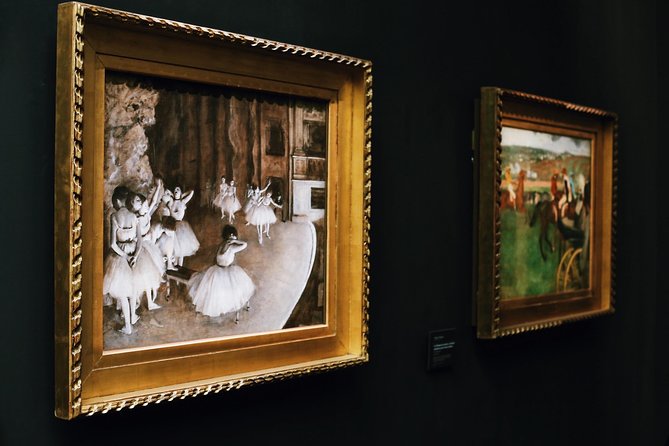
Expect a moderate amount of walking and standing over two to two and a half hours. Comfortable shoes are a sensible choice, and appropriate dress is required for entry into some sites on this type of tour.
Some rooms require very quiet voices or restrict speaking. Your guide should explain those rules before you enter. Museum displays can change during the year, so a particular work or room may not be available on every date.
Temporary exhibitions are not included. That matters if you are choosing the tour mainly for a special show. The focus is the permanent collection and its major artists.
The museum can also close without much warning. If opening is delayed by more than an hour, an alternative is offered, but the stated policy does not provide a refund or discount in that situation. It is a small risk, but one worth knowing before you build a tightly packed Paris schedule around the visit.
The experience is described as wheelchair friendly for the private format. The semi-private option carries a different accessibility note, so anyone relying on step-free access should confirm the exact format before booking.
How to get more from the art
Before the tour, look at the main names in the route: Millet, Manet, Monet, Renoir, and Van Gogh. You do not need to study their biographies. Just knowing the sequence will help you notice the change from traditional painting to the looser, more immediate work associated with Impressionism.
During the visit, ask your guide to compare two paintings rather than explain each one in isolation. Ask what changed in the handling of light, how the artist treated the viewer, or why a certain subject was considered daring. Those questions fit the tour’s main strength: showing art as a chain of ideas.
Headphones are useful when the galleries are crowded. One guide specifically used them to help the group follow the commentary in noisy conditions. They also let you look at a painting while keeping up with the explanation instead of pressing close to the guide.
Do not rush out when the formal tour ends. Since the activity finishes back at the museum, you may have a chance to continue on your own, depending on museum rules and the time of day. The tour gives you a framework. Your own extra time lets you return to a painting that caught your eye.
Who should book this Orsay tour?
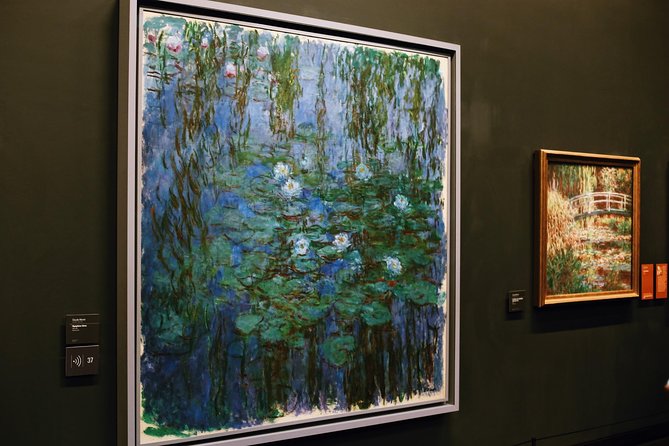
This is a good fit for a first visit to the Musée d’Orsay, especially if you want the Impressionist story rather than a random walk through the galleries. It also suits anyone who has seen reproductions of these paintings but wants help noticing technique, context, and relationships between artists.
Families can benefit from the structure. A guide who knows how to keep children involved can prevent the museum from becoming a long march between crowded rooms. Small groups also make it easier to adapt when one person needs a chair, a short pause, or extra explanation.
Art students and repeat museum visitors may prefer the private option, since a guide can spend more time on lesser-known works and answer specific questions. If you have already visited the Orsay several times, ask in advance how much the route can be adjusted.
Solo visitors should weigh the cost carefully. A private guide is expensive for one person, while a semi-private tour spreads the cost among a small group. If you are only seeking entry, buy a regular ticket. If you want the museum to make sense in limited time, the tour has a stronger case.
Should you book the Musée d’Orsay Exclusive Guided Tour?
Book it if you want a clear, chronological introduction to Impressionism, reserved entry, and a guide who can explain why the paintings mattered when they were new. The strongest guides, including Christophe, Dina, Liliya, Hugo, Romain, Dunja, and Paloma, are praised for warmth, strong English, lively explanations, and good pacing.
Skip it if you prefer to wander alone, already know the collection well, or consider $144.21 too high for guided interpretation. The museum is rewarding without a tour, and the admission cost is only one part of this experience’s price.
For most first-time visitors, I would choose the small-group format and reserve a morning or afternoon slot. Choose private guiding if your group has children, mobility needs, or many questions. Cancel at least 24 hours before the start time if your plans change, since later cancellations are not refunded.
FAQ
How long does the Musée d’Orsay guided tour last?
The tour lasts about two to two and a half hours. The stated duration is 2.5 hours.
Is museum admission included?
Yes. Reserved entry and all entrance fees are included. Temporary exhibitions are not included.
Is the tour private?
You can choose a private tour or a lower-priced semi-private option. The private option gives your group its own guide. The semi-private option is not private.
What art will I see?
The route includes works by Millet, Manet, Renoir, Monet, and Van Gogh. Featured works include The Gleaners, Luncheon on the Grass, Dance at Le Moulin de la Galette, Monet’s poppies, and Bedroom in Arles.
Where does the tour start and finish?
It starts at the Musée d’Orsay at 75007 Paris, France, and ends back at the meeting point. Hotel pickup and drop-off are not included.
Can I cancel for a full refund?
You can cancel at least 24 hours before the experience start time for a full refund. Changes or cancellations made less than 24 hours before the start time are not accepted or refunded.
Just added in Paris
- Paris: Create your Signature Scent Perfume Workshop★ 4.8 · 221 reviews
- Paris: Flea Market Insider’s Tour in Extra-Small Group★ 4.6 · 73 reviews
- Paris : Painting experience in an art cafe★ 4.6 · 204 reviews
- Paris: Vallée Village Outlet Shopping Day★ 4.3 · 362 reviews
- Paris night out : Comedy in English ‘How to Become a Parisian ?’★ 4.5 · 373 reviews
- La Vallee Village Shopping Outlet by Luxury Transport from Paris★ 3.5 · 111 reviews
- Design Luxury and Personalized Jewelry in Paris le Marais★ 5.0 · 160 reviews
- Oh My God She’s Parisian! English Comedy Show in Paris★ 4.5 · 116 reviews
Orsay Museum Tours, compared.
Paris in a Day: Louvre or Orsay, Eiffel Tower, City Walk & Cruise
Read our review →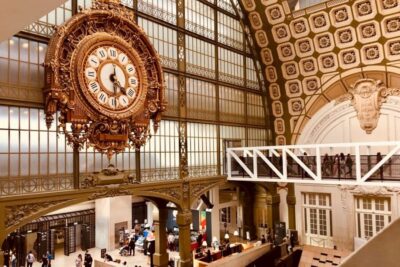
Musée d’Orsay Entry Ticket and Seine River Cruise
Read our review →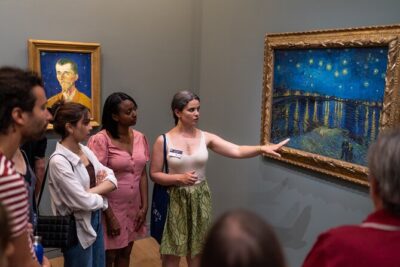
Musée d’Orsay Skip-the-Line Tour with Expert Guide
Read our review →
The Musée d’Orsay Guided Tour Orsay Museum Semi-Private 6ppl Max
Read our review →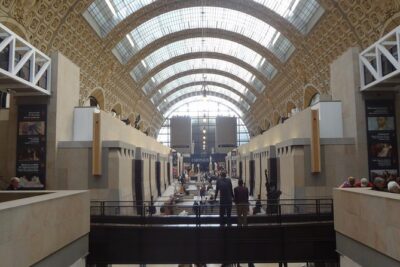
Orsay Museum and Rodin Museum Combo Entry Ticket
Read our review →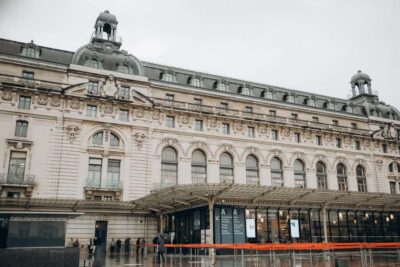
Browse the lists this tour appears in