Reviewed · BATTLEFIELD & WWII TOURS
Somme Battlefields from Paris with Australian memorial & Amiens Cathedral
The most powerful part of this day is its mix of preserved trenches, enormous memorials, and personal stories. You move from the crater left by a 1916 mine to quiet cemeteries and the Australian sites around Villers-Bretonneux, then finish beneath the soaring stonework of Amiens Cathedral.
I like the small group, capped at eight, and the way the tour links British, Canadian, Newfoundland, and Australian service. I also like the Sir John Monash Centre, where film and interactive displays put faces and voices to the war. The drawback is the long day and long ride from Paris. One past departure also had a cramped vehicle and another raised serious concerns about the guide, so the quality can depend heavily on who leads your group.
Key points for deciding on the Somme day trip
- Preserved First World War ground: Walk beside trenches at Beaumont-Hamel and see the vast Lochnagar Crater.
- Strong Australian focus: Villers-Bretonneux and the Sir John Monash Centre make this especially meaningful for Australians.
- Small-group transport: The air-conditioned minivan holds no more than eight people, with pickup and return at 7:00 am from Avenue des Ternes.
- A full military story: Thiepval, Pozières, Newfoundland, British, Canadian, and Australian sites are covered in one day.
- A good final contrast: Amiens Cathedral adds architecture, faith, and civilian wartime history after hours among memorials.
- Prepare for exposed conditions: Bring waterproof shoes, warm layers, and rain protection, especially from late autumn through winter.
Why the Somme is worth a full day from Paris
This is not a quick photo stop in the countryside. The Somme battlefields cover a broad area, and the tour uses the day to connect several sites that would be awkward to reach by public transport. You leave Paris at 7:00 am and return to the same meeting point after roughly 11 hours.
I see the long travel time as part of the bargain. You get air-conditioned transport, a driver-guide, and a small group instead of piecing together trains, taxis, and local transfers. At $278.26 per person, this is not a cheap outing, but the price makes more sense if you value a full day of transport and guided interpretation.
The van format usually gives you more direct contact with the guide than a large coach. Guides such as Aaron, Etienne, Philip, Oliver, Matthew, Pierre, Victor, Clement, and Sarah have been praised for clear explanations and military detail. Aaron’s background in the armed forces was particularly useful to some groups, while Etienne was noted for patience and strong local knowledge.
That said, do not book this as a light sightseeing day. The subject is grim. You will spend much of the day looking at graves, names, ruined battle sites, and places where large numbers of young men died. The best guides treat that subject with care rather than turning it into battlefield entertainment.
Other battlefield and wartime sites reachable from Paris:
- Somme Battlefields Small-Group Day Trip with John Monash Centre from Paris
★ 4.5 · 270 reviews - Normandy Battlefields Tour – American Sites (A3)
★ 5.0 · 876 reviews - Normandy Battlefields D-Day Private Trip with VIP Services from Paris
★ 5.0 · 240 reviews
Thiepval Memorial and the scale of loss
The first major stop is the Thiepval Memorial of the Missing. More than 72,000 United Kingdom and South African servicemen are named here, each without a known grave.
The scale is difficult to take in from a guidebook. The names are not presented as a short list of famous officers. They represent thousands of ordinary men whose bodies were never identified or recovered. Give yourself time to look beyond the architecture and consider what the absence of a grave meant for families.
You receive about 30 minutes at the memorial. That is enough for a focused visit, though it may feel short if you want to read many names or take in every part of the site. The guide’s explanation matters here because the memorial can otherwise seem like a grand structure without a clear story.
The site introduces one of the day’s central ideas: the Somme is not only about battle movements. It is also about the long aftermath, missing soldiers, and families left without a known place to mourn.
Lochnagar Crater, a huge scar from July 1, 1916
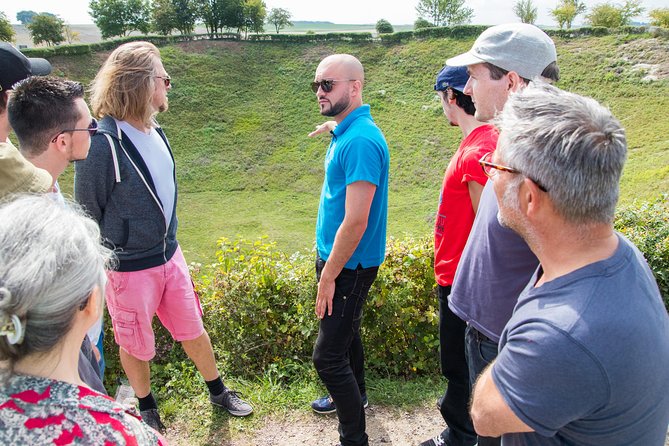
At Lochnagar Crater, you see the physical result of a mine explosion on the first day of the Battle of the Somme. The crater is about 30 metres deep and 100 metres wide.
That size gives you a sense of the force used before the infantry assault began. Maps and numbers can make the opening of the battle feel distant. A vast depression in the ground makes it more immediate.
The stop lasts about 30 minutes and is outdoors, with little shelter from bad weather. Wear shoes with a firm tread, especially after rain. You may find the ground muddy or slippery, and the cold can cut through quickly during winter departures.
This is one of the clearest places to understand how much of the Somme remains visible. Almost 110 years later, the crater still marks the earth in a way that no museum display can fully match.
Beaumont-Hamel and the Newfoundland trenches
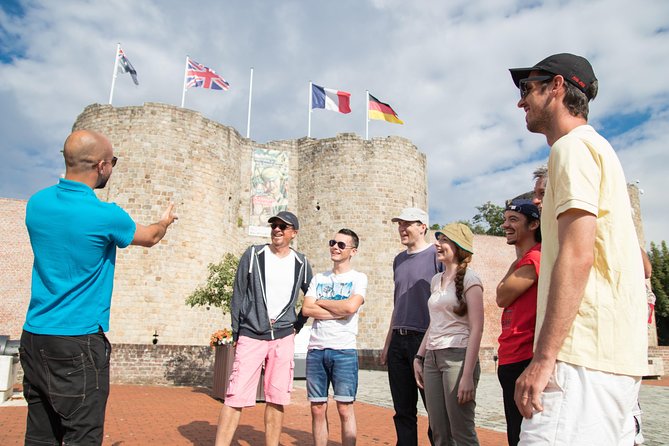
The Newfoundland Memorial at Beaumont-Hamel is the largest preserved Somme battlefield site on the route. You can walk around surviving trenches and see the ground where soldiers lived and fought.
For me, this is one of the most valuable stops because it connects military planning with daily conditions. A trench is not just a line on a map. It was a cramped, wet, dangerous place where men waited, worked, slept, and tried to stay alive under fire.
You have about 30 minutes here. That gives you time to walk through part of the site, but not enough for an extended exploration. Keep the pace in mind if you have mobility concerns, since battlefield ground may be uneven. The tour information says most people can participate, but it does not promise a fully accessible route.
The Newfoundland connection also broadens the story beyond the usual British and Australian focus. The guide places the site within the wider Allied effort, helping you understand that the Somme was fought by forces from several parts of the British Empire and beyond.
Same base, a different kind of day:
- Paris: Louvre Museum Timed-Entrance Ticket
★ 4.6 · 71,977 reviews - Disneyland® Paris 1-Day Ticket
★ 4.6 · 49,412 reviews - Paris: Versailles Palace and Gardens Full Access Ticket
★ 4.6 · 41,579 reviews - Paris: Evening River Cruise with Music
★ 4.4 · 22,721 reviews
Pozières and the cost of the fighting
Pozières Memorial receives a shorter visit of about 10 minutes. That may sound brief, but the stop works as a compact pause in the wider story.
Pozières was a key location in the fighting, and the memorial helps connect the earlier battlefield sites with the later Australian section of the tour. Your guide may use the drive between stops to explain the battle movements and the role of different units.
The short stop also shows one tradeoff of covering so much ground in a single day. You see many important places, but some visits are necessarily quick. If you want to study every memorial at length, a private multi-day battlefield trip would suit you better.
For most people, the value here is the sequence. Thiepval, Lochnagar, Beaumont-Hamel, and Pozières are not isolated monuments. Together, they help you follow the scale and changing character of the battle.
Villers-Bretonneux and the Australian story
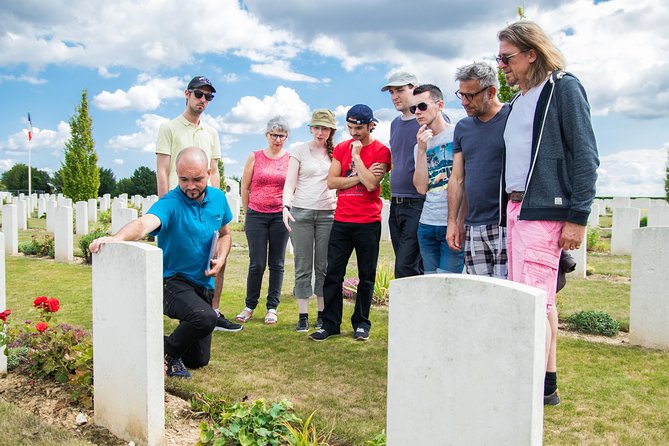
At Villers-Bretonneux Military Cemetery, the memorial commemorates 10,738 Australian servicemen who died on the Western Front without a known grave. The site also hosts Anzac Day ceremonies each April 25.
This is likely to be the emotional center of the day for Australians. The tour shows how Australian forces were involved in the defence of Villers-Bretonneux and the protection of the route toward Amiens. The nearby town’s continuing gratitude gives the visit a human link beyond the cemetery itself.
You have about 30 minutes at the cemetery. Expect a quiet, formal place rather than a museum. The rows of graves and the names of the missing ask you to slow down and pay attention.
The Australian focus is one reason this tour suits people with family military connections. One guide was able to take a participant to the area connected with a grandfather’s wartime service, creating a deeply personal visit. That kind of adjustment cannot be guaranteed, but it shows why you should share relevant family information when booking or meeting the guide.
The Sir John Monash Centre brings voices to the story
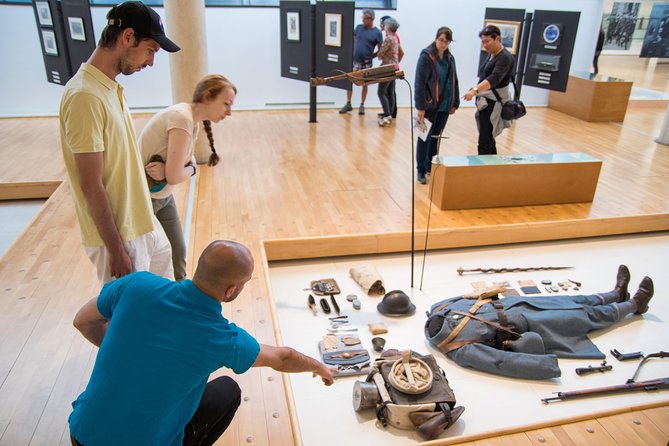
The one-hour visit to the Sir John Monash Centre is the most modern part of the day. Video testimonials and interactive displays present personal accounts of the Great War and the hardships faced by soldiers.
After several outdoor sites, this indoor stop gives you a chance to warm up and organize what you have seen. It also adds voices and personal detail to the memorials. For many visitors, the center is among the best parts of the tour because it explains the Australian experience in a format that is easier to follow than dates and battle maps alone.
The center is especially useful if you know Gallipoli but have only a general sense of Australia’s Western Front role. It places Villers-Bretonneux, the Somme, and the later stages of the war into a wider story.
Allow the full hour. Rushing through the displays would weaken the point of including the center. The tour has already taken you to the actual ground, and the exhibits help you interpret it.
Lunch at Le Tommy in Pozières
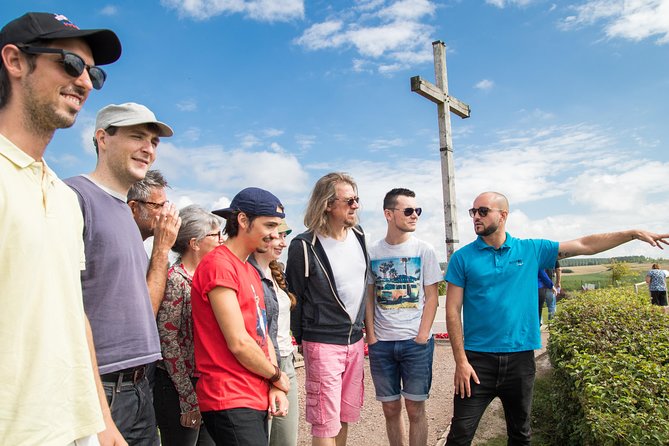
Lunch is not included, and you have about an hour at Le Tommy. The restaurant is operated by Dominique, a local figure with a strong interest in the Somme and a private collection of wartime artifacts.
The collection is a major reason to stop here. You can look at objects connected with the Battle of the Somme and get a sense of how local memory has been preserved outside formal museums. The setting adds a personal, lived-in quality to the day.
Food quality may be uneven. One past meal received poor marks, including complaints about steak, while others found the lunch good and reasonably priced. Vegetarian or vegan choices may also be limited, so ask what is available before ordering if you have dietary needs.
Treat Le Tommy as both a lunch stop and a small museum visit. The restaurant may not deliver a polished dining experience every time, but the collection gives the stop a purpose beyond eating.
Amiens Cathedral closes the day on a different note
The final stop is the 13th-century Cathedral of Amiens, described as the largest cathedral in France. You have about 20 minutes inside.
After hours focused on military death, the cathedral offers a striking change of mood. Its height and scale shift your attention from trenches and cemeteries to medieval architecture and the civilian world that existed before the war. The building was damaged by German bombing in 1918, adding another wartime thread to the visit.
Twenty minutes is enough for a look inside and a quick sense of the structure, but not a full architectural tour. If Amiens Cathedral is a major priority for you, plan a separate visit on another day. Here, it works as a brief but worthwhile final chapter.
I like this ending because it avoids finishing the day with one more cemetery. You leave with the Somme still in mind, but the final image is a living place of worship rather than only a record of loss.
Small-group comfort, timing, and guide quality
The group limit is eight people, which is a real advantage on a day with frequent stops. You can usually hear the guide without a microphone, ask questions, and move through small sites without the shuffle of a large coach.
The minivan is air-conditioned, but small-group does not automatically mean spacious. One past departure found the vehicle cramped during the long return journey. If you are tall or dislike sitting in a confined space for hours, keep that in mind before paying.
Guide quality also matters greatly. Most accounts describe guides such as Aaron, Etienne, Philip, Oliver, Matthew, Pierre, Victor, Clement, Sarah, and Nessa as engaging, prepared, and well informed. Several guides adjusted the pace for small groups or tailored the day to personal interests.
There was also a serious negative account involving lateness, poor driving, weak site explanations, and an unprofessional presentation. That appears to be an outlier beside the many positive experiences, but it is fair to mention because a driver-guide can make or break a long day. The company’s response acknowledged the concerns, but no particular guide can be guaranteed.
What to wear and pack for the Somme
The Somme is exposed, and the tour operates in all weather. Bring a waterproof outer layer, warm clothing, and shoes with decent tread.
Winter conditions can be far harsher than Paris. Cold, rain, and even snow are possible, and Australian winter clothing may not be enough for a Somme winter. You will be stepping onto outdoor battlefield sites, not simply walking between heated museums.
Pack water and any snacks you prefer. There are toilet and refreshment breaks along the way, but lunch at Le Tommy is the main planned meal stop and food is not included.
The minimum age is seven. The subject matter is serious, so parents should decide if the children in their group will handle the memorials and wartime accounts well.
Who should book this Somme tour?
I would choose this tour if you have a strong interest in the First World War, Australian military history, family service records, or the preserved battlefield sites of northern France. It is also a practical choice if you have only one free day from Paris and want transport, guiding, and several major locations handled in one package.
The tour suits adults and older children who can manage an early start, a long day, and a serious subject. Australians and Canadians may find particular meaning in the memorials, though the route also gives British, South African, Newfoundland, and wider Allied perspectives.
I would not choose it if you want a relaxed day outside Paris, a long lunch, or unhurried time at each site. The schedule is full, and some stops last only 10 or 30 minutes.
The free-cancellation policy allows a full refund if you cancel at least 24 hours before the start time. Book well ahead if your Paris dates are fixed, since this experience is often reserved months in advance.
Should you book it?
Book it if you want the Somme explained through actual ground, memorials, cemeteries, and Australian sites rather than through a book alone. The preserved trenches, Lochnagar Crater, Thiepval, Villers-Bretonneux, and the Sir John Monash Centre give the day real weight.
Skip it if the 7:00 am start, 11-hour schedule, and outdoor conditions sound tiring. For the right person, the price buys an efficient and moving day with a small group. Just dress for the weather, expect a firm pace, and remember that the guide assigned to your van will shape much of the experience.
FAQ
How long is the Somme Battlefields tour from Paris?
The tour lasts approximately 11 hours, including transport between Paris and the Somme sites.
Where does the tour begin and end?
It begins at Dada12, Av. des Ternes, 75017 Paris, at 7:00 am, and returns to the same meeting point.
How many people are in the group?
The tour accepts a maximum of eight participants and uses an air-conditioned minivan.
Is lunch included?
No. You receive about one hour for lunch at Le Tommy in Pozières, but the meal cost is not included.
What is the minimum age?
The minimum age is seven years old.
Does the tour run in bad weather?
Yes. It operates in all weather conditions, so you should dress appropriately and bring waterproof clothing and suitable footwear.
Are the memorial and site admissions included?
The listed admissions are free, and the tour includes transport, the driver-guide, taxes, fees, and handling charges.
Can I cancel for a full refund?
Yes. You can receive a full refund if you cancel at least 24 hours before the experience start time. Changes or cancellations made less than 24 hours in advance are not accepted for a refund.
Just added in Paris
- Paris: Create your Signature Scent Perfume Workshop★ 4.8 · 221 reviews
- Paris: Flea Market Insider’s Tour in Extra-Small Group★ 4.6 · 73 reviews
- Paris : Painting experience in an art cafe★ 4.6 · 204 reviews
- Paris: Vallée Village Outlet Shopping Day★ 4.3 · 362 reviews
- Paris night out : Comedy in English ‘How to Become a Parisian ?’★ 4.5 · 373 reviews
- La Vallee Village Shopping Outlet by Luxury Transport from Paris★ 3.5 · 111 reviews
- Design Luxury and Personalized Jewelry in Paris le Marais★ 5.0 · 160 reviews
- Oh My God She’s Parisian! English Comedy Show in Paris★ 4.5 · 116 reviews
Battlefield & WWII Tours, compared.
Normandy Battlefields Tour – American Sites (A3)
Read our review →
Somme Battlefields Small-Group Day Trip with John Monash Centre from Paris
Read our review →