
Reviewed · WINE TOURS
Bordeaux Wine Masterclass: Blending workshop with appetizer
The clever part of this Bordeaux wine class is the blending exercise. You taste Merlot and Cabernet Sauvignon separately, then combine them in different amounts to see how a Bordeaux-style wine changes. It turns an abstract lesson about grape varieties into something you can taste right away.
I like the small-group setting, capped at 12 people, and the practical teaching. You learn how to read a French label, talk about aromas, and make sense of terms such as terroir and appellation. I also like the spread of French wines, since the class reaches beyond Bordeaux to Burgundy, Côtes du Rhône, and the Loire Valley. The main drawback is simple: the appetizer plate is useful, but it is light. This is a tasting with snacks, not lunch.
Key points to know before booking
- Blend your own Bordeaux-style wine: Work with Merlot and Cabernet Sauvignon and compare different proportions.
- Taste at least seven French wines: The selection covers Bordeaux and other major French wine regions.
- Learn useful wine language: Practice describing color, aromas, flavors, terroir, and appellation.
- Expect a small class: The maximum group size is 12, which gives you room to ask questions.
- Enjoy a light food pairing: Cheese, cured meat, chocolate, and fresh bread accompany the tasting.
- Plan for a central Bordeaux meeting point: The class starts and ends at 3 Rue d’Enghien at 10:30 a.m.
Why the blending lesson is the heart of the class
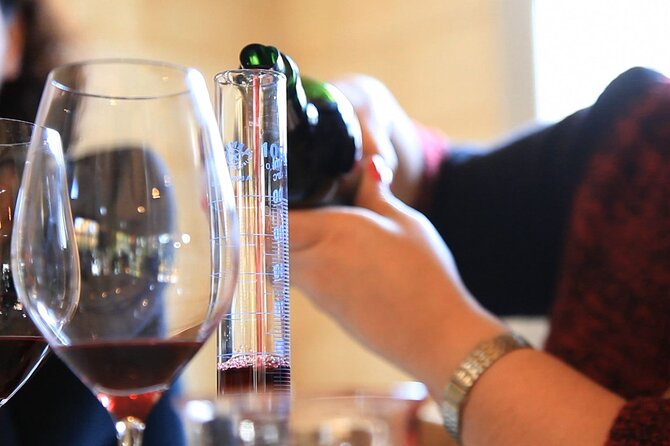
Many wine tastings ask you to sip, listen, and nod. This one gives you a small job to do. Near the end, you create a personal blend using two grapes closely tied to Bordeaux: Merlot and Cabernet Sauvignon.
That exercise matters because Bordeaux wine is often built through blending rather than relying on a single grape. Merlot can bring a softer, rounder character, while Cabernet Sauvignon is associated with a firmer structure. You do not need technical wine training to follow the lesson. The point is to taste the difference for yourself.
The class helps you see why two wines can taste different even when they come from the same general area. The guide explains the process, then gives you the chance to adjust the balance. You may prefer one grape on its own, or find that a blend feels more complete. Either way, the lesson gives you a clearer idea of what winemakers are trying to achieve.
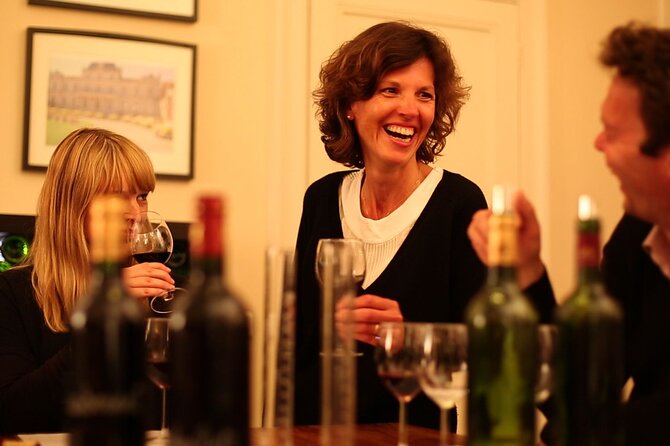
This is also the most memorable part for couples and small groups. You can compare your blend with the person beside you and see how personal taste affects the final result. It is educational without feeling like an exam.
More wine tours in Bordeaux:
- Bordeaux: Cité du Vin Entry Ticket and Wine Tasting
★ 4.6 · 3,885 reviews - Bordeaux: River Garonne Cruise with Glass of Wine and Canelé
★ 4.5 · 3,630 reviews - From Bordeaux: Afternoon Saint-Emilion Wine Tasting & snack
★ 4.8 · 1,581 reviews
A French wine lesson that starts with the basics
The session begins at 10:30 a.m. at 3 Rue d’Enghien in Bordeaux. You remain at the meeting point for the full activity, so there is no coach ride, vineyard transfer, or walking tour to manage. That makes this a useful choice for a morning when you want to learn before spending time in the city or heading out to the vineyards.
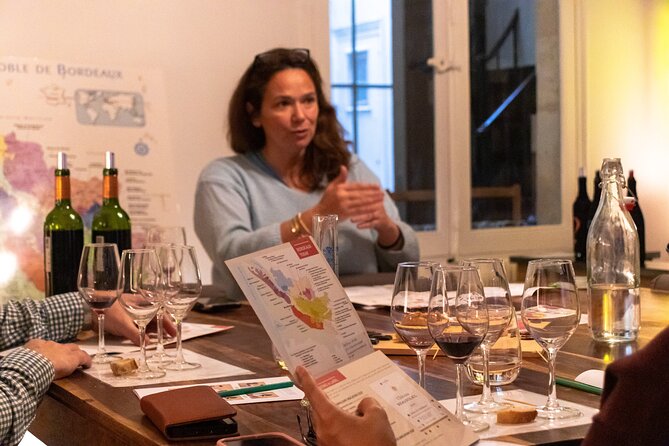
The guide first gives you a broad map of French wine. Bordeaux is the focus, but you also taste wines from Burgundy, the Côtes du Rhône, and the Loire Valley. That wider view is important. French wine labels and regional terms make more sense once you can place each area in the larger picture.
You are introduced to words such as terroir and appellation. The first refers to the local conditions that shape a wine, including soil, climate, and place. The second relates to the official geographic naming system used for French wine. These terms can seem fussy when you first see them on a label, but they become practical once the guide connects them to actual bottles.
The lesson also covers how to decipher a French label. French labels often emphasize the place where the wine was made rather than putting the grape variety in large letters. That can be confusing at first. By the end, you should have a better idea of what information to look for and why the region matters.
Seven or eight wines, not just Bordeaux
The tasting includes at least seven different wines, and the full description refers to eight samples. The exact count may vary, so plan on a generous selection rather than a fixed number. You taste wines from several parts of France, with Bordeaux receiving special attention.
This range is one of the best reasons to book the class early in your Bordeaux visit. It gives you a vocabulary for later meals and winery visits. After tasting several regions side by side, you may find it easier to explain what you like instead of simply saying that a wine is good or not good.
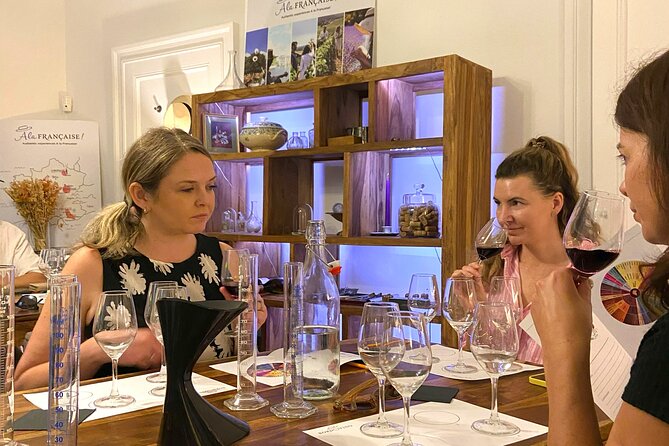
The guide asks you to pay attention to the wine’s color, aromas, and flavors. You may also take part in smell-based tests designed to help you identify familiar scents. The purpose is not to turn you into a professional taster in one morning. It is to train your attention.
You will learn that tasting is not only about detecting fruit. Texture, acidity, body, and the feel of tannins all affect your impression. The teaching is presented in an informal way, and participation is encouraged. If you already know a fair amount about wine, you can ask more detailed questions. If you are new to wine, you can follow the class without feeling out of place.
Guides who make the class personal
The listed guide is a professional sommelier, and the teaching team has included Gabriel, Victoire, Fabien, Chloé, Dorian, Carol, Hugo, Rémi, Hector, and others. The experience can therefore feel different depending on who leads your session.
The strongest pattern in the feedback is the quality of the instruction. Gabriel was praised for answering questions and explaining pairing, ratings, and the science behind wine. Chloé was described as friendly and clear. Fabien received credit for making blending easy to understand. Dorian was noted for his wine background and understanding of Cognac, while Hugo was praised for explaining how wine is made and how to tell wines apart.
You should not expect every guide to use the same examples or personality. That is normal for a rotating team. The useful point is that the class is designed around conversation. You can ask about grapes, production methods, French regions, or a bottle you have recently tried.
One note of balance: one participant felt the guide did not match the advertised sommelier description. Most of the feedback praised the teaching, but that comment is worth keeping in mind if you have advanced certification-level expectations. This is a friendly educational class, not a professional wine qualification.
Same base, a different kind of day:
- Medoc or Saint Emilion Wine Tasting and Chateau from Bordeaux
★ 5.0 · 1,415 reviews - Saint Emilion Day Trip with Sightseeing Tour & Wine Tastings from Bordeaux
★ 5.0 · 1,120 reviews - Saint-Émilion: Grand Cru Classé Winery Visit and Tasting
★ 4.6 · 1,118 reviews - Saint Emilion Half-Day Trip with Wine Tasting & Winery Visit from Bordeaux
★ 4.5 · 1,034 reviews
Cheese, charcuterie, chocolate, and bread
The food is there to support the tasting. Expect a French appetizer platter with cheese, cured meat, chocolate, and fresh bread. It gives you a chance to see how food changes your impression of wine.
That pairing element is especially useful with red wine. A wine that feels sharp or dry by itself may taste different with cheese or charcuterie. Chocolate adds another comparison, though the platter is not meant to replace a full meal.
I would eat breakfast before arriving. One participant enjoyed the wine but felt there was not much food. The class lasts about 90 minutes according to the headline information, while the detailed description calls it a two-hour workshop. Allow roughly an hour and a half to two hours, and do not arrive expecting lunch.
The food also helps keep the experience social. You are not simply holding a glass and listening to a lecture. You have something to nibble while discussing the wines with the group.
What the 12-person limit means
The maximum group size is 12 people. That is small enough for the guide to answer questions and keep the tasting interactive, but large enough to create a pleasant group atmosphere.
The class suits solo visitors, couples, friends, and small celebrations. One person used it for a hen party, and the format worked because it combines instruction with a shared activity. It also suits a milestone trip or a first morning in Bordeaux when you want a quick introduction before visiting more wineries.
The group size cannot guarantee a private lesson. You will share the table with other people, and the pace will partly depend on the questions asked. That is a benefit if you enjoy conversation, but less ideal if you want a quiet, highly personalized tasting.
Is $54.42 a fair price?
At $54.42 per person, the price is reasonable for a guided tasting that includes at least seven wines, instruction, food, and the blending exercise. You are paying for more than the liquid in the glass. The value is in the explanation, the regional comparisons, and the chance to test the lesson yourself.
I would compare it with the cost of buying seven French wines on your own, then add the difficulty of finding someone to explain the labels and guide a structured tasting. The class gives you a short, organized introduction without requiring a full day in the countryside.
The value is strongest for someone who wants a foundation. You leave with better questions to ask at a restaurant or wine shop, and you may be able to describe your preferences more clearly. If you already have advanced wine training, the class may feel introductory in parts, though the blending activity can still make the visit worthwhile.
It is also less expensive and less time-consuming than a full vineyard excursion. Several people wished they had booked a winery outing as well. That points to a good plan: take this class early, then use what you learn during a later trip to Saint-Émilion or another wine area. The class itself does not include hotel pickup, drop-off, or a vineyard visit.
The best time to schedule it in Bordeaux
The class starts at 10:30 a.m. That timing works well for a morning activity, especially if you plan to spend the afternoon exploring Bordeaux or joining a separate wine excursion.
Booking about a month ahead is sensible. The experience is often reserved roughly 29 days in advance, and the group is limited to 12 people. If your dates are fixed, do not wait until the last day.
You receive a mobile ticket, and the activity is offered in English. French language instruction is not included. The tour begins and ends at 3 Rue d’Enghien, so check the address before setting out and allow time to reach the meeting point.
The minimum drinking age is 18. Pets are not allowed, and most people can participate. The activity is seated and centered on tasting and discussion, though specific accessibility details are not provided.
Who should book this Bordeaux wine workshop?
I would recommend it to you if you are curious about French wine but do not know where to begin. It also works well for someone who has visited wineries before but still finds French labels and regional terms confusing.
It is a good fit for:
- Couples building a wine-focused Bordeaux itinerary
- Friends looking for an easy group activity
- Wine beginners who want clear instruction
- Experienced drinkers who enjoy blind tasting and blending
- Visitors who want a seated activity rather than a full-day excursion
- Anyone planning to visit Bordeaux vineyards later in the trip
I would be more cautious if you want a substantial meal, a vineyard tour, or a private tasting. The class stays in the city, includes light food, and uses a shared small-group format.
Should you book the Bordeaux Wine Masterclass?
Yes, if you want a practical introduction to French wine in a short morning session. The blending exercise gives the class a purpose beyond tasting, and the regional selection helps you place Bordeaux in the wider French wine world.
Book it early in your stay if possible. You will get more from later restaurant orders, wine-shop visits, and vineyard tours once you understand the basics. At $54.42, the combination of seven or more wines, food, instruction, and hands-on blending makes this a solid value for curious wine drinkers.
Skip it only if you are seeking a full meal, a countryside outing, or an advanced professional course. For everyone else, this is a friendly way to make French wine less mysterious and a lot more enjoyable.
FAQ
Where does the Bordeaux wine masterclass begin?
The experience begins at 3 Rue d’Enghien, 33000 Bordeaux, France.
What time does the class start?
The class starts at 10:30 a.m.
How long does the experience last?
The listed duration is approximately 1 hour 30 minutes. The detailed description refers to a two-hour workshop, so allow about 90 minutes to two hours.
How many people can join the class?
The maximum group size is 12 travelers.
How many wines will I taste?
The experience includes at least seven different wines. The detailed description refers to eight wines, so the exact number may vary.
Which wines and regions are included?
You learn about Bordeaux and taste wines from regions including Burgundy, Côtes du Rhône, Bordeaux, and the Loire Valley.
Do I get to make my own wine blend?
Yes. You create a custom blend using Merlot and Cabernet Sauvignon, two grape varieties associated with Bordeaux.
Is food included?
Yes. The class includes a French appetizer platter with cheese, cured meat, chocolate, and fresh bread.
Is the experience offered in English?
Yes. The class is offered in English. French language instruction is not included.
Just added in Bordeaux
- Au Cœur du Château – VSOP D’USSÉ & XO BARON OTARD★ 4.5 · 108 reviews
- Discover Braastad Cognac★ 5.0 · 52 reviews
- retro road trip/ Méhari, 2CV & Burton in Rochefort, La Rochelle★ 5.0 · 28 reviews
- Saint Emilion Full Day Wine and Bike Tour★ 5.0 · 167 reviews
- Virtual Room Bordeaux – 1st team virtual reality experience★ 5.0 · 47 reviews
- Private Bordeaux History Tour with a glass of Bordeaux wine.★ 5.0 · 28 reviews
- Wine Masterclass & Cheese Tasting Workshop in Bordeaux★ 5.0 · 29 reviews
- Bordeaux bike tour “The Best of Bordeaux”★ 5.0 · 164 reviews
Wine Tours, compared.
Authentic Parisian Gourmet Food Tour with 10 Local Dishes & Wines
Read our review →
Loire Valley Castles Day Trip from Paris with Complementary Wine
Read our review →
River Garonne Cruise with Glass of Wine and Canelé
Read our review →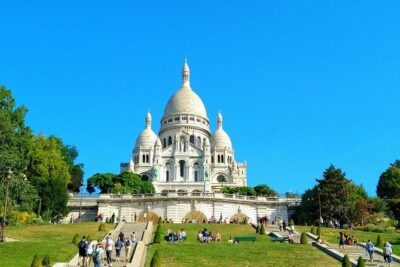
Montmartre Hill French Gourmet Food and Wine Tasting Walking Tour
Read our review →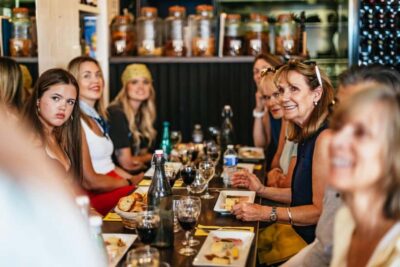
Montmartre Cheese, Wine & Pastry Guided Walking Tour
Read our review →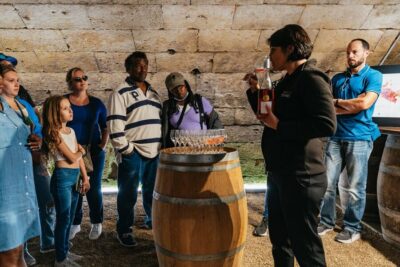
Loire Valley Castles Day Trip With Wine Tasting
Read our review →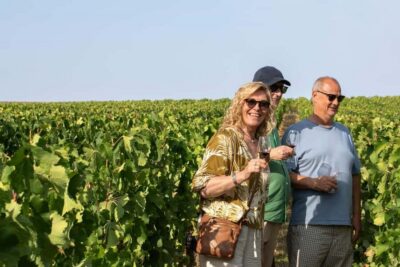
Afternoon Saint-Emilion Wine Tasting & snack
Read our review →Browse the lists this tour appears in