
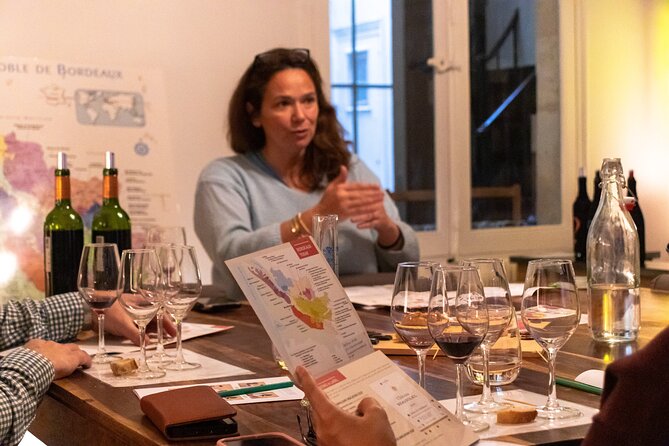
Reviewed · WINE TOURS
Bordeaux:Wine Masterclass & Blending workshop with appetizer
Bordeaux’s wine country can feel like a locked room if you do not know the language of grapes, appellations, and blends. This 90-minute workshop gives you a useful key: you taste six wines while learning how Bordeaux producers combine varieties to create a finished cuvée. The small group, capped at 12 people, keeps the class personal.
I like the hands-on blending session, which turns wine theory into something you can taste for yourself. I also like the French aperitif, with bread, sausage, cheese, and dark chocolate, since these simple pairings make the tasting feel like a social French morning rather than a lecture. The main caution is that the class may feel intense in a group of only two or three, especially if you prefer to listen quietly rather than describe what you smell and taste.
Key points to know
- Six wines in 90 minutes: You taste white and red wines, single-varietal examples, blended wines, and a famous Bordeaux wine in a blind tasting.
- Your own cuvée: The blending workshop lets you compare how different proportions change a wine’s character.
- Small English-language class: The group can include no more than 12 people, with a professional wine educator leading the session.
- Classic Bordeaux grapes: Merlot and Cabernet Sauvignon receive special attention, giving you a useful base for future tastings.
- Aperitif included: Fresh bread, sausage, cheese, and dark chocolate are served alongside the wines.
- Central meeting point: You meet at A La Française’s apartment at 3 Rue d’Enghien in Bordeaux at 10:25 a.m. for the 10:30 start.
Why this Bordeaux class is worth your morning
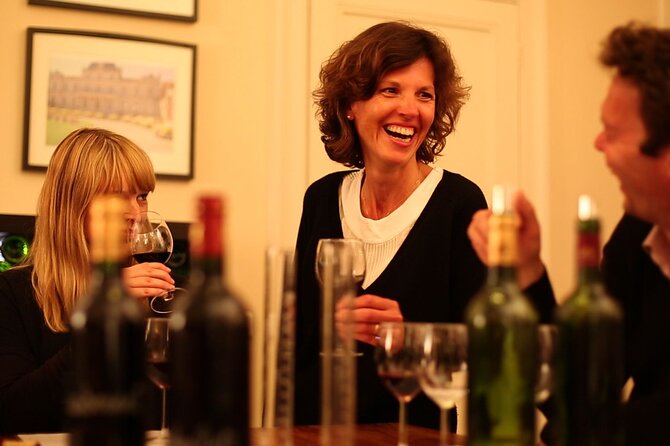
A wine tour from Bordeaux can take you out to estates on the Left or Right Bank, but this class does something different. It helps you understand what is in your glass before you spend a full day visiting vineyards.
You learn to taste in a structured way, starting with appearance and smell before moving to flavor and finish. The point is not to produce the perfect answer. It is to give you a method, so a French wine list feels less like a test and more like a set of choices.
That practical angle is the chief strength of the experience. If you have ever swirled a glass at a restaurant and wondered what you were supposed to notice, the opening lesson gives you a clearer path. You will practice identifying aromas, comparing wines, and describing your impressions in plain language.
The class is led in English by a professional wine educator. No French language is required. That matters in Bordeaux, where even a basic wine conversation can quickly fill with French place names and technical terms.
More wine tours in Bordeaux:
- Bordeaux: Cité du Vin Entry Ticket and Wine Tasting
★ 4.6 · 3,885 reviews - Bordeaux: River Garonne Cruise with Glass of Wine and Canelé
★ 4.5 · 3,630 reviews - From Bordeaux: Afternoon Saint-Emilion Wine Tasting & snack
★ 4.8 · 1,581 reviews
Meeting at 3 Rue d’Enghien
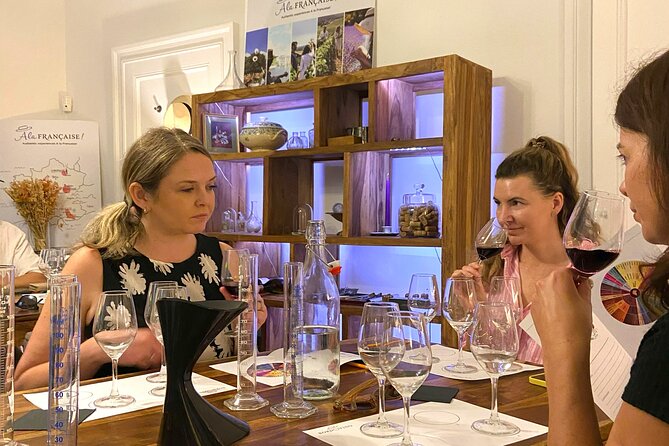
The meeting point is A La Française’s apartment at 3 Rue d’Enghien, 33000 Bordeaux. You should arrive by 10:25 a.m. for the 10:30 start.
The setting is useful because the class begins indoors and avoids the time and cost of getting out to the vineyards. You are not spending the morning on a coach or waiting for cellar visits. Instead, the full session is devoted to tasting and instruction.
The activity lasts 90 minutes and ends at noon. That makes it easy to fit around lunch, an afternoon museum visit, or a later trip into the surrounding wine country. It is also a sensible choice if you have only a short stay in Bordeaux and want a focused introduction without giving up half a day.
Pets are not allowed. The activity is not suitable for people with mobility impairments, so check the access arrangements before booking if that applies to you.
Starting with white wine and tasting basics
The class opens with a welcome glass of white wine. This is more than a drink to settle everyone in. It gives the educator a simple example to use while explaining the basics of tasting.
You learn how to look at the wine, smell it, and taste it with more attention. The educator also helps you recognize how grape variety and winemaking affect what you notice. The lesson is designed for beginners, but it can still help you if you have already visited a few wineries.
I like this beginning because it takes the pressure off. You are not asked to identify a rare aroma immediately. You start by building a vocabulary and comparing your impressions with the group.
The informal approach is important. Wine tasting can become awkward when an instructor treats every answer as a quiz. Here, the stated aim is to help you taste like a sommelier without feeling intimidated in a restaurant. Still, one participant found that the questioning felt discouraging in an unusually tiny group. If you are sensitive to being put on the spot, tell the educator early that you prefer time to think before answering.
Bordeaux grapes, with Merlot and Cabernet Sauvignon
The next part turns to Bordeaux itself. You learn about the region’s wine traditions and its main grape varieties, especially Merlot and Cabernet Sauvignon.
The class serves two single-varietal wines so you can taste the grapes separately. This is a smart teaching choice. Bordeaux is famous for blends, and it can be hard to understand a finished blend if you have never compared its building blocks.
A single-varietal wine gives you a reference point. You can focus on the character of one grape before seeing how that character changes when it is combined with another. The goal is not to memorize a long list of tasting terms. It is to notice contrast.
This portion also gives useful context for future meals and wine-shop visits. If a bottle label names a Bordeaux appellation rather than a grape, you will have a better idea of why the producer may have combined several varieties.
The history lesson is part of the class, but the experience is not presented as a formal museum talk. The emphasis stays on tasting and comparison. That balance should suit you if you want context that supports the wine rather than a long historical lecture.
Same base, a different kind of day:
- Medoc or Saint Emilion Wine Tasting and Chateau from Bordeaux
★ 5.0 · 1,415 reviews - Saint Emilion Day Trip with Sightseeing Tour & Wine Tastings from Bordeaux
★ 5.0 · 1,120 reviews - Saint-Émilion: Grand Cru Classé Winery Visit and Tasting
★ 4.6 · 1,118 reviews - Saint Emilion Half-Day Trip with Wine Tasting & Winery Visit from Bordeaux
★ 4.5 · 1,034 reviews
The blending workshop and your own cuvée
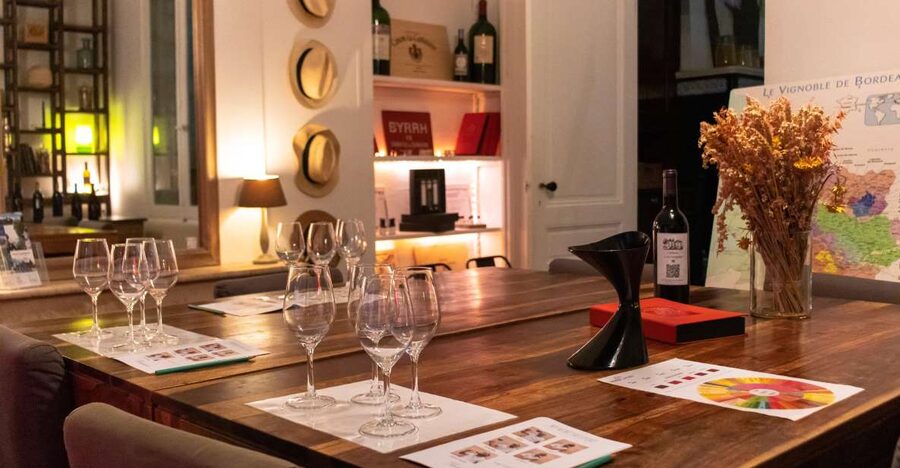
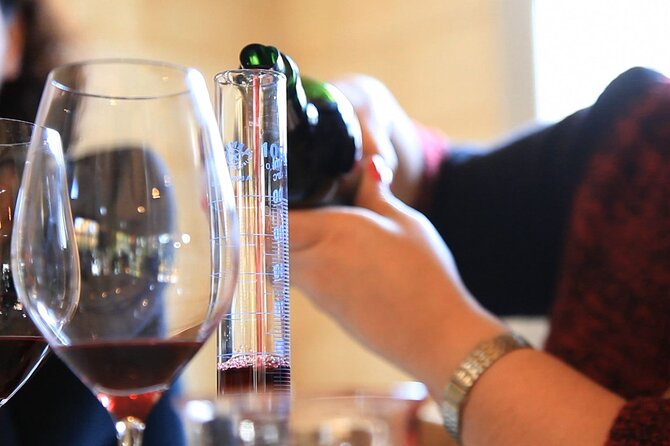
The heart of the activity is the blending session. You work with the idea behind a Bordeaux cuvée, a wine made by combining different components into one finished product.
You taste two blended wines prepared in front of you. This lets you compare how the proportions and ingredients shape the result. You then create your own version, using the examples as a guide.
This is the part I would value most if I were booking the class. Blending is often explained in abstract terms, with talk of balance, body, fruit, acidity, and structure. Here, you can connect those words to a real comparison in the glass.
Do not expect to leave as a Bordeaux winemaker. The workshop is short, and the purpose is understanding, not professional production. But you should leave with a better sense of why a producer might combine varieties instead of bottling each one alone.
It is also a good antidote to the idea that one grape automatically makes a better wine than another. A blend is about how parts work together. Your own cuvée may not be perfect, but it gives you a direct lesson in proportion and balance.
The small group helps here. With a maximum of 12 people, the educator has room to explain the differences and respond to questions. One participant described the class as especially useful after already taking both a Left Bank and Right Bank wine tour. That is a good clue about the workshop’s role: it adds technical understanding to vineyard visits rather than replacing them.
Six wines, including a blind tasting
You taste six wines in total. The sequence includes the opening white and red wines, two single-varietal wines, two blended wines, and a blind tasting of a famous Bordeaux wine.
The blind tasting brings a playful finish to the technical work. You try to guess where the wine comes from based on its character. The exercise tests your new vocabulary without requiring you to be an expert.
Blind tasting can also reveal how difficult wine identification really is. That is useful. It keeps the class from becoming a lesson in false certainty, where every smell has one correct name and every wine must fit a neat category.
You may notice that the class moves at a steady pace. Six wines in 90 minutes is enough to make meaningful comparisons, but it is not a leisurely afternoon tasting. Pay attention to the educator’s explanations and avoid treating each pour as a separate event. The value comes from the sequence.
The wines are described as quality French wines, with a focus on Bordeaux. Specific producers and vintages are not provided, so you should not book this expecting a particular château or bottle. Book it for the tasting format and the chance to compare styles.
Bread, cheese, sausage, and dark chocolate
The wine is served with a traditional French aperitif. The platter includes fresh bread, sausage, cheese, and dark chocolate.
These foods are not just decoration. They show how food can change your impression of a wine. A salty sausage, creamy cheese, or piece of dark chocolate can make the same sip seem softer, sharper, fruitier, or more structured.
The food also makes the class feel more relaxed. You have something to nibble while asking questions, and the tasting resembles the way wine is enjoyed in France, as part of a social table rather than as an isolated technical exercise.
This is an appetizer, not lunch. If you have planned a full midday meal, keep that in mind. The included food should take the edge off your appetite, but it is not presented as a substitute for lunch.
A lunch option is listed as not included, so you should plan and budget for your own meal afterward.
The small-group format: personal but not anonymous
The group can include up to 12 people. That is small enough for questions and discussion, but large enough to avoid the pressure of a private lesson.
The group size can vary. One recent class had only two participants. That allowed plenty of time for questions and a more direct exchange with the educator, but it also made one participant feel watched when answering tasting questions.
This is worth considering before you book. Some people love a tiny class because the educator can slow down and explain every point. Others feel more comfortable speaking in a larger group, where they can listen first and answer only when ready.
The best approach is to treat your answers as observations, not exams. There is no single correct smell or flavor for every person. If you are unsure, say what you notice and ask for help finding the right words. The tasting method is meant to build confidence, not test memory.
There is also a minimum operating rule. The class may be cancelled if only one person books, since at least two participants are required. If that happens, you will be contacted and receive a full refund.
Price and practical value at $53
At $53 per person, the class costs more than a simple bar tasting, but it includes six wines, instruction, the blending activity, and an appetizer platter.
The value is strongest if you want to learn how Bordeaux wine works. You are paying for guided comparison, not only for six pours. The educator connects the wines, grape varieties, blending process, and food pairings, which makes the experience more useful than tasting bottles without context.
It can also save time. A full vineyard excursion from Bordeaux usually requires transport and a larger time commitment. This class stays in the city and gives you a concentrated introduction in one morning.
The price is less attractive if you mainly want to sample as many expensive wines as possible. The specific producers and vintages are not promised, and the class focuses on teaching rather than rare-bottle access.
Free cancellation is available up to 24 hours before the activity, and you can reserve now and pay later. Those terms help if your Bordeaux plans are still shifting.
Who should book this Bordeaux workshop?
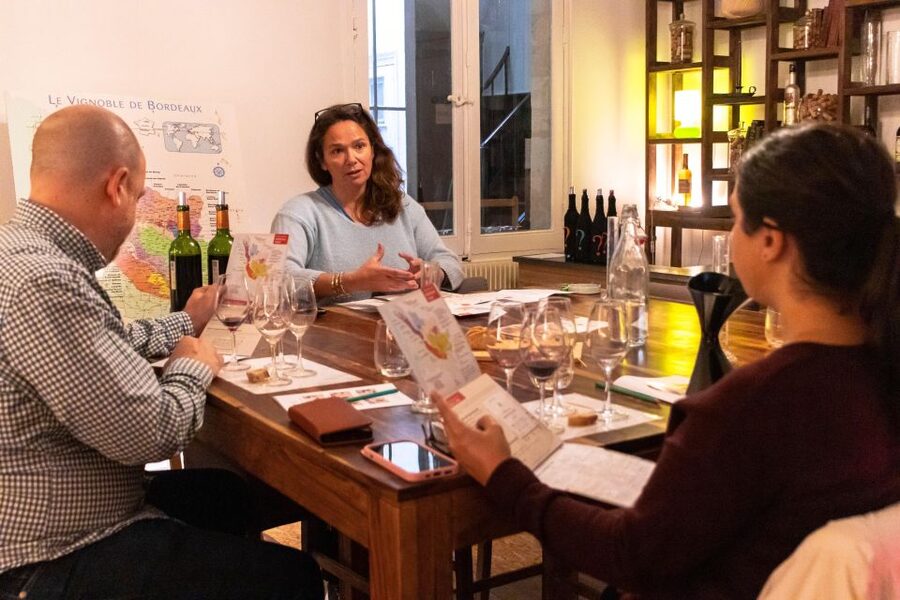
I would recommend it to you if you are new to French wine, want a clearer way to taste, or have already visited vineyards and want to understand the blending behind what you drank.
It also suits couples, solo visitors, and small groups who enjoy asking questions. The English-language format removes the need to manage French wine terminology on your own.
You may prefer a different experience if your main goal is touring a château, walking through vineyards, or tasting only at the source. This activity takes place in Bordeaux and focuses on the glass, not on vineyard scenery or estate visits.
It is also not the best choice for someone who wants a long, slow meal. The food is an aperitif, and the 90-minute schedule moves with purpose.
My advice before you book
Arrive early, especially since the requested arrival time is 10:25 a.m. Bring a curious attitude rather than a desire to prove that you can identify every aroma.
If you have already taken a Left Bank or Right Bank tour, do not assume this class will repeat the same material. Its value is the blending workshop and the side-by-side tasting, which can make those regional differences easier to understand.
If you are completely new to wine, the opening white wine and tasting lesson should give you a comfortable starting point. If you already know wine well, the class will be most worthwhile if you enjoy comparing blends and discussing how proportions affect the final cuvée.
Should you book it?
Book this workshop if you want a short, practical Bordeaux wine lesson with six wines, food pairings, and a hands-on blending session. At $53, it offers good value for a city-based introduction, especially when you want more guidance than a casual tasting bar provides.
Skip it if you want a château visit, vineyard views, or a full meal. Also consider the small-group pressure if you dislike speaking about what you smell and taste. For most curious wine drinkers, though, the class gives you a useful foundation you can carry into every Bordeaux restaurant and bottle shop afterward.
FAQ
Where does the Bordeaux wine workshop meet?
Meet at A La Française’s apartment at 3 Rue d’Enghien, 33000 Bordeaux.
What time should I arrive?
You should arrive at 10:25 a.m. for the 10:30 a.m. start.
How long does the activity last?
The workshop lasts 90 minutes and ends at noon.
How many wines will I taste?
You will taste six French wines, including white and red wines, single-varietal wines, blended wines, and a wine used for the blind tasting.
Is the blending session included?
Yes. The activity includes a blending workshop where you learn about Bordeaux’s cuvée-making process and create your own blend.
Is the workshop offered in English?
Yes. The live tour guide and wine educator lead the activity in English. French language instruction is not included.
What food is served?
The included French appetizer platter features fresh bread, sausage, cheese, and dark chocolate.
Can I cancel the booking?
Yes. You can cancel up to 24 hours in advance for a full refund. You can also reserve now and pay later.
Just added in Bordeaux
- Au Cœur du Château – VSOP D’USSÉ & XO BARON OTARD★ 4.5 · 108 reviews
- Discover Braastad Cognac★ 5.0 · 52 reviews
- retro road trip/ Méhari, 2CV & Burton in Rochefort, La Rochelle★ 5.0 · 28 reviews
- Saint Emilion Full Day Wine and Bike Tour★ 5.0 · 167 reviews
- Virtual Room Bordeaux – 1st team virtual reality experience★ 5.0 · 47 reviews
- Private Bordeaux History Tour with a glass of Bordeaux wine.★ 5.0 · 28 reviews
- Wine Masterclass & Cheese Tasting Workshop in Bordeaux★ 5.0 · 29 reviews
- Bordeaux bike tour “The Best of Bordeaux”★ 5.0 · 164 reviews
Wine Tours, compared.
Authentic Parisian Gourmet Food Tour with 10 Local Dishes & Wines
Read our review →
Loire Valley Castles Day Trip from Paris with Complementary Wine
Read our review →
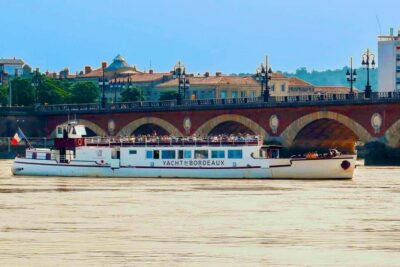
River Garonne Cruise with Glass of Wine and Canelé
Read our review →
Montmartre Hill French Gourmet Food and Wine Tasting Walking Tour
Read our review →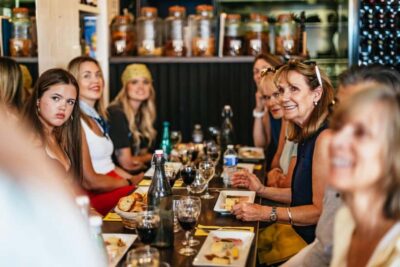
Montmartre Cheese, Wine & Pastry Guided Walking Tour
Read our review →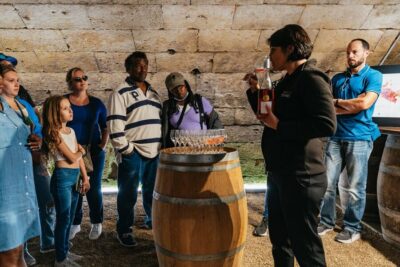
Loire Valley Castles Day Trip With Wine Tasting
Read our review →
Afternoon Saint-Emilion Wine Tasting & snack
Read our review →Browse the lists this tour appears in