
Reviewed · TOURS IN BORDEAUX
From Sarlat-la-Canéda: Lascaux IV and Cave Art Full-Day Tour
The great draw here is seeing Lascaux IV alongside an authentic cave site. Lascaux IV is a remarkably careful reconstruction, while Rouffignac gives you a different, more immediate sense of prehistoric shelter and art. Add the museum at Les Eyzies and the cliff dwellings of La Roque Saint-Christophe, and you get a full day of Dordogne prehistory rather than a quick look at one famous cave.
I like the small group, with no more than eight people, and the fact that your guide drives between sites while explaining the region. Guides including Anne, Lena, Benoit, Marion, Florence, Martin, and Emilien have been praised for clear English, good timing, local stories, and thoughtful lunch advice. The main drawback is the price, $265 per person, plus the long nine-hour schedule and limited English commentary inside Lascaux IV itself.
Key points at a glance
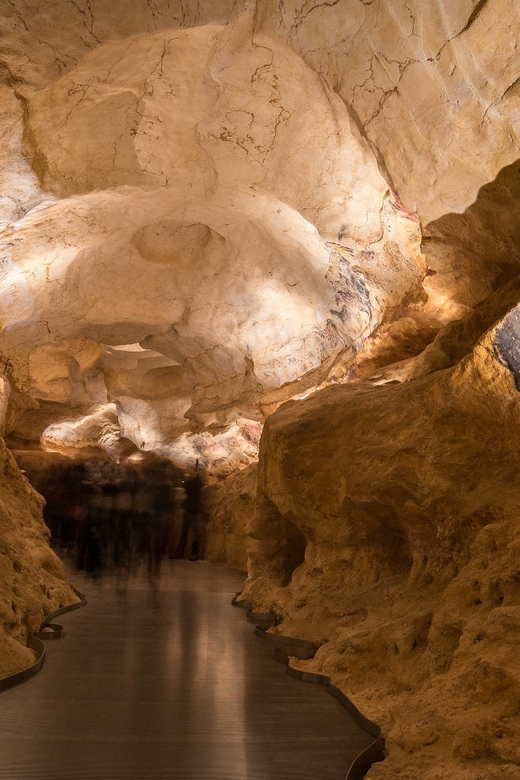
- Lascaux IV recreation: See a full-scale reproduction made with careful scientific and artistic methods, including paintings recreated with natural pigments.
- Rouffignac adds authenticity: The cave offers a different experience from Lascaux IV, with original prehistoric art and an electric train journey through the site.
- Les Eyzies puts the subject in context: The National Prehistory Museum holds the world’s largest collection of prehistoric artifacts.
- La Roque Saint-Christophe is an outdoor change of pace: Explore a limestone cliff inhabited since Paleolithic times, with stairs and dramatic views.
- Small-group transport saves effort: A comfortable van, an English-speaking driver-guide, and a maximum of eight participants make a complicated day easier.
- Plan for cool caves and uneven walking: Bring a warm jacket, comfortable shoes, and an identity card. The caves are about 14°C, or 57°F.
Why this Dordogne day works so well
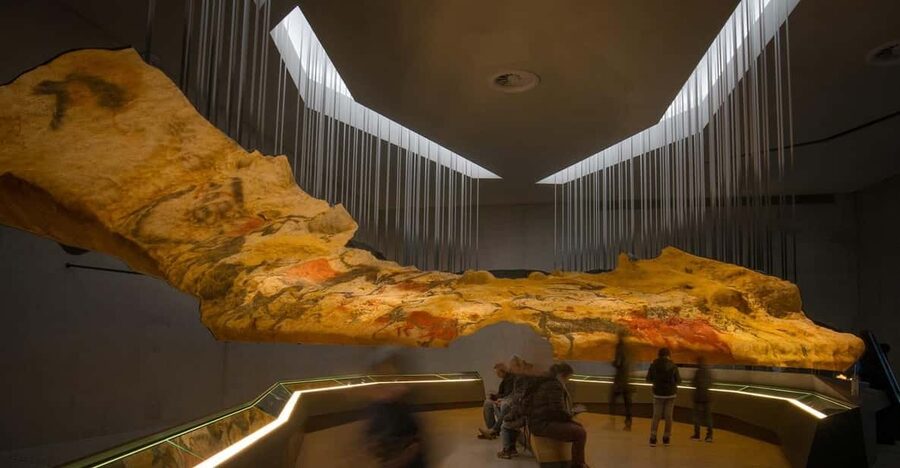
Dordogne is one of the best places in France to connect prehistoric art with the people, tools, shelters, and geology behind it. On this tour, you are not simply shown a famous painted wall and sent on your way. The day builds a story through museum objects, cave art, reconstructed spaces, and cliffside architecture.
That order matters. The National Prehistory Museum at Les Eyzies introduces Cro-Magnon and the many periods of human settlement in the area. Lascaux then gives you the famous painted animals and sweeping shapes. Rouffignac supplies a different kind of cave experience, while La Roque Saint-Christophe shows how people used the natural cliffs above the river.
I also like the scale of the outing. A nine-hour day sounds demanding, but the stops break it into manageable pieces. You ride for roughly 30 minutes from Sarlat, spend time at several major sites, pause for lunch and free time around Montignac, then return by van. You will be busy, but you are not sitting through one long lecture.
The tour leaves from the Place Pasteur bus stop in Sarlat-la-Canéda, near La Maison Secrète. The group is capped at eight, though the exact vehicle and seating arrangement can vary. One practical point from past experience on this type of small van tour: if you care about your seat, arrive early. A comfortable van is still less pleasant from the back row for nine hours, especially when the road turns narrow.
Other trips people book in Bordeaux:
- Bordeaux: Cité du Vin Entry Ticket and Wine Tasting
★ 4.6 · 3,885 reviews - Bordeaux: River Garonne Cruise with Glass of Wine and Canelé
★ 4.5 · 3,630 reviews - From Bordeaux: Afternoon Saint-Emilion Wine Tasting & snack
★ 4.8 · 1,581 reviews
Les Eyzies and the National Prehistory Museum
Les Eyzies-de-Tayac-Sireuil is the natural opening chapter. The first five Cro-Magnon skeletons were discovered here in 1868, and the town remains closely tied to the study of early modern humans in Europe.
The National Prehistory Museum opened in 2004 and contains the largest collection of prehistoric artifacts in the world. That is a lot to take in, so the guide’s role is useful. Instead of wandering through displays without a clear thread, you get help understanding what matters and how the objects relate to the caves you will see later.
Expect roughly an hour and a half here, including guided time. The displays cover prehistoric tools, remains, and other evidence of human life. This stop is especially useful if you are new to the subject, since it gives names and dates to the broad sweep of prehistory before you reach the art.
I would not rush through the museum, but I would also be realistic about the schedule. You are not visiting every room in detail. The day has fixed cave times, and the museum is one part of a larger program. If your main interest is art rather than archaeology, you may find the museum less immediately thrilling than Lascaux. Still, it makes the later stops easier to understand.
Several guides, including Anne, Benoit, Marion, Florence, and Lena, have been praised for explaining technical subjects in plain English. That matters here. Prehistoric dates, cave use, geology, and human development can become a blur without a clear guide.
Rouffignac and the value of an original cave
Rouffignac provides the day’s strongest contrast with Lascaux IV. Lascaux IV is a reproduction, created to protect the original cave. Rouffignac is an authentic cave site, and its art gives you a different feeling even if the presentation is less polished.
The journey through Rouffignac is made by a small electric train, which takes you into the cave. You will see engravings and animal outlines associated with the Ice Age, including images that feel less theatrical than the famous paintings at Lascaux. That difference is part of the appeal. Rouffignac is not trying to be a grand architectural showpiece. Its strength is the sense of entering a real underground place used by people long ago.
The cave stop is generally paired with substantial guided time, though the order can change according to Lascaux IV’s reserved entry slots. Your guide will set up the visit before you enter and help interpret it afterward.
There is one important warning. English cave tours at Rouffignac may not always be available. An older experience included a German-language cave tour with only a short English tablet, which made following the commentary difficult. Conditions and schedules can change, so ask your guide how the language arrangements will work on the day. The small group’s own guide can still provide useful context before and after the cave.
This is also where warm clothing earns its place in your day bag. The cave temperature is about 14°C. You may be comfortable in the Dordogne sunshine and still feel chilly underground.
Lascaux IV and the famous painted animals
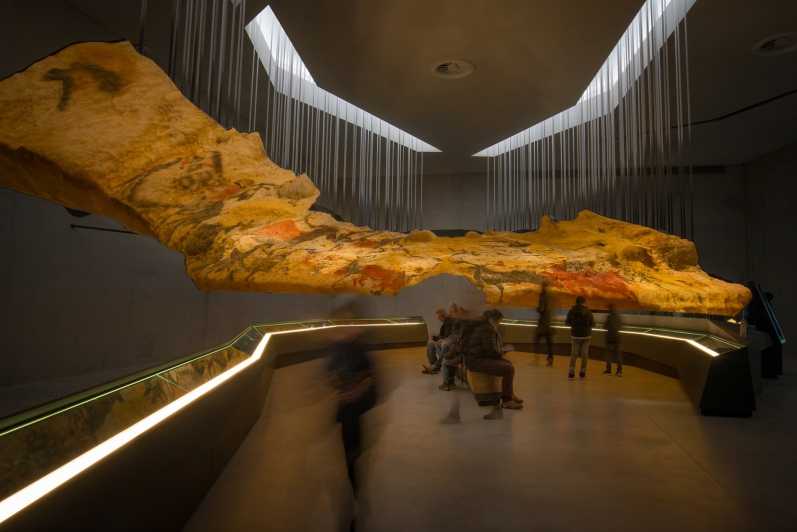
Lascaux is the headline stop, and the modern Lascaux IV complex is impressive even before you see the art. The original cave is closed to ordinary public access to protect the paintings. Lascaux IV recreates the cave in full, using detailed measurements, artistic methods, and modern construction techniques.
The reproduction includes the cave’s contours down to very small details. A reinforced concrete shell was formed using methods associated with shipbuilding, then finished to reproduce the shape and atmosphere of the original. The paintings were recreated with natural pigments, following the methods used roughly 17,000 years ago.
You will see the familiar Paleolithic animals and sweeping compositions that made Lascaux famous. Even knowing you are in a copy, the experience can be powerful. The scale, darkness, surface texture, and close grouping of the images help explain why the original cave is treated with such care.
The tour includes skip-the-line access, which is valuable because Lascaux IV runs on reserved time slots. Your day may begin at Lascaux, or it may come later, depending on the available entry time. Do not assume the printed order is fixed.
English tours inside Lascaux IV are limited. Most visits are conducted in French. Your English-speaking guide will explain the cave before and after the official visit, but simultaneous translation is not allowed inside. This is the biggest language limitation of the tour, and you should know it before paying the full price.
Even so, the guide’s preparation makes a difference. A clear introduction helps you know where to look, what details to notice, and why the reproduction is considered such a serious conservation project. Afterward, your guide can fill in the gaps and connect the cave to the museum and Rouffignac.
Same base, a different kind of day:
- Medoc or Saint Emilion Wine Tasting and Chateau from Bordeaux
★ 5.0 · 1,415 reviews - Saint Emilion Day Trip with Sightseeing Tour & Wine Tastings from Bordeaux
★ 5.0 · 1,120 reviews - Saint-Émilion: Grand Cru Classé Winery Visit and Tasting
★ 4.6 · 1,118 reviews - Saint Emilion Half-Day Trip with Wine Tasting & Winery Visit from Bordeaux
★ 4.5 · 1,034 reviews
La Roque Saint-Christophe above the river
La Roque Saint-Christophe changes the mood completely. Instead of walking through an enclosed museum or cave, you climb along a sheer limestone cliff where people used natural shelters over many thousands of years.
The site is both prehistoric and architectural. You learn how people adapted the cliff for shelter and how later inhabitants developed practical systems for living in a vertical setting. The guide explains the prehistoric caves and the engineering used to make the cliff habitable.
Allow about two hours for this part of the program. It gives your eyes a break from dark interiors and adds a strong visual sense of the Dordogne setting. The height and exposed rock make the site memorable, but they also create the clearest physical limitation of the day.
La Roque Saint-Christophe includes stairs and is not suitable for wheelchair users or people with mobility issues. Comfortable shoes are essential. If stairs are difficult for you, this is not a minor detail to overlook. Ask before booking, since the tour is built around the full group visiting the site.
Lunch, free time, and the practical rhythm
The schedule includes about two and a half hours of free time in Montignac. This is your best chance for lunch and a short walk rather than a formal meal included in the tour.
Meals and drinks are not included, so budget for lunch separately. Guides have helped by suggesting places to eat, and the break also gives you time to talk with the other people in the van. It is a useful pause between the museum and cave visits.
The day may not follow the exact sequence described in advance. Lascaux IV’s ticket times control much of the schedule, so the operator may move the museum, Rouffignac, or La Roque Saint-Christophe around. That flexibility protects the most important reservation, but it means you should not plan an independent appointment immediately after the tour.
The activity operates in rain or shine. July departures begin at 8:30 a.m. rather than 9 a.m., and the tour is not available in August. It requires at least two adults to operate. Children under four cannot join, and you should provide a child’s age when booking so an appropriate car seat can be arranged.
The guide and van make the difference
The strongest part of this experience is the guide. You are not just being transported between ticketed attractions. The driver-guide explains the Dordogne countryside, gives background during the drives, handles changes in timing, and helps make sense of what you are seeing.
Guides named in past bookings include Anne, Lena, Benoit, Marion, Florence, Martin, Emilien, and Ann. Their strengths have included clear English, local stories, good driving on narrow roads, useful restaurant suggestions, and the ability to adjust when a museum or cave schedule changes.
The van is also important. With a group limited to eight, you avoid the feel of a large coach excursion. The short transfers become chances to ask questions, rest your feet, or look out at the countryside. A microphone has been used in the vehicle, which helps people hear from the rear seats, though seating may remain fixed for the whole day.
This arrangement is especially helpful if you are staying in Sarlat without a rental car. Recreating the day independently would require several reservations, careful driving, parking, and a good understanding of the region’s scattered sites. You might save money with your own car, but you would also take on the work and lose the guide’s running commentary.
Is $265 a fair price?
At $265 per person, this is not a budget outing. The price makes more sense if you value convenience and interpretation. Transport, an English-speaking driver-guide, and visits to the named sites are included, while meals, drinks, and any attractions outside the program are not.
The value is strongest for first-time visitors to the Dordogne who want to cover the main prehistoric sights in one day. You are paying for more than a ride to Lascaux. You get a carefully connected program involving the museum, an authentic cave, a major reconstruction, and a cliffside site.
The price is harder to justify if you have several days, your own car, and strong French. You could spread the visits out, spend longer at the museum, and arrange each admission yourself. You may also prefer a slower day with fewer stops.
For most people staying in Sarlat, I think the cost is reasonable if prehistory is a major reason for your visit. The small group and guide support are the key benefits, not simply the number of attractions checked off.
Who should book this experience?
Book it if you want a focused day about prehistoric art and early human life, especially if you do not want to drive between Les Eyzies, Rouffignac, Montignac, and La Roque Saint-Christophe. It suits adults, older children, art lovers, history fans, and anyone with Lascaux high on a personal wish list.
You should be comfortable with a full nine-hour schedule, walking, stairs, cool caves, and a fair amount of information. Bring an identity card, sturdy shoes, and a warm jacket. Pets are not allowed.
I would skip it if you use a wheelchair, have serious difficulty with stairs, need a fully English-language presentation inside Lascaux IV, or prefer a quiet day with plenty of time at one site. For everyone else, this is one of the more efficient ways to understand why the Dordogne is central to the study of prehistory.
FAQ
Where does the tour start?
The meeting point is the Place Pasteur bus stop in Sarlat-la-Canéda.
How long does the tour last?
The tour lasts nine hours, including travel between the sites.
Which places are visited?
The program includes Les Eyzies and the National Prehistory Museum, Rouffignac, Lascaux IV, and La Roque Saint-Christophe. The order may change according to Lascaux IV’s reserved entry times.
Is Lascaux IV an original cave?
No. Lascaux IV is a full reproduction of the original cave and its artwork. It was created using detailed scientific and artistic methods to protect the original site.
Is the tour conducted in English?
The driver-guide speaks English. English tours inside Lascaux IV are limited, and most cave visits there are in French. Your guide explains the cave before and after the official visit because simultaneous translation is not allowed inside.
Is lunch included?
No. Meals and drinks are not included. The schedule provides free time in Montignac for lunch.
Is the tour suitable for people with mobility issues?
No. La Roque Saint-Christophe includes stairs, and the activity is not suitable for wheelchair users or people who cannot manage stair climbing.
What should I bring?
Bring a passport or identity card, comfortable walking shoes, and a warm jacket. The caves are about 14°C, or 57°F.
Can young children join?
Children under four years old cannot join the tour. If bringing an older child, provide the child’s age when booking so an appropriate car seat can be arranged.
Just added in Bordeaux
- Au Cœur du Château – VSOP D’USSÉ & XO BARON OTARD★ 4.5 · 108 reviews
- Discover Braastad Cognac★ 5.0 · 52 reviews
- retro road trip/ Méhari, 2CV & Burton in Rochefort, La Rochelle★ 5.0 · 28 reviews
- Saint Emilion Full Day Wine and Bike Tour★ 5.0 · 167 reviews
- Virtual Room Bordeaux – 1st team virtual reality experience★ 5.0 · 47 reviews
- Private Bordeaux History Tour with a glass of Bordeaux wine.★ 5.0 · 28 reviews
- Wine Masterclass & Cheese Tasting Workshop in Bordeaux★ 5.0 · 29 reviews
- Bordeaux bike tour “The Best of Bordeaux”★ 5.0 · 164 reviews
Tours in Bordeaux, compared.

River Garonne Cruise with Glass of Wine and Canelé
Read our review →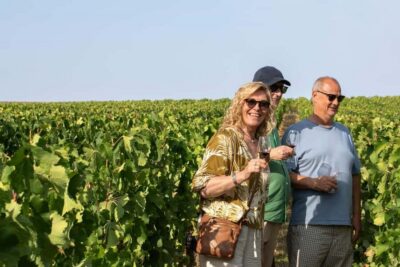
Afternoon Saint-Emilion Wine Tasting & snack
Read our review →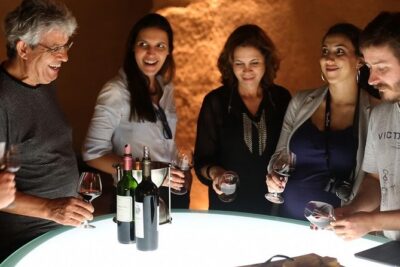
Medoc or Saint Emilion Wine Tasting and Chateau from Bordeaux
Read our review →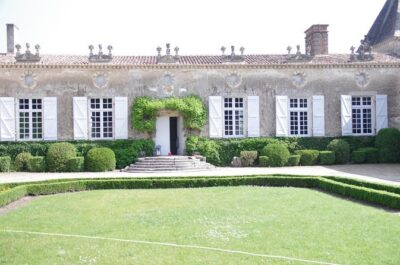
Saint Emilion Day Trip with Sightseeing Tour & Wine Tastings from Bordeaux
Read our review →
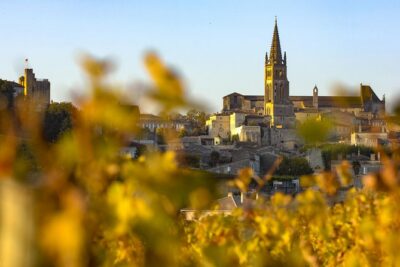
Saint Emilion Half-Day Trip with Wine Tasting & Winery Visit from Bordeaux
Read our review →
Browse the lists this tour appears in