
Reviewed · LOUVRE MUSEUM TOURS
Louvre & Musée d’Orsay Guided Museum Tour Semi-Private 6ppl Max
The clever part of this Paris tour is the pairing: you move from the Louvre’s royal collections and Renaissance masterpieces to the Musée d’Orsay’s Impressionist revolt in a single morning and afternoon. Guides such as Alessandra, Belen, Marcel, Anais, and Thibaut have brought art history to life with stories, comparisons, and practical routes through huge museums.
I like the six-person maximum, which gives you a real chance to ask questions instead of following a flag through a crowd. I also like the link between the two museums, since guides can explain how artistic ideas changed from the Academy and Renaissance traditions to the light and color of Monet, Renoir, and Cézanne.
The tradeoff is the price, $288.42 per person, and the pace. Five and a half hours of art, walking, stairs, security, and a Seine crossing is a full day on your feet. This is an excellent highlights tour, but it cannot replace several leisurely visits to either museum.
Key points to know before booking
- Two world-class museums in about five and a half hours: Begin at the Louvre at 10 a.m., then walk across the Seine to the Musée d’Orsay.
- A genuinely small group: The activity is limited to six people, allowing more questions and easier movement through crowded galleries.
- The guide supplies the missing context: Expect connections between artists, periods, techniques, and the social forces that shaped French art.
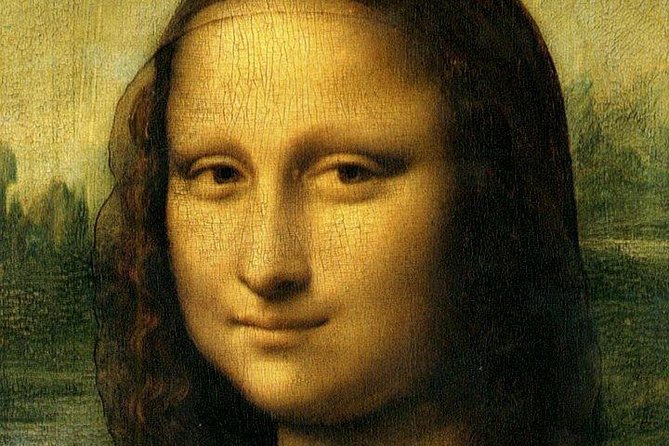
- The Louvre is handled strategically: You’ll see major works such as the Mona Lisa, Venus de Milo, and paintings by Raphael and Delacroix without trying to cover every room.
- The Musée d’Orsay adds a different mood: Its focus on Impressionism brings Monet, Renoir, Cézanne, and the break from academic painting into view.
- Plan for serious walking: Wear comfortable shoes, carry only a small bag, and bring identification with your birth date.
Why this two-museum plan works
The Louvre and Musée d’Orsay are not simply two famous buildings to check off. Together, they tell a useful story about European art. The Louvre takes you through centuries of painting and sculpture, including the grand traditions that shaped artistic training. The Musée d’Orsay picks up the story with artists who challenged those rules.
That connection is the main reason I prefer this format to a rushed visit to the Louvre alone. You do not just see one famous canvas after another. A good guide can point out how an idea, technique, or artistic argument developed across time.
The small group matters here. A guide can adjust explanations for a family with children, a couple already familiar with art, or first-time museum visitors who want the basics. Several guides, including Christina, Daniel, Taylor, and Hugo, have been praised for keeping younger people involved rather than turning the tour into a lecture.
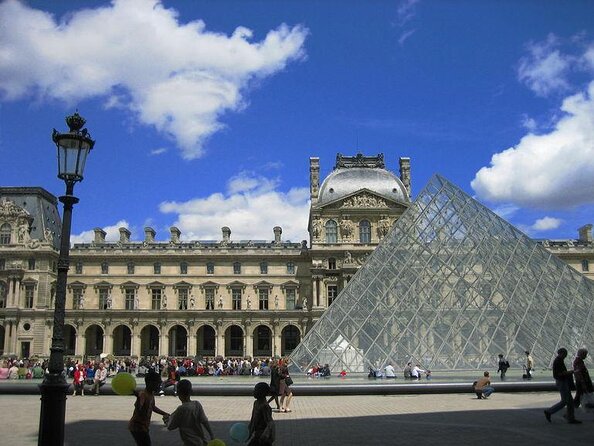
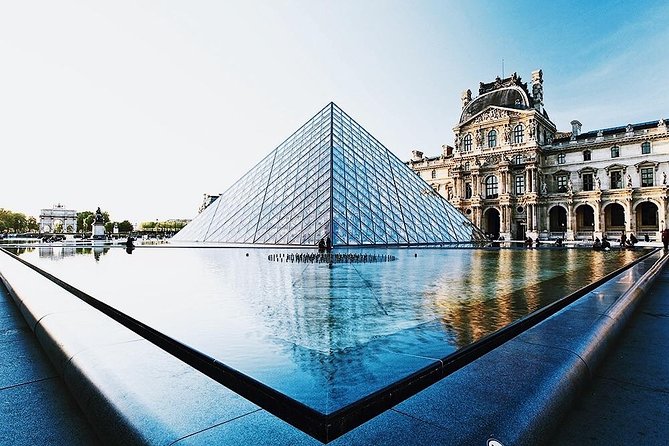
The experience is offered in English and starts at the Louvre pyramid. You finish at the Musée d’Orsay, so you are free to continue looking around there after the guided portion. There is no hotel pickup or drop-off, so you’ll need to reach the pyramid yourself and arrange your own way onward after the tour.
Other ways into the Louvre from Paris:
- Paris: Louvre Museum Timed-Entrance Ticket
★ 4.6 · 71,977 reviews - Paris: Louvre Guided Tour with Reserved Access & Boat Cruise
★ 4.3 · 16,353 reviews - Louvre Museum Masterpieces Guided Tour with Access
★ 4.5 · 12,023 reviews
Starting beneath the Louvre pyramid at 10 a.m.
The meeting point is the grand glass pyramid outside the Louvre. This is an easy landmark, but it is also a busy place, so arrive with enough time to find the guide and pass through the museum’s security process.
The Louvre is enormous. Even a full day would only cover part of it, and a half-day tour must make choices. The guide’s job is to give you a clear route to the major works while adding pieces that help explain the larger collection.
Expect attention to the Mona Lisa and the Venus de Milo, along with works by Raphael and Delacroix. The Mona Lisa can be especially crowded, and reaching the front may take patience. One smart approach described during the tour experience was to give equal attention to other Leonardo works, such as The Virgin and Child with Saint Anne, where you can sometimes study the painting more closely and hear a fuller explanation.
That is an important point. The Louvre is not improved by seeing only the most photographed object in every room. A guide can help you notice composition, gesture, symbolism, and the choices that make a work important, even when you are standing among a great many people.
Some rooms have quiet or restricted speaking rules. Your guide will explain those limits before you enter. Security lines can also form, even with priority or skip-the-line arrangements, because museum security remains in charge of access.
The Louvre portion is described as a two-hour guided visit within a roughly two-and-a-half-hour stop. The exact flow can depend on crowds, security, museum operations, and the group’s pace. You should expect a focused highlights route, not a complete survey of the palace and its collections.
What the Louvre portion does best
The best guides make the Louvre feel less like a maze. Several guides, including Alessandra, Marcel, Julien, and Bellan, have been praised for finding efficient paths and using the waiting time well.
That practical skill has real value. Without a plan, you can spend a surprising amount of time finding the correct gallery, backtracking, or standing in a crowd without understanding what you are looking at. A guide can also position the group so that a sculpture or painting makes visual sense instead of appearing as a distant object behind a wall of phones.
Alessandra’s approach combined art, history, humor, and personal warmth. Marcel’s commentary connected the works to wider ideas while keeping the group together through crowded spaces. Julien was especially appreciated for offering different ways to look at familiar works, while Bellan was praised for her route planning and ability to make a repeat visit feel fresh.
Those names are examples from the guiding team, not a promise that one particular person will lead your booking. The quality of the day will depend in part on your assigned guide, but the format gives that guide room to work with the group instead of managing a large crowd.
The Seine crossing and change of pace
After the Louvre, the group makes a short walk across the Seine to the Musée d’Orsay. This transition is simple, but it gives the day a useful pause. You leave the grand scale and long corridors of the former royal palace and move toward a museum built in a former railway station.
The tour information does not include lunch. You should plan accordingly, especially because the Louvre section, the walk, and the second museum create a long stretch of activity. One group grabbed lunch to go and ate in the gardens before continuing, but you should treat that as a practical choice rather than a guaranteed part of the tour.
The walk also means you need sensible shoes. Several descriptions of the experience stress the amount of walking and stairs. The small group may help you move more easily, but it does not reduce the physical size of the museums.
More Orsay visits booked from Paris:
- Paris in a Day: Louvre or Orsay, Eiffel Tower, City Walk & Cruise
★ 5.0 · 1,956 reviews - Paris: Musée d’Orsay Entry Ticket and Seine River Cruise
★ 4.6 · 1,344 reviews - Paris: Musée d’Orsay Skip-the-Line Tour with Expert Guide
★ 4.5 · 1,145 reviews - Musée d’Orsay Skip-the-Line Tour with Expert Guide
★ 4.8 · 1,088 reviews
The Musée d’Orsay and the Impressionist break
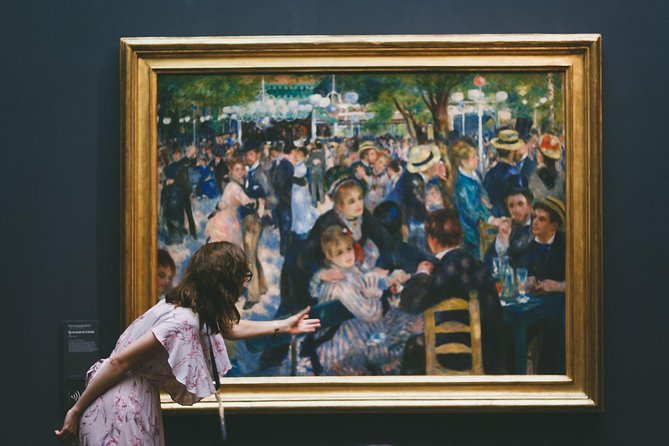
The Musée d’Orsay section focuses on the French Impressionist movement and artists such as Renoir, Cézanne, and Monet. The guide explains why their techniques were so controversial, especially their use of light, color, and visible brushwork.
This is where the connection to the Louvre becomes most useful. You can see how the academic system valued certain subjects and methods, then understand why the Impressionists wanted something different. Guides such as Belen and Mathieu have linked works from the two museums, explaining artistic relationships and the beginnings of Impressionism.
Belen’s presentation of the French Academy and the Impressionists’ break from it was especially suited to a first visit. Rather than treating Impressionism as a collection of pretty outdoor scenes, the explanation places it in an argument about training, subject matter, color, and modern life.
The Musée d’Orsay often feels easier to handle than the Louvre, though conditions vary. Its collection is more concentrated, so two hours can give you a useful introduction to the best-known works and the movement around them. You will not cover every gallery, and temporary exhibitions are not included.
The guided visit is described as about two hours within a two-and-a-half-hour stop. At the end, you can continue exploring the museum on your own if you wish. That extra freedom is valuable because you may discover a painting you want to study without having to keep up with the group.
The guides make or break the experience
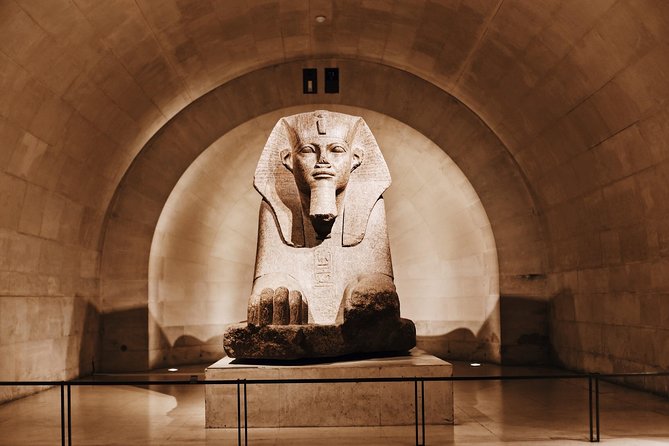
This tour is sold around the museums, but the guide is the real variable. The strongest examples include art-history training, lively delivery, and an ability to read the group.
Marcel has a master’s degree in art history and was praised for making the works feel immediate rather than remote. Anais adjusted the visit to suit the group’s needs while keeping the material accessible. Miriam connected art styles, history, and individual works across both museums.
Other guides bring different strengths. Hugo used humor and engaging explanations to keep two young adults interested. Daniel made the day entertaining for children. Taylor was described as warm, clear, and able to answer a wide range of questions. Atheni used waiting time to explain the period ahead and showed comparisons on an iPad.
You should not expect an identical personality or presentation from every guide. But the small format gives the guide a chance to respond to your questions. If you want the day to feel like an art-history class with plenty of room for conversation, this is a better bet than a large group wearing identical headsets.
Audio equipment has been reported to work well on the tour, but it is still worth paying attention to the guide’s instructions and staying close. In crowded galleries, even a small group can separate quickly.
Is $288.42 a fair price?
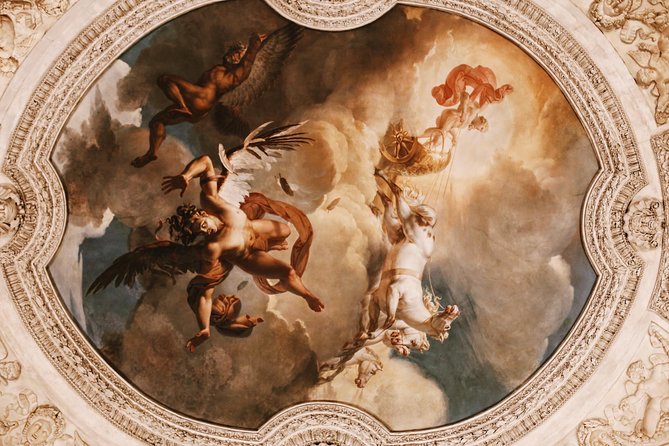
At $288.42 per person, this is not a budget museum visit. The cost includes entry to both museums, a professional guide, and a small group limited to six people. Adult museum admission is listed as a €22 component, so most of the price pays for the guide, organization, and access to a carefully planned route.
The value depends on how you would otherwise use your time. If you are comfortable studying museum maps, waiting in security lines, finding the major works, and reading about them independently, you can spend less by visiting on your own. You also gain more freedom that way.
I see stronger value if you have one day for both museums, are visiting Paris for the first time, or feel overwhelmed by the Louvre’s size. A good guide can save time and give you a framework that stays useful after the tour ends. One previous Louvre visit without a guide was contrasted with a later guided visit that felt far more rewarding because the artwork had context.
The price is harder to justify if you want a slow, specialist visit focused on one artist or collection. It is also not the right choice if you dislike fixed schedules. This is a structured half-day, and the group must keep moving to reach both museums.
Visitors under 18 and residents of the European Economic Area under 26 may qualify for free admission with valid identification and proof of residency. The tour price and admission arrangements should still be checked carefully at booking, since the stated adult ticket component does not necessarily describe every eligibility situation.
Practical details that affect your day
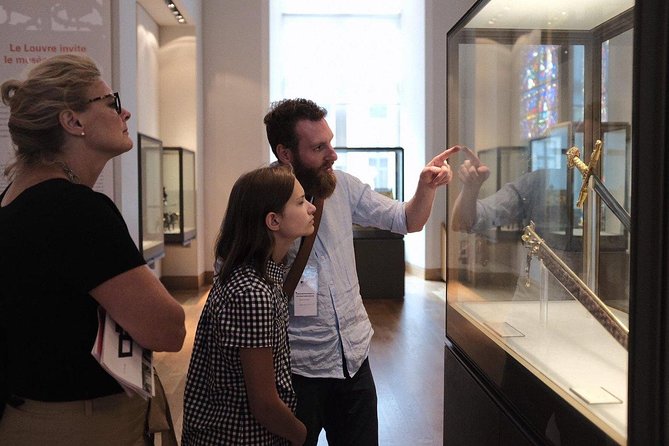
Bring identification or a photo of identification that includes your birth date. This is a museum rule, not an optional extra.
Large bags and suitcases are not allowed inside. Carry a handbag or a small, thin backpack only. This is particularly important if you are arriving directly from a train station or checking out of a hotel.
The museums can close or delay entry without warning. If opening is delayed by more than an hour, an alternative is offered, but the stated conditions do not provide a refund or discount for such museum-related changes.
You can cancel for a full refund up to 24 hours before the local start time. Changes or cancellations made inside that 24-hour window are not accepted for a refund. The activity also requires a minimum number of participants, and if that minimum is not met, you are offered another date or experience, or a full refund.
The tour is near public transportation, but pickup is not included. A taxi or Uber is suggested for those who do not want to navigate Paris transit before the 10 a.m. start.
Who should book this Paris museum tour?
I would choose this tour for a first visit to Paris, a short stay, or a family that wants the major works explained without doing hours of preparation. It also suits anyone who has already visited the Louvre but felt they saw famous names without understanding why the works matter.
The tour works particularly well for mixed-interest groups. A person who loves art can ask detailed questions, while a child or reluctant museum companion gets stories, connections, and a manageable route. The guide’s ability to adjust the presentation is one of the format’s strongest features.
I would choose something else if your priority is solitude, photography, a slow study of individual paintings, or an exhaustive look at the Louvre. You may also prefer separate museum visits if five and a half hours of walking sounds tiring.
Should you book it?
Book this tour if you want an efficient introduction to both museums and place a high value on explanation, navigation, and a small group. The best parts are the links between the Louvre and Musée d’Orsay, the chance to ask questions, and the way a strong guide can turn a crowded museum into a coherent story.
Skip it if the price feels too high for guided highlights or if you want to set your own pace. For most first-time visitors with limited time, though, the combination is sensible: see the essential Louvre works, understand why Impressionism changed painting, and finish with time to continue at the Musée d’Orsay on your own.
FAQ
How long does the Louvre and Musée d’Orsay tour last?
The experience lasts approximately five hours and 30 minutes. The schedule includes a Louvre visit of about two hours and 30 minutes, a short walk across the Seine, and a Musée d’Orsay visit of about two hours and 30 minutes.
Where does the tour begin and end?
It begins at the grand pyramid outside the Louvre at 10 a.m. The tour ends at the Musée d’Orsay.
What is included in the price?
The price includes entry to the Louvre and Musée d’Orsay, a professional guide, and the small-group tour. Adult admission includes a listed €22 museum ticket component. Temporary exhibitions are not included.
How many people can join the group?
The activity has a maximum of six participants. A private upgrade is available if that option is selected.
Are hotel pickup and drop-off included?
No. Hotel pickup and drop-off are not included. You are advised to use public transportation, a taxi, or Uber to reach the meeting point and continue after the tour.
Can I cancel for a refund?
Yes. You can cancel at least 24 hours before the local start time for a full refund. Cancellations or changes made less than 24 hours before the start time are not refunded or accepted.
More museums in Paris
- Paris: Louvre Museum Entry Ticket With Host and River Cruise
★ 4.6 · 9,926 reviews - Les Invalides: Napoleon’s Tomb & Army Museum Entry
★ 4.6 · 9,185 reviews - Louvre Museum – Exclusive Guided Tour (Entry Included)
★ 5.0 · 6,296 reviews - Paris: Louvre Museum Hosted Entry and Mona Lisa Audioguide
★ 4.6 · 5,235 reviews
Just added in Paris
- Paris City Sightseeing Half Day Guided Segway Tour with a Local Guide★ 5.0 · 371 reviews
- Paris Create your Own Perfume Workshop with a Perfumer★ 4.5 · 275 reviews
- Paris: Oh My God She’s Parisian! English Comedy Show★ 4.7 · 257 reviews
- Paris: Create your Signature Scent Perfume Workshop★ 4.8 · 221 reviews
- Paris: Flea Market Insider’s Tour in Extra-Small Group★ 4.6 · 73 reviews
- Paris : Painting experience in an art cafe★ 4.6 · 204 reviews
- Paris: Vallée Village Outlet Shopping Day★ 4.3 · 362 reviews
- Paris night out : Comedy in English ‘How to Become a Parisian ?’★ 4.5 · 373 reviews
Louvre Museum Tours, compared.

Louvre Guided Tour with Reserved Access & Boat Cruise
Read our review →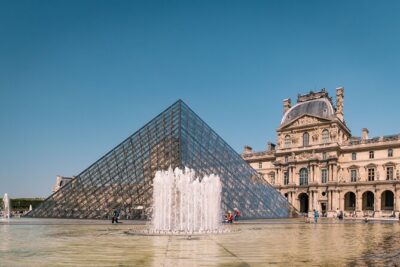
Louvre Museum Masterpieces Guided Tour with Access
Read our review →
Louvre Museum Entry Ticket With Host and River Cruise
Read our review →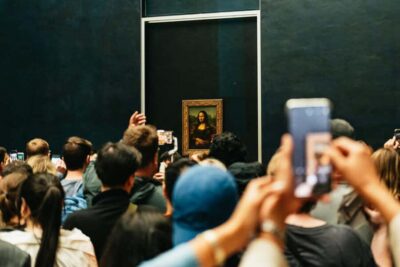
Priority Access Louvre with Host -Direct to Mona Lisa
Read our review →
Mona Lisa & Louvre Masterpieces Tour with Reserved Access
Read our review →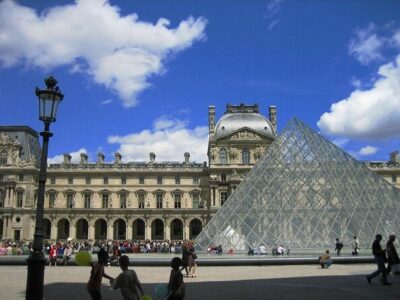
Louvre Museum – Exclusive Guided Tour (Entry Included)
Read our review →
Louvre Reserved Ticket and River Cruise Combo
Read our review →Browse the lists this tour appears in