
Reviewed · LOUVRE MUSEUM TOURS
Louvre Museum: Mona Lisa Without the Crowds Last Entry Tour
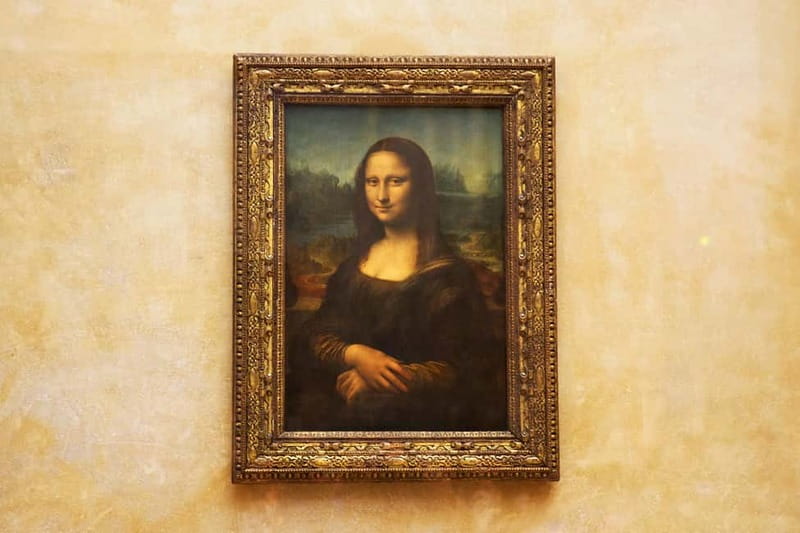
The best part of this Louvre tour comes late in the visit: you reach the Mona Lisa near closing time, when the room is often calmer and you have a better chance of seeing the painting without a wall of people. Before that, an art historian leads you through the museum’s essential works, giving the vast palace some shape and purpose.
I like the small group of up to 15 and the way the route links art with French and European history. I also like the skip-the-line entry, since it saves time at one of Paris’s most visited sights. The main drawback is the pace: three hours on foot, with many stairs and large galleries, can be tiring, and this tour is not suitable for wheelchairs, strollers, or travelers with mobility impairments.
Key points at a glance
- Mona Lisa at the end: Visit Leonardo’s famous portrait as the museum is closing, often with more breathing room than during the day.
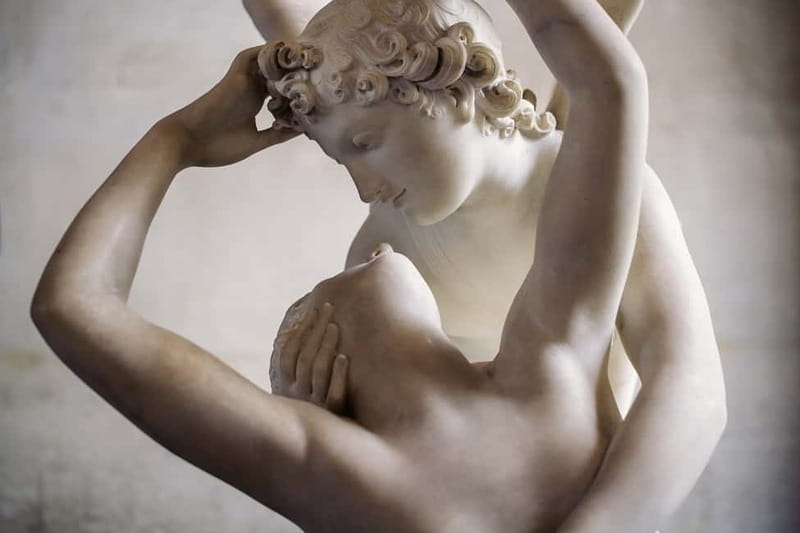
- A focused Louvre route: See Venus de Milo, Winged Victory, Cupid and Psyche, Michelangelo’s Slaves, Liberty Leading the People, The Raft of Medusa, and the Crown Jewels.
- Art historian guidance: Guides such as Hugo, Violette, Laurence, Claire, Antoine, and Adam have been praised for lively explanations, humor, and strong storytelling.
- Small-group format: The group can be limited to 15 people, making it easier to hear and ask questions.
- Three hours on foot: Wear comfortable shoes and expect a moderate walking pace through a very large museum.
- Simple meeting point: Meet at the winged statue to the left of the Arc de Triomphe du Carrousel, not at the Arc de Triomphe de l’Étoile.
Why the last Louvre entry matters
The Louvre is not a museum you casually wander through in an hour. It is enormous, the rooms are spread across several wings, and its famous works can be separated by long corridors and crowded galleries. A guide helps you spend your time on the pieces that reward close attention.
This tour begins late in the day and finishes with the Mona Lisa. That order matters. You are not rushing straight to Leonardo’s portrait, taking one quick photo, and leaving. Instead, you first see how the Louvre’s collection moves from ancient sculpture to Renaissance painting, French Romanticism, and royal display.
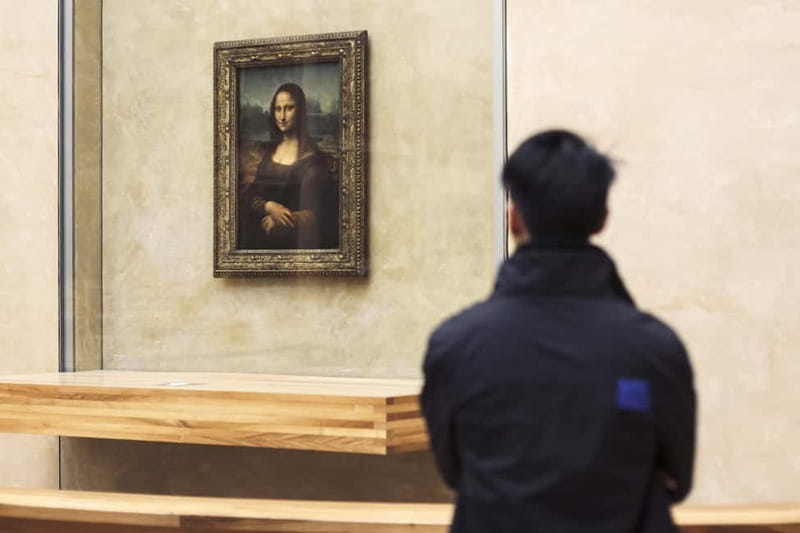
The final visit to the Mona Lisa is the emotional payoff. The tour description promises a quieter experience, not an empty room, so keep your expectations sensible. The museum can still be busy, and conditions vary by day. Still, the late timing gives you a better chance of looking carefully rather than being pushed along by a dense daytime crowd.
The tour costs about $97 per person. That is a serious price for three hours, but it includes museum admission, skip-the-line access, a live English-speaking guide, and headsets. I see the value mainly in the guidance and the time saved. If you already know the Louvre well and enjoy making your own route, a guided visit may not be worth the extra cost. For a first visit, though, the help with orientation can prevent the museum from becoming an exhausting march between famous names.
Other ways into the Louvre from Paris:
- Paris: Louvre Museum Timed-Entrance Ticket
★ 4.6 · 71,977 reviews - Paris: Louvre Guided Tour with Reserved Access & Boat Cruise
★ 4.3 · 16,353 reviews - Louvre Museum Masterpieces Guided Tour with Access
★ 4.5 · 12,023 reviews
Finding the guide at the Carrousel
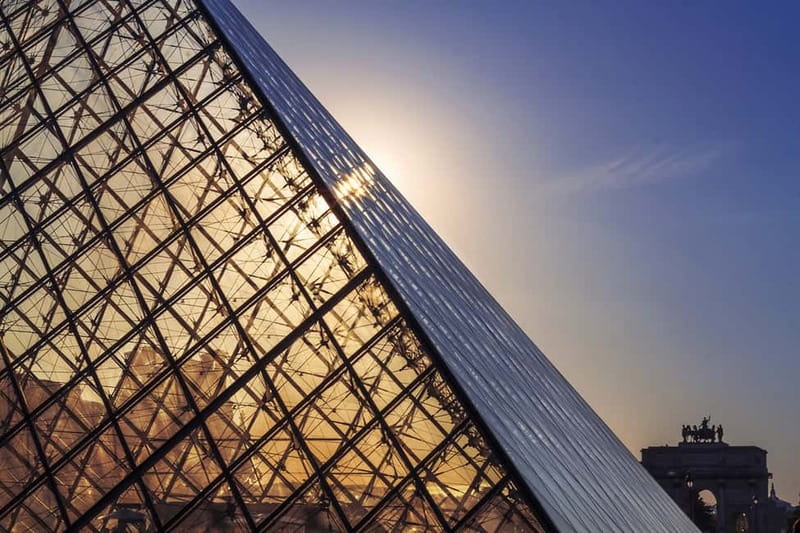
The meeting point is at the Arc de Triomphe du Carrousel, in front of the Louvre and opposite the pyramid entrance to the Tuileries Gardens. When you face the arch, look for the winged statue on the left. Your guide will hold a green Walks sign.
This detail deserves attention because Paris has more than one famous Arc de Triomphe. You do not want the much larger Arc de Triomphe de l’Étoile on the Champs-Élysées. Arrive 15 minutes early, especially if you are unfamiliar with the Louvre’s broad courtyards and garden entrances.
The tour ends back at the Louvre. Hotel pickup and drop-off are not included, so plan your route to and from the museum yourself. Bring an identification document, wear comfortable shoes, and leave luggage or large bags elsewhere. Baby strollers and oversize luggage are not allowed on this activity.
Starting below the palace
The first part of the visit introduces the Louvre as a building, not just a container for paintings. You go to the palace foundations and moat, where the remains help explain the site’s earlier defensive role.
This is a useful beginning because it gives the museum a physical story. You are not simply entering a modern gallery and looking at isolated objects. The Louvre grew through different periods of French royal and national life, and the old foundations offer a glimpse of what came before the grand palace you see today.
The guide’s role is important here. A good explanation can make a short stop feel meaningful rather than like a quick look at old stone. Guides such as Bel and Claire have been praised for connecting the building and its art to Parisian history, which is exactly the kind of context that helps on a first visit.
Greek sculpture: Venus de Milo and Winged Victory
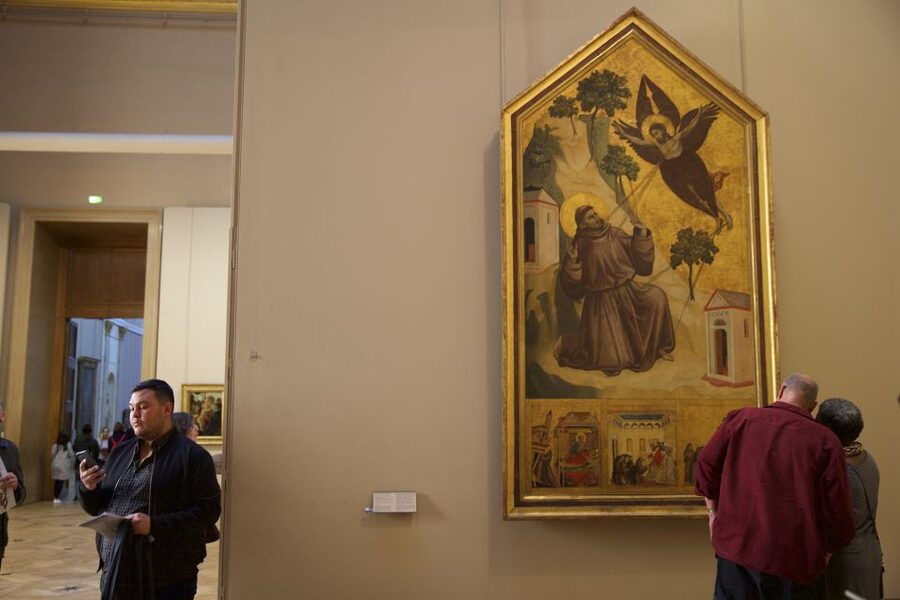
From the foundations, the route moves into the Classical Greek sculpture collection. Two major works anchor this section: the Venus de Milo and the Winged Victory of Samothrace.
Venus de Milo is instantly recognizable, but a guide can help you look beyond the missing arms and famous silhouette. You can pay attention to the pose, the balance of the body, and the way the sculpture has become an image of ancient beauty in the modern world.
Winged Victory is a different experience. The sculpture’s position at the top of a grand staircase gives it a sense of arrival and motion. Even without knowing every detail, you can see how the angled wings, flowing clothing, and forward movement create drama.
This is one reason the tour works better than a checklist. You see two ancient sculptures, but they do not feel like the same kind of object. Your guide can point out the difference in mood, setting, and physical energy, helping you remember what you saw after the visit.
More museums in Paris:
- Paris: Louvre Museum Entry Ticket With Host and River Cruise
★ 4.6 · 9,926 reviews - Les Invalides: Napoleon’s Tomb & Army Museum Entry
★ 4.6 · 9,185 reviews - Louvre Museum – Exclusive Guided Tour (Entry Included)
★ 5.0 · 6,296 reviews - Paris: Louvre Museum Hosted Entry and Mona Lisa Audioguide
★ 4.6 · 5,235 reviews
Michelangelo, Cupid and Psyche, and the sculpture galleries
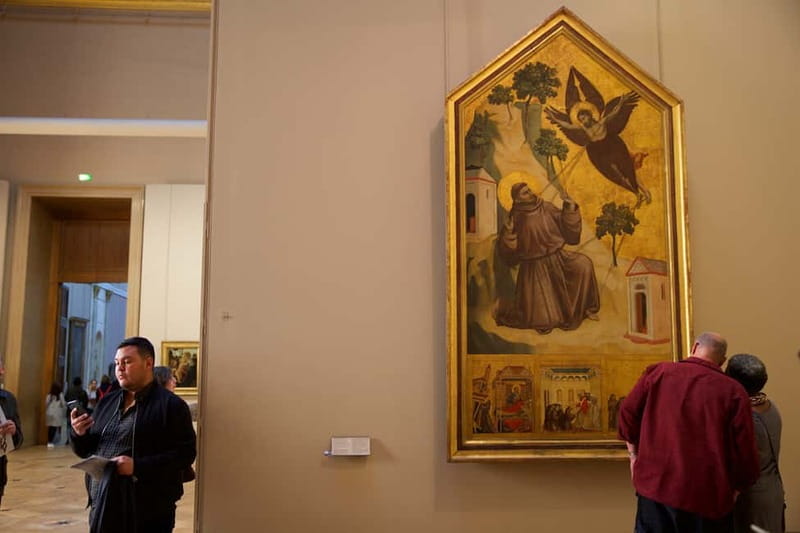
The route continues to works such as Cupid and Psyche and Michelangelo’s Slaves. These stops give you a chance to compare different ideas of the human figure.
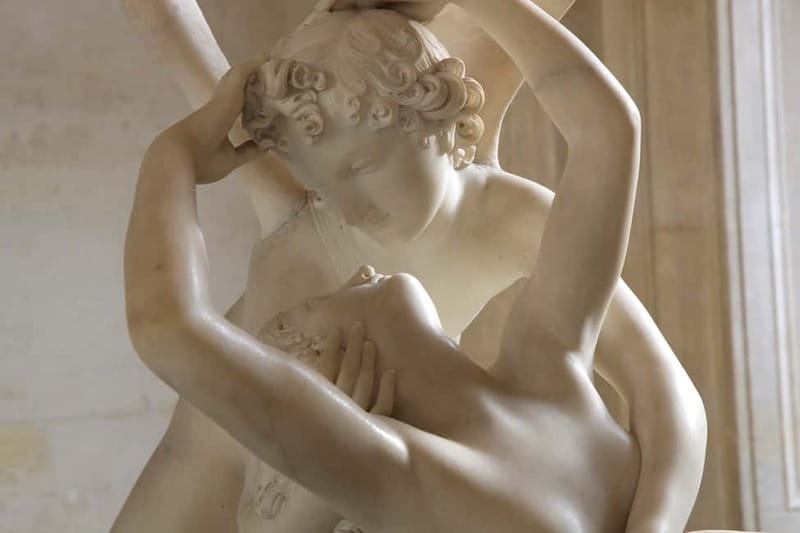
Cupid and Psyche is graceful and theatrical, with intertwined bodies and a carefully arranged embrace. Michelangelo’s Slaves feel more strained and unfinished, as if the figures are trying to break free from the stone. Seeing these works in one guided sequence makes the comparison useful. You can think about movement, emotion, and the relationship between the sculptor and the material.
The museum’s scale can make sculpture galleries blur together when you walk alone. A guide keeps the focus narrow. You are not expected to remember every work in the room. Instead, you stop at a few pieces and learn why they matter.
The small-group setup helps here. With no more than 15 people, you should be able to hear the commentary through the headset and stay close enough to follow the guide’s gestures. The group is still large enough that you may not get a private conversation at every stop, but it is far more manageable than a large coach group.
French painting and the story behind Liberty Leading the People
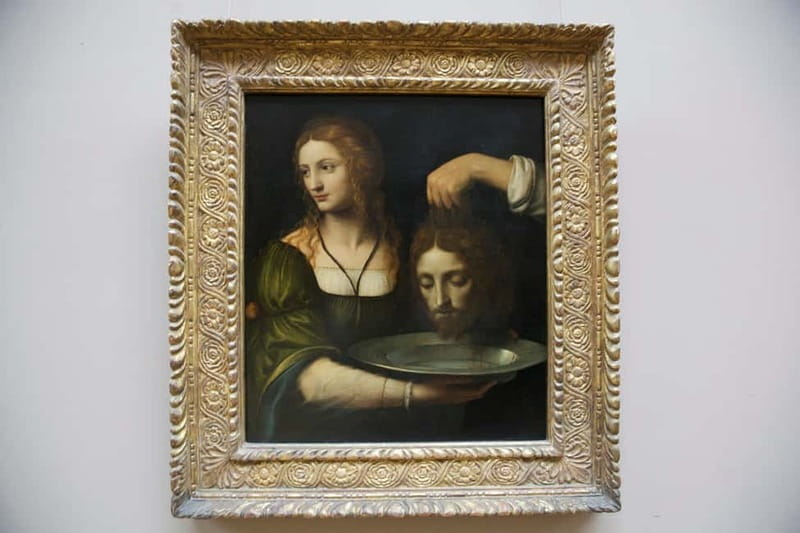
Delacroix’s Liberty Leading the People brings the tour into a more openly political part of the collection. The painting shows Liberty moving over a barricade with figures from different parts of society following her. It is not simply a decorative scene. It reflects the conflict and political feeling of 19th-century France.
This is where a strong guide can make a major difference. Several guides on this experience, including Laurence, Bel, and Violette, have been praised for explaining the social setting around artworks rather than treating each painting as a separate picture.
I find that approach especially helpful at the Louvre. A painting can be technically impressive but still hard to understand if you do not know what its figures, symbols, and events meant at the time. Your guide may also connect the work to later art and changing ideas about national identity.
Caravaggio, Raphael, and Leonardo
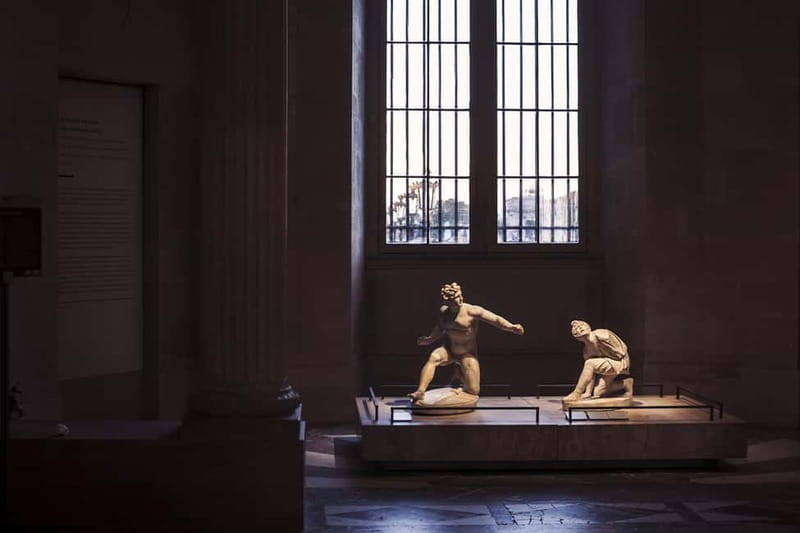
The tour also includes works associated with Caravaggio, Raphael, and Leonardo da Vinci. These artists represent different approaches to light, composition, and human expression, and the route gives you a compact introduction to major Renaissance and Baroque traditions.
Do not expect to see everything by these artists. The Louvre cannot be covered properly in three hours, and this is a highlights tour. The benefit is that you get a clear selection rather than wandering through gallery after gallery without knowing what deserves your attention.
Guides such as Antoine, Hugo, Adam, and Claire have been praised for combining art information with humor and storytelling. That matters during a long museum visit. Technical details are useful, but stories about the artist, the subject, or the period help the work stay in your mind.
The headsets are another practical advantage. The Louvre can be noisy, and you may stand several steps away from the guide in a crowded room. Audio equipment lets you keep looking at the artwork while still following the explanation.
The Raft of Medusa and the Crown Jewels
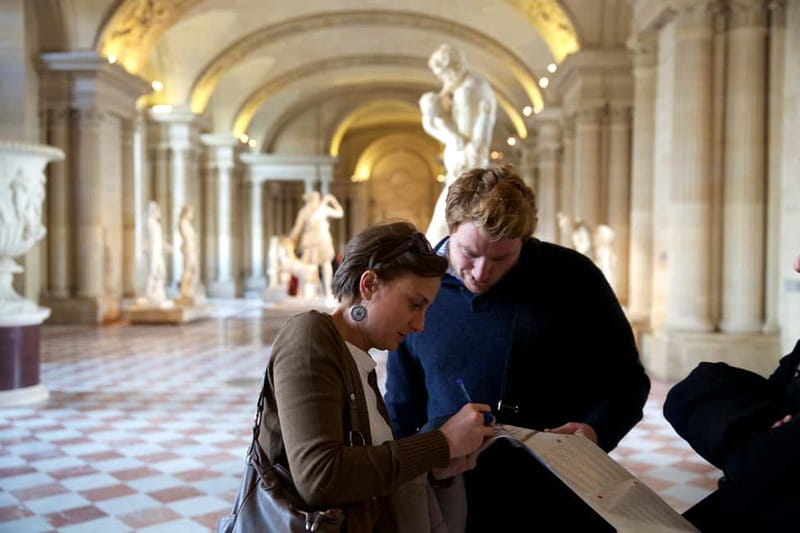
Géricault’s The Raft of Medusa is one of the Louvre’s most dramatic paintings. Its large scale, desperate figures, and harsh emotional tone make it difficult to overlook. A guide can help you read the arrangement of bodies and the way hope and disaster are balanced in the scene.
The route then reaches a room displaying the Crown Jewels. This offers a change of pace after the paintings and sculptures. You move from painted stories and carved bodies to objects made for royal display, ceremony, and power.
That contrast is useful. The Louvre is not only a place for paintings. It also holds objects that show how rulers used luxury and spectacle to present authority. The Crown Jewels room gives you a quick sense of that world without requiring a separate visit to another museum.
The exact rooms open to the public can change. Museum areas may close without warning, and your guide may adjust the route. If one section is unavailable, the experience is not designed to guarantee every named work on every date.
Meeting the Mona Lisa at closing time
The Mona Lisa comes at the end, with about 30 minutes listed for the visit. You enter the Mona Lisa room with your guide and have time to see Leonardo’s small portrait after spending the earlier part of the tour on larger works.
The painting’s size often surprises first-time visitors. Its fame is enormous, but the portrait itself is relatively modest. That contrast is part of the experience. Once you have a clearer understanding of Renaissance portraiture and Leonardo’s use of expression, light, and composition, you may look at the painting differently.
The late timing is the main reason to choose this tour over a standard daytime visit. You may find the room less crowded and have a better chance to pause, look, and take a photo without a large press of people. The word quieter is more accurate than empty. The Mona Lisa remains one of the Louvre’s main attractions.
You should also keep in mind that the tour ends at the museum after this stop. The gift shop may already be closed by the time you leave, so do not count on buying souvenirs after the visit.
The guides make or break the experience
The strongest part of this tour is the guide. Names that have appeared on the schedule include Hugo, Laurence, Violette, Lee, Bel, Claire, Adam, Antoine, Karen, Manuel, Abby, and Daniel. The exact guide is not guaranteed, but the experience depends heavily on who leads your group.
The best guide style here is energetic without becoming theatrical, clear without flattening the art into simple facts, and able to connect a painting to the society that produced it. Several guides have also been praised for including teenagers, answering questions, using humor, and keeping a mixed-age group interested.
One especially useful quality is navigation. The Louvre can be confusing even after you have visited once. A guide who knows the route can move you through crowded areas and keep the group together without wasting much time.
You should still treat this as a walking tour, not a private lesson. With three hours and a fixed route, the guide cannot stop at every work you may want to see. If you have a particular painting or department in mind, ask whether the route can include it, but do not assume it will be possible.
Who should book this Louvre tour?
I would choose this tour for a first-time Louvre visitor who wants the major highlights without spending half a day planning a route. It also suits you if the Mona Lisa matters, but you would rather see it at the end of a guided visit than fight through the museum alone.
Families can do well with this format if everyone can walk at a moderate pace. Abby has been praised for engaging a group ranging from age 14 to 81, which suggests the storytelling can work across generations. Still, children who tire quickly may find the three-hour length demanding.
Art lovers who want detailed time with one particular department should look elsewhere. This is a broad introduction, not a specialist tour of French painting, ancient Egypt, modern art, or the full Renaissance collection.
The activity is not suitable for wheelchair users, strollers, or people with mobility impairments. Leave large bags and luggage behind, and wear shoes that will be comfortable for several hours indoors.
Is $97 a fair price?
At $97, this is not a budget museum visit. You are paying for more than admission. The price includes skip-the-line entry, a live English-speaking art historian, headsets, and a small group capped at 15 people.
The value is strongest if you have limited time in Paris. A poor Louvre visit can consume hours while leaving you unsure what you actually saw. A focused route gives you major sculpture, painting, royal objects, and the Mona Lisa in one organized session.
The value is weaker if you prefer a slow, independent visit. You will not control every stop or linger as long as you like in each room. You also need to accept that museum closures may force changes to the route.
Free cancellation up to 24 hours before the start and the option to reserve now and pay later add useful flexibility. Check the available start time carefully, since the late schedule is central to the experience.
Should you book it?
Book this tour if you want a guided first look at the Louvre, a smaller group, and a better chance of seeing the Mona Lisa during a quieter closing-time period. The strongest reasons are the guide’s storytelling, the efficient route, and the way the visit saves you from getting lost in a huge museum.
Skip it if you want total freedom, need step-free access, or plan to spend most of the day studying one collection. For most first-time visitors with only a few days in Paris, the tour offers a sensible way to see the Louvre’s headline works without turning the museum into an exhausting guessing game.
FAQ
How long does the Louvre Mona Lisa last-entry tour last?
The tour lasts three hours. About two and a half hours are devoted to the guided Louvre visit, followed by about 30 minutes in the Mona Lisa room.
What language is the tour conducted in?
The tour is conducted in English with a live English-speaking guide.
Where does the tour meet?
It meets at the statue next to the Arc de Triomphe du Carrousel, in front of the Louvre and opposite the pyramid entrance to the Tuileries Gardens. When facing the arch, meet at the winged statue on the left.
How early should I arrive?
Arrive 15 minutes before the scheduled start time. Look for a guide holding a green Walks sign.
Is skip-the-line entry included?
Yes. Skip-the-line entry to the Louvre Museum is included in the activity.
Is the tour suitable for wheelchair users?
No. The tour is not suitable for wheelchair users, people with mobility impairments, or strollers.
Can I bring luggage or a large bag?
No. Luggage, large bags, oversize luggage, and baby strollers are not allowed.
What should I bring?
Bring a passport or ID card and comfortable shoes.
Can I cancel for a full refund?
Yes. You can cancel up to 24 hours in advance for a full refund. You can also reserve now and pay later.
Just added in Paris
- Private Transfers in Paris★ 5.0 · 75 reviews
- Disneyland® Paris 1 Day Ticket with Transport from Paris★ 3.5 · 302 reviews
- Personalized Transport service from Disneyland to Paris★ 5.0 · 63 reviews
- CDG – Euro Disney – CDG Two Way Private Shuttle Transfer★ 5.0 · 233 reviews
- Monet’s Gardens & House-Private Giverny Tour From Paris★ 4.5 · 137 reviews
- Giverny Monet House and Gardens Skip the line Walking tour★ 4.0 · 217 reviews
- Guided tour Monet’s house and gardens/small group★ 4.5 · 68 reviews
- Monet’s House and Garden & Giverny Village★ 4.5 · 39 reviews
Louvre Museum Tours, compared.

Louvre Guided Tour with Reserved Access & Boat Cruise
Read our review →
Louvre Museum Masterpieces Guided Tour with Access
Read our review →
Louvre Museum Entry Ticket With Host and River Cruise
Read our review →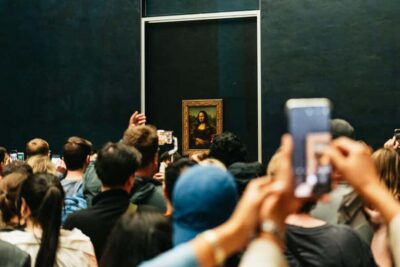
Priority Access Louvre with Host -Direct to Mona Lisa
Read our review →
Mona Lisa & Louvre Masterpieces Tour with Reserved Access
Read our review →
Louvre Museum – Exclusive Guided Tour (Entry Included)
Read our review →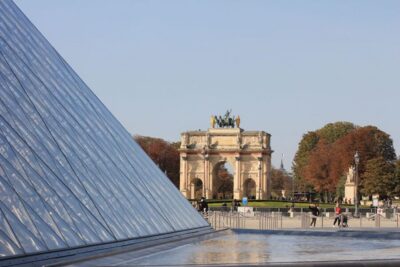
Louvre Reserved Ticket and River Cruise Combo
Read our review →Browse the lists this tour appears in