
Reviewed · WINE TOURS
Make your own cuvée of Bordeaux wine
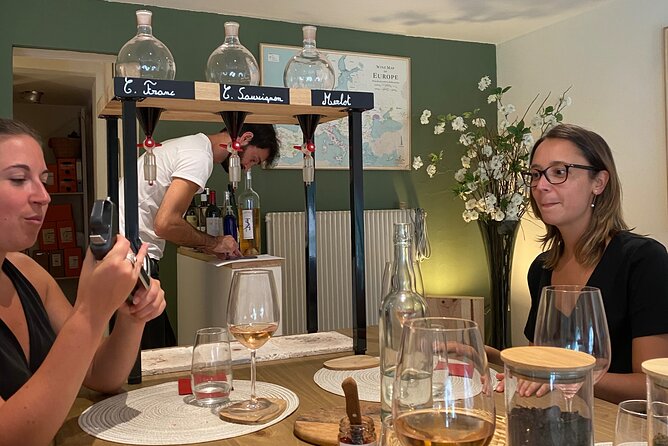
Bordeaux wine is built in the blending room, not just the vineyard. In this hands-on workshop at Le Pied à Terre, you taste the building blocks of a red Bordeaux, then use tubes and pipettes to make a blend that suits your own palate. Your reward is a bottle with your name on it, a far more personal souvenir than another bottle bought from a shop.
I like the clear lesson in grape variety, especially the chance to compare Merlot, Cabernet Sauvignon, and Cabernet Franc side by side. I also like the friendly, informal teaching style associated with James, Pierre, and Geoffroy, plus the Basque cheese and charcuterie served during the tasting. The main caution is simple: a few sessions have been shorter or more tasting-focused than advertised, so confirm that the blending and bottling portion is included when you book.
Key points at a glance
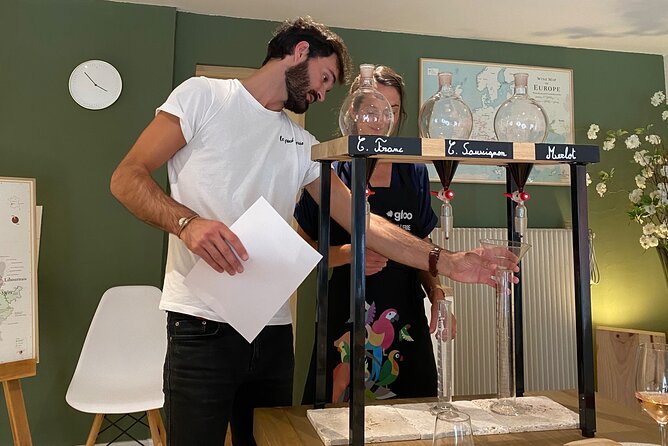
- Make a personal Bordeaux blend: Use measured samples, tubes, and pipettes to set your own percentages.
- Learn the three main grapes: Compare Merlot, Cabernet Sauvignon, and Cabernet Franc by aroma, structure, and taste.
- Small English-language setting: The workshop is capped at 12 people, with guides who explain Bordeaux in clear English.
- Eat while you taste: Basque cheese and charcuterie give you something useful to compare with the wines.
- Take home a named bottle: Your finished cuvée can be labeled with your name.
- Allow about two and a half hours: Some sessions have run closer to three hours, while a few have been shorter.
Why Bordeaux blending makes this workshop different
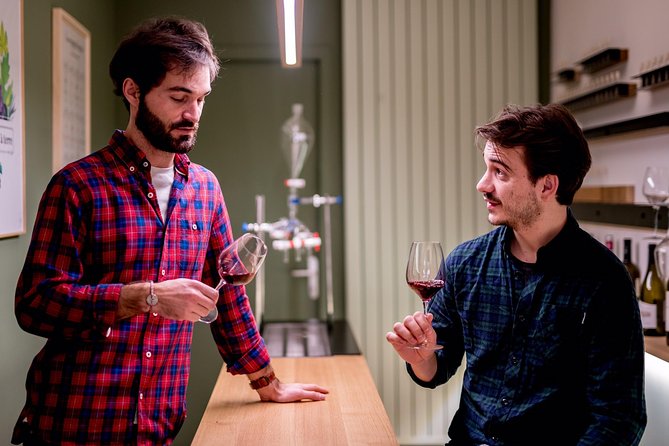
Many wine tastings ask you to identify aromas, compare vintages, and then nod thoughtfully over a glass. This one adds a practical question: What would you put in the bottle?
That question gets to the heart of Bordeaux wine. Merlot can give a blend softness, fruit, and roundness. Cabernet Sauvignon brings tannin and backbone. Cabernet Franc adds fragrance and a different kind of lift. The exact result depends on the proportions, so your finished wine reflects your choices rather than a winemaker’s fixed recipe.
You are not making wine from grapes in the vineyard. You are blending prepared single-varietal wines into a personal cuvée. That distinction matters. The workshop is best understood as a blending class and tasting experience, followed by the creation of one bottle, not a full winemaking course.
I find that useful because Bordeaux can seem complicated from the outside. The region includes the Left Bank, Right Bank, and Entre-Deux-Mers, with different soils, grapes, and traditions. Instead of asking you to memorize a long list of estates, this workshop gives you a simple way to understand how a finished red wine is assembled.
More wine tours in Bordeaux:
- Bordeaux: Cité du Vin Entry Ticket and Wine Tasting
★ 4.6 · 3,885 reviews - Bordeaux: River Garonne Cruise with Glass of Wine and Canelé
★ 4.5 · 3,630 reviews - From Bordeaux: Afternoon Saint-Emilion Wine Tasting & snack
★ 4.8 · 1,581 reviews
Starting at Le Pied à Terre on Rue Judaïque
The session begins at Le Pied à Terre, a wine shop and tasting space at 22 Rue Judaïque in Bordeaux. You return there at the end, so there is no separate drop-off or countryside transfer to plan.
The location suits a city break. You can fit the workshop into a day of sightseeing without giving up a full day to a vineyard excursion. It also makes this a useful option for anyone who wants more than a quick shop tasting but less than a long trip into the surrounding wine country.
The cellar setting helps the mood. This is meant to feel like an informal workshop, not a formal lecture hall. The group size is limited to 12 people, which should give you enough room to ask questions and work with the samples without feeling lost in a crowd.
The experience is offered in English. That is especially helpful for technical ideas such as tannin, acidity, structure, aroma, and balance. Several guides are connected with the experience, including James, Pierre, and Geoffroy. Their approach is warm and conversational, with humor and visual aids used to make Bordeaux easier to follow.
The first lesson: grapes, regions, and tasting basics
The opening section gives you the groundwork for the rest of the afternoon. You learn about Bordeaux’s main wine areas, including the Left Bank, Right Bank, and Entre-Deux-Mers, then look at the grape varieties commonly used in red Bordeaux blends.
This regional overview has a practical purpose. It helps explain why one Bordeaux wine can taste more structured and tannic while another feels softer and fruitier. Soil samples are also used in the presentation, giving you a physical way to connect place, grape growing, and style.
The tasting lesson covers smell, taste, tannin, acidity, and texture. If you are new to wine, this is a useful introduction to the vocabulary without requiring you to pretend you can smell every aroma in the glass. If you already attend tastings, you may still find the method worthwhile because it asks you to apply what you know.
The food is simple but well chosen: cheese and charcuterie from the Basque Country. This is not a meal, so arrive knowing that the food supports the tasting rather than replacing lunch or dinner. It does give you a chance to notice how salt, fat, and texture change the way wine feels in your mouth.
Tasting Merlot, Cabernet Sauvignon, and Cabernet Franc
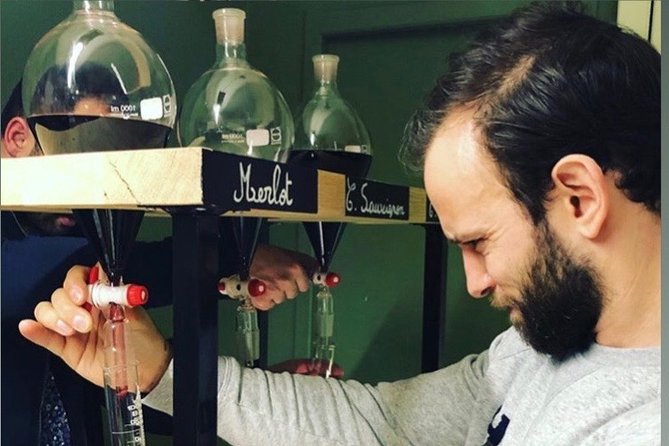
The core of the session is the comparison of the separate grape varieties. You taste the wines and consider what each one contributes to a Bordeaux blend.
Cabernet Sauvignon is presented as the source of tannic structure. Merlot can bring a softer, rounder character, while Cabernet Franc adds aroma and complexity. The point is not to label one grape the winner. The point is to see why a winemaker combines them.
This is where the experience has more value than a standard tasting. A glass of finished Bordeaux tells you the final story, but tasting the components helps you hear the separate voices. You begin to understand why two wines made from the same general grapes can feel quite different.
Some sessions also include a guided tasting followed by a blind tasting. The blind portion gives you a chance to use your new vocabulary without seeing the label first. It is a good test of whether you can recognize structure and style rather than simply rely on a famous name.
A useful tip is to compare the three grape varieties side by side whenever possible. Sequential tasting can make each sample interesting, but side-by-side comparison makes the differences easier to grasp. You can better notice how Cabernet Sauvignon supplies tannin, while Merlot and Cabernet Franc shift the balance of fruit, aroma, and acidity.
Same base, a different kind of day:
- Medoc or Saint Emilion Wine Tasting and Chateau from Bordeaux
★ 5.0 · 1,415 reviews - Saint Emilion Day Trip with Sightseeing Tour & Wine Tastings from Bordeaux
★ 5.0 · 1,120 reviews - Saint-Émilion: Grand Cru Classé Winery Visit and Tasting
★ 4.6 · 1,118 reviews - Saint Emilion Half-Day Trip with Wine Tasting & Winery Visit from Bordeaux
★ 4.5 · 1,034 reviews
Using tubes and pipettes to make your cuvée
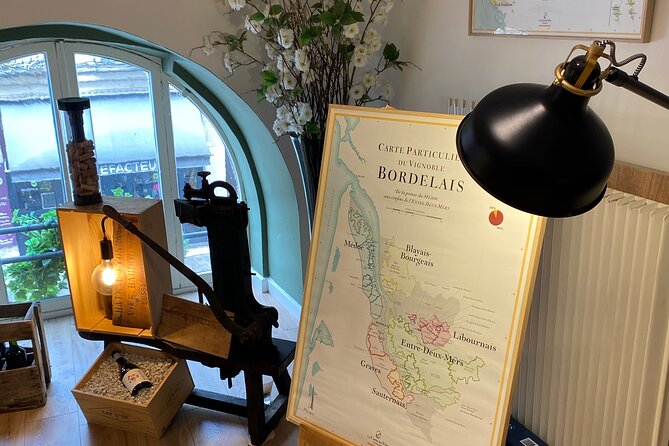
After the teaching and tasting, you move to the creative part. You work with measured amounts of the single-varietal wines and combine them in different proportions. Tubes and pipettes make the process feel precise, even though the aim is exploration rather than laboratory science.
This is the moment when the lesson becomes personal. You may prefer a smoother, Merlot-led wine, or you may want more Cabernet Sauvignon for firmness. You might use Cabernet Franc to add perfume and a different edge. The blend you choose is guided by your own taste.
Do not expect an unlimited blending bench with every grape grown in Bordeaux. The main workshop centers on Merlot, Cabernet Sauvignon, and Cabernet Franc. One participant suggested that small additions of grapes such as Petit Verdot, Pinot, or Gamay could make the experiment even broader, but the current format keeps the activity focused and manageable.
The limited choices are not necessarily a weakness. Three varieties are enough to show how much a blend can change. They also keep the process from turning into a confusing chemistry exercise, especially for first-time wine tasters.
Once you settle on your formula, you create your own bottle. The bottle can be labeled with your name, giving you a physical reminder of the workshop and a fun way to compare your creation with someone else’s blend later.
How long the session really takes
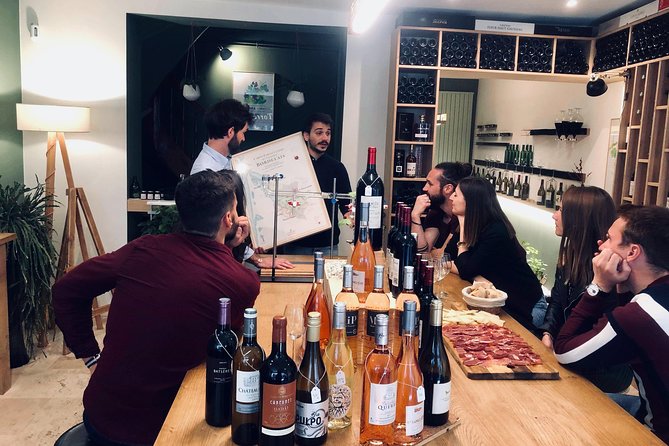
The published duration is about two hours and 30 minutes. Several sessions have lasted closer to three hours, particularly when the group asks questions and spends more time on tasting and blending.
That flexibility can be pleasant if you want a relaxed afternoon. It can be inconvenient if you have a tightly timed dinner reservation, museum booking, or train. I would leave a little breathing room after the stated end time rather than scheduling something immediately afterward.
There has also been confusion on a small number of occasions about which activity was booked. Some people arrived expecting to blend and instead received a shorter tasting and lecture. The provider apologized for those mix-ups, but the issue is worth taking seriously. Before arrival, check your confirmation and ask Le Pied à Terre to confirm that the hands-on cuvée-making and bottle are part of your reservation.
This is particularly important because the title promises a specific activity. The wine education is useful on its own, but it is not the same experience as making and bottling a blend.
Is the $71.20 price good value?
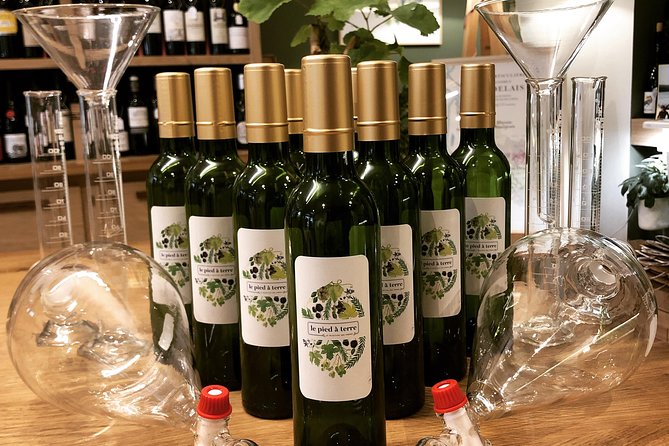
At $71.20 per person, this is more expensive than a basic Bordeaux tasting, but it offers more than a few pours at a counter. You receive a structured lesson, several wines, food, guided blending, and the chance to take home a bottle labeled with your name.
The value is strongest if you are interested in how wine is made and want an activity you can remember and discuss afterward. The bottle is not just a purchase. You took part in deciding what went into it, which gives the souvenir some meaning.
The price is less attractive if you mainly want to taste prestigious Bordeaux estates or visit vineyards outside the city. This is not a château tour, and it does not replace a day in the Médoc, Saint-Émilion, or another wine area. It is an urban workshop focused on tasting and blending.
For a couple, family, or group of friends, the activity also creates a natural comparison. Each person can make a different blend, then taste the bottles later and argue about which one is best. That playful element helps justify the cost for people who want participation rather than passive sightseeing.
Who will enjoy this most
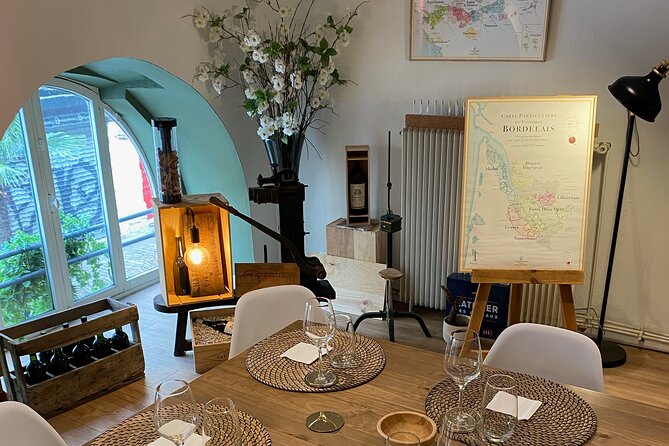
This workshop suits first-time Bordeaux visitors who want a basic map of the region before buying or ordering local wine. It also works well late in a France trip, when you have already tasted other wines and can use the class to bring those impressions together.
You do not need to be a wine expert. In fact, beginners may get the greatest benefit because the session explains the basics in a clear order. You learn what to look for, taste the grape components, and then use that information immediately.
Experienced wine drinkers should not assume the class will be too simple. The blind tasting, soil samples, blending ratios, and discussion of balance add useful detail. Still, anyone looking for an advanced technical course should keep expectations in check. The tone is accessible and social rather than academic.
This is a red wine experience. If you prefer only white wine, you may be disappointed. The featured grapes and the blending exercise focus on red Bordeaux.
The group limit of 12 makes it a good choice for people who dislike large bus tours. It is also suitable for solo visitors because the structure gives you an easy way to meet others without forcing a party atmosphere.
Practical details before you book
The meeting point is Le Pied à Terre, 22 Rue Judaïque, 33000 Bordeaux, France. The activity ends at the same location. It is near public transportation, and mobile tickets are accepted.
Service animals are allowed. The workshop is offered in English and has a maximum of 12 participants.
Free cancellation is available up to 24 hours before the start time for a full refund. Changes or cancellations inside that 24-hour window are not accepted for a refund. The experience can also be canceled if the minimum number of participants is not reached or if poor weather affects the session. In those cases, you are offered another date or experience, or a full refund.
The weather rule is worth noting even though the activity takes place in a cellar. Keep an eye on your booking details rather than assuming the session will run in every condition.
Should you book the Bordeaux cuvée workshop?
I would book this if you want to understand Bordeaux by doing something, not just listening. The blend-making is the reason to choose it. Tasting Merlot, Cabernet Sauvignon, and Cabernet Franc separately, then deciding how they should work together, gives you a useful mental model for Bordeaux wine.
The workshop is also a strong choice for English speakers who want a lively introduction without committing to a full-day vineyard trip. The guides bring humor and clear explanations, and the small group keeps the session personal.
I would skip it if your main goal is château architecture, vineyard scenery, or rare estate wines. I would also confirm the exact inclusions before paying, since a few scheduling mix-ups resulted in a tasting without the promised blending exercise.
For most wine-curious visitors, the combination of instruction, food, hands-on mixing, and a named bottle makes the $71.20 worthwhile. Just protect the time in your schedule, arrive ready for red wine, and make sure you are booked for the full cuvée workshop.
FAQ
Where does the Bordeaux wine blending experience begin?
It begins at Le Pied à Terre, 22 Rue Judaïque, 33000 Bordeaux, France.
Where does the activity end?
The experience ends back at Le Pied à Terre, the same place where it begins.
How long does the workshop last?
The stated duration is approximately two hours and 30 minutes. Some sessions have lasted closer to three hours.
Is the experience offered in English?
Yes. The activity is offered in English.
How many people can join the workshop?
The experience has a maximum of 12 participants.
Which grape varieties are used for the blend?
The workshop focuses on Merlot, Cabernet Sauvignon, and Cabernet Franc.
Do I take home a bottle?
The activity includes the possibility of taking home a bottle of your own blend labeled with your name.
Can I cancel for a full refund?
Yes. You can cancel at least 24 hours before the start time for a full refund. Cancellations or changes made less than 24 hours before the start time are not accepted for a refund.
Just added in Bordeaux
- Au Cœur du Château – VSOP D’USSÉ & XO BARON OTARD★ 4.5 · 108 reviews
- Discover Braastad Cognac★ 5.0 · 52 reviews
- retro road trip/ Méhari, 2CV & Burton in Rochefort, La Rochelle★ 5.0 · 28 reviews
- Saint Emilion Full Day Wine and Bike Tour★ 5.0 · 167 reviews
- Virtual Room Bordeaux – 1st team virtual reality experience★ 5.0 · 47 reviews
- Private Bordeaux History Tour with a glass of Bordeaux wine.★ 5.0 · 28 reviews
- Bordeaux bike tour “The Best of Bordeaux”★ 5.0 · 164 reviews
- Luxurious full day Bordeaux wine tour in a Tesla★ 4.5 · 31 reviews
Wine Tours, compared.
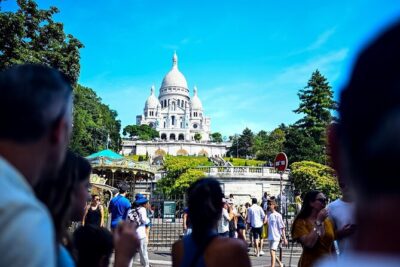
Authentic Parisian Gourmet Food Tour with 10 Local Dishes & Wines
Read our review →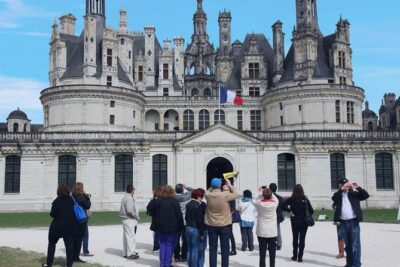
Loire Valley Castles Day Trip from Paris with Complementary Wine
Read our review →
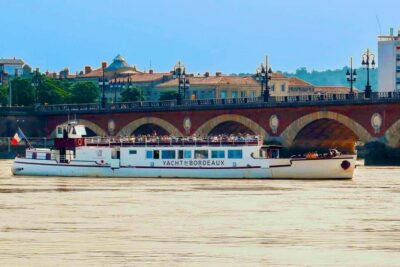
River Garonne Cruise with Glass of Wine and Canelé
Read our review →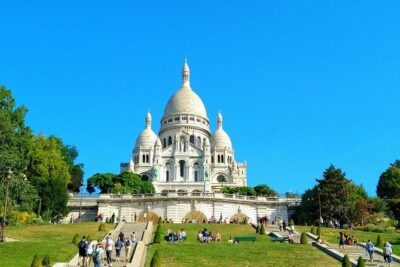
Montmartre Hill French Gourmet Food and Wine Tasting Walking Tour
Read our review →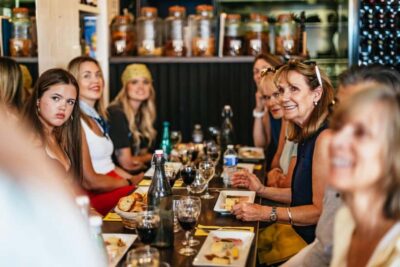
Montmartre Cheese, Wine & Pastry Guided Walking Tour
Read our review →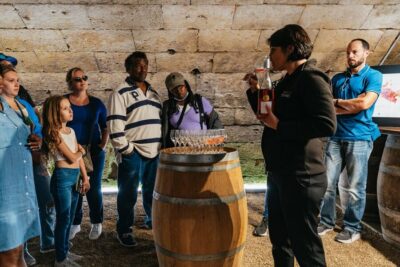
Loire Valley Castles Day Trip With Wine Tasting
Read our review →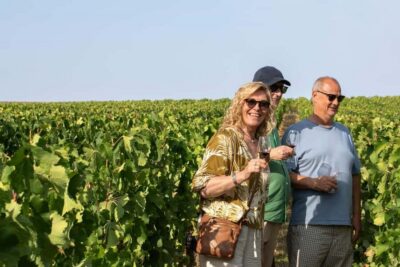
Afternoon Saint-Emilion Wine Tasting & snack
Read our review →Browse the lists this tour appears in