
Reviewed · WALKING TOURS
Marseille: Essential Guided Walking Tour of the City
Marseille reveals itself best on foot, and this route gives you a useful first look at the city’s old quarters, waterfront and hilltop views in one sweep. You’ll move from the grand La Major Cathedral through Le Panier, the Old Port, Saint Victor and Palais du Pharo, with local guide Charles tying the pieces together.
I like the small group of no more than eight and the way Charles uses old photographs, maps and humor to explain how Marseille changed. I also like the practical finish: he has shared suggestions for museums, restaurants and local food, including bouillabaisse spots, so you can keep exploring after the walk.
The main consideration is the physical effort. This is a 5-kilometer route over roughly 150 minutes, with hills, uneven streets and plenty of standing. It is not suitable for wheelchair users, and warm weather can make the walk feel longer.
Key points at a glance
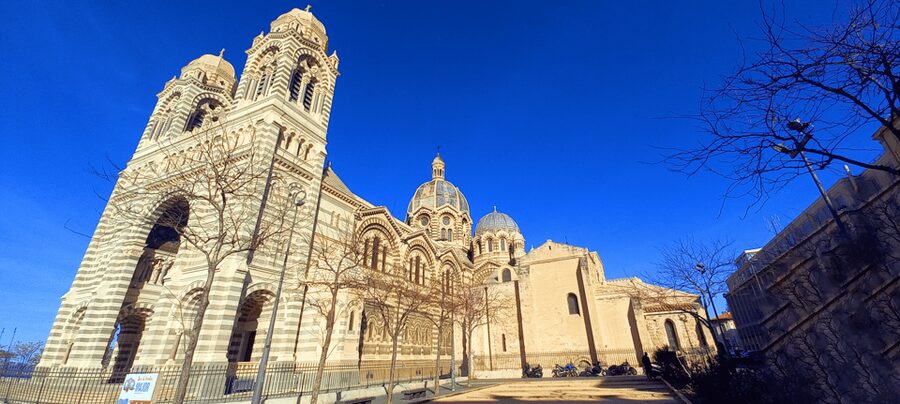
- Start beneath La Major Cathedral: Meet Charles in front of Marseille’s striking Neo-Byzantine landmark, wearing a white cap.
- Walk through Le Panier: See street art, old lanes, the Vieille Charité and the quiet Windmill Hill area.
- Connect ancient and modern Marseille: Learn about Greek beginnings, Roman influence, wartime events and later rebuilding.
- Follow the city toward Vieux Port: Pass Rue de la République, Cours Honoré d’Estienne d’Orves and the harbor forts.
- Enjoy sea views at Saint Victor and Le Pharo: The route ends with broad views, grand architecture and a palace built for Empress Eugénie.
- Get personal advice from a local: Charles speaks French and English and often tailors recommendations to your interests.
Why this Marseille walk works as a first introduction
Marseille can feel scattered at first. The cathedral, Le Panier, the Old Port, Saint Victor and Le Pharo are close enough to connect on foot, but each area has a different character. This tour helps you understand that shape before you set off alone.
The route also gives you more than a parade of monuments. Charles explains how the city’s Greek and Roman beginnings still affect its streets and harbor, then moves into the harder chapters of Marseille’s past, including World War II. That mix matters. You get the grand story, but also a sense of how people lived, traded, fought, rebuilt and adapted.
At $41 per person, I see this as a fair price for a small-group introduction. You are paying for two and a half hours of guiding, not entry tickets or a meal. Since food and drinks are not included, the value depends on how much you want context and local orientation. If you plan to spend several days in Marseille, the advice at the end can make the price easier to justify.
The group size is a real plus. With eight people or fewer, you can ask questions without shouting across a crowd. Charles has also shown a knack for adjusting the pace, finding shade when possible and making solo participants feel included. Those details are especially useful in a walking tour, where a poor pace or a distant guide can spoil the experience.
More walking tours in Marseille:
- Marseille: Half-Day City Highlights Guided Walking Tour
★ 5.0 · 273 reviews - Marseille: No-Diet Club Local Food Tasting and Walking Tour
★ 4.8 · 173 reviews - Marseille: Walking Food Tour with Full Meal
★ 4.7 · 137 reviews
Meeting La Major Cathedral
Begin in front of Cathédrale Basilique Sainte-Marie-Majeure, usually called La Major. Charles wears a white cap, which makes him easier to spot near the imposing cathedral.
La Major is a fitting starting point. Its Neo-Byzantine and Romanesque design feels grand and slightly theatrical, with striped stone, domes and decorative details that set Marseille apart from the more restrained towns of Provence. The opening stop lasts about 10 minutes, so think of it as an introduction rather than an extended interior visit.
This first pause gives Charles room to outline the city’s long timeline. Marseille is around 2,600 years old, and the tour uses that age as a thread rather than throwing dates at you. If you like architecture, look closely at the façade while Charles explains the building’s place in the city.
You should arrive ready to walk. Comfortable shoes, water, sunglasses and clothing suited to the weather are sensible choices. The meeting point is near the Old Port area, but the tour does not provide food or drinks, so bring what you need.
Le Panier, Marseille’s oldest quarter
From La Major, the route heads into Le Panier. This hillside district overlooks the Vieux Port and the Mediterranean, and its narrow streets give you a sharp change from the cathedral’s open scale.
Le Panier is one of the most rewarding parts of the walk because it is not just a collection of sights. You get lanes, painted walls, street-art murals and small corners that are easy to miss when you are moving quickly between major attractions. Charles points out the area’s older features while explaining how the neighborhood fits into Marseille’s wider story.
The tour allows about 30 minutes here, followed by the Church of Accoules. That is enough time for a useful introduction, though not enough for a slow, independent wander through every lane. I would treat this as your orientation to Le Panier, then return later if the area catches your interest.
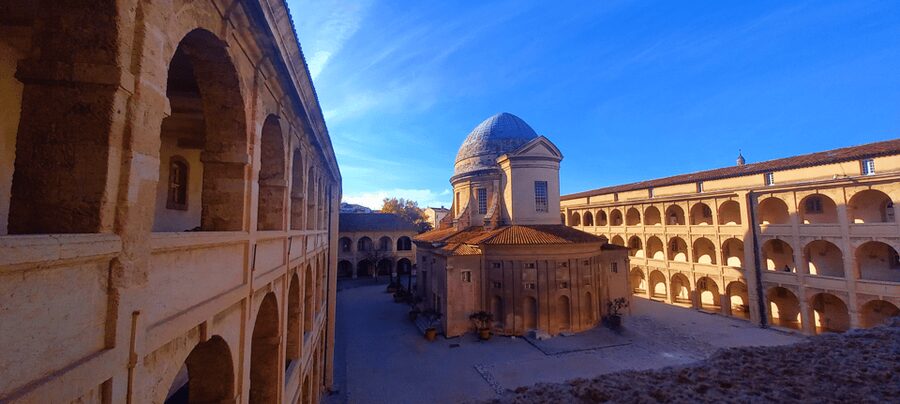
The Vieille Charité is one of the key sights in this section. This former hospital complex has a handsome enclosed courtyard and a long connection with the city’s social history. The route also reaches the calm Windmill Hill area, a quieter contrast to the harbor below.
Le Panier has slopes and uneven surfaces. The walk is manageable for many people, but you should not expect a flat promenade. If you have knee, balance or mobility concerns, take the 5-kilometer distance seriously.
From Accoules to Rue de la République
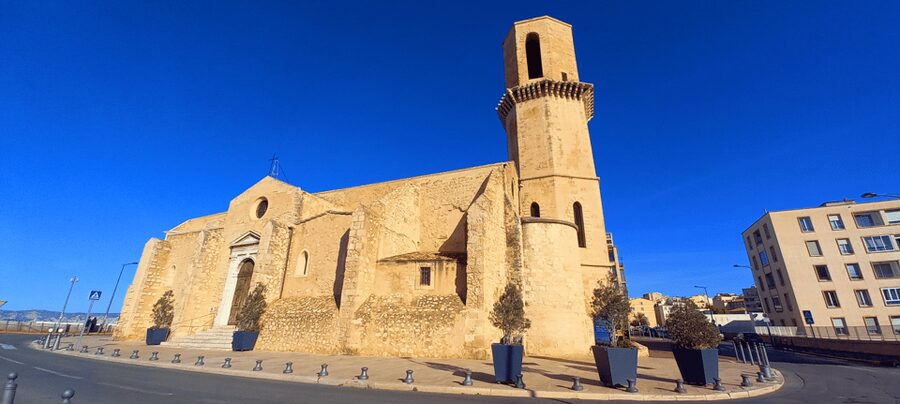
The Church of Accoules follows as a shorter 10-minute stop. Its place in the old quarter helps connect religious buildings with the daily life of Marseille’s historic center.
Next comes Rue de la République, another 10-minute section. The street offers a different view of the city, with its broad urban scale and architectural contrast. After narrow Le Panier, this change helps you see how Marseille developed beyond its oldest core.
Charles is at his best when moving between these contrasts. The tour is not limited to isolated facts about a church or street. It shows you how the city’s design changed over time, and how old neighborhoods sit beside later urban projects.
The pace also allows for questions. Several participants have found Charles easy to understand in English, while the tour is also available in French. His style is described as warm, humorous and attentive, which is helpful when the subject turns from architecture to difficult events.
Same base, a different kind of day:
- Marseille: City Sightseeing Hop-On Hop-Off Bus Tour
★ 3.8 · 2,820 reviews - Marseille: Côte Bleue Calanques Half-Day Kayak Tour
★ 4.7 · 877 reviews - Marseille Food Tour – Full Meal of Local Tastes by Do Eat Better
★ 5.0 · 530 reviews - Marseille: Calanques National Park Guided Hike with Picnic
★ 4.9 · 516 reviews
Vieux Port and the heart of maritime Marseille
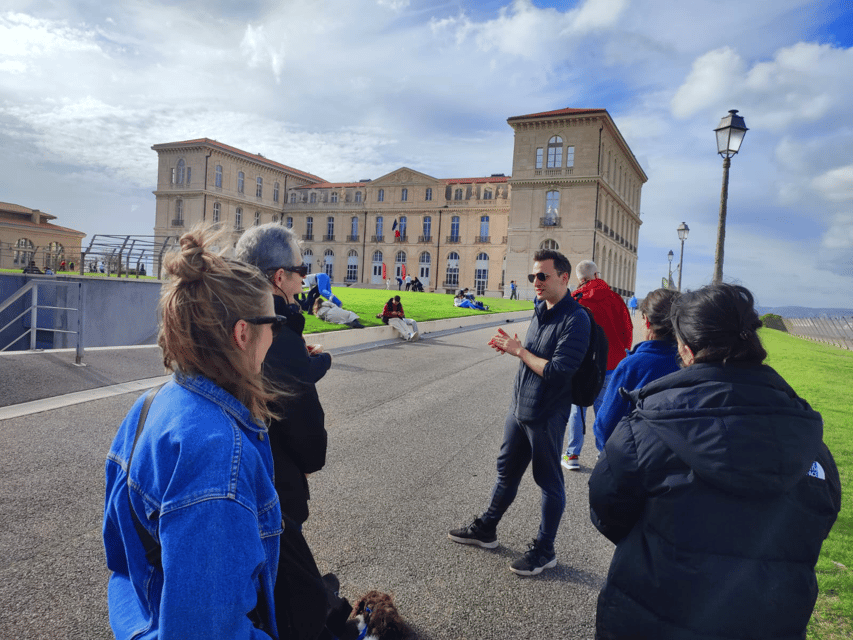
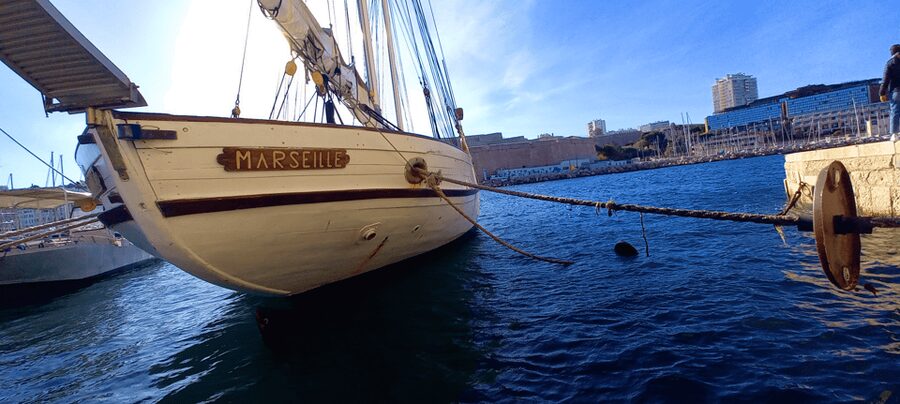
The Old Port is the route’s central scene. Boats and yachts sit in the water, with Fort Saint-Jean and Fort Saint-Nicolas guarding opposite sides of the harbor. You will have about 15 minutes here, enough to take in the setting and hear why this waterway has mattered since ancient times.
The harbor is where Marseille’s identity becomes clearest. Trade, fishing, travel and military defense all meet here. Charles explains the port’s long role in the city, including the influence of the Roman Empire and the changes brought by later events.
This is a good place to pause for photographs, but remember that the official stop is part of a moving walk. If you want extended time by the water, save it for after the tour or return later. The Old Port is also one of the two listed drop-off points, along with Palais du Pharo.
The docks also bring in the city’s more painful wartime story. Charles discusses Marseille during World War II and the damage and disruption that followed. That section gives the tour some needed weight. Marseille is not presented as a polished postcard. You hear about loss, conflict and rebuilding alongside the city’s beauty.
Cannebiere and Cours Honoré d’Estienne d’Orves
The itinerary includes a walk along Cannebiere, Marseille’s famous main avenue. Galleries, workshops, shops, cafés, bistros and restaurants line the route, creating a useful bridge between the old port and the city’s everyday commercial life.
Cannebiere is not a museum display. It is a working street, and that is part of its appeal. You see how the harbor connects with the rest of the city, and you get ideas for places to return when you are ready for a meal or drink.
Cours Honoré d’Estienne d’Orves follows for about 10 minutes. This open square near the port is another place where you can pause and get your bearings. Charles uses the surrounding streets to explain Marseille’s changing social and architectural character.
If you are hoping for a food tour, this is not one. Food and drinks cost extra, and tasting stops are not included. Still, the route puts you in a good position to ask Charles for restaurant suggestions. Several participants have valued his advice on museums and places to eat, and one received a recommendation for Chez Fonfon for bouillabaisse.
Saint Victor’s Abbey and a well-timed pause
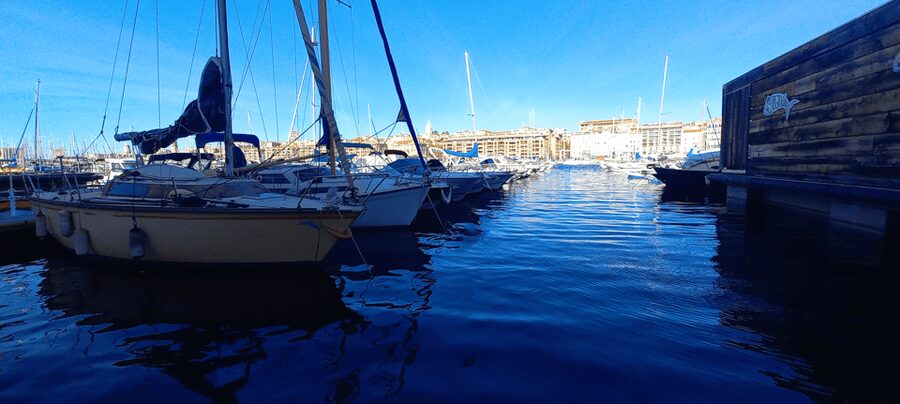
The walk continues to Abbaye Saint-Victor, with around 15 minutes for the guided visit and a further 20-minute break for sightseeing and views.
Saint Victor is one of Marseille’s important religious sites, and its Roman architectural character adds another layer to the route. After La Major’s grand style and Le Panier’s tight streets, the abbey gives you a more sober sense of the city’s age.
The 20-minute break is useful. A long city walk needs a pause, particularly in summer, and this section gives you time to take in the views without listening continuously. Bring water, since refreshments are not supplied.
This is also a good point to judge your energy. The final section reaches Palais du Pharo, and the total route involves continued walking. You can enjoy the break, but it is not a full meal stop or a long rest period.
Palais du Pharo and the final sea views
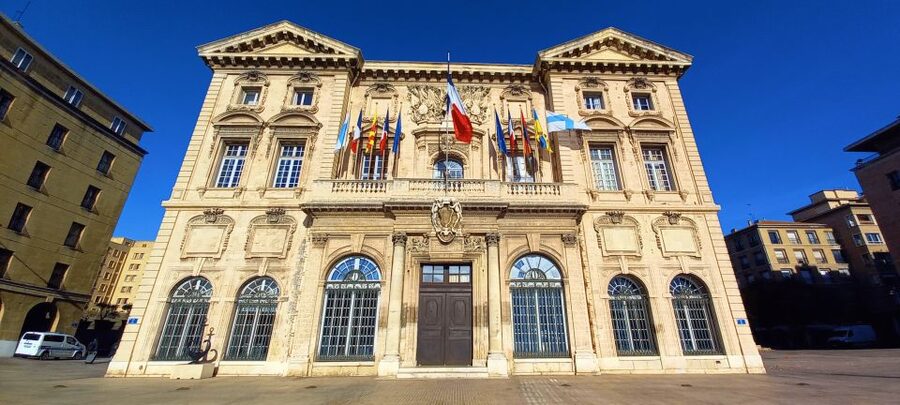
The final major stop is Palais du Pharo, reached after about 30 minutes of walking and sightseeing. Emperor Napoleon III built the grand palace in the mid-19th century for Empress Eugénie.
The palace is attractive, but the setting is the real reward. From Le Pharo, you get broad views toward the Mediterranean and the harbor, with Marseille spread below. After the close streets of Le Panier, the open outlook makes a satisfying ending.
The tour also points out the ornate façade and terraces of Le Pharo, giving you time to appreciate the building’s position above the water. This is a strong place for photos, though the route does not include entry into the palace.
The tour ends either at the Old Port or Palais du Pharo. That gives you some flexibility. You can continue exploring from the waterfront, stay near the palace, or use Charles’s recommendations to plan the rest of the day.
Charles as your guide
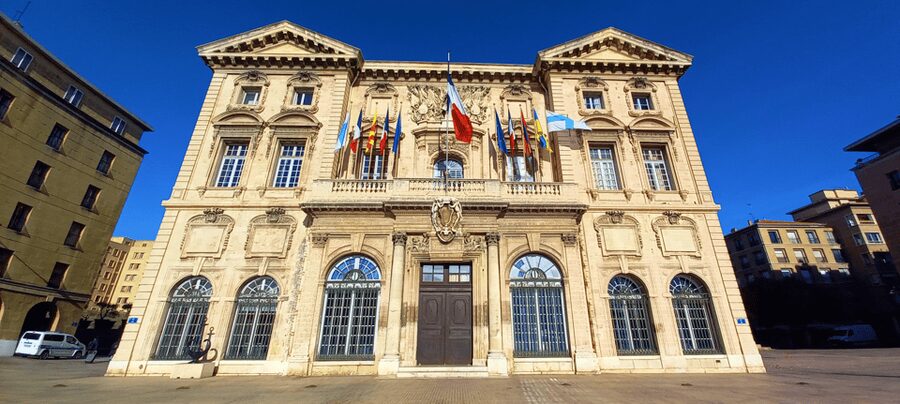
Charles is the clearest reason to choose this particular walk over a generic city circuit. He is a local, bilingual guide who speaks French and English, and he brings old photographs and maps to help explain Marseille’s changes.
His approach seems especially useful if you enjoy history but dislike dry lectures. He mixes dates and events with humor, personal attention and stories about the city. He also makes space for questions instead of treating the route as a fixed speech.
The small group helps here. Solo participants have been made to feel welcome, and couples or families can ask for suggestions that match their interests. Charles has also followed up with restaurant, museum and activity ideas, which turns the walk into a practical planning session for the rest of your stay.
Do not expect a silent, contemplative stroll. You will be moving through busy city areas while listening and asking questions. The guide’s energy is a benefit for most people, but those looking for a very quiet walk may prefer exploring alone.
Who should book this walk?
I would choose this tour early in a Marseille visit. It covers the main old-city areas, gives you a sense of direction and helps you decide where to spend more time later.
It suits first-time visitors, cruise passengers with a half day, solo travelers and anyone who wants history explained in plain language. It is also a good match for people who want both major sights and smaller streets, rather than only a bus ride past monuments.
The route is less suitable if you need step-free access, dislike hills or want long visits inside each monument. It is also not a food tour, museum tour or dedicated art tour. You will see many places from the outside and receive context, but some sites deserve a separate visit.
Book with comfortable footwear and water. Allow a little flexibility around the advertised 150 minutes, since questions, group pace and stops can affect the timing. Free cancellation is available up to 24 hours before departure, and you can reserve now and pay later, which helps if your Marseille plans are still shifting.
Should you book it?
Book this walk if you want a strong first look at Marseille with a local guide who can connect ancient origins, wartime history, street life and sea views. The combination of La Major, Le Panier, Vieux Port, Saint Victor and Le Pharo gives you a lot of city in a manageable half day.
Skip it if you want a flat route, extensive indoor visits or a meal included. For most visitors who can comfortably walk 5 kilometers, $41 is a sensible price for a small group, clear historical context and personal advice from Charles. It leaves you with something more useful than a list of sights: a working sense of how Marseille fits together.
FAQ
Where does the Marseille walking tour start?
The tour starts in front of Cathédrale Basilique Sainte-Marie-Majeure, also called La Major, in Marseille.
How do I find the guide?
Your guide, Charles, wears a white cap at the meeting point in front of La Major Cathedral.
How long does the tour last?
The advertised duration is 150 minutes, or about two and a half hours.
How far do you walk?
The tour covers a route of about 5 kilometers.
Which languages are available?
The live tour is available in French and English.
How large is the group?
The tour is limited to eight participants.
Is food included?
No. Food and drinks are not included, so bring water and anything else you may need during the walk.
Is the tour suitable for wheelchair users?
No. The tour is not suitable for wheelchair users. Comfortable shoes and weather-appropriate clothing are recommended.
Just added in Marseille
- Private French Pastry Class in Marseille★ 5.0 · 90 reviews
- Picturesque Luberon – From MARSEILLE★ 5.0 · 36 reviews
- Provence : Aix en Provence, Cassis and Marseille Private Tour★ 4.5 · 53 reviews
- Marseille Walking food and culture tour 3 hour Private tour★ 4.0 · 36 reviews
- Market & Perched Villages of the Luberon Day Trip from Marseille★ 5.0 · 85 reviews
- Marseille Guided Tour for 2.5 Hours with a Bilingual Local Guide★ 5.0 · 36 reviews
- Marseille Guided Tour for 4 Hours with a Bilingual Local Guide★ 5.0 · 105 reviews
- Private Full Day Wine Tour in Provence From Marseille cruise port★ 5.0 · 32 reviews
Walking Tours, compared.
Paris Top Sights Half Day Walking Tour with a Fun Guide
Read our review →
Montmartre Hidden Gems and Scenic Highlights Walking Tour
Read our review →
Montmartre Hill French Gourmet Food and Wine Tasting Walking Tour
Read our review →
Paris Île de la Cité and Notre-Dame Walking Tour With Crypt
Read our review →
Montmartre Cheese, Wine & Pastry Guided Walking Tour
Read our review →
Paris in a Day: Louvre or Orsay, Eiffel Tower, City Walk & Cruise
Read our review →
Montmartre Highlights Walking Tour with a Local Guide
Read our review →
Browse the lists this tour appears in