
Reviewed · WALKING TOURS
Marseille: Half-Day City Highlights Guided Walking Tour
Marseille reveals itself best on foot, and this tour covers a remarkable slice of the city in four hours. You start at La Major Cathedral, pass through Le Panier and the Old Port, ride a short ferry, climb toward Notre Dame de la Garde, then continue along the coast to Vallon des Auffes and Palais du Pharo.
I like the small group of no more than eight, which gives Charles time to learn names, answer questions, and adjust the pace. I also like the mix of major sights and ordinary streets, including the back lanes of Le Panier and Roucas Blanc. The catch is simple: nine kilometers with hills and steps is a serious morning walk, especially in strong sun.
Key points to know before booking
- Charles leads the tour: His humor, energy, local knowledge, and personal recommendations are central to the experience.
- The route covers 9 kilometers: Bring walking shoes, water, sun protection, and enough stamina for uphill sections.
- You see Marseille’s main contrasts: Historic districts, the working harbor, seaside roads, a fishing port, and panoramic hilltop views all fit into one morning.
- A short ferry ride breaks up the walking: The five-minute boat crossing adds a pleasant change of pace.
- The group stays small: With a maximum of eight people, the tour feels more personal than a large city walk.
- The tour suits active visitors: It is not designed for wheelchair users, children under 12, people with low fitness, or people over 70.
Why this four-hour route works so well
Marseille can feel scattered when you first arrive. Its cathedral, old quarter, harbor, basilica, beaches, and coastal monuments are not packed into one tidy historic center. That is the main value of this tour: Charles connects the pieces while you walk between them.
You get an introduction to Marseille’s 2,600 years of history, but the focus is not only on dates and buildings. The route shows how the city changes from one neighborhood to the next. Le Panier feels old and close-knit. The Old Port opens the city toward the sea. Notre Dame de la Garde gives you the big picture. Vallon des Auffes brings you down to a smaller, more intimate waterfront.
Charles is clearly the key part of the experience. He is described as warm, funny, attentive, and passionate about Marseille. He also speaks English and French, and he makes a point of including each person in the group. His style appears to balance useful facts with stories, local customs, and suggestions for what to do after the walk.
Several participants found that his pacing made the long route manageable. That does not make it an easy stroll, but it does mean you are not expected to rush from stop to stop. If someone needs a pause, the arrangement allows you to rest and rejoin the group later.
More walking tours in Marseille:
- Marseille: No-Diet Club Local Food Tasting and Walking Tour
★ 4.8 · 173 reviews - Marseille: Walking Food Tour with Full Meal
★ 4.7 · 137 reviews - Marseille: Foodie Walking Tour of the Cours Julien District
★ 4.8 · 97 reviews
Starting at La Major and entering Le Panier
Meet Charles in front of Cathédrale Basilique Sainte-Marie-Majeure, usually called La Major. Look for the guide wearing a white cap. The cathedral is a fitting starting point because it sits between the old port area and Le Panier, linking Marseille’s grand public face with its older neighborhood streets.
The cathedral visit is brief, around ten minutes. The route then moves into Le Panier for about 40 minutes. This is one of the best sections for walking because narrow, pedestrian-friendly lanes reveal parts of Marseille that a bus or taxi cannot reach.
Expect an old quarter shaped by slopes, stairways, small streets, and layers of city life. Charles uses this part of the route to explain how Marseille developed over time, rather than treating the neighborhood as a backdrop for photographs. The walk is also where his local perspective matters most. You can ask questions as the group moves, and the small size should make it easier to hear and stay connected.
The tradeoff is that old districts are rarely flat or perfectly even. Wear shoes with a firm grip. Sandals with little support will make the morning harder than it needs to be.
From Hôtel de Ville to the Old Port
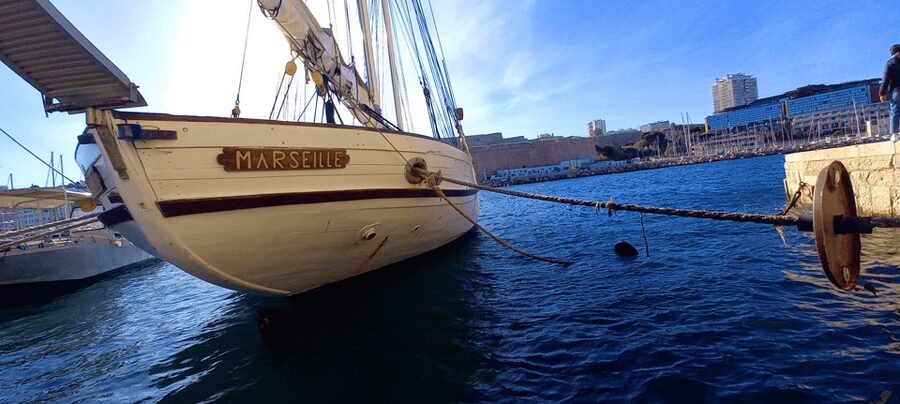
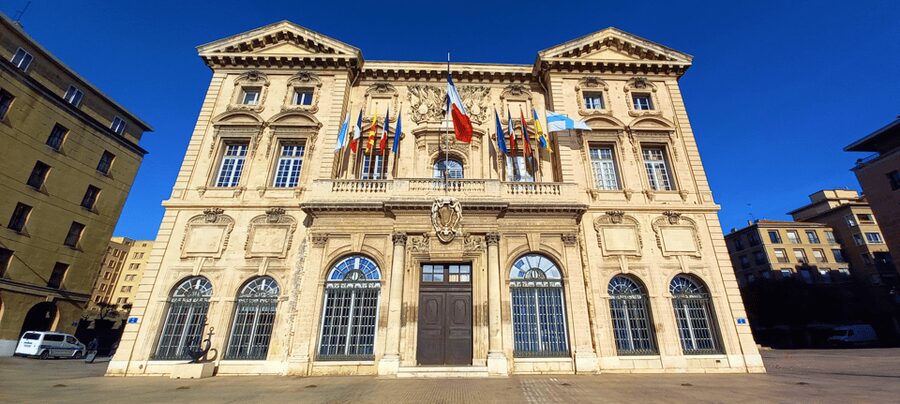
From Le Panier, the route reaches Hôtel de Ville, a short stop for sightseeing and local history. You then take a five-minute ferry ride across the harbor. This is a small part of the tour, but it adds welcome variety and gives you a different view of Marseille from the water.
The ferry is not a full harbor cruise. Think of it as a practical crossing with a scenic bonus. You will not spend long on board, but the short ride breaks up the walking and lets you look back toward the waterfront.
The Old Port is Marseille’s natural center and one of the clearest places to understand the city’s relationship with the sea. The visit here is brief, but Charles uses the harbor and nearby Cours Honoré d’Estienne d’Orves to explain the city’s public life, architecture, and changing character.
This portion is useful early in your stay. You get orientation before spending more time in areas that are harder to place on a map. If you plan to eat around the port later, Charles can also point you toward places he recommends, according to the experience details shared by past participants.
The climb through Parc de La Colline Puget
After the Old Port, the route turns uphill through Parc de La Colline Puget. The walk and sightseeing here take about 25 minutes. This is one of the sections where the tour shifts from city streets to higher viewpoints.
The climb is not a minor detail. The route covers nine kilometers, and the hills and steps are part of what makes the tour broad in scope. You are reaching parts of Marseille that cannot be linked together without some effort. If you like walking tours that include exercise, this is a plus. If you prefer a flat route, it is a clear drawback.
Bring water in your backpack. Food and drinks are not included, and you are expected to carry your own supplies. Sunglasses, a hat, sunscreen, and proper hiking or walking shoes are also sensible, particularly in warm weather.
Same base, a different kind of day:
- Marseille: City Sightseeing Hop-On Hop-Off Bus Tour
★ 3.8 · 2,820 reviews - Marseille: Côte Bleue Calanques Half-Day Kayak Tour
★ 4.7 · 877 reviews - Marseille Food Tour – Full Meal of Local Tastes by Do Eat Better
★ 5.0 · 530 reviews - Marseille: Calanques National Park Guided Hike with Picnic
★ 4.9 · 516 reviews
Notre Dame de la Garde and the best city view
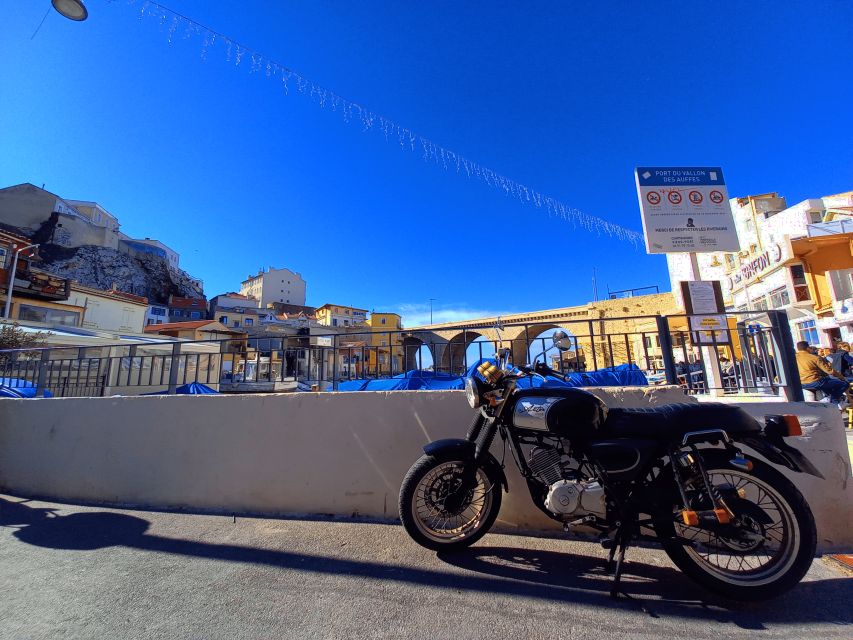
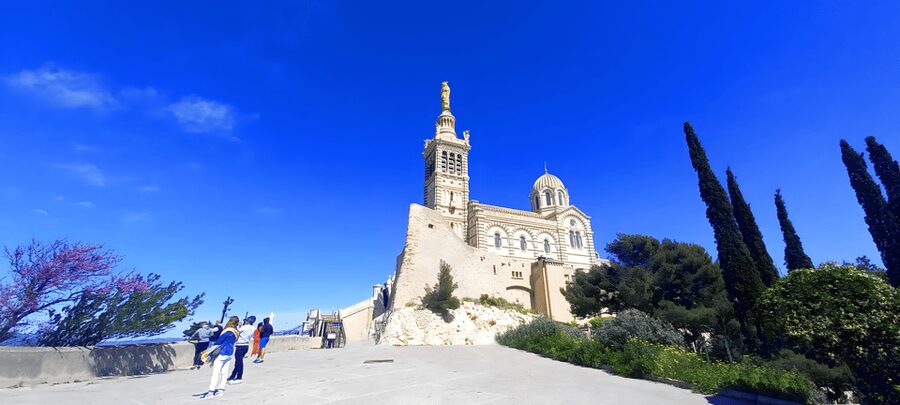
The route reaches Notre Dame de la Garde, Marseille’s hilltop basilica, for a guided visit and a 25-minute break. This is the visual high point of the morning. From here, you can look over the city, harbor, and sea, giving you a useful sense of Marseille’s size and position.
The break matters because it gives your legs time to recover after the climb. It also lets you take in the view without feeling that you must immediately move on. Charles explains the site and its place in Marseille’s identity, while the elevated position helps bring earlier parts of the route into focus.
This stop is also a good example of the tour’s balance. You get a major landmark, but you reach it through neighborhoods and public spaces rather than arriving by vehicle, taking a quick photograph, and leaving. The climb gives the basilica more meaning because you have crossed much of the city to reach it.
The basilica visit is not an extended indoor tour, so anyone wanting a very detailed art or architectural study may need extra time on another visit. The strength here is the combination of the building, the view, and Charles’s explanation of the city below.
Roucas Blanc, Vallon des Auffes, and the coast
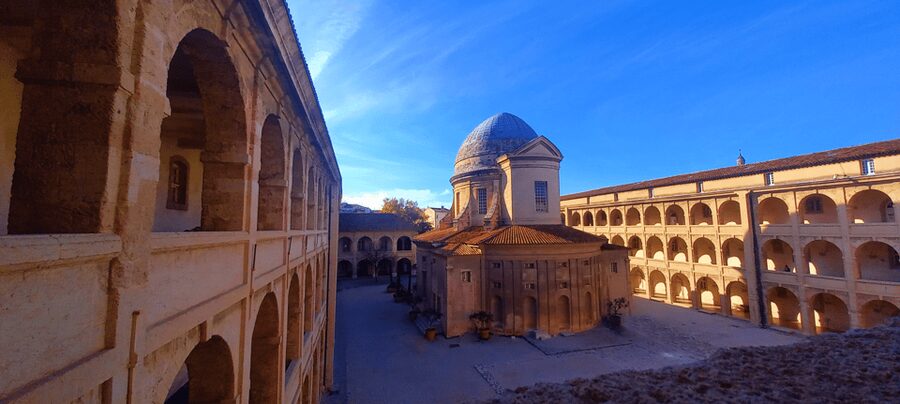
From Notre Dame de la Garde, the route continues through Marseille for roughly 40 minutes before reaching Vallon des Auffes. The change in atmosphere is one of the most appealing parts of the day.
Roucas Blanc is known for its hillside streets and sea-facing setting. Walking through this area gives you a feel for Marseille beyond the central tourist sights. You see how the city rises and falls, and why a walking route reveals more than a simple list of landmarks.
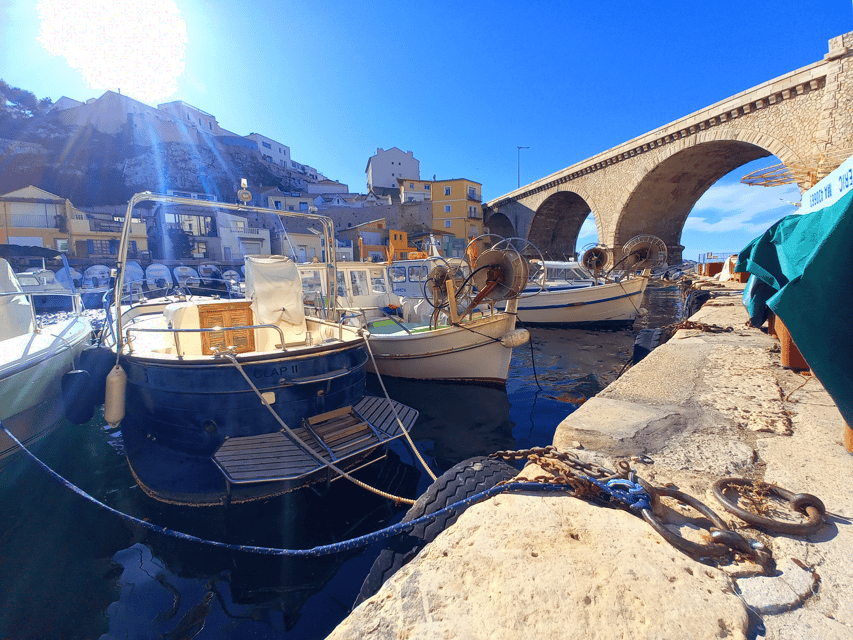
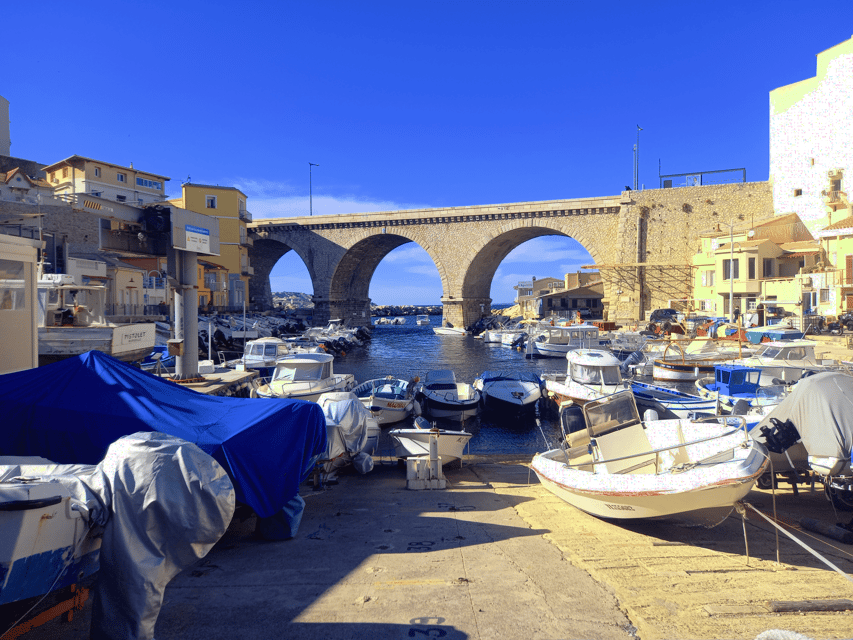
Vallon des Auffes is a small fishing port set in a rocky cove. The scale is much more intimate than the Old Port. Instead of broad harbor activity, you get a compact waterfront setting with a strong connection to fishing and local life.
The stop lasts about ten minutes, but the surrounding walk and views add to it. This is a good place for photographs, though you should keep the group’s pace in mind rather than lingering too far behind.
The route then reaches the Monument aux morts de l’Armée d’Orient et des terres lointaines for a photo stop. From there, you follow the Corniche John Fitzgerald Kennedy, one of Marseille’s notable seaside roads, before passing Plage des Catalans.
These coastal sections give you open views and a change from the narrow streets earlier in the morning. They can also expose you to sun and wind, so your hat, sunscreen, and water earn their place in your bag.
Palais du Pharo, Saint Victor, and the finish
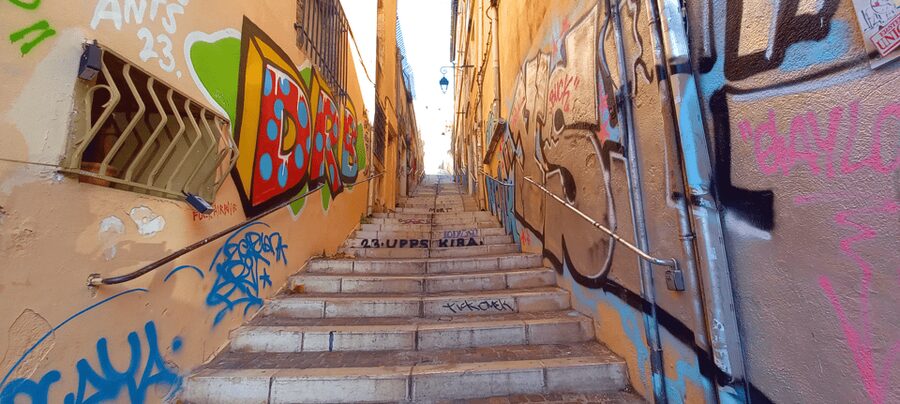
Palais du Pharo is another strong viewpoint and architectural stop. The palace looks toward the harbor and helps explain Marseille’s connection to imperial France and its later public development. The tour focuses on sightseeing and context rather than a long interior visit.
The route then passes Saint Victor’s Abbey, with around 20 minutes devoted to guided sightseeing. This is a fitting late stop because it brings you back to Marseille’s religious and historical roots after the coastal walk.
The published route begins at La Major and finishes at the Old Port. That ending is practical. You are back in the city center, close to places where you can eat, continue sightseeing, or make your way toward other parts of Marseille. The route description also refers to returning to La Major, so confirm the exact end point and day’s route with the provider if your onward plans depend on it.
What the price means at $58
At $58 per person, this is not the cheapest way to see Marseille, but the price is reasonable if you want one morning to connect many separate sights. You receive four hours with a live guide, a small group capped at eight, the Notre Dame de la Garde visit, and a short ferry crossing.
The value rests mainly with Charles. A self-guided day could cover some of the same places, but you would need to plan the route, understand the hills, connect the historical story, and find the less obvious streets yourself. The tour also gives you personal recommendations for restaurants and other activities, which can help you use the rest of your stay well.
The price is less attractive if you want a short, relaxed orientation walk. You are paying for distance and coverage, not just a gentle introduction around the Old Port. Food and drinks cost extra, and you should budget for your own refreshments.
Who should book this tour?
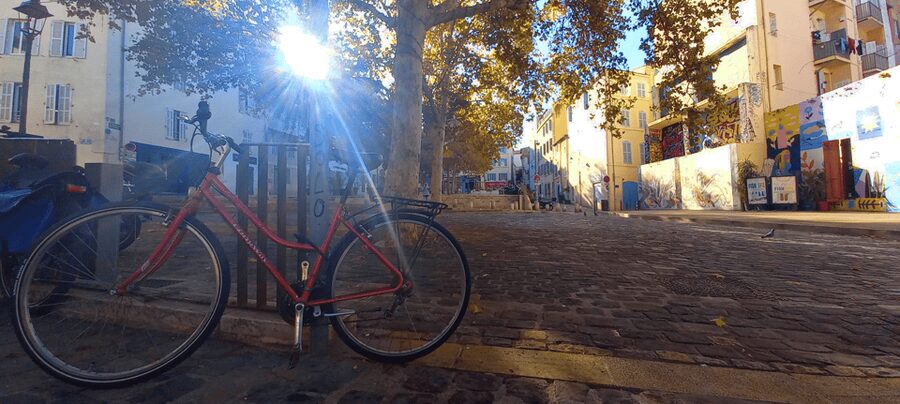
I would choose this tour for a first visit to Marseille, especially if you have only a day or two in the city. It gives you an overview of several districts and helps you decide where to return at a slower pace.
It also suits people who like local stories, city history, viewpoints, and a bit of exercise. Solo visitors and couples may appreciate the small group, while families with older teenagers can join if everyone is comfortable with the distance and hills. One 15-year-old was especially happy with the experience, but children under 12 are not accepted.
You should think twice if you have low fitness, limited mobility, or difficulty with steps. The tour is not suitable for wheelchair users, and the stated guidance excludes people over 70, although one participant aged 74 reported completing it comfortably. That individual experience does not change the formal suitability guidance, so assess your own ability carefully.
Charles can slow the pace and allow a pause, but this remains a nine-kilometer route. Marseille’s heat, hills, and uneven streets are part of the deal.
Practical ways to enjoy the morning
- Wear supportive hiking or walking shoes, not thin fashion trainers.
- Carry your own water and food in a backpack.
- Use sunscreen, sunglasses, and a sun hat.
- Meet directly in front of La Major and look for the white cap.
- Book near the start of your stay if you want Charles’s suggestions for later meals and sightseeing.
- Leave enough time after the tour if you need a full lunch or onward transport, since the walk may run longer than four hours at a relaxed pace.
Free cancellation is available up to 24 hours before the start, and you can reserve now and pay later. The tour runs in English or French, with starting times depending on availability.
Should you book the Marseille city highlights walk?
Book it if you want Marseille explained as a living city rather than a string of isolated monuments. Charles brings together Le Panier, the Old Port, Notre Dame de la Garde, Vallon des Auffes, the Corniche, Palais du Pharo, and Saint Victor in one active morning, with enough local context to make the route memorable.
Skip it if you want a flat walk, a slow museum-style visit, or a short introduction that leaves your afternoon untouched. For fit visitors who want strong views, old streets, coastal scenery, and a guide who takes a personal interest in Marseille, $58 is a fair price for a well-packed first look.
FAQ
How long is the Marseille walking tour?
The tour lasts four hours and covers about nine kilometers.
Where does the tour meet?
You meet directly in front of La Major Cathedral, the Cathédrale Basilique Sainte-Marie-Majeure. The guide wears a white cap.
Who guides the tour?
Charles leads the tour. He guides in English and French and shares information about Marseille’s history, districts, culture, and daily life.
Is food or drink included?
No. You need to bring your own drinking water and food in your backpack.
Is the tour suitable for people with limited mobility?
No. The tour is not suitable for wheelchair users or people with a low level of fitness. It includes hills, steps, and about nine kilometers of walking.
What happens if I need to rest during the tour?
You can pause or rest and then rejoin the group at another location. The route still requires enough fitness for a long walk with uphill sections.
Just added in Marseille
- Marseille: Tailored Wine Tasting Experience in Top Wine Shop★ 5.0 · 106 reviews
- Marseille: Calanques Sailing Day Trip with Lunch and Wine★ 4.8 · 411 reviews
- From Aix: Cassis Boat Ride & Provence Wine Tasting Day Tour★ 4.8 · 103 reviews
- From Marseille: Provence Sightseeing Tour and Wine Tasting★ 4.7 · 195 reviews
- Marseille: No-Diet Club Local Food Tasting and Walking Tour★ 4.8 · 173 reviews
- From Marseille: Guided E-Bike Tour to Calanque de Sormiou★ 4.8 · 308 reviews
- Ultimate Calanques Panoramic e-bike Ride – 3h (Small Group)★ 4.5 · 335 reviews
- Marseille Grand E-Bike Tour : “le tour du Fada”★ 4.5 · 352 reviews
Walking Tours, compared.

Paris Top Sights Half Day Walking Tour with a Fun Guide
Read our review →
Montmartre Hidden Gems and Scenic Highlights Walking Tour
Read our review →
Montmartre Hill French Gourmet Food and Wine Tasting Walking Tour
Read our review →
Paris Île de la Cité and Notre-Dame Walking Tour With Crypt
Read our review →
Montmartre Cheese, Wine & Pastry Guided Walking Tour
Read our review →
Paris in a Day: Louvre or Orsay, Eiffel Tower, City Walk & Cruise
Read our review →
Montmartre Highlights Walking Tour with a Local Guide
Read our review →
Browse the lists this tour appears in