

Reviewed · LOUVRE MUSEUM TOURS
Murders and Mysteries of the Louvre Museum
The Louvre is more than a parade of famous pictures. This tour uses its medieval fortress, royal apartments, ancient objects, and violent paintings to tell the stranger stories behind the museum. You will see the Mona Lisa, Venus de Milo, Egyptian collections, crown jewels, and French masterpieces, but with an eye for magic, betrayal, ritual, and murder.
I like the small group of up to eight because a guide can usually keep the route personal and help you get close enough to hear. I also like the way the tour mixes essential sights with less obvious works, so you get a useful first look without spending two hours only in front of the museum’s biggest names.
The main concern is guide delivery. One group found the English hard to hear in the noisy galleries, and the dark-mystery theme may feel lighter than expected if your guide simply points out a few gruesome paintings. At $200 per person, you are paying for expert guidance and saved time, not just admission.
Key points at a glance
- The Louvre’s medieval remains: See the foundations and remnants of the fortress that came before the palace and museum.
- A dark twist on major sights: Connect ancient rituals, magic, scandal, betrayal, and violent scenes to the art.
- The essential masterpieces included: The route covers the Mona Lisa, Venus de Milo, Egyptian art, French works, and crown jewelry.
- A small group of eight: The limited size can make questions, photos, and movement through crowded rooms easier.
- Two hours, then more time inside: Your admission remains valid after the guided visit, so you can continue alone.
- Practical entry details: Skip-the-line access applies to museum entry, but everyone still waits for security.
Why this Louvre tour feels different

Most first visits to the Louvre follow a familiar path: Mona Lisa, Venus de Milo, Winged Victory, then a hurried search for the exit. This experience takes a different route through the same enormous institution. It treats the museum as a place shaped by royal power, old rituals, private scandal, and human violence.
That approach matters because the Louvre can otherwise feel like a giant warehouse of masterpieces. A guide gives you a thread to follow. Here, the thread is the unsettling side of art and the building itself.
You will hear about the Louvre as a fortress before it became a palace. You will also learn how it served as a royal residence and a setting for betrayal, scandal, and murder. That historical frame helps explain why the basement remains are worth seeing, even if you came mainly for paintings.
The tour is not a ghost walk, and it does not turn every object into a horror story. It is a guided art and museum visit with a darker question running through it: what do these works reveal about fear, power, religion, desire, and death?
Other ways into the Louvre from Paris:
- Paris: Louvre Museum Timed-Entrance Ticket
★ 4.6 · 71,977 reviews - Paris: Louvre Guided Tour with Reserved Access & Boat Cruise
★ 4.3 · 16,353 reviews - Louvre Museum Masterpieces Guided Tour with Access
★ 4.5 · 12,023 reviews
Meeting beneath the glass pyramid
Your meeting point is the Statue of Louis XIV in front of the Louvre Pyramid on Rue de Rivoli. You meet your guide beneath the immense glass pyramid, after the security check but before the ticketed museum entrance. The exact instructions on your voucher matter, since the Louvre grounds can be confusing at busy times.
Bring a passport or identity card. Large bags and luggage are not allowed, and anything over 55 by 35 by 20 centimeters cannot enter the museum. Pack lightly. A small day bag is the sensible choice.
The security queue is still part of the process. The skip-the-line benefit applies to entering the museum with your guide, but it does not remove the security check. This is an important distinction. You can save time at the ticket entrance, but you should not arrive assuming you can walk straight through the pyramid.
Once inside, the guide leads the group through the selected galleries. English and French are available. Because the museum is large and often noisy, stay near the guide, especially during transitions between rooms.
Starting below the palace: the medieval Louvre
The medieval remains provide the best opening because they change your sense of place. Before the elegant courtyards and grand galleries, the Louvre was a defensive fortress. The remnants of that earlier structure sit below the later palace.
This is not simply an architectural footnote. The fortress explains the building’s stern beginnings and gives the museum a physical link to medieval Paris. You are not only looking at art in a former royal setting. You are standing inside layers of power that changed over centuries.
The guide uses these remains to explain the Louvre’s growth from fortress to royal home and then to public museum. That story also prepares you for the tour’s main theme. The building has witnessed ambition, secrecy, political maneuvering, and violence long before visitors began photographing the Mona Lisa.
Allow yourself a moment here. Many people rush toward the paintings, but the old foundations are among the parts most easily overlooked. If you want a tour that gives the building itself a role, this opening is useful.
Ancient Egypt, magic, and forgotten rituals
The Egyptian collection brings the tour’s supernatural side into focus. You will hear about magic and long-forgotten rituals as you move through objects from the ancient world. The point is not just to identify dates and materials. It is to consider how people once tried to manage death, danger, the gods, and the unknown.
This section can be especially effective if you enjoy stories about belief systems rather than only famous names. Ancient objects often carry meaning that is not obvious at a glance. A guide can connect a small ritual item or symbol to a wider view of the ancient world.
The quality of this part will depend heavily on the guide’s storytelling. The activity promises mysterious and sometimes frightening stories, but the exact balance may vary. One guide may build a strong narrative around ritual and fear. Another may offer a quicker explanation before moving to the museum’s best-known pieces.
You should expect interpretation, not a supernatural performance. The value is in seeing familiar collections through a less usual lens and learning why certain images and objects could have held power for the people who made or used them.
More museums in Paris:
- Paris: Louvre Museum Entry Ticket With Host and River Cruise
★ 4.6 · 9,926 reviews - Les Invalides: Napoleon’s Tomb & Army Museum Entry
★ 4.6 · 9,185 reviews - Louvre Museum – Exclusive Guided Tour (Entry Included)
★ 5.0 · 6,296 reviews - Paris: Louvre Museum Hosted Entry and Mona Lisa Audioguide
★ 4.6 · 5,235 reviews
Venus de Milo and the power of an icon
The Venus de Milo is one of the stops included on the route. Her missing arms are an obvious mystery, but the greater interest is how an incomplete statue became one of the world’s most recognizable images.
A guide can help you look beyond the crowd and the postcard familiarity. You may consider how the statue is displayed, why it became so famous, and how viewers respond to a work that is both damaged and celebrated.
Do not expect a long private viewing. The Louvre’s major works draw attention, and the tour has a lot to cover in two hours. The benefit is that you will not waste your limited time searching for the statue or wondering what deserves your attention once you arrive.
This is one reason the experience suits a first visit. You get orientation, context, and a route through major rooms without needing to plan every turn yourself.
Crown jewels, French masterpieces, and royal danger
The crown jewelry collection adds a different kind of mystery. These objects connect beauty with monarchy, wealth, possession, and political power. Jewels are not just decorative pieces in this setting. They reflect the status and danger attached to royal life.
The guide also covers French masterpieces and darker events shown in some of the museum’s major works. Paintings can look grand from a distance, yet many depict betrayal, execution, revenge, religious violence, or personal catastrophe. The tour asks you to notice those details instead of treating each canvas as a silent decoration.
This is where the theme can either come alive or feel too thin. One visitor found the guide friendly and helpful but felt the dark subject was reduced to a handful of gory paintings. That is a fair warning. If you want a tightly researched investigation into actual Louvre murders, this may not go far enough.
If you want a lively way to read familiar art, the approach is more promising. The guide can point out relationships between artists, artistic methods, and details that you might miss alone. One particularly strong experience included explanations of technique and connections among artists, not just a list of famous titles.
The Mona Lisa with a new question
The Mona Lisa is included, but this is not a promise of a quiet encounter. The painting is one of the Louvre’s most crowded sights, and your guide cannot remove the crowd. What the guide can do is give you a way to look at the painting beyond the standard question of why she smiles.
The tour treats her expression as part of the museum’s larger mystery. You will consider how the image has been interpreted and why the smile remains so compelling. The guide’s framing can help you spend your brief viewing time looking carefully rather than simply taking a photograph and moving on.
Keep your expectations sensible. You may have only a short chance to see the painting clearly, and the room can be loud. The value lies in the explanation around the work, plus the fact that the guide gets you there as part of a larger route.
The Mona Lisa is not the whole point of the visit. In fact, the tour is more useful if you treat her as one chapter in a wider story about art, fame, secrecy, and human behavior.
What two hours can realistically cover
Two hours is enough for a guided introduction, not enough for the entire Louvre. The route includes several major collections and the medieval remains, so the pace will be purposeful.
You will likely move between rooms rather than linger at every object. That is a strength if your time in Paris is short. A focused route can prevent you from losing an hour to navigation and still leave you with a map of what to revisit.
It is also a limitation for art lovers who want long, quiet study. You will not have time to examine every Egyptian object, French painting, jewel, and sculpture in detail. Think of the tour as a strong first pass.
After the two-hour visit, your admission allows you to stay inside and explore the rest of the museum independently. This adds real value. You can revisit a favorite work, seek out another department, or continue through galleries the guided route did not cover.
The small-group advantage and the guide question
A group limited to eight people is a good fit for the Louvre. The museum is too large for a guide to manage comfortably with a huge crowd, especially when stopping near famous works. A small group gives you a better chance to ask questions and stay close.
The guide’s expertise is the main reason to book this rather than enter alone. Strong guides have taken people through major exhibits, lesser-known works, art techniques, and relationships between artists. Some have also helped with photos and adjusted the route to suit the group.
There is one practical weakness to keep in mind. One person found the guide’s English difficult to understand and the voice too soft for the crowded rooms. Two members of that group were even separated in the crowd. If you have hearing concerns, position yourself near the guide at the start and ask the guide to speak up. An audio microphone is not listed as part of the experience.
The activity offers English and French, but no specific guide names are supplied. Your actual guide will shape the tone of the visit, especially how fully the murder and mystery theme is developed.
Is $200 per person a fair price?
At $200 per person, this is a costly Louvre visit. The admission fee is included, along with the guide and skip-the-line access for the museum entrance. The price makes the most sense when you value saved planning time, a small group, and a thematic route through a very large museum.
It is harder to justify if you mainly want entry and are comfortable using a guidebook or museum app on your own. The Louvre is expensive enough that a solo visit may suit independent art lovers better.
The value improves for a short Paris stay. If you have only two or three hours and want to see the medieval remains, Egyptian art, Venus de Milo, crown jewelry, French masterpieces, and Mona Lisa, a planned route can keep the visit from becoming a maze.
Tips are optional and not included. Cancellation is free up to 24 hours before the start, and you can reserve now and pay later, which helps if your schedule is still shifting.
Who should book this experience?
I would choose this tour for a first-time Louvre visitor who wants famous works with a strong story line. It also suits anyone drawn to old rituals, royal scandals, violent art, and the stranger side of museum collections.
Families and mixed-interest groups may find the theme useful because it gives younger visitors a reason to look closely at paintings and objects. The small group can also make the visit feel less anonymous than a large guided walk.
I would be more cautious if you want a specialist art-history lecture, a forensic account of actual murders, or a slow examination of a few paintings. The advertised theme is broad, and the experience can depend on how the guide connects the works.
Wear comfortable shoes and keep your belongings small. Arrive ready for security, stay close in crowded galleries, and plan to use the remaining admission time after the tour. If the guide delivers clear English and a strong narrative, the visit can turn an overwhelming museum into a memorable two-hour story.
FAQ
Where does the Louvre mystery tour meet?
Meet at the Statue of Louis XIV in front of the Louvre Pyramid, at the Louvre Museum on Rue de Rivoli in Paris. The precise meeting instructions will be shown on your voucher.
How long does the experience last?
The guided visit lasts two hours. Afterward, your ticket allows you to remain in the Louvre and continue exploring on your own.
What languages are available?
The live tour is available in English and French.
How large is the group?
The group is limited to eight participants.
Does the ticket include Louvre admission?
Yes. Museum entrance fees are included in the price.
Does skip-the-line access remove the security queue?
No. Skip-the-line access applies to entering the museum with the guide, but you must still wait for the security check.
What should I bring?
Bring a passport or identity card. Keep your bags small, since luggage and large bags are not allowed.
How large can my bag be?
Items larger than 55 by 35 by 20 centimeters are not permitted in the museum. Oversize luggage is also not allowed.
Can I cancel the booking?
Yes. You can cancel up to 24 hours in advance for a full refund. You can also reserve now and pay later.
Should you book the Louvre murders and mysteries tour?
Book it if you want the Louvre’s essential sights presented through stories of royal power, ancient ritual, scandal, and violence, and you value a small group that gets you moving efficiently. The included admission after the guided visit makes the two-hour format more useful.
Skip it if $200 feels too high for a fast introduction, or if you want a precise investigation of Louvre murders rather than a darkly themed art tour. Your best chance of getting full value is to stay close to the guide, arrive with a light bag, and keep extra time afterward for the galleries the group cannot cover.
Just added in Paris
- Private Transfers in Paris★ 5.0 · 75 reviews
- Disneyland® Paris 1 Day Ticket with Transport from Paris★ 3.5 · 302 reviews
- Personalized Transport service from Disneyland to Paris★ 5.0 · 63 reviews
- CDG – Euro Disney – CDG Two Way Private Shuttle Transfer★ 5.0 · 233 reviews
- Monet’s Gardens & House-Private Giverny Tour From Paris★ 4.5 · 137 reviews
- Giverny Monet House and Gardens Skip the line Walking tour★ 4.0 · 217 reviews
- Guided tour Monet’s house and gardens/small group★ 4.5 · 68 reviews
- Monet’s House and Garden & Giverny Village★ 4.5 · 39 reviews
Louvre Museum Tours, compared.


Louvre Guided Tour with Reserved Access & Boat Cruise
Read our review →
Louvre Museum Masterpieces Guided Tour with Access
Read our review →
Louvre Museum Entry Ticket With Host and River Cruise
Read our review →
Priority Access Louvre with Host -Direct to Mona Lisa
Read our review →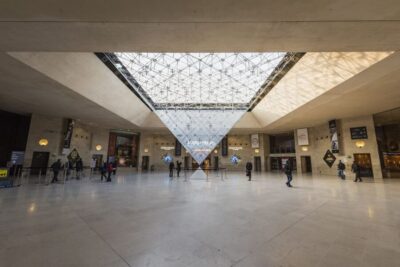
Mona Lisa & Louvre Masterpieces Tour with Reserved Access
Read our review →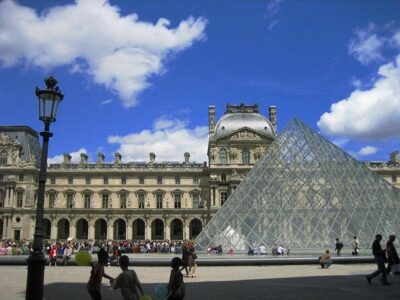
Louvre Museum – Exclusive Guided Tour (Entry Included)
Read our review →
Louvre Reserved Ticket and River Cruise Combo
Read our review →Browse the lists this tour appears in