
Reviewed · NORMANDY D-DAY TOURS
Omaha and Utah beaches
The most powerful part of this nine-hour D-Day tour is the range. You move from Omaha Beach and the American Cemetery to Utah Beach, Sainte Mère Église, La Fière, and small villages where individual actions changed the battle. I like the way the route follows both the American V Corps and VII Corps, giving you a wider picture than a beach-only visit. I also like the small group size, with no more than 16 people, and the use of a private vehicle.
My main caution is the pace. You cover a lot of ground in one day, and the price of $183.81 per person does not include lunch or drinks. If you want long, quiet stretches at one beach or museum, this is not that kind of outing. It is a full field day, best for people who want context, movement, and many stops.
Key points to know before booking
- Omaha and Utah in one day: You visit both major American landing areas rather than choosing just one.
- A strong mix of famous and lesser-known sites: Pointe du Hoc, the American Cemetery, La Fière, Hiesville, and Angoville-au-Plain all add different pieces to the story.
- Guides make a major difference: Guides including Theo, Adam, Ben, Valentine, William, Antoine, and others have used maps, photographs, personal stories, and family anecdotes to explain events.
- Small-group transport: The maximum group size is 16, with a private vehicle and round-trip transport from central Bayeux.
- Plan for weather: The beaches can feel cold, especially on autumn mornings, and the day may include walking outdoors in wind or rain.
- Bring your own lunch plan: Food, drinks, and lunch are not included, and the tour ends back at the morning meeting point rather than at your hotel.
Why this Bayeux tour covers more than the beaches
A visit to Normandy’s D-Day sites can easily become a string of names and dates. Omaha. Utah. Pointe du Hoc. Sainte Mère Église. The value of this tour is the way a guide links those places into a military campaign and then brings the story down to the level of individual soldiers, medics, civilians, and villages.
You begin at 8:20 a.m. at Place du Québec in Bayeux. From there, a driver and guide take you through the countryside in a private vehicle. The route follows American operations in two different sectors, so you see how the invasion unfolded across a broad area rather than treating each stop as an isolated memorial.
I would choose this tour if you have one full day for the American sectors and want someone else to handle the driving. Normandy’s roads connect many small sites, but finding them and understanding why they matter takes time. A good guide turns a church, bridge, field, or battery into part of a clear story.
Other days on the landing beaches from Bayeux:
- Normandy American D-Day Beaches Full Day Tour from Bayeux
★ 5.0 · 2,103 reviews - Normandy American D-Day Experience – Group tour from Bayeux
★ 5.0 · 1,566 reviews - Normandy Beaches Half-Day Afternoon Trip from Bayeux (A2)
★ 4.5 · 1,116 reviews
Longues-sur-Mer Battery gives you a German starting point
The day begins with Longues-sur-Mer Battery, a German coastal position. This is a useful opening because it gives you the defensive side of the invasion before you reach the American beaches.
The battery helps you picture the network of German positions facing the sea. It also prepares you for the concrete gun emplacements and remaining weapons you may see later. I like this stop as a reminder that D-Day was not simply a landing on an open shore. Allied forces faced prepared defenses, artillery, difficult terrain, and a system designed to slow the advance.
The stop is also a good test of the tour’s approach. You are not only looking at a monument. You are learning to read the physical remains and understand their place in the battle.
Omaha Beach and the American Cemetery
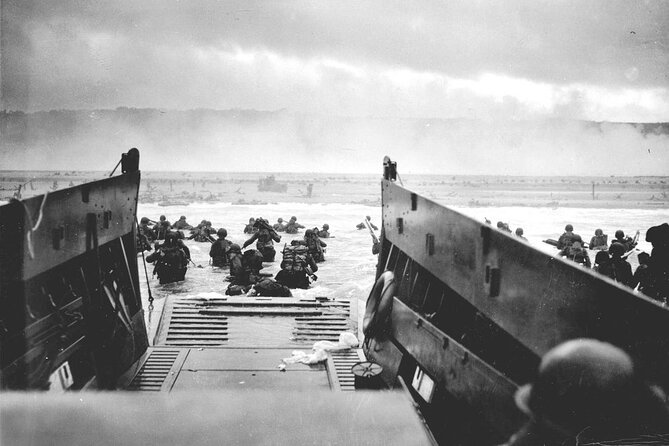
Omaha is the emotional center of the day for many people. The beach is broad and open, but that openness can make the scale of the fighting hard to grasp. Your guide uses the shoreline and the surrounding ground to explain what American troops faced when they came ashore.
This is where maps and photographs are especially useful. A guide such as Theo, Adam, Ben, or Valentine may explain the movement of units, the problems created by the beach defenses, and the decisions that shaped the first hours of the landing. The strongest guides on this route are praised for combining military detail with individual stories, so the day does not become a lecture filled only with troop numbers.
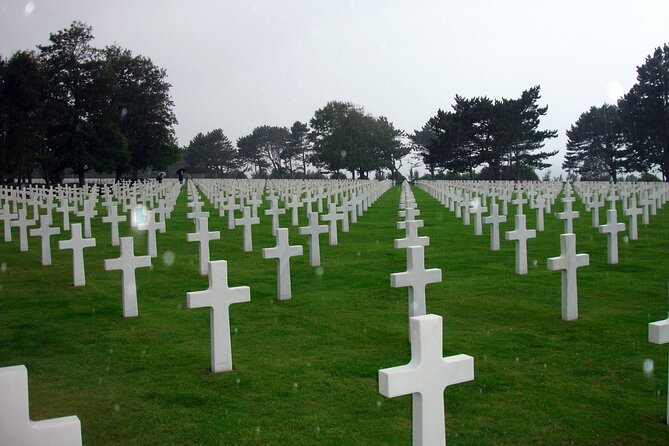
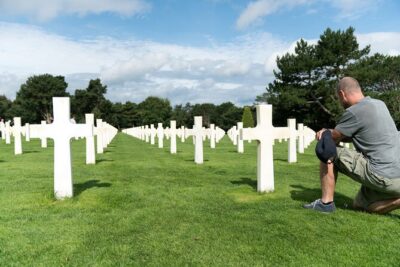
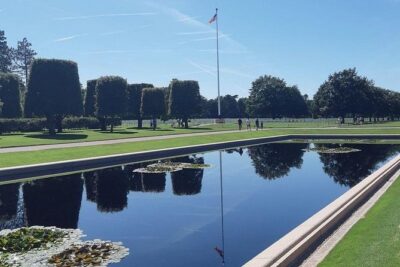
You also visit the American Cemetery at Colleville. The rows of markers make the human cost impossible to ignore. Set aside time to be quiet here. The cemetery can feel overwhelming, and the visit works best when you do not rush from one explanation to the next.
The practical point is simple: wear shoes suitable for standing and walking outdoors. Beaches and cemetery grounds are not the same kind of stop, and you will spend much of the day moving between open-air sites.
Pointe du Hoc shows the problem of height and distance

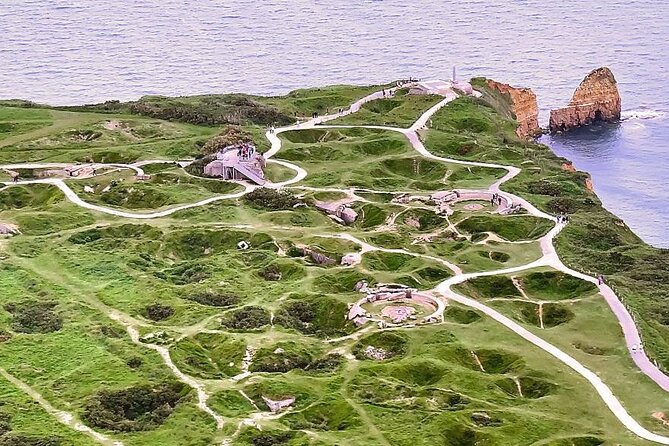
Pointe du Hoc is one of the most striking military sites on the route. The position gave German forces a commanding location above the coast, and its craters and concrete defenses help explain why the assault mattered.
This stop adds a different physical experience to Omaha. At Omaha, you look across a wide beach. At Pointe du Hoc, you confront cliffs, bomb craters, and fortified ground. Your guide can connect the position to the wider American advance and explain why taking it mattered to the operation.
The ground here is uneven, and the day involves outdoor walking. The exact amount of time at each stop can vary with conditions, traffic, and the needs of the group, so do not expect every location to receive the same length of visit.
Same base, a different kind of day:
- Omaha and Band Of Brothers Full Day Tour
★ 5.0 · 1,104 reviews - Omaha Beach D-Day Experience – Afternoon group tour from Bayeux
★ 5.0 · 1,088 reviews - Normandy Battlefields Tour – American Sites (A3)
★ 5.0 · 876 reviews - From Bayeux: American D-Day Sites in Normandy Half-Day Tour
★ 4.9 · 656 reviews
Sainte Mère Église and La Fière bring the airborne story into view
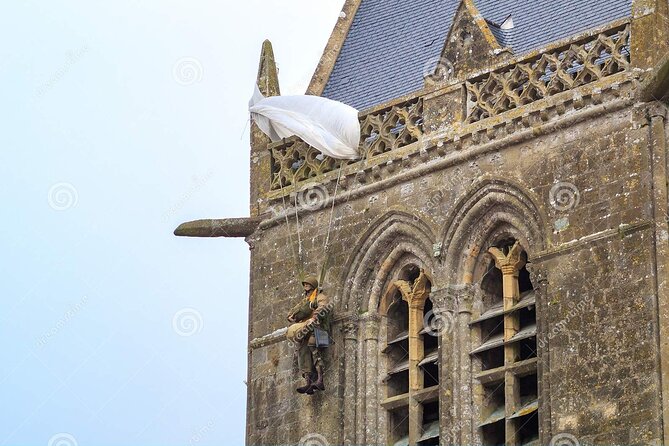
The route then moves inland to Sainte Mère Église, one of the best-known American airborne locations in Normandy. This changes the rhythm of the day. You are no longer focused only on troops coming from the sea. You are looking at the struggle to secure roads, bridges, villages, and crossings behind the coast.
La Fière adds another important setting. The bridge and surrounding area show why small pieces of ground could become major objectives. A bridge might look modest, but control of it could affect movement across the area and the ability to reinforce or isolate units.
These stops are useful if you have seen films or read popular accounts of D-Day but want to place those stories on an actual map. The guides often use photographs and maps to show how the action developed. That extra visual material matters because the countryside can look peaceful now, making the urgency of 1944 difficult to picture without help.
DeGlopper Action and the smaller memorial sites
The DeGlopper Action stop is one of the places that separates this outing from a basic beach transfer. It focuses on a specific act of courage rather than only on famous battle names.
That kind of stop gives the day a human scale. You are encouraged to think about what one person or one small group had to do in a particular moment. The tour also includes the General Pratt Memorial and other smaller memorials connected to the fighting.
I value these locations because they help you avoid seeing D-Day as one giant event with no individual texture. The famous beaches matter, but the campaign was also shaped by actions in fields, villages, churches, and along crossings. Guides such as Antoine have been especially effective at connecting these sites to the people involved and explaining events in a way that younger visitors can follow.
Utah Beach and Sainte Marie du Mont
Utah Beach gives you the second major American landing area of the day. Seeing Omaha and Utah together is one of the tour’s strongest features because the two beaches are not treated as interchangeable.
Your guide can compare the settings and explain how the American V Corps and VII Corps operated in different areas. That comparison gives you a better sense of the invasion’s size and complexity. By late afternoon, you also have enough context to understand Utah as part of the wider airborne and ground operation rather than as a separate attraction.
The route continues through Sainte Marie du Mont, another village linked to the American advance. Villages like this are easy to pass through without a guide. With an explanation of the operations around them, streets and buildings become useful reference points.
Do not expect a museum-heavy day. The emphasis is on places, terrain, memorials, and guide interpretation. If you prefer indoor exhibits, you may want to add a museum visit on another day.
Holdy Battery, the first aid station, and La Colombière Hospital
Holdy Battery adds another German defensive position to the route. It helps you see how fortified sites appeared beyond the immediate shoreline and how the invasion involved a network of positions rather than one line at the water.
The first aid station and La Colombière Hospital shift attention toward medical care. These stops help explain the work required after the initial landings, when wounded men needed treatment and evacuation while the fighting continued.
I like this part of the itinerary because it widens the story beyond combat. A battlefield tour should include the people who treated the wounded and the places that became makeshift medical centers. It also gives the day a different emotional tone after the large military sites.
Hiesville, General Taylor’s headquarters, and Angoville-au-Plain
At Hiesville, you visit the site associated with General Taylor’s headquarters. This connects the village setting to command decisions and the organization of the airborne operation.
The General Pratt Memorial continues the focus on individual leaders and local actions. Then the tour reaches Angoville-au-Plain, including the church associated with the care of Allied and German soldiers by two medics. This is one of the most affecting stops because the setting is small and personal. You are not standing at a vast cemetery or looking across a major beach. You are considering what happened inside a village church during the fighting.
This stop also shows why a guide matters. Without context, the church might appear to be simply another historic building. With the story explained, it becomes a place tied to medical care, danger, and an unusual moment of humanity in wartime.
The guides are the heart of the experience
The company uses driver-guides and professional guides, and the names attached to this tour include Theo, Adam, Ben, Valentine, William, Antoine, Guillaume, Louis, Stephen, and others. Your exact guide is not guaranteed from the information provided, but the experience depends heavily on who leads your group.
The strongest guide qualities are clear:
- Clear military explanations without drowning you in detail
- Personal stories and family anecdotes that give the campaign a human face
- Maps and photographs used at the right stops
- The ability to answer questions and correct popular misconceptions
- Enough humor and energy to keep a long day moving
Some guides also drive, while the service includes a separate driver in certain groups. That matters on a nine-hour outing because safe, calm transport lets you focus on the sites instead of the road.
The small group limit of 16 is another advantage. It is not a private tour, but it is far more personal than a large coach. You have a better chance of hearing the explanation, asking a question, and staying connected to the guide.
Is $183.81 a fair price?
At $183.81 per person, this is not a budget day out. Still, the price includes transport in a private vehicle, a driver or guide, and a professional or local guide across roughly nine hours. You also visit a long list of sites that would be difficult to connect efficiently without a car.
The value is strongest if you have limited time in Bayeux. You cover Omaha, Utah, Pointe du Hoc, the American Cemetery, Sainte Mère Église, La Fière, and several smaller sites in one day. You also avoid arranging parking and navigation across rural Normandy.
The price looks less attractive if you plan to rent a car, already know the military history, or want to spend most of the day inside museums. Lunch, drinks, and hotel pickup or drop-off are not included, so budget for those separately and make your own plan for food.
Timing, clothing, and practical details
Meet at Place du Québec in Bayeux at 8:20 a.m. The tour returns to that meeting point, so you need to arrange your own way to and from the start. Hotel pickup and drop-off are not included.
Wear warm layers. Autumn mornings at the beaches can be cold, and conditions may change during the day. One outing continued through cold, intermittent rain, so a waterproof layer is sensible even when the forecast looks mild.
Confirmation is sent within 48 hours, subject to availability. The tour is offered in English, mobile tickets are accepted, service animals are allowed, and most people can participate. Free cancellation is available until 24 hours before the start time. Changes or cancellations inside that window are not accepted for a refund.
Who should book this D-Day tour?
I would book it if you want a broad, serious look at the American sectors and prefer a guide to connect the sites. It suits first-time visitors, families with older children, and anyone who wants the military story explained through terrain and personal accounts.
It is also a good choice if you want both famous locations and smaller places that are easy to miss. The church at Angoville-au-Plain, La Fière, Hiesville, and the medical sites add depth to the beaches and cemetery.
I would hesitate if you dislike full-day outings, outdoor walking, early starts, or emotionally heavy subjects. I would also compare it with a museum-focused plan if you want exhibits, artifacts, and more time indoors.
Should you book it?
Book this tour if your priority is understanding how the American landings fit together across Normandy. The combination of Omaha, Utah, Pointe du Hoc, the cemetery, airborne sites, German batteries, medical locations, and small village memorials gives you far more than a quick beach stop.
The main reason to choose it is the guide. Theo, Adam, Ben, Valentine, Antoine, and the other named guides have brought maps, photographs, personal stories, and clear explanations to the route. The exact person may vary, but this is a guide-led experience where interpretation is central.
For one full day from Bayeux, the price is reasonable for the amount of ground covered and the convenience of private transport. Bring warm clothing, plan for lunch, and arrive ready for a moving day rather than a light sightseeing trip.
FAQ
Where does the tour begin?
It begins at Place du Québec, Pl. du Québec, 14400 Bayeux, France.
What time does the tour start?
The scheduled start time is 8:20 a.m.
Where does the tour end?
The tour ends back at the meeting point in Bayeux.
How long does the tour last?
The experience lasts approximately nine hours.
Is lunch included?
No. Lunch, food, and drinks are not included.
Is hotel pickup included?
No. Hotel pickup and hotel drop-off are not included.
How many people can join the tour?
The tour has a maximum group size of 16 people.
Can I cancel for a full refund?
Yes, if you cancel at least 24 hours before the experience start time. Cancellations or changes made less than 24 hours before the start time are not eligible for a refund.
Just added in Bayeux
- Mont-saint-Michel : Walk in the heart of the Bay★ 4.7 · 167 reviews
- 2-Hour Guided Walking tour of the Mont Saint Michel★ 4.0 · 203 reviews
- Mont-Saint-Michel bay walk★ 4.5 · 182 reviews
- Normandy Battlefields D-Day Private Trip with VIP Services from Paris★ 5.0 · 240 reviews
- From Bayeux: American D-Day Sites in Normandy Full-Day Tour★ 4.9 · 503 reviews
- Mont Saint Michel: Walking Tour & Optional Abbey Ticket★ 4.3 · 562 reviews
- Mont Saint-Michel Day Trip from Bayeux (Shared tour)★ 5.0 · 540 reviews
- From Paris: Normandy D-Day Beaches Day Trip★ 4.6 · 566 reviews
Normandy D-Day Tours, compared.
Normandy D-Day Sites & Cemetery Day Trip from Paris with Lunch
Read our review →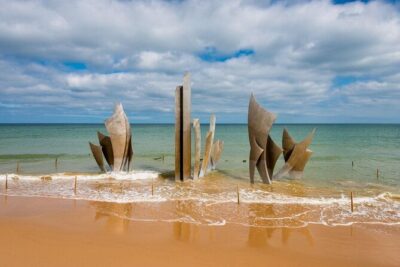
Normandy D-Day Small-Group Day Trip with Omaha Beach, Cemetery & Cider Tasting
Read our review →
Normandy D-Day Beaches and American Cemetery Day Trip from Paris
Read our review →
Normandy American D-Day Beaches Full Day Tour from Bayeux
Read our review →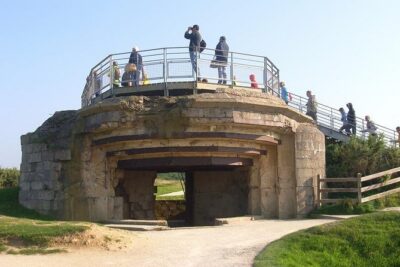
Normandy American D-Day Experience – Group tour from Bayeux
Read our review →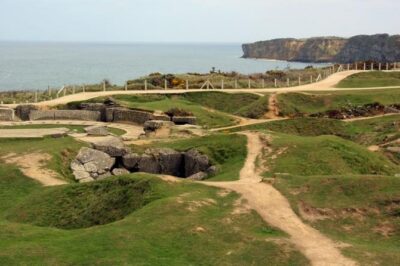
Normandy Beaches Half-Day Afternoon Trip from Bayeux (A2)
Read our review →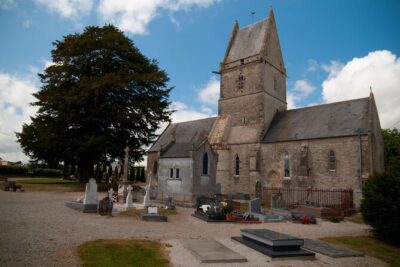
Omaha Beach D-Day Experience – Afternoon group tour from Bayeux
Read our review →Browse the lists this tour appears in