
Reviewed · PASTRY & CHOCOLATE WORKSHOPS
Paris: French Macaron Culinary Class with a Chef
French macarons look simple, but the crisp shell and soft center demand careful technique. This 150-minute class at Maison Fleuret School lets you make the pastry from start to finish, with a chef showing you how meringue, ganache, piping, and baking fit together.
I like the small group of up to six, since the chef can watch your technique instead of giving a speech from across a crowded room. I also like that you choose colors and flavors, then leave with a box of your own macarons. The main thing to consider is that the class may feel introductory if you already bake macarons often, and some sessions finish sooner than the advertised 150 minutes.
Macaron class highlights at a glance
- A real hands-on pastry lesson: You work through meringue, ganache, shells, and filling rather than simply watching a demonstration.
- Up to six participants: The intimate format allows the chef to correct small mistakes and help children or first-time bakers.
- English instruction: Chefs such as Alice, Amélie, Delphine, Christian, and Matthieu have led sessions in a friendly, clear style.
- Choice of colors and flavors: Some classes include multi-colored macarons, giving you a little creative control over the finished box.
- A useful family activity: Children as young as five have taken part successfully, with adults and teenagers enjoying the work too.
- A sweet souvenir: You take home the macarons made during class, often enough to share or enjoy over the next few days.
Why macarons make a good Paris cooking class
A macaron workshop gives you more than a quick pastry demonstration. You see how a few basic ingredients can produce a pastry with two very different textures: a thin, crisp shell outside and a tender, flavored center inside.
That contrast is what makes macarons tricky. The meringue must be stable, but not dry. The batter needs enough mixing to settle into smooth rounds, but too much mixing can leave it loose. The shells must rest and bake properly, or they may crack, spread, or fail to develop the familiar foot around the edge.
The class is built around these key points. Your chef explains how to prepare the meringue, how to make ganache, and how to combine the parts into finished macarons. You are not expected to arrive with baking experience. Several participants with little or no pastry background have found the method approachable, while people who had previously failed at home picked up practical corrections.
I especially like the confidence this can give you. A recipe can tell you to fold until the mixture reaches the right consistency, but an instructor can show you what that consistency looks and feels like. That kind of visual lesson is hard to get from a cookbook.
More cooking classes in Paris:
- Paris Cooking Class and Lunch with Wine plus Market Visit Option
★ 5.0 · 1,024 reviews - Paris Croissant Small-Group Baking Class with a Chef
★ 5.0 · 910 reviews - Paris: French Croissant Baking Class with a Chef
★ 4.9 · 712 reviews
Arriving at the grey door
The meeting point is in front of the grey door at Maison Fleuret School. There is not much signage outside, so you should check the address and look carefully when you arrive. One participant specifically found the lack of a prominent sign worth noting.
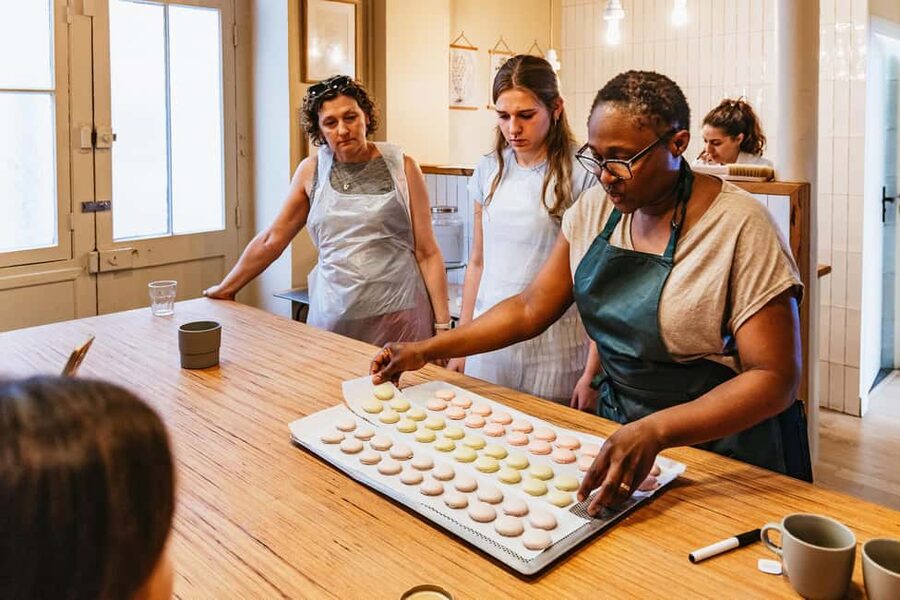
The school is described as a clean, attractive kitchen space in a central Paris location. You meet the other participants before the class begins, then settle in for instructions from the chef. The atmosphere is social, but the limited group size keeps it from feeling like a large tourist production.
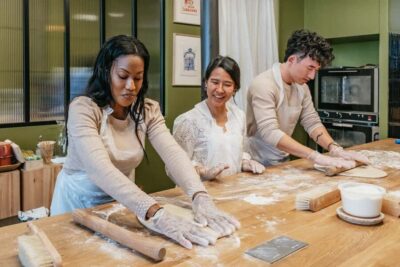
The small format matters here. Macaron-making involves close work with bowls, piping bags, trays, and measured ingredients. A room with six people gives the instructor a better chance to see whether your batter is too thick, your piping is uneven, or your shells need a little more attention.
The class is taught in English. Some instructors also speak French, and Delphine has led sessions in both languages so everyone could follow the steps. If you are visiting Paris with family or friends, you can expect to work alongside other small groups rather than having the entire kitchen to yourselves.
First comes the meringue
The first technical stage is the meringue. This is where the class begins to earn its keep, since the meringue provides much of the structure for the shells.
Your chef explains the process and shows you how to reach the proper result. You then work through the stage yourself, with help available when needed. The instructors are not simply there to keep the class moving. Names such as Alice, Amélie, Christian, Felix, Julie, and Matthieu appear often in feedback for being patient, cheerful, and willing to help each person individually.
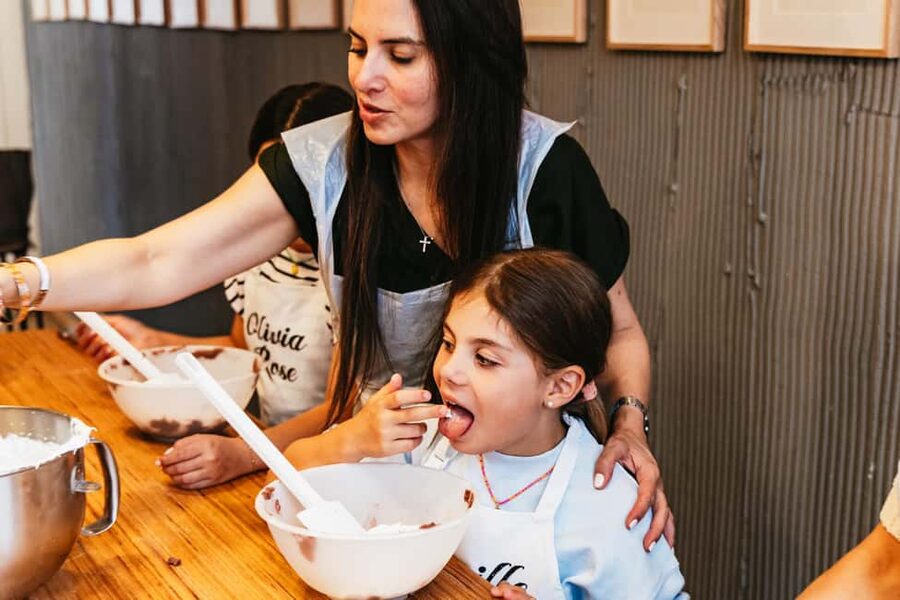
This is also the point where children can take part without needing to manage every detail alone. Ingredients are measured as part of the lesson, and the chef guides the group through the work. One family found that both adults and children produced macarons with good results, including a six-year-old. Another family brought children aged seven and nine, who enjoyed the activity.
You should still expect a proper cooking class, not a craft session with no rules. Meringue needs care, and your results depend on following instructions. The friendly tone keeps the process relaxed, but you will be asked to pay attention.
Ganache gives the macarons their center
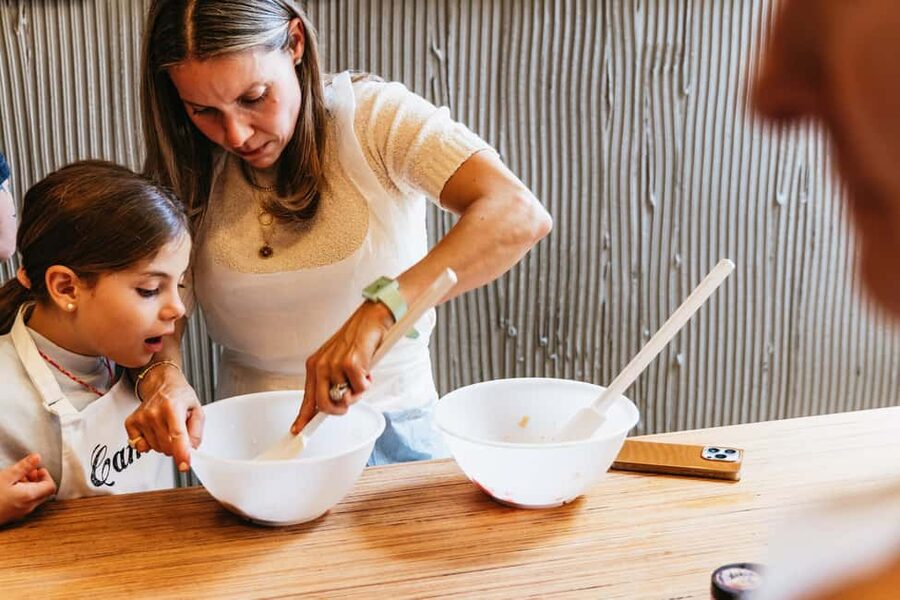
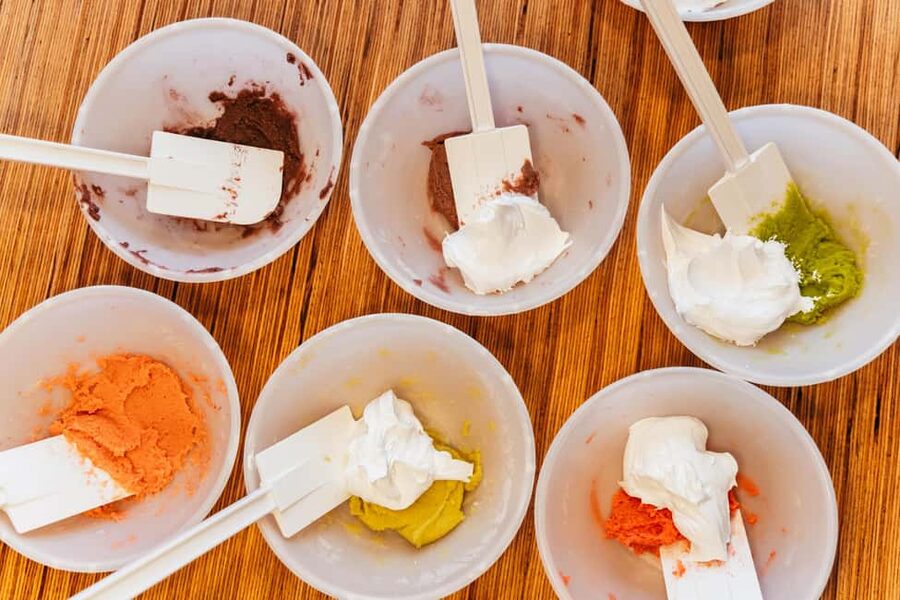
Once the shell mixture is underway, you learn about ganache. This is the soft, flavorful filling that brings the two shells together.
The lesson covers the technique rather than treating the filling as an afterthought. You see how the ganache is made and how it contributes to the final texture. The goal is a finished macaron that has a delicate center instead of a dry or overly hard filling.
Some sessions include a choice of flavors and colors. One class also covered multi-colored macarons, which adds a playful element without changing the basic pastry lesson. These choices make the activity feel personal, especially for families with children or teenagers who want to create something visually distinctive.
I would not book this expecting a full pastry-school syllabus. The class focuses on one pastry during a single session. That is a strength if you want a clear, manageable project in Paris, but a limitation if you are looking for advanced production methods, professional recipe scaling, or detailed troubleshooting for every possible failure.
One participant felt the class did not provide enough advanced information. That is a fair warning for experienced bakers. For beginners, though, the same straightforward approach is likely to be a benefit.
More food tours in Paris:
- Bateaux Parisiens Seine River Gourmet Dinner & Sightseeing Cruise
★ 4.5 · 6,930 reviews - Paris : 3-Course Gourmet Dinner Cruise on Seine River
★ 4.3 · 5,205 reviews - Authentic Parisian Gourmet Food Tour with 10 Local Dishes & Wines
★ 5.0 · 4,754 reviews - Bateaux Parisiens Seine River Gourmet Lunch & Sightseeing Cruise
★ 4.5 · 2,680 reviews
Piping shells and getting the texture right
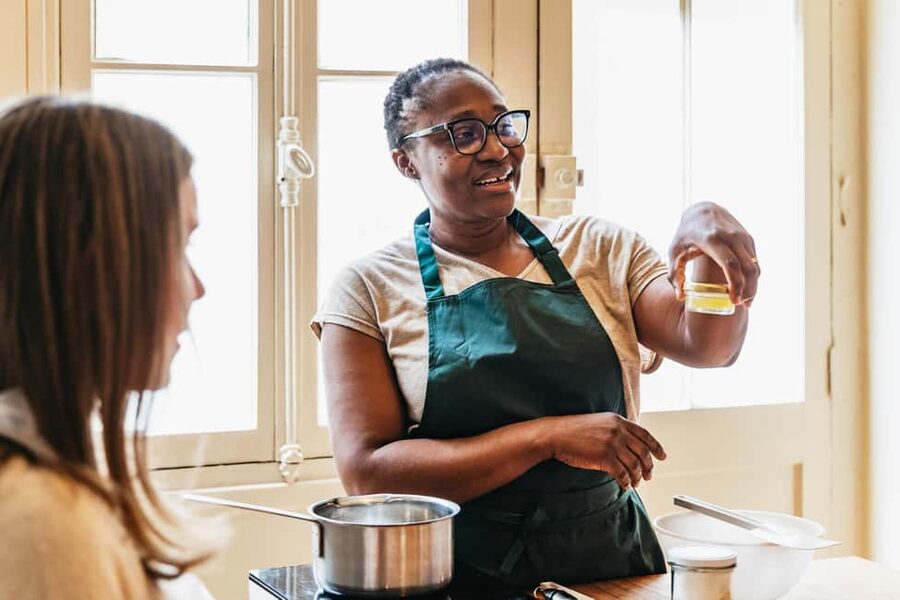
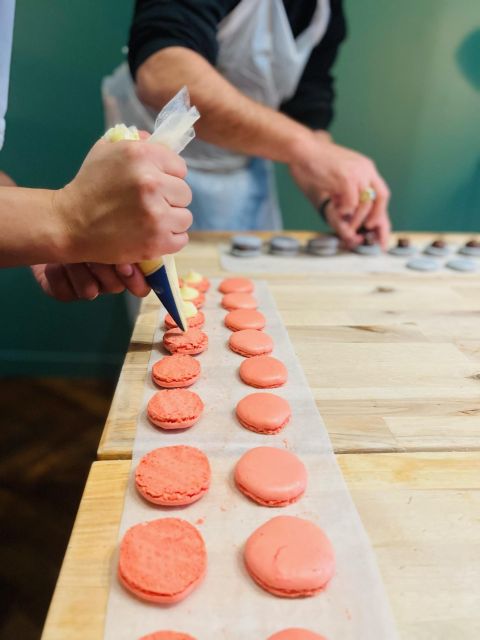
The most recognizable part of macaron-making is piping the round shells. Your chef explains how to shape them and how to aim for an even, smooth surface.
This is where the class becomes very practical. The shell has to look tidy before it even reaches the oven. You learn how to work toward the crisp outer layer described in the class, while keeping the inside soft and tender.
The chef can also give you quick corrections that a printed recipe cannot. If your rounds are too large, too small, or uneven, you can adjust on the next tray. If you are working with children, the instructor can make the task accessible without taking all the fun away from them.
Several instructors are praised for balancing group teaching with individual help. Matthieu, Matteo, and Christian are noted for explaining each step clearly and checking that everyone was doing it correctly. Amélie is repeatedly described as encouraging and easygoing, which matters when your first piped shells do not look like the ones in a pastry case.
The class aims to make success possible for beginners. That does not mean every macaron will be identical. It means you get enough guidance to produce a respectable and tasty result, even if your piping is not perfect.
Baking, filling, and the box to take home
After the shells are prepared, the process moves toward the finished pastry. You learn how the shells should develop their crisp exterior and soft interior, then fill and assemble them with ganache.
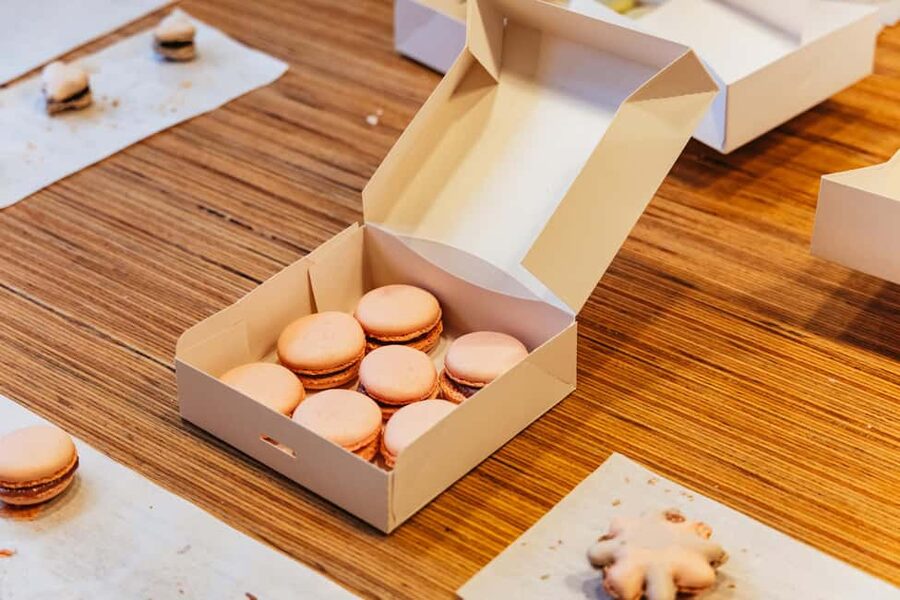
The final box is one of the best practical features. You do not leave with only a recipe and a photograph. You take away the macarons made during the lesson, giving you something to share with friends or family back at your accommodation.
The quantity can vary by session, but one participant described taking home a dozen or more, and another said the box provided macarons for much of the week. That makes the souvenir more substantial than a single sample.
You should protect the box during the rest of your day. A participant managed to carry the macarons back to the United Kingdom, but heat and rough handling can still work against you. Keep them level, avoid leaving them in hot conditions, and do not pack the box under heavy items.
The end result is not just about appearance. The class gives you the chance to taste the texture you were trying to create. That makes the lesson easier to remember when you try the recipe at home.
Why the six-person limit matters
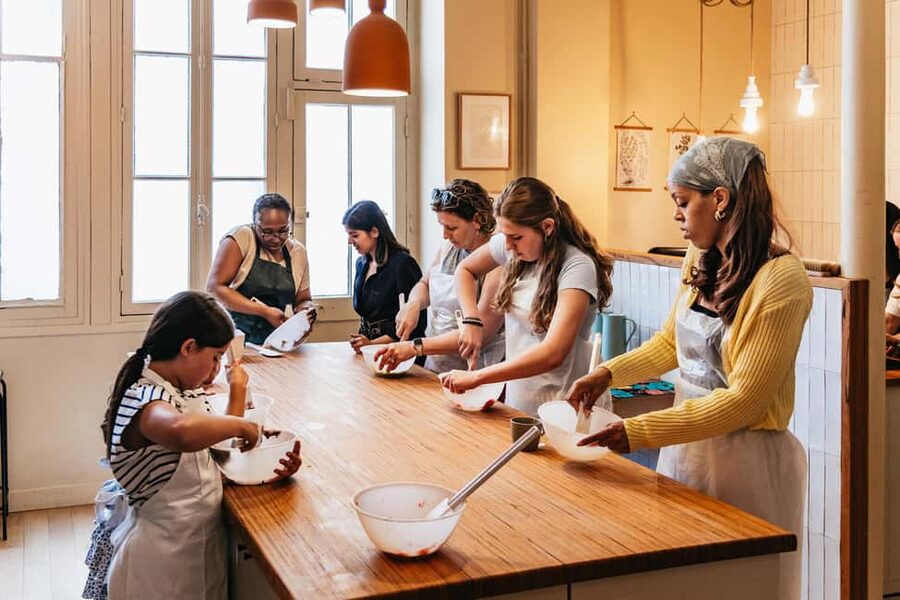
The class is listed for no more than six participants. For this type of cooking activity, that is a meaningful advantage.
A large group can turn a pastry lesson into a demonstration where you stand behind other people and wait for a turn. Here, the chef has more time to watch your work, answer questions, and help when a step goes wrong.
This is particularly useful for families. Children can take part in measuring, mixing, piping, and choosing colors, while the chef keeps the pace moving. Sessions have included children from about five years old through teenagers, and the instructors have been praised for involving younger participants without ignoring the adults.
The group format also adds a social element. You meet people from different places, work side by side, and sometimes exchange ideas with participants making croissants in another room. The atmosphere is friendly and informal, though one person found the last part of a session too loud. That may depend on the group and the activity happening nearby.
Timing, pace, and what 150 minutes means
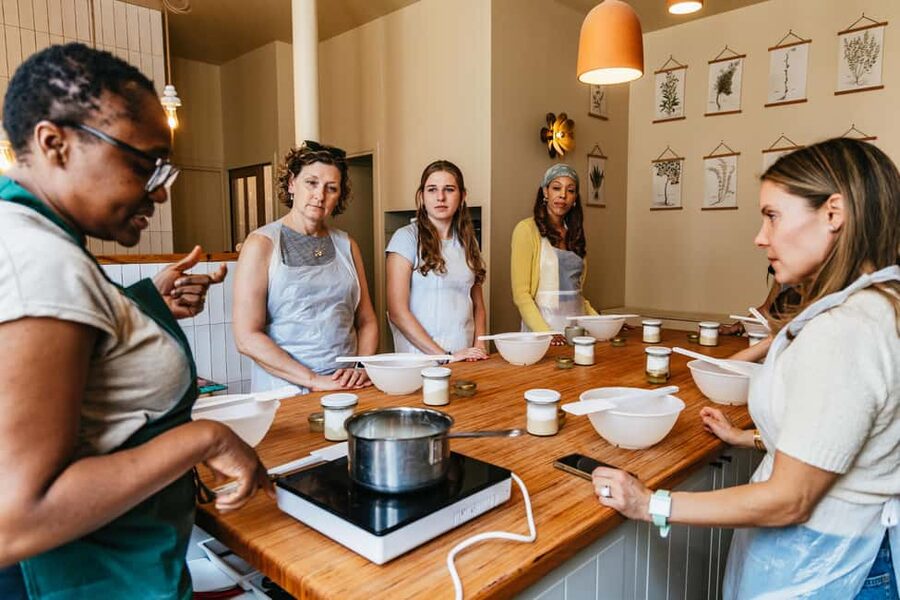
The advertised duration is 150 minutes, or two and a half hours. That gives the class enough room for instruction, hands-on work, baking, filling, and packing the macarons.
In practice, the pace can vary. One participant finished in about one hour and 45 minutes, which is noticeably shorter than the stated duration. You should treat the 150 minutes as the planned length rather than a guaranteed amount of instruction time.
That shorter finish may suit you if you have a busy Paris schedule. It may disappoint you if you are booking the class as a long, leisurely afternoon activity. I would leave some flexibility around the booking rather than planning another time-sensitive reservation immediately afterward.
The lesson works well on a day when you want a break from museums and monuments. It is also useful in poor weather, since the activity takes place indoors. You receive the chef’s guidance, spend time making something with your hands, and leave with an edible souvenir.
Value for families, couples, and first-time bakers
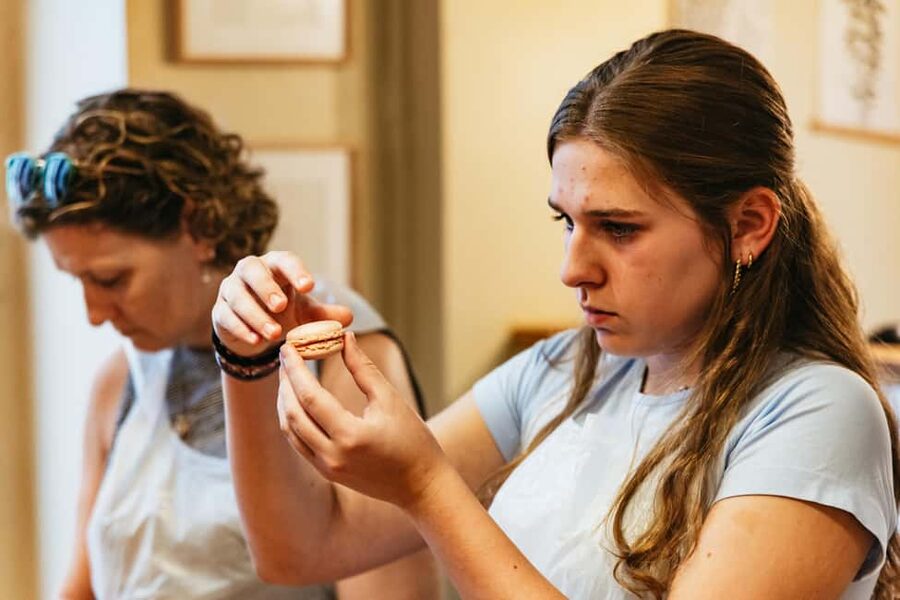
The price is not provided here, so I cannot judge the exact cost against similar Paris classes. I can still assess what you receive for the fee: an English-speaking chef, a small class, a hands-on lesson, the use of the school’s kitchen, and a box of macarons to take home.
That package is more valuable if you want actual instruction rather than a tasting. The chef’s corrections and explanations are the part you cannot easily reproduce at home. It is less compelling if your only goal is to eat macarons, since Paris has plenty of pastry shops where you can buy them without spending 150 minutes making them.
I would recommend it most strongly for:
- Families with children or teenagers who enjoy practical activities
- Couples looking for a shared food experience
- First-time bakers who want to understand the basic technique
- People who have tried macarons at home and struggled with the result
- Food-focused visitors who want a break from standard sightseeing
Experienced pastry cooks may want to ask about the level of the session before booking. The class covers the core method well, but it is not presented as an advanced professional workshop.
Practical details before you book
The class is taught in English, and the activity is listed as wheelchair accessible. Hotel pickup and drop-off are not included, so you make your own way to the school.
Arrive at the grey door at your reserved time. Since the exterior may not have clear signage, allow yourself enough time to confirm the entrance instead of arriving at the last second.
You can cancel up to 24 hours before the activity for a full refund, and the reserve-now, pay-later option keeps your plans flexible. The provider has also handled schedule or location changes with advance communication in past sessions, but you should still check your booking messages before setting out.
The class has a 4.9 rating from 591 reviews, with repeated praise for the instructors, small format, clean kitchen, clear explanations, and tasty results. The strongest pattern is not one particular chef. It is the consistent hands-on help provided by different instructors, including Alice, Amélie, Delphine, Felix, Christian, and Matthieu.
Should you book this macaron class?
Book it if you want to make something in Paris, not just look at it. The small group, friendly chefs, family-friendly pace, and box of finished macarons give the class a clear purpose.
I would be especially happy to recommend it to a family with children, since the instructors have shown patience with young bakers and made the work feel achievable. It also suits anyone who has been intimidated by macarons and wants a chef to explain the parts that recipes often leave vague.
Skip it if you want advanced pastry training, a long guaranteed session, or a purely relaxed tasting. The class can finish early, and its level is best suited to beginners and casual home bakers.
For most visitors, though, this is a smart Paris food activity: practical, social, manageable in half a day, and delicious at the finish.
FAQ
How long is the French macaron class?
The scheduled duration is 150 minutes, or two and a half hours. One participant reported finishing in about one hour and 45 minutes, so the actual pace can vary.
Is the class taught in English?
Yes. English is the listed language for the class. Some instructors also speak French, and Delphine has taught sessions in both French and English.
How many people are in the class?
The activity is limited to six participants. This allows the chef to give more individual help during mixing, piping, and assembly.
Do I take macarons home?
Yes. A box of macarons made during the lesson is included. Participants have described taking home about a dozen or more, though the exact quantity may vary.
Is the class suitable for children?
Yes. Children and teenagers have taken part successfully, including children as young as five. The chefs help younger participants join in while keeping the activity suitable for adults.
What is included, and is transportation provided?
The macaron cooking class, chef instructor, and box of macarons are included. Hotel pickup and drop-off are not included, so you must travel to the Maison Fleuret School yourself.
More pastry and chocolate sessions around Paris
- Paris: Montmartre Cheese, Wine & Pastry Guided Walking Tour
★ 4.8 · 2,255 reviews - Award-Winning Paris French Bakery Experience — Le Marais, 4th Arr
★ 4.5 · 1,186 reviews - Paris: Entrance Ticket to the Chocolate Museum
★ 4.1 · 1,105 reviews - Private Montmartre Food Tour with Wine, Cheese & Pastries
★ 5.0 · 1,027 reviews
Just added in Paris
- Paris City Sightseeing Half Day Guided Segway Tour with a Local Guide★ 5.0 · 371 reviews
- Paris Create your Own Perfume Workshop with a Perfumer★ 4.5 · 275 reviews
- Paris: Oh My God She’s Parisian! English Comedy Show★ 4.7 · 257 reviews
- Paris: Create your Signature Scent Perfume Workshop★ 4.8 · 221 reviews
- Paris: Flea Market Insider’s Tour in Extra-Small Group★ 4.6 · 73 reviews
- Paris : Painting experience in an art cafe★ 4.6 · 204 reviews
- Paris: Vallée Village Outlet Shopping Day★ 4.3 · 362 reviews
- Paris night out : Comedy in English ‘How to Become a Parisian ?’★ 4.5 · 373 reviews
Pastry & Chocolate Workshops, compared.
Montmartre Cheese, Wine & Pastry Guided Walking Tour
Read our review →
Award-Winning Paris French Bakery Experience — Le Marais, 4th Arr
Read our review →
Private Montmartre Food Tour with Wine, Cheese & Pastries
Read our review →
Paris French Sweets Tasting Tour with Pastries and Chocolates
Read our review →
Paris Croissant Small-Group Baking Class with a Chef
Read our review →
Browse the lists this tour appears in